 How to resolve AdBlock issue?
News
- Details
- Written by: Elizabeth Larson

LAKEPORT, Calif. — The effort to get a new courthouse for Lake County, now nearly 15 years in the making, is moving forward, with construction expected to begin next year.
The Lake County Superior Court said the new Lakeport courthouse project is nearing the completion of design.
The four-courtroom courthouse will be built at 675 Lakeport Blvd., purchased by the state in 2011 for $1.1 million, after a lengthy site selection process, which included input from justice partners, local government and the public.
The new building will replace the fourth floor of the current courthouse and will provide a safe and secure courthouse, with a jury assembly room, self-help center and attorney/client meeting rooms.
The Judicial Council of California reported that the courthouse project’s current authorized budget is $83,864,000.
It’s the highest priority trial court capital-outlay project in the entire state, court officials reported.
After the current courthouse at 255 N. Forbes St. was ranked in the Trial Court Capital Outlay Plan's “Immediate Need Project Priority Group” in 2009, the process of pursuing a new courthouse for Lake County began.
However, the Judicial Council’s plans hit obstacles, including the state’s financial challenges after the Great Recession.
The Lakeport courthouse project has consistently ranked at the top of the statewide list of projects most in need of replacement.
The latest statewide assessment of Trial Court Capital-Outlay Projects ranked Lakeport’s courthouse at the top of the statewide prioritized list of projects based on significant overcrowding, security concerns and accessibility challenges.
Last October, the team of Clark/Sullivan Broward Builders + Lionakis was selected as the design-build entity to design and construct the new building.
The Judicial Council, local court and the design-build team have spent the last year designing the new 46,000 square foot building.
Construction is currently scheduled to begin in late spring or early summer 2024 with completion in early 2026.
Additional information can be found at https://www.courts.ca.gov/facilities-lake.htm.
Email Elizabeth Larson at
- Details
- Written by: Elizabeth Larson
The board will meet at the district’s Lake County Campus at 15880 Dam Road Extension, Rooms 209 to 211 Thursday, Nov. 9.
There will be a special meeting and study session at 2 p.m. for the Student Access and Success Presentation, to be followed by a 3 p.m. closed session and the regular session at 5 p.m.
Agendas and board documents are here.
Those who wish to attend virtually can use this Zoom link; the meeting ID is 869 6439 7914. To call in, dial 1 669 900 6833.
While the future of the Lake County Campus — aligned with Woodland Community College, which is under the umbrella of the larger Yuba Community College District — is not specifically on the agenda, staff and supporters of the college are asking community members to attend and speak during public comment in support of the campus out of concerns that it is not being given the resources needed to continue.
On the agenda is a presentation about the highly respected Lake County Campus Culinary Arts Program, headed by Chef Robert Cabreros.
The board also will discuss the employment of the Lake County Campus’ interim dean.
Following the departure of Dean Ingrid Larsen in September, Patricia Barba has accepted the role on an interim basis. The board must approve the appointment on Thursday.
Other action items will include approval of the hires at Woodland Community College of Geoffrey Hulbert as director of Department of Supportive Programs and Services and Caren Fernandez as the interim assignment for acting director of matriculation and EOPS/CARE Program, and confirmation of the appointments of the Career and Technical Education Advisory Committee members.
Email Elizabeth Larson at
- Details
- Written by: LAKE COUNTY NEWS REPORTS
Everyone who lives, works or recreates in the forest is encouraged to attend to learn more about the impacts of recent wildfires and share their input on prioritizing investments in its recovery.
Participants will be guided through stations to identify the places and activities they care about most on the forest and to provide input on future conditions.
Families are encouraged to attend and bring their kids for fun activities and to meet Smokey Bear. A Spanish translator will be available.
Input sessions will be interactive and will take about 45 minutes. Community members are invited to come between 5 and 7:30 p.m. No registration is required.
The sessions are as follows.
Wednesday, Nov. 8
Pleasant Valley Recreation Center
2320 North Ave., Chico
Thursday, Nov. 9
Red Bluff Community Center
1500 S Jackson St., Red Bluff
Monday, Nov. 27
Robinson Rancheria
1545 State Highway 20, Nice
Tuesday, Nov. 28
Library Commons
23925 Howard St., Covelo
Nearly 90% of the Mendocino National Forest has burned within the last five years. Land managers have a unique opportunity to develop a post-fire restoration strategy to help build a more resilient landscape for the future. Public feedback will inform a shared vision for restoration after severe wildfires.
These community sessions are possible thanks to a first-of-its-kind collaboration with researchers from the U.S. Forest Service’s Region 5, Pacific Northwest and Southwest Research Stations, USDA California Climate Hub, and University of California, Davis.
The team is developing an ecosystem-based, post-fire restoration framework and integrating community input to prioritize future projects.
More information about the community sessions is available online.
- Details
- Written by: Morgan Marietta, University of Texas at Arlington

Should it be legal to take away the guns of people who are under a domestic violence protective order, which aims to shield victims from their abusers?
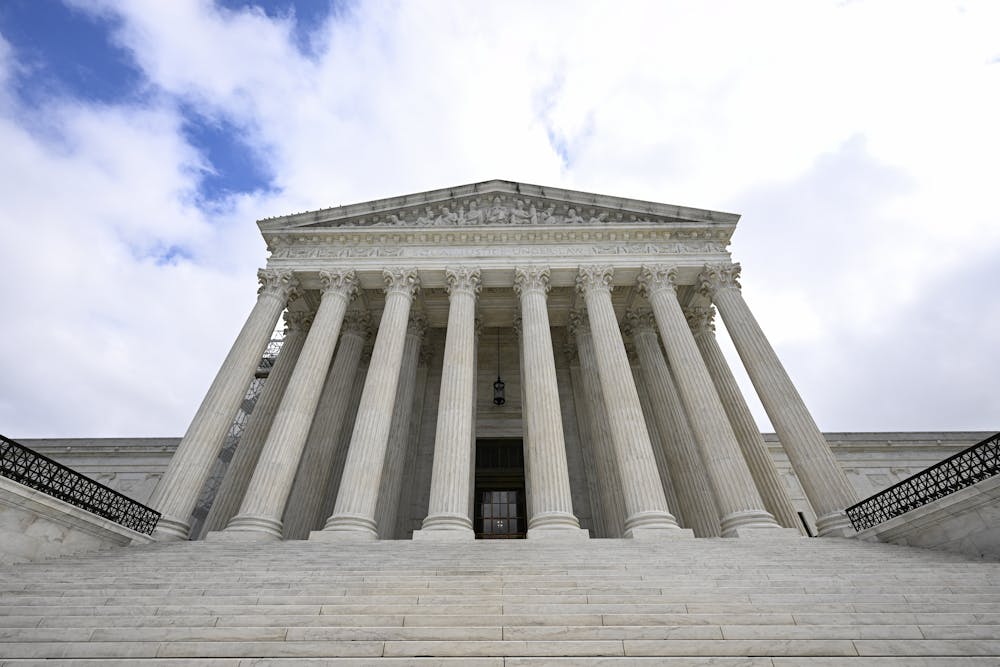
That’s the question posed in one of the biggest cases of the current Supreme Court term, focused on the limits of individual gun rights, which will be argued before the justices on Nov. 7.
The case, U.S. v. Rahimi, comes in the wake of revolutionary changes in doctrine over the past two court terms. Now, justices must grapple with how far the new principles will reach.
Two years ago, the court began what many consider to be a constitutional revolution.
The new supermajority of six conservative justices rapidly introduced new doctrines across a range of controversies, including abortion, guns, religion and race.
When the court announces a new principle – for example, a limit on the powers of a specific part of government – citizens and lawyers are not sure of the full ramifications of the new rule. How far will it go? What other areas of law will come under the same umbrella?
In a revolutionary period, aggressive litigants will push the boundaries of the new doctrine, attempting to stretch it to their advantage. After a period of uncertainty, a case that defines the limits on the new rule is likely to emerge.

Focus on guns
U.S. v. Rahimi may be the limiting case for gun rights, identifying the stopping point of the recent changes in Second Amendment doctrine.
Zackey Rahimi is a convicted drug dealer and violent criminal who also had a restraining order in place after assaulting his girlfriend. The court will decide whether the federal law prohibiting the possession of firearms by someone subject to a domestic violence restraining order violates the Second Amendment.
In the 2022 case of New York Rifle & Pistol v. Bruen, the court announced a new understanding of the Second Amendment. The amendment had long been understood to recognize a limited right to bear arms. Under the Bruen ruling, the amendment instead describes an individual right to carry a gun for self-protection in most places in society, expanding its range to the level of other constitutional rights such as freedom of religion or speech, which apply in public spaces.
However, the court’s conservative justices also tend to argue that constitutional rights are balanced by responsibilities to promote a functional society, a concept known as “ordered liberty.” The practical question is how to know the proper balance between liberty and order. If the right to carry a gun can be regulated but not eradicated, limited but not eliminated, where is the line?
The court’s answer in Bruen is history – a current law does not have to match a specific historical one exactly, but it has to be similar in form and purpose. Whatever gun regulations Americans allowed during the early republic – the critical period from around the 1780s to around the 1860s at the time of the Civil War – are allowable now, with the exception of any that would violate principles added to the Constitution more recently, such as racial equality under the 14th Amendment.
Justice Clarence Thomas, the author of the Bruen ruling, described it this way: The government must “identify a well-established and representative historical analogue, not a historical twin.” Thomas argued in Bruen that no such historical analogue existed for the limits New York imposed, invalidating the state’s ban on concealed carry permits.
The Rahimi case will provide a critical test of this historical approach to the boundaries of constitutional rights.
Historians have presented evidence that there were widespread laws and practices during the early republic limiting gun possession by individuals, like Rahimi, who were judged to be dangerous. However, those dangers did not include domestic violence, which was not deemed the same important concern then that it is now.
The court may consider the laws prevalent in the early republic, which regulated those who “go armed offensively” or “to the fear and terror of any person,” to be analogous to contemporary laws restraining those under a domestic violence restraining order. If so, the ruling will likely uphold Rahimi’s conviction and limit gun rights.
On the other hand, if the court reads those historical standards as more narrow and specific than the contemporary ban on gun possession while under a restraining order, those limits will be struck down.
This story incorporates sections of a previous story about the Supreme Court published on Sept. 26, 2023.
Morgan Marietta, Professor of Political Science, University of Texas at Arlington
This article is republished from The Conversation under a Creative Commons license. Read the original article.