How to resolve AdBlock issue?
Refresh this page
How to resolve AdBlock issue?
Refresh this page
Lake County News,California
  • Home
    • Registration Form
  • News
    • Education
    • Veterans
    • Community
      • Obituaries
      • Letters
      • Commentary
    • Police Logs
    • Business
    • Recreation
    • Health
    • Religion
    • Legals
    • Arts & Life
    • Regional
  • Calendar
  • Contact us
    • FAQs
    • Phones, E-Mail
    • Subscribe
  • Advertise Here
  • Login
How to resolve AdBlock issue?
Refresh this page

News

Police work to locate missing woman

Details
Written by: Lake County News reports
Published: 24 July 2024
Tammy Lynn Spurling. Courtesy photo.

CLEARLAKE, Calif. — The Clearlake Police Department is trying to locate a missing woman.

Tammy Lynn Spurling, 55, was last seen in the area of the Clearlake Safeway.

She is described as a white female adult, 5 feet 1 inch tall, 148 pounds, with brown hair and blue eyes.

It is unknown what she was wearing when last seen.

If you have any information regarding her whereabouts, please contact the Clearlake Police Department at 707-994-8251, Extension 1.

Ridge fire held to no new growth

Details
Written by: Elizabeth Larson
Published: 24 July 2024
LAKE COUNTY, Calif. — Firefighters kept the Ridge fire to no new growth on Tuesday, while further raising containment.

The fire, burning since Saturday afternoon on Walker Ridge along the Lake and Colusa County line, remained at 2,756 acres on Tuesday evening, with containment up to 35%.

Evacuation orders and warnings for eastern Lake County in the fire area were lifted over the weekend.

The fire has burned wildland and threatened 50 structures, none of which so far have been reported damaged or destroyed.

Email Elizabeth Larson at This email address is being protected from spambots. You need JavaScript enabled to view it.. Follow her on Twitter, @ERLarson, or Lake County News, @LakeCoNews.

Saving lives from extreme heat: Lessons from the deadly 2021 Pacific Northwest heat wave

Details
Written by: Jason Vogel, University of Washington and Brian G. Henning, Gonzaga University
Published: 24 July 2024


Volunteers pick up water to deliver to homeless people during a 2021 heat wave. AP Photo/Nathan Howard

The heat dome that descended upon the Pacific Northwest in late June 2021 met a population radically unprepared for it.

Almost two-thirds of households earning US$50,000 or less and 70% of rented houses in Washington’s King, Pierce and Snohomish counties had no air conditioning. In Spokane, nearly one-quarter of survey respondents didn’t have in-home air conditioning, and among those who did, 1 in 5 faced significant, often financial, barriers to using it.

Imagine having no way to cool your home as temperatures spiked to 108 degrees Fahrenheit (43 Celsius), and 120 F (49 C) in some places. People in urban heat islands – areas with few trees and lots of asphalt and concrete that can absorb and radiate heat – saw temperatures as much as 14 F (7.8 C) higher than that.

Extreme heat disasters like this are becoming increasingly common in regions where high heat used to be rare. Blackouts during severe heat waves can also leave residents who believe they are protected because they have in home air conditioners at unexpected risk. To prepare, cities, neighborhoods, companies and individuals can take steps now that can reduce the harm.
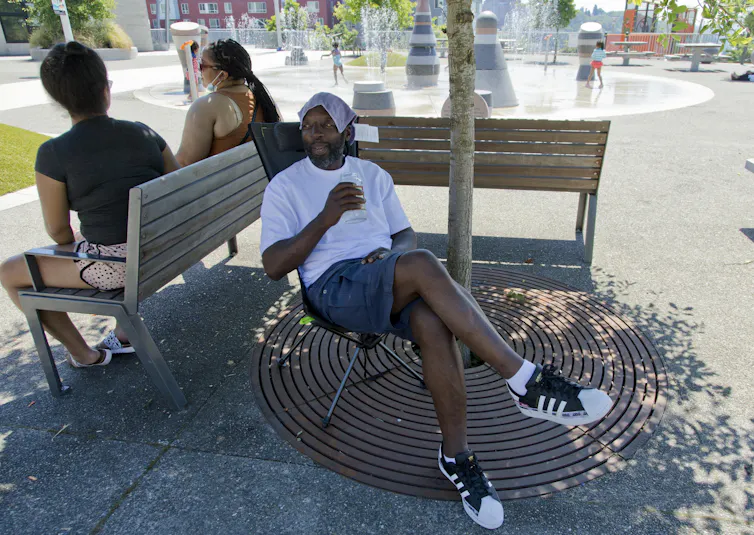
A man and two women sit in the shade while kids play in a fountain. The man has cool cloth on his head and cold soda in his hand. June is nicknamed 'Juneuary' in Seattle for its clouds and usual chill, but that isn't what residents endured in June 2021.
Designing shady spots for sitting and public fountains for kids to play in, like these people found in Seattle on June 27, 2021, can provide some relief from extreme heat. AP Photo/John Froschauer

In a new report, written with colleagues at universities and the Washington State Department of Health and released ahead of the two-year anniversary of the heat wave, we show how municipal planning agencies, parks departments, local health agencies, community-based organizations like churches and nonprofits, multiple state agencies, hospitals, public health professionals and emergency response personnel, as well as individuals and families, can play a vital role in reducing risk.

The 2021 heat dome was Washington’s deadliest weather disaster on record. It contributed to 441 deaths in the state between June 27 and July 3, our research shows. Medical systems were overwhelmed.

There are numerous ways to avoid this deadly of an outcome in the future. Many emerge from thinking about extreme heat as long-term risk reduction, not just short-term emergency response.

Designing environments for cooling

Greening the urban environment can reduce heat exposure and save lives. For example, planting trees and building shade structures where people are most exposed to heat can provide local relief from extreme temperatures. That includes providing shade at buildings without air conditioning and exposed public spaces, such as bus stops and parks.

Planting rooftops with vegetation, known as green roofs, or painting them white so they reflect heat rather than absorb it, can also lower roof temperatures by tens of degrees. Used widely, they can reduce an entire neighborhood’s heat island effect by several degrees.

An illustration showing a cross-section of a region, with a city and rural areas, and two chart lines showing day and night temperatures. The temps rise over areas with lots of concrete and asphalt, particularly dense areas that hold the heat.
Developed areas tend to heat up more than natural landscapes, such as parks. That can increase heat stress on humans. Climate Impacts Group/University of Washington, adapted from EPA

Efforts like these, along with tree planting campaigns in public parks and rights of way, and ordinances requiring shade trees for parking lots and private development projects, can transform the urban heat landscape.

Reaching vulnerable people

When heat waves are coming, culturally nuanced outreach efforts focused on the most vulnerable populations – and involving sources they trust – can save lives.

Government heat advisories in traditional media like radio, newspapers, TV and the internet have been shown to have limited success in changing people’s behavior. In the 2022 Spokane survey, 88% of respondents indicated they were unlikely to leave their home during an extreme heat event to go to a cooling center, for example. The reasons varied, including misperception of personal risk, fear of leaving homes unoccupied, not wanting to leave pets behind and mistrust of government.

Culturally specific resources led by community-based organizations can get around the government trust issue and can be tailored to the local population.
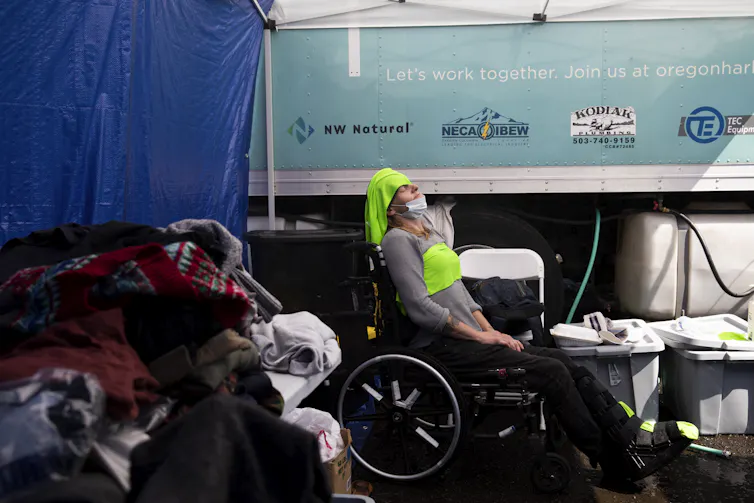
A woman in a wheel chair leans back with cooling clothes on her forehead and chest during the 2021 Pacific Northwest heat wave. The heat wave killed hundreds of people.
A woman puts cold cloths on her forehead at a cooling center in Portland, Ore., on June 27, 2021. Alisha Jucevic for The Washington Post via Getty Images

That might mean opening cooling centers in churches or common community gathering places and launching heat awareness campaigns driven by trusted community messengers. New York City developed a door-to-door wellness check program that uses neighborhood volunteers to check on elderly and other at-risk residents.

Under this model, churches, libraries, community centers and community nonprofits take center stage, supported with resources from local and state governments. Baltimore developed more than a dozen “resiliency hubs” using this model to provide water, cooling, power for charging devices and other support.

Community-based organizations can also direct energy assistance to lower-income community members. In Spokane, one community organization created a “cooling fund” to provide portable air conditioners to those who cannot afford one.

Our report lays out many other strategies to achieve long-term heat risk reduction.

Landlords, employers and utilities have a role

Addressing extreme heat over the long term requires the participation of many other groups not tasked with protecting public health.

For example, landlords of multifamily housing and rental homes have an important role to play. After the 2021 heat wave, Oregon passed a law prohibiting landlords from restricting tenants’ ability to install window air conditioners.

Employers of people who work outdoors, or indoors in buildings without air conditioning, can protect workers by allowing more breaks, providing shade and water and adjusting work hours to avoid heat exposure – although concerns persist about rule enforcement and reduced pay.

A worker standing in shade holds a
Outdoor workers may face extreme heat for hours on end. More frequent breaks and providing shade can help when work can’t stop. Jahi Chikwendiu/The Washington Post via Getty Images

Utilities can make a difference by ensuring the power stays on during high-demand periods, particularly in vulnerable neighborhoods, and working with communities to reduce costs for vulnerable people that may prevent them from using air conditioning.

Ultimately, reducing extreme heat vulnerability through multiple strategies is crucial because lives are at stake.

Coordination is essential

Extreme heat waves are forecast to occur more frequently across the globe as greenhouse gas emissions continue to warm the climate. Between 1971 and 2021, Washington state experienced an average of three extreme heat days per year. By the 2050s, climate models project that will rise to between 17 and 30 extreme heat days per year – a fivefold increase.
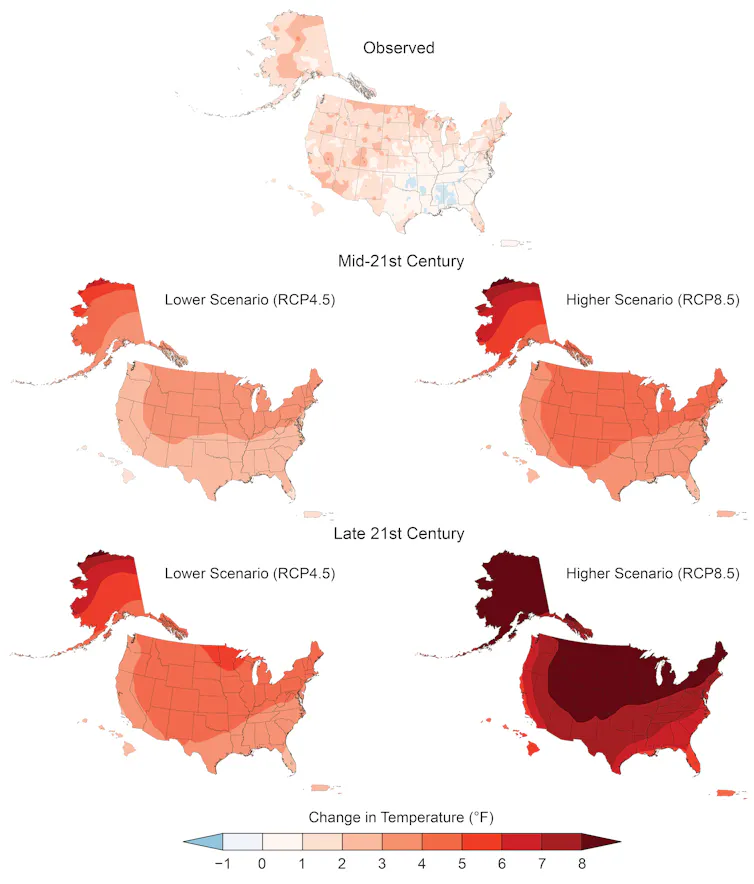
Five maps show observed temperature change and much higher changes by mid and late century, particularly with high-emissions scenarios.
Annual average temperatures are projected to increase, with proportionally greater changes at higher latitudes. The top map shows observed temperature changes from 1986-2016 relative to 1901-1960. The lower maps show projected changes for mid-century (2036–2065) and late century (2070–2099) depending on high and low greenhouse gas emissions. Fourth National Climate Assessment/NOAA NCEI/CICS-NC

In the end, saving lives from extreme heat is a complicated challenge requiring coordination across multiple levels of government, agencies and the civic and private sectors.

Some cities, including Phoenix, are experimenting with heat offices tasked with this coordination. But individuals have an important role to play as well.

In addition to knowing how to protect themselves, their loved ones and their neighbors, individuals can add their voices to the rising chorus calling on all levels of government and the private and civic sectors to take urgent steps to reduce heat risk.The Conversation

Jason Vogel, Interim Director, Climate Impacts Group, University of Washington and Brian G. Henning, Professor of Philosophy and Environmental Studies, Gonzaga University

This article is republished from The Conversation under a Creative Commons license. Read the original article.

Thompson secures $1 million for Lake County Sheriff’s Office administration and operations center

Details
Written by: Lake County News reports
Published: 23 July 2024
LAKEPORT, Calif. — On Monday, Rep. Mike Thompson (CA-04) announced he secured $1 million in community project funding for the Lake County Sheriff’s Office’s Administration and Operations Center Project.

“Efficient and reliable public safety coordination saves lives during disasters. I’m proud to have secured $1 million in federal funds to ensure the Lake County Sheriff Administration can provide essential services to our community when wildfires, floods, and other emergencies strike,” said Rep. Thompson.

“Repurposing the former Lakeport National Guard Armory Facility will strengthen our ability to recruit quality staff and help us more effectively serve the community by providing a long-term home for the Lake County Sheriff Administration and Operations Center,” said Lucas Bingham, Lake County’s sheriff-elect.

“We appreciate that Congressman Thompson recognizes Lake County’s geography and topography demand efficient coordination by Law Enforcement agencies and other First Responders, and this $1 million allocation fills an essential need,” Bingham added. “The Lake County Sheriff Administration and Operations Center Project will make residents safer, and lend greater confidence to those looking to invest in Lake County communities.”

“Congressman Thompson has been a constant champion of Lake County’s priorities and most urgent federal funding needs,” said Bruno Sabatier, chair of the Lake County Board of Supervisors. “This FY 2025 Community Project Funding will help Lake County’s economy, while providing critical public safety benefits. Lake County truly appreciates the United States Congress’ support, and Congressman Thompson’s leadership, in recognizing this crucial Lake County project as a matter of federal priority.”

Funding will go towards the renovation of the Lakeport Armory to house the county’s emergency operations center and sheriff administration building.

Lake County has witnessed catastrophic natural disasters, and its remote location requires a centralized facility to coordinate and house its emergency operations center and law enforcement headquarters.

Rep. Thompson requested funding for the project through Congress’ Community Project Funding, or CPF, process.

His request was included in the Fiscal Year 2025 Agriculture, Rural Development, Food and Drug Administration, and Related Agencies Appropriations Act, which passed out of committee recently.

The bill is expected to pass both chambers of Congress and be signed into law later this year.

To date, Thompson has secured a total of $4,850,000 in funding for three CPF requests submitted on behalf of Lake County and a total of $15,304,205 for projects across California’s Fourth District for 2025.

Each year, members of Congress may direct federal funding to a select number of Community Projects through the appropriations process.

Under this process, each House member is permitted to submit 15 project requests to the Appropriations Committee on behalf of their Congressional District so long as the projects meet criteria set forth by the Committee.

There are no guarantees that community projects will all be funded, and the projects are competitively evaluated by the Committee on Appropriations.

Project selection and submissions is the first stage of the process for Community Project Funding. The projects are subject to a strict transparency and accountability process before they may be selected for inclusion in the relevant appropriations legislation for the upcoming year.

Find more information on Rep. Thompson’s CPFs here.

Thompson represents California’s Fourth Congressional District, which includes all or part of Lake, Napa, Solano, Sonoma and Yolo counties.
  1. Clearlake Planning Commission to discuss airport redevelopment plan environmental study scope
  2. Ridge fire containment rises
  3. America faces a power disconnection crisis amid dangerous heat: In 27 states, utilities can shut off electricity for nonpayment even in a heat wave
  • 605
  • 606
  • 607
  • 608
  • 609
  • 610
  • 611
  • 612
  • 613
  • 614
How to resolve AdBlock issue?
Refresh this page