How to resolve AdBlock issue?
Refresh this page
How to resolve AdBlock issue?
Refresh this page
Lake County News,California
  • Home
    • Registration Form
  • News
    • Education
    • Veterans
    • Community
      • Obituaries
      • Letters
      • Commentary
    • Police Logs
    • Business
    • Recreation
    • Health
    • Religion
    • Legals
    • Arts & Life
    • Regional
  • Calendar
  • Contact us
    • FAQs
    • Phones, E-Mail
    • Subscribe
  • Advertise Here
  • Login
How to resolve AdBlock issue?
Refresh this page

News

Bureau of Land Management increases fire restrictions in Central California District due to high fire danger

Details
Written by: Lake County News reports
Published: 25 July 2024
LAKE COUNTY, Calif. – The Bureau of Land Management is increasing fire restrictions and temporary target shooting limitations for BLM-managed public lands within the Central California District.

Increased restrictions are in effect for the Central Coast Field Office, Mother Lode Field Office and the Ukiah Field Office effective July 24, due to high fire danger.

These increased restrictions are in addition to the initial fire restrictions issued by the field offices and the year-round statewide fire prevention order and will remain in effect until further notice.

The Ukiah Field Office oversees areas including Walker Ridge, or Condor Ridge, which is where the Ridge fire has been burning since Saturday.

The Ridge fire remained at 2,756 acres on Wednesday evening, with containment up to 50%.

The additional fire restriction announced Wednesday prohibits campfires, barbecues or open flame of any kind, even if you are in a developed campground.

Portable stoves and lanterns with shut-off valves, using gas, jellied petroleum or pressurized liquid fuel are still allowed both in and outside of a developed campground with a valid California campfire permit, available free at any USDA Forest Service, BLM or CalFire office, as well as online at https://www.readyforwildfire.org/prevent-wildfire/.

The BLM said its top priority is always the safety of staff and the recreating public.

The agency asked members of the public to please remember to only park legally when using BLM-managed recreation sites. Parking along state routes and county roads can inadvertently cause wildfires and may block access for firefighting engines and emergency vehicles, delaying life-saving services.

This has already been an active wildland fire year with fires occurring close in proximity to roadways, communities and recreational areas, posing considerable threat to public safety.

Taking individual responsibility to reduce wildfire risk, while recreating on public lands, around homes and communities, before a fire occurs can help keep property, the public and firefighters safe.

The following restrictions will remain in place until the fire danger subsides:
• No campfires, barbeques or open flame of any kind, even in developed campgrounds.
• No target shooting — hot bullet fragments, exploding targets and metal from recreational shooting can spark a wildfire. Use of firearms for hunting is still allowed. Hunters must abide by state of California laws and regulations. Visit www.wheretoshoot.org for alternative recreational target shooting locations.
• No motorized vehicles off BLM designated roads or trails.
• No tools powered by internal combustion engines off BLM designated roads or trails (such as chainsaws or lawn mowers).
• No smoking, except within an enclosed vehicle or building, or at a developed recreation site, or other designated areas.
• No welding or operating acetylene or other torch with open flame.
• No explosives.

Anyone found guilty of violating a fire prevention order may be fined not more than $100,000 and/or imprisonment for not more than 12 months. Restitution for total fire suppression and damage costs incurred may be borne by the trespasser.

To learn how you can do your part to prevent wildland fires visit www.readyforwildfire.org. Fire restrictions for all California BLM-managed public lands can be found on our website. The latest information is available online or by contacting the Central Coast, Mother Lode, or Ukiah field offices directly.

Fewer bees and other pollinating insects lead to shrinking crops

Details
Written by: Rachel Mallinger, University of Florida
Published: 25 July 2024


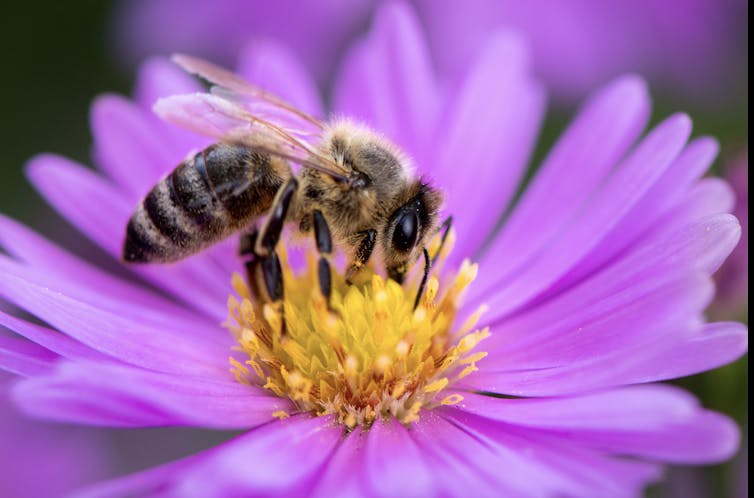
Insects are the primary pollinators of most flowers and crops. Niklas_Weidner/500px via Getty Images

Many plants, from crops to carnations, cannot bear fruit or reproduce without bees, beetles, butterflies and other insects to pollinate them. But the population of insect pollinators is dropping in the U.S., due in part to pesticides, climate change, invasive plants and diminished habitats. Rachel Mallinger, assistant professor of entomology at the University of Florida, explains why these insects are in decline and how homeowners can create yards and gardens that are good for pollinators.

Rachel Mallinger discusses insect pollination.

The Conversation has collaborated with SciLine to bring you highlights from the discussion that have been edited for brevity and clarity.

What kind of insects pollinate?

Rachel Mallinger: A lot of different insects pollinate. Insects visit flowers for many purposes, often for food, to get nectar or to get pollen. Sometimes they’ll visit flowers to mate or to lay eggs or as refuge. Bees are the primary pollinators for a lot of plants, but flies, wasps, beetles and butterflies also play an important role.

How ecologically critical are insect pollinators?

Mallinger: A small percentage of flowering plants are pollinated primarily by wind, but new research suggests that as much as 90% require animal pollinators. Although birds, bats and other mammals also pollinate, insects are the main pollinators for the vast majority of those plants.

Without insects and their pollination, these plants would not be able to reproduce, and we would see a dramatic decline in plant diversity and abundance. Without insect pollinators, these plants wouldn’t produce the seeds and the fruit that feed many animals – including people.

Have insect pollinator populations declined?

Mallinger: Recent studies have shown pretty dramatic declines in insects generally, and this has been shown even in conservation lands. So we think that in highly developed areas, insect declines are probably even more dramatic.

I study primarily native wild bees. Here in North America, we have between 4,000 and 5,000 species. For many species, we don’t know if they’re declining. Of the ones that we do have some information on, it’s estimated that about half are declining and about a quarter are imperiled and potentially on the road to going extinct.

The insect pollinators that tend to be most at risk are ones that are specialists – those that require really unique, specialized food or nesting resources. Also ones that already have a limited range. For example, maybe they are found only on islands or in a small area.

Although many bee populations are in danger, there’s much you can do to help.

What about the economic importance of insect pollinators?

Mallinger: Crops pollinated by animals, primarily insects, make up about one-third of our agricultural production in terms of acreage. A study in the state of Georgia found over US$360 million per year in crop pollination services provided by insects in that state alone.

What do insect pollinators need to be healthy?

Mallinger: Aside from pollen and nectar, some insect pollinators require additional food sources. For example, butterflies in the caterpillar stage need foliage from their host plants.

Other insect pollinators, like wasps and flies, are carnivores in the larval stage, so during that time they need to eat small arthropods – like spiders and centipedes – and insects.

Beyond that, they need nesting habitat. The majority of our insect pollinators nest below ground, and so they need ground that is relatively undisturbed, bare and accessible. Other pollinators nest in woody debris, stems and reeds. And some pollinators, like butterflies, just lay their eggs on host plants.

Additionally, pollinators need environments that are free from toxins. So they need environments that are not regularly sprayed with pesticides, including insecticides.

What stressors are leading to declines in insect pollinator populations?

Mallinger: I would say there are five main stressors.

Land use change is one. This can be the conversion of wild lands to agriculture or to development.

Climate change is another stressor. It changes the average temperature that these pollinators are experiencing and increases the chance of extreme temperatures and weather events. Hurricanes and flooding can be really detrimental and destroy the habitat for pollinators.

Third, pesticides and other chemicals in our environment that are toxic.

Invasive plants can be really detrimental for pollinators. They can take over an area and replace the native plants that pollinators depend on. That’s four.

And finally, pathogens and parasites.

All five of these stressors can interact. For example, climate change may increase the likelihood of invasive plant species, pathogens and parasites thriving. Land use change can also increase the likelihood of invasive species.

What can homeowners do to help pollinators?

Mallinger: Planting a diversity of flowering plants for pollinators is one of the best things you can do. Aim to have at least three plants flowering at any given time, and look for a diversity of flower colors and shapes. Different pollinators have different preferences. You can have flowers that are yellow, blue, purple, pink, red and white.

In terms of floral shapes, plant some flowers that are flat and are accessible for pollinators with small mouthparts. And also plant some flowers with medium-length tubes, and some with long tubes.

Focus on native plants and try to seek out plants that might not just be the common types that you find in the big box stores. Go to native plant nurseries and seek out resources online.

Additionally, try to have nesting habitat in your garden. If the space allows, have some woody debris around for the pollinators that nest above ground. This can include things like logs, stems and reeds. Also manage your area to be as chemical-free as possible. This includes reducing pesticide use.

Keep in mind that many pollinators that nest below ground are not aggressive and are solitary. It’s just one individual pollinator and her nest.

Watch the full interview to hear more.

SciLine is a free service based at the American Association for the Advancement of Science, a nonprofit that helps journalists include scientific evidence and experts in their news stories.The Conversation

Rachel Mallinger, Professor of Entomology, University of Florida

This article is republished from The Conversation under a Creative Commons license. Read the original article.
June unemployment rate rises in Lake County

Details
Written by: Elizabeth Larson
Published: 24 July 2024
LAKE COUNTY, Calif. — Lake County experienced an uptick in joblessness in June, while unemployment remained unchanged statewide and the federal rate had a slight increase, according to the latest report from the California Employment Development Department.

Lake County’s June unemployment rate was 5.7%, compared to the revised May rate of 5% and 6% in April, and the June 2023 rate of 5.2%.

Overall, 180 additional people were reported to be out of work in Lake County in June, for a total of 1,590 unemployed individuals.

Most of Lake County’s job categories declined in June, with the key month-over exceptions of information, which grew by 14.3%; federal government jobs, 6.7%; state government jobs, 5.6%; mining, logging and construction, 5.4%; good producing, 4.7%; retail trade, 2.3%; and trade, transportation and utilities, 2.1%.

Lake County ranked No. 36 for its June rate, according to the report.

Lake’s neighboring county jobless rates and ranks in June were: Colusa, 11.6%, No. 57; Glenn, 6.5%, No. 46; Mendocino, 4.9%, No. 23; Napa, 5%, No. 5; Sonoma, 4%, No. 7; and Yolo, 5.2%, No. 27.

On the national level, the Bureau of Labor Statistics reported that June’s unemployment rate was 4.1%, compared to 4% in May and 3.6% in June 2023.

On the state level, California’s employers added 22,500 nonfarm payroll jobs in June as the unemployment rate held steady at 5.2%, according to data released by the Employment Development Department, or EDD.

The report said California’s job market expansion officially entered its 50th month.

The California unemployment rate was 5.2% in May 2024, down slightly from the previous month. California payroll jobs totaled 18,033,900 in May 2024, up 43,700 from April. and up 207,700 from May of last year, the EDD said.

The EDD reported that since April 2020, California has gained 3,122,500 jobs, which averages out to 62,450 per month. June’s job gain follows a revised job gain of 43,300 for May 2024.

California gained 107,100 nonfarm payroll jobs in the first six months of 2024, which is more than double the number of nonfarm payroll jobs the State gained during the same time period last year, when the number was 38,400.

The number of Californians employed in June was 18,346,200, an increase of 17,500 persons from May’s total of 18,328,700, but down 93,900 from the employment total in June 2023, the state said.

The EDD said the number of unemployed Californians was 999,990 in June, a decrease of 10,300 over the month, but up 119,100 in comparison to June 2023.

Total nonfarm jobs in California’s 11 major industries amounted to 18,056,000 in June — a net gain of 22,500 from May. This followed a downward revised month-over gain of 43,300 jobs in May, the EDD reported.

The EDD said total nonfarm jobs increased by 223,600, a 1.3% increase, from June 2023 to June 2024 compared to the U.S. annual gain of 2,611,000 jobs, a 1.7% increase.

Seven of California's 11 industry sectors gained jobs in June with the largest increase in Trade, Transportation, and Utilities (+9,800), adding jobs for the fourth consecutive month. This sector overall has gained 21,700 jobs from March through June, due in part to increased traffic at California’s ports and other seasonal activities.

The number of jobs in the agriculture industry increased from May by 4,200 to a total of 414,800 jobs in June. The agriculture industry had 4,300 fewer farm jobs in June 2024 than it did in June of last year.

At the same time, Lake County’s farm industry was down by 4.8%, a loss of 50 jobs.

The lowest unemployment rate in California in June was in San Mateo, 3.5%, while the highest was in Imperial, 16.4%.

The EDD also released data on Unemployment Insurance benefits during the June 2024 sample week, when there were 381,123 people certifying for benefits. That compares to 379,955 people in May and 384,841 people in June 2023.

Concurrently, 45,162 initial claims were processed in the June 2024 sample week, which was a month-over increase of 6,269 claims from May and a year-over increase of 1,707 claims from June 2023, the EDD said.

Email Elizabeth Larson at This email address is being protected from spambots. You need JavaScript enabled to view it.. Follow her on Twitter, @ERLarson, or Lake County News, @LakeCoNews.

Mendocino College among partners to receive $18 Million grant to address Pacific Coast ocean restoration

Details
Written by: Lake County News reports
Published: 24 July 2024
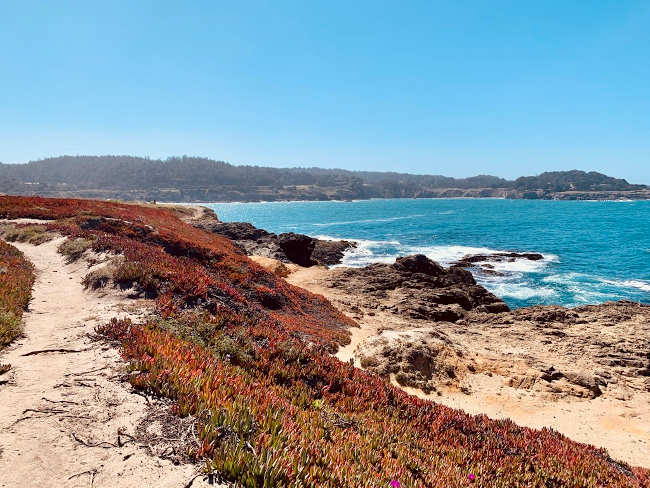
The Pacific Ocean in Mendocino County. Photo by Rose Bell.

NORTH COAST, Calif. — On Tuesday, the National Oceanic and Atmospheric Administration, or NOAA, announced the awards that are recommended for funding under the Transformational Habitat Restoration & Coastal Resilience grant program, with Mendocino College to be among the grantees.

The Nature Conservancy California has been recommended to receive $18 million over three years to launch the Pacific Coast Ocean Restoration Initiative, a comprehensive, collaborative statewide effort aimed at restoring and recovering degraded marine ecosystems across California.

This funding will enable TNC and a coalition of partners spanning the state — including the California Department of Fish and Wildlife, California Ocean Protection Council, Greater Farallones Association, Mendocino College, The Bay Foundation, Aquarium of the Pacific, the California Academy of Sciences, Sunflower Star Laboratory, Paua Marine Research Group, and University of California Santa Barbara — to lead efforts to help recover the federally endangered white abalone and the International Union for Conservation of Nature critically endangered sunflower sea star.

Additionally, the initiative will further advance restoration efforts for California’s kelp forests and will also pilot an innovative marine conservation workforce development program in collaboration with a community college, potentially scaling across the state's community college system.

“This ambitious, partnership-driven initiative will leverage the incredible work done to date, and the contributions from a diverse suite of partners, to advance a new model for coordinated and effective marine restoration and endangered species recovery that can deliver transformative impact for rocky reef ecosystems and coastal communities in this region,” said Norah Eddy, Ocean Recovery Program director at TNC California. “It also serves as a model for similar efforts elsewhere around the country and world.”

Kelp forest and rocky reef ecosystems are vital, supporting thousands of marine species and coastal communities from San Diego to the Oregon border, contributing hundreds of millions of dollars to California’s economy annually.

However, warming waters, disease, and human impacts have severely disrupted these ecosystems.

The white abalone, listed as endangered under the Endangered Species Act in 2001, and the sunflower sea star, which experienced a catastrophic decline from 2013 to 2016 due to disease, illustrate the urgent need for intervention.

These changing ocean conditions have led to a proliferation of purple urchins, which in part, have decimated bull kelp forests by over 96% in northern California.

“This project and its partnerships enable Mendocino College to enhance our workforce development curriculum, specifically supporting the creation of a marine ecosystem restoration program, aimed at building a diverse and climate-resilient workforce,” said Tim Karas, president/superintendent of Mendocino College. "As a Minority Serving Institution and Hispanic Serving Institution, we are committed to providing opportunities for historically underserved communities. This project will help us develop the necessary infrastructure and curriculum to equip our students with the skills needed for ocean restoration, significantly impacting workforce development and marine restoration efforts in our region."

The Pacific Coast Ocean Restoration Initiative is poised to address these challenges. For over a decade, scientists and practitioners through the leadership of groups like the above-mentioned Initiative partners have laid the groundwork for important restoration efforts across California’s coast.

The NOAA grant, funded through the Bipartisan Infrastructure Law and Inflation Reduction Act, will support critical infrastructure investments necessary to expand these restoration efforts.

"NOAA is proud to be supporting The Nature Conservancy and partners as they launch this innovative initiative," said Carrie Selberg Robinson, director of the NOAA Fisheries Office of Habitat Conservation. "Their work to catalyze and coordinate restoration across California will support the many species that rely on rocky reef and kelp habitats."

As the coalition partners embark on this groundbreaking initiative, the vision is clear: this is just the beginning of a series of milestones aimed at recovering endangered and threatened species and revitalizing marine habitats.

Officials said the Pacific Coast Ocean Restoration Initiative represents an exciting and transformative step forward in ensuring the health and resilience of California’s coastal ecosystems for generations to come.
  1. Police work to locate missing woman
  2. Ridge fire held to no new growth
  3. Saving lives from extreme heat: Lessons from the deadly 2021 Pacific Northwest heat wave
  • 604
  • 605
  • 606
  • 607
  • 608
  • 609
  • 610
  • 611
  • 612
  • 613
How to resolve AdBlock issue?
Refresh this page