How to resolve AdBlock issue?
Refresh this page
How to resolve AdBlock issue?
Refresh this page
Lake County News,California
  • Home
    • Registration Form
  • News
    • Education
    • Veterans
    • Community
      • Obituaries
      • Letters
      • Commentary
    • Police Logs
    • Business
    • Recreation
    • Health
    • Religion
    • Legals
    • Arts & Life
    • Regional
  • Calendar
  • Contact us
    • FAQs
    • Phones, E-Mail
    • Subscribe
  • Advertise Here
  • Login
How to resolve AdBlock issue?
Refresh this page

News

Lucerne Elementary seeks two applicants for school board

Details
Written by: Lake County News reports
Published: 14 September 2024
LUCERNE, Calif. — The Lucerne Elementary School District is seeking applicants for two vacant seats on its board of trustees.

The district reported that the board of trustees will fill the two vacancies by making appointments due to failure to elect.

Applications are now being accepted from any qualified persons interested in filling these vacancies.

The district said applicants must be 18 years of age or older, must reside within the Lucerne Elementary School District and be registered to vote there as well.

Applications are available from the Lucerne Elementary School District office, 3351 Country Club Drive, or online at www.lucerne.k12.ca.us by clicking on the "School Board" link.

Completed applications must be returned to the LESD office no later than 4 p.m., Tuesday, Oct. 1. Office hours are Monday through Friday, 8 a.m. to 4:30 p.m.

Candidates will be interviewed by the current governing board members at the Oct. 9 school board meeting.

California Highway Patrol celebrates largest graduating academy class in two years

Details
Written by: Lake County News reports
Published: 14 September 2024
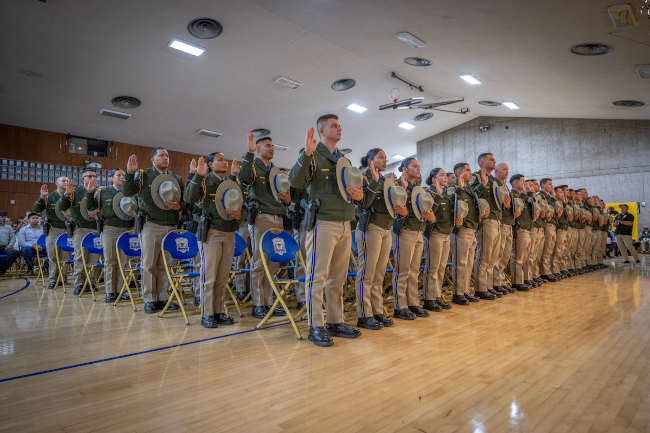
The latest California Highway Patrol Academy class graduated on Friday, Sept. 13, 2024, in West Sacramento, California. Photo courtesy of the Governor’s Office.

On Friday, the California Highway Patrol added 119 new officers to its ranks.

The officers are the newest graduates from the CHP Academy and make up the largest graduating class in more than two years, marking progress toward meeting California’s CHP 1000 recruitment campaign.

“I am grateful to these officers for their service and commitment to protecting Californians and our neighborhoods. As this class advances to posts throughout the Golden State, they should do so with pride, knowing that they represent the best of California as public servants dedicated to making a positive difference in their communities,” said Gov. Gavin Newsom.

This celebratory day marks the end of an intensive 26-week training, with the new officers being sworn in by CHP Commissioner Sean Duryee during a graduation ceremony at the CHP Academy in West Sacramento.

These new officers will report to one of the 102 CHP Area offices throughout the state to begin serving the people of California.

“These individuals have chosen a path of public service and have undergone months of intense training to prepare,” said CHP Commissioner Sean Duryee. “This career is one of the biggest challenges they will ever undertake, but it is by far the most rewarding. We are honored to welcome them into the CHP family.”

Following the launch of the CHP 1,000 recruitment campaign and other recent recruitment efforts and hiring investments — including a new recruitment web series, “Cadets” — CHP reports increased numbers of cadets this year. California continues to see more applicants and recruits.

With Friday’s class, a total of 528 officers have been added to CHP’s ranks in 2024, surpassing the total number of officers sworn in during 2023. Since 2023, more than 900 cadets have been sworn in as CHP officers.

A CHP Academy graduate has her badge pinned on during the graduation ceremony on Friday, Sept. 13, 2024, in West Sacramento, California. Photo courtesy of the Governor’s Office.


Training at the CHP Academy is comprehensive, beginning with a foundation in nobility in policing, leadership, ethics and cultural diversity.

Cadets also receive specialized instruction in responding to mental health crises, vehicle patrol, crash investigation, first aid, and apprehending impaired drivers. Additional training covers traffic control, report writing, stolen vehicle recovery, assisting motorists, emergency scene management, and mastery of the California Vehicle Code, Penal Code, and Health and Safety Code.

You can be one of the 1,000 new CHP officers ready to make a difference. Apply and register for an upcoming hiring seminar.

The CHP has seen an outpouring of interest in joining the ranks since the onset of a multiyear recruitment campaign in June 2022. In the first six months of 2024, the CHP received more than 11,700 cadet applications – a 58% increase from the same period in 2022.

Last year more than 19,500 applications were submitted to the department by people interested in a career serving the public as an officer. With more than 16,000 applications submitted in the first eight months of 2024, the CHP is on track to surpass the total from last year.

To accommodate the surge of interest, the CHP has been holding three Academy classes simultaneously for the first time in the Department’s history. The next CHP Academy graduation is scheduled for Nov. 15.

California has invested resources and personnel since 2019 to fight crime, help local governments hire more police, and improve public safety. In 2023, as part of California’s Real Public Safety Plan, the governor announced the largest-ever investment to combat organized retail crime in state history, an annual 310% increase in proactive operations targeting organized retail crime, and special operations across the state to fight crime and improve public safety.
A recording of the ceremony is available here.

For more information about a career with the CHP, visit the agency’s website or join them at a hiring seminar on Saturday, Sept. 21.

Celebrate new Spanish books at the Lake County Library

Details
Written by: Georgina Marie Guardado
Published: 14 September 2024
LAKE COUNTY, Calif. — The Lake County Library invites the community to join it for a series of exciting Spanish book parties.

These events celebrate the addition of new Spanish-language books to the library’s collection, made possible by the California Library Literacy Services English as a Second Language, or ESL, grant.

Families can enjoy games, prizes, snacks, and learn about the library’s Adult Literacy and ESL services.

Books in Spanish will be available for both children and adults, with a selection of bilingual English-Spanish books for kids. All books can be checked out for 21 days with a free library card.

Spanish book party dates are as follows:

• Lakeport Library: Saturday, Sept. 14, 11 a.m. to 1 p.m., 1425 N. High St.
• Redbud Library: Saturday, Sept. 21, 11 a.m. to 1 p.m., 14785 Burns Valley Road, Clearlake.
• Middletown Library: Saturday, Sept. 28, 11 a.m. to 1 p.m., 21256 Washington St.

Attendees can also learn about the Library’s Adult Literacy Program, which offers free services to improve reading and writing skills, and ESL instruction for those learning English.

The program is open to learners aged 16 and older who are no longer in a traditional high school environment. Volunteer tutors are trained to provide personalized assistance and interested community members are encouraged to get involved.

For more information, contact the Literacy Program at 707-263-7633 or email This email address is being protected from spambots. You need JavaScript enabled to view it.. You can also learn more at the library website at https://library.lakecountyca.gov/597/Library.

These events take place during National Hispanic Heritage Month — Sept. 15 to Oct. 15 — a time to celebrate the contributions and influence of Hispanic Americans on the culture and history of the United States.

Join the library in honoring this vibrant heritage by exploring its new Spanish-language books and participating in these festive celebrations.

Georgina Marie Guardado is the Lake County Library Literacy Program coordinator.

Is weight loss as simple as calories in, calories out? In the end, it’s your gut microbes and leftovers that make your calories count

Details
Written by: Christopher Damman, University of Washington
Published: 14 September 2024


Two foods may have the same number of calories, but other food factors and your microbes influence which calories your body uses more of. Martin Barraud/OJO Images via Getty Images

Is the adage “calories in, calories out” true? The short answer is yes, but the full story is more nuanced.

From the moment food touches your tongue to the time it leaves your body, your digestive system and gut microbiome work to extract its nutrients. Enzymes in your mouth, stomach and small intestine break down food for absorption, while microbes in your large intestine digest the leftovers.

“Calories in, calories out” refers to the concept that weight change is determined by the balance between the calories you consume and calories you expend. This includes not only the number of calories you eat due to appetite and absorb via digestion, but also how well those absorbed calories are burned through metabolism.

Recent research indicates that a significant factor influencing people’s variable appetites, digestion and metabolism are biologically active leftover components of food, known as bioactives. These bioactives play a key role in regulating the body’s metabolic control centers: your brain’s appetite center, the hypothalamus; your gut’s digestive bioreactor, the microbiome; and your cells’ metabolic powerhouses, the mitochondria.

I’m a gastroenterologist who has spent the past 20 years studying the gut microbiome’s role in metabolic disease. I’ll share how dietary bioactives help to explain why some people can eat more but gain less, and I’ll offer some dietary tools to improve metabolism.

Ruminating on appetite and digestion

Research has shown that consuming whole foods still “packaged” in their original fibers and polyphenols – the cellular wrappers and colorful compounds in plants that confer many of their health benefits – leads to more calories lost through stool, when compared with processed foods that have been “predigested” by factories into simple carbs, refined fats and additives.

This is one way calorie-free factors influence the “calories in, calories out” equation, which can be beneficial in a society where calorie intake often exceeds needs. Eating more whole foods and less processed foods simply lets you eat more because more of those unprocessed calories go out the other end unused.

Array of fruits, vegetables and grains
Foods rich in fiber − such as many nuts, seeds, fruits, vegetables and whole grains − can help you regulate your appetite. fcafotodigital/E+ via Getty Images

Fiber and polyphenols also help regulate your appetite and calorie intake through the brain. Your microbiome transforms these leftover bioactives into metabolites – molecular byproducts of digestion – that naturally decrease your appetite. These metabolites regulate the same gut hormones that first inspired the popular weight loss drugs Wegovy, Ozempic and Mounjaro, controlling appetite through your brain’s satiety center, the hypothalamus.

Processed foods lack these bioactives and are further formulated with salt, sugar, fat and additives to be hyperpalatable, causing you to crave them and eat more.

Mitochondrial maestros in the middle

A full accounting of calories also depends on how effectively your body burns them to power your movement, thoughts, immunity and other functions – a process largely orchestrated by your mitochondria.

Healthy people typically have high-capacity mitochondria that easily process calories to fuel cellular functions. People with metabolic diseases have mitochondria that don’t work as well, contributing to bigger appetites, less muscle and increased fat storage.

They also have less of a mitochondria-rich type of fat called brown fat. Rather than storing calories, this fat burns them to produce heat. Less brown fat may help explain why some people with obesity can have lower body temperatures than those who aren’t obese, and why there has been a decline in average body temperature in the U.S. since the industrial revolution.

Healthy mitochondria that burn more calories might also help explain why some people can eat more without gaining weight. But this raises the question: Why do some people have healthier mitochondria than others?

Your mitochondrial health is ultimately influenced by many factors, including those usually associated with overall well-being: regular exercise, adequate sleep, stress management and healthy eating.

Who turned off the metabo-lights

The latest nutrition research is revealing the roles that previously underappreciated dietary factors play in mitochondrial health. Beyond the essential macronutrients – fat, protein and carbohydrates – and micronutrients such as vitamins and minerals, other leftover factors in food, including fibers, polyphenols, bioactive fats and fermentation products, are also key for metabolism.

Unlike a Western diet, which often lacks these bioactives, traditional diets such as the Mediterranean and Okinawan diets are rich in foods – nuts, seeds, fruits, vegetables, whole grains and fermented foods – replete with these factors. Many bioactives pass undigested through the small intestine to the large intestine, where the microbiome converts them into activated metabolites. These metabolites are then absorbed, influencing the number of mitochondria in cells and how they function.

The food you eat shapes your microbiome and its metabolites.

At the most fundamental level of cell biology, metabolites turn on and off molecular switches in your genes through a process called epigenetics that can affect both you and your offspring. When the metabolic “lights” are turned on, they enliven the mitochondria responsible for a faster metabolism, effectively increasing the calories you use.

Please mind the microbiome gap

A healthy microbiome produces a full range of beneficial metabolites that support calorie-burning brown fat, muscle endurance and metabolic health. But not everyone has a microbiome capable of converting bioactives into their active metabolites.

Long-term consumption of processed foods, low in bioactives and high in salt and additives, can impair the microbiome’s ability to produce the metabolites needed for optimal mitochondrial health. Overuse of antibiotics, high stress and lack of exercise can also adversely affect microbiome and mitochondrial health.

Illustration of microbes nestled in intestinal villi
The microbes that colonize your gut can be helpful or harmful. Christoph Burgstedt/Science Photo Library via Getty Images

This creates a double nutrition gap: a lack of healthy diet and a deficiency in the microbes to convert its bioactives. As a result, well-studied nutritional approaches such as the Mediterranean diet might be less effective in some people with an impaired microbiome, potentially leading to gastrointestinal symptoms such as diarrhea and negatively affecting metabolic health.

In these cases, nutrition research is exploring the potential health benefits of various low-carb diets that may bypass the need for a healthy microbiome. While the higher protein in these diets can reduce the microbiome’s production of beneficial metabolites, the lower carbs stimulate the body’s production of ketones. One ketone, beta-hydroxybutyrate, may function similarly to the microbiome metabolite butyrate in regulating mitochondria.

Emerging microbiome-targeting approaches might also prove helpful for improving your metabolic health: butyrate and other postbiotics to provide preformed microbiome metabolites, personalized nutrition to tailor your diet to your microbiome, intermittent fasting to help repair your microbiome, and the future possibility of live bacterial therapies to restore microbiome health.

Tools to transform fat into fuel

For most people, restoring the microbiome through traditional diets such as the Mediterranean diet remains biologically achievable, but it is not always practical due to challenges such as time, cost and taste preferences. In the end, maintaining metabolic health comes back to the deceptively simple healthy lifestyle pillars of exercise, sleep, stress management and nutritious diet.

Some simple tips and tools can nonetheless help make nutritious diet choices easier. Mnemonics such as the 4 F’s of food – fibers, polyphenols, unsaturated fats and ferments – can help you focus on foods that best support your microbiome and mitochondria with “leftovers.” Bioactive-powered calculators and apps can also aid in selecting foods to control your appetite, digestion and metabolism to rebalance your calorie “ins and outs.”The Conversation

Christopher Damman, Associate Professor of Gastroenterology, School of Medicine, University of Washington

This article is republished from The Conversation under a Creative Commons license. Read the original article.

  1. Space News: Tiny, compact galaxies are masters of disguise in the distant universe − searching for the secrets behind the Little Red Dots
  2. Clearlake City Council ratifies Boyles fire emergency declaration
  3. Lake County Behavioral Health Services to host community support event
  • 547
  • 548
  • 549
  • 550
  • 551
  • 552
  • 553
  • 554
  • 555
  • 556
How to resolve AdBlock issue?
Refresh this page