How to resolve AdBlock issue?
Refresh this page
How to resolve AdBlock issue?
Refresh this page
Lake County News,California
  • Home
    • Registration Form
  • News
    • Education
    • Veterans
    • Community
      • Obituaries
      • Letters
      • Commentary
    • Police Logs
    • Business
    • Recreation
    • Health
    • Religion
    • Legals
    • Arts & Life
    • Regional
  • Calendar
  • Contact us
    • FAQs
    • Phones, E-Mail
    • Subscribe
  • Advertise Here
  • Login
How to resolve AdBlock issue?
Refresh this page

News

California unveils first-of-their-kind dashboards mapping out fire-prevention work to protect communities

Details
Written by: LAKE COUNTY NEWS REPORTS
Published: 11 October 2024
On Thursday, California unveiled newly updated, first-of-their-kind dashboards that will help Californians track the state’s wildfire prevention work.

Along with these new tools, state officials announced that 700,000 acres of land were treated for wildfire resilience in 2023, and that prescribed fire more than doubled between 2021 and 2023.

For the first time, all fuels management projects are being tracked in one place, on one map, delivering valuable information for project planning and wildfire response.

“Everything we do to protect California from wildfires is connected, and nowhere else has as many tools to show the full picture while improving land management and supporting firefighters. We’re embracing the technology and best practices that will help us fight wildfires, and making sure Californians see the tireless work in their communities,” said Gov. Gavin Newsom.

“Thousands of wildfire resilience projects have been completed across California to protect our communities and landscapes from catastrophic wildfire in recent years, and more are underway,” said Wade Crowfoot, secretary of the California Natural Resources Agency and co-chair of the Task Force. “Thanks to historic investments from our state and federal leaders, dozens of local agencies and hundreds of organizations are delivering these projects. Now for the first time, we have a dashboard that tracks all these diverse projects in one place and on one map. This enables us to measure our overall progress toward building wildfire resilience across the state and provides regional leaders valuable information to plan future projects.”

Interagency Treatment Dashboard

The updated version of the Interagency Treatment Dashboard shows wildfire resilience work (or “treatments”) for three calendar years (2021, 2022 and 2023).

The data, which was sourced from federal, state, local, tribal, and private entities, is now available in a single hub that allows Californians to easily see where treatments (such as prescribed fire, mechanical thinning, and tree planting) have been completed. This information is used to inform firefighting efforts, ensure transparency to the public, and track progress toward statewide goals.

The Task Force released a Beta version of the dashboard last year with 2022 data. This updated version now includes data for 2021, revised data for 2022, and new data for 2023.

Over 1 million acres worth of treatment work on 700,000 acres of land

The dashboard shows significant progress on multiple fronts to bolster wildfire resilience in California. In 2023, more than one million acres of treatments were conducted on about 700,000 acres, with many acres receiving multiple treatments such as thinning, prescribed fire, or other practices to improve forest health and community resilience.

The Task Force is tracking both “activity acres,” which reflect the level of effort conducted through various state, federal, and private programs — and “footprint acres” — which show the total geographic area treated in a calendar year.

The 2023 data shows a significant increase in acres treated since 2021. The increase is largely due to a significant expansion of prescribed fire treatments, which more than doubled since 2021.

These efforts have put the state on a solid path toward meeting its joint commitment with the U.S. Forest Service to complete treatments on more than a million acres by the end of 2025.

The Task Force is committed to increasing the pace and scale of statewide actions to address California’s wildfire crisis.

The dashboard is part of a larger strategy to connect the various statewide entities committed to this monumental task.

Fuel Treatment Effectiveness Dashboard

Cal Fire also launched a Fuel Treatment Effectiveness Dashboard, which shows how wildfire prevention projects are helping protect communities and landscapes when wildfire strikes.

“Utilizing technology, we can now track in real time when wildfires hit areas where fuel treatments have been conducted. We can then go into an area and see how those treatments affected fire behavior, evacuation routes, firefighting efforts and more,” said Cal Fire Chief/Director Joe Tyler. “This new dashboard is a tool for the public to see how fuels treatments had a positive impact on the firefight and how this work is making a difference.”

“No other state in the country is tackling wildfire resilience at this scale or with this level of innovation,” added U.S. Forest Service Deputy Regional Forester Kara Chadwick. “From groundbreaking prescribed fire projects to comprehensive data tracking systems, we’re setting the standard for what it means to protect our landscapes and communities.”

Toney reappointed to State Bar of California Board of Trustees

Details
Written by: LAKE COUNTY NEWS REPORTS
Published: 11 October 2024
LAKEPORT, Calif. — The Governor’s Office has reappointed a Lakeport resident to an important state post.

Mark Toney has been reappointed to the State Bar of California Board of Trustees, where he has served since 2020.

Toney has been executive director of The Utility Reform Network since 2008.

He was executive director of the Center for Third World Organizing from 2000 to 2004 and executive director of Direct Action for Rights and Equality from 1986 to 1994.

Toney was lead organizer at Workers’ Association for Guaranteed Employment from 1982 to 1985, and is a member of the Board of Directors of the National Whistleblower Center.

He earned a Doctor of Philosophy degree in sociology from the University of California, Berkeley and a Bachelor of Arts degree in political science from Brown University.

This position requires Senate confirmation and the compensation is $50 per diem.

Toney is a Democrat.

Is it COVID-19? Flu? At-home rapid tests could help you and your doctor decide on a treatment plan

Details
Written by: Julie Sullivan, Emory University and Wilbur Lam, Georgia Institute of Technology
Published: 11 October 2024


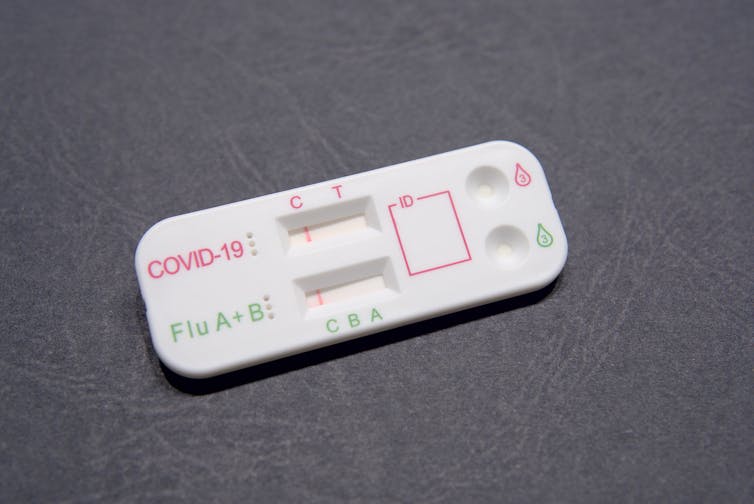
Over-the-counter multiplex tests for more than one illness may soon come to a pharmacy near you. Paco Burgada/iStock via Getty Images

A scratchy, sore throat, a relentless fever, a pounding head and a nasty cough – these symptoms all scream upper respiratory illness. But which one?

Many of the viruses that cause upper respiratory infections such as influenza A or B and the virus that causes COVID-19 all employ similar tactics. They target the same areas in your body – primarily the upper and lower airways – and this shared battleground triggers a similar response from your immune system. Overlapping symptoms – fever, cough, fatigue, aches and pains – make it difficult to determine what may be the underlying cause.

Now, at-home rapid tests can simultaneously determine whether someone has COVID-19 or the flu. Thanks in part to the National Institutes of Health’s Rapid Acceleration of Diagnostics, or RADx, program, the Food and Drug Administration has provided emergency use authorization for seven at-home rapid tests that can distinguish between COVID-19, influenza A and influenza B.

Our team in Atlanta – composed of biomedical engineers, clinicians and researchers at Emory University, Children’s Healthcare of Atlanta and Georgia Institute of Technology – is part of the RADx Test Verification Core. We closely collaborate with other institutions and agencies to determine whether and how well COVID-19 and influenza diagnostics work, effectively testing the tests. Our center has worked with almost every COVID and flu diagnostic on the market, and our data helped inform the instructions you might see in many of the home test kits on the market.

While no test is perfect, to now be able to test for certain viruses at home when symptoms begin can help patients and their doctors come up with appropriate care plans sooner.

A new era of at-home tests

Traditionally, identifying the virus causing upper respiratory illness symptoms required going to a clinic or hospital for a trained medical professional to collect a nasopharyngeal sample. This involves inserting a long, fiber-tipped swab that looks like a skinny Q-tip into one of your nostrils and all the way to the back of your nose and throat to collect virus-containing secretions. The sample is then typically sent to a lab for analysis, which could take hours to days for results.

Person inserting cotton swab into test tube for a rapid test
The COVID-19 pandemic made over-the-counter tests for respiratory illnesses commonplace. DuKai/Moment via Getty Images

Thanks to the COVID-19 pandemic, the possibility of using over-the-counter tests to diagnose respiratory illnesses at home became a reality. These tests used a much gentler and less invasive nasal swab and could also be done by anyone, anytime and in their own home. However, these tests were designed to diagnose only COVID-19 and could not distinguish between other types of illnesses.

Since then, researchers have developed over-the-counter multiplex tests that can screen for more than one respiratory infection at once. In 2023, Pfizer’s Lucira test became the first at-home diagnostic test for both COVID-19 and influenza to gain emergency use authorization.

What are multiplex rapid tests?

There are two primary forms of at-home COVID-19 and COVID-19/flu combination tests: molecular tests such as PCR that detect genetic material from the virus, and antigen tests – commonly referred to as rapid tests – that detect proteins called antigens from the virus.

The majority of over-the-counter COVID-19 and COVID-19/flu tests on the market are antigen tests. They detect the presence of antigens in your nasal secretions that act as a biological signature for a specific virus. If viral antigens are present, that means you’re likely infected.

Respiratory illnesses such as flu, COVID-19 and RSV can be hard to tell apart.

To detect these antigens, rapid tests have paper-like strips coated with specially engineered antibodies that function like a molecular Velcro, sticking only to a specific antigen. Scientists design and manufacture specialized strips to recognize specific viral antigens, like those belonging to influenza A, influenza B or the virus that causes COVID-19.

The antibodies for these viral targets are placed on the strip, and when someone’s nasal sample has viral proteins that are applied to the test strip, a line will appear for that virus in particular.

Advancing rapid antigen tests

Like all technologies, rapid antigen tests have limitations.

Compared with lab-based PCR tests that can detect the presence of small amounts of pathogen by amplifying them, antigen tests are typically less sensitive than PCR and could miss an infection in some cases.

All at-home COVID-19 and COVID-19/flu antigen tests are authorized for repeat use. This means if someone is experiencing symptoms – or has been exposed to someone with COVID-19 but is not experiencing symptoms – and has a negative result for their first test, they should retest 48 hours later.

Another limitation to rapid antigen tests is that currently they are designed to test only for COVID-19, influenza A and influenza B. Currently available over-the-counter tests aren’t able to detect illnesses from pathogens that look like these viruses and cause similar symptoms, such as adenovirus or strep.

Because multiplex texts can detect several different viruses, they can also produce findings that are more complex to interpret than tests for single viruses. This may increase the risk of a patient incorrectly interpreting their results, misreading one infection for another.

Researchers are actively developing even more sophisticated tests that are more sensitive and can simultaneously screen for a wider range of viruses or even bacterial infections. Scientists are also examining the potential of using saliva samples in tests for bacterial or viral infections.

Additionally, scientists are exploring integrating multiplex tests with smartphones for rapid at-home diagnosis and reporting to health care providers. This may increase the accessibility of these tests for people with vision impairment, low dexterity or other challenges with conducting and interpreting at-home tests.

Faster and more accurate diagnoses lead to more targeted and effective treatment plans, potentially reducing unnecessary antibiotic use and improving patient outcomes. The ability to rapidly identify and track outbreaks can also empower public health officials to better mitigate the spread of infectious diseases.The Conversation

Julie Sullivan, Chief Operating Officer of RADx Tech, Emory University and Wilbur Lam, Chief Innovation Officer, Children’s Healthcare of Atlanta Pediatric Technology Center; Professor of Biomedical Engineering, Georgia Institute of Technology

This article is republished from The Conversation under a Creative Commons license. Read the original article.
Firefighters quickly stop Kelseyville vegetation fire

Details
Written by: Elizabeth Larson
Published: 10 October 2024
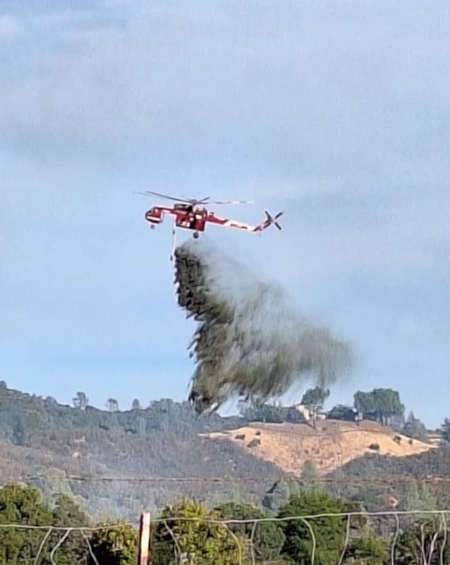
A helicopter drops water on a wildland fire near Kelseyville, California, on Wednesday, Oct. 9, 2024. Photo by Karen Sullivan.

KELSEYVILLE, Calif. — Firefighters on Wednesday afternoon quickly stopped a wildland fire near Kelseyville.

The fire in the 7200 block of Wight Way was first reported at about 3:30 p.m. Wednesday.

Firefighters responded quickly on the ground and from the air to stop the blaze, which was threatening structures.

Forward progress was reported to be stopped just after 4:30 p.m.

The fire was reported to be about four acres at the time firefighters stopped its forward.

Email Elizabeth Larson at This email address is being protected from spambots. You need JavaScript enabled to view it.. Follow her on Twitter, @ERLarson, or Lake County News, @LakeCoNews.
  1. Clearlake man arrested for possession of illegal weapons and explosives, animal cruelty
  2. Glenhaven fire fully contained
  3. Solid waste rate changes go into effect in city of Lakeport
  • 519
  • 520
  • 521
  • 522
  • 523
  • 524
  • 525
  • 526
  • 527
  • 528
How to resolve AdBlock issue?
Refresh this page