How to resolve AdBlock issue?
Refresh this page
How to resolve AdBlock issue?
Refresh this page
Lake County News,California
  • Home
    • Registration Form
  • News
    • Education
    • Veterans
    • Community
      • Obituaries
      • Letters
      • Commentary
    • Police Logs
    • Business
    • Recreation
    • Health
    • Religion
    • Legals
    • Arts & Life
    • Regional
  • Calendar
  • Contact us
    • FAQs
    • Phones, E-Mail
    • Subscribe
  • Advertise Here
  • Login
How to resolve AdBlock issue?
Refresh this page

News

Atmospheric rivers are shifting poleward, reshaping global weather patterns

Details
Written by: Zhe Li, University Corporation for Atmospheric Research
Published: 14 October 2024


Atmospheric rivers are long filaments of moisture that curve poleward. Several are visible in this satellite image. Bin Guan, NASA/JPL-Caltech and UCLA

Atmospheric rivers – those long, narrow bands of water vapor in the sky that bring heavy rain and storms to the U.S. West Coast and many other regions – are shifting toward higher latitudes, and that’s changing weather patterns around the world.

The shift is worsening droughts in some regions, intensifying flooding in others, and putting water resources that many communities rely on at risk. When atmospheric rivers reach far northward into the Arctic, they can also melt sea ice, affecting the global climate.

In a new study published in Science Advances, University of California, Santa Barbara, climate scientist Qinghua Ding and I show that atmospheric rivers have shifted about 6 to 10 degrees toward the two poles over the past four decades.

Atmospheric rivers on the move

Atmospheric rivers aren’t just a U.S West Coast thing. They form in many parts of the world and provide over half of the mean annual runoff in these regions, including the U.S. Southeast coasts and West Coast, Southeast Asia, New Zealand, northern Spain, Portugal, the United Kingdom and south-central Chile.

California relies on atmospheric rivers for up to 50% of its yearly rainfall. A series of winter atmospheric rivers there can bring enough rain and snow to end a drought, as parts of the region saw in 2023.
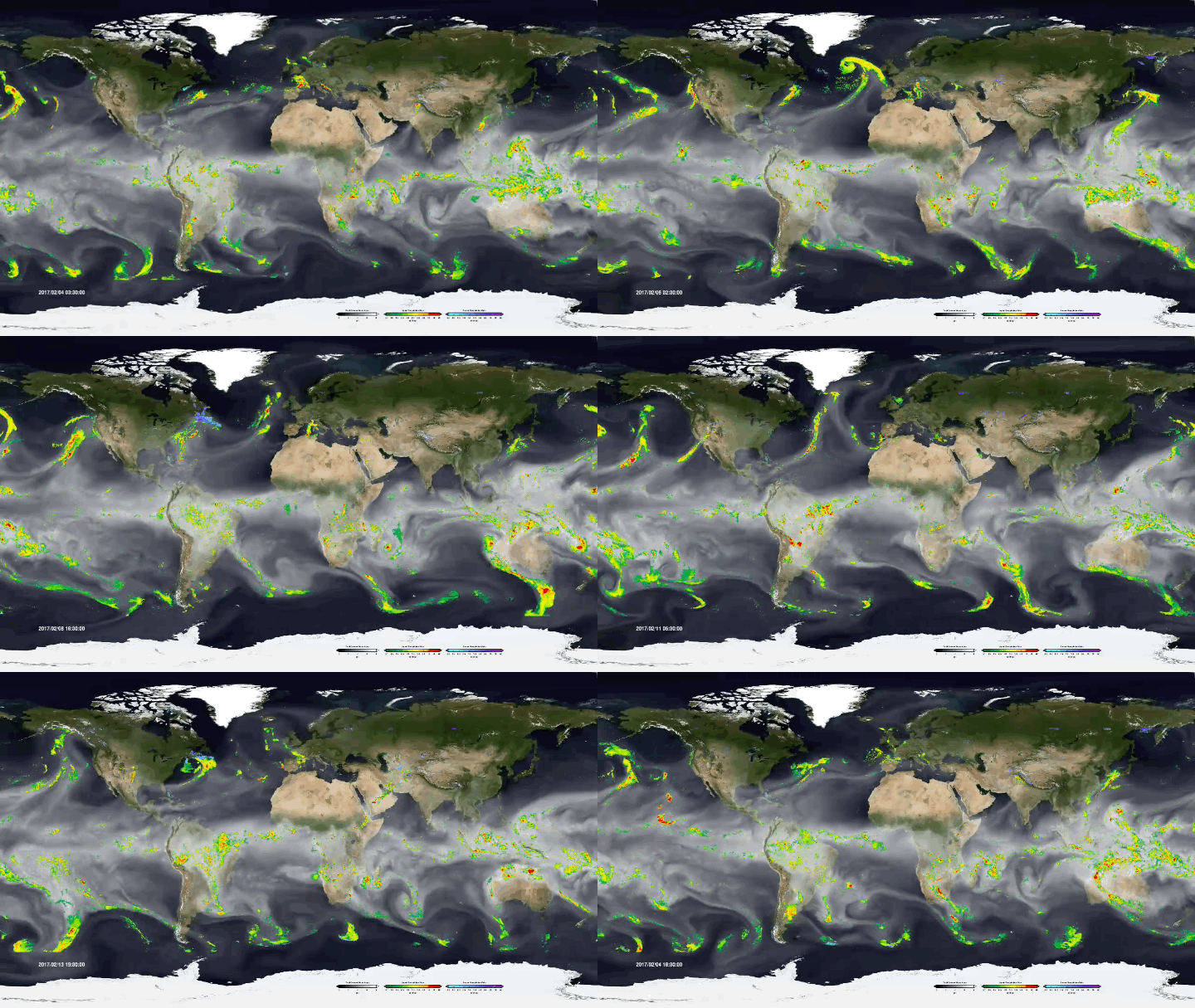
Atmospheric rivers occur all over the world, as this animation of global satellite data from February 2017 shows. NASA/Goddard Space Flight Center Scientific Visualization Studio

While atmospheric rivers share a similar origin – moisture supply from the tropics – atmospheric instability of the jet stream allows them to curve poleward in different ways. No two atmospheric rivers are exactly alike.

What particularly interests climate scientists, including us, is the collective behavior of atmospheric rivers. Atmospheric rivers are commonly seen in the extratropics, a region between the latitudes of 30 and 50 degrees in both hemispheres that includes most of the continental U.S., southern Australia and Chile.

Our study shows that atmospheric rivers have been shifting poleward over the past four decades. In both hemispheres, activity has increased along 50 degrees north and 50 degrees south, while it has decreased along 30 degrees north and 30 degrees south since 1979. In North America, that means more atmospheric rivers drenching British Columbia and Alaska.

A global chain reaction

One main reason for this shift is changes in sea surface temperatures in the eastern tropical Pacific. Since 2000, waters in the eastern tropical Pacific have had a cooling tendency, which affects atmospheric circulation worldwide. This cooling, often associated with La Niña conditions, pushes atmospheric rivers toward the poles.

The poleward movement of atmospheric rivers can be explained as a chain of interconnected processes.

During La Niña conditions, when sea surface temperatures cool in the eastern tropical Pacific, the Walker circulation – giant loops of air that affect precipitation as they rise and fall over different parts of the tropics – strengthens over the western Pacific. This stronger circulation causes the tropical rainfall belt to expand. The expanded tropical rainfall, combined with changes in atmospheric eddy patterns, results in high-pressure anomalies and wind patterns that steer atmospheric rivers farther poleward.

An animation of satellite data shows sea surface temperatures changing over months along the equator in the eastern Pacific Ocean. When they're warmer than normal, that indicates El Niño forming. Cooler than normal indicates La Nina.
La Niña, with cooler water in the eastern Pacific, fades, and El Niño, with warmer water, starts to form in the tropical Pacific Ocean in 2023. NOAA Climate.gov

Conversely, during El Niño conditions, with warmer sea surface temperatures, the mechanism operates in the opposite direction, shifting atmospheric rivers so they don’t travel as far from the equator.

The shifts raise important questions about how climate models predict future changes in atmospheric rivers. Current models might underestimate natural variability, such as changes in the tropical Pacific, which can significantly affect atmospheric rivers. Understanding this connection can help forecasters make better predictions about future rainfall patterns and water availability.

Why does this poleward shift matter?

A shift in atmospheric rivers can have big effects on local climates.

In the subtropics, where atmospheric rivers are becoming less common, the result could be longer droughts and less water. Many areas, such as California and southern Brazil, depend on atmospheric rivers for rainfall to fill reservoirs and support farming. Without this moisture, these areas could face more water shortages, putting stress on communities, farms and ecosystems.

In higher latitudes, atmospheric rivers moving poleward could lead to more extreme rainfall, flooding and landslides in places such as the U.S. Pacific Northwest, Europe, and even in polar regions.

A long narrow band of moisture sweeps up toward California, crossing hundreds of miles of Pacific Ocean.
A satellite image on Feb. 20, 2017, shows an atmospheric river stretching from Hawaii to California, where it brought drenching rain. NASA/Earth Observatory/Jesse Allen

In the Arctic, more atmospheric rivers could speed up sea ice melting, adding to global warming and affecting animals that rely on the ice. An earlier study I was involved in found that the trend in summertime atmospheric river activity may contribute 36% of the increasing trend in summer moisture over the entire Arctic since 1979.

What it means for the future

So far, the shifts we have seen still mainly reflect changes due to natural processes, but human-induced global warming also plays a role. Global warming is expected to increase the overall frequency and intensity of atmospheric rivers because a warmer atmosphere can hold more moisture.

How that might change as the planet continues to warm is less clear. Predicting future changes remains uncertain due largely to the difficulty in predicting the natural swings between El Niño and La Niña, which play an important role in atmospheric river shifts.

As the world gets warmer, atmospheric rivers – and the critical rains they bring – will keep changing course. We need to understand and adapt to these changes so communities can keep thriving in a changing climate.The Conversation

Zhe Li, Postdoctoral Researcher in Earth System Science, University Corporation for Atmospheric Research

This article is republished from The Conversation under a Creative Commons license. Read the original article.
Tuleyome Tales: Western black widows — a spooky story revisited

Details
Written by: Diana Drips
Published: 13 October 2024
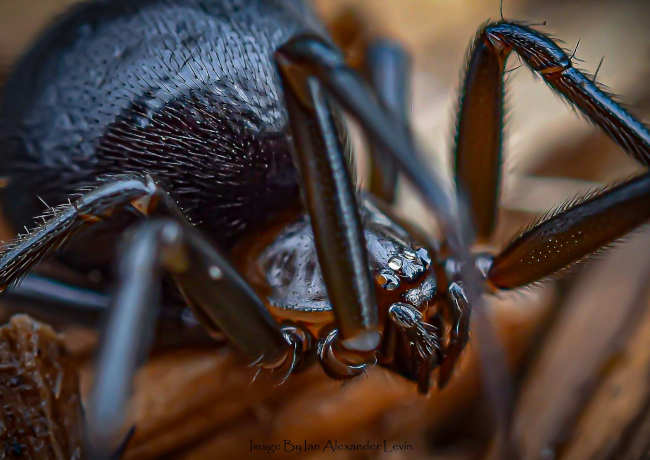
Female black widow (Latrodectus Hesperus) by Ian Alexander Levin.

For many, the autumnal equinox brings a sense of hope and the promise of relief from the heat. For others, it is a reminder that the spooky season is inching closer, one cobweb at a time.

As the days shorten and the weather cools, we will indeed begin to see more spiders in their webs, and one spider takes center stage when it comes to the spooky: the infamous Western black widow.

They are one of the most feared spider species and one of the most misunderstood.

You have no doubt heard horror stories about them lurking in garages and woodpiles, waiting for an opportunity to jump out and bite you.

Very spooky indeed, but spoiler alert, they can’t jump, and they only bite under very specific circumstances. More on this later.

While I love a scary story at Halloween, I think this villain deserves a bit of a rebrand. So, allow me to reintroduce you to one of our fascinating and misunderstood neighbors.

The Western black widow, Latrodectus hesperus, is a species of spider native to western North America and is one of 32 known species of Latrodectus spiders worldwide.

Females are identifiable by their shiny black exoskeleton, bulbous abdomen and red hourglass on their underside, growing up to 1.5 inches in length.

In contrast, males are light brown or gray with white and orange markings and are only about half the size of females.

Female black widows can live up to three years, but a typical lifespan is one year. Males, in contrast, live only one to two months after reaching adulthood.

Females will not venture more than a foot or two from their web during their lifetime. This makes for interesting nature watching; if you know where one lives, you can pretty much be guaranteed to find her again tomorrow evening and the evening after that. If she survives the winter, she will come out in the same spot in spring.

They make their irregular, messy webs about 1 to 2 feet off the ground, and unlike spiders that make new webs daily, Latrodectus hesperus works on the same web throughout their lives, often eating damaged parts of the web to reuse the silk. During web maintenance we can really see their beauty, as they seem to dance, pirouetting upside down as they strengthen their web.

Being primarily nocturnal, they have very poor vision, using their eyes to sense motion and light. They are, however, highly perceptive to the slightest movement and have tiny cracks called slit sensilla on their legs that allow them to sense movement and soundwaves, prompting scientists to compare their legs to ears. Fascinatingly, spiders’ webs have been theorized to be a sort of external mind, an extension of the spider’s sensory experience.

You may have heard the distinct crackling sound of a black widow web being broken, a sign of the unique strength of their silk among spiders. Their silk is stronger than steel by weight. Highly effective predators, they use their powerful web to capture insects like mosquitoes, flies, wasps, cicadas and even cockroaches, helping to keep our ecosystem in balance.

While they are fierce predators, they are otherwise quite docile. For spiders, it is nearly always better to flee rather than fight when faced with a threat. Their telltale red hourglass is meant as a silent warning to potential predators to keep our distance. Venom is metabolically expensive, a precious resource used to immobilize prey, it is rarely used for defense.

Researchers Nelsen, Kelln and Hayes conducted a study in 2013 at the University of Loma Linda in which Western black widows exhibited decision making about resource use when assessing a threat, choosing to use venom only when deemed absolutely necessary.

In the study, 43 Western black widow spiders were “poked” and “pinched” using artificial fingers to assess frequency of biting behavior when threatened. The findings: not a single spider bit after one poke by an artificial finger, instead fleeing or moving away from the threat.

Surprisingly, none of them bit even after 60 repeated pokes! It was only after being pinched between two fingers that 60% of the spiders did bite, but of those bites only 50% contained venom.

A bite without venom, or a “dry bite,” is meant to cause initial pain and deter the threat, and while painful, it does not pose a health risk. (Do not try this at home!)

According to Merri Lynn Casem, professor and spider researcher at Cal State Fullerton, the symptoms resulting from a venom-containing bite are caused by the protein alpha latrotoxin. Symptoms can include nausea, vomiting, pain and abnormal heart rate.

Modern treatments for bites focus primarily on pain relief. An antivenom can be used in severe cases. In cases where serious symptoms occur, it is usually due to an allergy, rather than the venom itself. The reality is that humans rarely die from a black widow bite. In fact, the last documented case of a death by a black widow bite in the US was in 1983.

Female black widows also have the reputation of being the femme fatale; the story goes that they habitually feast on males after mating.

The truth is that most male black widows live to mate again. In fact, according to natural history scientists at Seattle’s Burke Museum, there has never been an observed incident of a Latrodectus hesperus female eating a male after mating outside of captivity. There are other species of widow spiders that do habitually eat their mates, but in this species, the namesake is largely a myth based on behavior in captivity.

Males identify themselves with pheromones and with a specific set of movements as they enter the web of a potential mate to avoid being mistaken for prey. Males are known to occupy and guard the webs of females from other males, sometimes tearing down sections of her web to deter other males, a behavior called “web reduction.” Once mating has occurred, he then leaves her web, most often unscathed and in search of another mate.

Latrodectus hesperus are protective mothers. They are more prone to bite when their egg sac is threatened.

The abdomen of a gravid (pregnant) widow swells before her eggs are laid. Those big widows you have seen are not more fearsome, they are simply pregnant. In spring and summer, they lay tiny pink eggs and spin a protective silk egg sac.

They can have multiple egg sacs in a year, each containing hundreds of eggs, but only one to 12 of the hatchlings from a sac survive longer than 30 days.

Like many tall tales told around Halloween, the truth is much less spooky when we learn the details.

I hope that when you see a beautiful Western black widow this fall, that you think twice about squishing her, and that you maybe even compliment her on her fabulous dance moves and thank her for keeping our fly numbers in check.

Diana Drips is a Certified California Naturalist. Tuleyome is a 501(c)(3) nonprofit conservation organization based in Woodland, California. For more information go to www.tuleyome.org.

More low-cost spay/neuter clinics coming to Lake County in 2025

Details
Written by: LAKE COUNTY NEWS REPORTS
Published: 13 October 2024
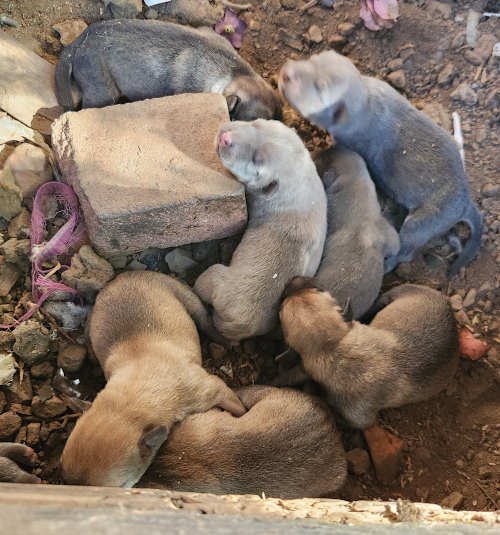
Puppies abandoned with their mother under a porch in Clearlake, California, were recently rescued by the Clearlake Animal Association. Photo courtesy of the Clearlake Animal Association.

LAKE COUNTY, Calif. — Next year, a new partnership amongst animal welfare organizations is planning to bring more low-cost spay/neuter clinics to Lake County.

Pet Fix – Lake County recently made its debut on Facebook, announcing badly needed affordable spay/neuter services for Lake County dog and cat owners.

Pet Fix is the result of a partnership between the Clearlake Animal Association, SPCA of Lake County and Dogwood Animal Rescue Project, based in Santa Rosa. All three organizations are 501 (c) 3 animal welfare nonprofits.

“The core team from the three nonprofits have been working on the logistics for these clinics with Animal Balance for a few months now, and are very pleased to be able to offer low-cost spay/neuter programs to the community,” said Charmaine Weldon, president of Clearlake Animal Association.

Animal Balance is a global organization that provides logistics and veterinary services in support of local low-cost spay/neuter clinics.

The first clinic is scheduled for February 2025 and will serve 200 cats and dogs. The plan is to hold five clinics during 2025, potentially serving hundreds more owned dogs and cats.

Spaying and neutering will considerably reduce the number of puppies and kittens and positively impact the pet overpopulation in Lake County.

“As a veterinarian holding spay-neuter clinics in Lake County since 2015, I'm so excited and proud for this coalition of Lake County animal groups to be coming together to increase the access to spay and neuter for all Lake County animals in 2025,” said Dr Jennifer Eisley DVM from Lake County SPCA.

“I am also thrilled that we are partnering with Animal Balance, a group with over 20 years of experience bringing spay-neuter campaigns to underserved communities internationally and nationally,” Eisley added. “These campaigns, plus the ongoing efforts of the SPCA of Lake County, will hopefully help us to make a bigger impact to improve the lives and health of Lake County Animals going forward.”

“Dogwood has long recognized the desperate need for low-cost spay/neuter in Lake County, we're thrilled to be partnering with Clearlake Animal Association and the SPCA to curb the overpopulation crisis and end suffering," said Charlotte Pearce, Dogwood Animal Rescue, co-founder and board member.

“What we are seeing,” said Denise Gilmer, administrator of the Clearlake Community Canine Coalition Facebook page, “is the number of loose, intact dogs with an increase during peak female heat seasons of spring and fall guarantees an increase in litters of puppies being posted for rehoming and reports of abandoned puppies on social media two to three months later.”

A recent survey of puppies needing homes, or found abandoned tallied 319 puppies from mid-August until Oct. 2, and that number is growing daily.

From December 2023 through April 2024, 1,355 individual loose dogs reported on social media in Lake County were counted by a Clearlake Animal Association volunteer.

That tally included 116 puppies and 12 nursing mothers. Only a few nursing mothers had puppies with them, indicating there were unidentified litters of puppies somewhere near where the mothers were sighted.

Over 60% of the loose dogs were observed within the approximately 10 square miles of the city of Clearlake.

“This is a community project and an example of what can be accomplished when local animal welfare organizations work together for solutions,” said Weldon. “Successful spay/neuter clinics depend on volunteers and donations.”

Volunteers can help make the day of a clinic go smoothly by helping with various jobs. Donations help offset the cost of the clinics.

Interested community members are encouraged to follow Pet Fix – Lake County on Facebook. There is a current call for volunteers to help at the upcoming clinics.

The minimum cost to support reduced-fee spay/neuter services is $37,000 per clinic. Pet Fix – Lake County aims to raise a total of $185,000 to fund all five clinics.

Donations to Pet Fix are being accepted through the Dogwood Animal Rescue Project at their website.

Helping Paws: Many great dogs

Details
Written by: Elizabeth Larson
Published: 13 October 2024
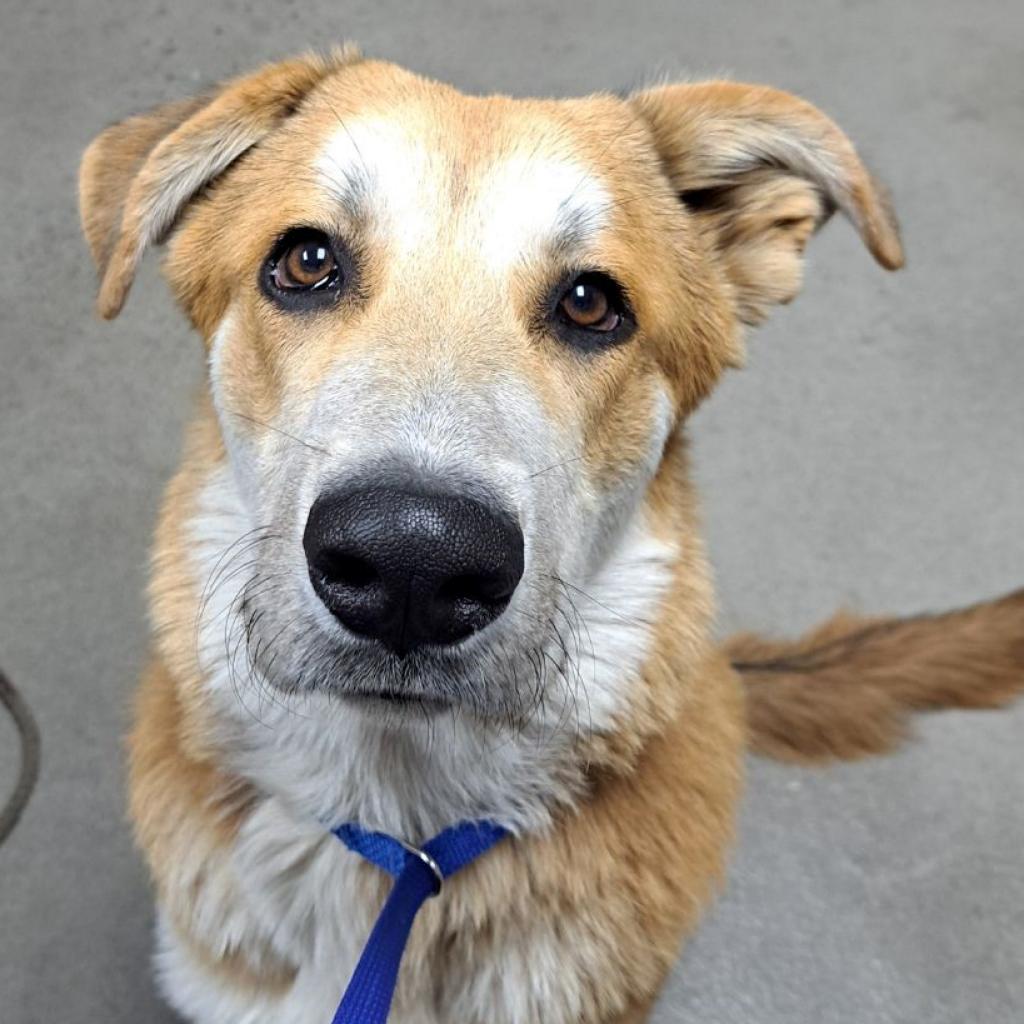
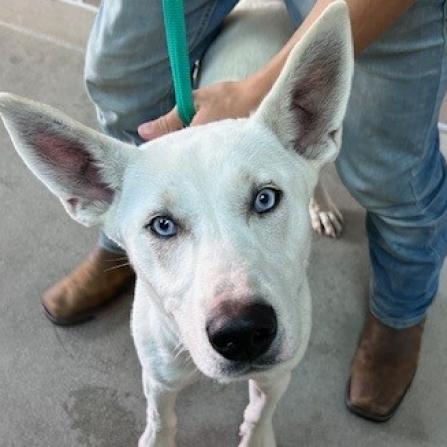
LAKE COUNTY, Calif. — Lake County Animal Care and Control has many great dogs waiting for homes this week.

The dogs available for adoption this week include mixes of Australian shepherd, border collie, boxer, cane corso, Chihuahua, German shepherd, husky, Labrador Retriever, pit bull terrier and terrier.

Dogs that are adopted from Lake County Animal Care and Control are either neutered or spayed, microchipped and, if old enough, given a rabies shot and county license before being released to their new owner. License fees do not apply to residents of the cities of Lakeport or Clearlake.

Those dogs and the others shown on this page at the Lake County Animal Care and Control shelter have been cleared for adoption.

Call Lake County Animal Care and Control at 707-263-0278 or visit the shelter online for information on visiting or adopting.

The shelter is located at 4949 Helbush in Lakeport.

Email Elizabeth Larson at This email address is being protected from spambots. You need JavaScript enabled to view it.. Follow her on Twitter, @ERLarson, or Lake County News, @LakeCoNews.


Kennel#21's preview photo
Kennel#21

Kennel#30's preview photo
Kennel#30

Kennel#4's preview photo
Kennel#4

Kennel#10's preview photo
Kennel#10

Kennel#23(Kora)'s preview photo
Kennel#23(Kora)

Kennel#14's preview photo
Kennel#14

Kennel#33's preview photo
Kennel#33

Kennel#2's preview photo
Kennel#2

Kennel#5's preview photo
Kennel#5

Kennel#7's preview photo
Kennel#7

Kennel#22's preview photo
Kennel#22


Kennel#26a's preview photo
Kennel#26a

Kennel#18's preview photo
Kennel#18

Kennel#3's preview photo
Kennel#3

Kennel#6's preview photo
Kennel#6

 
Kennel#19(Otis)'s preview photo
Kennel#19(Otis)

Kennel#24's preview photo
Kennel#24

Kennel#28's preview photo
Kennel#28


Kennel#9's preview photo
Kennel#9


Kennel#31a's preview photo
Kennel#31a


Kennel#11's preview photo
Kennel#11

 
Kennel#20(Lil Daddy)'s preview photo
Kennel#20(Lil Daddy)

 
Kennel#34's preview photo
Kennel#34


  1. Switching off from work has never been harder, or more necessary. Here’s how to do it
  2. Space News: Comet Tsuchinshan-ATLAS is a Halloween visitor from the spooky Oort Cloud − the invisible bubble that’s home to countless space objects
  3. Mendocino National Forest begins reconstruction of High Glade Lookout
  • 516
  • 517
  • 518
  • 519
  • 520
  • 521
  • 522
  • 523
  • 524
  • 525
How to resolve AdBlock issue?
Refresh this page