 How to resolve AdBlock issue?
News
- Details
- Written by: Elizabeth Larson
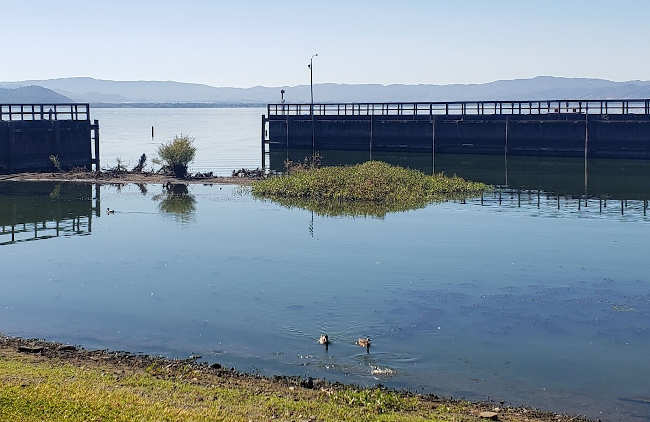
LUCERNE, Calif. — After several years of winding its way through a government regulatory process, the Lucerne Harbor Park dredging project has received final approval.
At its Oct. 1 meeting, the Board of Supervisors voted unanimously to award a $211,700 contract to Marz Engineering of Ukiah, one of two firms to submit bids for the project.
Public Services Director Lars Ewing said the bids from Marz Engineering and Steelhead Constructors JV of Redding, which bid $1,097,777, were opened on Aug. 28.
Ewing noted the “significant discrepancy” between the two bids, explaining that his staff communicated with Marz Engineering to ensure that they had factored in prevailing wage and labor law compliance.
A labor organization contacted the county to ask about the bid’s adherence to prevailing wage, Ewing said, adding he had communicated directly with Marz about that concern.
The company included with their bid submittal the mandatory prevailing wage and related labor requirements certification document, which Ewing said established the company’s acknowledgment that it had to pay prevailing wage and conform to other labor laws.
Ewing said the project is fully funded through Budget Unit 1781, Special Projects. Money from the sale of the Lucerne Hotel was set aside to cover the project.
Board members acknowledged the project was a long time in coming and they are looking forward to seeing it take place.
Supervisor Michael Green, who said he was excited to see the project move forward, noted there was a tribal monitoring agreement with Robinson Rancheria which complicated the process. He asked Ewing if it was a model for other dredging projects.
Ewing said if it was used as a model, it would be for lessons learned and what not to do for a project.
The project originally was put out with a request for review with a proposed categorical exemption to the California Environmental Quality Act, or CEQA, Ewing said.
It’s not abnormal to have tribal monitoring and archaeological monitoring above and beyond that, which is what there is in the case of this project, said Ewing.
“By and large this is not an overly complex project. It was the process, I would suggest that on this, that we can learn from. But I would stop short of saying that it’s a model. Every project is somewhat unique,” he said.
“This is going to be great for Lucerne. It’s great to get boats in the harbor and interacting with the shore, and I just look forward to seeing this project moving forward very much,” said Green.
The project has been in the works for five years. Northshore Supervisor EJ Crandell, whose tribe has the monitoring agreement, tried to explain the delays, beginning with the project starting in 2019, then the COVID-19 pandemic beginning the following year. In 2021, the categorical exemption occurred.
He said there was monitoring and they found “a situation” that slowed the process, an apparent reference to the discovery of an archaeological site. There also was changeover in Community Development Department heads, he said, thanking Ewing for being steadfast.
Board Chair Bruno Sabatier said he doesn’t usually get excited in agenda review, but that was the case when he saw the harbor dredging project being brought forward for the meeting.
“This is exciting. Anybody who’s passed by, especially during the drought, could see the amount of buildup that’s occurred within Lucerne Harbor. This is going to be great. It has been a long time coming. Hiccups happen unfortunately and some of them are out of our control,” said Sabatier.
He said he was happy they found the pathway to get to that point, and he said he hoped that whatever initial study review they’ve done can be used for Lucerne Harbor in the future, as he knows it’s going to happen again in that area.
Ewing said he can communicate with Water Resources and the two cities on the maintenance dredging side of things.
He said it was the first time the harbor was being dredged since its construction. “So there is a pathway through permitting agencies if it’s truly maintenance dredging, if you continually perform this.”
That’s something to consider as opposed to a one-time, standalone project that has different requirements, Ewing said.
Sabatier said the project has potential for economic impact, adding it will be helpful for the Northshore.
Green said the Blue Ribbon Committee for the Rehabilitation of Clear Lake had given a shout out to the Lucerne Harbor dredging project.
He said the committee pointed out that among other benefits of the project, it will take out an estimated two tons of phosphorus and about 0.4 tons of nitrogen by dredging out sediment. That’s roughly equivalent to 2% of the annual input of phosphorus of Clear Lake.
“It may sound like just a little bit, but part of what we know about water quality in Clear Lake is there is a lot of phosphorus present in those deposited sediments,” Green said.
While it’s probably not the best way to scrape the entire lake of phosphorus, there is a tangible benefit called out by the committee, Green said.
Crandell moved to approve the project, which Supervisor Jessica Pyska seconded and the board approved 5-0.
Project needed for several years
The need for the project has been evident for several years, as an island of sediment has built up within the harbor, making a portion of it impassable.
In January 2019 the Lucerne Area Town Hall passed a resolution asking the county to spend a small portion of the $2.5 million sales price from the Lucerne Hotel to dredge the harbor.
Then-County Administrative Officer Carol Huchingson pushed back on the proposal, which the Board of Supervisors ultimately approved in the 2019-20 budget with $250,000 set aside for the project. The project’s estimated price tag later rose to $350,000.
The project ended up being held over for several years.
In November 2020, Public Services had to close the boat launch at the park as a result of the sediment buildup, coupled with the low water level. County officials at that time had estimated the dredging project would be finished by the end of 2021.
At its June 11 meeting, the supervisors approved the plans and specifications for the project as part of the consent agenda.
As followup to the Oct. 1 meeting, Lake County News asked Ewing about the history of the harbor and its construction.
“The record drawings I have show construction/dredging of the launching facility in 1965, followed by a 1977 site improvement project that included construction of the parking lot, restroom, floating docks, landscaping, and other site improvements (but no dredging),” Ewing said in an email.
Asked about when the project could begin, Ewing said, “I anticipate this project will start no later than the end of October. The work window is between Oct. 15 and Dec. 31, to protect the Clear Lake hitch.”
Ewing said that while the project is not an overly complicated one, “it certainly has had more than its fair share of obstacles.”
Email Elizabeth Larson at
- Details
- Written by: LAKE COUNTY NEWS REPORTS
PG&E said its meteorologists and operations professionals are monitoring a potential wind event forecasted to enter parts of our service area around noon on Thursday and exit as late as midday Saturday.
Given the forecasted strong winds and current dry vegetation conditions, PG&E has begun sending advanced notifications to customers — via text, email and automated phone call — in targeted areas where power may need to be proactively shut off for safety to reduce wildfire risk.
The duration and extent of power outages will depend on the weather in each area, and not all customers will be affected for the entire period.
The potential public safety power shutoff, or PSPS, event could affect approximately 28,000 customers in small portions of several counties, including areas in the North Bay, East Bay, Central Coast and Sierra Nevadas.
PG&E’s in-house meteorologists, Emergency Operations Center, and Hazard Awareness & Warning Center continue to monitor conditions closely and will share additional customer notifications as conditions evolve.
When possible, PG&E representatives will make individual, in-person visits to customers enrolled in the company’s Medical Baseline Program who do not verify they have received these important safety communications, with a primary focus on customers who rely on electricity for critical life-sustaining equipment.
Potentially affected customers, counties
Customers can look up their address online to find out if their location is being monitored for the potential safety shutoff at www.pge.com/pspsupdates.
The potential shutoff is currently expected to affect approximately 28,000 customers across the following counties:
• Alameda County: 28 customers, 1 Medical Baseline customer.
• Alpine County: 564 customers, 10 Medical Baseline customers.
• Amador County: 55 customers, 2 Medical Baseline customers.
• Butte County: 648 customers, 51 Medical Baseline customers.
• Calaveras County: 2,346 customers, 59 Medical Baseline customers.
• Colusa County: 605 customers, 30 Medical Baseline customers.
• Contra Costa County: 805 customers, 49 Medical Baseline customers.
• El Dorado County: 984 customers, 28 Medical Baseline customers.
• Fresno County: 1,151 customers, 73 Medical Baseline customers.
• Glenn County: 511 customers, 21 Medical Baseline customers.
• Lake County: 168 customers, 8 Medical Baseline customers.
• Madera County: 2,901 customers, 216 Medical Baseline customers.
• Mariposa County: 640 customers, 15 Medical Baseline customers.
• Mendocino County: 10 customers, 4 Medical Baseline customers.
• Merced County: 27 customers, 0 Medical Baseline customers.
• Monterey County: 576 customers, 21 Medical Baseline customers.
• Napa County: 649 customers,17 Medical Baseline customers.
• Nevada County: 808 customers, 16 Medical Baseline customers.
• Placer County: 1,175 customers, 26 Medical Baseline customers.
• Plumas County: 658 customers, 27 Medical Baseline customers.
• San Luis Obispo County: 128 customers, 4 Medical Baseline customers.
• Santa Barbara County: 106 customers, 2 Medical Baseline customers.
• Shasta County: 1,417 customers, 87 Medical Baseline customers.
• Sierra County: 972 customers, 41 Medical Baseline customers.
• Solano County: 2,467 customers, 196 Medical Baseline customers.
• Sonoma County: 707 customers, 19 Medical Baseline customers.
• Stanislaus County: 27 customers, 0 Medical Baseline customers.
• Tehama County: 2,872 customers, 275 Medical Baseline customers.
• Tuolumne County: 3,823 customers, 175 Medical Baseline customers.
• Yolo County: 262 customers, 15 Medical Baseline customers.
PG&E said it initiates PSPS when the fire-weather forecast is severe enough that people’s safety, lives, homes and businesses may be in danger of wildfires.
Factors that can lead to a PSPS include but are not limited to:
• Low humidity levels, generally 30% and below.
• A forecast of high winds, particularly sustained winds above 19 miles per hour and wind gusts above 30 to 40 miles per hour.
• Condition of dry material on the ground and low moisture content of vegetation.
• A red flag warning declared by the National Weather Service.
• Real-time ground observations from our crews working across the service area.
- Details
- Written by: LAKE COUNTY NEWS REPORTS
While “shop local” campaigns are not new, the concept has never been more important.
As the costs of running a business rise and the prices of goods and services increase, households' disposable income has decreased.
When Lake County residents make purchases, it’s crucial to consider how resources are spent and what happens to that money once it leaves your wallet.
The campaign aims to highlight the benefits of shopping locally, including:
• Strengthening the local economy: Money spent at local businesses often stays within the community, creating a positive economic cycle that benefits everyone.
• Job creation: Local businesses are significant employers, providing jobs for residents and contributing to overall economic health.
• Unique and diverse offerings: Local businesses offer unique products and services that reflect the character and culture of our community.
The "Eat Drink Shop Local" campaign is designed to be inclusive, with opportunities for everyone to participate — whether you’re a business owner, a local agency, or an individual. The ultimate goal is to help local businesses survive and thrive, ensuring our communities and families do too.
“We believe that small actions can lead to significant change. By supporting local businesses, we can create a more robust, resilient local economy and a thriving community,” said Ernesto Padilla, president of the Lake County Economic Development Corp.
The campaign has multiple avenues to support local businesses. Businesses wishing to participate can sign up on the website and information will be added to the “Shop Small Saturday” listing. The listing will help share local promotions during the major shopping weekend following Thanksgiving.
Additionally, businesses will have access to free printed and electronic branding materials. The goal is to emphasize the local options for holiday shopping, and brand for year-round focus on eating, drinking, and shopping for local products.
Key events include the following:
Kick-off webinar: 5 p.m. Monday, Oct. 21. Nicole Flora, executive director of Lake EDC, will outline the campaign’s purpose, components, and how to get involved.
“Slow the Scroll: Photography and Social Media Training for Business,” 5:30 to 6:30 p.m. Monday, Oct. 28, and Monday, Nov. 4, Lakeport City Hall, 225 Park St. Discover best practices for compelling photographs and business posts on social media to help boost sales during the holiday season.
Shop Small Saturday, Nov. 30. National focus on small, local businesses, kicking off the holiday shopping season. Businesses can sign up to list promotions, and shoppers can find the promotion listing on the Lake EDC website and Facebook page.
For more information about the campaign, sign up for the kick-off, workshops, and be included in the “Shop Small” campaign, or find out other ways you can get involved, visit https://lakecountycaedc.org/shoplocal/.
- Details
- Written by: LAKE COUNTY NEWS REPORTS
This $425,000 federal grant will support a series of programs focused on safety, education and cultural understanding.
The TTEP grant provides resources to create specialized training, community outreach and educational events that increase awareness of tribal sovereignty and respect cultural traditions.
The program also aims to address the unique challenges Native American communities face.
“This grant is a significant milestone for our department and the communities we serve across California,” said CHP Commissioner Sean Duryee. “It allows us to enhance safety and foster cultural understanding through essential resources and educational programs.”
Grant funds will be used to conduct workshops and training sessions for CHP personnel, emphasizing culturally informed law enforcement practices and the historical context of Native American relations.
The program will also support the development of educational materials that provide safety information and resources tailored to Native American communities.
This initiative aligns with the CHP’s commitment to improving community relations and enhancing public safety through education and outreach.
By working closely with tribal leaders and members, the CHP seeks to address specific concerns and provide meaningful support to Native American communities throughout the state.
Funding for this program was provided by a grant from the California Office of Traffic Safety through the National Highway Traffic Safety Administration.