How to resolve AdBlock issue?
Refresh this page
How to resolve AdBlock issue?
Refresh this page
Lake County News,California
  • Home
    • Registration Form
  • News
    • Education
    • Veterans
    • Community
      • Obituaries
      • Letters
      • Commentary
    • Police Logs
    • Business
    • Recreation
    • Health
    • Religion
    • Legals
    • Arts & Life
    • Regional
  • Calendar
  • Contact us
    • FAQs
    • Phones, E-Mail
    • Subscribe
  • Advertise Here
  • Login
How to resolve AdBlock issue?
Refresh this page

News

Adventist Health Clear Lake medical office in Lucerne to close; services to be reallocated

Details
Written by: Elizabeth Larson
Published: 25 November 2024
LUCERNE, Calif. — Adventist Health Clear Lake reported that it is closing its Lucerne medical office.

Hospital officials said in a written statement that the decision is “part of a strategic effort to reallocate resources to areas of higher demand, ensuring the community receives the best possible care in the most impactful locations.”

The Lucerne office will officially close on Dec. 31.

“At Adventist Health Clear Lake, our mission is to provide compassionate, high-quality care for everyone we serve,” said Adventist Health Clear Lake Administrator Chuck Kassis. “This decision allows us to strengthen services in key areas, optimizing resources to benefit the greatest number of patients in our community.”

Adventist Health Clear Lake opened the medical office in Lucerne — the former Lucerne Community Clinic at 6300 East Highway 20 in Lucerne — in the spring of 2019 after acquiring it from Dr. Robert Gardner.

The decision to close the Lucerne office “follows an in-depth review of service demands and patient needs across Lake County. By concentrating resources in locations where there is higher patient volume, Adventist Health Clear Lake aims to enhance access and improve service capacity for residents,” hospital officials said.

Adventist Health Clear Lake said patients affected by the closure will be provided “with support to transition their care seamlessly to nearby Adventist Health Clear Lake facilities,” which include options in Lakeport, Kelseyville and Clearlake.

The Adventist Health Clear Lakes patient services team can assist with answering questions about care continuity or finding a new provider, officials said.

Email Elizabeth Larson at This email address is being protected from spambots. You need JavaScript enabled to view it.. Follow her on Twitter, @ERLarson, and on Bluesky, @erlarson.bsky.social. Find Lake County News on the following platforms: Facebook, @LakeCoNews; X, @LakeCoNews; Threads, @lakeconews, and on Bluesky, @lakeconews.bsky.social.

General plan meeting for agricultural community postponed

Details
Written by: LAKE COUNTY NEWS REPORTS
Published: 25 November 2024
LAKE COUNTY, Calif. — A Lake County General Plan meeting focusing on the agricultural community was postponed due to inclement weather.

The meeting on Lake County 2050, the project to update Lake County’s General Plan, was set to have taken place on Thursday, Nov. 21, at the Lake County Courthouse.

County officials ask that community members stay tuned for updates on the new date and time, currently to be determined.

For updates and more information, visit lakecounty2050.org/meetings/.

For more information about the meeting and the process, contact Community Development Director Mireya Turner at telephone 707-263-2221 or email This email address is being protected from spambots. You need JavaScript enabled to view it..

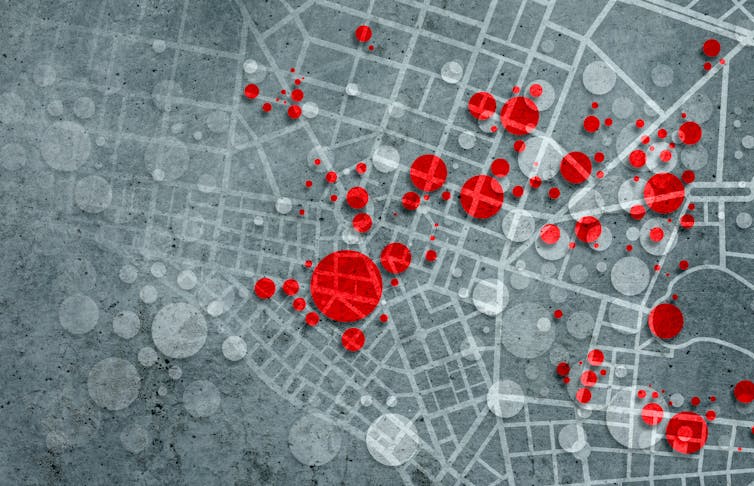
Public health surveillance, from social media to sewage, spots disease outbreaks early to stop them fast

Details
Written by: John Duah, Auburn University
Published: 25 November 2024


Health officials work to connect the dots during the early stages of an outbreak. Maxiphoto/iStock via Getty Images Plus

A cluster of people talking on social media about their mysterious rashes. A sudden die-off of birds at a nature preserve. A big bump in patients showing up to a city’s hospital emergency rooms.

These are the kinds of events that public health officials are constantly on the lookout for as they watch for new disease threats.

Health emergencies can range from widespread infectious disease outbreaks to natural disasters and even acts of terrorism. The scope, timing or unexpected nature of these events can overwhelm routine health care capacities.

I am a public health expert with a background in strengthening health systems, infectious disease surveillance and pandemic preparedness.

Rather than winging it when an unusual health event crops up, health officials take a systematic approach. There are structures in place to collect and analyze data to guide their response. Public health surveillance is foundational for figuring out what’s going on and hopefully squashing any outbreak before it spirals out of control.

Tracking day by day

Indicator-based surveillance is the routine, systematic collection of specific health data from established reporting systems. It monitors trends over time; the goal is to detect anomalies or patterns that may signal a widespread or emerging public health threat.

Hospitals are legally required to report data on admissions and positive test results for specific diseases, such as measles or polio, to local health departments. The local health officials then compile the pertinent data and share it with state or national public health agencies, such as the U.S. Centers for Disease Control and Prevention.

When doctors diagnose a positive case of influenza, for example, they report it through the National Respiratory and Enteric Virus Surveillance System, which tracks respiratory and gastrointestinal illnesses. A rise in the number of cases could be a warning sign of a new outbreak. Likewise, the National Syndromic Surveillance Program collects anonymized data from emergency departments about patients who report symptoms such as fever, cough or respiratory distress.

Public health officials keep an eye on wastewater as well. A variety of pathogens shed by infected people, who may be asymptomatic, can be identified in sewage. The CDC created the National Wastewater Surveillance System to help track the virus that causes COVID-19. Since the pandemic, it’s expanded in some areas to monitor additional pathogens, including influenza, respiratory syncytial virus (RSV) and norovirus. Wastewater surveillance adds another layer of data, allowing health officials to catch potential outbreaks in the community, even when many infected individuals show no symptoms and may not seek medical care.

Having these surveillance systems in place allows health experts to detect early signs of possible outbreaks and gives them time to plan and respond effectively.

lots of people wearing PPE in a hospital hallway
An extremely busy emergency room could be a signal that an outbreak is underway. Jeffrey Basinger/Newsday via Getty Images

Watching for anything outside the norm

Event-based surveillance watches in real time for anything that could indicate the start of an outbreak.

This can look like health officials tracking rumors, news articles or social media mentions of unusual illnesses or sudden deaths. Or it can be emergency room reports of unusual spikes in numbers of patients showing up with specific symptoms.

Local health care workers, community leaders and the public all support this kind of public health surveillance when they report unexpected health events through hotlines and online forms or just call, text or email their public health department. Local health workers can assess the information and escalate it to state or national authorities.

Public health officials have their ears to the ground in these various ways simultaneously. When they suspect the start of an outbreak, a number of teams spring into action, deploying different, coordinated responses.

Collecting samples for more analysis

Once event-based surveillance has picked up an unusual report or a sudden pattern of illness, health officials try to gather medical samples to get more information about what might be going on. They may focus on people, animals or specific locations, depending on the suspected source. For example, during an avian flu outbreak, officials take swabs from birds, both live and dead, and blood samples from people who have been exposed.

Health workers collect material ranging from nose or throat swabs, fecal, blood or tissue samples, and water and soil samples. Back in specialized laboratories, technicians analyze the samples, trying to identify a specific pathogen, determine whether it is contagious and evaluate how it might spread. Ultimately, scientists are trying to figure out the potential impact on public health.

Finding people who may have been exposed

Once an outbreak is detected, the priority quickly shifts to containment to prevent further spread. Public health officials turn into detectives, working to identify people who may have had direct contact with a known infected person. This process is called contact tracing.

Often, contact tracers work backward from a positive laboratory confirmation of the index case – that is, the first person known to be infected with a particular pathogen. Based on interviews with the patient and visiting places they had been, the local health department will reach out to people who may have been exposed. Health workers can then provide guidance about how to monitor potential symptoms, arrange testing or advise about isolating for a set amount of time to prevent further spread.

truck advertising 'COVID Trace' app
Many states, including Nevada, set up contact tracing apps to help people determine whether they may have been exposed to the coronavirus. Gabe Ginsberg/Experience Strategy Associates via Getty Images

Contact tracing played a pivotal role during the early days of the COVID-19 pandemic, helping health departments monitor possible cases and take immediate action to protect public health. By focusing on people who had been in close contact with a confirmed case, public health agencies could break the chain of transmission and direct critical resources to those who were affected.

Though contact tracing is labor- and resource-intensive, it is a highly effective method of stopping outbreaks before they become unmanageable. In order for contact tracing to be effective, though, the public has to cooperate and comply with public health measures.

Stopping an outbreak before it’s a pandemic

Ultimately, public health officials want to keep as many people as possible from getting sick. Strategies to try to contain an outbreak include isolating patients with confirmed cases, quarantining those who have been exposed and, if necessary, imposing travel restrictions. For cases involving animal-to-human transmission, such as bird flu, containment measures may also include strict protocols on farms to prevent further spread.

Health officials use predictive models and data analysis tools to anticipate spread patterns and allocate resources effectively. Hospitals can streamline infection control based on these forecasts, while health care workers receive timely updates and training in response protocols. This process ensures that everyone is informed and ready to act to maximize public safety.

No one knows what the next emerging disease will be. But public health workers are constantly scanning the horizon for threats and ready to jump into action.The Conversation

John Duah, Assistant Professor of Health Services Administration, Auburn University

This article is republished from The Conversation under a Creative Commons license. Read the original article.


Tuleyome Tales: The Pacific Flyway, a natural wonder in our own backyard

Details
Written by: Diana Drips
Published: 24 November 2024
White crowned sparrows (Zonotrichis leucophrys) are regular backyard visitors. Photo by Ian Alexander Levin.

NORTHERN CALIFORNIA — Fall is my favorite season in the Berryessa Snow Mountain National Monument region, but not for the usual reasons.

It’s not the spiced lattes or the leaves changing colors, although those are nice too. The reason I love autumn so much in Northern California is because of the birds.

As temperatures finally start to cool, like clockwork, the birds come by the thousands to enjoy our comfortable and temperate winter weather.

Here in the valley, we are located along a major bird migration route called the Pacific Flyway. The Pacific Flyway spans 4,000 miles north to south from Alaska to Patagonia. More than 350 species of birds migrate every year using the Pacific Flyway.

According to the Sacramento Audubon Society, at least one billion birds migrate through the Sacramento region annually. Birds migrate south to our little corner of the Pacific Flyway from as far north as Canada and Alaska. For some birds, our valley floor is the final destination of their migratory route; for others, we are a rest stop on their way further south.

Birds begin to migrate when the days begin to shorten, and temperatures start to cool in their northern habitats. With the change in seasons, they see a reduction in the availability of their food sources, which are primarily insects, berries and aquatic plants. Migration offers a way to find more ample food and milder temperatures.

In the Sacramento Valley, the Northern Pintail (Anas acuta) is the harbinger of fall migration, arriving as early as August. Later, you may be lucky enough to hear the Sandhill Cranes (Antigone canadensis), whose loud calls can be heard up to a mile away.

During the fall, if you visit one of our area’s beautiful wetlands, you can see American Avocets, Horned Larks, Green-Winged Teals, American Widgeons, Long-Billed Curlews, and Merlins, to name just a few. In your yard you might enjoy watching White Crowned Sparrows, Hermit Thrushes, Dark Eyed Juncos, Western Tanagers, Townsend’s Warblers, and many more.

The idea of bird migration often brings to mind geese flying in V formation, which is an impressive feat. What I think is even more astounding is that tiny bird species like sparrows, warblers and hummingbirds also migrate, and compared to their size, the distances that they travel are nothing short of amazing.

Rufous hummingbirds (Selasphorus rufus) for example, which measure only about 3 inches in length, fly roughly 3,900 miles one way from Alaska to Mexico.

According to the website All About Birds, this journey is equivalent to 78 million body lengths for this tiny bird. Compare that to another impressive long-distance migrator, the 13-inch-long Arctic Tern that flies a mind boggling 11 thousand miles one way from Alaska to Antarctica, which is just 51 million of its body lengths.

Scientists still don’t fully understand how birds are able to migrate, but over the last few decades there have been some fascinating findings on the topic. Studies have shown that birds use the night sky and positioning of the stars, chiefly Polaris (the North Star) to navigate. On cloudy nights when stars are less visible, birds seem to wait for better visibility.

Many birds have a small amount of magnetite in their upper beak, a magnetic mineral that serves as a sort of internal compass.

Bird eyes contain a protein called cryptochrome that allow them to see the Earth’s magnetic field, and birds are thought to create what scientists call a mental map of the world around them.

Additionally, while historically it was thought that birds navigate solely based on instinct, recent studies have shown that juvenile birds seem to learn migration skills and routes from other birds.

Since birds tend to use the same migration route each year, ornithologists can often predict the day that a specific species will arrive in a given place along the flyway, which is great news if you enjoy watching birds.

Tools such as Birdcast can show you how many birds are expected to be migrating on a given day, including live updates. You might consider using a nature journal or a community science tool like eBird to record when your favorite species arrive in your yard, and in doing so, help scientists track this magnificent natural wonder.

While along the migratory path, birds face countless challenges. It is a dangerous and arduous journey, and many birds do not make it to their final destination due to difficult weather conditions, predation, exhaustion, or starvation along the way.

Human-related obstacles have also made this journey more difficult. These include habitat loss, inadequate food supply at resting stops, changing weather patterns, predation by house cats, hunting, and in recent years, commercial and residential light pollution and collisions with windows and tall buildings.

There are many things that you can do to help birds along their journey. Make your yard a good waystation along their travels. Leaf litter provides hiding places for insects that birds need to refuel, so “leave the leaves.” Plant native plants that provide seasonal habitat and berries for birds. Avoid using pesticides as they reduce the supply of birds’ primary food source: insects.

Turning off unnecessary lights outside can also have a big impact on birds who can be confused by artificial lighting along their migration route. Prevent window collisions by placing protective decals on the outside of your windows.

The fall bird migration serves as a reminder of the interconnectedness of our beautiful planet and the way that we are all part of a larger world. Tending gently to our little corner of the world benefits not just us, but also travelers along their epic journeys.

The most fun thing you can do to help birds is to learn about them and love them. We protect what we love. So, get out there and enjoy those fall birds!

Diana Drips is a Certified California Naturalist. Tuleyome is a 501(c)(3) nonprofit conservation organization based in Woodland, California. For more information go to www.tuleyome.org.

Northern pintails (Anas acuta) are early arrivers to the Sacramento Valley, often arriving in August. Photo by Erin Powell.
  1. Lake County Sheriff’s Activities League begins 28th year of service to local youth
  2. US House passes measure that could punish nonprofits Treasury Department decides are ‘terrorist’
  3. Helping Paws: From pups to seniors
  • 470
  • 471
  • 472
  • 473
  • 474
  • 475
  • 476
  • 477
  • 478
  • 479
How to resolve AdBlock issue?
Refresh this page