How to resolve AdBlock issue?
Refresh this page
How to resolve AdBlock issue?
Refresh this page
Lake County News,California
  • Home
    • Registration Form
  • News
    • Education
    • Veterans
    • Community
      • Obituaries
      • Letters
      • Commentary
    • Police Logs
    • Business
    • Recreation
    • Health
    • Religion
    • Legals
    • Arts & Life
    • Regional
  • Calendar
  • Contact us
    • FAQs
    • Phones, E-Mail
    • Subscribe
  • Advertise Here
  • Login
How to resolve AdBlock issue?
Refresh this page

News

US dodged a bird flu pandemic in 1957 thanks to eggs and dumb luck – with a new strain spreading fast, will Americans get lucky again?

Details
Written by: Alexandra M. Lord, Smithsonian Institution
Published: 24 February 2025


Eggs have been crucial to vaccine production for decades. Bettmann/Getty Images

In recent months, Americans looking for eggs have faced empty shelves in their grocery stores. The escalating threat of avian flu has forced farmers to kill millions of chickens to prevent its spread.

Nearly 70 years ago, Maurice Hilleman, an expert in influenza, also worried about finding eggs. Hilleman, however, needed eggs not for his breakfast, but to make the vaccines that were key to stopping a potential influenza pandemic.

Hilleman was born a year after the notorious 1918 influenza pandemic swept the world, killing 20 million to 100 million people. By 1957, when Hilleman began worrying about the egg supply, scientists had a significantly more sophisticated understanding of influenza than they had previously. This knowledge led them to fear that a pandemic similar to that of 1918 could easily erupt, killing millions again.

As a historian of medicine, I have always been fascinated by the key moments that halt an epidemic. Studying these moments provides some insight into how and why one outbreak may become a deadly pandemic, while another does not.

Anticipating a pandemic

Influenza is one of the most unpredictable of diseases. Each year, the virus mutates slightly in a process called antigenic drift. The greater the mutation, the less likely that your immune system will recognize and fight back against the disease.

Every now and then, the virus changes dramatically in a process called antigenic shift. When this occurs, people become even less immune, and the likelihood of disease spread dramatically increases. Hilleman knew that it was just a matter of time before the influenza virus shifted and caused a pandemic similar to the one in 1918. Exactly when that shift would occur was anyone’s guess.

In April 1957, Hilleman opened his newspaper and saw an article about “glassy-eyed” patients overwhelming clinics in Hong Kong.

The article was just eight sentences long. But Hilleman needed only the four words of the headline to become alarmed: “Hong Kong Battling Influenza.”

Within a month of learning about Hong Kong’s influenza epidemic, Hilleman had requested, obtained and tested a sample of the virus from colleagues in Asia. By May, Hilleman and his colleagues knew that Americans lacked immunity against this new version of the virus. A potential pandemic loomed.

A sailor walking down staircase on side of ship to hand a jar of fluid to a sailor at the bottom, surrounded by other sailors
The U.S. prioritized vaccinating military personnel over the public in 1957. Here, members of a West German Navy vessel hand over a jar of vaccine to the U.S. transport ship General Patch for 134 people sick with flu. Henry Brueggemann/AP Photo

Getting to know influenza

During the 1920s and 1930s, the American government had poured millions of dollars into influenza research. By 1944, scientists not only understood that influenza was caused by a shape-shifting virus – something they had not known in 1918 – but they had also developed a vaccine.

Antigenic drift rendered this vaccine ineffective in the 1946 flu season. Unlike the polio or smallpox vaccine, which could be administered once for lifelong protection, the influenza vaccine needed to be continually updated to be effective against an ever-changing virus.

However, Americans were not accustomed to the idea of signing up for a yearly flu shot. In fact, they were not accustomed to signing up for a flu shot, period. After seeing the devastating impact of the 1918 pandemic on the nation’s soldiers and sailors, officials prioritized protecting the military from influenza. During and after World War II, the government used the influenza vaccine for the military, not the general public.

Stopping a pandemic

In the spring of 1957, the government called for vaccine manufacturers to accelerate production of a new influenza vaccine for all Americans.

Traditionally, farmers have often culled roosters and unwanted chickens to keep their costs low. Hilleman, however, asked farmers to not cull their roosters, because vaccine manufacturers would need a huge supply of eggs to produce the vaccine before the virus fully hit the United States.

But in early June, the virus was already circulating in the U.S. The good news was that the new virus was not the killer its 1918 predecessor had been.

Hoping to create an “alert but not an alarmed public,” Surgeon General Leroy Burney and other experts discussed influenza and the need for vaccination in a widely distributed television show. The government also created short public service announcements and worked with local health organizations to encourage vaccination.

A 1957 film informing Americans how the U.S. was responding to an influenza outbreak.

Vaccination rates were, however, only “moderate” – not because Americans saw vaccination as problematic, but because they did not see influenza as a threat. Nearly 40 years had dulled memories of the 1918 pandemic, while the development of antibiotics had lessened the threat of the deadly pneumonia that can accompany influenza.

Learning from a lucky reprieve

If death and devastation defined the 1918 pandemic, luck defined the 1957 pandemic.

It was luck that Hilleman saw an article about rising rates of influenza in Asia in the popular press. It was luck that Hilleman made an early call to increase production of fertilized eggs. And it was luck that the 1957 virus did not mirror its 1918 relative’s ability to kill.

Recognizing that they had dodged a bullet in 1957, public health experts intensified their monitoring of the influenza virus during the 1960s. They also worked to improve influenza vaccines and to promote yearly vaccination. Multiple factors, such as the development of the polio vaccine as well as a growing recognition of the role vaccines played in controlling diseases, shaped the creation of an immunization-focused bureaucracy in the federal government during the 1960s.

Line of people inserting needle into cracked top eggs under lab hoods
Inoculating eggs with live virus was the first step to producing a vaccine. AP Photo

Over the past 60 years, the influenza virus has continued to drift and shift. In 1968, a shift once again caused a pandemic. In 1976 and 2009, concerns that the virus had shifted led to fears that a new pandemic loomed. But Americans were lucky once again.

Today, few Americans remember the 1957 pandemic – the one that sputtered out before it did real damage. Yet that event left a lasting legacy in how public health experts think about and plan for future outbreaks. Assuming that the U.S. uses the medical and public health advances at its disposal, Americans are now more prepared for an influenza pandemic than our ancestors were in 1918 and in 1957.

But the virus’s unpredictability makes it impossible to know even today how it will mutate and when a pandemic will emerge.The Conversation

Alexandra M. Lord, Chair and Curator of Medicine and Science, Smithsonian Institution

This article is republished from The Conversation under a Creative Commons license. Read the original article.
Tuleyome Tales: After a fire, ecological succession

Details
Written by: Diana Drips
Published: 23 February 2025
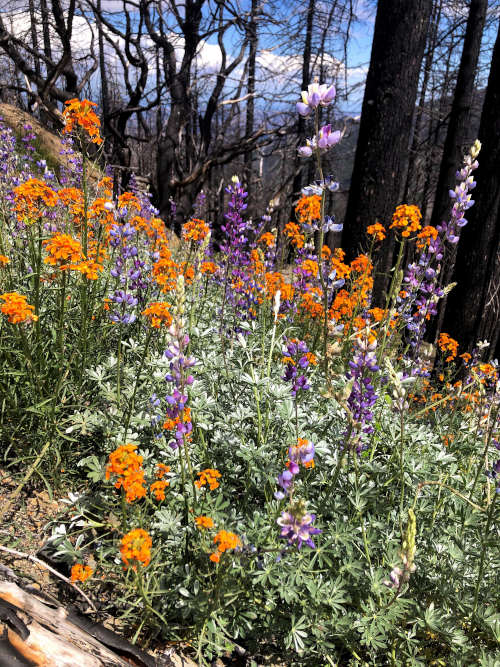
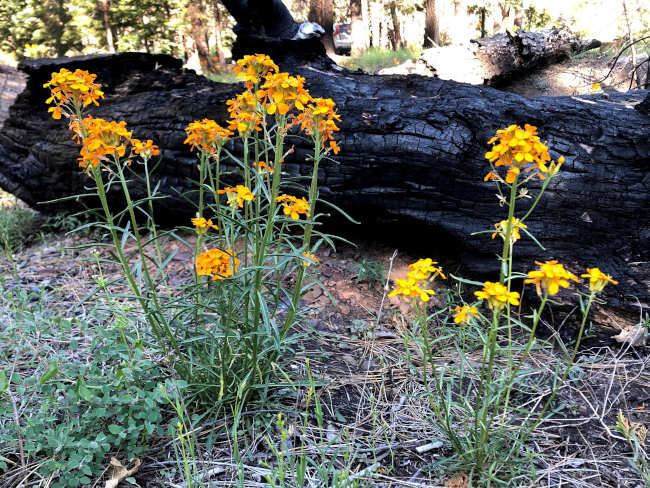
Wallflowers blooming following fire. Photo by Nate Lillge.

NORTHERN CALIFORNIA — Recovering after a fire has become a very frequent part of life in California.

Though fire is an intrinsic part of the California landscape, the fires in recent years feel different. Climate scientists agree that these fires, in frequency as well as severity, are indeed intensifying, an effect of human-caused climate change.

As of this writing, over 23,000 acres in and around our sister landscape, the Santa Monica Mountain National Recreation Area in Southern California, have been burned in the Palisades fire. Watching updates about the blaze in the southern part of our state had many of us remembering times when fires were closer to home, here in the Berryessa Snow Mountain region.

According to Solano County records, the 2020 LNU Lightning Complex fires burned 363,220 acres across Colusa, Lake, Napa, Solano, Sonoma and Yolo counties. Over the course of the fire, which lasted from Aug. 17 to Oct. 2, there were 1,491 structures destroyed, another 232 were damaged and tragically the fire took 6 human lives. It was the seventh largest wildfire in recorded California history.

Our beloved natural landscape and wildlife in the Berryessa Snow Mountain region was severely impacted. It is easy to recall the burnt hills, the charred trees, as well as the smokey skies that lasted all summer in 2020. Almost five years later, I find myself continuing to look to nature for wisdom about recovery after such significant losses.

Ecological succession is the term used by scientists to describe the process by which a biological community evolves over time. Primary succession is the process of ecological growth starting from completely barren or newly exposed land, after a volcanic eruption, for instance, when there is rock but no soil for plants to grow in.

“Pioneer species” in ecological terms are the first species to become established in a habitat. Seeds and spores brought in on the wind, in water, or dropped by a passing bird, bring the first species of plants to inhabit the landscape, creating a simple biological community. Over time, the plant matter decomposes and becomes soil, making way for larger plants and a more complex ecosystem.

Secondary succession occurs after a fire or other disturbance when the landscape is significantly altered, but the building blocks of soil are already present. In secondary succession, pioneer plant species like ferns and mosses are often the first to return. Ferns grow from rhizomes, horizontal root systems under the soil, which can withstand a moderate fire, allowing for ferns to appear as quickly as 3 weeks post-fire. Mosses can also begin to grow just 2 months after a fire. In the first spring post-fire we see grasses and wildflowers taking advantage of the sunlight once shaded out by the overstory. Nature wastes no time.

California native plants have evolved to live alongside fire, and they do so in several different ways. Some native plants like toyon (Heteromeles arbutifolia) rely upon resprouting new growth from the crown of an established plant after a fire, their root ball having stored nutrients to prepare for a time like this.

Many manzanita species (Arctostaphylos manzanita) rely upon germination of seeds to replenish their populations and use “fire cues” such as heat and smoke for seed germination.

Some plants have adapted to regenerate both by seed and resprouting at the crown such as California Yerba Santa (Eriodictyon californicum). Species of plants referred to as fire-followers, as the name implies, are signaled to germinate by the chemicals in charred wood and smoke after a fire.

Some endemic fire followers only grow in the one to two years after a fire, from seeds left behind after a previous fire, these newly sprouted plants will also produce masses of seeds to be stored in the soil until the next fire.

An example of a fire follower in our region is the wildflower Whispering bells (Emmenanthe penduliflora). Fascinatingly, studies have shown that many fire-following plants are more nutritionally dense when growing in ash-enriched soil from a recent fire, providing more nutrients to the herbivores who graze on them.

Wildflower bloom following fire. Photo Nate Lillge.


Along with plant life, insects and small mammals are also an integral part of succession after a fire. Many insect species are attracted to the scent of smoke and ash which signals ample food in the form of charred plant material. Birds are then drawn by the increase in insects in the area.

Small mammals such as rodents and rabbits are key to recovery in an area impacted by fire thanks to their ability to repopulate quickly, and their adaptability to shifts in the landscape. This boom in small mammals then brings larger mammals and birds of prey.

In the five to 10 years following a fire, we will start to see shrubs returning to the landscape, while trees can take decades to create the beginnings of an overstory. While it can take hundreds of years for a landscape to move from pioneer mosses and wildflowers to an ecosystem with mature trees, there is a lot of life happening in the years in between. Some ecosystems display more biodiversity in the years after a fire, than in the years leading up to one.

Perhaps the concept of ecological succession can help us cope with the impacts of present and future fires. In ecological succession, each plant and animal in the community does a little something to recover, and slowly there is renewal and opportunity.

As individuals we can’t change everything, but we can each do a little something and together that can make all the difference.

Driving or hiking through the fire-impacted areas now, almost five years later, you see the remains of charred trees that once shaded the understory, snags now providing habitat for woodpeckers and other cavity nesting birds. There are fields of miniature lupines, Yerba Santa, common woolly sunflower and broad leaf phacelia.

Wildflowers and grasses enjoying the lack of competition for sunlight provide a delicious buffet for wildlife to enjoy. Among disturbed edges, you find the soft low creeping of turkey mullein (Croton setiger), and the familiar brilliance of California fuschia (Epilobium canum).

Our state’s most famous fire-follower, the iconic California poppy (Eschscholzia californica) shimmers all over the hills. If you are lucky you might hear the persistent courting melodies of a northern mockingbird (Mimus polyglottos) or the distant “Chi-ca-go!” of a California Quail (Callipepla californica). Life has continued to push on.

Diana Drips is a Certified California Naturalist. Tuleyome is a 501 (c)(3) nonprofit conservation organization based in Woodland, CA. For more information go to www.tuleyome.org. 

Helping Paws: Many adoptable dogs and puppies

Details
Written by: Elizabeth Larson
Published: 23 February 2025
LAKE COUNTY, Calif. — Lake County Animal Care and Control has numerous puppies along with adult dogs waiting to go to new homes.

The dogs available for adoption this week include mixes of Australian shepherd, border collie, cattle dog, German shepherd, husky, Labrador Retriever, pit bull terrier, Rhodesian ridgeback, Rottweiler and terrier.

Dogs that are adopted from Lake County Animal Care and Control are either neutered or spayed, microchipped and, if old enough, given a rabies shot and county license before being released to their new owner. License fees do not apply to residents of the cities of Lakeport or Clearlake.

Those dogs and the others shown on this page at the Lake County Animal Care and Control shelter have been cleared for adoption.

Call Lake County Animal Care and Control at 707-263-0278 or visit the shelter online for information on visiting or adopting.

The shelter is located at 4949 Helbush in Lakeport.

Email Elizabeth Larson at This email address is being protected from spambots. You need JavaScript enabled to view it.. Follow her on Twitter, @ERLarson, and on Bluesky, @erlarson.bsky.social. Find Lake County News on the following platforms: Facebook, @LakeCoNews; X, @LakeCoNews; Threads, @lakeconews, and on Bluesky, @lakeconews.bsky.social.


Foster#9966's preview photo
Foster#9966

#90(Fern)'s preview photo
#90(Fern)

#90(Cedar)'s preview photo
#90(Cedar)

#90(Willow)'s preview photo
#90(Willow)

#90(Maple)'s preview photo
#90(Maple)

#114(Jenny)'s preview photo
#114(Jenny)
#32(Vivian)'s preview photo
#32(Vivian)
#138(Cisco)'s preview photo
#138(Cisco)

Diesel's preview photo
Diesel

Calvin's preview photo
Calvin
Grizzly's preview photo
Grizzly
Bailey's preview photo
Bailey
Arlo's preview photo
Arlo

Starla's preview photo
Starla

Foster#10068's preview photo
Foster#10068

Victor's preview photo
Victor

Mocha's preview photo
Mocha
Ruby's preview photo
Ruby
#1(Luna)'s preview photo
#1(Luna)

#8(Koa)'s preview photo
#8(Koa)

#8(Kai)'s preview photo
#8(Kai)

Jet's preview photo
Jet

Sam's preview photo
Sam

Louie's preview photo
Louie

Ace's preview photo
Ace

Bear-Bear's preview photo
Bear-Bear

Chai's preview photo
Chai

Hazel's preview photo
Hazel
 
Hamilton's preview photo
Hamilton

Hulk's preview photo
Hulk

Scout's preview photo
Scout

Buddy's preview photo
Buddy

A#68(Noah)'s preview photo
A#68(Noah)

C#135(Holly)'s preview photo
C#135(Holly)

Brynn's preview photo
Brynn

Lynn's preview photo
Lynn


Kennel #15's preview photo
Kennel #15
 

How much does scientific progress cost? Without government dollars for research infrastructure, breakthroughs become improbable

Details
Written by: Aliasger K. Salem, University of Iowa
Published: 23 February 2025


America may not maintain its position as a global leader in biomedical research without federal support. Sean Gladwell/Moment via Getty Images

On Feb. 7, 2025, the U.S. National Institutes of Health issued a policy that could weaken the position of the United States as a global leader in scientific innovation by slashing funds to the infrastructure that allows universities and other institutions to conduct research in the first place.

Universities across the nation carry out research on behalf of the federal government. Central to this partnership is federal grant funding, which is awarded through a rigorous review process. These grants are the lifeblood of biomedical research in the U.S.

When you think of the costs of scientific research, you might picture the people who conduct the research, and the materials and lab equipment they use. But these don’t encompass all the essential components of research. Every scientific and medical breakthrough also depends on laboratory facilities; heating, air conditioning, ventilation and electricity; and personnel to ensure research is conducted securely and in accordance with federal regulations.

These critical indirect costs of research are both substantial and unavoidable, not least because it can be very expensive to build, maintain and equip space to conduct research at the frontiers of knowledge. The NIH stated that it spent more than US$35 billion on grants in the 2023 fiscal year, which went to more than 300,000 researchers at more than 2,500 universities, medical schools and other kinds of research institutions across the nation. Approximately $9 billion of this funding was allocated to indirect costs.

NIH grants have supported the direct costs of my own scientific research on developing treatments for conditions ranging from cancer to eye diseases. I would be unable to carry out my research without the support of the indirect costs the NIH plans to cut.

What are indirect costs?

Indirect costs, also known as facilities and administration costs, or overhead, are funds provided to institutions to cover expenses that are not directly tied to specific research projects but are essential for their execution. Unlike direct costs, which cover salaries, supplies and experiments, indirect costs support the overall research environment, ensuring that scientists have the necessary resources to conduct their work effectively.

Indirect costs include maintaining optimal laboratory spaces, specialized facilities providing services like imaging and gene analysis, high-speed computing, research security, patient and personnel safety, hazardous waste disposal, utilities, equipment maintenance, administrative support, regulatory compliance, information technology services, and maintenance staff to clean and supply labs and facilities.

Academic institutions conduct research on behalf of the federal government.

Research institutions that receive federal grants must comply with the rules and regulations established by the U.S. Office of Management and Budget. These guidelines dictate the indirect cost rates of each institution.

Institutions submit proposals to federal agencies that outline the costs associated with maintaining research infrastructure. The cost allocation division of the Department of Health and Human Services reviews these proposals to ensure compliance with federal policies.

Indirect rates can range from 15% to 70%, with the specific level depending on the research and infrastructure needs of an institution.

Typically, institutions undergo an exacting process to renegotiate their indirect rates every four years, factoring in components such as general, departmental and program administration, building and equipment depreciation, interest, operations and maintenance, and library expenses. Universities need to carefully justify these cost components to ensure the sustainability of research infrastructure and compliance with federal requirements.

Notably, indirect costs from grants do not cover the full cost of carrying out research at universities. In 2023, colleges and universities contributed approximately $27 billion of their own funding, such as money from their endowments, to support research. This included $6.8 billion in indirect costs that the federal government did not reimburse.

Slashing vital research funding

In its February announcement, the National Institutes of Health declared that it would no longer determine indirect costs rates based on the needs of each institution. Instead, it would issue a standard indirect cost rate of 15% across all grants. The rationale given by the agency for the cap is to “ensure that as many funds as possible go towards direct scientific research costs rather than administrative overhead.”

It notably comes after the Trump administration and Elon Musk have sought to slash federal spending, with Musk criticizing indirect cost rates as “a ripoff.”

A standard 15% rate would significantly affect an institution’s ability to maintain its research infrastructure. For example, if a university had a 50% indirect cost rate in 2024, it would receive $150,000 for a $100,000 grant, with $50,000 allocated to indirect costs. With the new NIH cap, this would drop to $115,000, with only $15,000 for indirect costs.

The scale of this cut in research support becomes apparent at the state level, with harms to both red and blue states. For example, Texas institutions would face a reduction of over $310 million, and institutions in Iowa a reduction of nearly $37 million. California would lose more than $800 million, and Washington over $178 million.

Person wearing nitrile gloves pipetting a liquid into a vial over a lab area
Research has both indirect and direct costs – and both are essential. David Ryder/Stringer via Getty Images News

The NIH compared the new 15% cap to the indirect cost rates that foundations typically set for institutions of higher education. It pointed to the 10% rate granted by the Bill & Melinda Gates Foundation and Smith Richardson Foundation, the 12% rate of the Gordon and Betty Moore Foundation and Robert Wood Johnson Foundation, and the 15% rate of the Carnegie Corporation of New York, Chan Zuckerberg Initiative, John Templeton Foundation, Packard Foundation, and Rockefeller Foundation.

However, many researchers and funders have criticized this claim as misleading. A spokesperson for the Gates Foundation has previously stated that the listed rate does not reflect how the organization allocates its funds. Universities have pointed out that they often accept foundation grants with low or zero overhead rates because these grants constitute a relatively small portion of their funding and are often spent on early-stage faculty whose careers need additional support.

In addition, it is only because NIH grants cover a significant portion of their overhead costs that research institutions are able to accept foundation grants with such low indirect rates.

Biomedical researchers respond

Scientists and researchers responded to the NIH announcement with deep concern about the negative effects these funding cuts would have on biomedical research in the United States.

The Council on Governmental Relations, which monitors federal policy for major universities and medical research centers, stated that “America’s competitors will relish this self-inflicted wound,” urging the NIH to “rescind this dangerous policy before its harms are felt by Americans.”

The president and CEO of the Association of American Medical Colleges stated that the NIH policy would “diminish the nation’s research capacity, slowing scientific progress and depriving patients, families, and communities across the country of new treatments, diagnostics and preventative interventions.”

Research institutions, scientific societies, advocacy groups and lawmakers from both major political parties have pushed back against the 15% cap on indirect costs, urging NIH leadership to reconsider its policy.

Soon after the attorneys general of 22 states filed lawsuits challenging the policy, a federal judge issued a temporary pause in those states until lifted by the court.

Scientists expect the long-term effects of these funding cuts to significantly damage U.S. biomedical research. As the debate over federal support to academic research institutions unfolds, how institutions adapt and whether the NIH reconsiders its approach will determine the future of scientific research in the United States.The Conversation

Aliasger K. Salem, Bighley Chair and Professor of Pharmaceutical Sciences, University of Iowa

This article is republished from The Conversation under a Creative Commons license. Read the original article.

Biomedical research in the U.S. is world-class in part because of a long-standing partnership between universities and the federal government.
  1. Space News: NASA’s PUNCH mission to revolutionize our view of solar wind
  2. Vehicle rollover on Highway 20 leads to death of horses; fundraisers organized to help family
  3. Authorities ID man killed in January crash
  • 373
  • 374
  • 375
  • 376
  • 377
  • 378
  • 379
  • 380
  • 381
  • 382
How to resolve AdBlock issue?
Refresh this page