 How to resolve AdBlock issue?
News
- Details
- Written by: LAKE COUNTY NEWS REPORTS
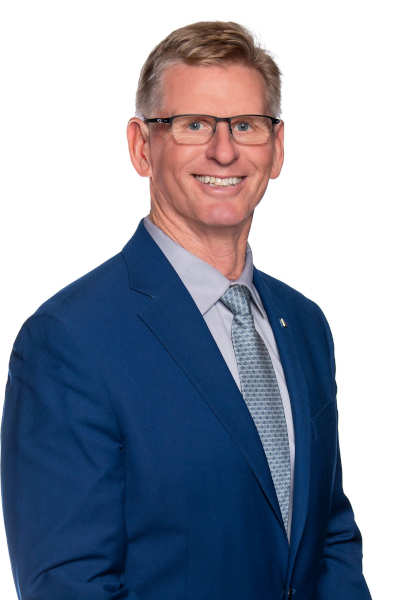
LAKE COUNTY, Calif. — Lake County’s superintendent of schools is raising concerns about a federal education memorandum issued earlier this month that’s aimed at rolling back efforts to encourage and embrace diversity.
On April 3, the U.S. Department of Education issued a four-page memorandum to public school superintendents across the nation, reaffirming that federal funding for school districts is contingent upon compliance with Title VI of the Civil Rights Act of 1964, said Superintendent Brock Falkenberg.
Title VI prohibits discrimination based on race, color, or national origin under any program or activity receiving federal financial assistance.
“Expressed in the form of a positive mindset this is about supporting all students,” said Falkenberg.
“In Lake County, the value of supporting all students is embedded in everything we do. This value is not adopted because federal law demands it, but because it reflects who we are as a Lake County community and what we, the community, believe. Our commitment to nondiscrimination would remain unchanged even in the absence of Title VI,” Falkenberg said.
Falkenberg said that, what is more concerning in the memo is the ambiguous assertion that diversity, equity and inclusion, or DEI, programs may be at odds with federal law.
“The document provides no definition of DEI, no examples of what is considered noncompliant, and no clear guidance for public schools. This vague language, combined with what appears to be an emerging pattern of ambiguous communication from federal agencies, including a similar ‘Dear Colleague’ letter issued on Feb. 14, suggests a shift toward threats and posturing rather than clear policy and guidance,” Falkenberg said.
“This is deeply problematic,” he said.
“DEI is not a slogan or a box to check in Lake County. It is a reflection of our community and a core aspect of our mission to serve every child. Diversity is not optional in Lake County, it is our lived reality. Our families represent a wide range of racial, cultural, religious, linguistic, and socioeconomic backgrounds. Our students include English language learners, children with disabilities, LGBTQ+ youth, and students from every political and social walk of life. You cannot ban or regulate diversity. It exists, and we choose to honor and leverage it,” Falkenberg explained.
“Equity, meanwhile, is how we ensure that every student has what they need to learn and succeed. It’s not about favoritism or unfair advantage, it’s about fairness,” said Falkenberg.
“Equity means providing a wheelchair for a student with mobility issues, lunch for students facing food insecurity, or flexible academic programs for students dealing with a health crisis or family emergency. Equity is meeting students where they are, giving them the tools and support they need, and holding high expectations for all,” he said.
Inclusion, Falkenberg explained, “is simply the practice of making sure every student, every family, and every staff member feels valued, respected, and welcome in our schools. That includes opportunities to engage in clubs, community events, cultural celebrations, and educational programs that reflect our shared values and diverse experiences.”
Across Lake County, over $17.1 million of annual school districts’ budgets comes from federal grants, most notably Title I, which supports students in low-income communities, and Individuals with Disabilities Act, or IDEA, which Falkenberg said provides partial funding for special education services.
“This funding is critical to serving our students and should never be used as leverage to pressure school districts into abandoning the values of the communities they serve or compromising their commitment to children,” Falkenberg said.
The Pledge of Allegiance, Falkenberg points out, ends with the statement, “With liberty and justice for all.”
“Our movement forward as a county is dependent on all students and children thriving, Falkenberg said. “Something is fundamentally wrong when school leaders are asked to choose between critical federal support and doing what is right for students.”
Falkenberg added, “In Lake County, we will continue to stand for all children without exception. We will not allow vague threats or rhetoric to derail the progress we have made. We will not retreat from our responsibility to prepare every child, regardless of background, to thrive, while they contribute meaningfully to society, the workforce, and our democracy.”
- Details
- Written by: Elizabeth Larson
The meeting will begin at 6 p.m. at the Lucerne Alpine Senior Center, 3985 Country Club Drive.
Virtual participation is available via Zoom at https://app.zoom.us/wc.
To join by phone dial 1 669 900 9128. The Zoom Webinar ID is 825 9780 9680; the passcode is 778050.
The full agenda can be seen here.
Agenda items include:
• Discussion and possible action including acceptance of an update from Public Services Director Lars Ewing and the Department of Water Resources regarding Alpine Park cleanup, swim area cleanup and tule/brush cleanup.
• A presentation from Senior Transportation Planner John Speka regarding the Lake Area Planning Council's update of the Regional Transportation Plan.
• A presentation from Public Works Director Glen March regarding transportation concerns and future projects.
• An update from Caltrans regarding potential projects.
• An update regarding a potential joint municipal advisory committee meeting.
• Flood control mitigation for Victoria Creek.
An update from Supervisor EJ Crandell.
The Central Region Town Hall Board includes Chair Becky Schwenger, Vice Chair Austin Pratt, Recorder Atlas Pearson, and members Jon Karlsson and Jacob Blue.
- Details
- Written by: Elizabeth Larson

CLEARLAKE, Calif. — Clearlake Animal Control has many dogs waiting for a new start with adoptive families.
The shelter has 55 adoptable dogs listed on its website.
This week’s dogs include “Levi,” a 10-month-old male mixed breed dog with a brown brindle coat.
Shelter staff said Levi — who is still a puppy — would love another furry friend to play with in his new home. He’s energetic, loves walks and cuddling.
The shelter is located at 6820 Old Highway 53. It’s open from 9 a.m. to 6 p.m. Tuesday through Saturday.
For more information, call the shelter at 707-762-6227, email
This week’s adoptable dogs are featured below.
Email Elizabeth Larson at
- Details
- Written by: Dennis Fordham
However, a skilled nursing facility still cannot require the execution of an advanced health care directive as a condition to providing services (Probate Code Section 5677).
In California, “A patient is presumed to have the capacity to make a health care decision, to give or revoke an advance health care directive, and to designate or disqualify a surrogate (Probate Code Section 4657).”
An adult resident at a skilled nursing facility with capacity may appoint an agent, often a close family member or trusted friend, with representative authority, and express enforceable health care decisions using an advanced health care directive or a “power of attorney for health care.”
The representative authority to make health care decisions for the resident may either be immediate or delayed. A resident with capacity will usually make the advanced health care directive immediate, both in anticipation of an unforeseen health care crisis and so that the employees of the skilled nursing facility may discuss the resident’s health care with the agent.
The advanced health care directive will need to be supplemented by a Health Insurance Portability and Accountability Act, or HIPAA, release to allow disclosure of confidential medical information.
If a skilled nursing facility resident does not already have an advanced health care directive or power of attorney for health care, with which the resident agrees, then the resident will typically want to execute an advanced health care directive (present day approach).
California law requires that execution of an advanced health care directive by a skilled nursing facility resident involve the protective oversight of an ombudsman representative as a witness.
The ombudsman will need to meet with the skilled nursing facility resident, alone or with family if requested by the resident, to ensure that the resident has the capacity to sign the document.
That is, does the resident understand, at the time of signing, that the advanced health care directive is an important legal tool to express the resident’s preferences regarding health care and to appoint an agent as a health care decisionmaker.
Also, the ombudsman will want to ensure that the resident, at the time of signing, is acting voluntarily and not under duress, undue influence or menace.
If the ombudsman is still uncertain as to the resident’s capacity to understand the advanced health care directive, the ombudsman may look at the resident’s medical chart for further information before deciding.
Next, the signing of the prepared advanced health care directive involves either one of two approaches, that is, either the notary public and an ombudsman approach, or, second, an ombudsman and an additional witness approach. Typically the first approach is used.
The additional witness to the advanced health care directive (not the ombudsman) cannot be an employee of the skilled nursing facility or the agent nominated in the advanced health care directive.
Moreover, the additional witness (that is, other than the ombudsman), “… shall be an individual who is neither related to the patient by blood, marriage, or adoption, nor entitled to any portion of the patient’s estate upon the patient’s death under a will existing when the advance directive is executed or by operation of law then existing.”
That last restriction naturally favors hiring a travelling notary as most of the people who would be willing to come to the SNF and be a witness are disqualified persons.
As a temporary or emergency (“stop gap”) measure, a resident with capacity may choose to nominate a “surrogate” health care decisionmaker.
All this requires is that the resident personally inform the supervising health care provider or a designee of the skilled nursing facility (section 4711 Probate Code). The surrogate’s authority does not exceed 60 days but, while effective, the surrogate’s authority is the controlling authority, even over the authority of an agent under any existing advanced health care directive.
The foregoing is not legal advice. Consult a qualified estate planning attorney for guidance.
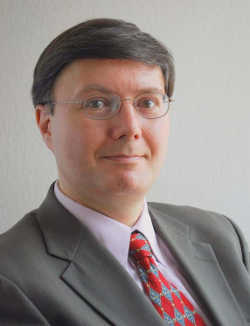
Dennis A. Fordham, attorney, is a State Bar-Certified Specialist in estate planning, probate and trust law. His office is at 870 S. Main St., Lakeport, Calif. He can be reached at