How to resolve AdBlock issue?
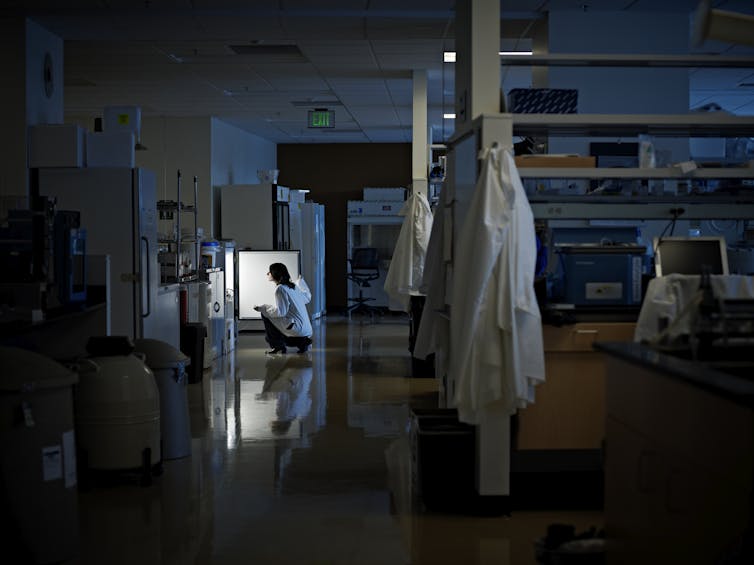
Cancer research in the U.S. doesn’t rely on a single institution or funding stream − it’s a complex ecosystem made up of interdependent parts: academia, pharmaceutical companies, biotechnology startups, federal agencies and private foundations. As a cancer biologist who has worked in each of these sectors over the past three decades, I’ve seen firsthand how each piece supports the others.
When one falters, the whole system becomes vulnerable.
The United States has long led the world in cancer research. It has spent more on cancer research than any other country, including more than US$7.2 billion annually through the National Cancer Institute alone. Since the 1971 National Cancer Act, this sustained public investment has helped drive dramatic declines in cancer mortality, with death rates falling by 34% since 1991. In the past five years, the Food and Drug Administration has approved over 100 new cancer drugs, and the U.S. has brought more cancer drugs to the global market than any other nation.
But that legacy is under threat. Funding delays, political shifts and instability across sectors have created an environment where basic research into the fundamentals of cancer biology is struggling to keep traction and the drug development pipeline is showing signs of stress.
These disruptions go far beyond uncertainty and have real consequences. Early-career scientists faced with unstable funding and limited job prospects may leave academia altogether. Mid-career researchers often spend more time chasing scarce funding than conducting research. Interrupted research budgets and shifting policy priorities can unravel multiyear collaborations. I, along with many other researchers, believe these setbacks will slow progress, break training pipelines and drain expertise from critical areas of cancer research – delays that ultimately hurt patients waiting for new treatments.
A 50-year foundation of federal investment
The modern era of U.S. cancer research began with the signing of the National Cancer Act in 1971. That law dramatically expanded the National Cancer Institute, an agency within the National Institutes of Health focusing on cancer research and education. The NCI laid the groundwork for a robust national infrastructure for cancer science, funding everything from early research in the lab to large-scale clinical trials and supporting the training of a generation of cancer researchers.
This federal support has driven advances leading to higher survival rates and the transformation of some cancers into a manageable chronic or curable condition. Progress in screening, diagnostics and targeted therapies – and the patients who have benefited from them – owe much to decades of NIH support.
But federal funding has always been vulnerable to political headwinds. During the first Trump administration, deep cuts to biomedical science budgets threatened to stall the progress made under initiatives such as the 2016 Cancer Moonshot. The rationale given for these cuts was to slash overall spending, despite facing strong bipartisan opposition in Congress. Lawmakers ultimately rejected the administration’s proposal and instead increased NIH funding. In 2022, the Biden administration worked to relaunch the Cancer Moonshot.
This uncertainty has worsened in 2025 as the second Trump administration has cut or canceled many NIH grants. Labs that relied on these awards are suddenly facing funding cliffs, forcing them to lay off staff, pause experiments or shutter entirely. Deliberate delays in communication from the Department of Health and Human Services have stalled new NIH grant reviews and funding decisions, putting many promising research proposals already in the pipeline at risk.
Philanthropy’s support is powerful – but limited
While federal agencies remain the backbone of cancer research funding, philanthropic organizations provide the critical support for breakthroughs – especially for new ideas and riskier projects.
Groups such as the American Cancer Society, Stand Up To Cancer and major hospital foundations have filled important gaps in support, often funding pilot studies or supporting early-career investigators before they secure federal grants. By supporting bold ideas and providing seed funding, they help launch innovative research that may later attract large-scale support from the NIH.
Without the bureaucratic constraints of federal agencies, philanthropy is more nimble and flexible. It can move faster to support work in emerging areas, such as immunotherapy and precision oncology. For example, the American Cancer Society grant review process typically takes about four months from submission, while the NIH grant review process takes an average of eight months.

But philanthropic funds are smaller in scale and often disease-specific. Many foundations are created around a specific cause, such as advancing cures for pancreatic, breast or pediatric cancers. Their urgency to make an impact allows them to fund bold approaches that federal funders may see as too preliminary or speculative. Their giving also fluctuates. For instance, the American Cancer Society awarded nearly $60 million less in research grants in 2020 compared with 2019.
While private foundations are vital partners for cancer research, they cannot replace the scale and consistency of federal funding. Total U.S. philanthropic funding for cancer research is estimated at a few billion dollars per year, spread across hundreds of organizations. In comparison, the federal government has typically contributed roughly five to eight times more than philanthropy to cancer research each year.
Industry innovation − and its priorities
Private-sector innovation is essential for translating discoveries into treatments. In 2021, nearly 80% of the roughly $57 billion the U.S. spent on cancer drugs came from pharmaceutical and biotech companies. Many of the treatments used in oncology today, including immunotherapies and targeted therapies, emerged from collaborations between academic labs and industry partners.
But commercial priorities don’t always align with public health needs. Companies naturally focus on areas with strong financial returns: common cancers, projects that qualify for fast-track regulatory approval, and high-priced drugs. Rare cancers, pediatric cancers and basic science often receive less attention.
Industry is also saddled with uncertainty. Rising R&D costs, tough regulatory requirements and investor wariness have created a challenging environment to bring new drugs to market. Several biotech startups have folded or downsized in the past year, leaving promising new drugs stranded in limbo in the lab before they can reach clinical trials.
Without federal or philanthropic entities to pick up the slack, these discoveries may never reach the patients who need them.
A system under strain
Cancer is not going away. As the U.S. population ages, the burden of cancer on society will only grow. Disparities in treatment access and outcomes persist across race, income and geography. And factors such as environmental exposures and infectious diseases continue to intersect with cancer risk in new and complex ways.
Addressing these challenges requires a strong, stable and well-coordinated research system. But that system is under strain. National Cancer Institute grant paylines, or funding cutoffs, remain highly competitive. Early-career researchers face precarious job prospects. Labs are losing technicians and postdoctoral researchers to higher-paying roles in industry or to burnout. And patients, especially those hoping to enroll in clinical trials, face delays, disruptions and dwindling options.

This is not just a funding issue. It’s a coordination issue between the federal government, academia and industry. There are currently no long-term policy solutions that ensure sustained federal investment, foster collaboration between academia and industry, or make room for philanthropy to drive innovation instead of just filling gaps.
I believe that for the U.S. to remain a global leader in cancer research, it will need to recommit to the model that made success possible: a balanced ecosystem of public funding, private investment and nonprofit support. Up until recently, that meant fully funding the NIH and NCI with predictable, long-term budgets that allow labs to plan for the future; incentivizing partnerships that move discoveries from bench to bedside without compromising academic freedom; supporting career pathways for young scientists so talent doesn’t leave the field; and creating mechanisms for equity to ensure that research includes and benefits all communities.
Cancer research and science has come a long way, saving about 4.5 million lives in the U.S. from cancer from 1991 to 2022. Today, patients are living longer and better because of decades of hard-won discoveries made by thousands of researchers. But science doesn’t run on good intentions alone. It needs universities. It needs philanthropy. It needs industry. It needs vision. And it requires continued support from the federal government.
Jeffrey MacKeigan, Professor of Pediatrics and Human Development, Michigan State University
This article is republished from The Conversation under a Creative Commons license. Read the original article.