How to resolve AdBlock issue?
Refresh this page
How to resolve AdBlock issue?
Refresh this page
Lake County News,California
  • Home
    • Registration Form
  • News
    • Education
    • Veterans
    • Community
      • Obituaries
      • Letters
      • Commentary
    • Police Logs
    • Business
    • Recreation
    • Health
    • Religion
    • Legals
    • Arts & Life
    • Regional
  • Calendar
  • Contact us
    • FAQs
    • Phones, E-Mail
    • Subscribe
  • Advertise Here
  • Login
How to resolve AdBlock issue?
Refresh this page

News

Wildfire Preparedness Week: Take steps to protect homes, communities

Details
Written by: LAKE COUNTY NEWS REPORTS
Published: 05 May 2025
LAKE COUNTY, Calif. — California faces a year-round wildfire threat.

Wildfire Preparedness Week 2025, observed May 4 to 10, serves as a vital call to action for all Californians to take steps now to prepare and reduce wildfire risk at home and in your community.

Cal Fire and partners are intensifying their efforts to help communities prepare for the peak of the fire year through collaboration, innovation, and public engagement.

This year’s theme — “Building a Fire-Ready Future: Strengthening Our Defenses, Together” — underscores the collective responsibility of individuals, communities, and agencies to prepare for and defend against wildfire threats.

Cal Fire continues to lead proactive wildfire mitigation through strategic fuel reduction, forest health initiatives, and an expanded grant program supporting private landowners, Fire Safe Councils, and Firewise Communities.

“Building a fire-ready future means working together — by doing your part to protect your property through home hardening efforts, creating defensible space, and creating an emergency plan for your family, you are helping first responders protect lives, property, and natural resources,” Cal Fire Director and Fire Chief Joe Tyler said.

This Wildfire Preparedness Week, Californians are urged to:

• Create defensible space, focus on Zone 0, the first five feet around your home.
• Harden structures against flying embers with ignition resistant building materials.
• Develop and practice a wildfire action plan so you are prepared when wildfire strikes.
• Stay informed with emergency alerts –sign up today
• Pack a ‘go bag’ and be ready to evacuate.

“Wildfire safety begins with being prepared,” said State Fire Marshal Daniel Berlant. “Protecting our homes and communities takes all of us — neighbors, local groups, and state agencies — working side by side to reduce risk and save lives.”

To learn more about wildfire safety and preparedness, visit www.ReadyForWildfire.org. 

Cal Fire encourages Californians to access the Ready for Wildfire web-based FirePLANNER that includes local alerts, checklists for preparedness, evacuation plans, and other kits. To download the free app, visit https://plan.readyforwildfire.org/.

The Women’s Health Initiative has shaped women’s health for over 30 years, but its future is uncertain

Details
Written by: Jean Wactawski-Wende, University at Buffalo
Published: 05 May 2025


Women make up more than 50% of the population, yet before the 1990s they were largely excluded from health and medical research studies.

To try to help correct this imbalance, in 1991 the National Institutes of Health launched a massive, long-term study called the Women’s Health Initiative, which is still running today. It is the largest, longest and most comprehensive study on women’s health ever conducted in the U.S. It also is one of the most productive studies in history, with more than 2,400 published scientific papers in leading medical journals.

On April 20, 2025, the Department of Health and Human Services told the study’s lead investigators it plans to terminate much of the program’s funding and discontinue its regional center contracts. On April 24, after pushback from the medical community, HHS officials said the funding had been reinstated. But the reversal was never officially confirmed, so the study’s lead investigators – including me – remain concerned about its future.

I am a public health researcher who has studied chronic disease prevention in women for nearly 40 years. I have been centrally involved with the Women’s Health Initiative since its inception and currently co-direct one of its four regional centers at the University at Buffalo.

The project’s findings have shaped clinical practice, prevention strategies and public health policies across the U.S. and the world, particularly for older women. In my view, its loss would be a devastating blow to women’s health.

An imperative to invest in women’s health

The Women’s Health Initiative was established in response to a growing realization that very little medical research existed to inform health care that was specifically relevant to women. In the U.S. in the 1970s, for example, almost 40% of postmenopausal women were taking estrogen, but no large clinical trials had studied the risks and benefits. In 1985 an NIH task force outlined the need for long-term research on women’s health.

Launched by Bernadine Healy, the first woman to serve as director of the NIH, the Women’s Health Initiative aimed to study ways to prevent heart disease, cancer and osteoporosis.
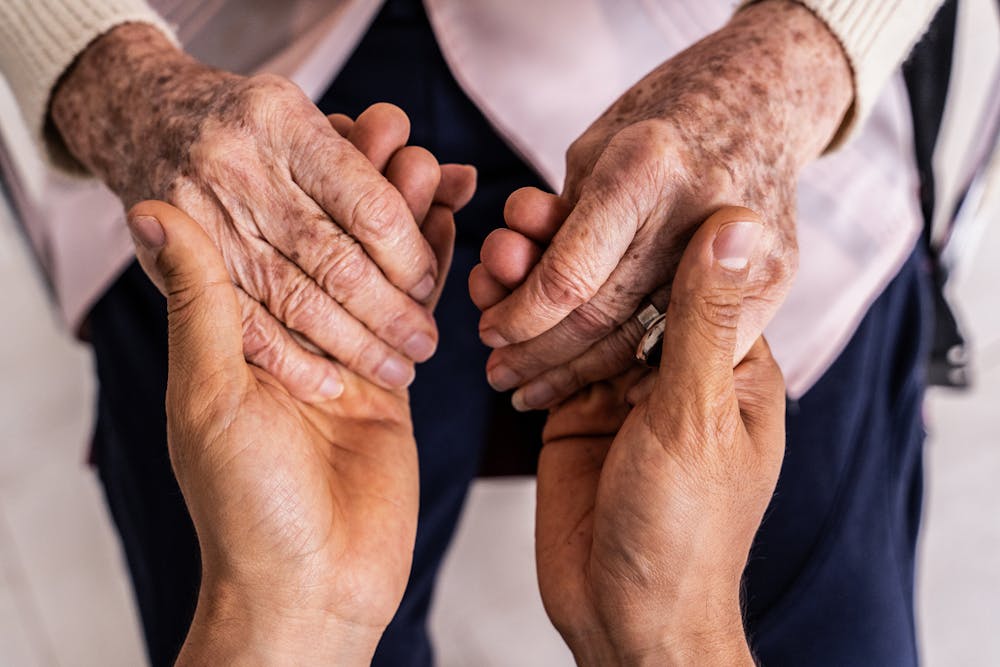
The hands of an older woman and a caregiver, clasped
About 42,000 women ages 78 to 108 remain active participants in the Women’s Health Initiative. Frazao Studio Latino/E+ via Getty Images

Between 1993 and 1998, the project enrolled 161,808 postmenopausal women ages 50 to 79 to participate in four randomized clinical trials. Two of them investigated how menopausal hormone therapy affects the risk of heart disease, breast cancer, hip fractures and cognition. Another examined the effects of a low-fat, high-fiber diet on breast and colorectal cancers as well as heart disease. The fourth looked at whether taking calcium plus vitamin D supplements helps prevent hip fractures and colorectal cancer.

Women could participate in just one or in multiple trials. More than 90,000 also took part in a long-term observational study that used medical records and surveys to probe the link between risk factors and disease outcomes over time.

Clarifying the effects of hormone therapy

Some of the most important findings from the Women’s Health Initiative addressed the effects of menopausal hormone therapy.

The hormone therapy trial testing a combination of estrogen and progesterone was set to run until 2005. However, it was terminated early, in 2002, when results showed an increased risk in heart disease, stroke, blood clotting disorders and breast cancer, as well as cognitive decline and dementia. The trial of estrogen alone also raised safety concerns, though both types of therapy reduced the risk of bone fractures.

After these findings were reported, menopausal hormone therapy prescriptions dropped sharply in the U.S. and worldwide. One study estimated that the decreased use of estrogen and progesterone therapy between 2002 and 2012 prevented as many as 126,000 breast cancer cases and 76,000 cardiovascular disease cases – and saved the U.S. an estimated US$35 billion in direct medical costs.

Reanalyses of data from these studies over the past decade have provided a more nuanced clinical picture for safely using menopausal hormone therapy. They showed that the timing of treatment matters, and that when taken before age 60 or within 10 years of menopause, hormones have more limited risk.

Defining clinical practice

Although the Women’s Health Initiative’s four original clinical trials ended by 2005, researchers have continued to follow participants, collect new data and launch spinoff studies that shape health recommendations for women over 65.

Almost a decade ago, for example, research at my institution and others found in a study of 6,500 women ages 63 to 99 that just 30 minutes of low to moderate physical activity was enough to significantly boost their health. The study led to changes in national public health guidelines. Subsequent studies are continuing to explore how physical activity affects aging and whether being less sedentary can protect women against heart disease.

Bone health and preventing fractures have also been a major focus of the Women’s Health Initiative, with research helping to establish guidelines for osteoporosis screening and investigating the link between dietary protein intake and bone health.

One of the Women’s Health Initiative’s biggest yields is its vast repository of health data collected annually from tens of thousands of women over more than 30 years. The data consists of survey responses on topics such as diet, physical activity and family history; information on major health outcomes such as heart disease, diabetes, cancer and cause of death, verified using medical records; and a trove of biological samples, including 5 million blood vials and genetic information from 50,000 participants.

The Women’s Health Initiative set out to prevent heart disease, cancer and osteoporosis in menopausal women.

Any researcher can access this repository to explore associations between blood biomarkers, disease outcomes, genes, lifestyle factors and other health features. More than 300 such studies are investigating health outcomes related to stroke, cancer, diabetes, eye diseases, mental health, physical frailty and more. Thirty are currently running.

What does the future hold?

In addition to data amassed by the Women’s Health Initiative until now, about 42,000 participants from all 50 states, now ages 78 to 108, are still actively contributing to the study. This cohort is a rare treasure: Very few studies have collected such detailed, long-term information on a broad group of women of this age. Meanwhile, the demographic of older women is growing quickly.

Continuing to shed light on aging, disease risk and prevention in this population is vital. The questions guiding the project’s ongoing and planned research directly address the chronic diseases that Health Secretary Robert F. Kennedy Jr. has announced as national priorities.

So I hope that the Women’s Health Initiative can continue to generate discoveries that support women’s health well into the future.The Conversation

Jean Wactawski-Wende, Professor of Public Health and Health Professions, University at Buffalo

This article is republished from The Conversation under a Creative Commons license. Read the original article.

Helping Paws: This week’s new dogs

Details
Written by: Elizabeth Larson
Published: 04 May 2025
“Silvy.” Photo courtesy of Animal Care and Control.

LAKE COUNTY, Calif. — Lake County Animal Care and Control has more dogs at the shelter this week waiting for their new families.

The dogs available for adoption this week include mixes of bulldog, Catahoula leopard dog, cattle dog, German shepherd, husky, Labrador Retriever, pit bull terrier and terrier.

Dogs that are adopted from Lake County Animal Care and Control are either neutered or spayed, microchipped and, if old enough, given a rabies shot and county license before being released to their new owner. License fees do not apply to residents of the cities of Lakeport or Clearlake.

Those dogs and the others shown on this page at the Lake County Animal Care and Control shelter have been cleared for adoption.

Call Lake County Animal Care and Control at 707-263-0278 or visit the shelter online for information on visiting or adopting.

The shelter is located at 4949 Helbush in Lakeport.

Email Elizabeth Larson at This email address is being protected from spambots. You need JavaScript enabled to view it.. Follow her on Twitter, @ERLarson, and on Bluesky, @erlarson.bsky.social. Find Lake County News on the following platforms: Facebook, @LakeCoNews; X, @LakeCoNews; Threads, @lakeconews, and on Bluesky, @lakeconews.bsky.social.


Toby's preview photo
Toby

Mister's preview photo
Mister

Lady's preview photo
Lady

Argo's preview photo
Argo

Marjorie's preview photo
Marjorie

Lisa's preview photo
Lisa

Maggie's preview photo
Maggie

Winnie's preview photo
Winnie

 
Bertha's preview photo
Bertha

Gunther's preview photo
Gunther

Bruno's preview photo
Bruno

Scrappy's preview photo
Scrappy

Low Low's preview photo
Low Low

Chip's preview photo
Chip

Priscilla's preview photo
Priscilla

Ranger's preview photo
Ranger

Ruger's preview photo
Ruger

Kennel#14a's preview photo
Kennel#14a

Kennel#14b's preview photo
Kennel#14b

Buster Brown's preview photo
Buster Brown

Rome's preview photo
Rome

American Red Cross to host open house and ribbon cutting at Lakeport office May 14

Details
Written by: LAKE COUNTY NEWS REPORTS
Published: 04 May 2025
LAKEPORT, Calif. — The American Red Cross California Gold Country Region is planning a special event this month to welcome the community to its Lakeport office and share volunteer opportunities.

The Red Cross will host an open house at its Lakeport office, 140 Nine St., Lakeport, on Wednesday, May 14, from 10 a.m. to noon.

A ribbon cutting will take place at 10:30 a.m.

This family-friendly event, which will include refreshments, is an opportunity for the community to meet local Red Cross volunteers and staff and learn about the wide range of services their volunteers provide in the Lakeport area and throughout the organization’s 26-county region.

Red Cross will also share information on how to become a Red Cross volunteer.

“It is a critical time for us to expand our volunteer workforce in Lakeport — especially those who serve as disaster response volunteers — so we can address the needs of people who experience home fires, as well as those who may be displaced during wildfires and other disasters,” Red Cross said in a statement.

The Red Cross will also host two volunteer information open houses at the Lakeport office on May 20 and 27. Refreshments will be served.
  1. Bees, fish and plants show how climate change’s accelerating pace is disrupting nature in 2 key ways
  2. Space News: What’s up for May 2025
  3. Clear Lake named one of best U.S. fishing lakes for 2025
  • 300
  • 301
  • 302
  • 303
  • 304
  • 305
  • 306
  • 307
  • 308
  • 309
How to resolve AdBlock issue?
Refresh this page