How to resolve AdBlock issue?
Refresh this page
How to resolve AdBlock issue?
Refresh this page
Lake County News,California
  • Home
    • Registration Form
  • News
    • Education
    • Veterans
    • Community
      • Obituaries
      • Letters
      • Commentary
    • Police Logs
    • Business
    • Recreation
    • Health
    • Religion
    • Legals
    • Arts & Life
    • Regional
  • Calendar
  • Contact us
    • FAQs
    • Phones, E-Mail
    • Subscribe
  • Advertise Here
  • Login
How to resolve AdBlock issue?
Refresh this page

News

Lake County Adult School celebrates nearly 100 graduates in 2025

Details
Written by: LAKE COUNTY NEWS REPORTS
Published: 07 June 2025

lcoeadultschoolgrads

The Lake County Adult School Graduating Class of 2025 after receiving their high school diploma on Saturday May 31, 2025, at the Lower Lake High School Gym in Lower Lake, California. Photo courtesy of the Lake County Office of Education.


LAKEPORT, Calif. — The Lake County Office of Education said it was proud to announce that nearly 100 students have earned their high school diplomas through the Lake County Adult School during the 2024–25 academic year.

This significant achievement underscores the program’s commitment to providing accessible and flexible educational opportunities for adult learners across the county.

The graduation ceremony took place on Saturday, May 31, at the Lower Lake High School Gym.

“All students can learn and succeed, but not on the same day, and not in the same way,” said Lake County Superintendent of Schools Brock Falkenberg. “Nearly 100 students earning their high school diploma proves that when given the opportunity and support, everyone can reach their goals.”

The Lake County Adult School, established in September 2023, offers free, in-person high school diploma completion programs for adults aged 18 and older, with classes held at both the Lake County Campus of Woodland Community College and Mendocino College Lake Center.

“Our adult education programs are designed to meet the diverse needs of our students, providing them with the support and resources necessary to succeed,” said Matt Russell, director of Adult Education & College and Career Readiness. “These graduates have demonstrated incredible grit, resilience, and dedication. We are immensely proud of their accomplishments.”

The program’s success stories include individuals like Tom Willis, who earned his diploma at the age of 71.

Willis was the student speaker at the graduation ceremony and exemplifies that it is never too late to earn your diploma. Inspired by his daughter and granddaughter who are both previous graduates of the program, Willis’s achievement highlights the program’s impact on families and the broader community.

Willis plans to continue his education journey by taking classes at the Woodland Community College for culinary and baking.

With a 130-credit graduation requirement and Western Association of Schools and Colleges, or WASC, accreditation, the Lake County Adult School ensures a comprehensive educational experience.

The program’s flexibility allows students to balance their studies with personal and professional responsibilities, fostering an environment where lifelong learning thrives.

For more information about the Lake County Adult School and enrollment opportunities, please visit lakecoe.org/AdultSchool or contact Adult Education Instructor Jonah Wakefield at This email address is being protected from spambots. You need JavaScript enabled to view it. or 707-245-6366.

Clearlake Animal Control: ‘Coco’ and the dogs

Details
Written by: Elizabeth Larson
Published: 07 June 2025

caccoco 

“Coco.” Photo courtesy of Clearlake Animal Control.


CLEARLAKE, Calif. — Clearlake Animal Control has many dogs that are waiting to be part of new families.

The shelter has 50 adoptable dogs listed on its website.

This week’s dogs include “Coco,” a male Great Pyrenees mix with a white coat.

The shelter is located at 6820 Old Highway 53. It’s open from 9 a.m. to 6 p.m. Tuesday through Saturday.

For more information, call the shelter at 707-762-6227, email This email address is being protected from spambots. You need JavaScript enabled to view it., visit Clearlake Animal Control on Facebook or on the city’s website.

This week’s adoptable dogs are featured below.

Email Elizabeth Larson at This email address is being protected from spambots. You need JavaScript enabled to view it.. Follow her on Twitter, @ERLarson, and on Bluesky, @erlarson.bsky.social. Find Lake County News on the following platforms: Facebook, @LakeCoNews; X, @LakeCoNews; Threads, @lakeconews, and on Bluesky, @lakeconews.bsky.social.


Estate Planning: The possible return of the MediCal asset limits

Details
Written by: Dennis Fordham
Published: 07 June 2025

dennisfordhamheadshot

Dennis Fordham. Courtesy photo.


California’s just revised proposed state budget shows that Gov. Newsom intends to reinstate the Asset test for Medi-Cal eligibility.

Previously, on Jan. 1, 2024, California had abolished the asset test. Currently, assets are not considered when a person applies for any type of Medi-Cal, whether it is community based (at home) or long term care Medi-Cal (at a skilled nursing facility).

However, the proposed budget shows that the $2,000/$3,000 (single/married couple) assets limits for countable non-exempt will return in 2026. Medi-Cal would revert to pre-2024.

Prior to Jan. 1, 2024, Medi-Cal had the following asset categories: (1) Exempt assets, (2) non available non exempt assets, and (3) available non exempt assets. Exempt and unavailable assets are not counted in the asset test. Available non-exempt assets do count. California residents with excess countable assets would make them non countable or else transfer them in ways that did not result in an ineligibility period to receive Medi-Cal.

People seeking Medi-Cal eligibility had the following ways to become Medi-Cal eligible without transferring assets: spend down non exempt assets (e.g., excess money), make non exempt assets unavailable (e.g., placing them for sale), purchase a special type of single premium annuity, give non exempt assets away (typically to relatives) or else place assets into a special needs trust to make the assets unavailable. Anytime a person already on Medi-Cal received an inheritance, these approaches were often applied.

Transferring assets and avoiding any transfer penalties, in the right situation, was also widely used. California’s long-standing 30 month look back rules required Medi Cal eligibility workers to count non exempt assets gifted away during the 30 month look back period (prior to Medi-Cal application). Such transfers could result in an ineligibility period for Medi-Cal eligibility, especially if not done correctly.

However, the transfer rules are unlikely to apply to transfers made between Jan. 1, 2024, and Jan. 1, 2026.

Presently, transfer rules are irrelevant with respect to transfers made after Jan. 1, 2024, and 2026. Also, prior to Jan. 1, 2024, Medi-Cal did not consider the transfer of an exempt asset (e.g., a person’s residence) as a disqualifying transfer because such retaining exempt assets did disqualify a person from Medi-Cal, but did eliminate them from the estate for estate recovery at death.

Now, during 2025, people receiving or expecting to need Medi-Cal will likely re-examine whether their existing assets and anticipate any future inheritances they might receive would disqualify their continued or future Medi-Cal eligibility after 2025.

Naturally, purchasing new (or improving existing) assets that are exempt for Medi-Cal eligibility purposes (e.g., a dwelling, a vehicle, household contents, a burial policy, services) is the first “go to” approach. Transferring assets to family or using a special needs trust are next step approaches.

Families of existing Medi-Cal recipients in long term skilled nursing facilities (”SNF’s”) are likely going to consider what to do with the soon to be excess countable resources (e.g., money in the bank, brokerage, second homes, etc.) under a possible restored asset test and whether to act prior to 2026.

California’s possible reinstatement of the Medi-Cal eligibility asset test would bring us back to familiar but undesired Medi-Cal eligibility planning territory. Nothing is yet certain. But the possibility needs careful monitoring and a getting ready to act; perhaps even prior to Jan. 1, 2026.

The foregoing is not legal advice.  Consult a qualified elder law attorney for guidance.

Dennis A. Fordham, Attorney, is a State Bar-Certified Specialist in estate planning, probate and trust law. His office is at 870 S. Main St., Lakeport, Calif. He can be reached at This email address is being protected from spambots. You need JavaScript enabled to view it. and 707-263-3235. 

Space News: New model helps to figure out which distant planets may host life

Details
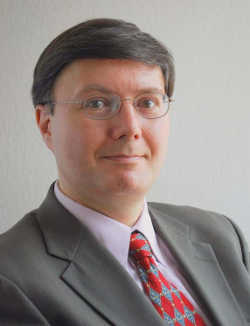
Written by: Daniel Apai, University of Arizona
Published: 07 June 2025


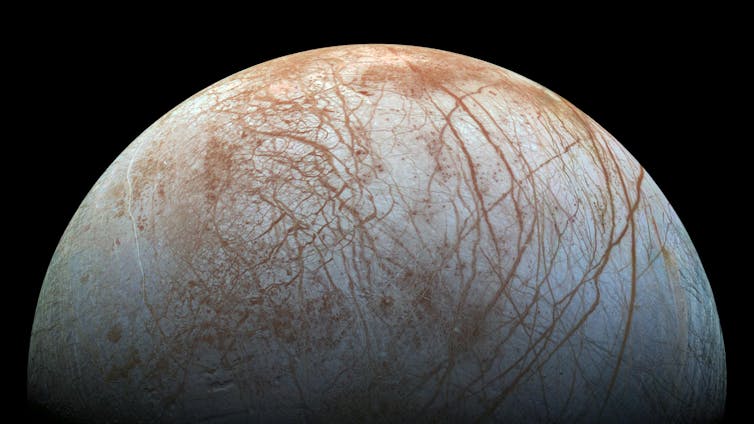
Some ‘water worlds’ like Jupiter’s moon Europa could potentially be habitable for life. NASA/JPL-Caltech/SETI Institute

The search for life beyond Earth is a key driver of modern astronomy and planetary science. The U.S. is building multiple major telescopes and planetary probes to advance this search. However, the signs of life – called biosignatures – that scientists may find will likely be difficult to interpret. Figuring out where exactly to look also remains challenging.

I am an astrophysicist and astrobiologist with over 20 years of experience studying extrasolar planets – which are planets beyond our solar system.

My colleagues and I have developed a new approach that will identify the most interesting planets or moons to search for life and help interpret potential biosignatures. We do this by modeling how different organisms may fare in different environments, informed by studies of limits of life on Earth.

New telescopes to search for life

Astronomers are developing plans and technology for increasingly powerful space telescopes. For instance, NASA is working on its proposed Habitable Worlds Observatory, which would take ultrasharp images that directly show the planets orbiting nearby stars.

My colleagues and I are developing another concept, the Nautilus space telescope constellation, which is designed to study hundreds of potentially Earthlike planets as they pass in front of their host stars.

A number of spherical telescopes next to a spaceship.
Future telescopes, like the proposed Nautilus, could help search the skies for habitable planets. Katie Yung, Daniel Apai /University of Arizona and AllThingsSpace /SketchFab, CC BY-ND

These and other future telescopes aim to provide more sensitive studies of more alien worlds. Their development prompts two important questions: “Where to look?” and “Are the environments where we think we see signs of life actually habitable?”

The strongly disputed claims of potential signs of life in the exoplanet K2-18b, announced in April 2025, and previous similar claims in Venus, show how difficult it is to conclusively identify the presence of life from remote-sensing data.

When is an alien world habitable?

Oxford Languages defines “habitable” as “suitable or good enough to live in.” But how do scientists know what is “good enough to live in” for extraterrestrial organisms? Could alien microbes frolic in lakes of boiling acid or frigid liquid methane, or float in water droplets in Venus’ upper atmosphere?

To keep it simple, NASA’s mantra has been “follow the water.” This makes sense – water is essential for all Earth life we know of. A planet with liquid water would also have a temperate environment. It wouldn’t be so cold that it slows down chemical reactions, nor would it be so hot that it destroys the complex molecules necessary for life.

However, with astronomers’ rapidly growing capabilities for characterizing alien worlds, astrobiologists need an approach that is more quantitative and nuanced than the water or no-water classification.

A community effort

As part of the NASA-funded Alien Earths project that I lead, astrobiologist Rory Barnes and I worked on this problem with a group of experts – astrobiologists, planetary scientists, exoplanet experts, ecologists, biologists and chemists – drawn from the largest network of exoplanet and astrobiology researchers, NASA’s Nexus for Exoplanet System Science, or NExSS.

Over a hundred colleagues provided us with ideas, and two questions came up often:

First, how do we know what life needs, if we do not understand the full range of extraterrestrial life? Scientists know a lot about life on Earth, but most astrobiologists agree that more exotic types of life – perhaps based on different combinations of chemical elements and solvents – are possible. How do we determine what conditions those other types of life may require?

Second, the approach has to work with incomplete data. Potential sites for life beyond Earth – “extrasolar habitats” – are very difficult to study directly, and often impossible to visit and sample.

For example, the Martian subsurface remains mostly out of our reach. Places like Jupiter’s moon Europa’s and Saturn’s Moon Enceladus’ subsurface oceans and all extrasolar planets remain practically unreachable. Scientists study them indirectly, often only using remote observations. These measurements can’t tell you as much as actual samples would.

A view of Mars' dusty, rocky surface.
Mars’ hot, dusty surface is hostile for life. But scientists haven’t been able to study whether some organisms could lurk beneath. NASA/JPL-Caltech/Malin Space Science Systems

To make matters worse, measurements often have uncertainties. For example, we may be only 88% confident that water vapor is present in an exoplanet’s atmosphere. Our framework has to be able to work with small amounts of data and handle uncertainties. And, we need to accept that the answers will often not be black or white.

A new approach to habitability

The new approach, called the quantitative habitability framework, has two distinguishing features:

First, we moved away from trying to answer the vague “habitable to life” question and narrowed it to a more specific and practically answerable question: Would the conditions in the habitat – as we know them – allow a specific (known or yet unknown) species or ecosystem to survive?

Even on Earth, organisms require different conditions to survive – there are no camels in Antarctica. By talking about specific organisms, we made the question easier to answer.

Second, the quantitative habitability framework does not insist on black-or-white answers. It compares computer models to calculate a probabilistic answer. Instead of assuming that liquid water is a key limiting factor, we compare our understanding of the conditions an organism requires (the “organism model”) with our understanding of the conditions present in the environment (the “habitat model”).

Both have uncertainties. Our understanding of each can be incomplete. Yet, we can handle the uncertainties mathematically. By comparing the two models, we can determine the probability that an organism and a habitat are compatible.

As a simplistic example, our habitat model for Antarctica may state that temperatures are often below freezing. And our organism model for a camel may state that it does not survive long in cold temperatures. Unsurprisingly, we would correctly predict a near-zero probability that Antarctica is a good habitat for camels.

An image of thick plumes of smoke coming from rocks under the sea.
A hydrothermal vent deep in the Atlantic Ocean. These vents discharge incredibly hot plumes of water, but some host hearty microorganisms. P. Rona / OAR/National Undersea Research Program (NURP); NOAA

We had a blast working on this project. To study the limits of life, we collected literature data on extreme organisms, from insects that live in the Himalayas at high altitudes and low temperatures to microorganisms that flourish in hydrothermal vents on the ocean floor and feed on chemical energy.

We explored, via our models, whether they may survive in the Martian subsurface or in Europa’s oceans. We also investigated if marine bacteria that produce oxygen in Earth’s oceans could potentially survive on known extrasolar planets.

Although comprehensive and detailed, this approach makes important simplifications. For example, it does not yet model how life may shape the planet, nor does it account for the full array of nutrients organisms may need. These simplifications are by design.

In most of the environments we currently study, we know too little about the conditions to meaningfully attempt such models – except for some solar system bodies, such as Saturn’s Enceladus.

The quantitative habitability framework allows my team to answer questions like whether astrobiologists might be interested in a subsurface location on Mars, given the available data, or whether astronomers should turn their telescopes to planet A or planet B while searching for life. Our framework is available as an open-source computer model, which astrobiologists can now readily use and further develop to help with current and future projects.

If scientists do detect a potential signature of life, this approach can help assess if the environment where it is detected can actually support the type of life that leads to the signature detected.

Our next steps will be to build a database of terrestrial organisms that live in extreme environments and represent the limits of life. To this data, we can also add models for hypothetical alien life. By integrating those into the quantitative habitability framework, we will be able to work out scenarios, interpret new data coming from other worlds and guide the search for signatures of life beyond Earth – in our solar system and beyond.The Conversation

Daniel Apai, Associate Dean for Research and Professor of Astronomy and Planetary Sciences, University of Arizona

This article is republished from The Conversation under a Creative Commons license. Read the original article.

  1. Free adoptions set to send more pets home Saturday
  2. Clearlake City Council approves new agreement for school resource officers
  3. ‘Pump the brakes’: CHP launches statewide speed prevention campaign
  • 265
  • 266
  • 267
  • 268
  • 269
  • 270
  • 271
  • 272
  • 273
  • 274
How to resolve AdBlock issue?
Refresh this page