How to resolve AdBlock issue?
Refresh this page
How to resolve AdBlock issue?
Refresh this page
Lake County News,California
  • Home
    • Registration Form
  • News
    • Education
    • Veterans
    • Community
      • Obituaries
      • Letters
      • Commentary
    • Police Logs
    • Business
    • Recreation
    • Health
    • Religion
    • Legals
    • Arts & Life
    • Regional
  • Calendar
  • Contact us
    • FAQs
    • Phones, E-Mail
    • Subscribe
  • Advertise Here
  • Login
How to resolve AdBlock issue?
Refresh this page

News

City of Clearlake approved as a Blue Zones Project Worksite

Details
Written by: LAKE COUNTY NEWS REPORTS
Published: 08 June 2025

clearlakelogo


LAKE COUNTY, Calif. — Blue Zones Project Lake County announced that the city of Clearlake has been officially approved as a Blue Zones Project Worksite, recognizing its commitment to supporting employee well-being and fostering a healthier work environment.

To achieve this approval, the city of Clearlake implemented a range of supportive environmental changes, including flexible workstations, an employee garden, fresh fruit in the break room, and a Blue Zones Project book library to encourage ongoing learning and personal growth.

These efforts build on the city’s broader commitment to employee well-being, reflected in its human resources policies that prioritize a healthy, balanced, and engaged workplace culture.

"The city of Clearlake has shown genuine commitment to creating a thriving workplace that empowers employees to make healthier choices, feel more connected, and bring their best selves to work each day," said Kelly Yandell, organization and well-being lead for Blue Zones Project Lake County, who led the worksite approval process.

City leaders celebrated the designation as a meaningful step in their organizational wellness Journey.

“The city of Clearlake is thrilled to announce its official approval as a Blue Zones organization, a testament to our unwavering commitment to well-being and a healthier, more vibrant community,” said Melissa Swanson, Administrative Services director for the city of Clearlake.

Swanson added, “This significant achievement marks a pivotal moment in our journey, and we couldn't be prouder. This approval is the culmination of dedicated effort from our entire team, our partners, and the community members who embraced this vision with us. We are incredibly excited about the positive impact this will continue to have on the health and happiness of everyone involved.”

Blue Zones Project is a community-led well-being improvement initiative designed to make healthy choices easier in all the places people live, work, and play. Based on research of the world’s longest-lived cultures, the project focuses on permanent and sustainable changes to environment, policy, and social networks.

With this new approval, the city of Clearlake joins a growing number of worksites across Lake County working to make the healthy choice the easy choice for employees.

For more information about Blue Zones Project Lake County and how your organization can become an approved worksite, visit www.bluezonesproject.com or email This email address is being protected from spambots. You need JavaScript enabled to view it..

Celebrate fourth annual California State Parks Week June 11 to 15

Details
Written by: LAKE COUNTY NEWS REPORTS
Published: 08 June 2025

cspwlogo


Mark your calendars and start making plans to join California State Parks and partners in celebrating the fourth annual California State Parks Week from June 11 to 15.

Presented by California State Parks, California State Parks Foundation, Parks California and Save the Redwoods League, this exciting weeklong celebration with the tagline “This is Where You Live” offers more than 170 events, including both in-person and virtual experiences, highlighting the people, places and programs that make California’s 280 state parks truly unique.

Why California State Parks Week?

California’s state parks preserve and protect the state’s natural and cultural history. In recent years, it has become abundantly clear that public lands play a critical role in making communities stronger, happier and healthier. Our shared parks are places where everyone can connect with nature and find inspiration and joy. California State Parks Week is a fun way to celebrate the wonder and sense of community that the outdoors provides to Californians and visitors from all over the world.

Lake County is home to Clear Lake State Park in Kelseyville and Anderson Marsh State Historic Park in Lower Lake, as well as a portion of Robert Louis Stevenson State Park near Middletown.

During California State Parks Week, Anderson Marsh will host its final guided park walk of the spring season on Saturday, June 14.

Whether you are exploring new outdoor activities, learning ways to protect the environment or connecting with your community, California State Parks Week offers something for everyone — all at no additional cost. It’s an opportunity to take direct climate action, enjoy the beauty of your parks and be part of a movement to preserve them for future generations.

The festivities take added significance this year as California celebrates its 175th year of statehood.

“As California commemorates its 175th anniversary, California State Parks Week offers an opportunity to celebrate the incredible natural and cultural wealth that our 280 state parks offer,” said Armando Quintero, director of California State Parks. “This is where you live, and these spaces connect us to the land, our history and one another. Whether you’re hiking, volunteering or simply soaking in the views, this week is a beautiful reminder to embrace the unmatched nature of California and the positive impact it has on our well-being and the health of the environment.”

Launched in 2022, California State Parks Week advances the “Outdoor Access for All” initiative championed by Gov. Gavin Newsom, First Partner Jennifer Siebel Newsom and the California Natural Resources Agency’s “Outdoors for All” initiative.

The initiative expands outdoor access to all Californians through focused investments in open space infrastructure, outdoor programming and improvements to permit applications, with a priority to support underserved communities.

California State Parks protects the best of the state’s natural and cultural history; more than 340 miles of coastline; the tallest, largest and among the oldest trees in the world; and deserts, lakes, rivers and beaches. There are more than 5,200 miles of trails, and 15,000 campsites, prehistoric and historic archeological sites, ghost towns, historic homes and monuments — all waiting to be explored.

“California State Parks Week is more than a celebration — it’s a reflection of the deep, personal connections people have with these incredible places,” said Rachel Norton, executive director of California State Parks Foundation. “At California State Parks Foundation, we believe that when people explore parks and have meaningful experiences in nature, they’re more likely to become lifelong stewards. From volunteering to advocating for funding, Californians are stepping up to protect these shared lands for future generations. This week is a reminder of the joy our parks bring — and the power we have, together, to ensure they thrive.”

The following are some ways to enjoy the state’s park.

Celebrate community and culture: California’s state parks are for all people. The event affirms that truth by elevating the perspectives and experiences of communities that have been historically underrepresented in public lands with celebrations and cultural events.

Explore new experiences: Everyone is encouraged to visit a state park and try something new. From first-time camping and an interpretive hike to adventures like surfing, boating or off-roading, California State Parks Week is your invitation to explore an activity that you just might fall in love with.

Nourish your health and well-being: Studies have shown that time in nature can boost people’s physical, mental and emotional well-being. Everyone should have access to these benefits. California’s state parks give us all places where we can find refuge, inspiration and joy.

Support climate resilience: Learn about and support state parks and their partners’ efforts to ensure climate resilience across California’s State Park System — from expanding protected lands in state parks and restoring forests to engaging in educational dialogue about climate threats and solutions.

“Parks are more than places — they are part of the fabric of our communities and where people from all backgrounds can feel welcomed, inspired and connected,” Said Kindley Walsh Lawlor, president and CEO of Parks California. “California State Parks Week celebrates the unique power of these public spaces to bring people together, foster belonging and spark a lifelong love for the outdoors. At Parks California, we are proud to help make parks more welcoming and resilient so everyone can enjoy their beauty and benefits — now and into the future.”

Reservations are now open. For a full list of events and participation details, visit https://castateparksweek.org/.

AmeriCorps is on the chopping block – despite research showing that the national service agency is making a difference in local communities

Details
Written by: Pamela Paxton, The University of Texas at Austin
Published: 08 June 2025


Many AmeriCorps crews, like this one seen at work in Maine in 2011, restore and renovate public parks. John Patriquin/Portland Press Herald via Getty Images

Hundreds of thousands of U.S. nonprofits provide vital services, such as running food banks and youth programs, supporting public health initiatives and helping unemployed people find new jobs. Although this work helps sustain local communities, obtaining the money and staff they require is a constant struggle for many of these groups.

That’s where AmeriCorps often comes in. The independent federal agency for national service and volunteerism has facilitated the work of approximately 200,000 people a year, placing them through partnerships with thousands of nonprofits that provide tutoring, disaster relief and many other important services.

But Americorps’ fate is now uncertain. In April 2025, the Trump administration canceled more than 1,000 grants, suddenly ending the stipends that were supporting more than 32,000 AmeriCorps volunteers. On June 5, a judge ordered that these grants be restored in Washington D.C. and 24 states in response to a lawsuit they had filed. The judge also ordered that all volunteers who had been deployed in those places be reinstated “if they are willing and able to return.”

The Trump administration has also put most of AmeriCorps administrative staff on leave and indicated that it wants to eliminate the independent agency, along with its US$1.2 billion annual budget. AmeriCorps doesn’t appear in a detailed 2026 budget request the administration released on May 30.

I’m a sociology and public affairs professor who has studied nonprofits and volunteering for decades. My research suggests that dismantling AmeriCorps would harm the organizations that rely on national service members and take a toll on the communities that benefit from their work.

AmeriCorps explains what the independent national service agency does.

What AmeriCorps does

AmeriCorps traces its roots to the mid-1960s, when Volunteers in Service to America, known as VISTA, was founded as a domestic counterpart to the Peace Corps. Several earlier service programs were consolidated when Congress passed the National and Community Service Trust Act in 1993. AmeriCorps was officially launched in 1994 – and VISTA became one of its programs.

Since then, AmeriCorps members have built housing and infrastructure, delivered disaster relief, tutored in low-income schools, provided health care and helped older adults age with dignity in both urban and rural communities across the nation.

AmeriCorps includes a variety of programs, each designed to address specific public needs. Some AmeriCorps volunteers provide direct services, such as tutoring, food delivery and in disaster response efforts. Others focus on building the long-term capacity of local nonprofits through volunteer recruitment, fundraising strategy and community outreach.

AmeriCorps volunteers, whom the agency calls “members,” are placed in thousands of nonprofits, schools and local agencies. Many of them are recent college graduates or early-career professionals. Some programs specifically ask people over 55 to serve. Those “senior” volunteers support children through the Foster Grandparents program, volunteer for organizations or assist other older people through the Senior Companions program.

Many AmeriCorps volunteers are paid a modest allowance for this work that runs about $500 per week. AmeriCorps senior volunteers receive smaller sums in hourly stipends to offset the costs of volunteering.

Fox40 News in Sacramento, Calif., covers the Trump administration’s reduction of AmeriCorps’ ranks in April 2025.

Helping nonprofits gain traction

AmeriCorps has long funded research that assesses its impact.

One such study found that every dollar invested in national service generates $11.80 in benefits for society, such as higher earnings, better mental and physical health, and economic growth. Additionally, every federal dollar spent on national service produces $17.30 in savings across other government programs through reductions in public assistance, health and criminal justice spending.

As part of AmeriCorps’ research grants program, I have received funding to study civic engagement and AmeriCorps programming.

In one of those studies, which I conducted with two former colleagues at the University of Texas at Austin in 2021, we found that VISTA volunteers were able to help nonprofits gain volunteers. After two years, an organization with that support had 71% more volunteers than those that didn’t participate in the VISTA program.

We also found that the longer a nonprofit had a staffer supported by the VISTA program, the more its overall pool of volunteers increased.

Nonprofits with VISTA volunteers also had three times as many donations two years later, compared with nonprofits without VISTA service members. But the total value of donations the nonprofit obtained didn’t always rise. That is, we found that VISTA builds people power, but not necessarily fundraising revenue.

Findings like these indicate that AmeriCorps hasn’t just helped the people it serves or the people who volunteer through the program. It also strengthens nonprofits and increases engagement within local communities, reinforcing the civic fabric that knits communities together.

As members of Congress and the White House decide whether to preserve AmeriCorps, I hope they consider the evidence that demonstrates this worthwhile program’s positive impact.The Conversation

Pamela Paxton, Professor of Sociology, The University of Texas at Austin

This article is republished from The Conversation under a Creative Commons license. Read the original article.

Space News: What’s up for June 2025

Details
Written by: Preston Dyches
Published: 08 June 2025

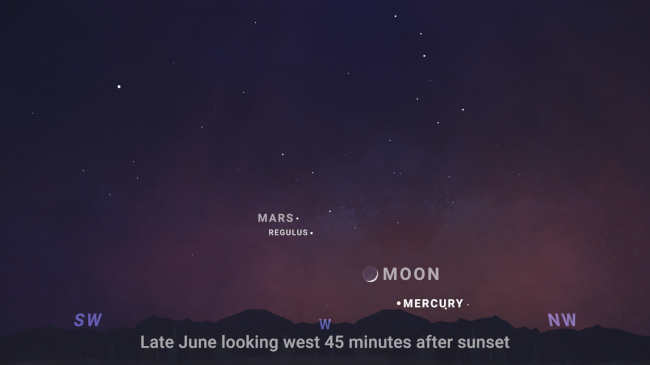
junewhatsupmars 

Sky chart showing Mercury with the crescent Moon following sunset in late June, 2025. NASA/JPL-Caltech.


What’s Up for June? Mars grazes the lion's heart, a connection to ancient times, and the galaxy in all its glory.

June planet observing

Starting with planet observing for this month, find Saturn and Venus in the eastern sky during the couple of hours before dawn each morning throughout the month. Saturn rapidly climbs higher in the sky each day as the month goes on. You'll find the third quarter moon next to Saturn on the 19th, and a crescent moon next to Venus on the 22nd. 

Mercury pops up toward the end of the month. Look for it quite low in the west, just as the glow of sunset is fading. It's highest and most visible on the 27th.

Mars is still visible in the couple of hours after sunset toward the west, though it's noticeably fainter than it was in early May. 

Over several days in mid-June, Mars passes quite close to Regulus, the bright star at the heart of the constellation Leo, the lion. Have a peek on the 16th and 17th with binoculars or a small telescope to see them as close as the width of the full moon.

Milky Way core season

June means that Milky Way "Core Season" is here. This is the time of year when the Milky Way is visible as a faint band of hazy light arching across the sky all night. You just need to be under dark skies away from bright city lights to see it. What you're looking at is the bright central core of our home galaxy, seen edge-on, from our position within the galaxy's disk. 

Long-exposure photos make the Milky Way's bright stars and dark dust clouds even clearer. And while our eyes see it in visible light, NASA telescopes observe the galaxy across the spectrum — peering through dust to help us better understand our origins.

However you observe it, getting out under the Milky Way in June is a truly remarkable way to connect with the cosmos.

junewhatsupregulus

Sky chart showing Mars close to Regulus in the evening sky on June 16, 2025. NASA/JPL-Caltech.


June Solstice

June brings the summer solstice for those north of the equator, which is the winter solstice for those south of the equator. In the Northern Hemisphere, this is when the Sun is above the horizon longer than any other day, making it the longest day of the year. The situation is reversed for the Southern Hemisphere, where it's the shortest day of the year. 

Earth's tilted rotation is the culprit. The tilt is always in the same direction, with the North Pole always pointing toward Polaris, the North Star. And since that tilt stays the same, year round, when we're on one side of the Sun in winter, the north part of the planet is tilted away from the Sun. 

But six months later, the planet moves halfway around its annual path, carrying us to the opposite side of Earth's orbit, and the northern part of the planet now finds itself tilted toward the Sun. The June solstice is when this tilt is at its maximum. This is summertime for the north, bringing long days, lots more sunlight, and warmer temperatures.

junewhatsuppolaris

Illustration from a NASA animation showing the tilt of Earth's axis in June (Northern Hemisphere summer) with respect to the Sun, the planet's orbit, and the North Star, Polaris. NASA's Goddard Space Flight Center.


The June solstice marks a precise moment in Earth's orbit — a consistent astronomical signpost that humans have observed for millennia. Ancient structures from Stonehenge to Chichén Itzá were built, in part, to align with the solstices, demonstrating how important these celestial events were to many cultures. 

So whether you're experiencing long summer days in the northern hemisphere or the brief daylight hours of winter in the south, find a quiet spot to watch the sunset on this special day and you'll be participating in one of humanity's oldest astronomical traditions, connecting you to observers across thousands of years of human history.

Preston Dyches works for NASA's Jet Propulsion Laboratory.


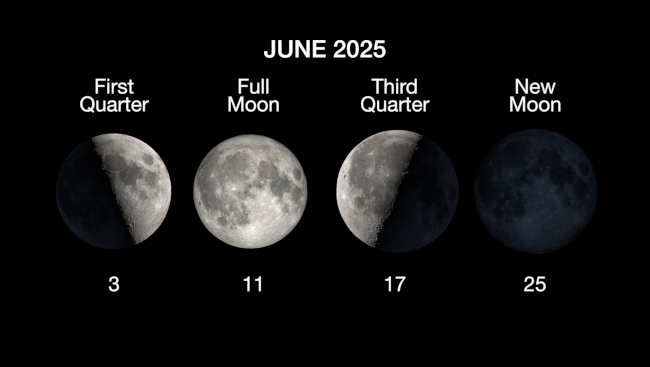
junewhatsupmoon

The phases of the moon for June 2025. NASA/JPL-Caltech.

  1. Lake County Adult School celebrates nearly 100 graduates in 2025
  2. Clearlake Animal Control: ‘Coco’ and the dogs
  3. Estate Planning: The possible return of the MediCal asset limits
  • 264
  • 265
  • 266
  • 267
  • 268
  • 269
  • 270
  • 271
  • 272
  • 273
How to resolve AdBlock issue?
Refresh this page