How to resolve AdBlock issue?
Refresh this page
How to resolve AdBlock issue?
Refresh this page
Lake County News,California
  • Home
    • Registration Form
  • News
    • Education
    • Veterans
    • Community
      • Obituaries
      • Letters
      • Commentary
    • Police Logs
    • Business
    • Recreation
    • Health
    • Religion
    • Legals
    • Arts & Life
    • Regional
  • Calendar
  • Contact us
    • FAQs
    • Phones, E-Mail
    • Subscribe
  • Advertise Here
  • Login
How to resolve AdBlock issue?
Refresh this page

News

First-of-its-kind partnership will support older adults in higher education and workforce development

Details
Written by: LAKE COUNTY NEWS REPORTS
Published: 22 June 2025

The California Community Colleges, the California Department of Aging, and the Labor and Workforce Development Agency have launched a new statewide effort to support adult learners. 

This collaboration ensures older adults have access to higher education, job training and opportunities to build new skills.

The agencies have signed a memorandum of understanding that provides guidelines on how to work together with regional partners to establish career pathways for older adults. 

Whether going back to work or starting a new career, learners will have access to education and hands-on job training that opens new doors and builds a stronger workforce. 

Through this partnership, agencies are also expanding opportunities for caregivers by connecting them to health care career pathways and creating more job opportunities for older adults and people with disabilities, a key priority within the California Community College’s strategic plan, Vision 2030.

“This partnership marks an important step in Vision 2030 to expand access to career-ready education for learners at every stage of life,” said California Community Colleges Chancellor Sonya Christian. “By recognizing the value of lived experience and building on existing skills, we’re creating new opportunities for adult learners to succeed academically and thrive in today’s workforce. Together, we’re opening pathways to advancement while supporting a stronger, more resilient economy for our entire state."

Many older adults are looking for ways to stay engaged or find meaningful work. Because of this new collaboration, community colleges across the state will connect adult students with career technical education, job training, and support services, helping them stay competitive. 

Guided by California’s Master Plan for Aging, today’s initiative supports the development of inclusive communities where older adults are valued, engaged, and have access to opportunities to work, volunteer, and thrive.

“California’s older adults are a powerful, untapped resource, bringing wisdom, resilience and a lifetime of experience to today’s dynamic economy. At the California Department of Aging, we’re reimagining what it means to age in this state by championing bold, inclusive pathways that empower older adults to keep learning, earning, working and shaping the future of their communities,” said Susan DeMarois, director of the California Department of Aging.

California community colleges focus on career education and entrepreneurial development programs. With the support of the California Labor and Workforce Development Agency, these programs will be elevated, allowing both agencies to work together to better serve adult learners across the state.

“We are proud to be part of this effort, and by working together, we will ensure older adults develop new skills, while keeping California’s workforce strong and inclusive,” said Secretary of the California Labor and Workforce Development Agency Stewart Knox.

This collaboration between state agencies is a key step in ensuring that California’s aging population has access to academic opportunities and resources to thrive in a rapidly changing world. It also supports expanding the caregiving workforce, which is a critical need as it’s estimated that California will experience a shortage of up to 3.2 million caregivers by 2030.

The California Community Colleges is the largest system of higher education in the nation, composed of 73 districts and 116 colleges serving 2.1 million students per year. 

Thompson responds to bombing of Iranian nuclear sites, continues call for Congress to convene

Details
Written by: LAKE COUNTY NEWS REPORTS
Published: 22 June 2025

In the wake of bombing strikes conducted on three nuclear sites in Iran on Saturday, Lake County’s member of the House of Representatives continued his call for Congress to return to Session. 

“It is Congress’ Constitutional responsibility to debate and approve any use of military force,” Rep. Mike Thompson (CA-04) said following President Donald Trump’s announcement that the United States had executed the strikes in the midst of the Israel-Iran conflict.

“This is why I called on Speaker Johnson last week to reconvene the U.S. House of Representatives, and I am calling on him once again to call us back into session now,” Thompson said.

He added, “Members must be briefed immediately on the evolving situation in the Middle East so we can fulfill our Constitutional responsibilities.” 

Last week, Thompson led a formal letter to Johnson urging him to reconvene the House of Representatives so Congress can be thoroughly briefed on the evolving situation in the Middle East and fulfill its Constitutional responsibilities related to any potential authorization of military force.

The letter said, in part: “Congress has the sole power to declare war under Article 1 of our Constitution. It is of the highest importance that no military action take place without Congressional authorization. The stakes are too high. As representatives of the American people, it is the duty of every Member to ensure that we fulfill our Constitutional role.”

Thompson, a Vietnam veteran, represents California’s Fourth Congressional District, which includes all or part of Lake, Napa, Solano, Sonoma and Yolo counties.

Low-income homeowners hit by disasters may get less help from the government, as Trump administration nixes rules on fairness, community input and resilience

Details
Written by: Ivis García, Texas A&M University
Published: 22 June 2025

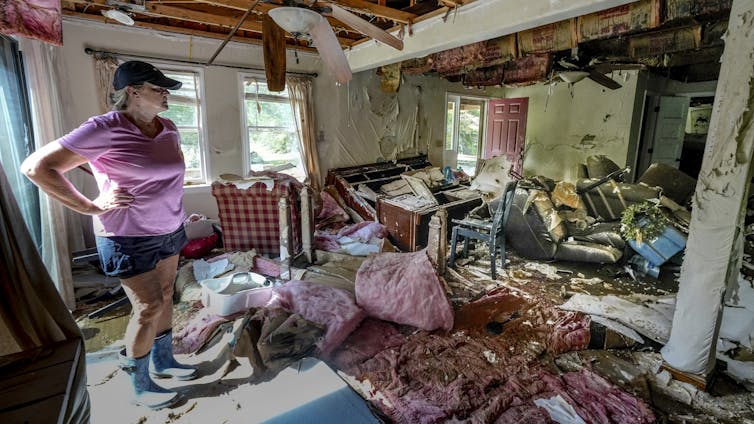
Hurricane Helene caused extensive damage to homes in North Carolina in 2024. AP Photo/Kathy Kmonicek

Imagine that a hurricane has destroyed your home.

The roof is gone. The floors are flooded. Your family’s belongings are ruined.

When this happens, you can apply for federal disaster aid, hoping for a lifeline. For many low-income families and other people of modest means, funding for that aid is often channeled to the states through the Department of Housing and Urban Development’s Community Development Block Grant Disaster Recovery program.

Known as CDBG-DR, this program mainly provides funding to repair and rebuild homes belonging to people of low-to-moderate income who either have no insurance at all or whose coverage falls short of what is needed to making housing safe again.

When homes are damaged beyond repair or located in areas where it’s too dangerous to rebuild because of the likelihood of future bouts of flooding in the same place, the CDBG-DR program can help pay for residents to move somewhere else that is less prone to disasters. In both cases, it covers costs that the Federal Emergency Management Agency does not pay for.

But in 2025, with hurricane season underway, the rules for who gets help and how it’s distributed have changed significantly.

As an urban planner who has researched disaster recovery efforts, I’m alarmed by Memorandum 2025-02, which HUD .

The memo changes the rules for nearly US$12 billion in disaster recovery funding approved by Congress for disasters occurring in 2023 and 2024. And HUD is implementing these changes early in the process, before any of this money has been distributed.

A house that's been destroyed is covered by tarps.
This home in Puerto Rico was destroyed when Hurricane Fiona struck the island in September 2022. Ivis Garcia

What has changed

The memo does away with the civil rights certifications, fair housing assessments, environmental standards and citizen advisory groups that have long been mandatory for the recipients of disaster recovery funds.

Civil rights certification means that CDBG-DR grantees must verify that disaster aid will be distributed without discrimination based on race, ethnicity, age, disability status, or other characteristics known as “protected classes.” Without this certification, there’s no formal process to ensure disaster aid is distributed fairly.

Fair housing obligations are assessments of whether middle- and lower-income families, people of color or people with disabilities can find safe, affordable housing without facing any discrimination.

In addition, HUD no longer requires detailed demographic reporting on who is applying for or receiving aid. This includes information such as gender, race, age, disability status and the language someone speaks.

Another change is that HUD’s updated disaster recovery guidelines no longer require economic development funds to emphasize people of modest incomes or their communities. Under the new rules, any business hit by a disaster can get recovery funds. It doesn’t matter how much money the owners make, as long as they can show that the disaster affected them.

And several important environmental protections have been rolled back. HUD previously mandated that disaster recovery projects comply with federal building standards.

Those codes are tougher than the local housing codes. These included rules for building homes higher off the ground to avoid future flooding and using stronger construction methods to withstand extreme weather events. Without them, new construction may be less durable and less safe – especially in areas hit hard by hurricanes or other natural disasters.

Strong energy efficiency standards help keep long-term utility costs low and reduce pressure on power grids during extreme weather events. They also make rebuilt homes more sustainable by reducing greenhouse gas emissions.

A woman and a child sift through the detritus where a business once stood.
Tina Brotherton, 88, right, gets help from 9-year-old neighbor Lainey Hamelink as she surveys the wreckage of her business, Tina’s Dockside Inn. It was completely destroyed in Hurricane Idalia, as was Brotherton’s nearby home, in Horseshoe Beach, Fla., in 2023. AP Photo/Rebecca Blackwell

Less coordination and communication

HUD has also removed a requirement for the nonprofits, local governments and other recipients of CDBG-DR grants to create and convene citizen advisory groups. That change took effect on March 24, 2025.

These groups, which have long made it easier for local communities to have a say regarding federally funded disaster recovery efforts, have played an important role in making sure those efforts reflect the needs and priorities of local residents – especially those most affected.

While eliminating this step may make it easier and faster for local governments to spend the recovery funds allocated for their communities, it also means there’s less opportunity for their own communities to influence how those funds are spent. Without that input, recovery efforts fail to resolve the real challenges people are facing.

Staffing and funding cuts

The White House’s 2026 budget proposal retains the HUD program that distributes disaster recovery grants while eliminating the related Community Development Block Grant program, which helps people experiencing homelessness and also funds everything from child care to services for older people.

I’m concerned about how CDBG-DR grants will be distributed, apart from the program’s changes. HUD’s Office of Community Planning and Development, which administers the CDBG-DR program, is slated to lose 84% of its staff, according to widespread media reports published earlier this year.

The Trump administration is also calling for cutting HUD’s staff, and President Donald Trump’s proposed 2026 budget would cut the agency’s entire budget in half.

In its March 25 HUD memo, the Trump administration framed these policy changes as a way to streamline recovery efforts and provide greater flexibility in the use of federal disaster funds. The memo also asserted that the changes were needed for compliance with executive orders that banned the use of diversity, equity and inclusion criteria and hiring practices that the administration considers to be discrimintory.

But critics of the policy rollbacks, including the National Low Income Housing Coalition, which advocates affordable housing, worry that removing long-standing safeguards could weaken the CDBG-DR program’s core mission of equitably distributing aid and building resilient communities. The standards and community input systems HUD has abandoned, the coalition says, have historically helped ensure that disaster recovery funds reach the people who need them most.The Conversation

Ivis García, Associate Professor of Landscape Architecture and Urban Planning, Texas A&M University

This article is republished from The Conversation under a Creative Commons license. Read the original article.

Space News: NASA engineers simulate lunar lighting for Artemis III moon landing

Details
Written by: NATIONAL AERONAUTICS AND SPACE ADMINISTRATION
Published: 22 June 2025


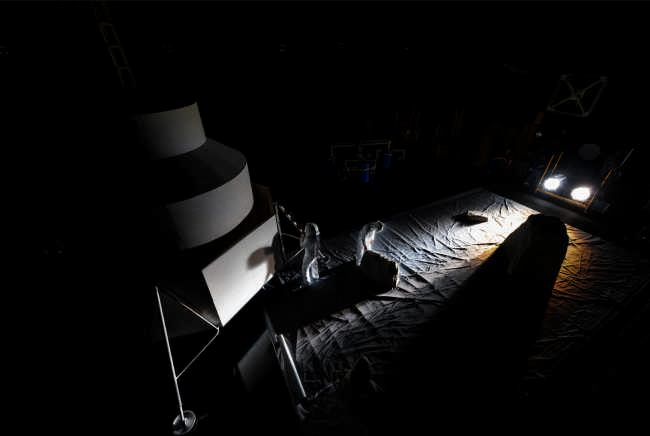
NASA engineers inside the Flat Floor Facility at Marshall Space Flight Center in Huntsville, Alabama, mimic lander inspection and assessment tasks future Artemis astronauts may do during Artemis III. Lights are positioned at a low angle to replicate the strong shadows that are cast across the lunar South Pole. Photo: NASA/Charles Beason.


Better understanding the lunar lighting environment will help NASA prepare astronauts for the harsh environment Artemis III Moonwalkers will experience on their mission. 

NASA’s Artemis III mission will build on earlier test flights and add new capabilities with the human landing system and advanced spacesuits to send the first astronauts to explore the lunar South Pole and prepare humanity to go to Mars.

Using high-intensity lighting and low-fidelity mock-ups of a lunar lander, lunar surface, and lunar rocks, NASA engineers are simulating the Moon’s environment at the Flat Floor Facility to study and experience the extreme lighting conditions. The facility is located at NASA’s Marshall Space Flight Center in Huntsville, Alabama.

“The goal is really to understand how shadows will affect lander visual inspection and assessment efforts throughout a future crewed mission,” said Emma Jaynes, test engineer at the facility. “Because the Flat Floor Facility is similar to an inverted air hockey table, NASA and our industry partners can rearrange large, heavy structures with ease — and inspect the shadows’ effects from multiple angles, helping to ensure mission success and astronaut safety for Artemis III.”

Data and analysis from testing at NASA are improving models Artemis astronauts will use in preparation for lander and surface operations on the Moon during Artemis III. The testing also is helping cross-agency teams evaluate various tools astronauts may use.

The 86-foot-long by 44-foot-wide facility at NASA is one of the largest, flattest, and most stable air-bearing floors in the world, allowing objects to move across the floor without friction on a cushion of air.

Test teams use large, 12-kilowatt and 6-kilowatt lights to replicate the low-angle, high contrast conditions of the lunar South Pole. Large swaths of fabric are placed on top of the epoxy floor to imitate the reflective properties of lunar regolith. All the mock-ups are placed on air bearings, allowing engineers to easily move and situate structures on the floor.

“The Sun is at a permanent low angle at the South Pole of the Moon, meaning astronauts will experience high contrasts between the lit and shadowed regions,” Jaynes said. “The color white can become blinding in direct sunlight, while the shadows behind a rock could stretch for feet and ones behind a lander could extend for miles.”

The laboratory is large enough for people to walk around and experience this phenomenon with the naked eye, adding insight to what NASA calls ‘human in-the-loop testing.

NASA is working with SpaceX to develop the company’s Starship Human Landing System to safely send Artemis astronauts to the Moon’s surface and back to lunar orbit for Artemis III.

Through the Artemis campaign, NASA will send astronauts to explore the Moon for scientific discovery, economic benefits, and to build the foundation for the first crewed missions to Mars – for the benefit of all. 

For more information about Artemis missions, visit https://www.nasa.gov/artemis. 

The Flat Floor Facility is an air-bearing floor, providing full-scale simulation capabilities for lunar surface systems by simulating zero gravity in two dimensions. Wearing low-fidelity materials, test engineers can understand how the extreme lighting of the Moon’s South Pole could affect surface operations during Artemis III. Photo: NASA/Charles Beason.
  1. UC Cooperative Extension Tribal Extension Office opens at Middletown Rancheria
  2. Thompson leads letter demanding Congress reconvene to address evolving situation in the Middle East
  3. 50 years after ‘Jaws,’ researchers have retired the man-eater myth and revealed more about sharks’ amazing biology
  • 249
  • 250
  • 251
  • 252
  • 253
  • 254
  • 255
  • 256
  • 257
  • 258
How to resolve AdBlock issue?
Refresh this page