 How to resolve AdBlock issue?
Recreation
- Details
- Written by: Editor
The California Department of Fish and Wildlife (CDFW) recently hosted a pheasant ecology workshop to examine possible causes of a decline of the state's pheasant population over the last 25 years.
Held in cooperation with Pheasants Forever, the workshop convened more than 45 state and federal scientists, public and private land managers, and representatives from Ducks Unlimited and the California Waterfowl Association.
Participants reviewed research from scientists at the US Geological Survey and heard from pheasant experts from across the nation.
Data collected showed that contributing factors to the decline include changes in agricultural practices, growth of forested habitats in historic wetland and grassland environments, climate change and predation from increasing raven populations.
“The combination of modern analysis tools and on-the-ground land management techniques helped us chart a map forward, which is especially important during the drought,” said CDFW Upland Game Program Scientist Matt Meshriy. “We look forward to collaborating with Pheasants Forever and other conservation partners interested in this species.”
The workshop, held on April 30 and May 1, included presentations by Dr. Les Flake of South Dakota State University and Senior Research Biologist Dave Musil of Idaho Fish and Game.
CDFW managers from six state wildlife areas and federal partners from the Sacramento National Wildlife Refuge Complexes also presented reports on site-specific conditions that described the breadth of habitat challenges facing pheasants and other upland nesting bird species throughout the state.
Pheasants were introduced in California in the 1890s and adapted well in the agricultural regions of the state.
By the mid-1960s, about 250,000 hunters were spending about 800,000 days afield in pursuit of this game bird.
Since the mid-1990s, populations have been steadily declining. In 2010, only about 30,000 pheasant hunters spent about 100,000 days afield.
Pheasants Forever is the nation's largest nonprofit organization dedicated to upland habitat conservation. Pheasants Forever and Quail Forever have more than 140,000 members and 700 local chapters across the United States and Canada.
Chapters are empowered to determine how 100 percent of their locally raised conservation funds are spent; the only national conservation organization that operates through this truly grassroots structure.
Since its creation in 1982, Pheasants Forever has spent $577 million on 475,000 habitat projects benefiting 10 million acres nationwide.
- Details
- Written by: Editor
Spring-run Chinook salmon could return to their historic spawning habitat on the North Yuba River under a still-developing agreement involving three agencies and three conservation groups.
Working together as the “Yuba Salmon Partnership Initiative,” the coalition released a framework for such an agreement on Thursday.
When completed, the agreement would create a first-ever “collect and transport” program in California, like those successfully used for decades in Oregon and Washington to move salmon around dams too tall for fish ladders.
The program would return spring-run Chinook salmon and possibly steelhead to more than 30 miles of the North Yuba River.
Deep, cool pools on this stretch of the river provide ideal habitat for the species that summers in mountain streams before spawning in the fall. In addition, the agreement would create a program to enhance salmon and steelhead habitat in the lower Yuba River downstream of the U.S. Army Corps of Engineers' Englebright Dam.
The California Department of Fish and Wildlife (CDFW), National Marine Fisheries Service (NOAA Fisheries), Yuba County Water Agency (YCWA), American Rivers, Trout Unlimited and California Sportfishing Protection Alliance released a “term sheet” that will guide negotiations on a binding settlement agreement that would form the basis of salmon reintroduction and restoration programs.
The non-binding term sheet defines principles for funding and fiscal responsibility, agrees to some limits on potential actions, and anticipates how the partners will seek to address numerous legal and regulatory requirements essential for the reintroduction to happen.
In signing the term sheet, the partners commit to negotiating a more detailed and binding settlement agreement that they hope to complete by next year.
They also commit to the use of a transparent, science-based process that offers opportunities for public input and response in developing the specifics of the anticipated programs.
“This initiative is an ambitious undertaking to restore spring-run Chinook and steelhead to miles of historic pristine habitat in the Sierra Nevada Mountains,” said Charlton H. Bonham, CDFW director. “This long-term experiment has been successful in several Pacific Northwest states and we hope for a similar outcome in California. A project of this importance wouldn't be possible without a robust partnership, and considering the state's unprecedented drought, it couldn't be happening at a more crucial time for these fish.”
The Yuba Salmon Partnership Initiative seeks to accomplish a major goal set forth in Governor Edmund G. Brown Jr.'s California Water Action Plan.
This five-year plan, released in January 2014, spells out actions needed to restore California's key ecosystems, and bring greater resiliency and reliability to its water resources.
Directives in the plan include establishing fish passage around “rim” dams in the foothills of the Sierra Nevada that block historic salmon and steelhead habitat.
Director Bonham added, “Collaboration with Sierra County and other stakeholders will be important for us to ensure this program recognizes their needs.”
The salmon reintroduction program, if implemented as envisioned in the term sheet, would return salmon to spawning habitat in the North Yuba River using specially designed collection facilities and trucks.
This would allow adult fish to bypass two dams northeast of Marysville: the U.S. Army Corps of Engineers' Englebright Dam, built in 1941 to trap debris generated by hydraulic mining, and YCWA's New Bullards Bar Dam, built further upstream in 1970 to provide flood protection, water supply and power generation.
The program would move juvenile salmon downstream in the winter and spring by gathering them in collection facilities above New Bullards Bar Dam and trucking them downstream past the dams to resume their journey to the Pacific Ocean.
The reintroduction effort would focus first on spring-run Chinook salmon. If successful, a steelhead reintroduction could follow. Providing fish access to historical habitat is also a climate change adaptation strategy.
“Reintroducing spring-run Chinook to their historic habitat above dams on the Yuba River has been discussed for decades,” said Will Stelle, NOAA Fisheries West Coast regional administrator. “Now this diverse coalition has reached agreement on the key terms to launch a successful program. We have a lot of work still ahead of us, and we will need to stay focused, given the urgency of getting these imperiled salmon back into their native habitat. The YSPI represents a major step forward, and we're excited to help make it happen.”
The term sheet also envisions a program to analyze, prioritize and implement habitat actions in the Lower Yuba River downstream of Englebright Dam.
These actions are likely to include improvement of riparian vegetation, measures to restore salmon spawning habitat and measures to improve rearing habitat for juvenile salmonids, including the expansion of side channel and floodplain areas to promote rapid growth of young salmon before they migrate to the ocean.
“Reuniting salmon with their historic habitat into the North Yuba River through a collaborative, voluntary initiative is a worthwhile endeavor that we believe will ultimately benefit our environment, the people of Yuba County and all of California,” said John Nicoletti, Chairman of the YWCA Board of Directors.
YCWA has agreed to pay up to $100 million of total project costs, which are estimated at $400-$500 million, over the 50-year life of the program (2015 dollars).
The term sheet defines additional commitments by the partners. These include support for various regulatory approvals that the project will require; evaluation of North Yuba River habitat suitability; evaluating collection and transport facilities; development of biological and habitat goals and objectives; and development of an adaptive management plan so that the program can be adjusted based on monitoring results.
The project promises to yield a wealth of scientific information that may aid other reintroduction efforts, other ecosystems and fisheries science overall.
Once implemented, it would test whether “collect and transport” programs can contribute to the recovery of Central Valley salmon populations as they have contributed to the recovery of salmon populations in the Pacific Northwest.
For more information, please visit www.dfg.ca.gov/fish/Resources/Chinook/YSPI/ .
- Details
- Written by: Editor
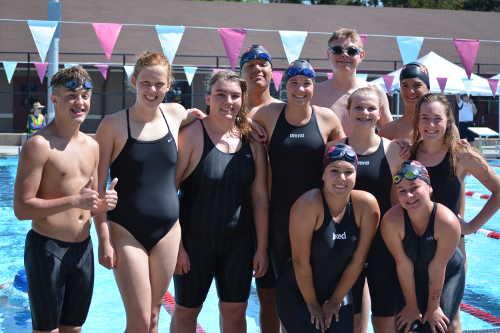
LAKE COUNTY, Calif. – The Coastal Mountain League Championship swim meet was held Saturday at the new St. Helena High School pool and the combined team of Clear Lake High School and Kelseyville High School swimmers proved that they were there to win.
Eleven swimmers earned All-League recognition – an honor earned by the swimmers, not chosen by the coaches.
The combined swim team was allowed to swim as one team at the CMC Championships where the girls placed second overall and the boys placed fourth in the overall rankings.
“I told my swimmers to shoot for top 12 with the ultimate goal being to make top six,” Head Coach Agustin Merodio explained. “The top six swimmers in each event earn the right to claim All-League distinction. The top three will receive medals. In this sport, the All-League athletes earn the title, it is not based on the coach’s opinion.”
Merodio added, “I am so proud of this team. They earned a total of 26 medals. We have never done this well at the championship level. They practiced hard and it paid off. This is a young team, so I am excited to see what will happen next year.”
Earning All-League status was Kaylie Williams, Liz Fricker, Lauren Rudnick, Nikki Hanson, Amelia Tejeda, Paige LaVrar, Shannon Fronsman, Tim Peterson, Max Madrzyk, Diego Tejeda and Owen Lawler.
Lauren Rudnick topped the field with two gold medals – winning the 200 IM and 100 Butterfly races.
Winning two silver medals was Nikki Hanson in the 200 Freestyle and 500 Freestyle events.
Rounding out the medal winners was Liz Fricker – bronze – 100 Freestyle and Diego Tejeda – silver – 200 Freestyle.
The rest of the medals came with the accomplishments of the relay teams.
According to Merodio, “These relay teams have been working hard all season so that they can get to this one meet – where they get one shot at a medal. They exceeded expectations – beating relay teams from schools that are bigger and more experienced.”
Earning silver medals in the 200 Freestyle Relay were Kaylie Williams, Lauren Rudnick, Nikki Hanson and Liz Fricker.
Another group of silver medals went to the 400 Freestyle Relay team of Paige LaVrar, Liz Fricker, Lauren Rudnick and Hallie Holmes.
Taking home bronze medals in the 200 IM Relay was Nikki Hanson, Shannon Fronsman, Amelia Tejeda and Kaylie Williams.
The boys relay team of Tim Peterson, Max Madrzyk, Owen Lawler and Diego Tejeda won bronze in the 200 Freestyle Relay and the team of Alberto Sturr, Max Madrzyk, Owen Lawler and Diego Tejeda won bronze in the 400 Freestyle Relay.
The high school team would like to invite you to share Mother’s Day with them this Sunday at the Kelseyville Lion’s Club. They are hosting a pancake breakfast from 8 to 11 a.m. and every mother will receive a carnation.

- Details
- Written by: Editor
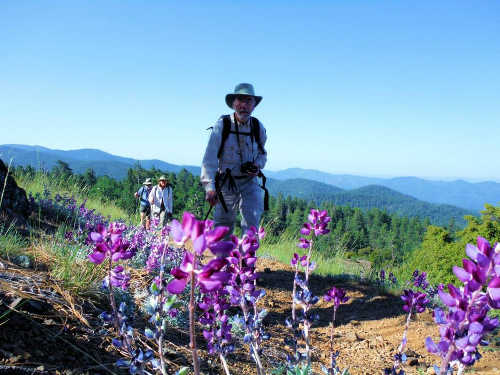
NORTHERN CALIFORNIA – Join Tuleyome on Saturday, May 9, and Sunday, May 10, as they summit Snow Mountain.
They will car camp on May 9 at Letts Lake Campground and hike the nine miles roundtrip and 2,200-foot elevation gain to the top of Snow Mountain on May 10.
Celebrate Mother’s Day with an adventure you’ll remember.
Snow Mountain, rising high above the surrounding landscape, is the northern anchor of the proposed Berryessa Snow Mountain National Monument.
Hikers will be treated to sweeping vistas and scenery that includes pine and fir forests, wildflowers and multi-hued metamorphic rocks.
Space is limited. RSVP to
Rain will cancel this trip and no dogs are permitted.
Tuleyome’s Home Place Adventure program believes everyone deserves access to the outdoors.
Tuleyome is a conservation nonprofit based in Woodland, committed to protecting the wild and agricultural heritage of our region.
While all hikes are free and open to the public, donations are gratefully accepted.
For more information, event details and directions visit www.tuleyome.org and check out other upcoming outdoor events.