 How to resolve AdBlock issue?
Recreation
- Details
- Written by: California Department of Fish and Wildlife
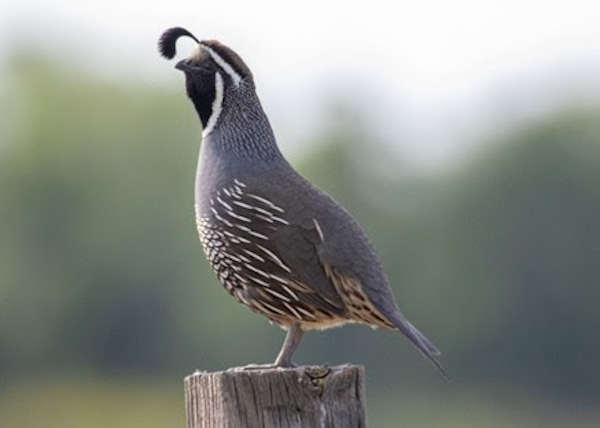
Native quail
Q: I live near a park that is frequented by quail, and I love watching them on my morning walks. What plants can I put in my own yard to encourage quail to visit my property?
A: Quail certainly are charismatic birds — we understand why you’d want to see them near your home.
California is home to three species of quail: mountain, California and Gambel’s quail. To encourage quail to visit your property, we suggest planting brush species that provide cover and perches, and forb species that provide food.
For mountain quail, this would include shrubs like manzanita and buckbrush, and native oak trees. California quail also gravitate toward brittlebush, deerweed, redberry and Pacific blackberry. Gambel’s quail have evolved with the dry dusty desert areas.
They like acacia, brittlebush, mesquite, cacti and yucca. All three species of quail prefer seeds in the pea family: lotus, lupine and clover. Filaree and chickweed are other good forb options.
Oak trees are a good option because they can provide perches for birds and California quail will eat the oak galls.
Finally, consider the species of trees and shrubs that you see quail use on your walks in natural areas. Take time to observe how quail use native vegetation for food and shelter in those areas, and then simulate that in your own yard.
Bait regulations
Q: Is it legal to catch sunfish and use them as live bait for bigger fish? What kind of live bait can you use in freshwater?
A: These are seemingly simple questions, but the answers are a bit complex because they depend on several factors including the California sport fishing district where you will be fishing, the body of water where you plan to fish and the species of live bait you intend to use.
The applicable regulations can be found in California Code of Regulations, Title 14, sections 4.10-4.30. You can find these in the California Freshwater Sport Fishing Regulations booklet, which is available for download. On the last page of the booklet there’s a map of the seven California sport fishing districts.
Each sport fishing district will have its own additional regulations on what kind of live bait is allowed, along with water-specific, area-specific and bait-specific regulations.
There are variables between districts to authorize or prohibit movement of live fish from the location where captured.
For example, in the Valley Sport Fishing District, which covers all or parts of 25 counties in the middle part of the state, live or dead fin fish (which includes sunfish) generally cannot be used as bait (California Code of Regulations Title 14, section 4.20).
However, there are exceptions to the general prohibition and certain waters where live fin fish are lawfully caught can be used for live bait in the waters where they were caught (CCR Title 14, section 4.20(a)-(f)).
By contrast, in the Southern Sport Fishing District, which covers all or part of seven Southern California counties, sunfish may never be used as live bait, though some other fish species may be used (CCR Title 14, section 4.10).
The bottom line: It’s imperative to check the bait fish use regulations in the sport fishing district where you plan to fish before using any live bait.
Bears
Q: I live in the foothills of the Sierra Nevada and a neighbor of mine said she’s seen a grizzly bear in the wild. Is that possible?
A: Black bears are the only wild bears in California. However, they do come in many different colors, from solid black to shades of brown and tan. Some have different patches of color, such as a white blaze on the chest or lighter colored muzzles.
Many people will claim to have seen a “brown bear.” Generally, the term “brown bear” refers to Ursus arctos, the grizzly bear.
California grizzly bears became extinct by the 1920s and only the one on our state flag remains.
There are two subspecies of black bears recognized in California: The northwestern or Olympic black bear (Ursus americana altifrontalis) in the northwest corner of California, and the California black bear (Ursus americana californiensis) throughout the rest of California.
They are thought to be geographically distinguished from each other by the crest of the Klamath Mountains. California’s black bear population is robust and has increased over the past 25 years.
Since the extinction of the California grizzly, black bears have been able to expand throughout much of the state as they no longer face direct competition from the larger bear species.
- Details
- Written by: Allison Panella
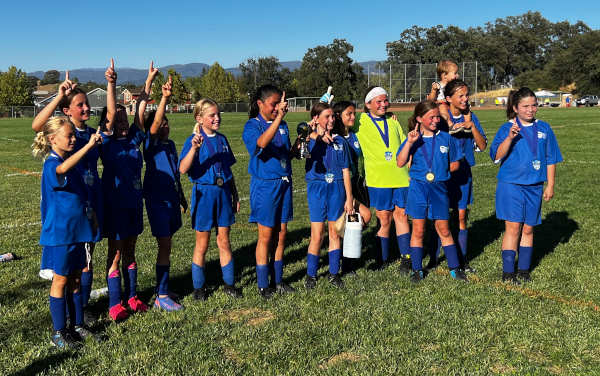
KELSEYVILLE, Calif. — Konocti Youth Soccer League U-12 Kelseyville soccer team, Lady Falcons, claimed first place this year.
The team not only went undefeated but also took first place in the KYSL soccer tournament.
The Lady Falcons were 10-0 and outscored their opponents 51-10.
Ten of their 12 players scored goals this season including their goalie.
Goals were scored by the following players:
• Ximena Herren: 13 goals.
• Brooke Poff: 8 goals.
• Cassidy Hanson: 7 goals.
• Genavieve Joaquin: 6 goals.
• Kiera Mick: 4 goals.
• Paelynn Beall (Goalie): 4 goals.
• Audrey Panella: 3 goals.
• Carly Gleason: 2 goals.
• Gabby Keyes: 2 goals.
• Samantha Nunez: 1 goal.
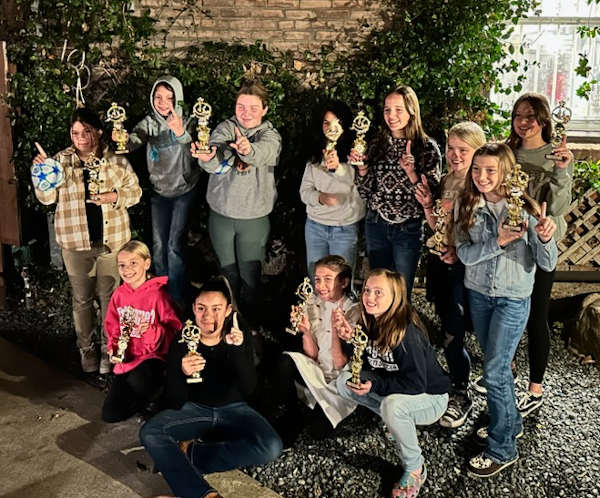
Ximena Herren was awarded the team and tournament most valuable player. Samatha was awarded as the most improved player.
“We are extremely proud of these girls, they played hard, and were excellent to coach,” said Head Coach Pat Mick.
“The best part about coaching these girls is that they played with heart, they left it all on the field every single time,” said Assistant Coach Allison Panella.
Lady Falcons team members were Ximena Herren, Brooke Poff, Cassidy Hanson, Genavieve Joaquin, Kierra Mick. Paelynn Beal, Audrey Panella, Carly Gleason, Gabby Keyes, Samantha, Ella Pindell and Kate Hobbs.
- Details
- Written by: Lake County Fair
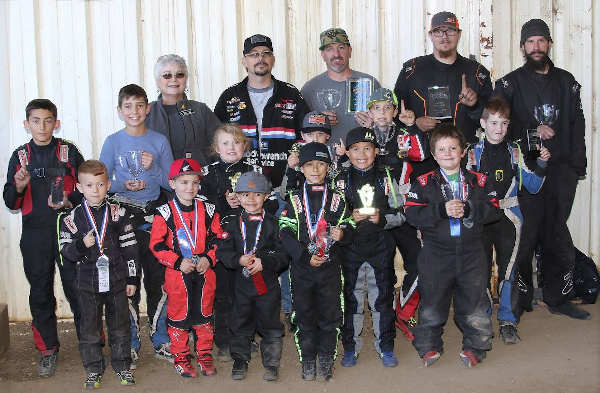
LAKEPORT, Calif. — In an extraordinary move, the Lake County Fair Board directors voted to take on the Indoor Go-Kart Winter Series when no bids came in for their request for proposal.
With amazing support from racing enthusiasts and the community, the indoor track, “which is better than ever,” in the Baldwin Pavilion came together in a very short period of time.
The fair and racers would like to thank JB Consulting, Brian Case Constriction, Earth It (Paul Venza), Lauenroth Trucking, Granite Construction and Bryant Welding for their amazing support.
Thanksgiving weekend was their third race, and they are going strong.
The series is becoming a great success. Lake County Fair CEO Sheli Wright reports it was the motivation from local youth, like Landyn Snider, who came into the fair office to request that the track keep going during the winter months.
Current point leaders are as follows:
• Predator: Brody Robfogel, Petaluma.
• Jr. Predator: Nixon Soiland, Suisun City.
• Beginner Box Stock: Brayden Kidd, Petaluma.
• Box Stock: Logan Nelson, Chico.
• Sportsman: Kyle Pollock, Lakeport.
• Open Clone: Zach Frazer, Santa Rosa.
• Cage Clone: Charlie Collins, Upper Lake.
• 250’s: Landyn Snider, Kelseyville.
• Open: Landyn Snider, Kelseyville.

- Details
- Written by: California Department of Fish and Wildlife
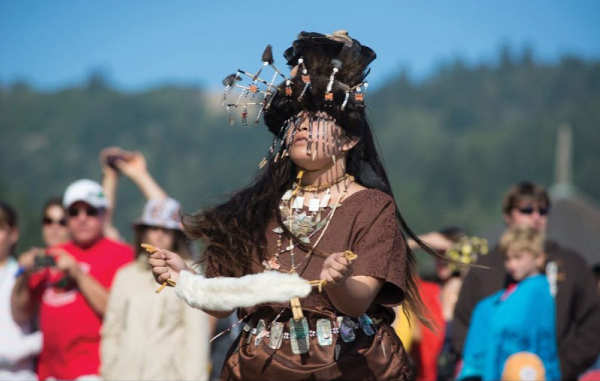
Cultural heritage
Q: Why does CDFW celebrate cultural heritage months like Native American Heritage Month in November and Black History Month in February?
A: There are two main reasons why the California Department of Fish and Wildlife (CDFW) celebrates cultural heritage months: 1) We want to celebrate, identify and understand the cultural needs of the diverse group of Californians we serve. Along those lines, we want people of all cultural backgrounds to feel welcome when they interact with CDFW. 2) We want people of different backgrounds who work for CDFW, or who want to work for CDFW, to feel like they belong. We want our workforce to reflect California’s diversity, and it helps us accomplish that goal when we understand the state’s diverse cultural perspectives.
CDFW believes that the most equitable way of providing services to the public is identifying and understanding people’s needs, and then providing services based on those needs.
For example, there are differences in the way that groups of Californians prefer to recreate and experience nature. Some cultures may gravitate toward hiking, while others may tend to prefer bird watching or fishing.
As a department, we want to embed equity into our work and make California’s natural resources available to everyone. To accomplish that goal, we strive to consider all perspectives when working on projects that involve or impact recreation.
Celebrating diverse perspectives also helps CDFW develop policy. By sharing diverse perspectives and celebrating how different cultures experience nature, we put ourselves in a better position to shape policies that are reflective of those experiences and needs.
CDFW’s celebration of cultural heritage months is about understanding differences so we can be respectful of one another and honor each other’s perspectives. We choose to recognize and honor differences in perspective as a reminder that our shared values include CDFW’s mission to manage California's diverse fish, wildlife and plant resources, and the habitats upon which they depend, for their ecological values and their use and enjoyment by the public.
Sonoran toad
Q: Does the Sonoran Desert toad exist anywhere in California?
A: The Sonoran Desert toad is considered extirpated from California, and its former range in the state occurred along the Colorado River. They do not occur in the wild anywhere in California as far as we know. They would be illegal to possess in California without a Scientific Collecting Permit.