 How to resolve AdBlock issue?
Recreation
- Details
- Written by: Nadine Strauss
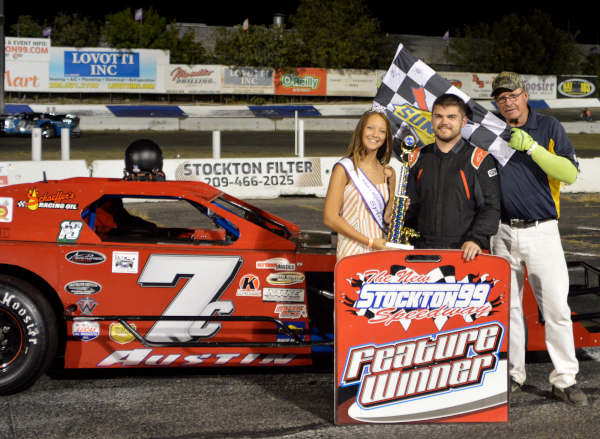
Cameron Austin of Lakeport inherited the lead when race leader Ian Elliott of Lakeport hit fluid on the track in turn four and spun with only 3 laps to go in the Bob Lehman Classic at Stockton 99 Speedway Saturday night.
Because of the anticipated lengthy clean up, race officials yellow-checked the event and declared Austin the winner.
Dustin DeRosier of Cloverdale finished second followed by NSMS points leader Scott Winters of Tracy, Elliott, and Orion Mosher of Eureka.
Mosher won the $100 dash for cash over DeRosier, Jordan Smith and Jason Philpot. Mosher also received $125 for the longest tow.
Rick Avila was given $125 for the hard luck award.
Winters earned the O’Reilly’s Auto Parts fastest qualifier’s award when he clocked in at 14.251 seconds, only .008 second quicker than Austin's time of 14.259.
Elliott earned the O'Reilly's Hard Charger award for coming from the back of the pack to the lead twice in the same race. The Naake Suspension certificate also went to Elliott. The Scribner jugs went home with Winters and Philpot. DeRosier, Keith Bloom and Orion Mosher received gift certificates from Frank’s Radios.
The $500 bonus money from the Lehman family was earned by Mosher, Calvin Hegje, Jordan Smith, Philpot, and Bloom, each receiving $100.
Other bonus money went to Hedge ($100 from Economy Heating & Air) for leading lap one, Bloom ($100 also from Economy Heating and Air) for leading lap 12, Austin ($100 from Smog Busters) for leading lap 43, and Elliott ($100 from Authority Heating and Air) for leading lap 55.
Major sponsors of this race were Anderson Logging of Fort Bragg, Hoosier Tire West, Sunoco Race Fuels, Naake Suspension, Mark & Sharon Baldwin, Ray Elliott, Doyce Eaton, Scribner Plastics, McMurray & Sons Roofing, O’Reilly Auto Parts and Frank’s Radios.
The 2022 NSMS Tribute Tour continues on September 23-24 at Redwood Acres Raceway in Eureka. This event will be the richest event in the History of the North State Modified Series with $4000 going to the winner and $1000 for 10th in the Dale Baldwin 60 lap feature event.. Other cash bonuses will be on the card like $1000 to win the non-NSMS winners Dash for Cash. More details coming soon.
- Details
- Written by: California Department of Fish and Wildlife
Please check the rules and regulations for the waters you plan to fish, and read up on recommendations for fishing during a drought.
You’re also invited to participate in virtual offerings from Fishing in the City, a program that allows Californians to learn to fish in metropolitan areas.
General information about the Fishing in the City program can be found on the CDFW website.
All fishing regulations, such as bag and size limits, gear restrictions, report card requirements and fishing hours and stream closures, remain in effect.
Every angler must have an appropriate report card if they are fishing for steelhead or sturgeon anywhere in the state, or for salmon in the Smith and Klamath-Trinity river systems.
Those interested in fishing in California’s lakes, streams and rivers can find information about inland fishing locations and species on the CDFW website.
Information about ocean fishing, including spots along California beaches, is also available on the website. A list of free fishing piers and a zoomable map of pier locations is also available to help you plan a pier fishing adventure.
It is free to fish certain piers, jetties or breakwaters along the coast year-round in California, but Free Fishing Days are a great time to be introduced to fishing for perch, greenling, rockfish and bass.
Other helpful resources for anglers include the fish planting schedule and fishing guide.
The Saturday of Labor Day weekend is typically reserved as California’s second Free Fishing Day of the year, with the Saturday of Fourth of July weekend being the first (July 2 in 2022).
Children 16 and younger can fish for free every day of the year in California, but Free Fishing Day offers a time when families and friends can experience the hobby together because those 17 and older can fish without having to buy a sport fishing license. Free Fishing Days also provide an easy opportunity for licensed anglers to introduce non-angling friends to fishing and the outdoors.
Don’t miss out on the final day of 2022 for free fishing! This is a great opportunity to use that beginner’s luck and enjoy one of California’s most popular pastimes. If you get “hooked” on fishing, be sure to purchase an annual resident sport fishing license. The revenue generated from license sales helps conserve our fish populations and habitats while supporting California's longstanding angling opportunities for today and future generations.
- Details
- Written by: California Department of Fish and Wildlife
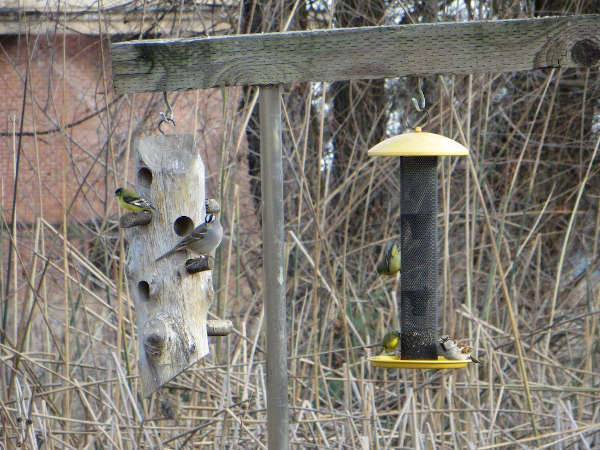
Bird feeders
Q: In response to recent warnings about avian flu in wild birds, I have taken down my bird feeders and bird baths. When is it OK to put them back out?
A: Infection with avian influenza viruses among songbirds, including many common backyard birds, appears to be relatively rare. However, feeding and providing water to wild birds is generally discouraged because the increased congregation of wild birds at bird feeders and bird baths may lead to fecal contamination of the local environment, which can aid in disease transmission.
While the risk of avian influenza to most songbird species appears low, there are other more common diseases, such as avian pox and avian trichomonosis, that periodically circulate among wild birds that may cause increased mortality during outbreaks.
Rather than providing bird seed to wild birds, a healthier option would be to provide natural sources of food by landscaping with native plants, if possible. This will benefit wild birds and pollinators like butterflies and bees.
If you do choose to have bird feeders and bird baths, it is generally recommended that bird feeders and bird baths are thoroughly cleaned outdoors at least once a week, and more often if there is heavy use by birds. Disposable gloves should be worn and hands should be thoroughly washed after handling of bird feeders and bird baths.
Please note, some pathogens can persist in water, on surfaces or in soil for hours to days, so even the most rigorous cleaning may not be enough to stop all disease transmission. If backyard chickens or other captive birds such as ducks, geese, pigeons, doves and parrots are present in the area, it’s strongly recommended not to have bird feeders and bird baths, and to exclude wild birds from accessing chicken feed and water.
Hunter education
Q: I recently completed my hunter education course. How do I obtain my hunter education certificate?
A: Currently, CDFW’s Hunter Education course is offered in three formats – traditional, hybrid and online. The traditional and hybrid courses include in-person instruction and testing. Those who successfully complete one of these courses will be issued a card-style hunter education certificate by the instructor. The online only course allows you to print out a paper certificate upon completion.
Regardless of which course format you complete, a Hunter Education certificate on durable license paper can also be purchased through CDFW’s Online License Sales and Services webpage by following these steps: login, select “Purchase Licenses,” then select “Hunter Education,” and then “Hunter Education Certificate (Dup).”
For additional information about both basic Hunter Education and Advanced Hunter Education, please visit CDFW's California Hunter Education webpage.
You may also consider purchasing a lifetime license. There are two types: the lifetime fishing license and lifetime hunting license. To learn more, visit CDFW’s Lifetime Licensing webpage.
Welcome to the ranks of California hunters! We wish you many memorable and successful seasons ahead.
Shipping wildlife skulls
Q: Can I ship a crocodile skull to California? I sell them online and have a client in California who would like to purchase one.
A: California Penal Code section 653o prohibits the sale of alligator or crocodile parts in California, even though neither are native to our state. However, this Penal Code provision is the subject of active litigation, and currently both the California Department of Fish and Wildlife and the Attorney General are enjoined from enforcing this law.
- Details
- Written by: nderson Marsh State Historic Park
The next guided walk will be held on Saturday, Aug. 13, beginning at 8:30 a.m.
The August nature walk will be led by Henry Bornstein, a certified California Naturalist and volunteer State Parks docent.
The hike will cover parts of the Cache Creek Nature Trail, the Marsh Trail and the Ridge Trail.
The hike is over mostly level terrain and will cover about 3 miles at a leisurely pace. It should last between one and a half to two hours.
Bring binoculars and meet in the parking lot at 8:15 a.m. for time to experience the early morning wildlife that can be found in the Ranch House and Barn complex yard — the walk will begin at 8:30 a.m.
There is no charge for the guided nature walk and parking is free for those attending.
Anderson Marsh State Historic Park is located on Hwy 53, between Lower Lake and Clearlake.
For more information about the guided walk, email