 How to resolve AdBlock issue?
Recreation
- Details
- Written by: Elizabeth Larson
Saturday, Sept. 23 is National Hunting and Fishing Day and California hunting and fishing seasons are in full swing.
Currently deer, bear, grouse, early mountain quail, rabbit, and tree squirrel seasons are under way across the state. The high country streams, rivers and lakes are in peak form. This is prime time.
Together, CDFW and BLM are proud to promote the excellent hunting and fishing opportunities available on public lands.
BLM-managed public lands in California offer a wide variety of recreational opportunities including hunting, fishing, hiking, mountain biking, horseback riding, boating and backcountry exploring.
Millions of acres of public land are available for hunting and thousands of miles of rivers and streams are available for fishing in California.
CDFW is responsible for over one million acres of fish and wildlife habitat, managed through 749 properties throughout the state. These properties provide habitat for a rich diversity of fish, wildlife and plant species.
Hunters and anglers are advised to check area closures and local restrictions before heading out. Fire season is here and several large wildfires are burning currently, which may close some areas to hunting and fishing.
Additionally, the severe winter damaged roads, which may account for other closures or restricted access. Information on area closures is available at wildlife.ca.gov/hunting/area-alerts.
While current target shooting restrictions are in place on some BLM-managed public lands, hunting in those areas is open with a valid hunting license.
For updates on BLM restrictions visit www.blm.gov/programs/public-safety-and-fire/fire-and-aviation/regional-info/california/fire-restrictions.
For the 2016 season, a record 84 percent of deer tag holders complied with California's new mandatory deer tag reporting requirement. CDFW thanks all those who reported and hopes for increased participation following the 2017 season. The reports are vital to estimating deer populations and setting tag quotas for the coming hunting season.
California is phasing-in the use of non-lead ammunition for hunting. Lead ammunition is permitted in 2017 for hunting deer in California outside of the California condor range, state wildlife areas or ecological reserves where non-lead ammunition is required.
Learn more about California's phase-in of nonlead ammunition for hunting by visiting www.wildlife.ca.gov/Hunting/Nonlead-Ammunition.
Hunters and anglers are often referred to as the original conservationists. CDFW and BLM value the many contributions they make to fish and wildlife conservation efforts in the Golden State.
For more information about California's hunting and fishing seasons, licenses and tags, please visit www.wildlife.ca.gov.
For more information about BLM lands and outdoor activities, please visit www.blm.gov/california.
- Details
- Written by: Carrie Wilson
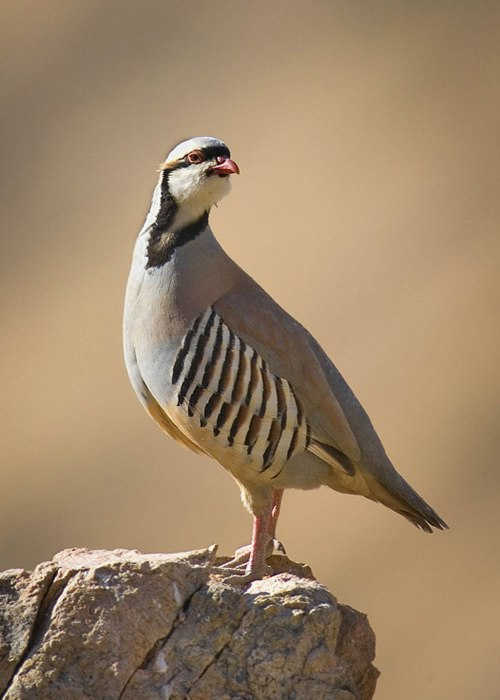
Possessing steel and lead while hunting chukar and quail?
Question: The ban on hunting with lead ammunition is being phased in. It now includes chukar, while the use of lead will continue to be allowed for quail until the 2019 season.
My question is can hunters carry both types of shells (lead and steel) in the field if they are hunting areas where they might reasonably expect to find both species, switching between one and the other depending on what birds they bump?
Or must they only possess steel (or bismuth or tungsten or other certified nonlead ammunition) while hunting chukar, and then have to use that ammunition if they run into quail? (Jim M.)
Answer: No. When hunting and targeting two different species, and the possession of lead ammunition is prohibited for one of those regulated species but not the other, you are held to the confines of the most restrictive regulation.
In this case, chukar fall under the regulation that says, it is “unlawful to use, or possess with any shotgun capable of firing, any projectile(s) not certified as nonlead…” (California Code of Regulations, section 250.1(d)(2)).
Thus, if you are using your trusty shotgun to hunt both quail and chukar at the same time, steel/nonlead ammo is required.
Shrimp fishing legal?
Question: I have been trying to research whether it is permissible for a recreational license holder to trap for shrimp in the ocean.
Can you please help me understand if this is allowed and if there are any restrictions on type of traps, limits, etc. or any other restrictions that I should be aware of? (Kevin B., Santa Barbara)
Answer: Yes, it is legal to take any type of ocean shrimp in California waters, but spot prawns are the most desirable and sought after for eating purposes.
However, because California’s spot prawns are found so deep – usually 100 fathoms (600 feet) or more – and the bag limit is only 35, most people are not interested in trapping these shrimp recreationally.
Another option is the lesser known coonstripe shrimp, also referred to as dock shrimp for their habit of sometimes living around pilings. Unlike spot prawns, coonstripe shrimp inhabit relatively shallow water and can be fished close to shore with lightweight traps.
They may occur out to depths of 600 feet, but fishermen often set their traps between 70-150 feet. The sport limit is 20 pounds per day (the first 20 pounds taken, regardless of size or condition), and there is no closed season or size limit for the sport fishery.
While they range from Sitka, Alaska to (at least) Point Loma in San Diego County, the highest concentrations of coonstripe are found in far northern California, near Crescent City.
Shrimp and prawn traps may be used to take shrimp and prawns only. South of Point Conception, trap openings may not exceed one half-inch in any dimension, effectively prohibiting shrimp and prawn trapping in the region.
This requirement is intended to protect juvenile lobster. For For traps fished north of Point Conception, trap openings may not exceed five inches in any dimension.
To learn more about fishing for these interesting shellfish, please check out the crustaceans section of the current Ocean Sport Fishing regulations for the regulations, legal gear, limits and other information you will need to know (CCR Title 14, sections 29.80 through 29.88).
Is lead shot legal or illegal for doves this season?
Question: I keep hearing from tons of folks who are saying that lead shot is illegal for doves this season.
I can’t find anything in the regs that say that, except for when hunting on California Department of Fish and Wildlife (CDFW) lands or in the condor zone.
The way I read it, lead shot is OK for doves until July 2, 2019. Am I correct or wrong? (Bill K.)
Answer: You are correct.
Effective July 1, 2016, nonlead shot is required when taking upland game birds with a shotgun.
Exceptions include when hunting dove, quail, snipe; or any game birds taken on licensed game bird clubs. In addition, nonlead shot is now required when using a shotgun to take resident small game mammals, nongame birds, and any wildlife for depredation purposes.
For more on the nonlead ammunition implementation, please check our Nonlead Ammunition in California Web site.
Do smoked fish stored in a freezer count as in possession?
Question: For the regulation of five fish bag limit and ten in possession, do fish that are smoked and retained in freezer count for the latter? (Bob M., Anderson)
Answer: “No more than one daily bag limit of each kind of fish, amphibian, reptile, mollusk or crustacean named in these regulations may be taken or possessed by any one person unless otherwise authorized; regardless of whether they are fresh, frozen, or otherwise preserved” (CCR Title 14, section 1.17).
Trout regulations generally allow possession of double the daily bag limit and is covered in the “unless otherwise authorized” exemption described above.
To specifically answer your question, smoked or retained fish in a freezer are part of your possession limit.
Carrie Wilson is a marine environmental scientist with the California Department of Fish and Wildlife. While she cannot personally answer everyone’s questions, she will select a few to answer each week in this column. Please contact her at
- Details
- Written by: Editor
Several other deer hunting zones - D3-D5 and D8-D10 - open the following week, on Saturday, Sept. 23.
Severe winter weather conditions took a toll on some migratory deer populations and the California Department of Fish and Wildlife (CDFW) reduced the number of tags for a few popular areas in order to sustain herds over the long term.
Not all populations suffered heavy winter losses, however, and CDFW's trail cameras and fecal DNA studies revealed bucks out there for the taking.
"One benefit from the above-average rain and snowfall this winter is that we did see an early green-up," said Stuart Itoga, senior environmental scientist and the CDFW's deer program coordinator. "Plentiful forage and water are generally helping deer populations recover from multiple years of drought."
Detailed information on California's various deer zones, including season dates, descriptions and maps, is available at CDFW's Deer Hunting Web page, www.wildlife.ca.gov/Hunting/Deer#54773-seasons.
Hunters are strongly advised to check area closures and local restrictions before heading out. Fire season is here and several large wildfires are burning currently, which may close some areas to hunting.
Additionally, the severe winter damaged roads in some areas, which may account for other closures or restricted access. Information on area closures is available at www.wildlife.ca.gov/hunting/area-alerts.
For the 2016 season, a record 84 percent of deer tag holders complied with California's new mandatory deer tag reporting requirement. CDFW thanks all those who reported and hopes for increased participation following the 2017 season.
The reports are vital to estimating populations and setting tag quotas for the coming hunting season.
Tags can be reported online at www.ca.wildlifelicense.com/InternetSales/CustomerSearch/Begin.
Tag holders may also submit reports by mail to CDFW Wildlife Branch, P.O. Box 944209, Sacramento, CA 94299-0002.
California is phasing-in the use of nonlead ammunition for hunting. Lead ammunition is permitted for hunting deer in California in 2017 outside of the California condor range, state wildlife areas or ecological reserves where nonlead ammunition is required.
Learn more about California's phase-in of nonlead ammunition for hunting at www.wildlife.ca.gov/Hunting/Nonlead-Ammunition.
- Details
- Written by: CARRIE WILSON
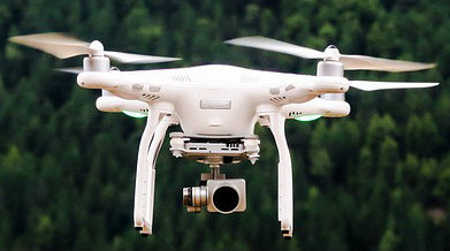
Drones for fishing offshore
Question: I have seen many videos of people using drones to fly their bait out to deeper water. I know drone use is illegal for hunting land animals, but what about for fish? Here is a link to a video of some guys using a drone to fish for tuna. (Mark G.)
Answer: There is currently nothing in the Fish and Game Code or California Code of Regulations Title 14 regulations prohibiting use of drones (or kites or remote control boats) to get your terminal gear out to locations beyond where you can cast.
However, drone operators need to comply with all laws applicable to drone use, including restrictions on where they may be operated.
Bag limits for trout and kokanee separate or combined?
Question: I have a question about bag limits for trout and kokanee salmon. In just about every lake I fish, the bag limit is five trout per day.
Some of these lakes also contain kokanee salmon, which also have five fish limits. When trout and kokanee occur in the same lake, are their bag limits separate or combined?
For example, do two trout AND three kokanee equal one daily bag limit, or could five trout equal one limit and five kokanee equal another bag limit?
Could one bag limit be comprised of five trout AND five Kokanee or is the bag limit a total combined limit? I have always assumed it was five per day total no matter what the species. (Ryan H.)
Answer: In 2015, a regulation was adopted by the Fish and Game Commission to expand angler opportunity and define kokanee as an inland salmon, which is exactly what it is.
Since kokanee are considered landlocked salmon and not trout (CCR Title14, section 1.57), the bag and possession limits for each species are separate, not combined.
Is it legal to possess a found deer skull with antlers?
Question: I recently found the remains of a dead blacktail deer on public land in Northern California. From what I could discern, the buck died of natural causes due to a lion turning him into lunch.
Is it legal to retain the skull and antlers from this deer? Clearly, the antlers are not natural sheds and there is not a cancelled tag associated with the antlers. (Mike M.)
Answer: Yes, this would be legal. The Fish and Game Code does not prohibit possession of the dried skull and antlers of a deer that died of natural causes.
Kids and two rods
Question: My nephew (13 years old) will be coming to visit me in the Sierra this month, and I am looking forward to taking him fishing. I’m wondering if he can troll/bait fish with two rods?
Would a second rod validation be required? If so, can a second rod validation be purchased without buying a sport fishing license? (Ryan H.)
Answer: Anglers younger than 16 years old are not required to buy a fishing license nor a second rod validation in order to fish with two rods.
We are always happy to hear about experienced anglers taking young people out to teach them how to fish. Good luck to both of you and thank you for passing along the tradition!
Will traditional muzzleloaders be required to switch over to nonlead?
Question: I like to hunt with a traditional muzzleloader (1840s era reproduction) that uses round balls. Due to the new law requiring nonlead ammunition, will I be required as of 2019 to use nonlead round balls? (Fred H.)
Answer: Yes. Effective July 1, 2019, nonlead ammunition will be required when taking any wildlife with a firearm anywhere in California.
New nonlead forms of traditional ammunition are currently being developed. Nonlead muzzleloading ammunition is readily available with plastic sabots holding copper slugs. The sabot system protects your barrel if that is a concern.
For a list of certified nonlead ammunition and for more information on nonlead hunting requirements, please visit our “Nonlead Ammunition in California” Web site.
Carrie Wilson is a marine environmental scientist with the California Department of Fish and Wildlife. While she cannot personally answer everyone’s questions, she will select a few to answer each week in this column. Please contact her at