 How to resolve AdBlock issue?
Recreation
- Details
- Written by: California Department of Fish and Wildlife
Question: I've heard that there's been an issue with fraudulent websites selling California fishing licenses. I bought my license online earlier this year. I don't remember what link I used, and now I'm worried that I might have bought a fake license! Should I take it to a California Department of Fish and Wildlife (CDFW) office to find out? (Chris)
Answer: Unfortunately, yes, CDFW has recently discovered several unscrupulous vendors who are "brokering" licenses illegally. To date, it appears these sites have been buying real licenses from CDFW on behalf of customers, but charging exorbitant "shipping fees" on top of the price of the license. If you bought a license from one of these sites, it may be that you received a real license, but were overcharged for it. That said – we can only vouch for the authenticity of items purchased directly from a CDFW office, an authorized license sales agent , through our telephone sales agent at 800-565-1458 or online through our Automated License Data System (ALDS). If you have a printer available, you can buy, print out, sign and carry a temporary license that is valid. If you buy and print out an annual license, the temporary license is good for one month and we will mail your annual license to you. Shorter term licenses such as one-day and two-day can also be printed directly from your computer after making your purchase through ALDS.
If you're unsure about an online purchase you've made and want to confirm that your transaction resulted in the issuance of a valid license, please contact us at
Please note that the only authorized online sales sites for CDFW products are the CDFW website and ALDS. If the URL doesn't match one of those two, do not enter your credit card number or other personal information! Also, an authorized CDFW purchase will never require you to provide your social security number.
For more information about these fraudulent sites, and what you can do to protect yourself from identify theft and fraud, please see our news release.
Is a license required to do catch-and-release fishing?
Question: I am interested in fishing both freshwater and saltwater but plan to do only catch-and-release fishing. Will I still need a license if I'm fishing only for fun and not keeping any of the fish I catch? (Josh)
Answer: Yes, you must have a fishing license to engage in the act of fishing regardless of whether you intend to keep fish. The way it is defined in the regulations, you need a license to even "attempt" to pursue or take a fish or animal.
Grizzly bear tooth
Question: I received a grizzly bear tooth amongst some of my grandfather's possessions after he passed away. My grandfather grew up here in California and was an amateur geologist and never hunted, so I think he either found or purchased the tooth, although I have no proof. I was wondering if it is legal to possess or sell the tooth here in the state of California. I don't want to break any laws. (James L.)
Answer: It is legal for you to possess it or give it away, but you cannot try to sell it. The sale or purchase of any bear part in California is prohibited (Fish and Game Code, section 4758 (a)). Even offering it for sale over the Internet is a federal violation that could make you subject to prosecution under the Lacey Act.
Sounds like you have an interesting piece of California's history, as grizzly bears are extinct in the state – enjoy it!
Carrying a handgun when hunting
Question: I hunt in B1/B2 (pot country) and carry a handgun when I hunt. I have a Carry Concealed Weapon (CCW) permit. Does my handgun ammo need to be non-lead also? (John)
Answer: As long as your firearm is possessed only for your personal protection and not for hunting, the law allows you to carry lead ammunition. Here are the relevant provisions of law that apply to your first question: "Nothing in this section is intended to prohibit the possession of concealable firearms containing lead ammunition, provided that the firearm is possessed for personal protection and is not used to take or assist in the take of wildlife" (California Code of Regulations, section 250.1(c)(3)).
If you have a question for the California Department of Fish and Wildlife, email at
- Details
- Written by: Nadine Strauss
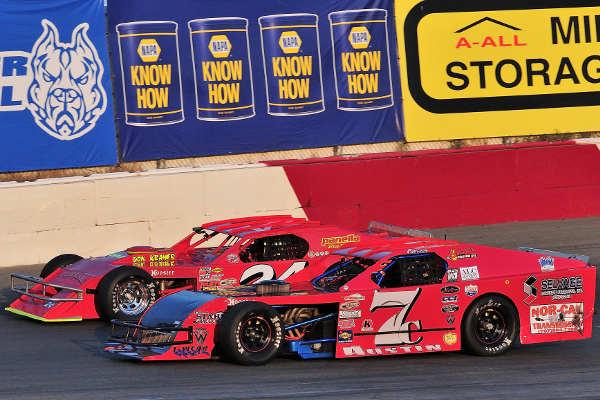
EUREKA, Calif. – The North State Modified Series, presented by Protect the Harvest, will make its second appearance this season at the Redwood Acres Raceway this Saturday night.
A Friday afternoon practice will be held on the 3/8 mile paved oval from 4 until 8 p.m.
Redwood Acres Raceway is located at the Redwood Acres Fairgrounds at 3750 Harris St. in Eureka.
Sponsoring the event is McMurray & Sons Roofing, who is celebrating 100 years in business this weekend. Representatives from McMurray’s will be on hand Saturday to witness the fast-paced open-wheel competition of the NSMS modifieds.
The McMurray & Sons Roofing 60 lap feature will pay $1,000 to win, $700 for second, and $600 for third. The Lucas Oil Dash for Cash contenders run for $100 to win and $50 for second place.
In addition, the top 15 drivers in the NSMS points standings will share in the $2500 Lucas Oil Tow Money program.
So far in the seven events already run in 2019, there has been only one repeat winner – Robbie Knittel of Lodi, driving the Ferrari Farms #24. Knittel won back-to-back events at Stockton 99 Speedway and Madera Speedway last month.
The other winners were Randy Houston of Medford, Oregon, at Madera Speedway, Kelseyville’s Darrin Knight at Stockton 99, Ukiah driver Kyle Tellstrom, who won the last event at Eureka, Jason Philpot of Sacramento at Shasta Speedway in Anderson, and Cameron Austin of Santa Rosa at the last NSMS event at All American Speedway in Roseville.
Austin is the current NSMS points leader with a slim 13 points margin over Knittel. Philpot sits third in the standings, Knight is fourth, and Darrin Sullivan is fifth.
The North State Modified Series will join the bombers, road runners, bandoleros, legends cars and mini stocks.
The North State Modified Series is presented by Protect the Harvest, Lucas Oil, Hoosier Tire West, Sunoco Race Fuels, Naake Suspension, Five Star Bodies, Racer Bling, Keyser Racing Products, Scribner Plastics, and Franks Radios.
NSMS modified rules, procedures, schedule, entry forms and other information are available at www.northstatemodifieds.com. Also visit the North State Modified Series Facebook page.
- Details
- Written by: Elizabeth Larson
Over the past seven years, this incredible smallmouth fishery has cracked the Top 10 in Bassmaster’s 100 Best Bass Lakes rankings two times.
In both 2015 and 2018, the St. Lawrence (also known as the Upper St. Lawrence River) ranked eighth on the list. This year, though, the New York fishery would not be denied as the No. 1 bass fishing destination in the country.
There are plenty of tournament results to back up this claim, but there is no need to look any further than the Carhartt Bassmaster College Series presented by Bass Pro Shops held June 19 through 21. In this event, a 26-pound, 6-ounce limit of smallmouth was weighed in.
However, the most astounding statistic is that the average weight of the entire 149-team field was 20.3 pounds. The winning team from Sam Houston State University averaged 24-4 per day. The Carhartt Big Bass Award for that event was a 6-pound, 7-ounce giant. Suffice it to say, the St. Lawrence not only has big smallmouth swimming around the many islands dotting its waterscape, but a lot of them.
“The St. Lawrence is not only healthy right now, but seems to be showing off,” said James Hall, editor of Bassmaster Magazine. “There have been years where a spirited internal debate was required to assign the top spot in the rankings. This year was easy after looking at the unbelievable weights being produced at the Upper St. Lawrence River. And on top of that, the scenery is stunning. If you are looking for the best angling experience in the country right now, the St. Lawrence river should be your next destination.”
Hall explained the process of creating the rankings takes more than two months. State fishery agencies across the U.S. are polled and rank the fisheries in their states based on stocking efforts, catch rates and angler access.
Then, B.A.S.S. Nation conservation directors add to the potential lakes list based on the thousands of tournaments they hold across the country. And finally, the data from dozens of tournament organizations, as well as big bass programs from various states, are analyzed to create the ultimate list of the Top 100 lakes.
The rankings are debated by a blue-ribbon panel of fishing industry insiders. The final result of this research and debate is Bassmaster’s 100 Best Bass Lakes rankings published in the July/August issue of the magazine.
Alabama’s Lake Guntersville took the No. 2 spot after producing several 30-plus-pound limits this spring. That said, the Big G was producing so many 20-pound limits that a 4-pound average quit turning heads. Even during tough tournaments, anglers had to catch at least 24 pounds to win. This historic fishery had been down in the rankings for several years, falling out of the Top 10 in both 2016 and 2017. It climbed to No. 9 last year, and is now looking as healthy as ever.
Texas’ Sam Rayburn Reservoir slipped from No.1 last year to No. 3. Although production has slowed a little bit, this lake still produced a 40-pound limit and typically required at least 22 pounds to win a one-day event.
California’s Clear Lake is in the fourth spot on the strength of the giant bass it is producing. A 16-pound largemouth was landed recently, and double-digit fish abound.
Rounding out the remainder of the Top 10 lakes are Texas’ Lake Fork at fifth; Tennessee’s Chickamauga Lake at sixth; California’s New Melones Lake at seventh; Michigan’s Lake St. Clair at eighth; South Carolina’s Santee Cooper Lakes at ninth; and New York’s Lake Erie (out of Buffalo) at tenth.
The rankings identify the Top 10 lakes in the nation based on head-to-head comparisons, as well as the Top 25 lakes in four geographical regions. “We divide the nation into four regions and rank the lakes in each region to give anglers perspective on the fisheries they can most likely reach,” Hall explained.
As for bragging rights on which state has the most fisheries in the 2019 rankings, the title is shared. Both Texas and California have 10 lakes on the list. Florida has the next highest with eight lakes making the rankings.
2019 List Of Bassmaster Magazine’s 100 Best Bass Lakes
RANK; FISHERY; STATE
Top 10
1. St. Lawrence River, New York
2. Lake Guntersville, Alabama
3. Sam Rayburn Reservoir, Texas
4. Clear Lake, California
5. Lake Fork, Texas
6. Chickamauga Lake, Tennessee
7. New Melones Lake, California
8. Lake St. Clair, Michigan
9. Santee Cooper Lakes, South Carolina
10. Lake Erie, New York
Northeast
1. St. Lawrence River, New York
2. Lake St. Clair, Michigan
3. Lake Erie, New York
4. Lake Erie, Ohio
5. Burt/Mullett lakes, Michigan
6. Lake Champlain, New York/Vermont
7. Bays de Noc, Michigan
8. Saginaw Bay, Michigan
9. Lake Charlevoix, Michigan
10. Grand Traverse Bay, Michigan
11. Potomac River, West Virginia, Virginia, Maryland
12. Oneida Lake, New York
13. Cayuga Lake, New York
14. Presque Isle Bay, Pennsylvania
15. Upper Chesapeake Bay, Maryland
16. Smith Mountain Lake, Virginia
17. Webber Pond, Maine
18. Green River Lake, Kentucky
19. Lake Cumberland, Kentucky
20. China Lake, Maine
21. Great Pond, Maine
22. Candlewood Lake, Connecticut
23. Chautauqua Lake, New York
24. Lake Winnipesaukee, New Hampshire
25. Kentucky Lake, Kentucky/Tennessee
Western
1. Clear Lake, California
2. New Melones Lake, California
3. Lake Perris, California
4. Sacramento-San Joaquin Delta, California
5. Diamond Valley Lake, California
6. Don Pedro Reservoir, California
7. Lake Berryessa, California
8. Lake Coeur d’Alene, Idaho
9. Shasta Lake, California
10. Lake Havasu, Arizona/California
11. Roosevelt Lake, Arizona
12. Lower Colorado River, Arizona/California
13. Alamo Lake, Arizona
14. Potholes Reservoir, Washington
15. Lake Washington, Washington
16. Brownlee Reservoir, Idaho/Oregon
17. Sand Hollow Reservoir, Utah
18. Elephant Butte Reservoir, New Mexico
19. Lake Mohave, Nevada/Arizona
20. C.J. Strike Reservoir, Idaho
21. Siltcoos Lake, Oregon
22. Owyhee Reservoir, Oregon
23. Lake Pleasant, Arizona
24. Lake Mead, Nevada/Arizona
25. Columbia River, Oregon/Washington
Central
1. Sam Rayburn Reservoir, Texas
2. Lake Fork, Texas
3. Sturgeon Bay, Wisconsin
4. Toledo Bend, Texas/Louisiana
5. Mille Lacs Lake, Minnesota
6. Lake Falcon, Texas
7. Lake Conroe, Texas
8. Lake Minnetonka, Minnesota
9. Caddo Lake ,Texas/Louisiana
10. Table Rock Lake, Missouri
11. Lake Lyndon B. Johnson, Texas
12. Millwood Lake, Arkansas
13. Caney Creek Reservoir, Louisiana
14. Lake Dardanelle, Arkansas
15. Lake Ray Roberts, Texas
16. Lake Texoma, Texas/Oklahoma
17. Lake Ouachita, Arkansas
18. Lake of the Ozarks, Missouri
19. Lake O’ the Pines, Texas
20. Grand Lake O’ the Cherokees, Oklahoma
21. Lake Columbia, Arkansas
22. Bull Shoals Lake, Arkansas
23. Lake Wanahoo, Nebraska
24. La Cygne Reservoir, Kansas
25. Newton Lake, Illinois
Southeast
1. Lake Guntersville, Alabama
2. Chickamauga Lake, Tennessee
3. Santee Cooper Lakes, South Carolina
4. St. Johns River, Florida
5. Lake Seminole, Florida/Georgia
6. Pickwick Lake, Alabama/Mississippi/Tennessee
7. Jordan Lake, North Carolina
8. Rodman Reservoir, Florida
9. Lake Murray, South Carolina
10. Falls Lake, North Carolina
11. Lake Tohopekaliga, Florida
12. Shearon Harris, North Carolina
13. Lake Eufaula, Alabama
14. Lake Istokpoga, Florida
15. Watts Bar Reservoir, Tennessee
16. Stick Marsh/Farm 13, Florida
17. Lake Wateree, South Carolina
18. Lake Okeechobee , Florida
19. Wheeler Lake, Alabama
20. Cherokee Lake, Tennessee
21. Clarks Hill Lake, Georgia/South Carolina
22. Lake Jordan, Alabama
23. Fellsmere Reservoir, Florida
24. Roanoke River, North Carolina
25. Lake Lanier, Georgia
- Details
- Written by: Elizabeth Larson
The group played a state qualifier tournament at Fox Tail Golf Course in Rohnert Park on May 29. The two teams (one from branches No. 133 and No. 168, and one from branches No. 157 and No. 176).
The area qualifiers were Bob Chesnut, Tom Marshall, Bill Surber, and Tom Hughes (Bill Sullivan substituted) and John Torres, John Crockenberg, Gordon Naumann and Ed Neal.
The sweeps winners were:
– First place, John Torres, John Crockenberrg, Gordon Naumann and Ed Neal with a score of 50.93.
– Second place went to Rick West, Tom Kirkpatrick, Tom Clark and Dale Candelaria with a score of 53.38.
– Third place were Tom Braun, Larry Alves, Mike Yamashita and Bill Miller with a score of 53.64 and fourth place went to Mel O’Meara, Bob Rum felt, Ron Raetz and Klark Raetz with a score of 54.97.
Closest to the pins were Bob Chesnut, 23 feet, 3 inches; Larry Alves, 30 feet; and Tom Clark, 34 feet, 6 inches on hole No. 3; and John Torres, 2 feet, 9 inches; Walt Neumann, 11 feet, 3 inches; and Tom Kirkpatrick, 14 feet, 6 inches.
The Carson City golf trip was a success with 24 golfers in attendance, the weather was great and the golf courses were fun to play.
The first tournament was played at the Toiyabe Golf Course. The winners that day were:
– First place, Bob Chesnut, Bob Smart, Jim Cary and Jan Mouser with a score of 54.52;
– Second place, Paul Peterson, Bob Rumfelt, John Miles and James Hornback, with a score of 54.65;
– Third place Bob Farris, Gary Farris, Jerry Martinez and John Gastineau with a score of 55.85.
Closest to the pins were Paul Peterson, 8 feet, and Bob Chesnut, 11 feet, 2 inches, on hole No. 2; Adele Curtin, 10 feet, 9 inches, and John Gastineau, 20 feet, 6 inches, on hole No. 12.
The second tournament was held at the Silver Oak Golf Course. The winners were:
– First place, Tom Braun, Ron Raetz, Jerry Martinez and Adele Curtin with a score of 50.83;
– Second place, Bill Craig, Bob Smart, Bob Schossler and Bill Lyon with a score of 52;
– Third place, Paul Peterson, Gary Farris, Jim Cary and Gary Faulkner, with a score of 52.75.
Closest to the pins Bob Rumfelt, 4 feet, and Bill Lyon, 21 feet, 4 inches, on hole No. 3, and Adele Curtin, 22 feet, 3 inches, and Tom Braun, 27 feet, 6 inches, on hole No. 11.
The last tournament for June was at the Hidden Valley Lake golf Course. It was on June 26. It was a very nice day and the weather was great. The format was a two man best ball with two flights.
Flight “A” winners were, first place, Jim Dvorak / Bob Smart with a score of 54; second and third place, tie, Larry Alves and Rick Ward, and Bruce Woodcock and Jim Boyd with scores of 60.
“B” flight winners were first place, Jerry Clayton/Mike Higman with a score of 56; second place, Jim Day/Bill Sullivan with a score of 61; third place, Jim Boyd/Bob Rumfelt with a score of 62.
Closest to the pin winners were Jim Cary, 23 feet, 9 inches, and Jim Day, 23 feet, 10 inches, on hole No. 8; and Mike Higman, 1 feet, 3 inches, and Tom Braun, 4 feet, 11 inches on hole No. 11.
The three upcoming tournaments this month are Hidden Valley Lake (Match Play) on July 17 and Healdsburg on July 24. The contact for SIRS golf is Jim Cary .
In other news, this month’s guest speaker was Russ Schtoy representing the Lake County Civil Grand Jury (not to be confused with the criminal grand jury).
Schtoy started with a brief overview of the history of grand juries from the Magna Carta, through the Fifth Amendment of the U.S. Constitution, to the establishment of county sitting grand juries by California in its legal system.
He emphasized that the objective was to “Investigate, report, recommend” and the importance of grand juries as a “balancing” against rural counties boards who may be abusing their positions as boards become more and more filled with career politicians.
Schtoy stressed a desire for “truth,” “transparency,” “improvements” and “benefiting the citizens” as what makes for a great juror. He talked – briefly – about what juries do (amount of time spent, secrecy, and interfacing with all levels of the county).
He ended his presentation by encouraging anyone interested to fill out an application to join the grand jury.