 How to resolve AdBlock issue?
Recreation
- Details
- Written by: Carrie Wilson
Question: There is a video floating around of a local captain offering advice on how to get rid of pesky gulls. He ties sardines (no hooks) to each end of some monofilament line and goes on to explain that one gull will grab the bait, and then all the others will follow.
Is that legal? Seems like birds could get tangled up and die. Introducing mono into the sea also seems to be dangerous to the creatures there. Is this practice acceptable? (Phil F.)
Answer: No, this practice is not legal. Intentionally putting monofilament line into the water is littering. It is also harassment of animals, which is prohibited by Title 14 section 251.1.
This provision defines harassment as an “intentional act which disrupts the animal’s normal behavioral patterns, which includes but is not limited to breeding, feeding or sheltering.” From what you describe, the whole point of this practice is to disrupt the gulls’ normal behavioral patterns.
Hunting upland birds and waterfowl at the same time
Question: If I’m in the field upland bird hunting and a flock of ducks/geese fly overhead, am I allowed to shoot those birds, too? (Robert G.)
Answer: Yes, but only if the season for waterfowl is open in the area, if you have the required state and federal waterfowl stamps affixed to your license, AND you only have steel or other non-toxic shot in your possession.
Effects of hunting bears and bobcats without dogs
Governor Brown signed SB 1221 on Sept. 26, 2012 to repeal authorization for the use of dogs to pursue bears and bobcats. The DFG has received a large number of questions from the public regarding what effects it may cause. Below are some of those frequently asked questions and answers:
Does SB 1221 affect the current bear hunting season? No. The new law will not go into effect until Jan. 1, 2013. The 2012 bear hunting season closes on Dec. 30, 2012, or when the DFG determines that 1,700 bears have been taken, whichever occurs first.
What will be the effect on the bear population?
The DFG does not believe this law will negatively affect the State’s black bear population. Any increase or decrease in the overall bear population will likely be reflective of bear habitat, since habitat quantity and quality have more impact on the bear population than current hunting effort.
Will I be able to surrender and get a refund on my bear or bobcat tag(s)?
No. Hunters are able to hunt bear and bobcat with dogs through the end of the current season, or until Jan. 1, 2013, whichever occurs first.
After that date, hunters retain the ability to take those species during open seasons without the use of dogs.
Will officers kill my livestock guard dog if it inadvertently chases a bobcat or bear?
This law applies specifically to the take of bear and bobcat as a method of take during regulated hunting seasons.
Current laws (Fish and Game Code, sections 3960-3961) allow for the protection of game mammals during the closed season on the animal. If a livestock dog were to attempt to take a bear or bobcat during the open season, it would be considered an unlawful method of take and appropriate enforcement action would be pursued.
While these laws allow for the capture or killing of dogs inflicting injury to certain mammals, DFG staff are careful in exercising its discretion and has rarely used this authority. The DFG does not expect this law to result in an increase in incidents involving the killing or capture of livestock guard dogs.
Will the DFG still meet its bear hunting season quota of 1,700?
The 1,700 bear harvest cap is not technically a quota. The DFG is not specifically targeting a specific number of bears to be killed each hunting season. This harvest cap exists because the Fish and Game Commission has determined that the bear population and the environment will not be negatively affected at this level of take.
In the past 10 years, this cap has been met only three times. The DFG will continue to collect data and information on the bear population.
From this data, we will continue to develop information for population trends and propose tag and take levels to the Fish and Game Commission consistent with the DFG’s Black Bear Management Plan.
Where can I find a copy of SB 1221?
Go to http://leginfo.legislature.ca.gov/ and in the top righthand corner under quick search, type SB 1221 next to Bill Number.
Carrie Wilson is a marine biologist with the California Department of Fish and Game. While she cannot personally answer everyone’s questions, she will select a few to answer each week. Please contact her at
- Details
- Written by: Editor
LAKE COUNTY, Calif. – The November field trip for the Redbud Audubon Society will be a combined trip with the Lake County Land Trust’s weekly walk at its Rodman Preserve near Upper Lake.
This is always an enjoyable walk with participants usually seeing songbirds, raptors, waterfowl and some mammals.
Meet at 9 a.m. at the Rodman Preserve Nature Education Center at 6350 Westlake Road near Upper Lake – take the Nice Lucerne Cut-off and then turn left on Westlake.
Heavy rain will cancel.
Call Pat Harmon at 707-263-4977 for information.
Please remember the Rodman Preserve is different than the county’s Rodman Slough Park, which is further down the cut-off near the bridge over the slough.
- Details
- Written by: Editor
HIDDEN VALLEY LAKE, Calif. – The Lake County Milers will host the 11th annual Turkey Trot in Hidden Valley Lake on Thanksgiving day, Thursday, Nov. 22.
This noncompetitive two-mile walk or three-mile run will be held at Hardester's Plaza, 19849 Hartmann Road.
The event is a family favorite and is free to the public.
The trot starts at 9 am.
Arrive between 8:30 a.m. and 8:50 a.m. to sign up and to drop off nonperishable food items for the Lake County Milers food drive and be entered into the holiday raffle.
Raffle prizes have been donated by Hardester's Market, Mountain High Coffee, Chic Le Chef and the Lake County Milers.
Get some exercise with family and friends before settling down for your Thanksgiving feast. Invite your friends.
The trot takes place, rain or shine. Lots of refreshments will be served.
Visit the Milers’ Facebook page at https://www.facebook.com/LakeCountyMilers?ref=ts&;fref=ts .
- Details
- Written by: Editor
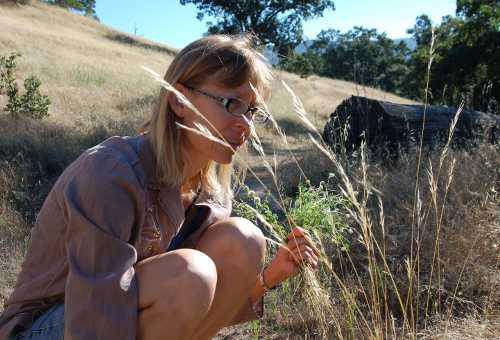
UPPER LAKE, Calif. – On Wednesday, Nov. 7, from 6:30 to 7:45 p.m. Paul Aigner, resident co-director of the University of California, McLaughlin Reserve, will present a lecture titled “Discovering California’s Lost Ecosystem: the ecology and management of native grasslands.”
The lecture will take place at the Lake County Land Trust’s Rodman Preserve Nature Education Center at 6350 Westlake Road near Upper Lake.
Aigner will talk about the wholesale transformation of species composition and ecology of California grasslands.
Space is limited to 40 people. Reservations will be made in the order received. Make reservations by emailing
The Lake County Land Trust is a nonprofit organization dedicated to the preservation of valuable natural habitats and open space in Lake County. For more information, including directions to the Rodman Preserve Nature Center go to www.lakecountylandtrust.org .