 How to resolve AdBlock issue?
Opinion
- Details
- Written by: Fr. Leo M. Joseph, O.S.F.
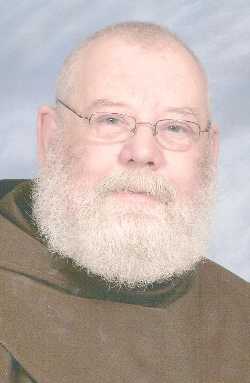
We are what we love. “Rend your hearts and not your garments,” says the prophet Joel.
Lent is a matter of the heart! “Yet even now, says the LORD, return to me with all your heart, with fasting, with weeping, and with mourning; rend your hearts and not your clothing.” This is the church’s Lenten call to repentance, and this is what we are setting out to do in these following 40 days.
First we have to have an authentic understanding of “repentance.”
The Greek word for repentance, “metanoia,” denotes a change of mind, a reorientation, a fundamental transformation of outlook of our vision of the world, and of our own self; and a new way of loving ourselves, loving others, and loving God. In other words: a “change of heart.”
It involves not mere regret of past evil but of our recognition of the distorted vision of our own condition, in which sin, by separating us from God, has reduced us to a divided, autonomous existence, depriving us of both our natural glory and our freedom.
Rather than mere dwelling on human sinfulness, repentance becomes the realization of human insufficiency and limitation.
Repentance then should not be accompanied by a preoccupation with our guilt but by an awareness of our estrangement from God and from each other.
This meaning of repentance replaces its negative connotation with a positive one, focusing on the communion with God that we are aiming for rather than the alienation that we are leaving behind.
Why did Jesus single out prayer, fasting and almsgiving? The Jewish religion in the time of Jesus considered these three practices as the principle works of the religious life. These were seen as the key signs of a pious person, the three great pillars on which a righteous life was based.
But Jesus pointed to the heart of the matter. Why do you pray, fast and give alms? To give glory to God? Or to draw attention to yourself so that others may notice and think highly of you?
Our Lord warns his disciples, and us, of self-seeking glory – the preoccupation with looking good and seeking praise from others.
True piety is something more than feeling good about yourself or looking holy. True piety is loving devotion to God. It is an attitude of awe, reverence, worship and obedience.
So why the ashes? Being strewed with ashes is an ancient sign of humility. It is dust – matter of the earth – which the ancient scriptures, and modern science, tell us we are made of. In other words – dirt!
And humility is definitely a dirty word in our modern culture. The word itself comes from the Latin word for dirt or soil. That’s why we call the soil in our gardens – humus! It’s from the same root word. So humility just means being down to earth, having your feet on the ground. That’s not so bad is it?
It's expressed beautifully in an old Shaker hymn:
'Tis the gift to be simple,
'tis the gift to be free,
'tis the gift to come down
where we ought to be,
and when we find ourselves in the place just right,
'twill be in the valley of love and delight.
When true simplicity is gained
to bow and to bend we shan't be ashamed,
to turn, turn, will be our delight
till by turning, turning we come round right.
That’s the starting point! It is only when we have our feet firmly planted on the ground that we can turn around and rechart our course.
And that’s humility. It is only when we are not so full of ourselves that we can be filled with God.
And that is what Jesus offers us. It is communion with God our loving Father. It is coming home to the loving arms of our Father who awaits us, who longs for us. In God alone we find the fullness of life, happiness and love. God wants to renew us each day and give us new hearts of love and compassion.
Today, we are called to journey with Jesus in a special season of prayer, fasting, almsgiving, as we prepare to celebrate the feast of Easter, our Christian Passover.
We, too, must follow our Lord in the way of the cross in denying ourselves and taking up our own cross in order to share in the victory of Christ's death and resurrection.
The Holy Spirit is ever ready to transform our hearts and to lead us further into God’s life of love and holiness.
Fr. Leo M. Joseph, O.S.F., is parish priest for St. John’s Parish in Lakeport, Calif.
- Details
- Written by: Dr. Lisa Takesue, DVM
When you think about it, many of us have had an encounter with an unowned “community cat” whether it is feral, abandoned, a drifter or one looking for new territory.
My most memorable experience was a large tom that paid occasional visits from a nearby feral colony and often fought with my cats.
After numerous wounds and abscesses my cat Toby contracted Feline AIDS (FIV), which is transmitted via cat-to-cat bite wounds. Two years ago his immune system weakened and I had to euthanize him due to an overwhelming infection.
Many of the people feeding unowned felines may not realize the impact these free-roaming cats have on the populations around them.
Anyone providing food to any cat is considered a “caregiver,” like it or not. Caregivers have good intentions but beyond feeding, many are unwilling or unable to have their cats spayed/neutered, vaccinated, and tested for contagious diseases such as FIV and Feline Leukemia (FeLV).
Once a food source is provided cats will be attracted and will congregate, exhibiting group behaviors such as socializing, breeding, hunting, and fighting. Before you know it, a colony has formed and will grow exponentially if the food source can support it.
The risk of disease is higher in groups of cats since many infectious organisms transmit via saliva, respiratory secretions, and feces. Social grooming, eating/drinking from the same bowl, etc. can transmit the respiratory viruses, Feline Leukemia, and rarely FIV.
Bite wounds can transmit FIV and Rabies, not to mention lots of bacteria. Fecal material can transmit panleukopenia (a parvovirus) and intestinal parasites.
External parasites such as fleas, ticks, and ear mites thrive within cat colonies since they have a smörgåsbord of individuals to feed from.
Many infections and parasites have “carrier” or latent stages, where the individual appears healthy yet can transmit disease to other cats or people.
And worse yet, a pregnant female can transmit FeLV or FIV to her fetuses, so kittens may be born infected and will appear healthy during the first few months of life.
Often caregivers try to befriend and handle unowned cats, putting themselves at risk for bites and scratches.
Anyone trying to pet or catch a cat with unknown vaccination status should be aware of a few health risks.
Cats are now the most frequently reported domestic rabid (infected with rabies) animal in the U.S., and anyone bitten by an unvaccinated cat should take preventative measures against the disease. For some baffling reason rabies vaccination is not required by law for cats in this state or county.
Cat scratches, often a minor painful nuisance, may transmit Bartonella (aka Cat Scratch Disease) a vague illness of fevers, swollen lymph nodes, aching, and malaise.
All this information may seem a bit alarmist or may discourage some from befriending stray cats altogether.
I would like to reinforce, though, that it is not enough for caregivers to just provide food for community cats.
They should make every attempt to get these cats spayed or neutered, tested for FeLV and FIV (and eliminated from the population if carrying either) and vaccinated against rabies, the respiratory viruses, parvovirus and leukemia.
A trap-neuter-return (TNR) program, such as the new Catsnip program sponsored by Lake County veterinarians, helps accomplish these goals by providing a free surgery and rabies vaccine.
In addition, most of the participating hospitals offer discounted pricing – for cats in the program – for the other feline vaccinations and testing.
Let me reiterate from Dr. Jeff Smith’s previous article that only unowned cats qualify for this free program.
Contacts for the program are: north county – Vicki Chamberlain,
Please consider the health of the surrounding human and animal communities when feeding unowned cats.
Lisa Takesue, DVM, works at Main Street Veterinary Clinic in Lakeport, Calif. Her guest commentary is endorsed by her colleagues at Middletown Animal Hospital, Animal Hospital of Lake County, Wasson Memorial Veterinary Clinic and Clearlake Animal Hospital.
- Details
- Written by: Jim Brown III
As a part of the 30-day public comment period on a settlement agreement between the U.S. Department of Justice, U.S. Environmental Protection Agency, Elem Colony and Bradley Mining Co., on behalf of the Elem families residing on the Elem Reservation, I will formally submit testimony to the Department of Justice and formally notify the federal government agencies and U.S. citizens that the true living Elem Reservation residents and community members formally reject and totally disagree with the current Department of Justice settlement agreement as prescribed, for the following reasons.
If the current settlement agreement is approved it will be a travesty of the federal justice system, violation of Indian Civil Rights Act and Indian Self-determination while undermining the protection of natural resources and tribal sovereignty and is a setback of environmental justice, a denial of fair and equal compensation to the living surviving Elem members and families for their lifelong pain and suffering and loss of tribal lifeways (gathering of healthy foods and fish).
The 380 acres the tribe gained in the settlement is only a small fraction of the tribe’s total aboriginal lands that were directly lost due to the mining operations.
Further, the $50,000 for the tribe is a financial insult, and should be viewed as bribe money, so the tribe will not file another lawsuit for EPA’s 106 violations in 2006, with the cleanup resulting in damage that has been estimated at $10 million.
The settlement agreement will cover up and deny the direct trusteeship of the Bureau of Indian Affairs and the environmental responsibilities of our own so-called premier agency, the U.S. EPA.
The Bureau of Indian Affairs is formally the tribe's trustee and the EPA is the premier environmental agency; they must take responsibility for their direct violations!
In 1971, the BIA/Central California Agency while providing the Elem tribe with a new housing, road and water project purchased the toxic mine tailings from the Bradley Mining Co.! In addition it did not comply with Section 106 of the National Historic Preservation Act.
The BIA/CCA agency has politically created division in the tribal leadership. For example, since 2008 – due to an election dispute and audit – the BIA has shut down all services to the Elem tribal members and community.
We have a newly funded HUD (2005) community center that is totally shut down since 2010, along with no existing tribal health or social services available to the Elem members residing on the reservation lands and community.
Most of the current officials who agreed to this illegal settlement agreement don’t even live on the Elem Reservation or even in live in the county and they appear only to want to divide up non-gaming funds.
Elem members who live on the Elem Reservation who disagree have been formally barred from attending Elem General Council tribal meetings addressing this settlement and have been formally excluded from exercising their voting rights and excluded from sharing tribal non-gaming funds, which is a direct violation of our tribal and civil rights.
In 2006, the U.S. EPA’s Superfund Cleanup Project at Elem, Sub-Contractor (CH2MHill) also, did not comply with Section 106. Seventy cubic yards of prehistoric and historic cultural soils and cultural artifacts were destroyed. They want us to only except $50,000 to not file another lawsuit?
In, addition the U.S. EPA Superfund manager interfered with tribal sovereignty and government operations when he created a conflict of interest by hiring the Elem advocate, NAGPRA Coordinator and Tribal Historic Preservation Officer.
In 2005 I was appointed Elem tribal historian. I have also served my tribe as an elected official and in 1999 as tribal chairman signed the California Gaming Compact. I was the tribal administrator (Elem tribal member) in 2006 who informed the office of Historic Preservation of the U.S. EPA violation, and then once I exposed the conflict of interest created between the US EPA Superfund Manager and the Elem tribal chairman, I was terminated by the tribal chairman in 2007.
I will be formally submitting and requesting this immediate amendment to the settlement. In addition, I am considering requesting formal compensation for my loss of employment that resulted from the EPA Superfund Manager’s conflict of interest.
On behalf of the Elem tribal members and residents of Elem Indian Colony, We formally request the following financial amendments to the Elem settlement agreement.
New settlement agreement:
- $3 million to purchase Rattlesnake Island (to forever preserve the ancient homeland tribal village and sacred site for the tribe).
- $1.5 million to build Elem museum/cultural center (fund, operate museum and cultural center for tribe and public).
- $1.5 million for an Elem health/wellness center (fund health & wellness center for tribal members).
- $2 million for Elem tribal members' ($50,000 each) financial compensation for lifelong pain, suffering and loss of life ($500,000 higher education, employment and training fund).
- $1 million for sacred site protection and development of a tribal land trust organization and for the purchase and operations of Anderson Marsh State/Tribal Park for public access.
- $1 million payment to and for the Lake County citizen’s benefit (food kitchen, homeless shelter, farmers markets, organic gardens, etc.).
Grand total: $10 million settlements.
Jim Brown III is an Elem-Modun tribal member. He lives in Clearlake Oaks, Calif.
- Details
- Written by: Mike Adams
I have a great appreciation for history and tradition. One of the many pleasures of living in a small community is that we experience the connection between our recent and historic past. We have many pieces of the past that we often just take for granted.
The Carnegie Library – a reflection of the vision of Andrew Carnegie to make possible a library in every town; the Clear Lake State Park – a vision of Lake County’s own Nellie Dorn to donate a prime piece of land for a state park; the vision of Ed Mansell – to build a gazebo in Library Park. These historical contributions to our community benefit us all to this day.
As with the Carnegie Library, the visionaries’ names remain connected to each; the State Park is fronted on Dorn Bay and the gazebo has a plaque dedicated to Ed Mansell.
The Soper-Reese Community Theatre is also one of these lasting symbols of our past that reminds us of our history, helping us develop our own history and adding to the quality of our lives.
The theater also holds the names of those who envisioned it; the Reeses who built it, Jim Soper who saw the vision of a performing arts venue and funded its purchase and the community who supported its resurrection.
Inside the theater are the names of those from the community who contributed to this vision. Below is one of the many stories that make up its history.
Hugh Jones, who grew up in Scotts Valley, writes: “During the pear harvest, many of the pear pickers were undocumented immigrants, and truly afraid of the INS (Immigration and Naturalization Service). Once-a-week during the harvest season the theater showed a movie in Spanish for the people working the harvest. One night the INS surrounded the theater hoping to capture all those watching the movie. This would have impacted the local economy and the harvest, so Mr. Reese stopped the movie, went up on stage and explained what was going on outside. He told those present that he was closing the theater offered for everyone to stay in the theater overnight. He said he would be back in the morning to let everyone go safely home after the INS left. This is what took place and the harvest went on without further problems.”
The newest program at the Theatre is “Lake County Live.”
The first broadcast on Sunday, Jan. 29 – featuring live radio on stage at the Soper-Reese – was a tremendous success. A full house, many laughs, local music, singing, clapping and cheering was broadcast live to the households of Lake County via its own community radio station, KPFZ.
Lake County Live was the vision of Doug Rhoades. Well-deserved congratulations are in order to Doug and the group that helped him in this endeavor.
The next Lake County Live will be on Sunday, February 26, at 6 p.m. Seating by 5:45 p.m. is requested.
Coming up this month: The Lake County Theatre Co. will bring an adaptation of Neil Simon’s hilarious play, “The Odd Couple (Female Version),” on Friday, Feb. 24, and Saturday, Feb. 25, at 7 p.m.; Sunday, Feb. 26, at 2 p.m.; Saturday, March 3, and Sunday, March 4, at 7 p.m.; and Monday, March 5, at 2 p.m.
Tickets are now available at The Travel Center in the Shoreline Shopping Center, Monday through Friday, 9 a.m. to 5 p.m. The theater box office is now open on Fridays from 10:30 a.m. to 5 p.m. and two hours before show time on the day of an event and, of course, online at www.soperreesetheatre.com.
For all the latest in information, tickets and more go to www.soperreesetheatre.com.
We’ll see you at the theater.
If you have a story to share about the theater send it to Voice of the Theatre, 275 S. Main St, Lakeport, Ca. 95453.
Mike Adams is executive director of the Soper-Reese Community Theatre in Lakeport, Calif.