 How to resolve AdBlock issue?
Opinion
- Details
- Written by: Greg Cornish
During your first election campaign I was a Gary Lewis supporter. You were new on the scene and Gary had accomplished a few things I wanted to see happen. As I sat talking to Gary one day at his election camp, some of the things he said about you started to not add up on how I perceive you. His criticisms of you were not being based in politics and I started looking at him differently.
After you won the election I became quite pleased with the way you conducted yourself on the Board of Supervisors and with your constituency. That's why I prefer local politics not based on parties and affiliations, it makes it easier to vote for people with ideas and vote based on performance rather than platforms.
However, recently, for whatever reason, you seem to not be as interested in hearing what our constituency has to say or to be as involved in the community as you have been in the past.
When the marijuana growers from another county moved in behind my house and started putting up 8-foot fences, burying watering tanks, grading, installing solar and gas generators, and taking up residence under tents, you did not seem too concerned when I contacted you about it via an e-mail.
Now when one of your constituents gives you a long detailed letter about what's going on in their neighborhood and looks to you for help, please understand they will become quite concerned when your answer in a reply e-mail is a short, “‘Yes, these things are popping up all over.’ – Denise Rushing.’”
I stared at that short e-mail for a while and thought, “What the heck?” I really wanted an opinion from you on the subject, and even a short- and long-range plan to deal with it. I thought that was how politicians handled their constituents.
Later that day I stopped by at a neighbor’s house and was talking about your e-mail. They said they had also contacted you with little success concerning a next-door neighbor who was moving in junk cars and generally making a wreck out of the neighborhood.
They received a note from you that said, “Well, you can't tell people how to live.” We were both puzzled because this didn't sound like the Denise Rushing that we come to know. The Denise Rushing we knew wanted to clean up blight and make Lucerne and Nice look a lot better.
After the resounding defeat of Measure D the voters sent a clear message to the Board of Supervisors saying, “Deal with this.” Sixty-six percent of your voting public wants you to crush this problem and give minimal legal rights to people growing marijuana for medical purposes. The voting public wants you to greatly limit collectives growing in the area in any legal way you can.
I may be wrong, but when I see you as a part of the advisory committee and listen to your views in the Board of Supervisors meetings, it appears you are trying to take a position somewhere in the middle.
Now I know you've had a rich full life and probably met many people who grow marijuana for purposes other than medicinal. I realize you probably know that these people would love to game the medical marijuana system or do what I call piggybacking for purposes of profit. Nowhere in Proposition 215 or SB420 does it mention profit.
Please, in all your future dealings I'd love to see you toughen up and become the person you were when you are fighting for your constituents in the water problem in Lucerne at the beginning of your Lake County political career. I genuinely like you and think you are a fine person, and would love to see you return to your fighting form and fight for the majority of your constituency while protecting the rights of the medical marijuana user by pushing back hard against the criminal element wanting to join it.
You've noticed in one of the last Board of Supervisors meetings when the people showed up to testify from Middletown and Kelseyville how frightened and disappointed the real constituency of the Board of Supervisors is.
You've learned that most of the people that are growing marijuana in the neighborhoods are exceeding the amount needed to satisfy their medical requirements.
You've learned that many of these people that are growing marijuana are not being good neighbors. You saw evidence of death and destruction to animals and the potential of death and destruction to human beings because of these bad neighbors.
Now as you said, “You can't tell people how to live.” However, if you want people to listen to your suggestions and be good neighbors you can control how they live by limiting with law.
Cut down the number of plants to the bare legal minimum reducing the need for guard dogs that these people can control, the need for weaponry to protect the large amount of plants and the other suggestions that the urgency ordinance offers. Personally, I see no reason we would ever need to change the urgency ordinance. People needing medicinal marijuana never had a supply problem or demand problem previously.
There is a time to negotiate and perhaps you see your position on the advisory board that of a negotiator.
Please remember that you do not have to play the middle; your constituency would like to see you negotiate for us and we believe due to the 66 percent to 34 percent mandate that you hold all of the cards.
Greg Cornish lives in Nice, Calif.
- Details
- Written by: Kamala D. Harris
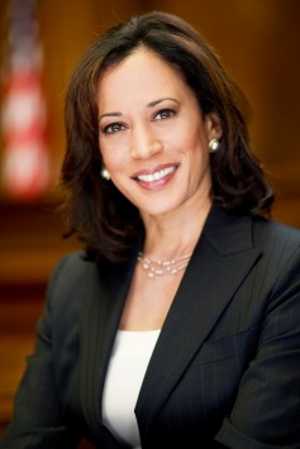
As California Attorney General, I have traveled the state to see how the mortgage crisis continues to impact California families.
I have visited neighborhoods where empty homes are magnets for criminal activity. I have heard the stories of responsible homeowners who lost their family homes – who lost their piece of the American Dream.
For far too long, too many California homeowners have been ensnarled in a long and painful nightmare.
Here in Lake County, there were nearly 3,000 foreclosures between 2008 and 2011. That translates to 1 out of every 12 homes.
We are now at a crossroads.
According to recent estimates, there are as many as 700,000 California households in the “foreclosure pipeline” today – many of them in Lake County. What these homeowners will tell you is that they need relief now.
In particular, they need the flaws in this system to be fixed, such as dual tracking – the dysfunctional practice in which a bank forecloses while the homeowner is negotiating in good faith for a loan modification.
Struggling homeowners also describe another experience that I have heard countless times: They’ll call their banks, only to be connected to a different person each time and someone who is unfamiliar with their situation and doesn’t have their paperwork. They’re continually forced to re-explain their situation and submit, often by fax machine, the same mountain of paperwork.
The solution is the California Homeowner Bill of Rights, which will end dual tracking and give homeowners a single point of contact as they navigate the system and try to keep their homes – a person at the bank who knows the facts of their case, has their paperwork and can get them a decision about their application.
This week, we took a step in the right direction. Key elements of the California Homeowner Bill of Rights passed out of a legislative conference committee.
The next step comes on Monday, when the full Legislature is set to vote on its passage – and it is my hope we’ll do what is right.
The national mortgage settlement we achieved last fall secured a commitment of up to $18 billion for California homeowners from the nation’s five major banks. It was an important first step.
But the protections of that agreement apply only to Californians whose home loans are handled by one of those five banks.
The same common-sense protections should apply across the board, which is why we need the California Homeowner Bill of Rights.
I encourage every Californian to reach out to their legislators and urge them to make sure we pass the California Homeowner Bill of Rights.
This is not a partisan issue. This is a basic issue of fairness – and one that requires action now.
Kamala D. Harris is California’s 32nd attorney general. To see how the California Homeowner Bill of Rights would benefit families in California, visit http://oag.ca.gov/ .
- Details
- Written by: Kathy Windrem and Mike Adams
In keeping with the Soper-Reese Community Theatre’s goal of providing a venue for our community to present local talent, we are looking ahead to partnering once again with an important nonprofit organization.
The Allegro Music Scholarship Program provides scholarships to young music students to support their ongoing music education.
A concert on Sunday, Nov. 4, is focused on young music students who have attained a high level of proficiency in their performance. They have become “Young Music Masters,” and we are honoring their success by featuring them in the concert.
A reception will be held at 2 p.m., with the performance starting at 3 p.m. All proceeds will go to the Allegro Scholarship Program.
This month we again highlight a local musician. Andy Rossoff is a Lake County resident who is highly committed to his music and his community.
By day he is an attorney with the Senior Law Project, providing free legal services to seniors. The Senior Law Project was incorporated in 1983 as a tax-exempt agency. Funding is provided by the Area Agency on Aging, the State Bar of California Legal Services Trust Fund, public and private grants, and client and community donations. The program serves Lake and Mendocino Counties from its Lakeport Office.
By night and weekends, Andy is committed to his music. Increasingly you will see him playing at community events and sharing his passion for his beloved New Orleans jazz.
He has played at the theater’s Third Friday Live and Lake County Live programs, the Pear Festival and the Arts Council’s First Friday Fling.
He also has performed around the lake at local wineries and restaurants. Andy travels often to New Orleans to develop his music, and in doing so has made friends with many jazz greats.
For the past several years, at his own expense, Andy has hosted a house party featuring one of New Orleans’ great jazz pianists, Tom McDermott.
This year it is Andy’s wish to share Tom’s visit to Lake County with the broader community. With Andy’s help, the Soper-Reese Community Theatre will host Tom McDermott playing jazz on Saturday, Aug. 18, starting at 7 p.m. The Soper-Reese Community Theatre will be transformed into a New Orleans Jazz club.
Coming up:
Tuesday Classic Movies, “1776,” July 10, 6 p.m.
Third Friday Live “After the Park” on July 20, 9 p.m. After the concert in Library Park, enjoy more music at the Soper Reese with the group “Short Stax.” Doors will open at 8:30 pm, and the music starts at 9 p.m.
Lake County Live radio broadcast on KPFZ 88.1 FM on Sunday, July 29, 6 p.m. Arrive by 5:30 p.m. to join the live audience and play a part in the broadcast.
August events include Miss Teen Lake County Pageant on Aug. 4; Golden Follies on Aug. 11 and 12; New Orleans Jazz on Aug. 18; Cheating Daylight on Aug. 25.
Tickets are available at The Travel Center in the Shoreline Shopping Center, Monday through Friday, 9 a.m. to 5 p.m., The theater box office, 275 S. Main St., will be will be open again on Fridays from 10:30 a.m. to 5:30 p.m. is always open two hours before show time on the day of any event.
Tickets also can be purchased on line at www.soperreesetheatre.com .
For all the latest in information, tickets and more go to www.soperreesetheatre.com , and we’ll see you at the theater.
Kathy Windrem and Mike Adams are part of the large volunteer group that run the Soper-Reese Community Theatre in Lakeport, Calif.
- Details
- Written by: Peter M. J. Hess
One of the most legendary maritime disasters was the 1912 sinking of the RMS Titanic.
In a pivotal scene in James Cameron’s 1997 film, master shipbuilder Thomas Andrews looks around the magnificent foyer of the grand staircase, swarming with frantic passengers.
Rose Bukater asks how serious the situation is. Says Andrews: “In an hour or so, all this will be at the bottom of the Atlantic.”
The tragedy that was Titanic presents us with some sobering parallels to the great environmental challenges facing our civilization in the twenty-first century.
Titanic suffered a cascading disaster in which sea water from one ruptured compartment spilled over the bulkhead into the next, inexorably causing the ship to founder.
Analogously, as our ever-increasing human demands for energy, water, housing, transportation and agricultural land run up against the immovable iceberg that is human carrying capacity, we are witnessing the cascading failure of our fragile terrestrial support systems.
Both calamities are the result of a collision between human over-confidence and the implacable forces of nature.
Titanic was at once an engineering marvel and a monument to human hubris. One of the most sophisticated ocean liners ever constructed, Titanic was declared by some to be “practically unsinkable.”
To minimize weight, maximize speed and preserve aesthetics, the owners skimped on lifeboats, installed inadequate bulkheads, and relied on a single iron hull.
Thomas Andrews recognized these design flaws and argued for 46 more lifeboats, for bulkheads that reached up to B deck to create sealable watertight compartments, and for a double hull. On every point he was overridden by his cost-conscious supervisors.
Like the Titanic, our present-day industrial civilization is a marvel of human ingenuity, and yet – as with Titanic – a reckoning looms on the horizon.
Our profligate use of coal, oil and gas resources for transportation and food production has allowed humans to flourish in almost every region of the globe.
Abundant cheap oil has supported medical advances to increase the birth rate, to extend life spans, and to enable us to expand our human population (if only temporarily) from one billion to seven billion in a century and a half.
But in our heedless rush for a better, more comfortable life, we’ve ignored the signs of impending disaster.
Humanity today is conducting an unprecedented ecological experiment, steaming into the uncharted waters of global climate change, unsure if we have sufficient provisions and lifeboats for all.
Like the third-class and steerage passengers on the Titanic, the developing nations will be on their own, as the industrial nations commandeer the world's remaining reserves of oil, water and arable land, as outlined by Michael Klare in The Race for What’s Left (2012; http://amzn.to/IYG23F ).
The existing problem of ecological refugeeism – as, for example, when millions of Bangladeshis will be forced to migrate to higher, already occupied ground – will be exacerbated by the extinction of entire island nations such as Tuvalu and the Maldives.
The burdens imposed by climate change and resource depletion will probably fall unequally.
In the case of tens of millions of people who rely for their supply of drinking water on shrinking Asian and South American glaciers, those who have contributed least to greenhouse gas emissions are likely to pay the highest price.
We are stressing all of Earth’s biogeographical support systems – from the atmosphere, to rivers and oceans, to forests and food production – without a clear picture of what the consequences will be.
If we cannot reverse our consumptive course, we can at least make an effort to minimize the impact by reducing human population growth to zero.
We can restrain our desire to travel any time to any place we want at whatever the energy cost. And we can “decarbonize” our energy economy by reducing as much as possible the amount of CO2 going into the atmosphere – through conservation, efficiency, sequestration, and converting to renewable sources (http://ncse.com/climate/climate-change-101/what-can-we-do ).
Climate change and resource depletion are avoidable tragedies, and pose urgent ethical questions. What are my environmental obligations as an individual? Ought I to live closer to my work? Should we bring a third child into the world? What energy-intensive creature comforts should affluent societies be willing to sacrifice?
Every Sunday Christians recite the Nicene Creed, professing belief in “the creator of heaven and earth,” and in “the life of the world to come.” But what about the world we actually inhabit? Does this world really matter?
As a theologian, a parent and an ethical person, I affirm that it does matter.
It matters that I leave the Earth a habitable place for my children and for countless future generations of humans.
It matters that we safeguard the millions of species who are our evolutionary cousins and planet mates.
It matters the world to me that with our actions we look after the creation we honor with our lips.
Peter M. J. Hess, Ph.D., is director of religious community outreach with the National Center for Science Education, a nonprofit organization in Oakland, Calif., that defends and promotes the teaching of evolution and climate science. He is from Cobb, Calif. and lives in Berkeley, Calif.