 How to resolve AdBlock issue?
Arts & Life
- Details
- Written by: Tim Riley
‘UNHINGED’ (RATED R)
Solstice Studios, a relatively new entertainment company that produces and releases feature films, has the distinct honor of releasing the first film nationwide in theaters since the coronavirus shutdown.
That Russell Crowe’s Tom Cooper, if that’s even his name, has more anger management issues than a lifetime of therapy could cure is evident from the get-go in the appropriately titled “Unhinged.”
We first see Tom on a rainy late night parked outside a suburban home with a “for sale” sign. He takes some medication, tosses his wedding ring over his shoulder, and lights matches for a reason that will soon be apparent.
Wielding an axe and a can of gasoline, he breaks down the front door of the house, viciously hacks up the couple inside, and sets a fire that quickly turns into an explosive conflagration.
Then the opening credits roll, consisting of grainy news film clips of incidents of rage, from assaults in a courtroom and on public transportation to civil unrest and riots to freeway traffic accidents.
News reports focus on the stress amidst horrible conditions and lament that angry people can lose self-control. “Incivility is a major issue in America. Rudeness can bring more rudeness,” intones an on-air commentator.
The montage of images of anger and frustration unleashed in a barrage of newsworthy soundbites suggest that “Unhinged” just might explore the psychology behind what fuels this ostensible plague of fury and rage. This is not that movie.
It’s all about Russell Crowe’s character, profusely sweating, disheveled and grossly overweight, being a powder keg of foaming derangement that is hell-bent for leather to snap at the least unjustifiable provocation.
Meanwhile, Rachel (Caren Pistorius), a single mom and freelance hairdresser, struggles to get herself and her young son Kyle (Gabriel Bateman) ready for school, while trying not to be late for work.
On this particular day and already behind schedule, Rachel tries to navigate rush hour traffic without much success. Getting stuck behind a large pickup truck where the driver won’t move on the green light just adds to her vexation.
Unfortunately, the driver of the truck is none other than Tom, and he does not take kindly to Rachel leaning a little too hard on the horn. Catching up to her at the next light, Tom suggests that a courtesy tap would suffice and seeks an apology.
Not in a mood when the day has already started off badly, Rachel has absolutely no desire to offer an act of contrition, at least until it dawns on her too late that it might be best to diffuse an ugly situation.
Demented as he is, Tom pursues Rachel in a street race, catching up with her eventually at a gas station where he says nothing other than to glare menacingly such that we know things are about to get much worse.
While Tom may be crazy, he’s clever enough to know how to manipulate his prey with a deadly cat-and-mouse game. Using the cell phone as a weapon, Tom taps into her contacts and targets Rachel’s loved ones and colleagues.
Rachel’s Volvo station wagon is no match for Tom’s massive truck that he’ll use as a battering ram when necessary. The physical threat, though, is at first minor when compared to the mind games that grow more harrowing.
An early scene of gruesome physical violence occurs when Tom shows up at a diner for Rachel’s appointment with a lawyer friend and ends up tormenting the guy while Rachel tries vainly to offer an apology on the phone. Then the situation turns extremely ugly and brutal.
One of the better mind games happens when Tom insists in a phone conversation that no harm will come to Rachel’s family if she picks someone out of her contact list to be murdered as a grim substitute for a loved one.
Does Rachel eventually figure out a way to fight back to save Kyle and any other family members not yet dispatched by the disturbed lunatic? You probably know the answer to this question if you have watched any revenge films.
Russell Crowe has developed a screen persona over the years that makes him very suitable for the role of a vengeful person of unbridled machismo. He’s absolutely the right fit for a deranged psychopath, because apparently Nicolas Cage was unavailable for the part.
South African actress Caren Pistorius is obviously not as well known to American audiences, but she brings the right note to the frazzled loving mother who eventually comes to terms with fighting back against unrelenting harassment and intimidation.
“Unhinged” is a grindhouse film that might have been a low-rent Quentin Tarantino production. As it is, this is a pulpy B-movie that delivers on its premise that nasty stuff happens when road rage goes to an extreme.
With many theaters not yet open, video on demand may not be far behind in bringing opportunity to witness Russell Crowe becoming frightfully “Unhinged,” and at least you won’t have to wear a mask at home.
Tim Riley writes film and television reviews for Lake County News.
- Details
- Written by: Ted Kooser
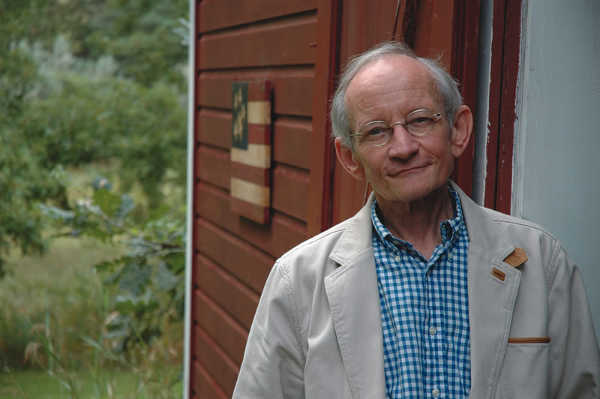
What do we select to keep with us when someone we love has died? Here’s Gail Mazur, who lives in Massachusetts, opening her closet door to show us. This poem originally appeared in the journal Ploughshares. Mazur’s new and selected poems, Land’s End, is due out this year from the University of Chicago Press.
Blue Work Shirt
I go into our bedroom closet
with its one blue work shirt, the cuffs
frayed, the paint stains a loopy non-
narrative of color, of spirit.
Now that you are bodiless
and my body’s no longer the body you knew,
it’s good to be reminded every morning
of the great mess, the brio of art-making.
On the floor, the splattered clogs
you called your “Pollock shoes.”
American Life in Poetry does not accept unsolicited manuscripts. It is made possible by The Poetry Foundation, publisher of Poetry magazine. It is also supported by the Department of English at the University of Nebraska, Lincoln. “Blue Work Shirt” from Land’s End: New & Selected Poems by Gail Mazur. Originally published in Ploughshares. Copyright ©2020 by The University of Chicago. Reproduced by permission. Introduction copyright @2020 by The Poetry Foundation. The introduction’s author, Ted Kooser, served as United States Poet Laureate Consultant in Poetry to the Library of Congress from 2004-2006.
- Details
- Written by: Tim Riley
‘PROJECT POWER’ (Rated R) on NETFLIX
If not for the presence of streaming services, this summer would turn out bereft of action films that might loosely be described as superhero adventures.
Netflix is filling the void, as it did recently with “The Old Guard” reviewed in this column.
The Netflix science-fiction crime drama action thriller “Project Power,” rated R for violence, bloody images, drug content and some language, is set in New Orleans where a pill being peddled on the streets offers its users unpredictable superpowers.
The street drug, developed by a shadowy organization headed by Dr. Gardner (Amy Landecker), is a luminous capsule that unlocks different superpowers for its users that lasts only five minutes.
As with the use of any pharmaceutical, results may vary, and particularly with a drug harvested from multiple species to create what villainous distributor Biggie (Rodrigo Santoro) calls the “next evolution of the human species.”
The Power pill presents a roll of the dice for the consumer. One might burst into flames and manage to burn down a tenement building during a chase. Another becomes invisible and stages a bank robbery that is more interesting during the pursuit.
Teenager Robin (Dominique Fishback) is dealing the drug to finance an operation for her mother. When ambushed by street punks for her stash, Robin is rescued by New Orleans detective Frank Shaver (Joseph Gordon-Levitt) with whom she has developed a professional relationship.
Frank relies on Robin for the powerful capsule because he’s willing to buck the system and use the pill as a means to track down the cartel pushing a product that is turning his beloved city into a cesspool of crime.
Not surprisingly, Frank runs afoul of his Captain Craine (Courtney B. Vance), who asks for his badge and gun until Frank convinces his boss that cooperating with other government agents hasn’t worked out very well for New Orleans.
To keep his job, Frank must pursue the distribution source, which just might be a former decorated soldier with PTSD and a personal agenda. That person is Art (Jamie Foxx), aka the Major, who is desperately searching for his missing daughter.
The paths of Frank, Robin and the Major soon cross, and these disparate characters form an uneasy alliance to rescue the Major’s daughter who is being held hostage by Dr. Gardner on a cargo ship loaded with illicit product.
“Project Power” has plenty of explosive action, but the most dynamic aspect is the rapport between the Major and Robin, which turns out to be the film’s appealing emotional core.
CABLE FALL PREVIEW – PART 2
During the remote summer television press tour, the new streaming service of the Peacock cable network, recently launched by its NBCUniversal parent company, held its first ever presentation of upcoming series in a formal setting.
The early 1990s high school comedy “Saved by the Bell” is being reimagined with an edgier mood and returning several veterans to Bayside High in regular and recurring roles.
Elizabeth Berkley’s former class president Jessie Spano is now a guidance counselor at Bayside and mother of the school’s football team captain. Mario Lopez’s sensitive jock A.C. Slater is now the gym teacher.
Mark-Paul Gosselaar’s Zack Morris has become governor of California who’s in hot water for closing too many low-income high schools, so he proposes transfers of affected students to the highest performing schools in the state, including his alma mater of Bayside.
In a sign of the changing times, one of the leading student characters is that of the most popular girl and cheerleader Lexi (Josie Totah), who just happens to be transgender. For many reasons, Bayside High is a different place than three decades ago.
“Rutherford Falls,” a new comedy series, depicts a small town in upstate New York and the Native American reservation it borders, both of which are turned upside down when local legend and town namesake Nathan Rutherford (Ed Helms) fights the moving of a historical statue.
One’s immediate thought is whether this comedy has anything to do with the wanton destruction of statues that have ranged from ones of the Founding Fathers to the abolitionist Frederick Douglass.
The cancel culture is not the issue in “Rutherford Falls.” The statue in question is that of one of Nathan’s ancestors who brokered a “fair and honest” deal with the local Native American tribe.
The problem is that the statue stands at the exact spot of the negotiated deal with the fictional Minneshonka tribe, but unfortunately the location is in the middle of a street, which creates a traffic hazard where drivers often crash into the pedestal.
The mayor of the town wants to move the statue from its precarious location, and Nathan Rutherford is resolute in his opposition to a relocation because doing so would be contrary to its historical significance.
That Nathan also runs the Rutherford Falls Heritage Museum, dedicated to the history of the town going back to the 17th century, only adds fuel to his fire to fight city hall tooth and nail.
Tim Riley writes film and television reviews for Lake County News.
- Details
- Written by: Ted Kooser
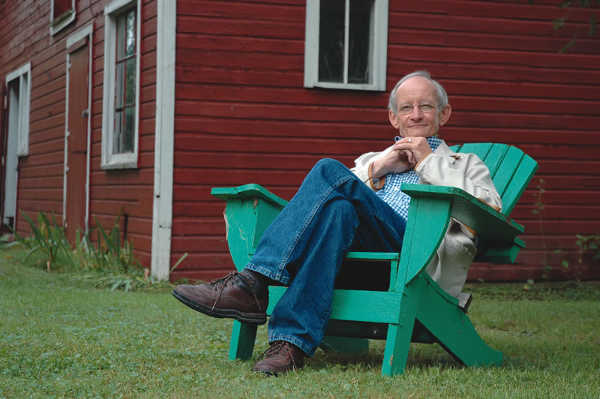
I’ve read that every time we call up a memory we tweak it a little, so that in the end what we remember is mostly fabrication.
Here Emily Ransdell, a poet from Washington state, touches upon this phenomenon in a poem that’s about much more than memory.
This appeared in “New Letters,” one of our best literary journals.
Everywhere a River
I do remember darkness, how it snaked
through the alders, their ashen flanks
in our high-beams the color of stone.
That hollow slap as floodwater hit
the sides of the car. Was the radio on?
Had I been asleep?
Sometimes you have to tell a story
your entire life to get it right.
Twenty-two and terrified, I had married you
but barely knew you. And for forty years
I’ve told this story wrong. In my memory
you drove right through it, the river
already rising on the road behind us,
no turning around.
But since your illness I recall it
differently. Now that I know it’s possible
to lose you, I’m finally remembering
it right. That night,
you threw that car in reverse,
and gunned it. You found us
another way home.
American Life in Poetry does not accept unsolicited manuscripts. It is made possible by The Poetry Foundation, publisher of Poetry magazine. It is also supported by the Department of English at the University of Nebraska, Lincoln. Poem copyright ©2019 by Emily Ransdell, “Everywhere a River,” from New Letters (Vol. 86, nos. 1 & 2, 2019). Poem reprinted by permission of Emily Ransdell and the publisher. Introduction copyright @2020 by The Poetry Foundation. The introduction’s author, Ted Kooser, served as United States Poet Laureate Consultant in Poetry to the Library of Congress from 2004-2006.