How to resolve AdBlock issue?
News
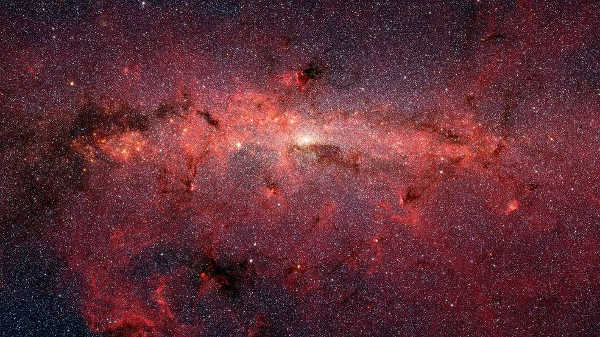
NASA is celebrating the legacy of one of its Great Observatories, the Spitzer Space Telescope, which has studied the universe in infrared light for more than 16 years.
The Spitzer mission will come to a close on Jan. 30.
Launched in 2003, Spitzer revealed previously hidden features of known cosmic objects and led to discoveries and insights spanning from our own solar system to nearly the edge of the universe.
"Spitzer taught us how important infrared light is to understanding our universe, both in our own cosmic neighborhood and as far away as the most distant galaxies," said Paul Hertz, director of astrophysics at NASA Headquarters. "The advances we make across many areas in astrophysics in the future will be because of Spitzer's extraordinary legacy."
Spitzer was designed to study "the cold, the old and the dusty," three things astronomers can observe particularly well in infrared light. Infrared light refers to a range of wavelengths on the infrared spectrum, from those measuring about 700 nanometers (too small to see with the naked eye) to about 1 millimeter (about the size of the head of a pin).
Different infrared wavelengths can reveal different features of the universe. For example, Spitzer can see things too cold to emit much visible light, including exoplanets (planets outside our solar system), brown dwarfs and cold matter found in the space between stars.
As for "the old," Spitzer has studied some of the most distant galaxies ever detected. The light from some of them has traveled for billions of years to reach us, enabling scientists to see those objects as they were long, long ago.
In fact, working together, Spitzer and the Hubble Space Telescope (which observes primarily in visible light and at shorter infrared wavelengths than those detected by Spitzer) identified and studied the most distant galaxy observed to date. The light we see from that galaxy was emitted 13.4 billion years ago, when the universe was less than 5 percent of its current age.
Among other things, the two observatories found that such early galaxies are heavier than scientists expected. And by studying galaxies closer to us, Spitzer has deepened our understanding of how galaxy formation has evolved during the universe's lifetime.

Spitzer also has a keen eye for interstellar dust, which is prevalent throughout most galaxies. Mixed with gas in massive clouds, it can condense to form stars, and the remains can give birth to planets. With a technique called spectroscopy, Spitzer can analyze the chemical composition of dust to learn about the ingredients that form planets and stars.
In 2005, after NASA's Deep Impact mission intentionally slammed into Comet Tempel 1, the telescope analyzed the dust that was kicked up, providing a list of materials that would have been present in the early solar system. What's more, Spitzer found a previously undetected ring around Saturn, composed of sparse dust particles that visible-light observatories can't see.
In addition, some infrared wavelengths of light can penetrate dust when visible light cannot, allowing Spitzer to reveal regions that would otherwise remain obscured from view.
"It's quite amazing when you lay out everything that Spitzer has done in its lifetime, from detecting asteroids in our solar system no larger than a stretch limousine to learning about some of the most distant galaxies we know of," said Michael Werner, Spitzer's project scientist.
To deepen their scientific insights, Spitzer scientists have frequently combined their findings with those of many other observatories, including two of NASA's other Great Observatories, Hubble and the Chandra X-ray Observatory.
Some of Spitzer's greatest scientific discoveries, including those regarding exoplanets, weren't part of the mission's original science goals. The team used a technique called the transit method, which looks for a dip in a star's light that results when a planet passes in front of it, to confirm the presence of two Earth-size planets in the TRAPPIST-1 system.
Then Spitzer discovered another five Earth-size planets in the same system — and provided crucial information about their densities — amounting to the largest batch of terrestrial exoplanets ever discovered around a single star.
One of the first observatories to distinguish the light coming directly from an exoplanet, Spitzer harnessed the same capability for another first: detecting molecules in the atmosphere of an exoplanet. (Previous studies had revealed individual chemical elements in exoplanet atmospheres.) And it provided the first measurements of temperature variations and wind in an exoplanet atmosphere as well.
"When Spitzer was being designed, scientists had not yet found a single transiting exoplanet, and by the time Spitzer launched, we still knew about only a handful," said Sean Carey, manager of the Spitzer Science Center at IPAC at Caltech in Pasadena, California. "The fact that Spitzer became such a powerful exoplanet tool, when that wasn't something the original planners could have possibly prepared for, is really profound. And we generated some results that absolutely knocked our socks off."
One of Spitzer's major strengths is its sensitivity — that is, its ability to detect very faint sources of infrared light. Earth is a major source of infrared radiation, and trying to see faint infrared sources from the ground is like trying to observe stars while the Sun is up. That's a major reason why Spitzer's designers made it the first astrophysics observatory in an Earth-trailing orbit: Far from our planet's heat, Spitzer's detectors wouldn't have to contend with our planet's own infrared radiation.
Different infrared wavelengths can reveal different features of the universe. Some ground telescopes can observe in certain infrared wavelengths and provide valuable scientific insights, but Spitzer can achieve greater sensitivity than even much larger ground telescopes and see much fainter sources, such as extremely distant galaxies.
What's more, it was designed to detect some infrared wavelengths that Earth's atmosphere entirely blocks, rendering those wavelengths beyond the reach of ground-based observatories.

What is infrared light and how do we use it to study the universe? Infrared radiation, or infrared light, is a type of energy that we humans can't see but can feel as heat.
All objects in the universe emit some level of infrared radiation, whether hot or cold, making an infrared telescope like NASA's Spitzer Space Telescope very useful in detecting objects that might seem invisible.
Spacecraft can generate infrared heat too, so Spitzer was designed to stay cool, operating at temperatures as low as minus 450 degrees Fahrenheit (minus 267 degrees Celsius).
In 2009, Spitzer exhausted its supply of helium coolant, marking the end of its "cold mission." But Spitzer's great distance from Earth has helped keep it from warming up too much — it still operates at about minus 408 degrees Fahrenheit (or minus 244 degrees Celsius) — and mission team members found they could continue observing in two infrared wavelengths. Spitzer's "warm mission" has lasted for over a decade, nearly twice as long as its cold mission.
The original mission planners didn't expect Spitzer to operate for 16-plus years. This extended lifetime has led to some of Spitzer's most profound science results but has also posed challenges as the spacecraft drifts farther from Earth.
"It wasn't in the plan to have Spitzer operating so far away from Earth, so the team has had to adapt year after year to keep the spacecraft operating," said Joseph Hunt, Spitzer project manager. "But I think overcoming that challenge has given people a great sense of pride in the mission. This mission stays with you."
On Jan. 30, 2020, engineers will decommission the Spitzer spacecraft and cease science operations. During the 2016 NASA Senior Review process, the agency made a decision to close out the Spitzer mission.
The closeout was initially planned for 2018 in anticipation of the launch of the James Webb Space Telescope, which will also conduct infrared astronomy.
When Webb's launch was postponed, the Spitzer mission was granted its fifth and final extension. These mission extensions have given Spitzer additional time to continue producing transformative science including pathfinding work for Webb.
JPL manages and conducts mission operations for the Spitzer mission for NASA's Science Mission Directorate in Washington. Science operations are conducted at the Spitzer Science Center at IPAC at Caltech. Spacecraft operations are based at Lockheed Martin Space in Littleton, Colorado. Data are archived at the Infrared Science Archive housed at IPAC at Caltech. Caltech manages JPL for NASA.
More information about Spitzer is available at https://www.nasa.gov/mission_pages/spitzer/main/index.html and https://go.nasa.gov/SpitzerToolkit.

LUCERNE, Calif. – The Northshore Fire Protection District officially welcomed two new members to its team of first responders and marked the promotion of another at a special ceremony held Friday afternoon at the district’s Lucerne headquarters.
Daniel Blair and Ralph Mattice, who joined the district late last year, and Randy Newell, a four-year veteran of the district, were celebrated at the event at Lucerne Station 80.
Blair is a firefighter/EMT who came from the Marin County Fire Department and Mattice is a paramedic/firefighter who previously worked for AMR in Contra Costa County, while Newell moved up in the Northshore Fire ranks from firefighter/paramedic to engineer, according to Chief Mike Ciancio.
The three men were joined by their families, colleagues and district board members Jim Burton, John Barnette and Lynn Ringuette.
“This is a special occasion for these guys, to get badged,” Ciancio told the group, adding he hoped all of them will enjoy long careers in the fire service.
“These guys spend a lot of time away from home,” said Ciancio.
Ciancio, who started the introduced the ceremonies, made sure to welcome the families, explaining they are now part of the larger Northshore Fire family.
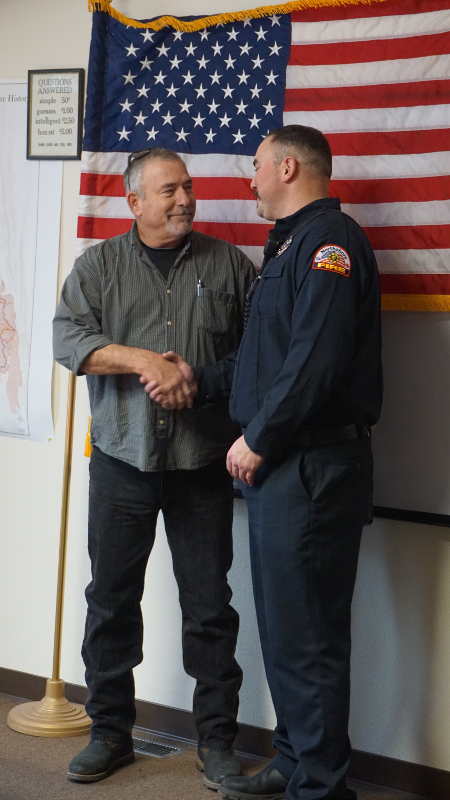
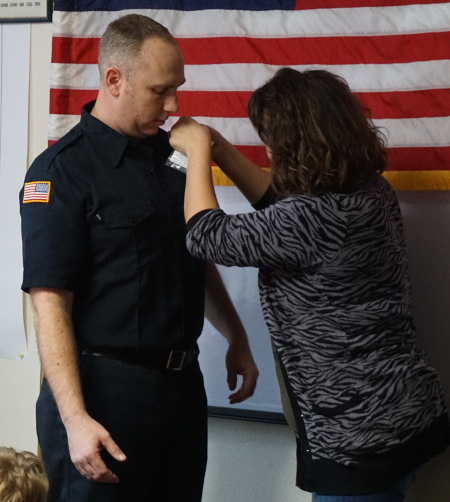
Ciancio then administered the oath to the three men, after which their family members took turns pinning on their badges.
Mattice’s wife, Bessie, pinned on his badge as their two small children, Jack and Pepper, watched nearby.
Daniel Blair’s father, Kevin, pinned on his badge, then shook his son’s hand.
Newell’s wife Casey, herself a volunteer firefighter, pinned on his badge as Ciancio held their small daughter, Ember.
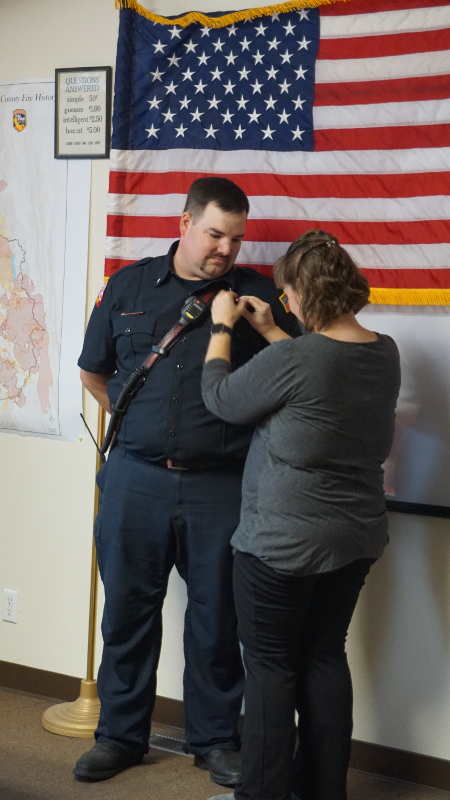
For Newell, firefighting is a profession for more than one generation of his family. His grandfather, Bill Merriman, who worked for Kelseyville Fire for 32 years as an engineer, was on hand to celebrate the next step in his grandson’s career.
Ciancio told Lake County News that staffing for the district – one of the largest in the state as far as coverage area – includes a total of 19 full-time firefighter positions, one of which is open but is in the process of being filled, along with two battalion chiefs, two officer personnel and Ciancio himself.
In addition, Ciancio said there are about 12 volunteers on the district’s books.
Email Elizabeth Larson at


LAKEPORT, Calif. – Police arrested a Lakeport man on Friday morning after an officer found him on the Terrace Middle School grounds without a reason to be there and in possession of a knife and drugs.
The Lakeport Police Department said Michael Richard King, 34, was arrested on Friday morning.
At 10 a.m. Friday, police said Lakeport Police School Resource Officer Ryan Cooley observed an adult male subject on the Terrace Middle School campus who appeared to have a folding knife hanging from the front of his beltline.
Cooley made contact with the male subject, who police identified as King, to check the status of the knife and the subject’s authorization for being on campus.
During further investigation, the police department said Officer Cooley determined that King was illegally in possession of a knife on campus and had no authorization, nor legitimate purpose, for being there.
Police said King subsequently was arrested for felony possession of a weapon on school grounds and misdemeanors for possession of suspected methamphetamine, possession of approximately half a pound of marijuana and possession of drug paraphernalia.
King was booked into the Lake County Jail on the charges and remained in custody late Friday on $15,000 bail.
His booking records show he is set to be arraigned in Lake County Superior Court on Monday.
SACRAMENTO – On Friday, the California Department of Water Resources announced an increase in 2020 State Water Project allocations to 15 percent of requested supplies, up from the year’s initial 10 percent allocation announced on Dec. 2.
Allocations are reviewed monthly based on snowpack and runoff information and are typically finalized by May.
Water from Clear Lake flows into Cache Creek which, in turn, flows into the Sacramento-San Joaquin River Delta, a source for the State Water Project.
“California gets most of its annual precipitation from a handful of major and infrequent winter storms,” said DWR Director Karla Nemeth. “After some significant storms in December, January has been relatively quiet and is currently below average. We continue to hope for wetter conditions and must always work to eliminate waste and use water more wisely.”
Precipitation in the Northern Sierra is at 63 percent of average to date. Statewide snowpack is 76 percent of normal for this date. The state gets about 30 percent of its annual water supply from snowpack.
Snow water content is one factor in determining allocation amounts along with reservoir storage and releases necessary to meet water supply and environmental demands.
Lake Oroville, the State Water Project’s largest reservoir, is currently at 61 percent of capacity and 94 percent of average for this time of year.
Shasta Lake, the Central Valley Project’s largest reservoir, is at 74 percent of capacity and 112 percent of average.
San Luis Reservoir, the largest off-stream reservoir in the United States where water is stored for the State Water Project and Central Valley Project, is at 72 percent of capacity and 95 percent of average.
In Southern California, State Water Project’s Castaic Lake is at 72 percent of capacity and 87 percent of average.
Friday’s 15 percent allocation amounts to 635,434 acre-feet of water.
The State Water Project provides water to 29 contractors who supply water to more than 27 million Californians and 750,000 acres of farmland.
Allocations are reviewed monthly based on snowpack and runoff information and are typically finalized by May.
Water from Clear Lake flows into Cache Creek which, in turn, flows into the Sacramento-San Joaquin River Delta, a source for the State Water Project.
“California gets most of its annual precipitation from a handful of major and infrequent winter storms,” said DWR Director Karla Nemeth. “After some significant storms in December, January has been relatively quiet and is currently below average. We continue to hope for wetter conditions and must always work to eliminate waste and use water more wisely.”
Precipitation in the Northern Sierra is at 63 percent of average to date. Statewide snowpack is 76 percent of normal for this date. The state gets about 30 percent of its annual water supply from snowpack.
Snow water content is one factor in determining allocation amounts along with reservoir storage and releases necessary to meet water supply and environmental demands.
Lake Oroville, the State Water Project’s largest reservoir, is currently at 61 percent of capacity and 94 percent of average for this time of year.
Shasta Lake, the Central Valley Project’s largest reservoir, is at 74 percent of capacity and 112 percent of average.
San Luis Reservoir, the largest off-stream reservoir in the United States where water is stored for the State Water Project and Central Valley Project, is at 72 percent of capacity and 95 percent of average.
In Southern California, State Water Project’s Castaic Lake is at 72 percent of capacity and 87 percent of average.
Friday’s 15 percent allocation amounts to 635,434 acre-feet of water.
The State Water Project provides water to 29 contractors who supply water to more than 27 million Californians and 750,000 acres of farmland.
NORTH COAST, Calif. – The week, Sonoma County authorities, with the assistance of state and federal law enforcement agencies, cited a Rohnert Park masseuse for solicitation of prostitution and posted two massage businesses as dangerous buildings during the course of an undercover operation.
Tonga Ball, 61, was cited and released for solicitation of prostitution on Thursday evening, according to Sgt. Juan Valencia of the Sonoma County Sheriff’s Office.
Valencia said that Sonoma County Sheriff's Office Domestic Violence/Sexual Assault Unit detectives conducted an undercover operation, specifically targeting possible human trafficking, in the massage parlor business.
He said detectives collaborated with the Federal Bureau of Investigation, the US Department of Homeland Security, and Sonoma County Code Enforcement for this multi-agency joint operation.
An undercover detective entered the Green Rose Therapy business, in Penngrove to receive a massage, Valencia said.
Valencia said Ball escorted the undercover detective into a room and began to give the detective a massage. Shortly thereafter, Ball solicited the detective to perform a lewd act for money.
Detectives entered the business and detained Ball. Valencia said there were no other employees or clients inside the business at the time.
A detective and a FBI agent conducted an interview with Ball regarding possible human trafficking, Valencia said.
Ball said she was there on her own free will and the business was not involved in any human trafficking operation. Ultimately, Ball was cited and released for solicitation for prostitution, Valencia said.
A Sonoma County Code Enforcement Agent entered the business and found multiple violations, including being a public nuisance, change of occupancy, commercial tenant improvements without permits and unpermitted substandard construction. Valencia said the business was posted as being a dangerous building and the specific tenant spaces cannot be occupied until the violations have been corrected.
Upon completion of the investigation at Green Rose Therapy, Valencia said detectives and Sonoma County Code Enforcement agents went to Penngrove Relax Center to conduct an inspection of the business. Multiple violations were present at this location and the business was posted as being a dangerous building.
“The Sonoma County Sheriff's Office would like to thank the Federal Bureau of Investigation, the US Department of Homeland Security and Sonoma County Code Enforcement for their assistance with this investigation,” Valencia said.
Tonga Ball, 61, was cited and released for solicitation of prostitution on Thursday evening, according to Sgt. Juan Valencia of the Sonoma County Sheriff’s Office.
Valencia said that Sonoma County Sheriff's Office Domestic Violence/Sexual Assault Unit detectives conducted an undercover operation, specifically targeting possible human trafficking, in the massage parlor business.
He said detectives collaborated with the Federal Bureau of Investigation, the US Department of Homeland Security, and Sonoma County Code Enforcement for this multi-agency joint operation.
An undercover detective entered the Green Rose Therapy business, in Penngrove to receive a massage, Valencia said.
Valencia said Ball escorted the undercover detective into a room and began to give the detective a massage. Shortly thereafter, Ball solicited the detective to perform a lewd act for money.
Detectives entered the business and detained Ball. Valencia said there were no other employees or clients inside the business at the time.
A detective and a FBI agent conducted an interview with Ball regarding possible human trafficking, Valencia said.
Ball said she was there on her own free will and the business was not involved in any human trafficking operation. Ultimately, Ball was cited and released for solicitation for prostitution, Valencia said.
A Sonoma County Code Enforcement Agent entered the business and found multiple violations, including being a public nuisance, change of occupancy, commercial tenant improvements without permits and unpermitted substandard construction. Valencia said the business was posted as being a dangerous building and the specific tenant spaces cannot be occupied until the violations have been corrected.
Upon completion of the investigation at Green Rose Therapy, Valencia said detectives and Sonoma County Code Enforcement agents went to Penngrove Relax Center to conduct an inspection of the business. Multiple violations were present at this location and the business was posted as being a dangerous building.
“The Sonoma County Sheriff's Office would like to thank the Federal Bureau of Investigation, the US Department of Homeland Security and Sonoma County Code Enforcement for their assistance with this investigation,” Valencia said.
Aurora, also known as the northern lights, are a sight to behold as they dance across the sky when solar winds collide with the Earth’s atmosphere.
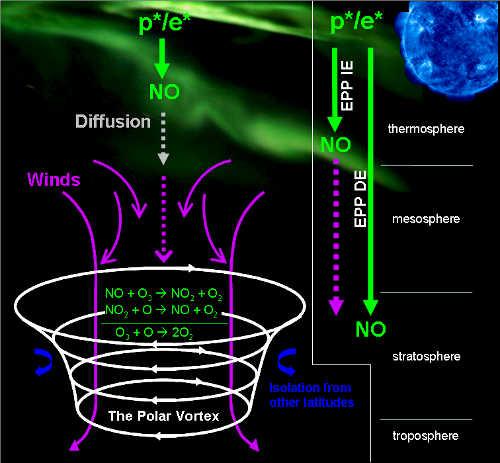
However, they also contribute to a process that has an adverse impact on the Earth’s ozone as nitric oxide is created during the auroral light show.
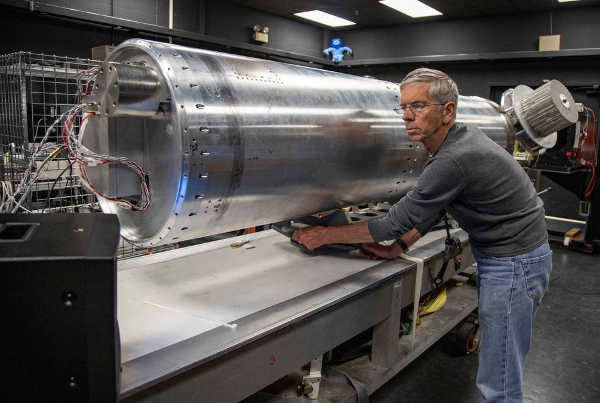
To better understand the abundance of nitric oxide in the polar atmosphere, NASA will launch the Polar Night Nitric Oxide or PolarNOx experiment from the Poker Flat Research Range operated by the University of Alaska, Fairbanks.
PolarNOx will fly on a NASA Black Brant IX suborbital sounding rocket between 8:04 and 9:04 a.m. EST (4:04 and 5:04 a.m. AST) on Jan. 26, 2020. The launch window runs through Feb. 8 and opens three to four minutes earlier each day.
Scott Bailey, PolarNOx principal investigator from Virginia Tech in Blacksburg, Virginia, said, “The aurora creates nitric oxide (NO), but in the polar night, unlike the sunlit atmosphere, there is no significant process for destroying the nitric oxide. We believe it builds up to large concentrations. The purpose of our rocket is to measure the abundance and especially the altitude of peak abundance for the nitric oxide. We don’t know the altitude at which the nitric oxide settles.”
“Nitric oxide under appropriate conditions can be transported to the stratosphere where it will catalytically destroy ozone,” Bailey said. “Those changes in ozone can lead to changes in stratospheric temperature and wind and may even impact the circulation near Earth’s surface.”
Nitric oxide in the northern regions exists between 53 and 93 miles altitude. During the rocket flight a star tracker will lock on to the star Gamma Pegasi.
“PolarNOx will observe starlight with a high spectral resolution UV spectrograph operating near 215 nanometers. Attenuation of the starlight by NO is used to obtain an NO altitude profile," said Bill McClintock, co-investigator and lead instrument scientist from the Laboratory of Atmospheric and Space Physics, University of Colorado in Boulder.
“The payload with the spectrograph is targeted to fly to an altitude of 161 miles. The goal is to get the most time possible observing both the star brightness above the nitric oxide and where the peak NO exists between 62 and 68 miles altitude,” McClintock said.
This is the second flight of PolarNOx from Poker Flat. “In 2017 we experienced an electronics failure during the flight. While we did get the important part of the data, the mission wasn’t a total success. We did upgrade the electronics for this reflight so we look forward to a much more successful mission,” Bailey said.
The University of Alaska Fairbanks Geophysical Institute has established a subscription-based text messaging service for anyone interested in receiving updates and links to launch range communications or stream broadcasts.
Subscribers also will be notified when the count drops below T-10 minutes, at which time a launch is likely to occur. To subscribe to the messaging service text PFRRLAUNCHES to 33222.
PolarNOx is supported through NASA's Sounding Rocket Program at the agency's Wallops Flight Facility at Wallops Island, Virginia, which is managed by NASA's Goddard Space Flight Center in Greenbelt, Maryland. NASA's Heliophysics Division manages the sounding-rocket program for the agency.
Keith Koehler works for NASA's Wallops Flight Facility in Wallops Island, Virginia.