 How to resolve AdBlock issue?
News
As the spread of COVID-19, the disease caused by the novel coronavirus, has caused nationwide shortages of respirator face masks for medical professionals, the California Department of Public Health is taking steps to protect health care professionals on the frontlines of the fight against novel coronavirus.
The Public Health Department announced Tuesday that it has received approval from the Centers for Disease Control and Prevention and the National Institute of Occupational Safety and Health to use some of its emergency planning reserves of 21 million N95 filtering facepiece masks in certain situations.
The emergency planning reserves of N95 masks, some of which are past their manufacturer use-by date, have been stored in climate-controlled conditions that preserved the masks’ efficacy. The way the masks have been stored will prevent the degradation of elastic that slips around the ears, a key factor in the CDC and NIOSH’s approval.
These masks are approved for use only in limited, low-risk circumstances, thus relieving pressure on the supply chain of unexpired masks for health care providers caring for confirmed COVID-19 patients and other high-risk situations for infectious diseases.
In tandem with this announcement, the Department of Public Health and CalOSHA both released guidance about:
– Which N95 masks may be safely used;
– Under what circumstances; and
– How health facilities can optimize use of expired masks to conserve unexpired personal protective equipment for confirmed COVID-19 patients and in other medically necessary situations.
The California Department of Public Health, along with the CDC, does not recommend that healthy people wear masks at this time. However, masks are recommended to limit the spread of disease for people who are exhibiting respiratory symptoms.
“California is working hard to ensure our health care system is in the strongest possible position to respond to this evolving situation,” said Gov. Gavin Newsom. “Critical to that effort is making sure health care workers have the medical masks and protective equipment they need to protect themselves while caring for patients. Our state is extremely grateful for the hard work and dedication of our health care workers in this time of expanded need.”
“Protecting the health and safety of the doctors, nurses, and other health care and dental care providers is a critical component of ensuring our public health at any time, and particularly now,” said Dr. Sonia Angell, director of the California Department of Public Health and State Health Officer. “Releasing this supply of masks will help keep our health care professionals safe on the job.”
As California’s testing for COVID-19 at 13 state and county public health labs in the state ramps up, Dr. Angell stressed that faster testing of patients may lead to a more rapid increase in the number of confirmed cases reported. That is not necessarily a sign that the rate of infection is increasing, but that our ability to test more people more rapidly is leading to better detection.
While additional positive tests continue to be reported by county health officers, state officials emphasized that these reports show swift and robust action is being taken to detect cases early, isolate and care for patients, and trace contacts.
“The risk to the health of the general public in California remains low. We will continue to provide updates as this situation evolves,” said Dr. Angell. “At this time, the best way to protect your health is to practice good health habits like washing your hands regularly, covering your cough and staying home if you are ill. Also, if you have a fever and respiratory symptoms or other signs of COVID-19, call ahead. Calling your health care provider or local public health department first before seeking medical care allows steps to be taken to protect the health and wellbeing of patients, healthcare providers and the community at large.”
COVID-19 in California by the numbers as of Tuesday, March 3:
43 – Positive tests
24 – Cases of positive tests related to federal repatriation flights
19 – Cases not related to repatriation flights
10 – Travel-related
5 – Person to person
4 – Community transmission
9,200+ – number of people self-monitoring who returned to the U.S. through SFO or LAX
49 – Number of local health jurisdictions involved in self-monitoring
13 – Labs with test kits
Thousands – Number of tests California is able to perform now.
The Public Health Department announced Tuesday that it has received approval from the Centers for Disease Control and Prevention and the National Institute of Occupational Safety and Health to use some of its emergency planning reserves of 21 million N95 filtering facepiece masks in certain situations.
The emergency planning reserves of N95 masks, some of which are past their manufacturer use-by date, have been stored in climate-controlled conditions that preserved the masks’ efficacy. The way the masks have been stored will prevent the degradation of elastic that slips around the ears, a key factor in the CDC and NIOSH’s approval.
These masks are approved for use only in limited, low-risk circumstances, thus relieving pressure on the supply chain of unexpired masks for health care providers caring for confirmed COVID-19 patients and other high-risk situations for infectious diseases.
In tandem with this announcement, the Department of Public Health and CalOSHA both released guidance about:
– Which N95 masks may be safely used;
– Under what circumstances; and
– How health facilities can optimize use of expired masks to conserve unexpired personal protective equipment for confirmed COVID-19 patients and in other medically necessary situations.
The California Department of Public Health, along with the CDC, does not recommend that healthy people wear masks at this time. However, masks are recommended to limit the spread of disease for people who are exhibiting respiratory symptoms.
“California is working hard to ensure our health care system is in the strongest possible position to respond to this evolving situation,” said Gov. Gavin Newsom. “Critical to that effort is making sure health care workers have the medical masks and protective equipment they need to protect themselves while caring for patients. Our state is extremely grateful for the hard work and dedication of our health care workers in this time of expanded need.”
“Protecting the health and safety of the doctors, nurses, and other health care and dental care providers is a critical component of ensuring our public health at any time, and particularly now,” said Dr. Sonia Angell, director of the California Department of Public Health and State Health Officer. “Releasing this supply of masks will help keep our health care professionals safe on the job.”
As California’s testing for COVID-19 at 13 state and county public health labs in the state ramps up, Dr. Angell stressed that faster testing of patients may lead to a more rapid increase in the number of confirmed cases reported. That is not necessarily a sign that the rate of infection is increasing, but that our ability to test more people more rapidly is leading to better detection.
While additional positive tests continue to be reported by county health officers, state officials emphasized that these reports show swift and robust action is being taken to detect cases early, isolate and care for patients, and trace contacts.
“The risk to the health of the general public in California remains low. We will continue to provide updates as this situation evolves,” said Dr. Angell. “At this time, the best way to protect your health is to practice good health habits like washing your hands regularly, covering your cough and staying home if you are ill. Also, if you have a fever and respiratory symptoms or other signs of COVID-19, call ahead. Calling your health care provider or local public health department first before seeking medical care allows steps to be taken to protect the health and wellbeing of patients, healthcare providers and the community at large.”
COVID-19 in California by the numbers as of Tuesday, March 3:
43 – Positive tests
24 – Cases of positive tests related to federal repatriation flights
19 – Cases not related to repatriation flights
10 – Travel-related
5 – Person to person
4 – Community transmission
9,200+ – number of people self-monitoring who returned to the U.S. through SFO or LAX
49 – Number of local health jurisdictions involved in self-monitoring
13 – Labs with test kits
Thousands – Number of tests California is able to perform now.
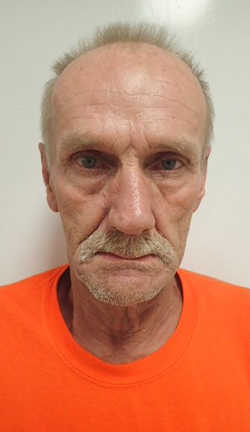
LAKE COUNTY, Calif. – The Clearlake Oaks man who killed his father and a friend, shot two others including a California Highway Patrol officer, robbed two stores and set wildland fires during an October 2017 shooting and crime spree has reached a plea deal with the Lake County District Attorney’s Office.
On Tuesday, the day before he was set to stand trial, Alan Leroy Ashmore, 64, pleaded no contest to murder and attempted murder charges, said District Attorney Susan Krones.
Krones said Alan Ashmore pleaded to first-degree murder for the killing of his 85-year-old father, Douglas Ashmore, as well as the killing of his friend, Richard Braden, 64.
Ashmore also pleaded no contest to the attempted first-degree murder of CHP Officer Steven Patrick, Krones said.
In all three instances, Krones said Ashmore admitted to the personal discharge of a firearm that resulted in death and great bodily injury.
As part of the plea deal, Krones said Ashmore agreed to a sentence of 140 years to life in prison.
While a no contest plea is technically not the same as a guilty plea, Krones said it has the same effect. In this case, she said it pointed to sufficient evidence to prove the case against Ashmore beyond a reasonable doubt.
She said she reached out to the victims to let them know about the settlement and their rights to give victim impact statements at his sentencing.
Krones said Ashmore will be sentenced at 1:30 p.m. Tuesday, April 14, in Judge J. David Markham’s Department 3 courtroom at the Lake County Courthouse in Lakeport.
The agreement included the dismissal of 18 counts ranging from assault with a deadly weapon to a felon in possession of guns and ammunition – a charge that stemmed from a 1980 felony burglary case – and hit and run involving a vehicle he had struck while driving around Clearlake Oaks that day, Krones said.
Krones said the charges were dismissed with a “Harvey waiver,” which means the charges can still be considered in the sentencing and victims have the opportunity to pursue restitution.
Ashmore previously had entered a plea of not guilty by reason of insanity. Krones said that plea was withdrawn, which was one of the reasons she agreed to this final plea deal.
“Even though I did not think that would have been successful,” she said of the insanity plea, “you never know what a jury’s gonna do.”
Ashmore’s attorney is Andrea Sullivan, who leads the county’s indigent defense contract.
Sullivan said she thought the plea agreement was a favorable outcome for Ashmore because, had he gone to trial and been convicted, he could have faced life in prison without the possibility of parole.
“This will also allow the victims and their families to move on without the trauma of reliving the incident at a jury trial,” Sullivan said.
The California Department of Corrections and Rehabilitation reported that a federal court in February 2014 ordered the state to implement a parole process for inmates who are 60 years or older and who have been incarcerated for at least 25 years. That ruling was in response to California’s prison overcrowding.
The state subsequently created the Elderly Parole Program, which allows for a parole suitability hearing once they are both age 60 and have served 25 years of continuous incarceration.
“Inmates sentenced to fixed, determinate terms as well as those sentenced to life with the possibility of parole are eligible for the program. Inmates who are sentenced to life without the possibility of parole, or who are sentenced to death are not eligible for the program,” the state reported.
Panels hearing such parole cases will consider advanced age, long-term confinement and diminished physical condition, if any, when determining the inmate’s suitability for parole. If approved, inmates are released immediately.
Based on the state guidelines, Ashmore would be 89 years old before he could be considered eligible for the program.
While theoretically parole is possible for Ashmore, “Realistically, he will likely never be paroled,” Sullivan said.
Krones agreed, noting that even if he became eligible for consideration, his suitability would be in question. She said she thinks it’s highly unlikely Ashmore would be found suitable “at the first opportunity, given what he did.”
She said she’s also informed the victims and their families that, should Ashmore be considered for parole in the distant future, the Lake County District Attorney’s Office would present opposition at a parole hearing.
Shooting and crime spree erupted after disagreement
Ashmore was arrested following a shooting spree during which he also robbed two gas stations at gunpoint and set fires in the Clearlake Oaks area on Oct. 23, 2017, as Lake County News has reported.
The incident, which led to a massive law enforcement response, began with a confrontation between Ashmore and a 22-year-old female friend at his home, Krones said.
Authorities said Ashmore had become angry with the woman after she refused to have sex with him and he shot her in the foot. She was able to escape out a window and ran to the neighbor’s house for help.
Douglas Ashmore had attempted to intervene in the confrontation between his son and the woman. After the woman escaped, Alan Ashmore shot his father in the face, killing him instantly, according to incident reports.
Krones said Ashmore then retrieved a shotgun from his residence, took his father’s vehicle and fired at several houses and neighbors.
He attempted to kill one neighbor who escaped after Ashmore’s pistol misfired. Ashmore then fired several rounds into three separate residences from both inside and outside of the residences, according to the District Attorney’s Office investigation.
Ashmore found Braden in a vehicle parked on the street in Anchor Village and shot him several times with a shotgun, killing him, authorities said.
Officer Patrick encountered Ashmore as he was responding to a call about a shooting in the area. Authorities said Ashmore shot several shotgun rounds at Patrick, hitting both his vehicle and his ballistic safety vest in the area of his abdomen.
Although injured, authorities said Patrick – along with a responding sheriff’s deputy – pursued Ashmore and protected the nearby East Lake Elementary School.
Ashmore fled to a Chevron station on Highway 20 and entered the station store with a shotgun, confronting a beer vendor as he entered the store, Krones said.
Based on the case investigation, Ashmore fired the shotgun one time at the head of the vendor, who went to retrieve his firearm – which he had a concealed weapons permit to carry – from his vehicle.
While still in the store, Ashmore stole a Pepsi and went back to his vehicle. The vendor fired several times at Ashmore’s vehicle in an attempt to stop him, Krones said.
Authorities said Ashmore proceeded to drive to the Power Mart gas station and entered that store with the firearm, robbing the store at gunpoint – pointing the shotgun at the clerk – and taking a pack of cigarettes and a lighter. After he left the store he fired several shots outside of it.
From there, Krones said Ashmore drove up High Valley Road where he lit several small fires in an attempt to escape law enforcement. Firefighters with Northshore Fire and Cal Fire extinguished the fires.
Krones said Ashmore made one more stop before he was taken into custody, driving into the parking lot of Brassfield Winery where he brandished a firearm at a man.
Authorities said Ashmore was attempting to steal the vehicle from the man, who escaped after a high-speed chase.
Ashmore would finally surrender without resistance at a roadblock on High Valley Road set up by the CHP, sheriff’s deputies and Lakeport Police officers, authorities said.
Then-District Attorney Don Anderson told Lake County News as the time that Ashmore told investigators after he was taken into custody that he “would just kill anyone that f****** moved.
Patrick would be off work for three months after the shooting before returning to duty, as Lake County News has reported.
The CHP Area commander at the time, Lt. Hector Paredes, said Patrick’s actions during the incident were “clearly heroic.”
Anderson, who originally handled Ashmore’s case, decided not to pursue the death penalty against him due to his age and the fact that, before the October 2017 spree killing, he had little criminal background.
Case had been set for trial this week
Ashmore was held to answer in the case following a March 2018 preliminary hearing.
It had been set for trial several times since, but Krones said the case was finally set to go to trial on Wednesday.
The trial was expected to last about a month and a half, with 30 or so witnesses, she said. In such a complicated scenario, even with a conviction, many issues can be raised on appeal.
“This plea will void any substantial lengthy appeals,” Krones said.
She said the discussions leading up to the plea agreement weren’t underway for very long. She said Anderson had previously been involved in negotiations to settle the case but they didn’t go anywhere.
Krones said she looked at the case again and, late last week, worked out the plea agreement with the defense.
Krones said Ashmore entered the plea on Tuesday, at which point he was on the Superior Court calendar for a settlement conference.
“It gives finality to the case,” Krones said.
Email Elizabeth Larson at
KELSEYVILLE, Calif. – With the number of novel coronavirus cases growing nationwide, a local panel of health experts and public officials gave updates at a Monday evening town hall about local preparedness and how to protect against the virus.
The California Department of Public Health said that, as of Monday, there are 43 people in the state who have tested positive for COVID-19 – the disease caused by the novel coronavirus – with 24 of those related to federal repatriation flights.
So far, there have been no cases of COVID-19 or even tests done for it in Lake County, Public Health Officer Dr. Gary Pace said at the Kelseyville town hall.
Sutter Lakeside Hospital Chief Medical Executive Dr. Diane Pege, a town hall panelist, said COVID-19 is relatively easy to kill and that basic precautions such as handwashing and keeping surfaces cleaned with the appropriate products can keep people safe.
“What we're learning about the virus changes from day to day,” Pege said.
Based on the latest information, Pege said it’s believed that if a person is exposed to the novel coronavirus, they would become symptomatic between two and 14 days. If they go 14 days without symptoms, they may not get it at all.
The town hall in Kelseyville followed by several hours a briefing at the White House in which Vice President Mike Pence and federal health officials who are part of the coronavirus task force gave the latest update on the spread of COVID-19.
Vice President Pence said in the afternoon briefing that there are 43 domestic cases plus another 48 cases of people returning to the United States from areas where they contracted the virus.
Pence also announced that four more deaths from the virus had occurred on Monday in the United States, bringing the total to six deaths nationwide.
In addition to meeting with the nation’s governors, the vice president reported that the administration had met earlier in the day with pharmaceutical companies that have formed a consortium to share information in the development of therapeutics and vaccines.
Pence said vaccines could be going to clinical trials within six weeks but are unlikely to be available until late this year or early next year. Therapeutics could be ready this summer or early fall.
Federal Health and Human Services Secretary Alex Azar said of the 43 domestic cases, 17 were travel-related, with the remaining 26 the result of person-to-person contact.
Even so, Pence and Azar said the immediate risk to Americans remains low.
Food and Drug Administration Commissioner Stephen Hahn said that due to a policy change, the capacity for testing for the virus is rapidly increasing.
He said this weekend, the capacity for state public health labs was between 75,000 and 100,000 tests, but changes in policy regarding development are allowing multiple companies and academic centers to move quickly in expanding the ability to test.
As a result, by the end of this week, close to a million tests will be able to be performed, Hahn said.
Local leaders offer questions, guidance
The Monday evening town hall was organized and moderated by Lily Woll, an educator who also is running for District 5 supervisor. She told Lake County News she organized the event in response to concerns community members had expressed to her.
For the town hall, she assembled a panel including Dr. Pace and Dr. Pege, Sheriff Brian Martin, Rob Young of the Lake County Office of Education, Sutter Lakeside Chief Nursing Executive Teresa Campbell, Sutter Lakeside infection preventionist Tammy Carter and Capt. Jim Dowdy of the Kelseyville Fire Department.
About two dozen people were in attendance at the event, held at Grace Church in Kelseyville, with many others watching a live stream of the event provided by the county of Lake and submitting questions online which the panel addressed at the end of the meeting.
Pace said very little testing for COVID-19 has been done in the United States due to the limited number of tests and the Center for Disease Control's specific protocols for the people they will test. As a result, health officials are not sure how widespread the infection is.
Strategies federal and state officials have been taking including limiting travel to countries with high risk and quarantining or isolating those who have been exposed, which he said is a containment strategy.
“This is a longstanding public health strategy that's worked some in the past,” he said.
However, once the virus it’s past containment, the strategy shifts to mitigation and the attempt to limit its spread, Pace said.
“Right now, the risk in Lake County is very low,” said Pace.
Neighboring counties have started to declare health emergencies. “We're not at that point in this county yet but it's something that may emerge in the coming weeks as we see how things go,” Pace said.
Sheriff Martin said the sheriff’s office has reached out to neighboring agencies to see what they are planning as part of putting together a Lake County protocol.
He said his agency is working to keep its personnel healthy so they can serve the community. “The government's not going to close down.”
Martin said the biggest challenge on the local level might be if people are quarantined. He said the Public Health officer has some police powers and can order quarantine, which is a misdemeanor to violate. In that case, the sheriff’s office would be the enforcement arm.
Young, the Lake County Office of Education’s emergency preparedness coordinator, said he acts as a liaison between the county of Lake and local school districts.
He said they’ve faced similar situations before, such as in 2009 with the H1N1 flu. At that time, schools were forced to develop a pandemic protocol which depends on universal precautions including cleaning, keeping people who are ill at home for 24 hours and following advice of Public Health.
Young said the Office of Education is in constant contact with Lake County Public Health, especially if its ongoing attendance data monitoring detects notable changes.
If there is an outbreak in Lake County, Young said schools are prepared to offer students independent study or makeup work as appropriate. He said school closures would only be considered after consultation with Public Health.
Understanding the novel coronavirus
Dr. Pege said most common colds are from the coronavirus family. Coronavirus has little projections that make it look like a crown, thus its name.
What’s different about COVID-19, Pege explained, is that it’s very light, and when people cough or sneeze it tends to hover and stay in the air.
However, “It's very easy to kill once it gets on a surface,” Pege said, noting that just about any product that will kill viruses will kill the novel coronavirus and that there are estimated to be 139 products on the market that will destroy it.
She said thorough hand washing – using soap and water for 15 to 20 seconds or using hand sanitizer, working it down into the webs of the fingers – is key, as is keeping away from people who are sneezing.
Whereas the common cold and flu usually start with aches, pains and feeling bad generally, Pege said COVID-19 starts with a cough, sometimes shortness of breath and then fever.
“It has a very specific presentation,” she said.
If people are sick and need care, Pege said they should call their health care provider or the hospital so they can make plans to receive and care for them.
Campbell said that Sutter Lakeside gets support through the Sutter Health Emergency Management System.
She said she is getting 20 to 30 emails a day from various agencies with all the latest information. “It's amazing.”
Campbell added, “We worked really closely with all the agencies at this table,” explaining that she is grateful for partnerships and collaboration, which she said makes the county safer.
Carter urged people to use proper “cough etiquette.” That means not coughing into their hands but into their elbow or a tissue, then immediately washing hands. Those with symptoms of illness should stay home.
Campbell added, “You don't get the coronavirus without an exposure opportunity, and that's why we say the risk in this county is relatively low.”
Capt. Jim Dowdy of Kelseyville Fire told the group, “We've been dealing with these kinds of things for years.”
He said it seems like there is a new virus every two years and treatment and policies tend to be very similar.
Dowdy said their crews are trained to handle such illnesses and they follow thorough protocols for cleaning equipment. “We're very diligent about keeping our equipment clean.”
He added, “We're all very prepared for this.”
Pege said that because novel coronavirus is new, most people don’t have antibodies to fight it. Once a person starts to develop symptoms, they have probably been shedding the virus for a few days.
With the opportunities for testing now ramping up, Pace said he expects regional labs to have testing capability over the next week.
“This is quickly changing. It's been a problem,” said Pace, adding that the dearth of testing is why health officials don’t yet have an understanding of how widespread COVID-19 is now, but he said that understanding may be completely different in two weeks.
Email Elizabeth Larson atThis email address is being protected from spambots. You need JavaScript enabled to view it. . Follow her on Twitter, @ERLarson, or Lake County News, @LakeCoNews.
The California Department of Public Health said that, as of Monday, there are 43 people in the state who have tested positive for COVID-19 – the disease caused by the novel coronavirus – with 24 of those related to federal repatriation flights.
So far, there have been no cases of COVID-19 or even tests done for it in Lake County, Public Health Officer Dr. Gary Pace said at the Kelseyville town hall.
Sutter Lakeside Hospital Chief Medical Executive Dr. Diane Pege, a town hall panelist, said COVID-19 is relatively easy to kill and that basic precautions such as handwashing and keeping surfaces cleaned with the appropriate products can keep people safe.
“What we're learning about the virus changes from day to day,” Pege said.
Based on the latest information, Pege said it’s believed that if a person is exposed to the novel coronavirus, they would become symptomatic between two and 14 days. If they go 14 days without symptoms, they may not get it at all.
The town hall in Kelseyville followed by several hours a briefing at the White House in which Vice President Mike Pence and federal health officials who are part of the coronavirus task force gave the latest update on the spread of COVID-19.
Vice President Pence said in the afternoon briefing that there are 43 domestic cases plus another 48 cases of people returning to the United States from areas where they contracted the virus.
Pence also announced that four more deaths from the virus had occurred on Monday in the United States, bringing the total to six deaths nationwide.
In addition to meeting with the nation’s governors, the vice president reported that the administration had met earlier in the day with pharmaceutical companies that have formed a consortium to share information in the development of therapeutics and vaccines.
Pence said vaccines could be going to clinical trials within six weeks but are unlikely to be available until late this year or early next year. Therapeutics could be ready this summer or early fall.
Federal Health and Human Services Secretary Alex Azar said of the 43 domestic cases, 17 were travel-related, with the remaining 26 the result of person-to-person contact.
Even so, Pence and Azar said the immediate risk to Americans remains low.
Food and Drug Administration Commissioner Stephen Hahn said that due to a policy change, the capacity for testing for the virus is rapidly increasing.
He said this weekend, the capacity for state public health labs was between 75,000 and 100,000 tests, but changes in policy regarding development are allowing multiple companies and academic centers to move quickly in expanding the ability to test.
As a result, by the end of this week, close to a million tests will be able to be performed, Hahn said.
Local leaders offer questions, guidance
The Monday evening town hall was organized and moderated by Lily Woll, an educator who also is running for District 5 supervisor. She told Lake County News she organized the event in response to concerns community members had expressed to her.
For the town hall, she assembled a panel including Dr. Pace and Dr. Pege, Sheriff Brian Martin, Rob Young of the Lake County Office of Education, Sutter Lakeside Chief Nursing Executive Teresa Campbell, Sutter Lakeside infection preventionist Tammy Carter and Capt. Jim Dowdy of the Kelseyville Fire Department.
About two dozen people were in attendance at the event, held at Grace Church in Kelseyville, with many others watching a live stream of the event provided by the county of Lake and submitting questions online which the panel addressed at the end of the meeting.
Pace said very little testing for COVID-19 has been done in the United States due to the limited number of tests and the Center for Disease Control's specific protocols for the people they will test. As a result, health officials are not sure how widespread the infection is.
Strategies federal and state officials have been taking including limiting travel to countries with high risk and quarantining or isolating those who have been exposed, which he said is a containment strategy.
“This is a longstanding public health strategy that's worked some in the past,” he said.
However, once the virus it’s past containment, the strategy shifts to mitigation and the attempt to limit its spread, Pace said.
“Right now, the risk in Lake County is very low,” said Pace.
Neighboring counties have started to declare health emergencies. “We're not at that point in this county yet but it's something that may emerge in the coming weeks as we see how things go,” Pace said.
Sheriff Martin said the sheriff’s office has reached out to neighboring agencies to see what they are planning as part of putting together a Lake County protocol.
He said his agency is working to keep its personnel healthy so they can serve the community. “The government's not going to close down.”
Martin said the biggest challenge on the local level might be if people are quarantined. He said the Public Health officer has some police powers and can order quarantine, which is a misdemeanor to violate. In that case, the sheriff’s office would be the enforcement arm.
Young, the Lake County Office of Education’s emergency preparedness coordinator, said he acts as a liaison between the county of Lake and local school districts.
He said they’ve faced similar situations before, such as in 2009 with the H1N1 flu. At that time, schools were forced to develop a pandemic protocol which depends on universal precautions including cleaning, keeping people who are ill at home for 24 hours and following advice of Public Health.
Young said the Office of Education is in constant contact with Lake County Public Health, especially if its ongoing attendance data monitoring detects notable changes.
If there is an outbreak in Lake County, Young said schools are prepared to offer students independent study or makeup work as appropriate. He said school closures would only be considered after consultation with Public Health.
Understanding the novel coronavirus
Dr. Pege said most common colds are from the coronavirus family. Coronavirus has little projections that make it look like a crown, thus its name.
What’s different about COVID-19, Pege explained, is that it’s very light, and when people cough or sneeze it tends to hover and stay in the air.
However, “It's very easy to kill once it gets on a surface,” Pege said, noting that just about any product that will kill viruses will kill the novel coronavirus and that there are estimated to be 139 products on the market that will destroy it.
She said thorough hand washing – using soap and water for 15 to 20 seconds or using hand sanitizer, working it down into the webs of the fingers – is key, as is keeping away from people who are sneezing.
Whereas the common cold and flu usually start with aches, pains and feeling bad generally, Pege said COVID-19 starts with a cough, sometimes shortness of breath and then fever.
“It has a very specific presentation,” she said.
If people are sick and need care, Pege said they should call their health care provider or the hospital so they can make plans to receive and care for them.
Campbell said that Sutter Lakeside gets support through the Sutter Health Emergency Management System.
She said she is getting 20 to 30 emails a day from various agencies with all the latest information. “It's amazing.”
Campbell added, “We worked really closely with all the agencies at this table,” explaining that she is grateful for partnerships and collaboration, which she said makes the county safer.
Carter urged people to use proper “cough etiquette.” That means not coughing into their hands but into their elbow or a tissue, then immediately washing hands. Those with symptoms of illness should stay home.
Campbell added, “You don't get the coronavirus without an exposure opportunity, and that's why we say the risk in this county is relatively low.”
Capt. Jim Dowdy of Kelseyville Fire told the group, “We've been dealing with these kinds of things for years.”
He said it seems like there is a new virus every two years and treatment and policies tend to be very similar.
Dowdy said their crews are trained to handle such illnesses and they follow thorough protocols for cleaning equipment. “We're very diligent about keeping our equipment clean.”
He added, “We're all very prepared for this.”
Pege said that because novel coronavirus is new, most people don’t have antibodies to fight it. Once a person starts to develop symptoms, they have probably been shedding the virus for a few days.
With the opportunities for testing now ramping up, Pace said he expects regional labs to have testing capability over the next week.
“This is quickly changing. It's been a problem,” said Pace, adding that the dearth of testing is why health officials don’t yet have an understanding of how widespread COVID-19 is now, but he said that understanding may be completely different in two weeks.
Email Elizabeth Larson at
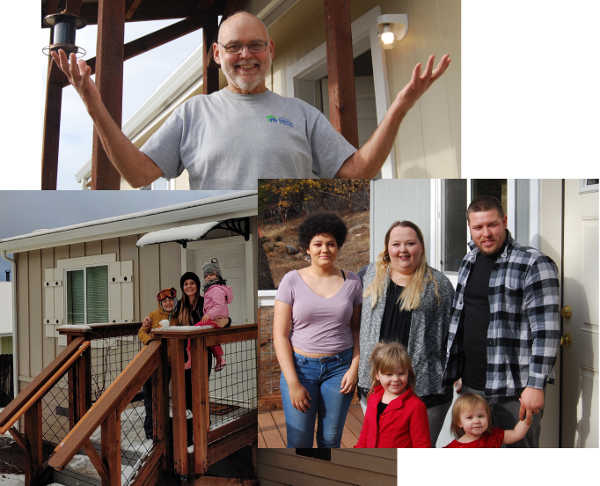
COBB, Calif. – Thanks to Habitat for Humanity Lake County three more families who lost their homes due to the Valley fire were welcomed into their new homes in time for the 2019 holiday season.
All three homes are in the affected burn area on Cobb.
After months of living in his travel trailer and rooming in a local church-owned facility, Roland Simpson was grateful to have his home restored on his property.
“It’s been a long time. Sometimes it felt like it would never happen. I’m happy to be back,” he said when Habitat staff welcomed him into his new home.
A short distance away, Will Stiles, his wife Barbara and their three children, who have extended family in the Cobb area, are equally elated. “This feels like a dream. This is the first time any place has felt like home since the Valley fire,” he said.
Jessica and her children were the third family to get into their home this past holiday season. “I still cannot believe we are living in our very own home. For a while, I was afraid I would have nowhere to go. I have an immense amount of gratitude for all Habitat has done to help me make this happen,” she said.
If you are a low-income family with a housing need and are willing to partner with Habitat for Humanity Lake County towards the goal of owning your own home, please contact the Habitat office at 707-994-1100, Extension 108, or come by the office at 14321 Lakeshore Drive in Clearlake between 9 a.m. and 4 p.m. Monday through Friday.
The office staff will be happy to provide you with information about the program and provide you with a pre-application to see if you might qualify.
NORTH COAST, Calif. – Personnel on the Baseball fire burning on the Mendocino National Forest’s Covelo Ranger District made good progress over the weekend and raised the containment on the incident to 90 percent.
The fire remained at 211 acres, according to officials with the Mendocino National Forest.
The Baseball fire is located about 15 miles southeast of Covelo in Mendocino and Glenn
Counties.
There are about 35 personnel assigned to the incident including engines and crews from the
Mendocino and the Six Rivers national forests, the forest reported.
Crews will continue to mop-up and patrol the fire until the fire is considered out, officials said. After a windy weekend, decreasing wind and temperatures in the 50s are expected early in the week.
It has been determined that the Baseball fire started from previous pile burning on the Baseball
prescribed fire project on Tuesday, Feb. 25, as Lake County News has reported.
The fire has burned in grass, brush and timber in steep, rugged terrain at a low to moderate rate in a mosaic pattern, similar to the desired effects from a prescribed fire, officials said.
There are no immediate threats to property or structures.
The fire remained at 211 acres, according to officials with the Mendocino National Forest.
The Baseball fire is located about 15 miles southeast of Covelo in Mendocino and Glenn
Counties.
There are about 35 personnel assigned to the incident including engines and crews from the
Mendocino and the Six Rivers national forests, the forest reported.
Crews will continue to mop-up and patrol the fire until the fire is considered out, officials said. After a windy weekend, decreasing wind and temperatures in the 50s are expected early in the week.
It has been determined that the Baseball fire started from previous pile burning on the Baseball
prescribed fire project on Tuesday, Feb. 25, as Lake County News has reported.
The fire has burned in grass, brush and timber in steep, rugged terrain at a low to moderate rate in a mosaic pattern, similar to the desired effects from a prescribed fire, officials said.
There are no immediate threats to property or structures.
As the spread of COVID-19, the disease caused by novel coronavirus, continues worldwide, the state of California on Monday announced a broad series of new actions designed to protect public health and safety.
Gov. Gavin Newsom is requesting the Legislature make up to $20 million available from the Disaster Response Emergency Operations Account, which will allow the state government to respond to the spread of COVID-19. This will be an early action item for the 2020-2021 budget.
Additionally, Gov. Newsom has activated the State Operations Center in Mather to its second-highest level to support state, federal and local emergency managers, public health officials and first responders.
The State Operations Center will provide operational and logistical support to the California Department of Public Health's Medical and Health Coordination Center, or MHCC.
The MHCC has been activated since January to coordinate California's public health response to COVID-19.
Also, over the weekend, California received additional COVID-19 test kits from the CDC, allowing California to test thousands of specimens. These resources, which were requested by the governor last week, will help California medical experts get test results sooner, so they can identify and treat cases, trace potential exposures and better protect public health.
Receiving these new test kits has significantly increased the state's capacity to process specimens and quickly identify new positive cases so affected individuals can be isolated
Ten California public health labs have already received CDC test kits and have begun testing. These labs include CDPH's Laboratory in Richmond, Alameda, Contra Costa, Sacramento, Santa Clara, Tulare, Ventura, Los Angeles, Orange, and San Diego County labs.
The CDPH Laboratory will provide diagnostic testing within a 48-hour turnaround time. More public health labs will soon be able to test, ramping up to a total of 20 public health labs in California in the coming weeks.
While additional positive tests continue to be reported by county health officers, state officials emphasized that these reports show swift and robust action is being taken to detect cases early, isolate and care for patients, and trace contacts.
"These new cases were quickly identified and isolated thanks to the increased testing capacity and aggressive contact tracing deployed by state and local public health departments in partnership with the CDC," said California Health and Human Services Secretary Dr. Mark Ghaly. "Quickly identifying and tracing positive cases is helping us better understand and slow the spread of the virus. As testing and contact tracing continues in the coming days, CDPH expects there will be more California cases identified."
Dr. Ghaly also underscored that there are simple steps we can all take to prevent the spread of COVID-19. Wash your hands with soap and warm water. Avoiding touch eyes, nose or mouth with unwashed hands. Stay home from work or school if you become sick with respiratory symptoms like a fever and cough. Avoid close contact with people who are sick. Follow guidance from public health officials.
It is also important that anyone experiencing symptoms of COVID-19 call their health care provider first before seeking medical care so that appropriate precautions can be taken.
COVID-19 in California by the numbers (as of Monday)
43 – Positive tests
24 – Cases of positive tests related to federal repatriation flights
19 – Cases not related to repatriation flights
10 – Travel-related
5 – Person to person
4 – Community transmission
9,100+ – Number of people self-monitoring who returned to the U.S. through SFO or LAX
49 – Number of local health jurisdictions involved in self-monitoring
10 – Labs performing tests
Thousands – Number of tests California is able to perform now
How can people protect themselves
Every person has a role to play. So much of protecting yourself and your family comes down to common sense:
– Washing hands with soap and water.
– Avoiding touching eyes, nose or mouth with unwashed hands.
– Avoiding close contact with people who are sick.
– Staying away from work, school or other people if you become sick with respiratory symptoms like fever and cough.
– Following guidance from public health officials.
State officials said they have been actively and extensively planning with local public health and health care delivery systems. Actions include:
– As in any public health event, the Medical and Health Coordination Center has been activated and is coordinating response efforts across the state and preparing for possible community transmission.
– California continues to prepare and respond in coordination with federal and local partners, hospitals and physicians.
– California activated the State Operations Center to coordinate response efforts across the state.
– Providing information, guidance documents, and technical support to local health departments, health care facilities, providers, schools, universities, colleges, and childcare facilities across California.
– Coordinating with federal authorities and local health departments that have implemented screening, monitoring and, in some cases quarantine of returning travelers.
– In coordination with the CDC, state and local health departments, we are actively responding to cases of COVID-19.
– Supporting hospitals and local public health laboratories for collection and shipment of specimens for testing of novel coronavirus.
– The California Department of Public Health's state laboratory in Richmond is testing for the virus that causes COVID-19 along with 9 other local public health labs across California.
Gov. Gavin Newsom is requesting the Legislature make up to $20 million available from the Disaster Response Emergency Operations Account, which will allow the state government to respond to the spread of COVID-19. This will be an early action item for the 2020-2021 budget.
Additionally, Gov. Newsom has activated the State Operations Center in Mather to its second-highest level to support state, federal and local emergency managers, public health officials and first responders.
The State Operations Center will provide operational and logistical support to the California Department of Public Health's Medical and Health Coordination Center, or MHCC.
The MHCC has been activated since January to coordinate California's public health response to COVID-19.
Also, over the weekend, California received additional COVID-19 test kits from the CDC, allowing California to test thousands of specimens. These resources, which were requested by the governor last week, will help California medical experts get test results sooner, so they can identify and treat cases, trace potential exposures and better protect public health.
Receiving these new test kits has significantly increased the state's capacity to process specimens and quickly identify new positive cases so affected individuals can be isolated
Ten California public health labs have already received CDC test kits and have begun testing. These labs include CDPH's Laboratory in Richmond, Alameda, Contra Costa, Sacramento, Santa Clara, Tulare, Ventura, Los Angeles, Orange, and San Diego County labs.
The CDPH Laboratory will provide diagnostic testing within a 48-hour turnaround time. More public health labs will soon be able to test, ramping up to a total of 20 public health labs in California in the coming weeks.
While additional positive tests continue to be reported by county health officers, state officials emphasized that these reports show swift and robust action is being taken to detect cases early, isolate and care for patients, and trace contacts.
"These new cases were quickly identified and isolated thanks to the increased testing capacity and aggressive contact tracing deployed by state and local public health departments in partnership with the CDC," said California Health and Human Services Secretary Dr. Mark Ghaly. "Quickly identifying and tracing positive cases is helping us better understand and slow the spread of the virus. As testing and contact tracing continues in the coming days, CDPH expects there will be more California cases identified."
Dr. Ghaly also underscored that there are simple steps we can all take to prevent the spread of COVID-19. Wash your hands with soap and warm water. Avoiding touch eyes, nose or mouth with unwashed hands. Stay home from work or school if you become sick with respiratory symptoms like a fever and cough. Avoid close contact with people who are sick. Follow guidance from public health officials.
It is also important that anyone experiencing symptoms of COVID-19 call their health care provider first before seeking medical care so that appropriate precautions can be taken.
COVID-19 in California by the numbers (as of Monday)
43 – Positive tests
24 – Cases of positive tests related to federal repatriation flights
19 – Cases not related to repatriation flights
10 – Travel-related
5 – Person to person
4 – Community transmission
9,100+ – Number of people self-monitoring who returned to the U.S. through SFO or LAX
49 – Number of local health jurisdictions involved in self-monitoring
10 – Labs performing tests
Thousands – Number of tests California is able to perform now
How can people protect themselves
Every person has a role to play. So much of protecting yourself and your family comes down to common sense:
– Washing hands with soap and water.
– Avoiding touching eyes, nose or mouth with unwashed hands.
– Avoiding close contact with people who are sick.
– Staying away from work, school or other people if you become sick with respiratory symptoms like fever and cough.
– Following guidance from public health officials.
State officials said they have been actively and extensively planning with local public health and health care delivery systems. Actions include:
– As in any public health event, the Medical and Health Coordination Center has been activated and is coordinating response efforts across the state and preparing for possible community transmission.
– California continues to prepare and respond in coordination with federal and local partners, hospitals and physicians.
– California activated the State Operations Center to coordinate response efforts across the state.
– Providing information, guidance documents, and technical support to local health departments, health care facilities, providers, schools, universities, colleges, and childcare facilities across California.
– Coordinating with federal authorities and local health departments that have implemented screening, monitoring and, in some cases quarantine of returning travelers.
– In coordination with the CDC, state and local health departments, we are actively responding to cases of COVID-19.
– Supporting hospitals and local public health laboratories for collection and shipment of specimens for testing of novel coronavirus.
– The California Department of Public Health's state laboratory in Richmond is testing for the virus that causes COVID-19 along with 9 other local public health labs across California.