 How to resolve AdBlock issue?
News
Millions of Americans enjoy feeding and watching backyard birds. Many people make a point of putting food out in winter, when birds needs extra energy, and spring, when many species build nests and raise young.
As a wildlife ecologist and a birder, I know it’s important to understand how humans influence bird populations, whether feeding poses risks to wild birds, and how to engage with birds in sustainable ways.
There is still much to learn about the risks and benefits of feeding birds, particularly through large integrated national citizen science networks like Project FeederWatch. But we now have enough information to promote healthy interactions that can inspire future generations to care about conservation.
A long-term relationship
Birds have been taking advantage of human civilization for thousands of years, congregating where grains and waste are abundant. This means that people have been influencing the abundance and distribution of species for a very long time.
Studies show that providing food has myriad effects on birds’ decisions, behaviors and reproduction. One significant finding is that winter bird feeding increases individual survival rates, can encourage birds to lay eggs earlier in the year, and can also improve nestling survival.
All of these factors alter species’ future reproductive performance and can increase total bird abundance in later years. It’s not always clear how increased abundance of feeder birds impacts other species through competition, but rarer and smaller species can be excluded.
This interactive diagram, based on citizen science data, shows how North America’s top 13 feeder species fare when they compete at feeders. Credit: Cornell Lab of Ornithology
Supplemental food has also led to reduced reproductive success in a few species. This may happen because it improves survival odds for less healthy birds that otherwise would be unlikely to survive and reproduce, or because it leads birds to eat fewer types of natural foods, making their diets less nourishing.
Changing bird behavior
Research also shows that birds are extremely promiscuous. One review examined 342 species and found that in approximately 75%, birds had one or more side partners in addition to their nest mate.
It’s not always clear why birds cheat, but several studies have found that supplemental feeding can reduce the amount of infidelity in certain species, including house sparrows. This hints that feeding birds might alter their behavior and have an effect on genetic variation in urban populations.
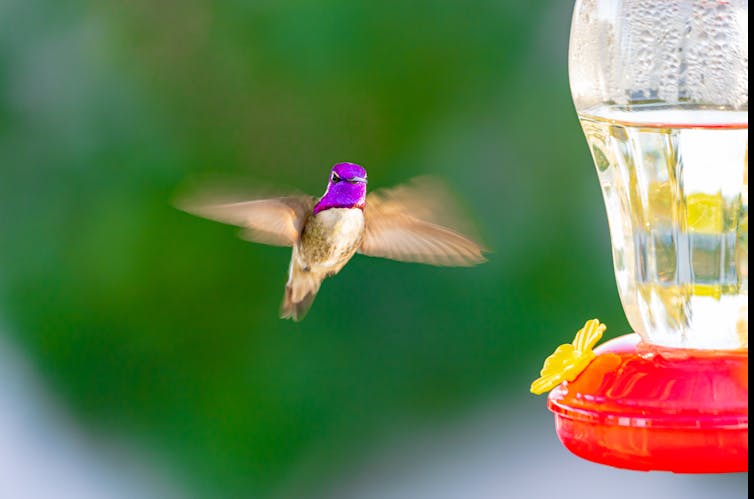
For birds that provide pollinating services, like hummingbirds and lorikeets, there is some evidence that providing them with sugar water – which mimics the nectar they collect from plants – can reduce their visits to native plants. This means they will transfer less pollen. Since much bird feeding happens in densely populated urban areas, it’s unclear how much impact this might have.
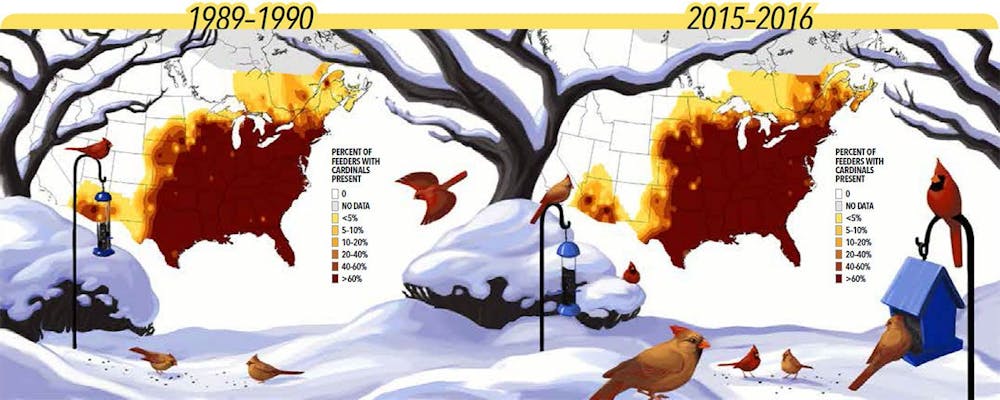
Some bird populations depend completely on feeding and would collapse over the winter without it. For example, Anna’s hummingbirds in British Columbia rely on heated feeders. Other species, such as hummingbirds in the southwest U.S., have become more locally abundant. Northern cardinals and American goldfinches have shifted and expanded their ranges northward with the availability of food.
In one incredible instance, garden feeders seem to have played a role in establishing a new wintering population of migratory blackcaps in the United Kingdom. This group is now genetically distinct from the rest of the population, which migrates further south to Mediterranean wintering grounds.
Don’t feed the predators
Scientists still know little about how bird feeding affects transmission of pathogens and parasites among birds. It is not uncommon for birds at feeders to carry more pathogens than populations away from feeders. Some well-documented outbreaks in the U.S. and U.K. have shown that feeding birds can increase problems associated with disease – evidence that was collected through feeder watch citizen science projects.
Because we still have a poor understanding of pathogen transmission and prevalence in urban areas, it is extremely important to follow hygiene guidelines for feeding and be alert for new recommendations.
Feeding can also attract predators. Domestic cats kill an estimated 1.3 to 4 billion birds in the U.S. every year. Feeders should not be placed in settings where cats are present, and pet cats should be kept indoors.
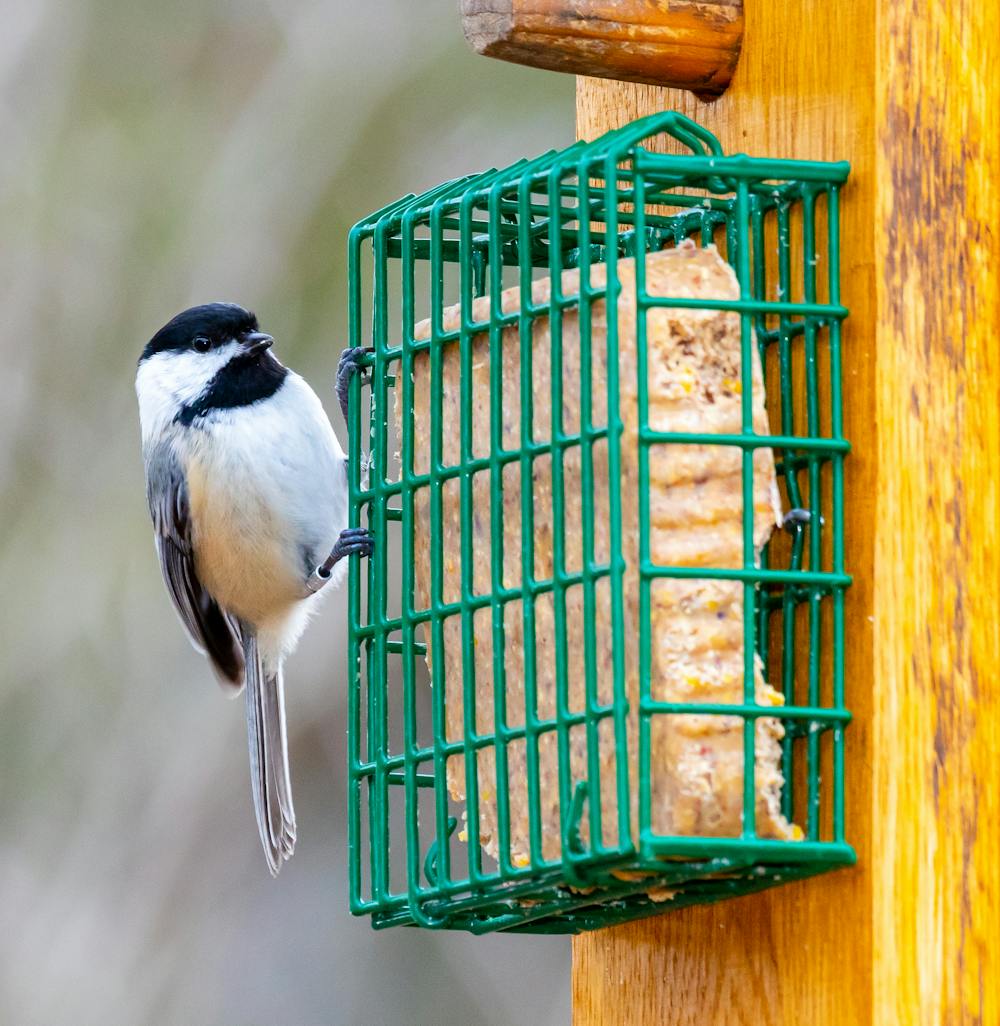
Feeders can also support both native and introduced birds that outcompete local species. One study found that feeders attracted high numbers of crows, which prey on other birds’ chicks, with the result that less than 1% of nearby American robin nests fledged young. In New Zealand, bird feeding largely benefits seed-eating introduced species at the expense of native birds.
Clean feeders and diverse diets
The good news is that studies do not show birds becoming dependent on supplemental food. Once started, though, it is important to maintain a steady food supply during harsh weather.
Birds also need access to native plants, which provide them with habitat, food and insect prey that can both supplement diets and support species that don’t eat seeds at feeders. Diverse food resources can counteract some of the negative findings I’ve mentioned related to competition between species and impacts on bird diets.
Good maintenance, placement and cleaning can help minimize the likelihood of promoting pathogens at feeders. Initiatives like Project FeederWatch have recommendations about feeder design and practices to avoid. For example, platform feeders, where birds wade through the food, are associated with higher mortality, possibly through mixing of waste and food.
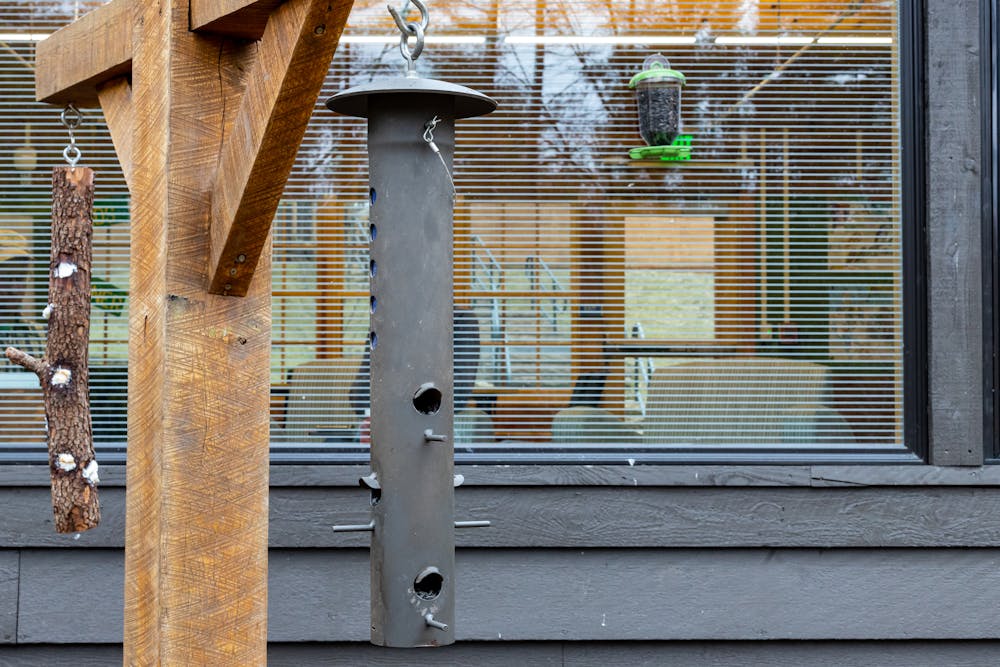
It’s also important to manage the area around feeders. Be sure to place feeders in ways that minimize the likelihood that birds will fly into windows. For instance, avoid providing a sight line through a house, which birds may perceive as a corridor, and break up window reflections with decals.
There are lots of great reasons to bring birds into your life. Evidence is growing that interacting with nature is good for our mental health and builds public support for conserving plants and wildlife. In my view, these benefits outweigh many of the potential negatives of bird feeding. And if you get involved in a citizen science project, you can help scientists track the health and behavior of your wild guests.
[You’re smart and curious about the world. So are The Conversation’s authors and editors. You can get our highlights each weekend.]
Julian Avery, Assistant Research Professor of Wildlife Ecology and Conservation, Pennsylvania State University
This article is republished from The Conversation under a Creative Commons license. Read the original article.
Dogs available for adoption this week include mixes of American Staffordshire Terrier, border collie, dachshund, German Shepherd, hound, husky, Jack Russell Terrier, Labrador Retriever and pit bull.
Dogs that are adopted from Lake County Animal Care and Control are either neutered or spayed, microchipped and, if old enough, given a rabies shot and county license before being released to their new owner. License fees do not apply to residents of the cities of Lakeport or Clearlake.
If you're looking for a new companion, visit the shelter. There are many great pets hoping you'll choose them.
The following dogs at the Lake County Animal Care and Control shelter have been cleared for adoption (additional dogs on the animal control Web site not listed are still “on hold”).
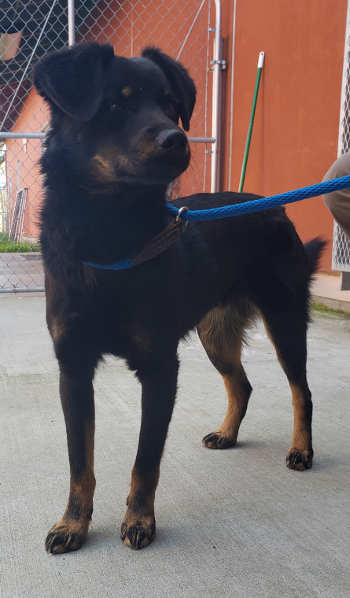
‘Smokey’
“Smokey” is a male dachshund mix with a short black and brown coat.
He already has been neutered.
He is in kennel No. 6, ID No. 11555.
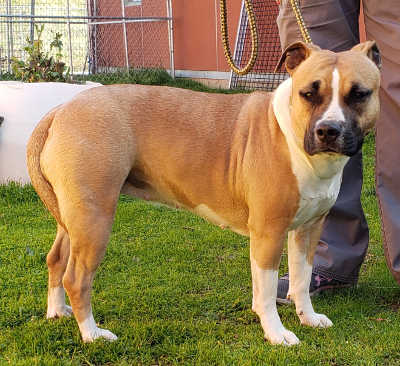
‘Ava’
“Ava” is a female American Staffordshire Terrier with a short black and tan coat.
She is in kennel No. 19, ID No. 13606.
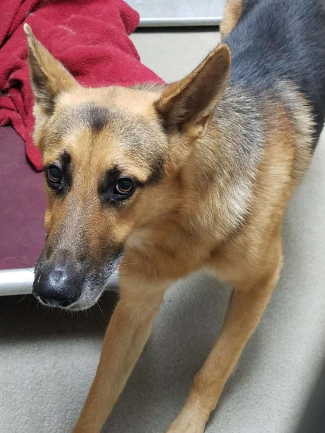
‘Tyson’
“Tyson” is a male German Shepherd with a medium-length tan and black coat and brown eyes.
He is in kennel No. 20, ID No. 11202.
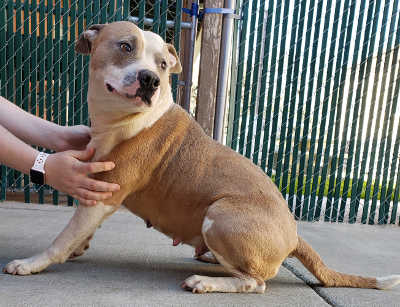
Female pit bull terrier
This female pit bull terrier has a short tan and white coat.
She is in kennel No. 22, ID No. 13604.
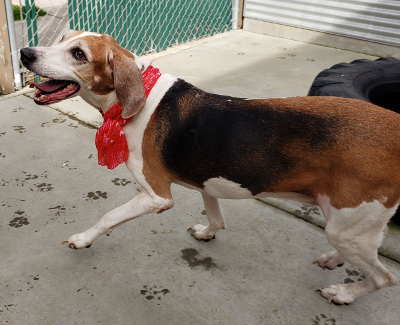
‘Nook’
“Nook” is a female hound mix with a short tricolor coat and brown eyes.
She has already been spayed.
She is in kennel No. 23, ID No. 11790.
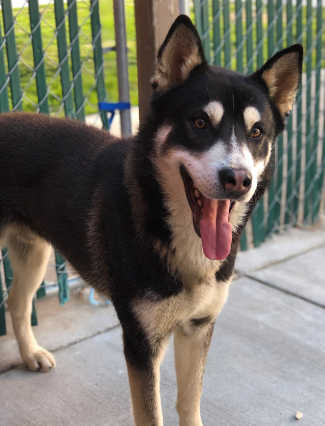
Male husky
This male husky has a medium-length black and white coat and brown eyes.
He is in kennel No. 24, ID No. 13585.
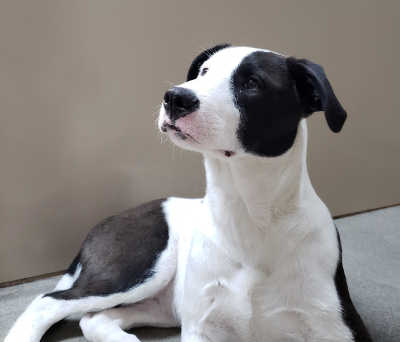
Female border collie-shepherd mix
This young female border collie-shepherd mix has a short black and white coat.
She has been spayed.
She is in kennel No. 29, ID No. 13612.
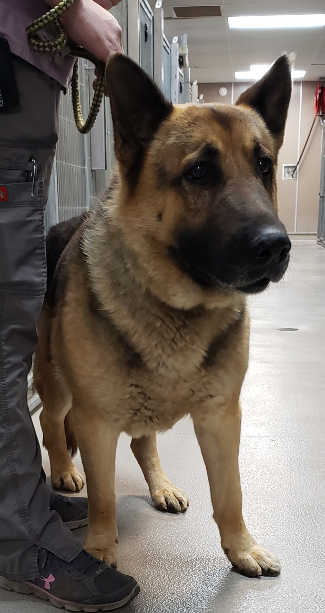
‘Sheriff’
“Sheriff” is a male German Shepherd with a medium-length black and tan coat.
He is in kennel No. 30, ID No. 13618.
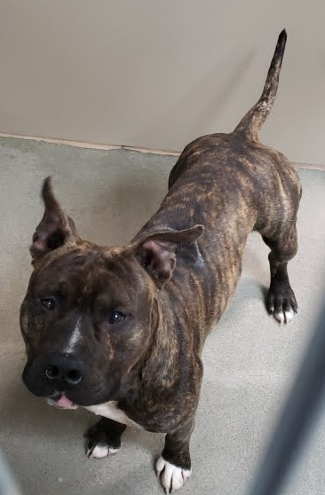
Male pit bull terrier
This male pit bull terrier has a short brindle coat.
He is in kennel No. 31, ID No. 13507.
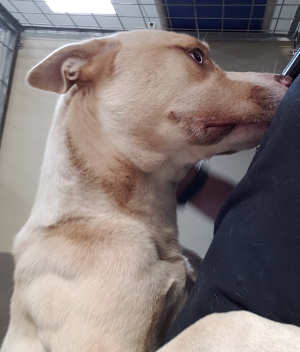
‘Chase’
“Chase” is a male husky-pit bull terrier mix with a short tan coat and blue eyes.
He is in kennel No. 32, ID No. 13541.
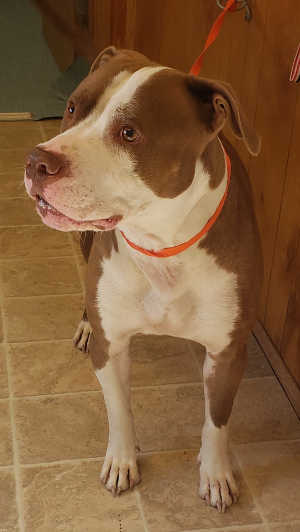
Male pit bull terrier
This male pit bull terrier has a short red and white coat and brown eyes.
He is in kennel No. 33, ID No. 13549.
Lake County Animal Care and Control is located at 4949 Helbush in Lakeport, next to the Hill Road Correctional Facility.
Office hours are Monday through Friday, 11 a.m. to 5 p.m., and 11 a.m. to 3 p.m., Saturday. The shelter is open from 11 a.m. to 4 p.m., Monday through Friday and on Saturday from 11 a.m. to 3 p.m.
Visit the shelter online at http://www.co.lake.ca.us/Government/Directory/Animal_Care_And_Control.htm .
For more information call Lake County Animal Care and Control at 707-263-0278.
Email Elizabeth Larson at
The state also reported that the number of cases statewide of COVID-19, the disease caused by the novel coronavirus, had risen from 69 on Friday to 88 on Saturday.
“It’s a question of when – not if – some California public schools will face closure because of COVID-19. School districts must prepare for these scenarios so that parents and children can plan for what would happen if their local school faced closure,” said Gov. Gavin Newsom.
“It’s also not lost on anyone that these scenarios would put significant stress on families– especially those with the least financial resources. Already, we are seeing how this outbreak is having significant economic impact on families, workers, businesses and communities across California. The state of California is working around the clock to help shoulder the burden that Californians are facing during this crisis. We really are all in this together,” added Newsom.
The guidance for large events is here.
The guidance for schools is here.
The guidance for colleges and universities is here.
“We understand Californians are concerned about the spread of COVID-19 and remind them that the best way to protect yourself and others is by washing your hands, covering your sneeze or cough, staying away from others who are sick, and staying home if you are sick. This new guidance is designed to help California improve preparation and prevention,” said Dr. Sonia Angell, director of the California Department of Public Health and State Health Officer.
Saturday’s guidance follows guidance released Friday to support elder care and congregate living facilities. That guidance is available here.
COVID-19 in California by the numbers on Saturday, March 7:
88 – Positive cases
1 – Death
24 – Cases of positive tests related to federal repatriation flights
64 – Cases not related to repatriation flights
31 – Travel-related
19 – Person to person
10 – Community transmission
4 – Currently under investigation
10,250+ – Number of people self-monitoring who returned to the U.S. through SFO or LAX
49 – Number of local health jurisdictions involved in self-monitoring
15 – Labs with test kits
For more information on COVID-19 and California’s response visit the CDPH website.
Looking for astronomy highlights for March? This month, early risers enjoy a planetary grouping of Mars, Jupiter and Saturn in the early morning sky, a "Sirius" look at the Dog Star, and an evening trio at the end of the month.
If you're up early any morning during March, you'll want to go out and look toward the east to catch a lovely grouping of Mars, Jupiter and Saturn. The three planets are visible before dawn throughout the month.
At the beginning of March they form a line, with Mars located here – above Jupiter. But each morning as the month goes on, Mars appears to get closer to the giant planets.
On March 17, 18 and 19, an increasingly slim crescent Moon joins the three planets in a celestial quartet. Mars then passes just beneath Jupiter on March 19 through 21, before continuing on its way, ending the month here, just beneath Saturn.
Winter and early spring are a great time to marvel at Sirius – the brightest star in our sky.
Sirius is nicknamed "the Dog Star," because it's the brightest star in the constellation Canis Major. The main reason it's so bright in our sky is that it's one of the closest stars to our Sun, at just 8.6 light-years away. Now Sirius is actually a binary star system, with a tiny, white dwarf companion (although you'd need a decent-sized telescope to see it).
Sirius is super easy to locate: Just face toward the south and look for Orion. The three bright stars that make up Orion's belt point downward, toward Sirius. (Unless you're in the Southern Hemisphere, and then they point up toward Sirius.)
NASA's Voyager 2 spacecraft, which in the past few years has begun exploring interstellar space, is actually headed in the direction of Sirius. It'll pass within 4.3 light-years of the bright star in about 300,000 years.
Finally this month, on March 28, enjoy a beautiful grouping of Venus, the crescent moon and the Pleiades in the western sky after sunset.
The Pleiades are one of the best-known star clusters in the sky because they're so bright and easy to see – even in most urban areas.
Although only a handful of the brightest stars in the cluster are visible to the unaided eye, there are actually hundreds there, and they are dazzling when seen through binoculars or a small telescope.
Preston Dyches works for NASA's Jet Propulsion Laboratory.
Interim Registrar Diane Fridley said the election results will not be final until all of the ballots have been counted and the count is certified as part of the 28-day official canvass, which ends April 3.
On Friday, Fridley said approximately 10,514 ballots remain to be counted.
The work of the canvass also will include counting the ballots cast for the two write-in candidates for the Lake County Superior Court judicial seat. Both incumbent J. David Markham and challenger Lisa Proffitt-O’Brien filed paperwork to be qualified write-ins, as Lake County News has reported. So far, no initial count has been issued.
The breakdown of the 10,514 ballots to be counted is as follows:
– Vote-by-mail, or VBM, ballots received between Feb 26 and Election Day, March 3: 5,800;
– VBM ballots postmarked on or before March 3 and received on March 4: 364;
– VBM ballots postmarked on or before March 3 and received on March 5: 492;
– VBM ballots postmarked on or before March 3 and received on March 6: 77;
– Vote-by-mail ballots dropped off at the polls on Election Day: 1,911;
– Provisional and conditional ballots voted at the polls on Election Day: 1,405;
– Provisional and conditional ballots voted at the Elections Office: 98;
– Vote-by-mail ballots that require further review for various reasons: 367.
Fridley said that effective Jan. 1, 2016, Elections Code section 3020 changed the deadline for elections officials to receive vote-by-mail ballots returned by mail.
The result is that vote-by-mail ballots that are postmarked on or before Election Day shall be timely cast if the voter’s ballot is received by the voter’s elections official no later than three days after Election Day, in this case, on Friday.
She said “polls provisional ballots” are cast at the polling places on Election Day. Some of the reasons a voter is issued a provisional ballot:
– The voter’s name is listed on the active voter roster list as a vote-by-mail voter and the voter is unable to surrender his/her VBM ballot in order to be issued a polls ballot.
– The voter’s name is not printed in the roster-index, has moved and did not re-register to vote at his/her new residence address.
– A voter is voting in the wrong voting precinct and not his/her assigned voting precinct.
– A first-time voter who is required to provide ID but is unable to do so.
– The voter’s eligibility to vote cannot be determined by the poll worker.
Fridley said “conditional voter ballots” issued to a person personally visiting either the Lake County Registrar of Voters Office or a voting precinct no later than the close of the polls – prior to 8 p.m. – on Election Day.
These voters are Lake County residents who missed the regular voter registration deadline of Feb. 18 but they still have the option to vote in an election by conditionally registering to vote and casting a conditional ballot (same-day voter registration).
Fridley said provisional ballots, conditional ballots and vote-by-mail ballots requiring further review may be entirely counted, partially counted or not counted.
She said she will issue an update on the total number of ballots to be counted as well as a breakdown of ballots to be counted by unincorporated county and district contests on the ballot as soon as the information is available.
Email Elizabeth Larson at

MIDDLETOWN, Calif. – The Middletown Art Center has announced a call for work for the 2020 EcoArts Sculpture Walk.
The walk, held annually at the Middletown Trailside Park, will open its 15th annual exhibition with a reception in early June this year.
This will be the second exhibit since the park reopened following its devastation in the Valley fire.
The Sculpture Walk presents artists with a unique opportunity to respond to, and dialogue with, the park environment, a natural preserve.
Works may address continuous recovery of ecosystems through thoughtful artistry and/or restoration.
The park is home to many plant and animal species (though some have yet to return) and serves as a respite for residents and visitors to Middletown.
Proposals should integrate the spirit and materials of the park and the “locus” of south Lake County. The Latin term “locus” refers to the sense of a particular place, much like the term “terrior” is about a particular soil.
Submissions are due by or before March 30 and installation will be May 12 through May 29.
Applications can be downloaded at middletownartcenter.org/artists. Sculptures are generally de-installed Nov. 1, however, works that have a positive impact on the natural environment may be approved to remain in the park.
Artists seeking to propose work are encouraged to visit the park that is open dawn to dusk daily at 21435 Dry Creek Cutoff to get a sense of the natural environment and go to www.MiddletownArtCenter.org/ecoarts to view videos and images of work from the 2019 Sculpture Walk.
Visitors to the park will find some replanting in process as well as several sculptures, which have remained on view. Most notably are Emily Schiebal’s Pollinator Pole, which provides nesting for bees, Creatures of the Night – habitat for bats, created by Cobb Mountain Elementary and community members, and Resurrection by Marcus Maria Jung which juxtaposes parts of an ancient oak that burned in the fire with a tree that survived.
“While lack of trees and habitat is evident at the park, nature’s recovery is awe-inspiring, even breathtaking, especially this time of year,” said artist and MAC Director Lisa Kaplan.
For questions email
Visit www.middletownartcenter.org to learn more about upcoming classes, exhibitions, events, and ways to support the MAC’s efforts to weave the arts and culture into the fabric of life in Lake County.