 How to resolve AdBlock issue?
News
The Baseball fire was up to 80 percent containment on Saturday evening, according to the Mendocino National Forest.
The fire’s size is now estimated at 211 acres. Forest officials said the acreage is the result of a more precise measurement of the perimeter after a firing operation on Thursday where crews burned the vegetation between the main fire and an established handline to contain the fire.
The Baseball Fire straddles Glenn and Mendocino counties, 15 miles southeast of Covelo.
There are about 100 personnel on the incident including engines and crews from the Mendocino, Klamath and Six Rivers national forests and from Oregon.
On Saturday, crews continued to mop-up and patrol the fire.
Forest officials said the Baseball fire started from previous pile burning on the Baseball prescribed fire project.
The fire is burning in grass, brush and timber in steep, rugged terrain at a low to moderate rate in a mosaic pattern, similar to the desired effects from a prescribed fire. There are no immediate threats to property or structures.
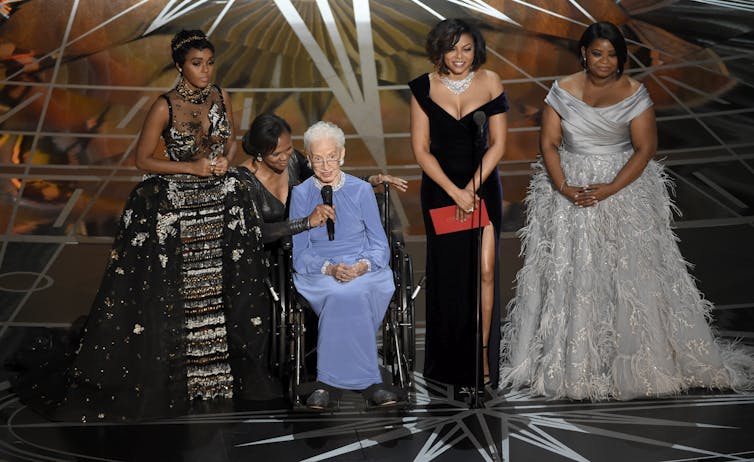
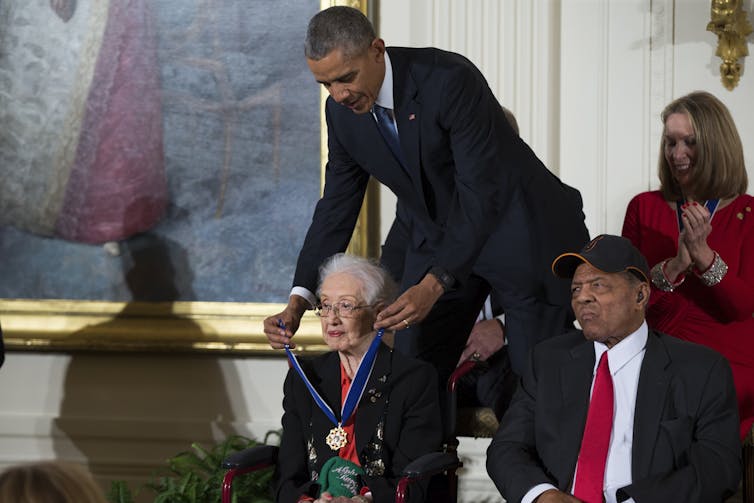
Katherine Johnson, an African-American mathematician who made critical contributions to the space program at NASA, died Feb. 24 at the age of 101.
Johnson became a household name thanks to the celebrated book “Hidden Figures: The American Dream and the Untold Story of the Black Women Mathematicians who Helped Win the Space Race,” which later became a movie. Her legacy provides lessons for supporting women and other underrepresented groups in mathematics and science.
As a historian of mathematics, I have studied women in that field and use the book “Hidden Figures” in my classroom. I can point to some contemporary ideas we can all benefit from when examining Johnson’s life.
1. Mentors make a difference
Early in her life, Johnson’s parents fostered her intellectual prowess.
Because there was no high school for African-American children in their hometown of White Sulphur Springs, West Virginia, the family relocated to Institute, West Virginia, during the school year. Johnson entered West Virginia State College High School as a preteen and enrolled at the age of 14.
While at West Virginia State, Johnson took classes with Angie Turner King. King taught at the laboratory high school while she worked to become one of the first African-American women to earn masters degrees in math and chemistry. She would go on to earn a Ph.D. in math education in 1955.
King taught Johnson geometry and encouraged her mathematical pursuits. Thirteen years older than Johnson, she modeled a life of possibility.
Johnson graduated from West Virginia State College at the age of 18. While there, she had the good fortune to learn from W. W. Schieffelin Claytor, the third African American to earn a Ph.D. in mathematics in America. Claytor encouraged Katherine to become a research mathematician. In the 1930s, a little over 100 American women counted themselves as professional mathematicians.
2. High school mathematics adds up
Once Johnson completed the standard mathematics curriculum at West Virginia State College, Claytor created advanced classes just for her, including a course on analytic geometry.
Mathematics concepts build on one another and the mathematics she learned in this class helped her in her work at NASA many years later. She used these analytical skills to verify the computer calculations for John Glenn’s orbit around the earth and to help determine the trajectory for the 1969 Apollo 11 flight to the moon, among others.
3. Grit matters
Long before psychologist Angela Duckworth called attention to the power of passion and perseverance in the form of grit, Katherine Johnson modeled this stalwart characteristic.
In 1940, she agreed to serve as one of three carefully selected students to desegregate West Virginia University’s graduate program. She also had to be “assertive and aggressive” about receiving credit for her contributions to research at NASA.
In 1960, her efforts helped her become the first African-American and the first woman to have her name on a NASA research report. Currently, the NASA archives contain more than 25 scientific reports on space flight history authored or co-authored by Johnson, the largest number by any African-American or woman.
4. The power of advocating for yourself
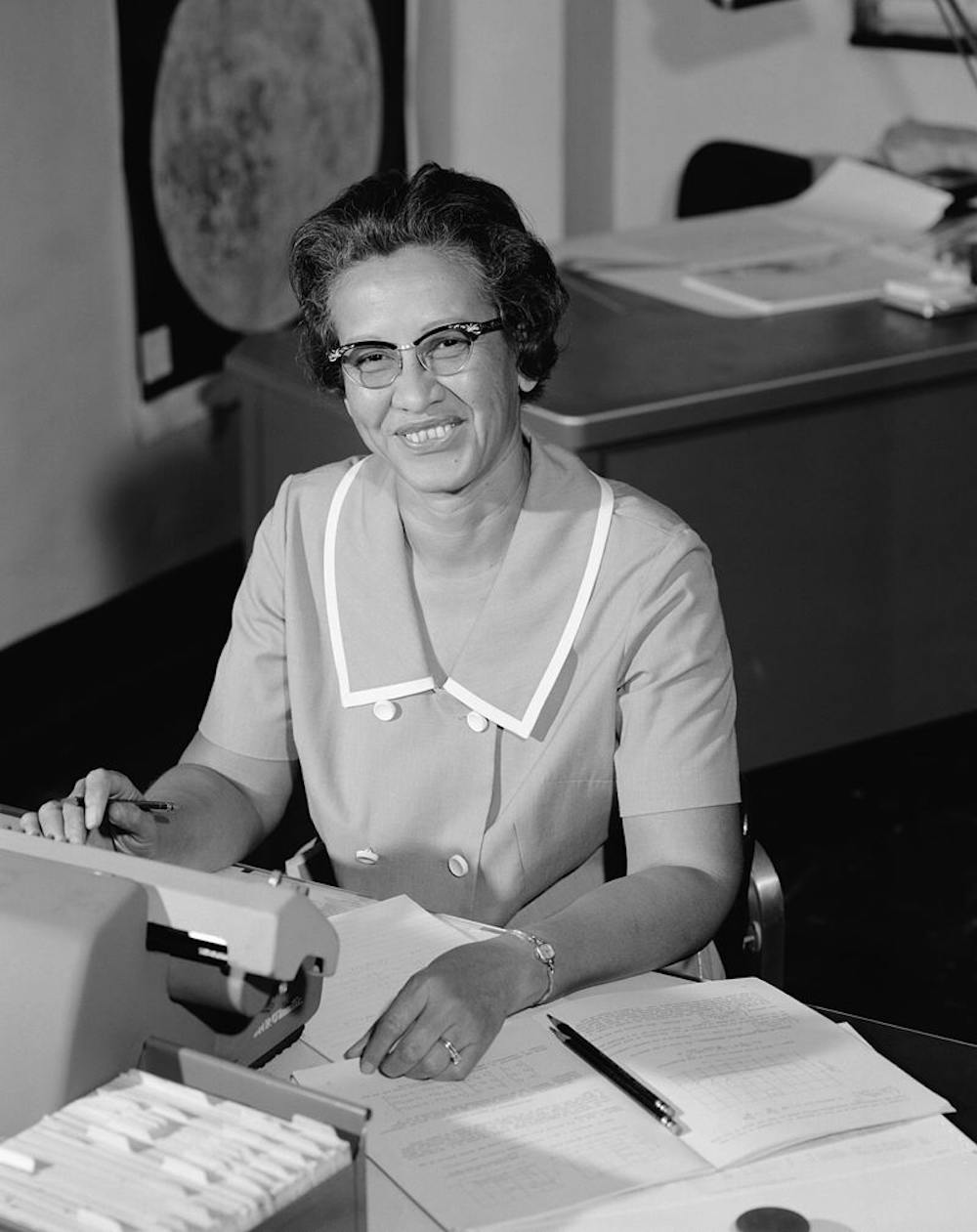

When NASA was formed in 1958, women were still not allowed to attend the Test Flight briefings.
Initially, Johnson would ask questions about the briefings and “listen and listen.” Eventually, she asked if she could attend. Apparently, the men grew tired of her questions and finally allowed her to attend the briefings.
5. The power of a team
In 1940, Johnson found herself among the 2% of all African-American women who had earned a college degree. At that time, she was among the nearly 60% of those women who had become teachers.
Later, she joined the West Computing Group at Langley Research Center where women “found jobs and each other.” They checked each other’s work and made sure nothing left the office with an error. They worked together to advance each other individually and collectively as they performed calculations for space missions and aviation research.
6. The power of women advocating for women
Although Johnson started as a human computer in the West Computing Group, after two weeks she moved to the Maneuver Load Branch of the Flight Research Division under the direction of Henry Pearson.
When it was time to make this position permanent after her six month probationary period, Dorothy Vaughan, then the West Computing department head and Johnson’s former boss, told Pearson to “either give her a raise or send her back to me.” Pearson subsequently offered Johnson the position and the raise.
7. The legacy of possibility
In March of 2014, Donna Gigliotti, producer of Shakespeare in Love and The Reader, received a 55-page nonfiction proposal about African-American women mathematicians at NASA in Hampton, Virginia.
“I kind of couldn’t get over the fact that this was a true story and I didn’t know anything about it,” Gigliotti confessed. “I thought well, this is a movie.” Gigliotti’s hunch ultimately led to the movie “Hidden Figures” and an entire generation of young people learning about the possibilities of math and science.
The U.S. State Department showed Hidden Figures throughout the developing world to encourage girls and women to consider the possibilities of careers in math and science. Mattel created a Katherine Johnson Barbie in its “Inspiring Women” series to celebrate “the achievements of a pioneer who broke through the barriers of race and gender.”
[You’re smart and curious about the world. So are The Conversation’s authors and editors. You can get our highlights each weekend.]
Della Dumbaugh, Professor of Mathematics, University of Richmond
This article is republished from The Conversation under a Creative Commons license. Read the original article.
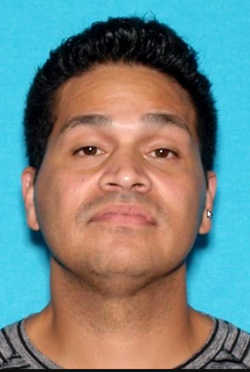
LAKEPORT, Calif. – The Lakeport Police Department said its officers – assisted by other local law enforcement agencies – took a man into custody after he assaulted his girlfriend on Friday evening and tried to prevent her from calling police for help.
Micah K. Akima, 39, was arrested on felony charges of domestic battery, false imprisonment, assault with a deadly weapon and preventing the summoning of 911, the Lakeport Police Department said.
At 6 p.m. Friday Lakeport Police officers responded to the area of Armstrong Street at South Russell Street on the report of an assault that had occurred, police said.
Officers met with a 47-year-old female victim at the location. Police said she had bruising to her face as well as cuts and bruising on her arms.
Police said the victim reported to officers that her boyfriend, Akima, had attacked her following a verbal argument after she had returned from shopping. The victim reported that she had been thrown to the ground and kicked and stomped on her face repeatedly by Akima.
The woman told police that Akima had taken her phone and she had been unable to call for help. She said she had been able to flee from the residence by escaping out the back door, police reported.
The victim at that point told officers that Akima was still at their residence, located on North Brush Street. Police said the woman told them that Akima was a former mixed martial arts fighter who was possibly suffering from a mental health crisis.
Lakeport Police officers responded to the address and attempted to contact and detain Akima with the assistance of Lake County Sheriff’s deputies. Police said they attempted to contact Akima but were ultimately unable to at that time.
Police said the officers followed up with the victim and obtained an emergency protective order to protect her from Akima.
Lakeport Police officers, with the assistance of the Lake County Sheriff’s Office and California Highway Patrol, returned to the residence where they attempted to contact Akima and place him under arrest per probable cause, police said.
The officers announced their presence multiple times to Akima and ordered him to surrender and exit the residence. Police said Akima refused to comply and remained inside the residence.
Officers and deputies then forced entry from the back of the residence, at which time Akima fled out the front door where he was intercepted and ultimately detained without further incident or injury to himself or law enforcement, police said.
Police said Akima was later booked into the Lake County Jail on the felony charges.
Lakeport Public Works employees responded and assisted with security repairs to the residence, police said.
The Lakeport Police Department thanked its partners with the Lake County Sheriff’s Office, the California Highway Patrol and Lakeport Public Works Department for their assistance in bringing the incident to a safe conclusion.
This week, the U.S. Centers for Disease Control and Prevention confirmed a possible first case of person-to-person transmission of COVID-19 in California, specifically, a resident of Solano County who is receiving medical care in Sacramento County, as Lake County News has reported.
In that case, the individual had no known exposure to the virus through travel or close contact with a known infected individual.
That brings the total number of confirmed cases in the United States to 15, with 12 related to travel and three the result of person-to-person spread, the CDC reported.
In response to local concerns, a coronavirus town hall will take place at 6:30 p.m. Monday, March 2, at Grace Evangelical Church, 6716 Live Oak Drive in Kelseyville.
Lily Woll, a local teacher and District 5 supervisorial candidate, said she’s heard from community members regarding their concerns about coronavirus, so she helped organize the event.
The event will include a panel discussion about the local preparations for dealing with coronavirus, and there will be a question and answer period following the presentations.
Woll said hospital and emergency officials, the Lake County Office of Education and Lake County Public Health Officer Dr. Gary Pace will attend. Spanish translation services will be provided.
Lake County Superintendent of Schools Brock Falkenberg said his agency’s coordinator for emergency readiness, Rob Young, will attend and take part in the panel.
Pace told Lake County News that he plans to discuss the current situation, local preparations and answer questions.
Pace offers Lake County situation update
Separately, in a Friday report, Pace noted, “The situation with the coronavirus is changing rapidly. While the risk locally continues to be very low, clearly the virus is spreading widely – now with outbreaks in Iran, Italy, Japan and South Korea – and the global impacts are beginning to be felt.”
Pace said there are currently no cases in Lake County, but regionally, there are two known cases in Humboldt County of people that had recently traveled to China.
In addition, there are two cases of repatriated travelers housed at Travis AFB who tested positive and are now being hospitalized in Napa County, with no known community contact.
Regarding the Solano County case confirmed this week, where there was no known travel exposure, Pace said, “It may have been a situation where the person acquired the infection in the community, but we don’t know all of the details yet.”
Pace said the public health strategy up to this point has been to slow the spread of the virus through travel restrictions and isolation of suspected cases.
“Fortunately, this containment approach has allowed us to get some preparations in place and given us time to learn more about the activity of the virus. Now as COVID-19 is spreading into more countries, we can reasonably expect it to make its way into the wider community here over the coming weeks or months, and the containment focus may shift to one of trying to control the impact,” Pace said.
While Pace said that the experts are not yet calling this a “pandemic,” it looks like it may be classified as one soon.
“Calling it a pandemic does not indicate how serious it will be in terms of debilitating disease, but it does suggest that it seems to be spreading to new countries rather quickly. Will it be mild, moderate, or severe in terms of illness and disruption of society? We just don’t know at this point. Also, some local areas like San Francisco are calling it a ‘health emergency,’ but that really is an indication of how many resources they are devoting to trying to prevent the spread, rather than an indication of the immediate risk to the population,” he said.
Much of the behavior of this virus is familiar in the way it is transmitted via droplets, and prevention strategies are similar to those used in influenza or other viral outbreaks, Pace said.
He offered the following guidance on how to stay healthy:
● COVID-19 spreads by respiratory means, so it is important to cover the mouth when coughing, cough into the arm, not touch your face, wash hands regularly, and don’t go to school or work when sick. Getting the flu shot, if you haven’t already, at least gives protection from the influenza virus.
● Most people with the virus have mild illness, with maybe 20 percent getting quite sick. The fatality rate seems to be less than 2 percent, and the people most at risk are elderly people with prior medical problems. Children don’t seem to be as affected. So, the strategy will be to protect the most vulnerable people in our community, and when people do begin to get ill, contact their medical providers. Call beforehand and let the office know of the cough and respiratory symptoms, so the patient can get masked before going into the waiting room.
● Masks. N95 masks are in short supply and should be reserved for people in close contact with infected people – health care workers or close family members. Surgical masks should be worn by people with cough and respiratory illness to prevent spread.
● An important step is to practice not touching our faces all of the time because this is a frequent source of infection. Also, replace handshakes with “elbow-bumps” or other forms of greeting.
If the situation worsens, and the illness spreads, there may be some additional preparations. None of these are in effect now, Pace said:
● Travel restrictions may get instituted. The CDC website is a good source to follow any developments.
● Sometime in the future, officials may start limiting large public gatherings (as is happening in China, Japan and Italy). This will depend on how widespread the virus becomes.
● Businesses may want to consider planning for potential spread. See the CDC website and look for “interim guidance for businesses.”
● It may be a good idea to get a few months of prescription medications stockpiled in case there are supply chain problems.
● Sometimes preparations and planning need to be made about how to care for sick family members, or who can tend to children if schools are closed.
● Storing some nonperishable food at home may be a good idea, in case there is “social distancing” required further down the road.
“Preparation and communication are key, and we continue to be on regular calls with the CDC, the California Department of Public Health, and local Public Health departments in the Bay Area. Especially in small, rural counties like ours with scarce resources, we receive a huge benefit by learning from the experiences of the larger urban areas,” Pace said.
“Keeping Californians safe and healthy is our number one priority,” said Dr. Sonia Angell, director of the California Department of Public Health and State Public Health Officer. “This has been an evolving situation, which California has been monitoring and responding to since COVID-19 cases first emerged in China last year. This is a new virus, and while we are still learning about it, there is a lot we already know.”
Angell added, “As in any public health emergency, the Department of Public Health's Emergency Operations Center has been actively coordinating response efforts across the state and preparing for possible community transmission. California continues to prepare and respond in coordination with federal and local partners.”
“We appreciate that this is a confusing time due to the rapidly changing nature of the information,” Pace said. “We will continue to update our community as new information becomes available. Lake County Public Health is in communication with our health partners in the county, with EMS and law enforcement, and the schools in an attempt for all of us to keep up to date on this evolving situation.
For more information about COVID-19, please visit the websites for CDPH or CDC, or call Lake County Public Health, 707-263-1090.
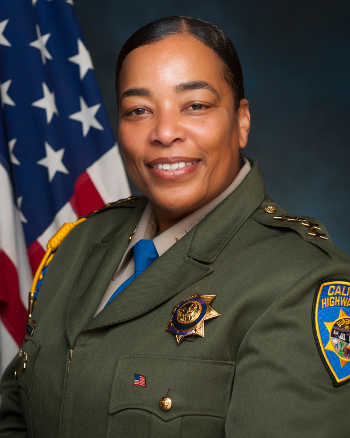
In a historical appointment, the California Highway Patrol has appointed the first African American woman to hold its second-in-command post.
On Friday, CHP Commissioner Warren Stanley announced his appointment of Assistant Commissioner Amanda L. Ray as deputy commissioner.
The appointment makes Deputy Commissioner Ray the first African American woman in the department’s 91-year history to hold the position of second in command of the nation’s largest state police agency.
Gov. Gavin Newsom, who last year reappointed Commissioner Stanley – who also is African American – to his post, applauded Friday’s announcement.
“The CHP is one of the most respected law enforcement agencies in California, if not the nation. As we mark Black History Month and Women’s History Month in March, I couldn’t be prouder of Deputy Commissioner Ray’s accomplishments and contributions to making the CHP the best of the best. Californians have every reason to be confident in the leadership of the CHP,” Newsom said.
Deputy Commissioner Ray stated she was “honored and humbled” to be appointed to her new post.
“I am grateful to continue to serve alongside the amazing women and men who each day are dedicated to providing the highest level of Safety, Service, and Security to the people of California,” she said. “I look forward to continuing to make the Department one that our employees and the people of this great state can admire and be proud of.”
A native of Oakland, Deputy Commissioner Ray, 53, is a 30-year member of the department, rising through the ranks and serving in assignments of increasing responsibility from cadet to assistant commissioner, staff, where she oversaw the administrative functions of the department, to include a $2.8 billion budget, departmental training, information technology, and personnel administration of a statewide organization of 11,000 women and men.
In her new role, Deputy Commissioner Ray will oversee the day to day operations, the administrative and field operations of the CHP as well as the Offices of Legal Affairs, Internal Affairs, Equal Employment Opportunity, Risk Management, the Office of Accreditation, and Community Outreach and Media Relations.
Deputy Commissioner Ray succeeds Scott Silsbee, who retired from the CHP in December.
California Highway Patrol Deputy Commissioner Amanda L. Ray career highlights:
CHP / Academy: 03/12/90, cadet
CHP / South Los Angeles Area: 08/09/90, officer
CHP / Santa Fe Springs Area: 12/02/99, sergeant
CHP / Santa Fe Springs Area: 04/01/03, lieutenant
CHP / Riverside Area: 07/01/06, lieutenant
CHP / Hayward Area: 09/01/11, captain
CHP / Riverside Area: 10/31/12, captain
CHP / Golden Gate Division: 09/01/15, assistant chief
CHP / Inland Division: 03/02/17, assistant chief
CHP / Assistant Commissioner, staff: 10/01/17, chief
CHP / Assistant Commissioner, staff: 04/01/18, assistant commissioner, staff
California will immediately receive an additional shipment of kits to test up to 1,200 people.
“These new testing protocols and resources will help California medical experts identify and treat COVID-19 cases, trace potential exposures and better protect public health,” said Gov. Gavin Newsom. “I am grateful to the CDC and federal government for quickly heeding our state’s requests and assisting California’s response to this evolving situation.”
“The availability to test at California’s public health laboratories is a significant step forward in our ability to respond rapidly to this evolving situation,” said Dr. Sonia Angell, director of the California Department of Public Health and State Health Officer. “As we face the likelihood of community transmission here in California, having this resource where we need it, is essential to better inform public health response and protect our communities.”
The California Department of Public Health has been prepared and is continuing with the following actions as the situation surrounding COVID-19 evolves:
– Activating the Emergency Operations Center to coordinate response efforts across the state.
– Continuing to prepare and respond in coordination with federal and local partners, hospitals and physicians.
– Deploying staff to assist with contact tracing in Solano and Sacramento counties for a patient whose source of infection is unknown.
– Providing information, guidance documents, and technical support to local health departments, health care facilities, providers, schools, universities, colleges, and childcare facilities across California.
– Coordinating with federal authorities and local health departments that have implemented screening, monitoring and, in some cases quarantine.
– Engaging with local health departments in managing suspect and confirmed cases of COVID-19 patients over the past several weeks.
Beyond the work of health officials, each and every person can take steps to reduce the risk of becoming infected with this virus.
– Washing hands with soap and water.
– Avoiding touching eyes, nose or mouth with unwashed hands.
– Avoiding close contact with people who are sick.
– Staying away from work, school or other people if you become sick with respiratory symptoms like fever and cough.
– Follow guidance from public health officials.
If a person develops symptoms of COVID-19 including fever, cough or shortness of breath, and has reason to believe they may have been exposed, they should call their health care provider or local health department before seeking care. Contacting them in advance will make sure that people can get the care they need without putting others at risk.
For more information about novel coronavirus including various resources, please visit the CDPH website.