 How to resolve AdBlock issue?
News
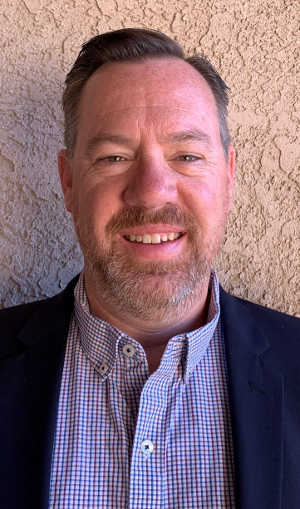
MIDDLETOWN, Calif. – The Middletown Unified School District Board of Trustees has named Michael Cox as the next superintendent of schools starting July 1.
Cox currently is the principal of the Alternative Education Center located in Silver Valley Unified School District.
The board is excited to welcome Cox to Middletown Unified. They said he brings with him leadership skills that foster a spirit of teamwork and we feel he will integrate well into our exceptional staff.
The selection is the result of an intensive search conducted with the Middletown Board of Trustees that produced many qualified applicants from diverse geographic and professional backgrounds.
“We are extraordinarily pleased with the outcome of this search process. In the end, Michael Cox proved himself the best fit to carry forward the vision of the district. His track record of driving academic excellence, along with his passion for working with students and families, demonstrates his capability to succeed in this new role,” the board said in a statement.
Cox completed the Master of Arts in educational administration from Brandman University and a Bachelor of Science degree from Utah State University.
He has pursued professional development opportunities including the Association of California School Administrators certificates in personnel and business, and most recently he was accepted and completed the Fiscal Crisis and Management Assistance Team Chief Business Official mentorship program.
“I am honored to have been chosen for this position,” said Cox. “I am grateful to serve in this capacity. I will work collaboratively, with an emphasis on teamwork and a ‘students first’ mindset, to continue moving the district in a positive direction and improving the educational outcomes for all of our students.”
New Unemployment Insurance claim data released this week by the California Employment Development Department illustrates the historic nature of the current demand for unemployment benefits in California with a total of 660,966 UI claims processed last week, creating a four-week total of 2.7 million claims processed.
That’s at least 2.3 million more than the highest one-month total since January 2010, when 375,735 unemployment insurance claims were processed.
Over the four-week period between March 15 and April 11, the EDD has paid out over $975 million in unemployment benefits to Californians in need.
On Sunday, April 12, the EDD also began automatically adding an extra $600 in federal funds
to each week of regular benefits a worker is eligible to receive. This is one of the first UI provisions of the federal CARES Act.
“These are historic times at the EDD, dramatically impacting our families, friends, neighbors and communities,” said EDD Director Sharon Hilliard. “Employees are rallying from throughout other EDD programs and state government to help us process this record claim load and get money into the hands of those in need just as quickly as possible. For most Californians, that continues to be about three weeks after applying for benefits.”
New additional UI call center
Beginning on Monday, April 20, EDD will launch a secondary call center line, so that Californians are able to call-in between the hours of 8 a.m. and 8 p.m., seven days a week.
A total of 1,340 state employees have been redirected to increase staffing at the call center, and assist Californians with their UI claims as hours of operation are increased. Additional staff will be added in the short-term.
Status on other federal CARES Act unemployment provisions
Pandemic Unemployment Assistance, or PUA, program: As announced by Gov. Newsom, the EDD is working around the clock with state partners to build the new Pandemic Unemployment Assistance program for launch in two weeks.
This new program will provide unemployment benefits for those that typically don’t qualify for regular state UI benefits, including business owners, the self-employed and independent contractors. There are new FAQs available through the EDD’s Pandemic Unemployment Assistance webpage and we encourage impacted workers to monitor this page for more information as details and instructions become available.
Pandemic Emergency Unemployment Compensation, or PEUC: The third UI provision of the CARES Act is a new 13-week extension of unemployment benefits for those who run out of their regular UI benefits paid. The federal government will be paying for these additional benefits and just recently provided EDD the necessary guidelines to implement this extension. The EDD will be working to get this extension operational just as soon as possible. Workers are encouraged to monitor EDD’s website for continuing updates.
Latest responses for questions from unemployed Californians
I used a third-party vendor to file my claim, will this expedite my claim?
No, The EDD is not affiliated in any way with any other third-party vendors offering help with submitting UI applications for benefits. We encourage everyone impacted by COVID-19 to seek assistance directly on the EDD COVID-19 webpage through your computer or mobile phone and utilize the various online resources we have for the fastest processing possible.
What is the best method to submit a UI claim?
Using the EDD’s UI Online system is the best option for fastest processing due to the fact that we’ve been able to adjust usual eligibility requirements helping us process large volumes of claims automatically through the system. Using paper forms should be considered a last resort since EDD cannot auto process these forms, which can slow down the payment of benefits.
I need help, are services available in multiple languages?
UI Online is available in English and Spanish and there are a variety of video tutorials in five different languages to help people use the system. Customer service representatives are available in English, Spanish, Cantonese, Mandarin and Vietnamese.
How soon could I receive benefits?
Please visit our Step-by-Step chart to inform claimants of what to expect after they submit a UI application in order to continually receive benefit payments.
Will I be eligible for unemployment benefits if I answer no to the question about looking for work?
Given the unique economic situation and lack of available work created by COVID19, the EDD has been able to adjust our usual eligibility requirements. You will not be penalized if you answer “no” to the question about looking for work and will be paid benefits for that week if you meet all other eligibility requirements.
Can I still qualify for benefits if my EDD notice shows that I have $0 in benefits available?
Generally, a mailed notice showing a $0 benefit award available may mean that we have no wage records reported by an employer to support an unemployment claim, or we need to verify your identity for the reported wages that belong to you.
Employers, not workers, pay for unemployment benefits through a contribution paid on behalf of each employee.
Visit the EDD FAQs for more information about how to proceed in this situation, and for other helpful information being continually updated as details become available.
That’s at least 2.3 million more than the highest one-month total since January 2010, when 375,735 unemployment insurance claims were processed.
Over the four-week period between March 15 and April 11, the EDD has paid out over $975 million in unemployment benefits to Californians in need.
On Sunday, April 12, the EDD also began automatically adding an extra $600 in federal funds
to each week of regular benefits a worker is eligible to receive. This is one of the first UI provisions of the federal CARES Act.
“These are historic times at the EDD, dramatically impacting our families, friends, neighbors and communities,” said EDD Director Sharon Hilliard. “Employees are rallying from throughout other EDD programs and state government to help us process this record claim load and get money into the hands of those in need just as quickly as possible. For most Californians, that continues to be about three weeks after applying for benefits.”
New additional UI call center
Beginning on Monday, April 20, EDD will launch a secondary call center line, so that Californians are able to call-in between the hours of 8 a.m. and 8 p.m., seven days a week.
A total of 1,340 state employees have been redirected to increase staffing at the call center, and assist Californians with their UI claims as hours of operation are increased. Additional staff will be added in the short-term.
Status on other federal CARES Act unemployment provisions
Pandemic Unemployment Assistance, or PUA, program: As announced by Gov. Newsom, the EDD is working around the clock with state partners to build the new Pandemic Unemployment Assistance program for launch in two weeks.
This new program will provide unemployment benefits for those that typically don’t qualify for regular state UI benefits, including business owners, the self-employed and independent contractors. There are new FAQs available through the EDD’s Pandemic Unemployment Assistance webpage and we encourage impacted workers to monitor this page for more information as details and instructions become available.
Pandemic Emergency Unemployment Compensation, or PEUC: The third UI provision of the CARES Act is a new 13-week extension of unemployment benefits for those who run out of their regular UI benefits paid. The federal government will be paying for these additional benefits and just recently provided EDD the necessary guidelines to implement this extension. The EDD will be working to get this extension operational just as soon as possible. Workers are encouraged to monitor EDD’s website for continuing updates.
Latest responses for questions from unemployed Californians
I used a third-party vendor to file my claim, will this expedite my claim?
No, The EDD is not affiliated in any way with any other third-party vendors offering help with submitting UI applications for benefits. We encourage everyone impacted by COVID-19 to seek assistance directly on the EDD COVID-19 webpage through your computer or mobile phone and utilize the various online resources we have for the fastest processing possible.
What is the best method to submit a UI claim?
Using the EDD’s UI Online system is the best option for fastest processing due to the fact that we’ve been able to adjust usual eligibility requirements helping us process large volumes of claims automatically through the system. Using paper forms should be considered a last resort since EDD cannot auto process these forms, which can slow down the payment of benefits.
I need help, are services available in multiple languages?
UI Online is available in English and Spanish and there are a variety of video tutorials in five different languages to help people use the system. Customer service representatives are available in English, Spanish, Cantonese, Mandarin and Vietnamese.
How soon could I receive benefits?
Please visit our Step-by-Step chart to inform claimants of what to expect after they submit a UI application in order to continually receive benefit payments.
Will I be eligible for unemployment benefits if I answer no to the question about looking for work?
Given the unique economic situation and lack of available work created by COVID19, the EDD has been able to adjust our usual eligibility requirements. You will not be penalized if you answer “no” to the question about looking for work and will be paid benefits for that week if you meet all other eligibility requirements.
Can I still qualify for benefits if my EDD notice shows that I have $0 in benefits available?
Generally, a mailed notice showing a $0 benefit award available may mean that we have no wage records reported by an employer to support an unemployment claim, or we need to verify your identity for the reported wages that belong to you.
Employers, not workers, pay for unemployment benefits through a contribution paid on behalf of each employee.
Visit the EDD FAQs for more information about how to proceed in this situation, and for other helpful information being continually updated as details become available.
MENDOCINO NATIONAL FOREST, Calif. – In alignment with current federal, state and local guidance for social distancing and to ensure health and safety of its visitors, employees and local communities, the Mendocino National Forest is closing off-highway vehicle trails to the public effective Friday, April 17.
Forest Order No. 08-20-03, which enacts the closure, will be in effect until April 30. The order is available on the forest website.
These off-highway vehicle trails are drawing increasingly heavy traffic and large groups of people creating circumstances where social distancing is not possible.
Additionally, users travel through and stop in communities adjacent to the forest before accessing riding areas which could potentially contribute to exposure risks to local residents.
“We realize how important the Mendocino National Forest is to the public, but to protect our visitors, employees and local communities, we must take steps to flatten the curve of the COVID-19 infection,” said Mendocino National Forest Supervisor Ann Carlson.
This closure is an interim measure. The Mendocino National Forest will continue to evaluate the emerging circumstances around COVID-19 and follow guidelines from the Centers for Disease Control as well as state and local health departments to ensure that the safety of employees and visitors remains the top priority.
Forest Order No. 08-20-03, which enacts the closure, will be in effect until April 30. The order is available on the forest website.
These off-highway vehicle trails are drawing increasingly heavy traffic and large groups of people creating circumstances where social distancing is not possible.
Additionally, users travel through and stop in communities adjacent to the forest before accessing riding areas which could potentially contribute to exposure risks to local residents.
“We realize how important the Mendocino National Forest is to the public, but to protect our visitors, employees and local communities, we must take steps to flatten the curve of the COVID-19 infection,” said Mendocino National Forest Supervisor Ann Carlson.
This closure is an interim measure. The Mendocino National Forest will continue to evaluate the emerging circumstances around COVID-19 and follow guidelines from the Centers for Disease Control as well as state and local health departments to ensure that the safety of employees and visitors remains the top priority.
Unprecedented observations of a nova outburst in 2018 by a trio of satellites, including two NASA missions, have captured the first direct evidence that most of the explosion’s visible light arose from shock waves — abrupt changes of pressure and temperature formed in the explosion debris.
A nova is a sudden, short-lived brightening of an otherwise inconspicuous star. It occurs when a stream of hydrogen from a companion star flows onto the surface of a white dwarf, a compact stellar cinder not much larger than Earth.
NASA’s Fermi and NuSTAR space telescopes, together with the Canadian BRITE-Toronto satellite and several ground-based facilities, studied the nova.
“Thanks to an especially bright nova and a lucky break, we were able to gather the best-ever visible and gamma-ray observations of a nova to date,” said Elias Aydi, an astronomer at Michigan State University in East Lansing who led an international team from 40 institutions. “The exceptional quality of our data allowed us to distinguish simultaneous flares in both optical and gamma-ray light, which provides smoking-gun evidence that shock waves play a major role in powering some stellar explosions.”
The 2018 outburst originated from a star system later dubbed V906 Carinae, which lies about 13,000 light-years away in the constellation Carina. Over time – perhaps tens of thousands of years for a so-called classical nova like V906 Carinae – the white dwarf’s deepening hydrogen layer reaches critical temperatures and pressures. It then erupts in a runaway reaction that blows off all of the accumulated material.
Each nova explosion releases a total of 10,000 to 100,000 times the annual energy output of our Sun. Astronomers discover about 10 novae each year in our galaxy.
Fermi detected its first nova in 2010 and has observed 14 to date. Although X-ray and radio studies had shown the presence of shock waves in nova debris in the weeks after the explosions reached peak brightness, the Fermi discovery came as a surprise.
Gamma rays – the highest-energy form of light – require processes that accelerate subatomic particles to extreme energies. When these particles interact with each other and with other matter, they produce gamma rays. But astronomers hadn’t expected novae to be powerful enough to produce the required degree of acceleration.
Because the gamma rays appear at about the same time as the peak in visible light, astronomers concluded that shock waves play a more fundamental role in the explosion and its aftermath.
In 2015, a paper led by Brian Metzger at Columbia University in New York showed how comparing Fermi gamma-ray data with optical observations would allow scientists to learn more about nova shock waves.
In 2017, a study led by Kwon-Lok Li at Michigan State found that the overall gamma-ray and visible emissions rose and fell in step in a nova known as V5856 Sagittarii. This implied shock waves produced more of the eruption’s light than the white dwarf itself.
The new observations from V906 Carinae, presented in a paper led by Aydi and published on Monday, April 13, in Nature Astronomy, spectacularly confirm this conclusion.
On March 20, 2018, the All-Sky Automated Survey for Supernovae, a set of two dozen robotic telescopes distributed around the globe and operated by Ohio State University, discovered the nova. By month’s end, V906 Carinae was dimly visible to the naked eye.
Fortuitously, a satellite called BRITE-Toronto was already studying the nova’s patch of sky. This miniature spacecraft is one of five 7.9-inch (20 centimeter) cubic nanosatellites comprising the Bright Target Explorer (BRITE) Constellation. Operated by a consortium of universities from Canada, Austria and Poland, the BRITE satellites study the structure and evolution of bright stars and observe how they interact with their environments.
BRITE-Toronto was monitoring a red giant star called HD 92063, whose image overlapped the nova’s location. The satellite observed the star for 16 minutes out of every 98-minute orbit, returning about 600 measurements each day and capturing the nova’s changing brightness in unparalleled detail.
“BRITE-Toronto revealed eight brief flares that fired up around the time the nova reached its peak, each one nearly doubling the nova’s brightness,” said Kirill Sokolovsky at Michigan State. “We’ve seen hints of this behavior in ground-based measurements, but never so clearly. Usually we monitor novae from the ground with many fewer observations and often with large gaps, which has the effect of hiding short-term changes.”
Fermi, on the other hand, almost missed the show. Normally its Large Area Telescope maps gamma rays across the entire sky every three hours. But when the nova appeared, the Fermi team was busy troubleshooting the spacecraft’s first hardware problem in nearly 10 years of orbital operations — a drive on one of its solar panels stopped moving in one direction. Fermi returned to work just in time to catch the nova’s last three flares.
In fact, V906 Carinae was at least twice as bright at billion-electron-volt, or GeV, energies as any other nova Fermi has observed. For comparison, the energy of visible light ranges from about 2 to 3 electron volts.
“When we compare the Fermi and BRITE data, we see flares in both at about the same time, so they must share the same source – shock waves in the fast-moving debris,” said Koji Mukai, an astrophysicist at the University of Maryland Baltimore County and NASA’s Goddard Space Flight Center in Greenbelt, Maryland. “When we look more closely, there is an indication that the flares in gamma rays may lead the flares in the visible. The natural interpretation is that the gamma-ray flares drove the optical changes.”
The team also observed the eruption’s final flare using NASA’s NuSTAR space telescope, which is only the second time the spacecraft has detected X-rays during a nova’s optical and gamma-ray emission.
The nova’s GeV gamma-ray output far exceeded the NuSTAR X-ray emission, likely because the nova ejecta absorbed most of the X-rays. High-energy light from the shock waves was repeatedly absorbed and reradiated at lower energies within the nova debris, ultimately only escaping at visible wavelengths.
Putting all of the observations together, Aydi and his colleagues describe what they think happened when V906 Carinae erupted. During the outburst’s first few days, the orbital motion of the stars swept a thick debris cloud made of multiple shells of gas into a doughnut shape that appeared roughly edge-on from our perspective.
The cloud expanded outward at less than about 1.3 million mph (2.2 million kph), comparable to the average speed of the solar wind flowing out from the Sun.
Next, an outflow moving about twice as fast slammed into denser structures within the doughnut, creating shock waves that emitted gamma rays and visible light, including the first four optical flares.
Finally, about 20 days after the explosion, an even faster outflow crashed into all of the slower debris at around 5.6 million mph (9 million kph). This collision created new shock waves and another round of gamma-ray and optical flares. The nova outflows likely arose from residual nuclear fusion reactions on the white dwarf’s surface.
Astronomers have proposed shock waves as a way to explain the power radiated by various kinds of short-lived events, such as stellar mergers, supernovae – the much bigger blasts associated with the destruction of stars – and tidal disruption events, where black holes shred passing stars.
The BRITE, Fermi and NuSTAR observations of V906 Carinae provide a dramatic record of such a process. Further studies of nearby novae will serve as laboratories for better understanding the roles shock waves play in other more powerful and more distant events.
The Fermi Gamma-ray Space Telescope is an astrophysics and particle physics partnership managed by NASA's Goddard Space Flight Center in Greenbelt, Maryland. Fermi was developed in collaboration with the U.S. Department of Energy, with important contributions from academic institutions and partners in France, Germany, Italy, Japan, Sweden and the United States.
NuSTAR is a Small Explorer mission led by Caltech and managed by JPL for NASA's Science Mission Directorate in Washington. NuSTAR was developed in partnership with the Danish Technical University and the Italian Space Agency, or ASI.
The spacecraft was built by Orbital Sciences Corp. in Dulles, Virginia. NuSTAR's mission operations center is at the University of California Berkeley, and the official data archive is at NASA's High Energy Astrophysics Science Archive Research Center. ASI provides the mission's ground station and a mirror archive. Caltech manages JPL for NASA.
Francis Reddy works for NASA’s Goddard Space Flight Center in Greenbelt, Maryland.
NORTH COAST, Calif. – On Friday Mendocino County’s health officer reported the fifth case of COVID-19 in Mendocino County, which she said was confirmed in a state prison inmate who was released there.
Dr. Noemi Doohan said the patient is a male between the ages of 19 and 34 years old, who although he’s tested positive is not showing symptoms.
The man is in isolation at home with a relative in the Ukiah Valley with active public health monitoring since Thursday, Doohan said.
Like the previous four cases, Doohan said this case is related to an exposure outside of Mendocino County and does not appear to indicate that community spread has occurred inside our county.
Mendocino County’s first four COVID-19 patients have fully recovered and are sheltering in place, according to Doohan’s report.
Doohan said the patient was released from a state correctional facility by the California Department of Corrections and Rehabilitation, or CDCR, and was transported, untested, from that facility to Mendocino County in order to stay with a relative.
The individual has not shown symptoms and was directed by CDCR to self-isolate until the COVID-19 testing was done, Doohan said.
Doohan said Mendocino County Public Health was made aware of the man’s presence in the
county on Thursday morning, as soon as Sheriff Matt Kendall became aware.
The man was evaluated at a local primary care clinic within hours, and Public Health transported the COVID-19 test sample to the Public Health lab in Santa Rosa promptly, resulting in a positive test result within 24 hours, she said.
“The primary care clinic responded to this urgent need in an exemplary matter, and took proper precautions including using personal protective equipment while evaluating the individual,” Doohan’s statement on the case explained.
“It can be easy to let our guard down as sheltering in place seems to drag on, but this case is proof that we still need our county’s shelter-in-place order to protect us while we gain precious time to prepare for the threat of COVID-19 community spread arriving in the near future like it has in Sonoma County,” said Doohan. “Sheltering in place is not optional. We must continue to shelter in place while practicing social distancing, and wear face coverings while out in public for essential activities.”
Anyone in Mendocino County who is tested for COVID-19 must remain in isolation until further directed by their clinician who ordered the test under the blanket isolation and quarantine orders
released by Dr. Doohan on April 8.
Dr. Noemi Doohan said the patient is a male between the ages of 19 and 34 years old, who although he’s tested positive is not showing symptoms.
The man is in isolation at home with a relative in the Ukiah Valley with active public health monitoring since Thursday, Doohan said.
Like the previous four cases, Doohan said this case is related to an exposure outside of Mendocino County and does not appear to indicate that community spread has occurred inside our county.
Mendocino County’s first four COVID-19 patients have fully recovered and are sheltering in place, according to Doohan’s report.
Doohan said the patient was released from a state correctional facility by the California Department of Corrections and Rehabilitation, or CDCR, and was transported, untested, from that facility to Mendocino County in order to stay with a relative.
The individual has not shown symptoms and was directed by CDCR to self-isolate until the COVID-19 testing was done, Doohan said.
Doohan said Mendocino County Public Health was made aware of the man’s presence in the
county on Thursday morning, as soon as Sheriff Matt Kendall became aware.
The man was evaluated at a local primary care clinic within hours, and Public Health transported the COVID-19 test sample to the Public Health lab in Santa Rosa promptly, resulting in a positive test result within 24 hours, she said.
“The primary care clinic responded to this urgent need in an exemplary matter, and took proper precautions including using personal protective equipment while evaluating the individual,” Doohan’s statement on the case explained.
“It can be easy to let our guard down as sheltering in place seems to drag on, but this case is proof that we still need our county’s shelter-in-place order to protect us while we gain precious time to prepare for the threat of COVID-19 community spread arriving in the near future like it has in Sonoma County,” said Doohan. “Sheltering in place is not optional. We must continue to shelter in place while practicing social distancing, and wear face coverings while out in public for essential activities.”
Anyone in Mendocino County who is tested for COVID-19 must remain in isolation until further directed by their clinician who ordered the test under the blanket isolation and quarantine orders
released by Dr. Doohan on April 8.
CLEARLAKE, Calif. – The Clearlake City Council on Thursday approved a memorandum of understanding in which it will assist with funding a facility meant to help transition people out of homelessness.
The agreement between the city, Adventist Health Clear Lake and Hope Rising Lake County will see the city contributing $500,000 in bond funds for the Hope Center, a planned 20-bed transitional facility to be located on a property purchased by Adventist Health at 3400 Emerson Drive.
Councilman Phil Harris, who ultimately made the motion to approve the memorandum of understanding, said the many organizations working together on the project are “sewing together a quilt that we will use to wrap around these people and provide some restoration to their lives that they would not have other otherwise.”
City Hall remains closed due to the COVID-19 countywide shelter in place order, but community members were able to participate virtually. Only council members and staff were present in the chamber, with Councilman Dirk Slooten and supporters for the Hope Center project attending via Zoom.
The discussion took place in the video above beginning at the 15:24 mark.
Before the discussion began on the agreement on Thursday evening, Councilman Russ Perdock, who works for Adventist Health Clear Lake and has been involved in its programs to address homelessness, recused himself from the discussion and left the council chambers.
In January, Allison Panella, Hope Rising’s executive director, and Shannon Kimbell-Auth, Adventist Health’s manager for community integration, asked the council to consider contributing $500,000 toward the facility, as Lake County News has reported.
In his report on the item, City Manager Alan Flora said the source of the funds would be the city’s Series B bond funding, bonds sold by the former Clearlake Redevelopment Agency to support low- and moderate-income housing.
Flora said the draft agreement was largely on the existing agreement Adventist Health Clear Lake has with Partnership HealthPlan – which awarded $1.3 million for the project – and includes a commitment for operating the Hope Center for a minimum of 15 years.
Hope Rising – the official name of which is Hope Is Rising Lake County – states on its website that its mission is “to mobilize and inspire community partnerships and actions that support individual, collective and community health and wellness.”
On its website, the organization reported that it “serves as a neutral convener to bring together leaders in our county to identify issues, develop innovative solutions, and implement agreed-upon actions with accountability and measurable outcomes.”
Hope Rising said it acts to raise, manage and disburse funds; a search of California Attorney General’s Office charity database shows the organization has been listed as a public benefit entity since 2019, although its registration does not appear final.
The agreement Flora presented set out several conditions, including:
– A commitment to operate the Hope Center for a minimum of 15 years from the date of occupancy, with the center to be operated consistent with the Local Innovation Grant on Housing MOU between Adventist Health and Partnership HealthPlan.
– If the MOU is terminated prior to 15 years from the date of occupancy, Adventist Health Clear Lake will ensure the Hope Center facility continues to be used for housing and support of the homeless and at-risk population in the Clearlake area and will not turn the property into an Adventist Health clinic or facility that solely benefits Adventist Health Clear Lake.
– Hope Is Rising Lake County and Adventist Health Clear Lake agree to show preference to homeless residents of Clearlake who are ready and willing to accept the Hope Center housing agreement.
– The city of Clearlake will not be an owner or have any role in the operation of the Hope Center, with Adventist Health Clear Lake and Hope Rising to take all responsibility for operations.
The council received letters of support for the project from Congressman Mike Thompson, Lake County Social Services Director Crystal Markytan and Lake County Superintendent of Schools Brock Falkenberg. On Tuesday, the Board of Supervisors also approved a letter offering its support for the project.
A collaborative approach to addressing homelessness
Shelly Trumbo, Adventist Health’s vice president of community integration and Hope Rising’s interim executive director at its inception, spoke to the council about the successful outcomes from Adventist Health’s Project Restoration.
A peer-reviewed process found that collaborative approach used in Project Restoration – and planned for use at the Hope Center – was associated with a 44-percent reduction in hospital utilization, an 83-percent reduction in community response system usage and a 71-percent reduction in costs to the population, she said.
Trumbo said a large group of organizations has recognized Lake County’s work in these areas, including the Robert Wood Johnson Foundation, the Association for Community Health Improvement and the Commonwealth Foundation.
Lake County Behavioral Health Services Administrator Todd Metcalf said his agency is contributing $200,000 toward the Hope Center.
“This is huge for our county,” said Metcalf, adding he’s committed to making it work, which is why he’s fronting the money.
Metcalf said the “housing first” model is key to getting people experiencing homelessness back on their feet.
He said mental health, substance abuse and homelessness are Lake County’s top three needs.
“This is an exciting time,” Metcalf added.
Kimbell-Auth said the same collaboration involved in the Hope Center was able to quickly transform a small warming center in Lakeport into an around-the-clock COVID-19 shelter for the homeless in the course of three days. She said the same group is working on getting housing in hotels for the homeless in Clearlake starting next week.
She said the project is changing the community, and what they will see from the Hope Center is far more than they can imagine.
“I’m excited. I’m thrilled. I’m honored, and I’m truly in awe of the opportunity,” David Santos, Adventist Health Clear Lake’s president and chief executive officer, told the council.
He said it’s taken four years to get to this point, adding that the city’s contribution will make or break the project.
Vice Mayor Dirk Slooten supported the project, saying the city has a “moral obligation” to address the homeless issue. “I really think we need to do this.”
Harris said Clear Lake is plagued by numerous issues. “The homeless population is definitely one of the biggest issues we face, and they are real people with real needs.”
Comparing the project to a quilt, he said he believed it’s God’s work, it was important for the council to move forward with it and he wanted to make the motion to approve it.
Councilwoman Joyce Overton agreed with Slooten that the city has an obligation to do something. “Our community will benefit from it.”
Slooten added that the greater risk is not participating and that it will help people to become productive citizens.
“There’s no negative on this one. So let’s do this,” he said, noting he wanted to second Harris’ motion.
Mayor Russ Cremer also offered his support for the project and the city’s proposed financial contribution from the former redevelopment agency bonds. He said of the funding, “It’s specifically for low- and moderate-income housing. It fits the model. It’s a great use for it.”
Cremer asked for the motion and Harris offered it, with Slooten seconding and the council approving it 4-0.
When Perdock returned to the chambers, he thanked the council members for their action.
In other action on Thursday, the council approved a $180,000 contract with R&R Construction for the Animal Control Facility Improvement Project, adopted an emergency ordinance establishing a 45-day moratorium on industrial hemp cultivation in the city, established an industrial hemp cultivation ad hoc committee, adopting a list of approved projects for submission to California Transportation Committee for SB1 funding and held the first reading of an ordinance for the commercial cannabis regulatory permit suspension/revocation and appeal process.
Email Elizabeth Larson at