 How to resolve AdBlock issue?
News
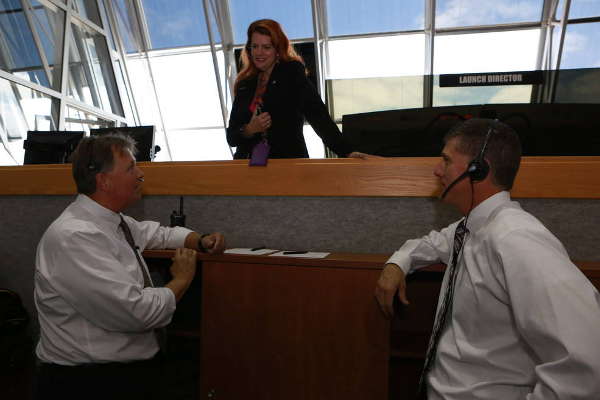
Before NASA’s mighty Space Launch System, or SLS, rocket can blast off from the agency’s Kennedy Space Center to send the Orion spacecraft into lunar orbit, teams across the country conduct extensive testing on all parts of the system.
Guiding that effort at the Florida spaceport are NASA test directors, or NTDs.
NTDs within the Exploration Ground Systems program are in charge of flight and ground hardware testing in Kennedy’s Launch Control Center firing rooms 1 and 2, where activities involved with preparing rockets, spacecraft and payloads for space can be controlled from computer terminals. They are responsible for emergency management actions, helping lead the launch team during all facets of testing, launch and recovery.
NASA’s Artemis missions will land American astronauts on the Moon by 2024, beginning with Artemis I, the uncrewed flight test of SLS and Orion.
“It’s certainly an amazing feeling to be responsible for setting up the building blocks of a new program which will eventually take us to the Moon, Mars and beyond,” said Senior NASA Test Director Danny Zeno.
Zeno is leading the development of test plans and procedures that are essential to flight and ground hardware for the Artemis missions.
This includes proving the functionality of flight and ground systems for the assembled launch vehicle configuration, verifying the mobile launcher arms and umbilicals operate as expected at launch, and performing a simulated launch countdown with the integrated vehicle in the Vehicle Assembly Building.
The 14-year NTD veteran relishes his hands-on role in successfully testing and launching SLS — the most powerful rocket NASA has ever built.
“It’s very fulfilling,” Zeno said. “What excites me about the future is that the work I’m doing today is contributing to someday having humans living and working on other planets.”
There are 18 people in the NTD office — all of whom must undergo rigorous certification training in the management and leadership of test operations, systems engineering and emergency response. They are in charge of the people, hardware and schedule during active firing room testing.
“The NTD office is at the center of testing operations, which will ensure that we are ready to fly the Artemis missions,” said Launch Director Charlie Blackwell-Thompson. “As we lay the foundation for exploring our solar system, the NASA test directors are on the front lines of making it happen.”
An NTD works from a console in the firing room during integrated or hazardous testing, guiding the team through any contingency or emergency operations.
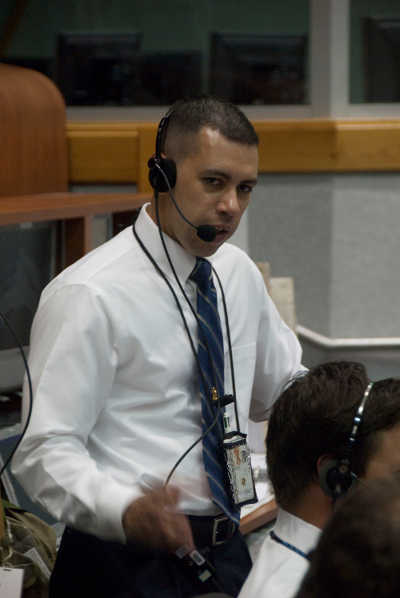
They lead critical testing on Launch Pad 39B and the mobile launcher, the 370-foot-tall, 11 million-pound steel structure that will launch the SLS rocket and Orion spacecraft on Artemis missions to the Moon and on to Mars.
This includes sound suppression, fire suppression and cryogenic fluid flow tests, as well as testing the crew access arm and umbilicals — connections that will provide communications, coolant and fuel up until launch.
While the majority of work for the ground and flight systems is pre-liftoff, the job certainly doesn’t end there.
“It culminates in a two-day launch countdown in which all of the groups, teams and assets are required to function together in an almost flawless performance to get us to launch,” said Senior NASA Test Director Jeff Spaulding.
Spaulding has nearly three decades of experience in the Test, Launch and Recovery Office. For Artemis I, he is leading the launch control team and support teams during the launch countdown for Blackwell-Thompson, who will oversee the countdown and liftoff of SLS.
Just over three miles from the launch pad, on launch day, Spaulding will be in the firing room running the final portion of cryogenic loading through launch. During this time, supercool propellants — called cryogenics — are loaded into the vehicle's tanks. He will perform the same tasks for the wet dress rehearsal, which is a full practice countdown about two months before launch that includes fueling the tanks and replicating everything done for launch prior to main engine start.
At the end of the mission, part of the team will lead the recovery efforts aboard a Navy vessel after Orion splashdown.
The NASA recovery director and supporting NTDs are responsible for planning and carrying out all operations to recover the Orion capsule onto a U.S. Navy ship.
This includes working closely with the Department of Defense to ensure that teams coordinate recovery plans, meet requirements, and follow timelines and procedures to bring our heroes and spacecraft home quickly and safely.
“We are supported by numerous teams at Kennedy and elsewhere around the country that are helping us with our historic first flight as we blaze a path toward landing astronauts on the Moon in 2024,” Spaulding said.
Jim Cawley works for NASA's Kennedy Space Center.

LAKE COUNTY, Calif. – Health officials in Lake and neighboring counties this week continued to make modifications to shelter in place orders, with some jurisdictions loosening rules and others adding restrictions as they seek to limit the spread of COVID-19.
On Thursday, Public Health Officer Dr. Gary Pace issued an addendum to his shelter in place order that allowed individuals and certain businesses to resume “some relatively low-risk activities while observing social distancing, and gathering in groups no larger than two.”
The wording of that order led to some confusion. It went into effect on April 23 and said it expires on June 1, leading some community members to conclude the entire shelter in place order had been extended.
Pace said in a Friday clarification that the shelter in place order’s expiration date remains May 3.
However, he added, “An extension of the order and/or updated orders will be forthcoming. The term of the order and its restrictions will depend on modifications that the governor makes to the state orders, and will also be based on the trajectory of the infection in Lake and neighboring counties.”
As of Friday night, Lake’s confirmed COVID-19 cases remained at six, while neighboring Mendocino County had seen its cases rise to 11 – more than doubling – over the previous day.
Other neighboring counties reported the following totals: Colusa, three; Glenn, five; Napa, 58 cases, two deaths; Sonoma, 217 cases, two deaths; and Yolo County, 157 cases, 13 deaths.
Statewide, more than 41,000 cases and 1,600 deaths were confirmed as of Friday by county departments.
On Friday Pace issued another addendum that also clarified the status of boating and fishing in Lake County.
The Friday addendum gives limited permissions for boating and fishing that apply to all city and county public waterways in Lake County.
Pace said fishing is allowed from the shoreline only – no fishing from boats is permitted – and swimming in waterways also is not permitted.
“We understand the orders have severely affected people and businesses, and have sought to take reasonable, evidence-based action to promote public health throughout the COVID-19 crisis,” Pace said Friday. “We will continue to monitor all available indicators of COVID-19 activity, and consider reintroduction of further activities, as appropriate. Again, activities will be reintroduced gradually, in the interest of public health.”
Neighboring counties update shelter in place orders
Pace has so far not required facial coverings but said that could be a requirement in the future.
Other counties around the region have taken different approaches to the question of facial coverings and also have varying end dates for their shelter in place orders.
Sonoma County instituted a requirement for people to wear facial coverings in public beginning on April 17, as Lake County News has reported.
Sonoma’s shelter in place order, like Lake’s, is in effect until May 3.
On Wednesday, Napa County issued an updated shelter in place order that is in effect until further action by the Public Health officer.
It included a “strong recommendation” that community members wear face coverings when in public or in shared spaces but didn’t make them mandatory.
That order loosened some restrictions, allowing for construction activities, real estate agent-client residential viewings, drive-in religious services with proper physical distancing, landscaping and gardening maintenance, and the use of golf courses and driving ranges.
On Thursday, Yolo County issued a new health order that requires everyone to wear a nonmedical facial covering in public, beginning on April 27.
Yolo’s shelter in place order continues through May 1.
On Friday, Mendocino County Health Officer Dr. Noemi Doohan issued a fourth revised shelter in place order that will remain in effect until May 10.
As part of that order, a new rule will begin at noon on May 1 that requires the use of facial coverings when in public as an additional measure to stop the spread of COVID-19 in Mendocino County. Exceptions are for children under 2 and those for whom it is not advised for health-related reasons. Facial coverings are recommended but optional for children ages 2 to 12.
“Facial covering orders are being widely adopted across California to help protect against asymptomatic spread of COVID-19,” Doohan said. “Wearing facial coverings in public combined with social distancing practices and sheltering in place are powerful weapons against COVID-19 and are helping prepare our community for limited reopening of activities in May.”
The new order also lessens some restrictions, including allowing for outdoor recreation to be initiated from within a 20-mile drive of one’s residence and permitting live-streaming of events that include singing and similar activities provided that venues take protective measures to mitigate COVID-19 transmission.
Colusa County’s shelter in place order remains in effect through May 8 and Glenn has implemented the state’s stay at home order, which so far doesn’t have a timeline for ending.
Email Elizabeth Larson atThis email address is being protected from spambots. You need JavaScript enabled to view it. . Follow her on Twitter, @ERLarson, or Lake County News, @LakeCoNews.
On Thursday, Public Health Officer Dr. Gary Pace issued an addendum to his shelter in place order that allowed individuals and certain businesses to resume “some relatively low-risk activities while observing social distancing, and gathering in groups no larger than two.”
The wording of that order led to some confusion. It went into effect on April 23 and said it expires on June 1, leading some community members to conclude the entire shelter in place order had been extended.
Pace said in a Friday clarification that the shelter in place order’s expiration date remains May 3.
However, he added, “An extension of the order and/or updated orders will be forthcoming. The term of the order and its restrictions will depend on modifications that the governor makes to the state orders, and will also be based on the trajectory of the infection in Lake and neighboring counties.”
As of Friday night, Lake’s confirmed COVID-19 cases remained at six, while neighboring Mendocino County had seen its cases rise to 11 – more than doubling – over the previous day.
Other neighboring counties reported the following totals: Colusa, three; Glenn, five; Napa, 58 cases, two deaths; Sonoma, 217 cases, two deaths; and Yolo County, 157 cases, 13 deaths.
Statewide, more than 41,000 cases and 1,600 deaths were confirmed as of Friday by county departments.
On Friday Pace issued another addendum that also clarified the status of boating and fishing in Lake County.
The Friday addendum gives limited permissions for boating and fishing that apply to all city and county public waterways in Lake County.
Pace said fishing is allowed from the shoreline only – no fishing from boats is permitted – and swimming in waterways also is not permitted.
“We understand the orders have severely affected people and businesses, and have sought to take reasonable, evidence-based action to promote public health throughout the COVID-19 crisis,” Pace said Friday. “We will continue to monitor all available indicators of COVID-19 activity, and consider reintroduction of further activities, as appropriate. Again, activities will be reintroduced gradually, in the interest of public health.”
Neighboring counties update shelter in place orders
Pace has so far not required facial coverings but said that could be a requirement in the future.
Other counties around the region have taken different approaches to the question of facial coverings and also have varying end dates for their shelter in place orders.
Sonoma County instituted a requirement for people to wear facial coverings in public beginning on April 17, as Lake County News has reported.
Sonoma’s shelter in place order, like Lake’s, is in effect until May 3.
On Wednesday, Napa County issued an updated shelter in place order that is in effect until further action by the Public Health officer.
It included a “strong recommendation” that community members wear face coverings when in public or in shared spaces but didn’t make them mandatory.
That order loosened some restrictions, allowing for construction activities, real estate agent-client residential viewings, drive-in religious services with proper physical distancing, landscaping and gardening maintenance, and the use of golf courses and driving ranges.
On Thursday, Yolo County issued a new health order that requires everyone to wear a nonmedical facial covering in public, beginning on April 27.
Yolo’s shelter in place order continues through May 1.
On Friday, Mendocino County Health Officer Dr. Noemi Doohan issued a fourth revised shelter in place order that will remain in effect until May 10.
As part of that order, a new rule will begin at noon on May 1 that requires the use of facial coverings when in public as an additional measure to stop the spread of COVID-19 in Mendocino County. Exceptions are for children under 2 and those for whom it is not advised for health-related reasons. Facial coverings are recommended but optional for children ages 2 to 12.
“Facial covering orders are being widely adopted across California to help protect against asymptomatic spread of COVID-19,” Doohan said. “Wearing facial coverings in public combined with social distancing practices and sheltering in place are powerful weapons against COVID-19 and are helping prepare our community for limited reopening of activities in May.”
The new order also lessens some restrictions, including allowing for outdoor recreation to be initiated from within a 20-mile drive of one’s residence and permitting live-streaming of events that include singing and similar activities provided that venues take protective measures to mitigate COVID-19 transmission.
Colusa County’s shelter in place order remains in effect through May 8 and Glenn has implemented the state’s stay at home order, which so far doesn’t have a timeline for ending.
Email Elizabeth Larson at
042420 Lake County amended ... by LakeCoNews on Scribd
NORTH COAST, Calif. – Mendocino County Public Health reported Friday evening that three additional cases of COVID-19 have been confirmed in Round Valley.
Those new cases made for six additional cases in Mendocino County in a 24-hour period, and on overall doubling in Mendocino County’s caseload, which as of Friday night stood at 11.
Of Mendocino County’s 11 cases, four have recovered, none have required hospitalization and there have been no deaths, Public Health officials said.
Health officials said the latest testing was performed at Round Valley Indian Health Center and the health care workers used proper personal protective equipment.
Following protocol, the Round Valley Indian Health Center reported the three new positive cases to Mendocino County Public Health, which initiated a contact tracing investigation and is working with Round Valley Indian Health Center on additional testing of individuals potentially exposed to the individuals that have tested positive.
Public Health said the individuals are in stable condition, in isolation at home with active public health monitoring and did not require hospitalization. Asymptomatic close contacts of the cases are in quarantine.
Mendocino County Health Officer Dr. Noemi Doohan, Round Valley Indian Health Center and Round Valley Indian Tribal Council urge residents to follow the health officer’s shelter-in-place order and stay home unless essential travel is required for groceries, medicine or other necessary items.
Officials also urged community members to wash hands with soap and water; clean and disinfect frequently touched surfaces daily; avoid touching eyes, nose or mouth with unwashed hands; cover coughs or sneezes with a tissue or the inner elbow; avoid close contact with people who are sick; do not go to work if you become sick with respiratory symptoms like fever and cough; and wear facial coverings when leaving home.
Those new cases made for six additional cases in Mendocino County in a 24-hour period, and on overall doubling in Mendocino County’s caseload, which as of Friday night stood at 11.
Of Mendocino County’s 11 cases, four have recovered, none have required hospitalization and there have been no deaths, Public Health officials said.
Health officials said the latest testing was performed at Round Valley Indian Health Center and the health care workers used proper personal protective equipment.
Following protocol, the Round Valley Indian Health Center reported the three new positive cases to Mendocino County Public Health, which initiated a contact tracing investigation and is working with Round Valley Indian Health Center on additional testing of individuals potentially exposed to the individuals that have tested positive.
Public Health said the individuals are in stable condition, in isolation at home with active public health monitoring and did not require hospitalization. Asymptomatic close contacts of the cases are in quarantine.
Mendocino County Health Officer Dr. Noemi Doohan, Round Valley Indian Health Center and Round Valley Indian Tribal Council urge residents to follow the health officer’s shelter-in-place order and stay home unless essential travel is required for groceries, medicine or other necessary items.
Officials also urged community members to wash hands with soap and water; clean and disinfect frequently touched surfaces daily; avoid touching eyes, nose or mouth with unwashed hands; cover coughs or sneezes with a tissue or the inner elbow; avoid close contact with people who are sick; do not go to work if you become sick with respiratory symptoms like fever and cough; and wear facial coverings when leaving home.
Cal Expo’s Board voted unanimously during its Friday board meeting to cancel the 2020 California State Fair and Food Festival until 2021 due to the extensive challenges posed by the COVID-19 public health crisis.
Cal Expo said the decision was made in accordance with the directives issued by the governor and California Department of Public Health.
This year’s state fair had been scheduled for July 17 to Aug. 2.
“While we had remained hopeful the California State Fair would be able to continue our 166-year tradition of showcasing the best of California and entertaining the state’s residents and families, it’s clear the impact of COVID-19 will continue to be felt for the foreseeable future and that large gatherings should be postponed at this time,” said Cal Expo General Manager and CEO Rick Pickering.
“The health and safety of the community, our guests, and staff is our number one priority. Canceling this summer’s California State Fair is the right thing to do, and is in line with the measured, scientific approach that’s been implemented by the governor and health officials to fight COVID-19. California Exposition and State Fair is a proud member of the statewide community and we will continue to do our part to combat COVID-19,” said Pickering.
Pickering said Cal Expo is playing a regional role in the effort to combat the virus, including serving as a drive-through testing site, as well as a temporary emergency isolation trailer facility for homeless individuals who have been exposed or infected.
He said canceling the state fair and many of the 200 year-round events hosted at Cal Expo is having a significant economic impact on Cal Expo and the region.
“We are sensitive to the fact Cal Expo is a regional, economic engine that generates sales tax revenue and employs over 800 seasonal workers. Our staff is working diligently on a strategy to safely reopen when appropriate and we look forward to the time when we can all gather again safely to celebrate the great things Californians have done and will do in the future,” Pickering said.
Cal Expo said the decision was made in accordance with the directives issued by the governor and California Department of Public Health.
This year’s state fair had been scheduled for July 17 to Aug. 2.
“While we had remained hopeful the California State Fair would be able to continue our 166-year tradition of showcasing the best of California and entertaining the state’s residents and families, it’s clear the impact of COVID-19 will continue to be felt for the foreseeable future and that large gatherings should be postponed at this time,” said Cal Expo General Manager and CEO Rick Pickering.
“The health and safety of the community, our guests, and staff is our number one priority. Canceling this summer’s California State Fair is the right thing to do, and is in line with the measured, scientific approach that’s been implemented by the governor and health officials to fight COVID-19. California Exposition and State Fair is a proud member of the statewide community and we will continue to do our part to combat COVID-19,” said Pickering.
Pickering said Cal Expo is playing a regional role in the effort to combat the virus, including serving as a drive-through testing site, as well as a temporary emergency isolation trailer facility for homeless individuals who have been exposed or infected.
He said canceling the state fair and many of the 200 year-round events hosted at Cal Expo is having a significant economic impact on Cal Expo and the region.
“We are sensitive to the fact Cal Expo is a regional, economic engine that generates sales tax revenue and employs over 800 seasonal workers. Our staff is working diligently on a strategy to safely reopen when appropriate and we look forward to the time when we can all gather again safely to celebrate the great things Californians have done and will do in the future,” Pickering said.
Gov. Gavin Newsom on Friday announced a series of initiatives to support vulnerable older Californians who are isolating at home during California's stay at home order.
California is launching a first-in-the-nation meal delivery program, a partnership to make wellness check-in calls, and the expansion of Friendship Line California to help combat social isolation.
These actions will support the approximately 1.2 million Californians over the age of 65 who live alone.
“The most important way for older Californians to stay safe is to stay at home,” said Gov. Newsom. “These programs will provide older, vulnerable Californians with access to nutritious meals in the safety of their homes and the opportunity to connect with someone who can listen to their concerns and make sure their needs are met. We are all in this together and we will continue to support older Californians who are more at risk during this public health emergency.”
“Older adults are heroes for being the first Californians to stay at home and save lives. However, they may be struggling to access food and with the mental health implications of isolation. These programs will make sure our older friends, family, and neighbors have access to the food and friendship they need," said Director of the California Department of Aging Kim McCoy Wade.
Restaurants Deliver: Home Meals for Seniors
This first-in-the-nation program will ensure vulnerable older Californians have consistent access to nutritious meals while staying safe at home.
The Restaurants Deliver: Home Meals for Seniors program will enlist community restaurants to prepare meals that will be delivered to older Californians who are isolating at home during California's stay at home order.
The program will also support local restaurant workers and owners who have lost business during the pandemic.
The program will be administered by local authorities and will serve older Californians who are ineligible for other nutrition programs.
The administration will keep updated information on the COVID-19 website on which localities are participating.
Social Bridging Project
The Social Bridging Project will mobilize more than 1,000 callers to proactively reach out to older Californians who are isolating at home.
The project will combat social isolation through direct, one-on-one communication with older Californians, many living alone and isolated.
Listos California is partnering with the California Department of Aging, United Airlines, Community Emergency Response Teams, or CERT, and Sacramento State University to make calls to older Californians.
Callers will check on the individual's well-being, connect them to resources, and connect with them on a personal level.
Friendship Line California: 1-888-670-1360
California is expanding Friendship Line California to support lonely and isolated older Californians across the state. Friendship Line California is toll-free and available to provide emotional support to older Californians facing loneliness, isolation and anxiety.
The California Department of Aging is partnering with the Institute on Aging to support this effort.
Friday’s announcements build on previous actions to support older Californians isolating at home.
Gov. Newsom previously announced the “Stay Home. Save Lives. Check In.” campaign to help combat social isolation among older Californians. The campaign urges all Californians to check in on their older neighbors with a call, text or physically-distanced door knock.
Californians are also encouraged to join the #CaliforniansForAll initiative by signing up at CalifornainsForAll.ca.gov. #CaliforniansForAll unites organizations in desperate need of volunteers with Californians looking to serve and share their commitment to their neighbors, while ensuring stay-at-home and physical distancing protocols are met.
The initiative will focus on recruiting younger Californians to help the most vulnerable throughout the state, including older Californians who are at higher risk of serious illness due to COVID-19.
Visit www.covid19.ca.gov for critical steps Californians can take to stay healthy, and resources available to those impacted by the outbreak.
California is launching a first-in-the-nation meal delivery program, a partnership to make wellness check-in calls, and the expansion of Friendship Line California to help combat social isolation.
These actions will support the approximately 1.2 million Californians over the age of 65 who live alone.
“The most important way for older Californians to stay safe is to stay at home,” said Gov. Newsom. “These programs will provide older, vulnerable Californians with access to nutritious meals in the safety of their homes and the opportunity to connect with someone who can listen to their concerns and make sure their needs are met. We are all in this together and we will continue to support older Californians who are more at risk during this public health emergency.”
“Older adults are heroes for being the first Californians to stay at home and save lives. However, they may be struggling to access food and with the mental health implications of isolation. These programs will make sure our older friends, family, and neighbors have access to the food and friendship they need," said Director of the California Department of Aging Kim McCoy Wade.
Restaurants Deliver: Home Meals for Seniors
This first-in-the-nation program will ensure vulnerable older Californians have consistent access to nutritious meals while staying safe at home.
The Restaurants Deliver: Home Meals for Seniors program will enlist community restaurants to prepare meals that will be delivered to older Californians who are isolating at home during California's stay at home order.
The program will also support local restaurant workers and owners who have lost business during the pandemic.
The program will be administered by local authorities and will serve older Californians who are ineligible for other nutrition programs.
The administration will keep updated information on the COVID-19 website on which localities are participating.
Social Bridging Project
The Social Bridging Project will mobilize more than 1,000 callers to proactively reach out to older Californians who are isolating at home.
The project will combat social isolation through direct, one-on-one communication with older Californians, many living alone and isolated.
Listos California is partnering with the California Department of Aging, United Airlines, Community Emergency Response Teams, or CERT, and Sacramento State University to make calls to older Californians.
Callers will check on the individual's well-being, connect them to resources, and connect with them on a personal level.
Friendship Line California: 1-888-670-1360
California is expanding Friendship Line California to support lonely and isolated older Californians across the state. Friendship Line California is toll-free and available to provide emotional support to older Californians facing loneliness, isolation and anxiety.
The California Department of Aging is partnering with the Institute on Aging to support this effort.
Friday’s announcements build on previous actions to support older Californians isolating at home.
Gov. Newsom previously announced the “Stay Home. Save Lives. Check In.” campaign to help combat social isolation among older Californians. The campaign urges all Californians to check in on their older neighbors with a call, text or physically-distanced door knock.
Californians are also encouraged to join the #CaliforniansForAll initiative by signing up at CalifornainsForAll.ca.gov. #CaliforniansForAll unites organizations in desperate need of volunteers with Californians looking to serve and share their commitment to their neighbors, while ensuring stay-at-home and physical distancing protocols are met.
The initiative will focus on recruiting younger Californians to help the most vulnerable throughout the state, including older Californians who are at higher risk of serious illness due to COVID-19.
Visit www.covid19.ca.gov for critical steps Californians can take to stay healthy, and resources available to those impacted by the outbreak.

NASA is celebrating the Hubble Space Telescope's 30 years of unlocking the beauty and mystery of space by unveiling a stunning new portrait of a firestorm of starbirth in a neighboring galaxy.
In this Hubble portrait, the giant red nebula (NGC 2014) and its smaller blue neighbor (NGC 2020) are part of a vast star-forming region in the Large Magellanic Cloud, a satellite galaxy of the Milky Way, located 163,000 light-years away. The image is nicknamed the "Cosmic Reef," because it resembles an undersea world.
Thirty years ago, on April 24, 1990, Hubble was carried aloft from NASA's Kennedy Space Center in Florida aboard the space shuttle Discovery, along with a five-astronaut crew. Deployed into Earth orbit a day later, the telescope opened a new eye onto the cosmos that has been transformative for our civilization.
Hubble is revolutionizing modern astronomy, not only for scientists, but also by taking the public on a wondrous journey of exploration and discovery. Hubble's never-ending, breathtaking celestial snapshots provide a visual shorthand for Hubble's top scientific achievements.
Unlike any space telescope before it, Hubble made astronomy relevant, engaging and accessible for people of all ages. The space telescope's iconic imagery has redefined our view of the universe and our place in time and space.
"Hubble has given us stunning insights about the universe, from nearby planets to the farthest galaxies we have seen so far," said Thomas Zurbuchen, associate administrator for science at NASA Headquarters in Washington, D.C. "It was revolutionary to launch such a large telescope 30 years ago, and this astronomy powerhouse is still delivering revolutionary science today. Its spectacular images have captured the imagination for decades, and will continue to inspire humanity for years to come."
Unencumbered by Earth's blurring atmosphere, the space observatory unveils the universe in unprecedented crystal-clear sharpness across a broad range of wavelengths, from ultraviolet to near-infrared light.
Download this video in HD formats from NASA Goddard's Scientific Visualization Studio
Hubble's top accomplishments include measuring the expansion and acceleration rate of the universe; finding that black holes are common among galaxies; characterizing the atmospheres of planets around other stars; monitoring weather changes on planets across our solar system; and looking back in time across 97% of the universe to chronicle the birth and evolution of stars and galaxies.
Hubble has yielded to date 1.4 million observations and provided data that astronomers around the world have used to write more than 17,000 peer-reviewed scientific publications, making it the most prolific space observatory in history. Its archival data alone will fuel future astronomy research for generations to come.
Hubble's longevity can be attributed to five space shuttle servicing missions, from 1993 to 2009, in which astronauts upgraded the telescope with advanced instruments, new electronics and on-orbit repairs. The venerable observatory, with its suite of cameras and other instruments, is expected to stay operational through the 2020s, in synergy with the upcoming James Webb Space Telescope.
The Hubble Space Telescope is a project of international cooperation between NASA and ESA (the European Space Agency). NASA's Goddard Space Flight Center in Greenbelt, Maryland, manages the telescope. The Space Telescope Science Institute (STScI) in Baltimore conducts Hubble science operations. STScI is operated for NASA by the Association of Universities for Research in Astronomy in Washington, D.C.