How to resolve AdBlock issue?
News
LAKE COUNTY, Calif. – Due to gusty winds and low humidity, the National Weather Service has issued a red flag warning for Lake and other neighboring counties that’s in effect through Monday evening.
A red flag warning means that critical fire weather conditions – a combination of strong winds, low relative humidity and warm temperatures – are either occurring now or will shortly.
The red flag warning, which went into effect on Sunday evening, continues until 5 p.m. Monday. It is for areas above 1,500 feet in elevation across southern and eastern Lake County, mainly for north- and east-facing upper slopes and ridges to the southeast of Kelseyville and Lucerne.
The forecast calls for sustained northeast winds of 12 to 20 miles per hour continuing through midday Monday, then gradually diminishing Monday afternoon.
The National Weather Services said peak gusts of 25 to 35 miles per hour will be possible over exposed mountain ridges into early Monday morning. Winds will then gradually diminish late Monday morning and into the afternoon.
The specific Lake County forecast this week predicts lighter winds through midweek.
Temperatures are expected to hover in the high 80s through Wednesday, dropping into the low 80s through Friday before rising into the 90s over the Independence Day weekend.
Nighttime temperatures this week will follow a similar trend, starting out in the low 60s through Tuesday before dropping into the 50s through the weekend.
Email Elizabeth Larson atThis email address is being protected from spambots. You need JavaScript enabled to view it. . Follow her on Twitter, @ERLarson, or Lake County News, @LakeCoNews.
A red flag warning means that critical fire weather conditions – a combination of strong winds, low relative humidity and warm temperatures – are either occurring now or will shortly.
The red flag warning, which went into effect on Sunday evening, continues until 5 p.m. Monday. It is for areas above 1,500 feet in elevation across southern and eastern Lake County, mainly for north- and east-facing upper slopes and ridges to the southeast of Kelseyville and Lucerne.
The forecast calls for sustained northeast winds of 12 to 20 miles per hour continuing through midday Monday, then gradually diminishing Monday afternoon.
The National Weather Services said peak gusts of 25 to 35 miles per hour will be possible over exposed mountain ridges into early Monday morning. Winds will then gradually diminish late Monday morning and into the afternoon.
The specific Lake County forecast this week predicts lighter winds through midweek.
Temperatures are expected to hover in the high 80s through Wednesday, dropping into the low 80s through Friday before rising into the 90s over the Independence Day weekend.
Nighttime temperatures this week will follow a similar trend, starting out in the low 60s through Tuesday before dropping into the 50s through the weekend.
Email Elizabeth Larson at
LAKE COUNTY, Calif. – With the Independence Day holiday rapidly approaching, Cal Fire is reminding all Californians and visitors to do their part to prevent fires caused by illegal fireworks or the misuse of “safe and sane” fireworks.
Safe and sane fireworks went on sale in approximately 300 communities throughout California on Sunday.
In Lake County, safe and sane fireworks are only allowed to be sold and used in the city of Lakeport, during specific days in early July.
Although fireworks are a symbolic display of patriotism during this time of celebration, they can be dangerous when handled incorrectly or used in the wrong environment.
“As we move into drier, warmer months, wildfire activity is quickly picking up," said Chief Thom Porter, Cal Fire director. "Residents need to understand the dangers associated with the use of illegal fireworks or misuse of legal fireworks. In California, we have zero tolerance for the use and sale of illegal fireworks. Any person who causes a fire can be held liable for the costs of its suppression and associated property damage. Often these costs are in the hundreds of thousands and sometimes millions of dollars.”
There are also legal ramifications when it comes to certain types of fireworks. Possession or transportation of illegal fireworks such as sky rockets, bottle rockets, roman candles, aerial shells, firecrackers and other types that explode, go into the air, or move on the ground in an uncontrollable manner can lead to a possible fine of up to $50,000 as well as prison time or jail for up to one year.
Even safe and sane fireworks taken into a city or county where they are banned are considered Illegal.
“Unfortunately, many community events for the Fourth of July have been canceled this year. With more families and friends spending time together at home during the holiday, we want to remind everyone that only ‘safe and sane’ fireworks are allowed in California and make sure to check your local laws regarding their use,” said State Fire Marshal Mike Richwine. “Only use legal fireworks and only in a safe manner. Use of illegal fireworks or use of any firework in an unsafe manner will quickly ruin a celebration and you could be fined and charged for resulting damages.”
The State Fire Marshal approved safe and sane fireworks are allowed for use in many communities; however, they are not approved state-wide.
Before purchasing these types of fireworks, be sure to check your local ordinances and follow the instructions to avoid accidents and injuries.
Fireworks guidelines:
– First check that fireworks are allowed in the area of use.
– Make sure the firework has the state fire marshal safe and sane seal. Counterfeit labels do exist, only make purchases from trustworthy vendors.
– Purchase only from legitimate organizations authorized to sell within California.
– Have a bucket of water, sand or garden hose available at the firing site.
– Read all instructions before use.
– Never alter, modify or enhance fireworks – use only in the manner intended.
– Make sure fireworks have proper clearance from flammable materials including dry grass and
Brush.
For a full fireworks safety guide visit https://www.readyforwildfire.org/more/fireworks-safety/ or watch the short video above.
LAKE COUNTY, Calif. – The Public Health officer on Sunday reported that nine more Lake County residents have tested positive for COVID-19 and that the county’s relaxing of restrictions will be limited temporarily as a result.
Lake County’s case total now stands at 54, according to Public Health Officer Dr. Gary Pace.
“Community transmission has probably occurred; the new Lake County cases stem from a variety of sources,” Pace said in a written statement issued on Sunday afternoon.
Lake County News asked Pace for information about how the newly confirmed cases acquired the virus but he did not provide that information.
“Similar increases are occurring throughout our region, including surrounding counties. California-wide, we have set a daily record for new infections each of the last five days,” Pace said in a written statement. “With more social interaction taking place due to loosening of restrictions, an increase in cases was expected. However, it also reinforces our great need to take appropriate precautions.”
Pace said 16 of Lake County’s COVID-19 cases are active, 38 have recovered and three currently are hospitalized.
One of the individuals requiring hospitalization was transferred to a higher level of care in another county, but remains Lake County’s case, Pace said.
Lake County’s current hospitalization number is the highest reported during the pandemic so far. Four previous cases also required care in hospitals, bringing the county’s cases that have required hospitalization to a total of seven.
“In other areas of the state, rises in cases have been followed in a week or two by a rise in hospitalizations,” Pace said. “We will be limiting any further relaxation of restrictions until seeing how this change in case numbers unfolds. If we continue to see worrisome increases throughout the week, we may need to reconsider some of our current approaches to businesses and activities.”
As of Sunday, approximately 4,785 tests have been conducted in Lake County. Lake County has more than 64,000 residents. Results from 770 cases are pending, Public Health reported.
Lake County’s COVID-19 cases have more than doubled since June 1, when the reported number of cases totaled 26.
In that same timeframe, cases statewide have risen from just over 115,000 to more than 210,000, with deaths increasing from more than 4,200 to nearly 6,000, according to Lake County News’ ongoing surveys of data provided by Public Health departments statewide.
Pace continued to ask people to wear face coverings to limit the spread of COVID-19.
“Clusters where people were wearing face coverings and not attending large social gatherings seem to be contained; those where people were not as careful appear to be creating more spread, with many more contacts being identified in our investigations,” Pace said.
While there have been those that have questioned the effectiveness of face coverings, “Health Services’ investigations have demonstrated far fewer people are exposed in cases where infected individuals regularly wore masks. As a reminder, we wear face coverings because it makes it less likely we will unknowingly spread COVID-19 to others, not to protect ourselves. If you have not already, please make masking a priority,” Pace said.
Pace said that, starting on Monday, he will begin publishing demographic information about Lake County’s cases online on its Lake County Coronavirus Response Hub.
The information, which will be updated weekly, will include age ranges, gender, location in the county (divided by the five supervisorial districts) and general mode of contact, Pace said.
State issues new guidance on bars
In other COVID-19 news on Sunday, in light of the recent spike in cases across the state, the California Department of Public Health and Gov. Gavin Newsom released guidance on the closure of bars for counties on the County Monitoring List.
Pace said Lake County is not currently on that list – which is monitoring areas with increased transmission rates and hospitalizations – but noted, “it gives some insight into how things could evolve if the situation continues to worsen.”
He added, “While we are not currently adding back any restrictions, no further relaxation can occur at this point.”
Lake County’s bars were among 13 business sectors that Pace allowed to reopen or expand operations on June 12.
The counties that the state on Sunday ordered to close their bars were Fresno, Kern, Kings, Los Angeles and Tulare. The state also recommended – but didn’t make mandatory – bar closures in Riverside, Sacramento, San Bernardino, Santa Barbara, Stanislaus and Ventura.
Contra Costa and Santa Clara, where bars are not yet open, are recommended to keep them closed. Imperial and San Joaquin, which also have not reopened bars, have been ordered not to do so at this time, the state said.
Public health professionals within California and throughout the nation have identified bars as the highest risk sector of nonessential businesses currently open.
The higher risk is due to the close, social nature of bars, with reduced inhibition and impaired judgment due to alcohol consumption, less compliance with masking and social distancing, the louder environment which leads to raised voices and great projection of droplets, and the increased challenge for contact tracing – a key measure needed to control spread – because of the constant mixing among patrons and a lack of record-keeping of those in attendance, the state reported.
Last week, Gov. Newsom also recommended Imperial County in Southern California return to shelter-in-place status, due to rising cases and full hospitals, Pace said.
Email Elizabeth Larson atThis email address is being protected from spambots. You need JavaScript enabled to view it. . Follow her on Twitter, @ERLarson, or Lake County News, @LakeCoNews.
Lake County’s case total now stands at 54, according to Public Health Officer Dr. Gary Pace.
“Community transmission has probably occurred; the new Lake County cases stem from a variety of sources,” Pace said in a written statement issued on Sunday afternoon.
Lake County News asked Pace for information about how the newly confirmed cases acquired the virus but he did not provide that information.
“Similar increases are occurring throughout our region, including surrounding counties. California-wide, we have set a daily record for new infections each of the last five days,” Pace said in a written statement. “With more social interaction taking place due to loosening of restrictions, an increase in cases was expected. However, it also reinforces our great need to take appropriate precautions.”
Pace said 16 of Lake County’s COVID-19 cases are active, 38 have recovered and three currently are hospitalized.
One of the individuals requiring hospitalization was transferred to a higher level of care in another county, but remains Lake County’s case, Pace said.
Lake County’s current hospitalization number is the highest reported during the pandemic so far. Four previous cases also required care in hospitals, bringing the county’s cases that have required hospitalization to a total of seven.
“In other areas of the state, rises in cases have been followed in a week or two by a rise in hospitalizations,” Pace said. “We will be limiting any further relaxation of restrictions until seeing how this change in case numbers unfolds. If we continue to see worrisome increases throughout the week, we may need to reconsider some of our current approaches to businesses and activities.”
As of Sunday, approximately 4,785 tests have been conducted in Lake County. Lake County has more than 64,000 residents. Results from 770 cases are pending, Public Health reported.
Lake County’s COVID-19 cases have more than doubled since June 1, when the reported number of cases totaled 26.
In that same timeframe, cases statewide have risen from just over 115,000 to more than 210,000, with deaths increasing from more than 4,200 to nearly 6,000, according to Lake County News’ ongoing surveys of data provided by Public Health departments statewide.
Pace continued to ask people to wear face coverings to limit the spread of COVID-19.
“Clusters where people were wearing face coverings and not attending large social gatherings seem to be contained; those where people were not as careful appear to be creating more spread, with many more contacts being identified in our investigations,” Pace said.
While there have been those that have questioned the effectiveness of face coverings, “Health Services’ investigations have demonstrated far fewer people are exposed in cases where infected individuals regularly wore masks. As a reminder, we wear face coverings because it makes it less likely we will unknowingly spread COVID-19 to others, not to protect ourselves. If you have not already, please make masking a priority,” Pace said.
Pace said that, starting on Monday, he will begin publishing demographic information about Lake County’s cases online on its Lake County Coronavirus Response Hub.
The information, which will be updated weekly, will include age ranges, gender, location in the county (divided by the five supervisorial districts) and general mode of contact, Pace said.
State issues new guidance on bars
In other COVID-19 news on Sunday, in light of the recent spike in cases across the state, the California Department of Public Health and Gov. Gavin Newsom released guidance on the closure of bars for counties on the County Monitoring List.
Pace said Lake County is not currently on that list – which is monitoring areas with increased transmission rates and hospitalizations – but noted, “it gives some insight into how things could evolve if the situation continues to worsen.”
He added, “While we are not currently adding back any restrictions, no further relaxation can occur at this point.”
Lake County’s bars were among 13 business sectors that Pace allowed to reopen or expand operations on June 12.
The counties that the state on Sunday ordered to close their bars were Fresno, Kern, Kings, Los Angeles and Tulare. The state also recommended – but didn’t make mandatory – bar closures in Riverside, Sacramento, San Bernardino, Santa Barbara, Stanislaus and Ventura.
Contra Costa and Santa Clara, where bars are not yet open, are recommended to keep them closed. Imperial and San Joaquin, which also have not reopened bars, have been ordered not to do so at this time, the state said.
Public health professionals within California and throughout the nation have identified bars as the highest risk sector of nonessential businesses currently open.
The higher risk is due to the close, social nature of bars, with reduced inhibition and impaired judgment due to alcohol consumption, less compliance with masking and social distancing, the louder environment which leads to raised voices and great projection of droplets, and the increased challenge for contact tracing – a key measure needed to control spread – because of the constant mixing among patrons and a lack of record-keeping of those in attendance, the state reported.
Last week, Gov. Newsom also recommended Imperial County in Southern California return to shelter-in-place status, due to rising cases and full hospitals, Pace said.
Email Elizabeth Larson at
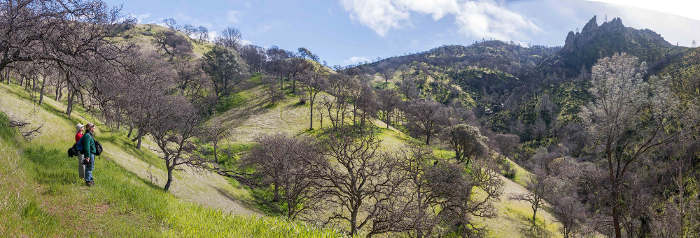
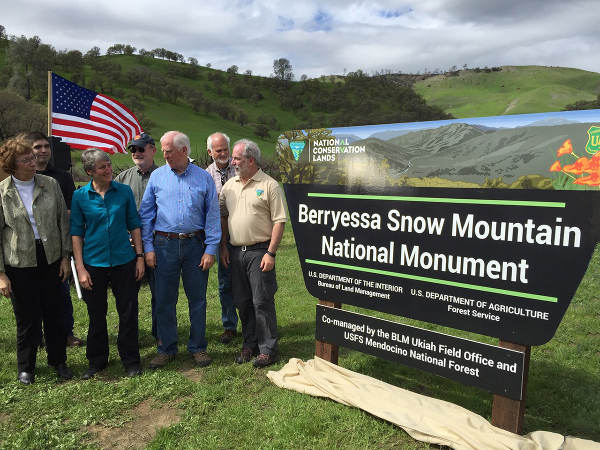
LAKE COUNTY, Calif. – Just in time to mark the fifth anniversary of its creation, a new book explores and celebrates the nature and history of the vast Berryessa Snow Mountain National Monument.
“Exploring the Berryessa Region: A Geology, Nature and History Tour,” published by Backcountry Press, is a collection of the work of several authors from Davis, including Bob Schneider, Eldridge and Judy Moores, Marc Hoshovsky and Peter Schiffman.
Created as a national monument on July 10, 2015, by then-President Barack Obama, the dream of making the Berryessa Snow Mountain National Monument had been the work of decades.
In November, the Board of Supervisors presented a proclamation declaring the town of Lucerne as the gateway to the National Monument following action by the Lucerne Town Hall in September.
One of the people involved in the advocacy for creating the National Monument is one of the book’s coauthors, Bob Schneider, who formerly worked with the nonprofit Tuleyome and today is involved with the California Native Plant Society and its efforts to protect the 9,000-acre Walker Ridge area.
He said Walker Ridge has remarkable plant life thanks to its serpentine soil, and he thinks it should be an area of critical environmental concern that’s added to the monument.
The Berryessa Snow Mountain National Monument, he explained, was designated because of its plate tectonic geology, biological diversity, wildlife corridors, cultural history and recreational opportunities.
Two-thirds of the 330,780-acre National Monument is located within Lake County. It crosses Napa, Yolo, Solano, Lake, Colusa, Glenn and Mendocino counties, and cradles varied and different landscapes.
The authors consider it a complex of geological wonders, biological abundance and a rich history of human cultures, including the Lake Miwok, Patwin, Pomo and Wintun peoples.
They packed the book with photographs, graphics, detailed maps, and a concise overview of the region’s complex geology, and presented it in an easy-to-read style.
Schneider said it's the first book to truly delve into a study of the Berryessa region, and that there was not enough information about the region that’s readily available to the public.
He told Lake County News that the book took about two and a half years to write.

Inspiration for the book
Schneider said he arrived in Davis as a freshman in 1966, the same year that Eldridge Moores arrived as a lecturer on tenure track for a professorship in the UC Davis Geology Department, now Earth and Planetary Sciences.
Moores, who taught geology for 47 years, had a career that spanned all of Earth’s continents. His studies, including plate tectonics, helped revolutionize the understanding of the geological history of the Earth.
He would influence many people, among them John McPhee. The men would share many field trips exploring Northern California geology while Moores discussed plate tectonics, ophiolites and pull apart basins. Moores is the main subject in McPhee’s books, “Assembling California” and “Annals of the Former World.”
Moores, Schneider said, was one of the real pioneers in the field of plate tectonics. He told Schneider that this region was one of the best to observe plate tectonics, on par with the Mariana Trench or Afghanistan. “It’s a pretty exciting place.”
Eldridge and Judy Moores led public fund-raising field trips for more than 20 years to show people the fascinating geology of the Berryessa region.
“I was driven by curiosity to learn more about this region and I wanted to expand Eldridge’s tour notes into a more complete illustrated story, including nature and history, that was more broadly accessible and inspirational to others,” said co-author Marc Hoshovsky.
Schneider said work was under way on a project to document trips Eldridge Moores was leading around the region when, in 2018, Moores was killed in a fire while on a geology tour in the Quincy area. He was 80 years old.
“It was very unexpected and tragic and so nothing happened for a couple months,” Schneider said.
The project at that point was a 20- to 40-page pamphlet on Moores’ trips. “How do you dedicate a pamphlet?” Schneider asked.
They decided that wouldn’t suffice. Schneider said they wanted to dedicate the project to Moores. “We really needed a book for that. Eldridge was inspiring.”
So the authors added a lot more information and that pamphlet grew into a book that tells the region’s story, including how they worked to get a national monument.
Geology as a ‘foundational instrument’
Geology, the authors explain in their book announcement, is “a foundational instrument” shaping the Berryessa region’s complex landscape.
They discuss the region’s biological diversity, wildlife connectivity and recreational opportunities for many different use groups. “We wanted to tell that story and that’s kind of what we did,” said Schneider.
The book includes cultural and historical notes about the region through a mile by mile geologic tour of the southern part of the Berryessa Snow Mountain National Monument.
Stops along the tour offer windows into the distant and recent past – highlighting the geology that drives today’s biological processes.
Schneider credited illustrator Tim Messick and editor Amy Boyer, among others, for their work in bringing the book together. It’s published in an 8.5-inch by 11-inch format, which is more conducive to the many maps, illustrations and pictures.
“The printing came out really awesome,” Schneider said.
An initial printing of 1,500 books was done. Schneider said he and Judy Moores bought 800 of the books, with more than 300 already sold. Schneider said he’s getting great feedback on the books, with people asking for more copies.
The authors are donating their initial proceeds to local nonprofits, said Schneider.
Schneider said he’s honored, humbled, excited and proud to be a part of the process leading to the creation of the book. “It is a great group of folks that worked on it.”
Noting that he wasn’t the best student in college – he was often out climbing – Schneider said now he’s on the cover with Eldridge Moores, which he said is an honor and is emotional for him as well.
Schneider, who said he loves Lake County, is now thinking about a new writing project that would focus on the Cache Creek area, which would include a look at the Walker Ridge and Bear Valley areas.
The authors will host a Zoom webinar discussing the book and ways to use it across the Berryessa Region on Tuesday, June 30, at 7 p.m.
Register for the webinar by visiting www.backcountrypress.com .
To order, visit https://backcountrypress.com/book/exploring-the-berryessa-region/ . The paperback is $19.95, the ebook is $14.95 and the book and ebook combination is $27.95.
Email Elizabeth Larson at
LAKE COUNTY, Calif. – Public Health has reported three more confirmed cases of COVID-19 in Lake County.
The three new cases bring Lake County’s total to 45.
Public Health did not release details of the cases or how the individuals contracted the virus.
Of the county 45 total cases, seven are active and 38 recovered. None are hospitalized, Public Health reported.
As of Saturday, Public Health said 4,719 tests have been conducted in Lake County, which has more than 64,000 residents. Results are pending from 787 tests.
Based on a survey of Public Health departments statewide, there are nearly 210,000 COVID-19 cases in California and nearly 5,900 deaths.
The California Department of Public Health reported that approximately 3,862,310 tests for COVID-19 have been conducted statewide, with the rate of positive tests over the previous 14 days at 5.3 percent.
As of June 26, local health departments have reported 14,520 confirmed positive cases in health care workers and 86 deaths statewide, the state reported.
Email Elizabeth Larson atThis email address is being protected from spambots. You need JavaScript enabled to view it. . Follow her on Twitter, @ERLarson, or Lake County News, @LakeCoNews.
The three new cases bring Lake County’s total to 45.
Public Health did not release details of the cases or how the individuals contracted the virus.
Of the county 45 total cases, seven are active and 38 recovered. None are hospitalized, Public Health reported.
As of Saturday, Public Health said 4,719 tests have been conducted in Lake County, which has more than 64,000 residents. Results are pending from 787 tests.
Based on a survey of Public Health departments statewide, there are nearly 210,000 COVID-19 cases in California and nearly 5,900 deaths.
The California Department of Public Health reported that approximately 3,862,310 tests for COVID-19 have been conducted statewide, with the rate of positive tests over the previous 14 days at 5.3 percent.
As of June 26, local health departments have reported 14,520 confirmed positive cases in health care workers and 86 deaths statewide, the state reported.
Email Elizabeth Larson at
KELSEYVILLE, Calif. – It was as sweet as sunshine to get out and hike the trails of Clear Lake State Park once again.
When everything was closed, the critter-cam activity that Clear Lake State Park Interpretive Association posted on their Facebook site was enriching with its copious wildlife sightings.
We may have missed nature, but it thrived without us, as evidenced by the numerous bear, bobcat, birds and other animal sightings caught on camera.
It was literally a day of wind in the willows as I breathed deep of the eutrophic waters of Clear Lake and two of its tributaries, Cole and Kelsey creeks.
The profuse willow trees were swaying to the music of the wind while distributing delicate fluff like a layer of snow along the trail.
The willows found in the park include some of the 84 species of willows native to California.
Willows are found growing along creeks, marshes and other wet areas throughout California.
Since willow spreads by root runners, it is a prolific plant that provides shade and habitat for birds and other wildlife.
Our lake, often criticized, is in actuality a healthy body of water rich in nutrients which provide it with dense fish and plant populations.
There are around 130 species of algae in our lake, and most are beneficial parts of the natural food chain that aid in the lake's health by reducing the sunshine from reaching the bottom of the lake, thereby decreasing invasive water weeds.

Since the lake is relatively shallow, it can warm up in portions, especially during summer months when bothersome blue-green algae gets trapped and forms mats.
These nuisance mats can be managed effectively by stirring up the water surface with aerators. Sometimes boat action through the mats or spraying water is useful in keeping the algae from becoming annoying.
The lively waters of Clear Lake teem with fish, while its shores are alive with prolific bird species and native plant life.
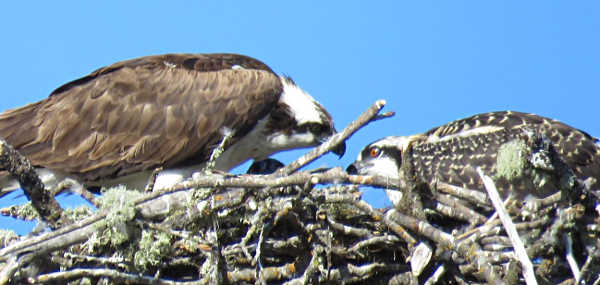
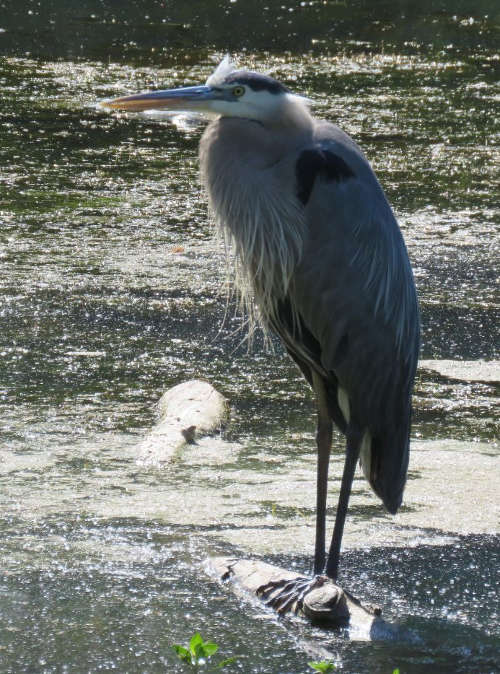
In no time at all, I witnessed the active osprey feeding their young, along with great blue herons, red-winged blackbirds, grebes, mallards, ravens, blue jays, swallows and more.
By taking a walk through the park it is easy to see why the Big Valley Pomo lived below the volcano, Mount Konocti for thousands of years.
The land here in what is now the park provided California buckeye, bay, black walnut, cattail, berries, ferns, elderberry, various pine nuts, a wide variety of acorns and a myriad of other nourishing foods for sustenance.
The willows here allowed for copious basket weaving materials, while the tule reeds gave them materials for boats, huts, mats and more.
The geologically active properties of the lake and its region were utilized by native peoples then, and later by those seeking wellness in the bubbling waters that rise up to the lake's surface.
While visiting state parks, California State Parks recommends hiking responsibly and to "Flatten the COVOD-19 curve at parks by: taking soap and hand sanitizer, maintaining social distance of 6 feet or more when walking, hiking, jogging or biking and to stay home if you're sick, along with covering mouth when coughing/sneezing with a tissue or your elbow."
Kathleen Scavone, M.A., is a retired educator, potter, freelance writer and author of “Anderson Marsh State Historic Park: A Walking History, Prehistory, Flora, and Fauna Tour of a California State Park” and “Native Americans of Lake County.”