 How to resolve AdBlock issue?
News
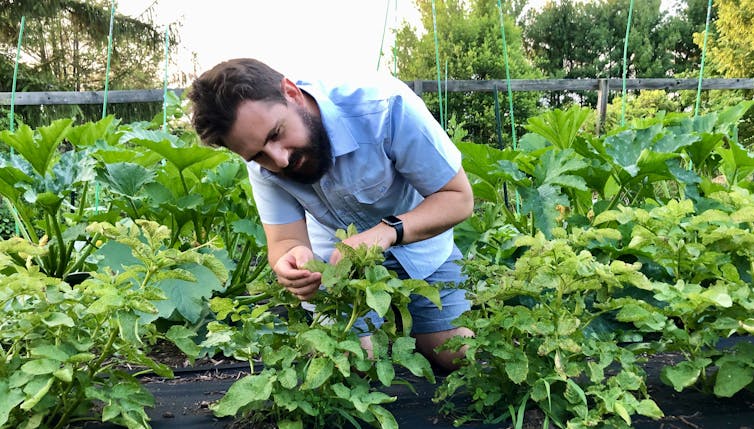
Home gardening is having a boom year across the U.S. Whether they’re growing their own food in response to pandemic shortages or just looking for a diversion, numerous aspiring gardeners have constructed their first raised beds, and seeds are flying off suppliers’ shelves. Now that gardens are largely planted, much of the work for the next several months revolves around keeping them healthy.
Contrary to the Biblical adage, we do not necessarily reap what we sow. As researchers specializing in plant pathology and entomology, we have devoted our careers to understanding and managing plant pests and pathogens. We are also gardeners with varying levels of experience and have seen firsthand the damage these insects and disease-causing agents can inflict.

Plant health is essential for seeing your garden succeed all the way to harvest. The United Nations General Assembly has declared 2020 as the International Year of Plant Health to help bring needed attention to pests and diseases that threaten global food production.
Thousands of pests and pathogens are known to target commercial crops, but a few usual suspects are routinely responsible for havoc in gardens across the U.S. Although each organism’s preferences vary, a few common tactics can help you detect them and protect your plants.
Start with prevention
Just as preventive steps like maintaining a balanced diet help keep humans healthy, home growers can take many actions to help their gardens thrive.
One key step is assessing soil fertility – the ability of soil to sustain plant growth – which can vary widely depending on your location and soil type. Low soil fertility limits food production and predisposes plants to disease and pests. University extension soil testing labs can help evaluate the quality of garden soil and identify nutrient deficiencies and acidic soils, often at no charge.

Suppressing weeds, either through mulching or weeding by hand each week, increases air flow and reduces humidity around garden plants, making it harder for pests and pathogens to thrive. Weed control ensures that nutrients are available for the plants you want to grow.
Proper spacing between plants is also important. Crowding can contribute to disease and pest outbreaks, so check and follow recommendations on seed packs or online as you add and move plants throughout the season. You can always cull plants after they come up to help with spacing. In small gardens, fewer plants that are properly supported can produce a bigger harvest than many overcrowded plants.
[You’re smart and curious about the world. So are The Conversation’s authors and editors. You can get our highlights each weekend.]
And then there’s the weather. Frost, hail, drought and flooding all pose unique risks to plants. Inconsistent rainfall can kill thirsty plants more quickly than infertile soils. Both too little and too much water will stress plants and can make them more vulnerable to severe pest and pathogen outbreaks.
A general rule of thumb is to follow a consistent daily watering regimen – preferably first thing in the morning – and to avoid over-watering, which can encourage root pathogens in soil.
Diagnosing problems
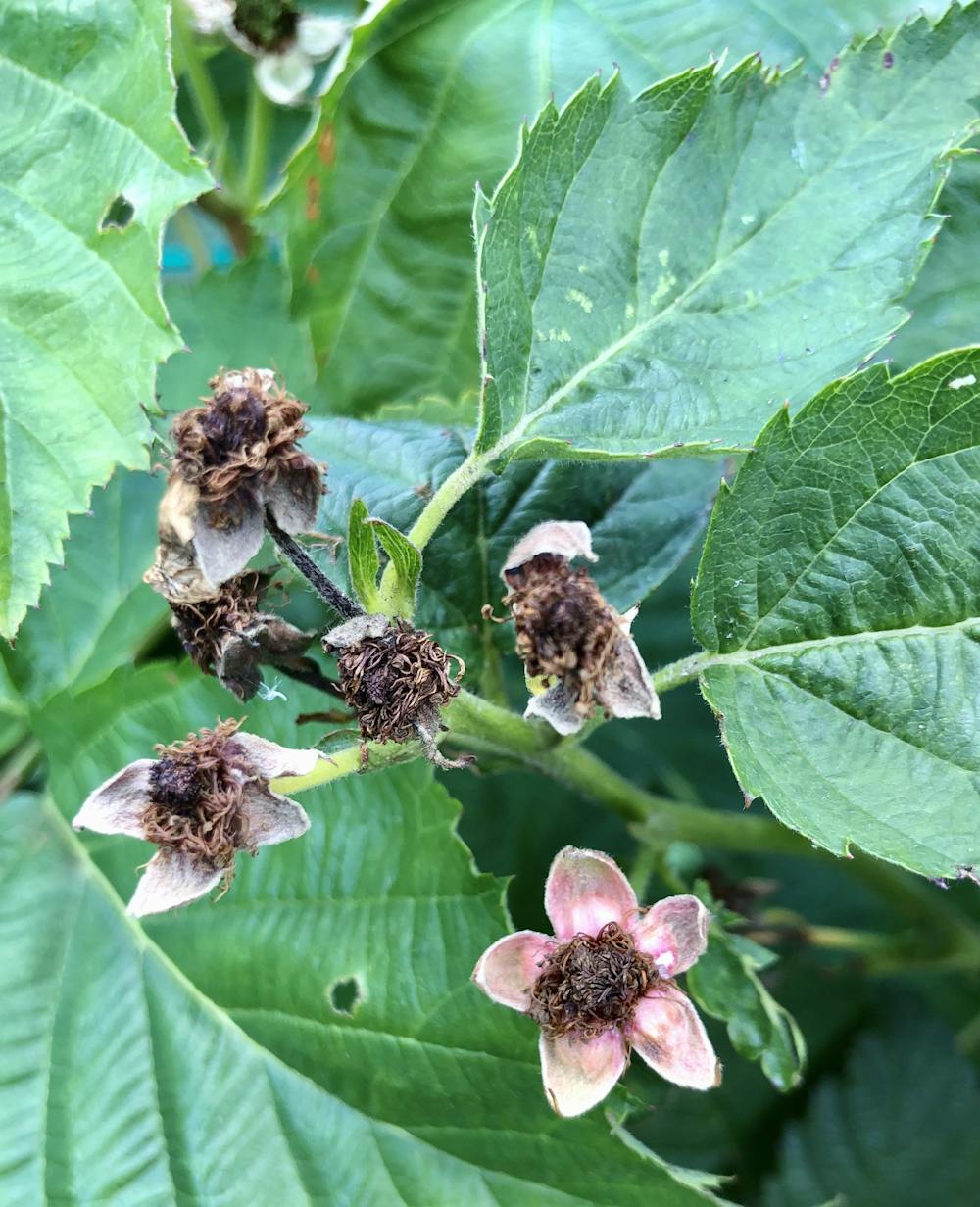
Common plant pathogens include viruses, bacteria, nematodes, oomycetes and fungi. All of these microorganisms, especially at an early stage of infection, are too small to see. But when they proliferate, they cause changes in plants that we can recognize.
Unlike insects, which move around on six legs or on wings through the air, pathogens can move unseen and unchecked from leaf to leaf on the wind, through the soil or in droplets of water. Some microbes have even formed intimate relationships with insects and use them as vehicles to move from plant to plant, which makes these pathogens even more challenging to manage. Unfortunately, by the time some pathogens make their presence known, the damage is already done.
We recently conducted a Twitter poll of gardeners nationwide to find out which culprits plagued their gardens. People named aphids, squash vine borers, squash bugs and flea beetles as the most problematic insect pests. Their most troublesome pathogens included powdery mildew, tomato bacterial wilt and cucurbit downy mildew.
To manage such perennial challenges, the first step is to spend time closely looking at your plants. Do you notice any insects consistently hanging around, or molds colonizing leaves or other plant parts? How about symptoms such as blight, stunting, or leaves that are yellowing, browning or wilting?
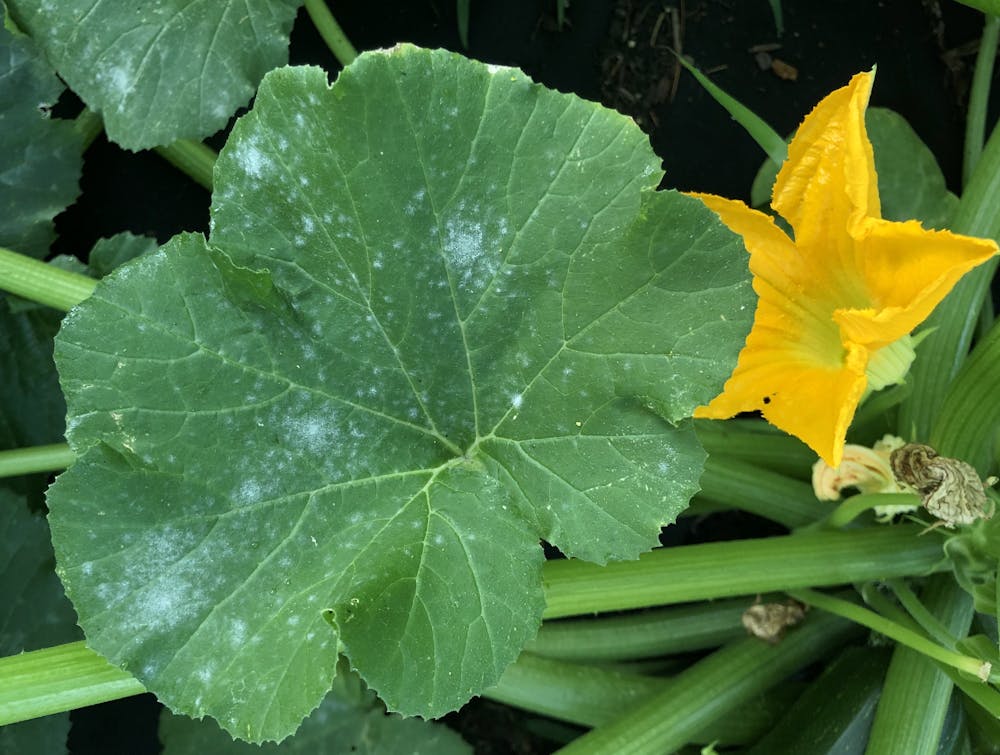
There are countless resources online for keen-eyed and curious gardeners looking to identify and manage pests and diseases. Try uploading a photo to the iNaturalist app or a Facebook gardeners group that can offer a community-sourced ID. Plant disease clinics in your state will also diagnose plant damage from diseases and pests for free or at low cost.
Once you’ve identified a problem serious enough to intervene, the land grant extension system can provide solutions. Extension programs at land grant schools like West Virginia University and Penn State University offer critical information on agriculture and management of pests and diseases in multiple languages for commercial and home growers.
Their resources include information on safe and proper use of pesticides as part of integrated pest management strategies. This approach employs pesticides in a targeted way along with non-chemical control methods and cultural practices, such as choosing native plants. Our professional societies, including the American Phytopathological Society, also offer a compendium series to help users diagnose and treat pests and diseases.
Those who are serious about learning and sharing their experience with others may want to consider Master Gardener programs, which train and certify community members on the latest evidence-based gardening techniques, tailored to their growing area. Master Gardeners pay it forward by training new Master Gardeners and answering questions for any gardener.
Plant pests are a daily reminder that gardens do not exist in a vacuum, and gardeners shouldn’t struggle alone either. Joining the gardening community takes attentiveness and time, but we believe the investment required to become an active member of your local gardening community is well worth it. With experience, the nervous tightrope act of keeping pests at bay and food on the table becomes a delicate dance that can help us appreciate where our food comes from – and ultimately, our place in the global ecosystem.
Matt Kasson, Associate Professor of Plant Pathology and Mycology, West Virginia University; Brian Lovett, Postdoctoral Researcher in Mycology, West Virginia University, and Carolee Bull, Professor of Plant Pathology and Systematic Bacteriology, Pennsylvania State University
This article is republished from The Conversation under a Creative Commons license. Read the original article.
Dogs available for adoption this week include mixes of border collie and Labrador Retriever, pit bull and shepherd.
Dogs that are adopted from Lake County Animal Care and Control are either neutered or spayed, microchipped and, if old enough, given a rabies shot and county license before being released to their new owner. License fees do not apply to residents of the cities of Lakeport or Clearlake.
The following dogs at the Lake County Animal Care and Control shelter have been cleared for adoption (additional dogs on the animal control Web site not listed are still “on hold”).
Call Lake County Animal Care and Control at 707-263-0278 or visit the shelter online at http://www.co.lake.ca.us/Government/Directory/Animal_Care_And_Control.htm for information on visiting or adopting.

Male pit bull terrier
This male pit bull terrier has a black coat.
He is in kennel No. 18, ID No. 13772.

Shepherd mix
This female shepherd mix has a brindle and white coat.
She is in kennel No. 22, ID No. 13776.

‘Socci’
“Socci” is a female Labrador Retriever-border collie mix with a black and white coat.
She has been spayed.
She is in kennel No. 25, ID No. 4924.
Email Elizabeth Larson at

Measurements from NASA’s Transiting Exoplanet Survey Satellite, or TESS, have enabled astronomers to greatly improve their understanding of the bizarre environment of KELT-9 b, one of the hottest planets known.
“The weirdness factor is high with KELT-9 b,” said John Ahlers, an astronomer at Universities Space Research Association in Columbia, Maryland, and NASA’s Goddard Space Flight Center in Greenbelt, Maryland. “It’s a giant planet in a very close, nearly polar orbit around a rapidly rotating star, and these features complicate our ability to understand the star and its effects on the planet.”
The new findings appear in a paper led by Ahlers published on June 5 in The Astronomical Journal.
Located about 670 light-years away in the constellation Cygnus, KELT-9 b was discovered in 2017 because the planet passed in front of its star for a part of each orbit, an event called a transit.
Transits regularly dim the star’s light by a small but detectable amount. The transits of KELT-9 b were first observed by the KELT transit survey, a project that collected observations from two robotic telescopes located in Arizona and South Africa.
Between July 18 and Sept. 11, 2019, as part of the mission’s yearlong campaign to observe the northern sky, TESS observed 27 transits of KELT-9 b, taking measurements every two minutes. These observations allowed the team to model the system’s unusual star and its impact on the planet.
KELT-9 b is a gas giant world about 1.8 times bigger than Jupiter, with 2.9 times its mass. Tidal forces have locked its rotation so the same side always faces its star. The planet swings around its star in just 36 hours on an orbit that carries it almost directly above both of the star’s poles.
KELT-9 b receives 44,000 times more energy from its star than Earth does from the Sun. This makes the planet’s dayside temperature around 7,800 degrees Fahrenheit (4,300 C), hotter than the surfaces of some stars. This intense heating also causes the planet’s atmosphere to stream away into space.
Its host star is an oddity, too. It’s about twice the size of the Sun and averages about 56 percent hotter. But it spins 38 times faster than the Sun, completing a full rotation in just 16 hours.
Its rapid spin distorts the star’s shape, flattening it at the poles and widening its midsection. This causes the star’s poles to heat up and brighten while its equatorial region cools and dims – a phenomenon called gravity darkening. The result is a temperature difference across the star’s surface of almost 1,500 F (800 C).
With each orbit, KELT-9 b twice experiences the full range of stellar temperatures, producing what amounts to a peculiar seasonal sequence. The planet experiences “summer” when it swings over each hot pole and “winter” when it passes over the star’s cooler midsection. So KELT-9 b experiences two summers and two winters every year, with each season about nine hours.
“It’s really intriguing to think about how the star’s temperature gradient impacts the planet,” said Goddard’s Knicole Colón, a co-author of the paper. “The varying levels of energy received from its star likely produce an extremely dynamic atmosphere.”
KELT-9 b's polar orbit around its flattened star produces distinctly lopsided transits. The planet begins its transit near the star's bright poles and then blocks less and less light as it travels over the star's dimmer equator.
This asymmetry provides clues to the temperature and brightness changes across the star’s surface, and they permitted the team to reconstruct the star’s out-of-round shape, how it’s oriented in space, its range of surface temperatures, and other factors impacting the planet.
“Of the planetary systems that we've studied via gravity darkening, the effects on KELT-9 b are by far the most spectacular,” said Jason Barnes, a professor of physics at the University of Idaho and a co-author of the paper. “This work goes a long way toward unifying gravity darkening with other techniques that measure planetary alignment, which in the end we hope will tease out secrets about the formation and evolutionary history of planets around high-mass stars.”
TESS is a NASA Astrophysics Explorer mission led and operated by MIT in Cambridge, Massachusetts, and managed by NASA's Goddard Space Flight Center. Additional partners include Northrop Grumman, based in Falls Church, Virginia; NASA’s Ames Research Center in California’s Silicon Valley; the Harvard-Smithsonian Center for Astrophysics in Cambridge, Massachusetts; MIT’s Lincoln Laboratory; and the Space Telescope Science Institute in Baltimore. More than a dozen universities, research institutes and observatories worldwide are participants in the mission.
Francis Reddy works for NASA’s Goddard Space Flight Center in Greenbelt, Maryland.
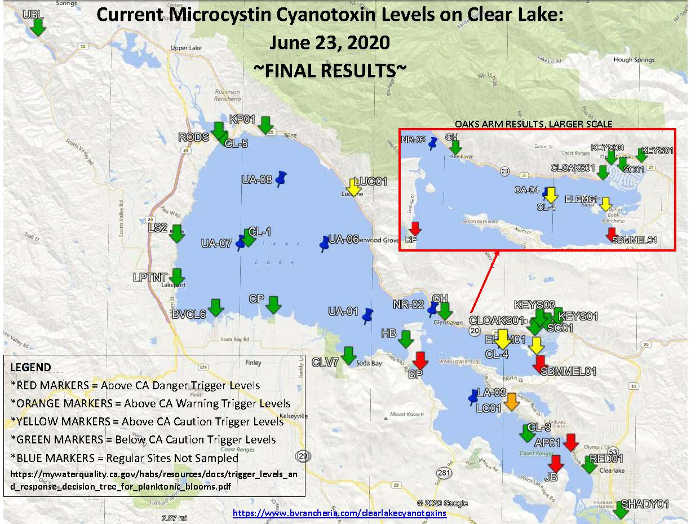
LAKE COUNTY, Calif. – Updated results from water quality testing at numerous locations on Clear Lake have confirmed several sites are at the “danger” level for cyanotoxins.
Clear Lake is a national treasure, and was recently named Best Bass Lake of the past decade by Bassmaster Magazine, as Lake County News has reported.
“It is also a large and biologically diverse natural body of water, and therefore dynamic in water quality,” said Public Health Officer Dr. Gary Pace.
“Given the warm weather and the long hours of sunlight this time of year, we are seeing large cyanobacteria/blue-green algae blooms at various places around the lake. In some locations, cyanotoxin has been detected at ‘danger’ levels,” Pace said.
Lake water monitoring is regularly conducted by the Big Valley Band of Pomo Indians and Elem Indian Colony at approximately 30 Clear Lake sites.
During June 23 sampling, Pace said worrisome levels of cyanotoxin were detected at 10 sites, which are shown on the map above. Based on lab testing results, four sites reached the “danger” level.
Those sites at the danger level are:
· Austin Park (AP01, Lower Arm);
· Buckingham (BP, Lower Arm);
· Jago Bay (JB, Lower Arm);
· Sulphur Bank Mercury Mine shoreline (SBMMEL01, Oaks Arm).
Other sites of concern are:
· Lily Cove (LC01, Lower Arm): Warning.
· CL-4 (Oaks arm, center of arm): Caution.
· CLV7: Caution.
· Elem Indian Colony shoreline (ELEM01, Oaks Arm): Caution.
· Keeling Park (KP01, Upper Arm): Caution
· Lucerne (LUC01, Upper Arm): Caution.
While much of the aquatic plant growth visible in the lake right now is harmless, cyanobacteria, when present in sufficient abundance, can produce cyanotoxins, which pose health hazards to humans, livestock and pets, said Pace.
“Varying levels of the toxin can be detected at different locations, so there is no need to be overly concerned about activities in areas of the lake where algae blooms are not present,” Pace said.
At the “danger” and “warning” levels, Pace said toxins from algae in the water can harm people and kill animals.
“Everyone should stay out of the water in those areas and not touch scum in the water or on the shore. Pets should stay out of the water, not drink the water, and avoid the scum. Fish and shellfish should not be eaten from those areas,” Pace said.
Symptoms of exposure include skin rashes, eye irritation, diarrhea, and vomiting. Pace said pets who contact the toxin can experience seizures and death.
Pace said to contact a medical provider or veterinarian if symptoms due to exposure are suspected.
For current cyanotoxin lab results, please visit the Clear Lake Water Quality Facebook page and Big Valley Band of Pomo Indians’ cyanotoxin monitoring website.
Further resources are available at the county’s pages on cyanobacteria and cyanohealth.
CDC guidance regarding harmful algal blooms can be found here.
“Our state, federal and local land management and fire agencies are outstanding partners,” said District 5 Supervisor Rob Brown. “Right now, they are working to remain prepared and prepositioned for future wildfire events throughout the state. We all have to do our part to help them out.”
Nearly 95 percent of wildfires in California are human-caused. Many result from events like equipment malfunctions, neglected heat sources, electrical or heating system issues and accidents of neglect, like improperly discarded cigarettes and metal objects (such as chains) left dangling from moving vehicles.
Particularly with the July 4 holiday on Saturday, it is critical all Lake County residents are vigilant in protecting against the threat of wildfire. Resources on topics including firework safety are available here.
“Resources are limited or uncertain for every public agency right now,” noted Brown, “and that includes some with responsibilities for fire suppression and mitigation. Inmate crews also do a lot of fire mitigation work, and we normally have four to five crews in Lake County, alone. Because of the early release of inmates, due to COVID-19, we will probably be down to one crew.”
Cleared brush visible from roadsides
The Bureau of Land Management is responsible for 200,000 square miles of federal land in Lake County, including areas near Buckingham (the Black Forest) and the Rivieras.
Recently, they contracted with Cal Fire to clear brush from areas visible from Lake County roadsides. While the vegetation was abated, a significant amount of brush has been piled and left in place. There is also some brush remaining from 2019’s 1,000 Hands Project.
Some county residents have expressed concern these piles may be hazardous, and asked that they be removed. Officials reassured the public that Cal Fire, BLM and the county are satisfied no significant fire hazard is present that warrants pulling Cal Fire personnel from their usual and customary duties during the active fire season.
BLM does not have vegetation management personnel available to remove the brush, and it is generally agreed to pose relatively limited fire risk in place.
Seeking an alternative contractor, one perhaps less familiar than Cal Fire with vehicle and equipment maintenance practices that limit the probability of sparks, may bring greater fire risk than leaving the brush in place, the county reported.
“Our local, state and federal partners are working collaboratively to prepare for this fire season but we can’t do it alone,” said Congressman Mike Thompson. “It is imperative that each of us as individuals remain vigilant and do our part to prevent devastating wildfires and help save lives.”
Tips for reducing many types of residential and other fire risk are also available from the National Wildfire Protection Association’s Firewise USA program.

Probate and trust administration are not the same. There are important differences and similarities between administering a decedent’s probate estate and administering a decedent’s trust estate.
Let’s begin with the differences.
Probate is court-supervised whereas trust administration is private. To commence probate one publishes notice in a newspaper and appears at a court hearing. To commence trust administration, however, one simply mails a notice letter – stating required information – to the decedent’s heirs and beneficiaries.
In probate, the decedent’s will, if any, and all other documents in the court file are available to the public to see.
Probate can also apply in the absence of any written will, i.e., intestacy (the heirs inherit). In trust administration, the decedent’s trust is only available to the decedent’s heirs and beneficiaries.
The expenses involved with a probate and trust administration also differ. A probate requires paying a court filing fee for each petition – there are at least two petitions from commencing to ending a probate – and a newspaper publication fee. Such expenses combined are often almost $1,500.
Then there are the attorney’s and personal representative’s fees, which are computed as a sliding scale percentage of the value of the estate under management: each is paid 4 percent of the first $100,000, 3 percent of the next $100,000 and 2 percent of any excess value of the estate under management.
Sometimes, at the court’s discretion, they may also be entitled to additional extraordinary fees for extraordinary work.
With a private trust administration there is no newspaper publication and no court petitions; except if such steps become necessary. The trustee and his or her attorney are typically paid on an hourly basis times a pay rate. Often, not always, the expenses associated with a probate significantly exceed those of a trust administration.
Next, there are also similarities between a probate and trust administration. There is a myth that if a person dies with their assets in a trust that nothing needs to be done; this is untrue.
Both probate and trust administration require the following: First, the decedent’s assets be collected, safeguarded, inventoried and appraised for tax and/or distribution purposes; second, that the decedent’s creditors be notified and all just debts be paid; third, that the decedent’s taxes obligations be settled; fourth, that the decedent’s debts and the expenses of administration be paid or guaranteed payment ahead of beneficiaries and heirs; and fifth, that the decedent’s beneficiaries be informed about the estate and its administration, including an accounting.
In California, there is a clear preference to avoid probate and to use a trust. Presently, if a decedent dies with an estate with a gross value over $166,250 then the estate is required to be probated, unless it is held in a trust or passes to surviving joint tenants or to designated transfer on death beneficiaries.
Sometimes, however, a trust is not a viable option. That is, a person must possess greater competency (mental understanding and comprehension) to execute a trust than to execute a will. If someone has borderline competency – such as may be due to dementia or senility – then that mental condition may be reason enough to use a will.
Other factors must also be considered. Such as, did the decedent receive Medi-Cal? Since January 1, 2017, a decedent whose estate is not subject to probate is also not subject to Medi-Cal estate recovery. Thus, holding one’s residence in trust avoids probate and Medi-Cal estate recovery claims.
The foregoing is a generalized discussion only, and is not legal counsel. Anyone confronting these issues should discuss their particular needs and circumstances with a qualified attorney and obtain guidance.
Dennis A. Fordham, attorney, is a State Bar-Certified Specialist in estate planning, probate and trust law. His office is at 870 S. Main St., Lakeport, Calif. He can be reached at