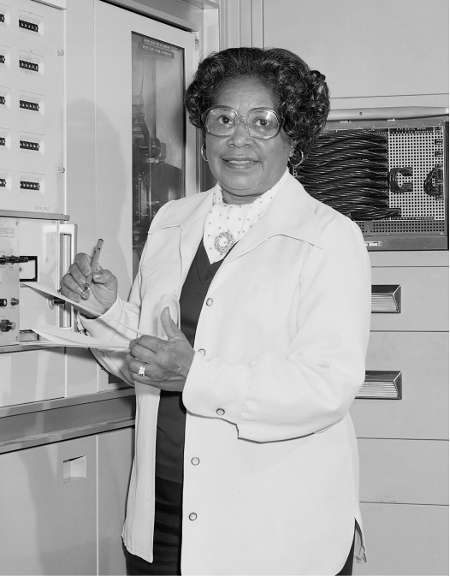
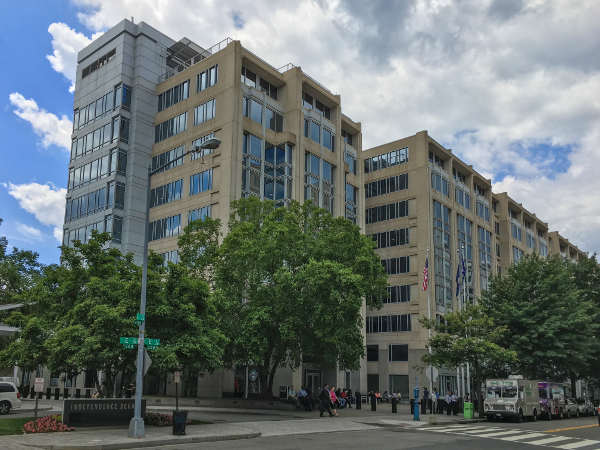
Mary Winston Jackson (1921–2005) successfully overcame the barriers of segregation and gender bias to become a professional aerospace engineer and leader in ensuring equal opportunities for future generations. Credits: NASA. NASA Administrator Jim Bridenstine announced Wednesday the agency’s headquarters building in Washington, D.C., will be named after Mary W. Jackson, the first African American female engineer at NASA.
Jackson started her NASA career in the segregated West Area Computing Unit of the agency’s Langley Research Center in Hampton, Virginia. Jackson, a mathematician and aerospace engineer, went on to lead programs influencing the hiring and promotion of women in NASA's science, technology, engineering, and mathematics careers.
In 2019, she was posthumously awarded the Congressional Gold Medal.
“Mary W. Jackson was part of a group of very important women who helped NASA succeed in getting American astronauts into space. Mary never accepted the status quo, she helped break barriers and open opportunities for African Americans and women in the field of engineering and technology,” said Bridenstine. “Today, we proudly announce the Mary W. Jackson NASA Headquarters building. It appropriately sits on ‘Hidden Figures Way,’ a reminder that Mary is one of many incredible and talented professionals in NASA’s history who contributed to this agency’s success. Hidden no more, we will continue to recognize the contributions of women, African Americans, and people of all backgrounds who have made NASA’s successful history of exploration possible.”
The work of the West Area Computing Unit caught widespread national attention in the 2016 Margot Lee Shetterly book “Hidden Figures: The American Dream and the Untold Story of the Black Women Mathematicians Who Helped Win the Space Race.”
The book was made into a popular movie that same year and Jackson’s character was played by award-winning actress Janelle Monáe.
In 2019, after a bipartisan bill by Sens. Ted Cruz, Ed Markey, John Thune and Bill Nelson made its way through Congress, the portion of E Street SW in front of NASA Headquarters was renamed Hidden Figures Way.
“We are honored that NASA continues to celebrate the legacy of our mother and grandmother Mary W. Jackson,” said Carolyn Lewis, Jackson’s daughter. “She was a scientist, humanitarian, wife, mother and trailblazer who paved the way for thousands of others to succeed, not only at NASA, but throughout this nation.”
Jackson was born and raised in Hampton, Virginia. After graduating high school, she graduated from Hampton Institute in 1942 with a dual degree in math and physical sciences, and initially accepted a job as a math teacher in Calvert County, Maryland.
She would work as a bookkeeper, marry Levi Jackson and start a family, and work a job as a U.S. Army secretary before her aerospace career would take off.
In 1951, Jackson was recruited by the National Advisory Committee for Aeronautics, which in 1958 was succeeded by NASA.
She started as a research mathematician who became known as one of the human computers at Langley. She worked under fellow “Hidden Figure” Dorothy Vaughan in the segregated West Area Computing Unit.
After two years in the computing pool, Jackson received an offer to work in the 4-foot by 4-foot Supersonic Pressure Tunnel, a 60,000 horsepower wind tunnel capable of blasting models with winds approaching twice the speed of sound. There, she received hands-on experience conducting experiments.
Her supervisor eventually suggested she enter a training program that would allow Jackson to earn a promotion from mathematician to engineer.
Because the classes were held at then-segregated Hampton High School, Jackson needed special permission to join her white peers in the classroom.
Jackson completed the courses, earned the promotion, and in 1958 became NASA’s first Black female engineer. For nearly two decades during her engineering career, she authored or co-authored research numerous reports, most focused on the behavior of the boundary layer of air around airplanes.
In 1979, she joined Langley’s Federal Women’s Program, where she worked hard to address the hiring and promotion of the next generation of female mathematicians, engineers and scientists. Jackson retired from Langley in 1985.
In 2019, President Donald J. Trump signed the Hidden Figures Congressional Gold Medal Act that posthumously awarded the honor to Jackson, who passed away in 2005, and her “Hidden Figures” colleagues Katherine Johnson, Dorothy Vaughan and Christine Darden.
In 2017, then 99-year-old Katherine Johnson was there to personally dedicate a new state-of-the-art computer research facility that bears her name at Langley.
Johnson, another original member of the West Area Computing Unit, also was honored as a trailblazer and given the Presidential Medal of Freedom in 2015.
In addition, Johnson was part of the group honored with the Congressional Gold Medal, and NASA’s Independent Verification and Validation facility in Fairmont, West Virginia, also bears Johnson’s name.
“NASA facilities across the country are named after people who dedicated their lives to push the frontiers of the aerospace industry. The nation is beginning to awaken to the greater need to honor the full diversity of people who helped pioneer our great nation. Over the years NASA has worked to honor the work of these Hidden Figures in various ways, including naming facilities, renaming streets and celebrating their legacy,” said Bridenstine. “We know there are many other people of color and diverse backgrounds who have contributed to our success, which is why we’re continuing the conversations started about a year ago with the agency’s Unity Campaign. NASA is dedicated to advancing diversity, and we will continue to take steps to do so.”
For additional information on Mary W. Jackson, the “Hidden Figures,” and today’s Modern Figures, visit https://www.nasa.gov/modernfigures .
Mary W. Jackson NASA Headquarters building in Washington, D.C. Credits: NASA.
LAKE COUNTY, Calif. – The Board of Supervisors will implement a new hybrid approach to public meetings when it convenes next week.
The board last met in person in the board chambers, with social distancing, on March 17, two days before the countywide shelter in place order went into effect.
Since then, board meetings have been held virtually and live-streamed through Granicus on the county’s website and Facebook page, and through the Zoom platform.
At Tuesday’s meeting, County Administrative Officer Carol Huchingson told the board, “Staff has been working hard to develop a solution for you which will bring together the Zoom technology and also allow for people to be back in the boardroom.”
She said the board will return to a renovated boardroom at its special meeting beginning at 1 p.m. Tuesday, June 30.
Huchingson said that in addition to continued use of Zoom, the county also will maintain its Granicus and Facebook livestreams.
Referring to a comment made during a previous meeting that “it’s what people feel comfortable with” in terms of managing their needs through the COVID-19 pandemic, “This option that staff’s going to present to you does just that,” said Huchingson.
She said the boardroom has been remodeled. Plexiglass has been placed around the seats of board members, staffers and the public comment microphone. The public seating has been removed and now only about 25 people can be seated in the chambers.
All of the changes are meant to create a “hybrid Zoom environment,” Huchingson said,
She said the new setup will allow seamless communication between the board and the public, with a Zoom projection screen to allow two-way communication.
“It’s a little awkward but at the same time it’s definitely the hybrid style that we asked,” said Supervisor Bruno Sabatier.
He said he’s glad the meetings are more accessible to people who can’t always come to the meetings in person. However, he said he’s concerned about the future, and while he wants to make sure to continue to provide interaction through Facebook and Zoom, he raised the issue of costs, primarily related to staffing, as an IT Department staffer is now assigned to work every meeting. Sabatier said the meeting format needs to be sustainable for the future.
Huchingson suggested that the board should have a discussion with Shane French, the county’s IT director, to get his perspective on the impacts on his department.
IT staffer Jake Reinke, who manages the board meetings on Zoom, noted, “We’re working here, we’re getting better” at handling the virtual meetings.
Supervisor Tina Scott asked about Zoom capacity. Reinke said the county’s Zoom setup can facilitate up to 300 participants, although there has been some suggestion it could be much lower, at around 60. As the Zoom host, he said he hasn’t noticed bandwidth issues.
Supervisor EJ Crandell said he’s glad the county is continuing to run the meetings with the virtual access. “I think it’s just good for the constituency.”
Board Chair Moke Simon said he appreciated staff’s hard work to put the new format together.
“Next time we will kind of roll this thing out to the public and work through any issues that come up. And we do know there will be issues, but we’ll work them out as we go,” Simon said, adding it’s good to have the meetings available to more people, which adds to transparency.
No public comment was offered during the discussion.
Email Elizabeth Larson at This email address is being protected from spambots. You need JavaScript enabled to view it. . Follow her on Twitter, @ERLarson, or Lake County News, @LakeCoNews.
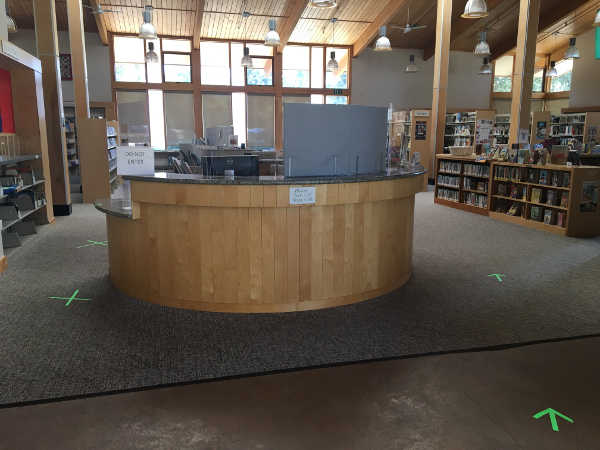
Middletown Library in Middletown, California, displays its new social distancing look as it reopens for Grab & Go library services. All Lake County Library branches are now open to the public with safety procedures in place. Photo courtesy of the Lake County Library. LAKEPORT, Calif. – Lake County Library branches are now open for Grab & Go Library service during normal operating hours for in-person checking out of materials and for computer use only.
All in-person programs, meetings and events inside the library are suspended. The library is asking visitors to please limit the amount of time they spend in the library to ensure equal access and proper social distancing.
Due to Upper Lake Library’s small size, entry will be by appointment only. Please call the branch directly at 707-275- 2049 to set up an appointment.
The library’s website http://library.lakecountyca.gov gives information about library programs, services and policies. To speak to a library employee, call 707-263-8817.
County Librarian Christopher Veach said this about the library services, “We are looking forward to providing greater access to the library while continuing to work together to keep all of our community members safe.”
The following rules will be in effect in all library branches.
Patrons experiencing symptoms of COVID-19 are asked to stay home and to please perform a symptoms self-check before entering the building.
Face masks covering the nose and mouth are required at all times while inside the library. Face masks protect others from the respiratory droplets exhaled by the wearer. If you are unable to wear a face mask please call the library before arriving so we can make a reasonable accommodation for you.
Social distancing of at least 6 feet will be required at all times while in the building. Staff will enforce occupancy limits by limiting entry to the building if the library becomes too full so that proper social distancing can be maintained.
The library is also asking visitors to sanitize their hands frequently and avoid touching their eyes, nose and mouth. Hand sanitizer or soap and water are available at the library. Visitors should sanitize their hands before using any shared resource.
Please return all items in outside book drops. Returned library materials will be quarantined for at least 72 hours before being put back on the shelves. The library is not accepting any donated books, magazines or DVDs at this time.
Public computer use is limited at present. Due to social distancing a limited number of computer stations are available and computer time limits have been reduced to one initial 30 minute session with a time extension of up to an additional 30 minutes if no one is waiting. Time limits will be strictly enforced. Please plan accordingly.
If you need help finding something in advance, visit our library catalog or call the library for help. Library staff will be happy to help you find something before you visit.
For children, Storytime Grab & Go Crafts for you to take and complete at home are available upon request.
Digital books, audiobooks, comics, music, movies, television shows, and other digital content including programs and storytimes remain available at our website, social media pages, and via email.
In its first projections comparing different actions to control COVID-19 transmission, the Institute for Health Metrics and Evaluation, or IHME, at the University of Washington is forecasting nearly 180,000 in the United States will die by Oct. 1.
The forecast shows 179,106 deaths – with a range of 159,497 to 213,715). Those numbers drop to 146,047, with a range of 140,849 to 153,438, if at least 95 percent of people wear masks in public.
“There is no doubt that even as states open up, the United States is still grappling with a large epidemic on a course to increase beginning in late August and intensifying in September,” said IHME Director Dr. Christopher Murray. “People need to know that wearing masks can reduce transmission of the virus by as much as 50 percent, and those who refuse are putting their lives, their families, their friends and their communities at risk.”
The new US forecast is lower than the forecast of 201,129 deaths released on June 15.
California and other states have seen over the past several weeks increasing case numbers, but deaths are not yet rising at the same rate, a trend which could change in the coming weeks.
The forecast projects 8,745 deaths in California – with a range of 7,709 to 10,489 – with mask wearing, while 11,631, with a range of 9,093 to 17,007, could die without mask wearing. More than 5,800 have died so far, based on reports from county Public Health departments statewide.
“States reporting the ages of confirmed cases suggest there are more cases being detected in younger people who are at substantially lower risk of death than older people,” Murray said. “It remains to be seen how this will unfold over the next few weeks, and if transmission continues to go up, we may see increasing infections in at-risk populations.”
IHME’s new projections include the re-imposition of strong social distancing mandates when deaths per day reach a level of 8 per one million people, but currently only Texas and Florida reach this level of resurgence before Oct. 1. Mask wearing at current reported rates is included in the model.
“These factors are vital in our projections and highlight how many lives can be saved,” Murray said.
The forecasts by state with and without 95 percent wearing masks are:
Alabama: With mask use 1,334 (range of 1,118 to 1,644) / Without mask use 2,008 (range of 1,301 to 3,384). Alaska: 18 (range of 14 to 31) / 30 (range of 16 to 97). Arizona: 3,195 (range of 2,389 to 4,623) / 5,687 (range of 3,163 to 11,174). Arkansas: 576 (range of 374 to 1,028) / 988 (range of 431 to 2,601). California: 8,745 (range of 7,709 to 10,489) / 11,631 (range of 9,093 to 17,007). Colorado: 1,796 (range of 1,687 to 2,047) / 1,920 (range of 1,699 to 2,651). Connecticut: 4,473 (range of 4,395 to 4,605) / 4,513 (range of 4,411 to 4,693). Delaware: 488 (range of 466 to 522) / 501 (range of 470 to 554). District of Columbia: 619 (range of 590 to 664) / 668 (range of 610 to 775). Florida: 7,523 (range of 5,249 to 12,530) / 15,393 (range of 7,272 to 39,303). Georgia: 4,269 (range of 3,419 to 5,888) / 6,614 (range of 3,977 to 12,291). Hawaii: 28 (range of 23 to 44) / 48 (range of 25 to 149). Idaho: 112 (range of 105 to 122) / 124 (range of 109 to 146). Illinois: 7,717 (range of 7,296 to 8,295) / 8,487 (range of 7,560 to 9,936). Indiana: 2,832 (range of 2,691 to 3,022) / 3,303 (range of 2,917 to 3,882). Iowa: 815 (range of 769 to 894) / 874 (range of 791 to 1,042). Kansas: 340 (range of 306 to 395) / 428 (range of 334 to 624). Kentucky: 689 (range of 608 to 847) / 829 (range of 638 to 1,295). Louisiana: 3,702 (range of 3,439 to 4,191) / 4,135 (range of 3,550 to 5,580). Maine: 116 (range of 113 to 121) / 118 (range of 113 to 125). Maryland: 3,434 (range of 3,324 to 3,574) / 3,611 (range of 3,398 to 3,894). Massachusetts: 8,553 (range of 8,357 to 8,793) / 8,802 (range of 8,483 to 9,208). Michigan: 6,354 (range of 6,251 to 6,517) / 6,534 (range of 6,333 to 6,937). Minnesota: 1,701 (range of 1,625 to 1,803) / 1,797 (range of 1,676 to 1,970). Mississippi: 1,141 (range of 1,074 to 1,242) / 1,237 (range of 1,118 to 1,438). Missouri: 1,624 (range of 1,269 to 2,396) / 2,778 (range of 1,506 to 6,349). Montana: 29 (range of 23 to 44) / 39 (range of 24 to 98). Nebraska: 376 (range of 306 to 505) / 529 (range of 328 to 1,000). Nevada: 655 (range of 580 to 824) / 788 (range of 602 to 1,355). New Hampshire: 542 (range of 431 to 784) / 668 (range of 449 to 1,230). New Jersey: 13,551 (range of 13,299 to 13,878) / 13,808 (range of 13,385 to 14,395). New Mexico: 669 (range of 541 to 1,002) / 851 (range of 558 to 1,852). New York: 31,729 (range of 31,606 to 31,866) / 31,837 (range of 31,676 to 32,021). North Carolina: 1,647 (range of 1,480 to 1,901) / 1,957 (range of 1,585 to 2,689). North Dakota: 88 (range of 83 to 95) / 92 (range of 84 to 104). Ohio: 3,280 (range of 3,070 to 3,614) / 3,781 (range of 3,282 to 4,759). Oklahoma: 465 (range of 428 to 526) / 546 (range of 451 to 728). Oregon: 359 (range of 276 to 532) / 836 (range of 357 to 2,312). Pennsylvania: 7,238 (range of 6,833 to 7,814) / 7,799 (range of 7,017 to 9,214). Rhode Island: 1,085 (range of 1,029 to 1,179) / 1,120 (range of 1,045 to 1,252). South Carolina: 922 (range of 799 to 1,106) / 1,172 (range of 866 to 1,712). South Dakota: 133 (range of 109 to 175) / 174 (range of 118 to 290). Tennessee: 793 (range of 680 to 973) / 941 (range of 719 to 1,367). Texas: 5,582 (range of 4,033 to 8,485) / 13,736 (range of 6,372 to 30,535). Utah: 273 (range of 227 to 347) / 398 (range of 260 to 707). Vermont: 63 (range of 62 to 65) / 66 (range of 63 to 72). Virginia: 1,758 (range of 1,722 to 1,810) / 1,788 (range of 1,738 to 1,867). Washington: 1,556 (range of 1,488 to 1,655) / 1,917 (range of 1,704 to 2,272). West Virginia: 108 (range of 103 to 116) / 113 (range of 104 to 124). Wisconsin: 930 (range of 858 to 1,036) / 1,076 (range of 912 to 1,401). Wyoming: 21 (range of 19 to 23) / 21 (range of 19 to 26).
“States are attempting the difficult balancing act of preserving health and enabling economic recovery,” Murray said. “Going forward, IHME will continue to forecast for different scenarios including planned intermittent mandates in the fall when deaths per day may reach higher levels within each state, recognizing that solutions are not uniform across communities.”
CLEARLAKE, Calif. – Clearlake Animal Control has two dogs ready for new homes.
While the shelter has moved most of its dogs into foster, potential adopters can make appointments to meet and adopt available dogs.
The following dogs are ready for adoption or foster.
“Bella.” Photo courtesy of Clearlake Animal Control. ‘Bella’
“Bella” is a female American Bully mix.
She has a short beige and tan coat.
She is dog No. 3537.
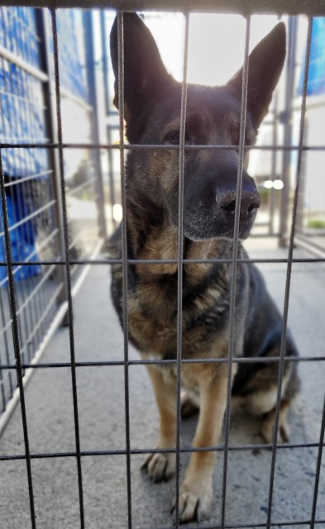
“Lady.” Photo courtesy of Clearlake Animal Control. ‘Lady’
“Lady” is a female German Shepherd mix.
She has been spayed.
She is dog No. 3683.
Clearlake Animal Control’s shelter is located at 6820 Old Highway 53, off Airport Road.
Hours of operation are noon to 4 p.m. Tuesday through Saturday. The shelter is closed Sundays, Mondays and major holidays; the shelter offers appointments on the days it’s closed to accommodate people.
Call the Clearlake Animal Control shelter at 707-273-9440, or email This email address is being protected from spambots. You need JavaScript enabled to view it. to inquire about adoptions.
Email Elizabeth Larson at This email address is being protected from spambots. You need JavaScript enabled to view it. . Follow her on Twitter, @ERLarson, or Lake County News, @LakeCoNews.
As of June 2020, NASA’s Solar Dynamics Observatory – SDO – has now been watching the Sun non-stop for over a full decade.
From its orbit in space around Earth, SDO has gathered 425 million high-resolution images of the Sun, amassing 20 million gigabytes of data over the past 10 years.
This information has enabled countless new discoveries about the workings of our closest star and how it influences the solar system.
With a triad of instruments, SDO captures an image of the Sun every 0.75 seconds. The Atmospheric Imaging Assembly, or AIA, instrument alone captures images every 12 seconds at 10 different wavelengths of light.
This 10-year time lapse showcases photos taken at a wavelength of 17.1 nanometers, which is an extreme ultraviolet wavelength that shows the Sun’s outermost atmospheric layer – the corona.
Compiling one photo every hour, the movie condenses a decade of the Sun into 61 minutes.
The video shows the rise and fall in activity that occurs as part of the Sun’s 11-year solar cycle and notable events, like transiting planets and eruptions.
The custom music, titled “Solar Observer,” was composed by musician Lars Leonhard.
While SDO has kept an unblinking eye pointed toward the Sun, there have been a few moments it missed.
The dark frames in the video are caused by Earth or the Moon eclipsing SDO as they pass between the spacecraft and the Sun.
A longer blackout in 2016 was caused by a temporary issue with the AIA instrument that was successfully resolved after a week. The images where the Sun is off-center were observed when SDO was calibrating its instruments.
SDO and other NASA missions will continue to watch our Sun in the years to come, providing further insights about our place in space and information to keep our astronauts and assets safe.
Mara Johnson-Groh works for NASA’s Goddard Space Flight Center in Greenbelt, Maryland.
 How to resolve AdBlock issue?