 How to resolve AdBlock issue?
News
The workshop, entitled “Our Future in a Fire-adapted Landscape,” will take place from 9 a.m. to 12:30 p.m. April 28 and 29. Different topics will be covered each day.
FireScape Mendocino is a voluntary, inclusive and collaborative effort to shape the future of the fire-prone landscape in and near the Mendocino National Forest. Working together, they emphasize shared learning, problem-solving and action on the ground.
This week’s workshop will explore post-fire observations and experiences from the Ranch and August Complex wildfires, factors influencing future forests and landscapes, and upcoming land management projects being proposed by the Mendocino National Forest in response to the August Complex.
Organizers are seeking participants with local perspectives, interests in outdoor recreation, experiences living with wildfires, experience owning or managing land, thoughts about community and landscape planning, enthusiasm and an interest in shaping the future of local landscapes.
Participants will engage with a variety of collaborators. Guided by the best practices of the North America Fire Learning Network, FireScape Mendocino is designed to enable people with diverse perspectives to find ways to work together to achieve tangible results in communities and the surrounding landscapes.
The workshop is free and open to the public; everyone is welcome to participate.
Community participation in this workshop will help guide FireScape Mendocino as its community-based collaboration transitions from planning to project development and implementation.
Register online at http://bit.ly/Firescape12.
For more information, visit http://mendocinofirescape.blogspot.com/ and check out other examples from around the country at www.conservationgateway.org.
NORTH COAST, Calif. – Authorities are trying to locate a missing Sonoma County man who is elderly and at-risk.
Ronald Creighton, 73, was reported missing on Sunday night.
The Napa County Sheriff’s Office said Creighton is from Sonoma County but was last seen in Napa County.
Creighton was driving a 2021 white Hyundai Accent subcompact car, license plate 8VRR257.
He is described as being 5 feet 10 inches tall and 178 pounds, with brown eyes and brown hair.
Anyone with information about Creighton’s whereabouts should call 911 or their local law enforcement agency.
The commission will meet at 6 p.m. Tuesday, April 27, in the council chambers at Clearlake City Hall, 14050 Olympic Drive.
The agenda can be found here.
Submit comments and questions in writing for commission consideration by sending them to
The public may attend planning commission meetings in person. However, the council chambers will have limited capacity and attendees must adhere to masking and social
distancing mandates.
The meeting will be broadcast live on the Youtube channels for the city of Clearlake or Lake County PEG TV.
Community members also can participate via Zoom.
To give the planning commission adequate time to review your questions and comments, please submit written comments prior to 6 p.m. Tuesday, April 27.
The main item on the agenda is the commission’s consideration of a conditional use permit for Akwaaba LLC.
The company is proposing a commercial cannabis microbusiness in an existing dispensary at 3995 Alvita Ave., with the permit to allow cultivation – nursery only – as well as manufacturing, distribution and retail.
During the public hearing, the commission will consider if the project is exempt from environmental review in accordance with the California Environmental Quality Act.
The commission’s members are Chair Kathryn Davis, Vice Chair Robert Coker and commissioners Lisa Wilson, Erin McCarrick and Fawn Williams.
Email Elizabeth Larson at
The following cats at the shelter have been cleared for adoption.
Call Lake County Animal Care and Control at 707-263-0278 or visit the shelter online at http://www.co.lake.ca.us/Government/Directory/Animal_Care_And_Control.htm for information on visiting or adopting.
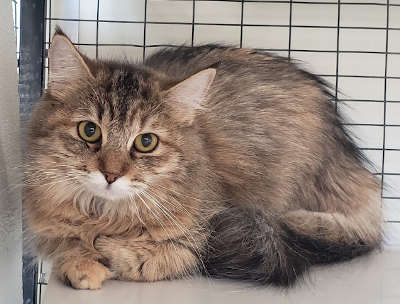
‘Ruby’
“Ruby” is a female domestic long hair with a brown coat and gold eyes.
She is in cat room kennel No. 120, ID No. 14475.

‘Moxi’
“Moxi” is a female domestic longhair with a calico coat and blue eyes.
She is in cat room kennel No. 133, ID No. 14483.
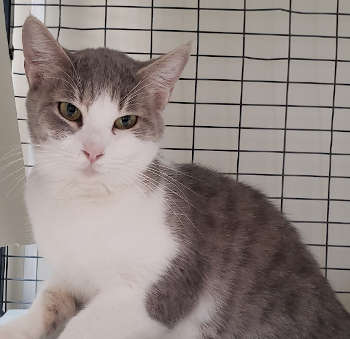
‘Chick-a-dee’
“Chick-a-dee’ is a female domestic short hair cat with a gray and white coat and gold eyes.
She is in cat room kennel No. 138, ID No. 14474.
Email Elizabeth Larson at
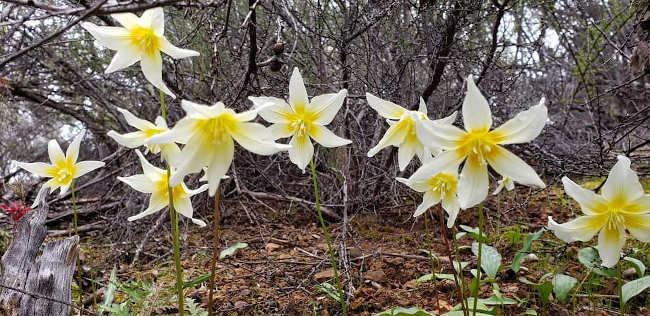
LAKE COUNTY, Calif. – There are some plants (just like people and other animals) that just do better when they grow together and such is the case with buck brush and fawn lilies, two great friends that often grow together because it may be beneficial to both.
It’s not an exclusive relationship, but buck brush (Ceanothus cuneatus) provides the shade that the California Fawn Lilly (Erythronium californiacum) likes, so they are oftentimes found growing and blooming together.
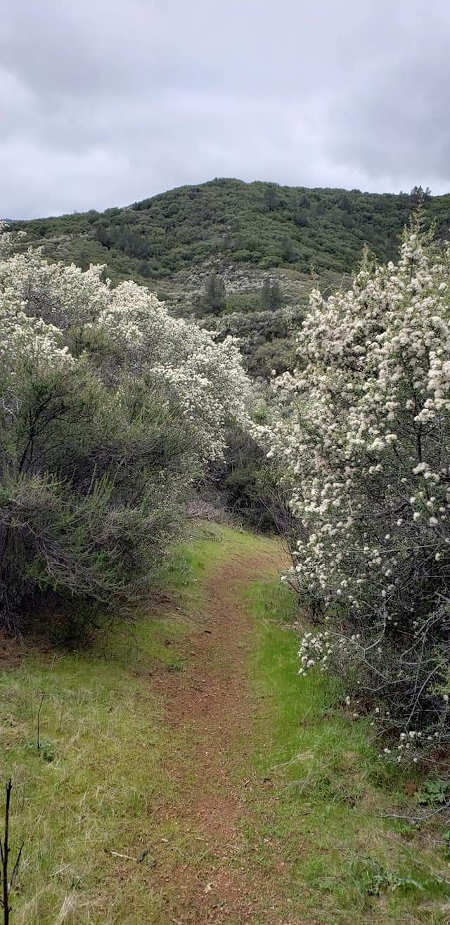
One of the most widespread native plants in California, buck brush, as you might guess by it’s common name, is a food source for deer and is found throughout California and particularly in chaparral landscapes, growing to about 9 feet tall and covered with clusters of small white flowers in April and May here in Lake County.
Dotting the hillsides with the pretty white bush, you can be sure of your ID as no other California native in Lake County presents itself in this way and if you're lucky enough to be hiking a trail while it is blooming, you'll enjoy a beautiful scent welcoming spring!
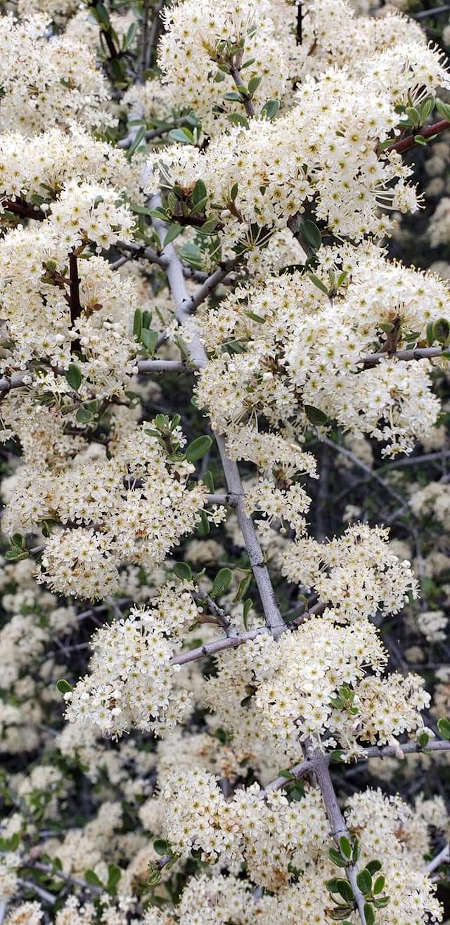
After flowering, seeds of the buckbrush are, “dispersed when the capsule explodes and propels them some distance. Harvester ants have been known to cache the seeds, which can lie dormant for a long time since fire is required for germination,” according to the California Native Plant Society.
Oftentimes you will find the spectacular fawnlily growing under and nearby buck brush on singular stalks, with one to three flowers each that range from six to 12 inches tall that typically begin blooming just before buck brush, and seeing these two in bloom together is a treat for both your eyes and nose!
Nurseries where you can purchase seeds/starts:
California Fawn Lilly: https://calscape.org/nurseries.php?id=1583&showmap=1
Buck Brush: https://calscape.org/nurseries.php?id=871&showmap=1
Terre Logsdon is an environmentalist, certified master composter, and advocate for agroecology solutions to farming. An avid fan and protector of California wildflowers, plants, natural resources, and the environment, she seeks collaborative solutions to mitigate the effects of climate change. Kim Riley is retired, an avid hiker at Highland Springs, and has lived in Lake County since 1985. After 15 years of trail recovery and maintenance on the Highland Springs trails, she is now focused on native plants, including a native plant and pollinator garden on her property as well as promoting and preserving the beauty of the Highland Springs Recreation Area. Karen Sullivan has operated two nurseries to propagate and cultivate native plants and wildflowers, has lived in Kelseyville for the past 30 years, rides horses far and wide to see as many flowers as possible, and offers native plants and wildflowers for sale to the public. You can check her nursery stock here. They are collaborating on a book, Highland Springs Recreation Area: A Field Guide, which will be published in the future. In the meanwhile, please visit https://www.facebook.com/HighlandSpringsNaturalists and https://www.facebook.com/HighlandSpringsRecreationArea.
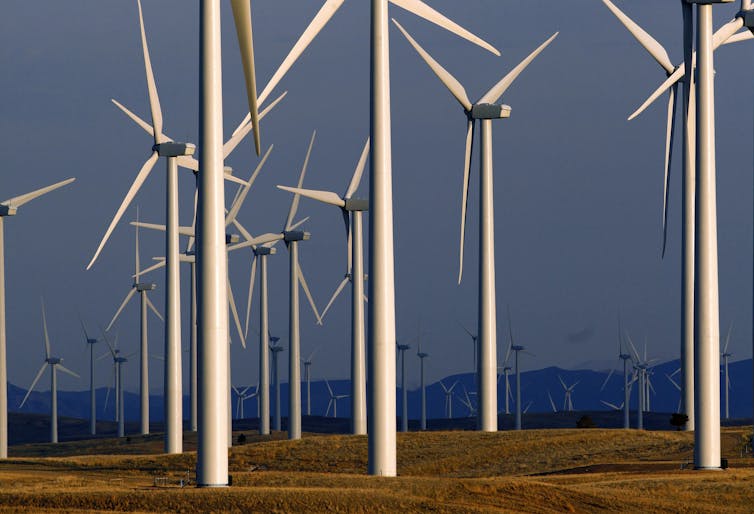
Renewable energy’s rapid growth is accelerating a national shift to a carbon-free electric power system.
So far 17 states plus Washington, D.C., and Puerto Rico have adopted laws or executive orders setting goals for reaching 100% clean electricity by 2050 or sooner. And 46 U.S. utilities have pledged to go carbon-free. Now the Biden administration and some members of Congress are proposing to decarbonize the power sector by 2035.
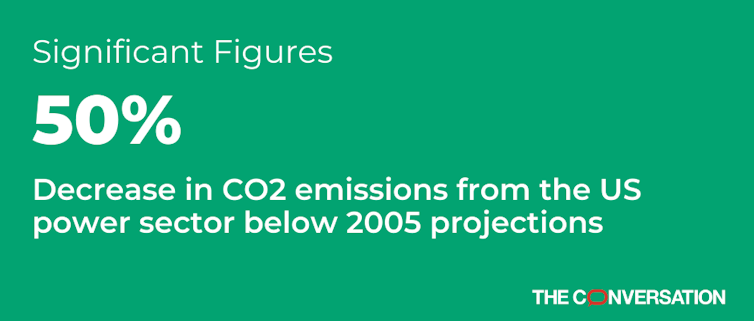
While this much change in 15 years seems ambitious, our new report, “Halfway to Zero,” looks back at the past 15 and finds that power sector emissions are half of what they were projected to be.
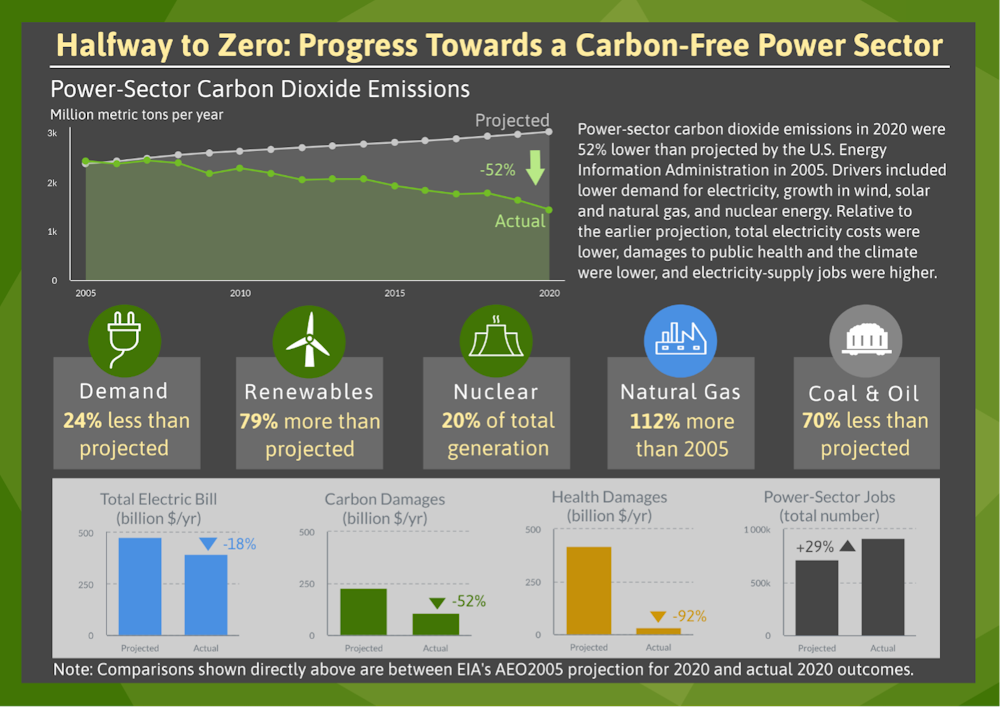
We analyzed the “business as usual” projection in the 2005 Annual Energy Outlook published by the Energy Information Administration, the U.S. government’s official agency for data collection and analysis. It projected that annual carbon dioxide emissions from the electric power sector would rise from 2,400 million to 3,000 million metric tons from 2005 to 2020.
Instead, they fell to 1,450 million metric tons – 52% below projected levels. In short, the U.S. electricity sector has managed to march halfway to zero in just 15 years.
Cleaner fuels and more efficient devices
This drop happened thanks to policy, market and technology drivers.
Overall demand for electricity in 2020 was almost exactly the same as in 2005, and 24% lower than projected by federal energy forecasters. This was due partly to economic changes, such as lower economic growth from two recessions and slightly lower population growth.
The U.S. has also become more energy efficient since 2005, thanks to policies and technology improvements. Many devices that power our lives, such as LED lights, get more performance from a kilowatt-hour of electricity now than they did 15 years ago.
Wind and solar power dramatically outperformed expectations, delivering 13 times more generation in 2020 than projected. Emission-free nuclear generation largely held steady.
Finally, natural gas generation grew rapidly, driven by the shale gas revolution and low fuel prices. This pushed much of the generation of coal – the most carbon-intensive electricity source – out of the market.
These shifts have delivered many benefits. Total electric bills for consumers were 18% lower in 2020 than the Energy Information Administration had previously projected, saving households US$86 billion per year.
Reduced sulfur and nitrogen emissions, especially from less coal generation, led to a steep drop in such health impacts as respiratory disease. Premature deaths due to power-sector air pollution fell from 38,000 to 3,100 per year. And declining employment in the coal industry was more than offset by job growth in other areas, notably solar power.
The other 50%
Many assessments of energy transitions assert that it takes decades for societies to shift fully from one energy source to another. But our study shows that dramatic changes in emissions can happen much more quickly.
This doesn’t guarantee that getting to zero will be easy, though.
Wind, solar and battery technologies will be central to further decarbonization. Accelerating their deployment will require a laser focus on maintaining reliability, with new transmission lines and changes to power-system planning and operations. It will also call for careful attention to ecological impacts and heightened sensitivity to effects on workers and communities.
Fortunately, much of the generation and storage needed to hit a zero-carbon target is already in development. Developers have requested access to the transmission grid for 660 gigawatts of new wind and solar generating capacity and 200 gigawatts of storage. That represents more than half of what could be required. Not all proposed projects will be built, but the scale indicates tremendous commercial interest.
Using this much wind and solar raises the question of how to meet the last portion of demand on cloudy or windless days. Many technologies could fill this gap, such as longer-duration storage, hydrogen or synthetic fuels, fossil or biomass generation with carbon capture, advanced nuclear power, and geothermal energy. All require more research.
Our study offers two central lessons as the nation moves forward. First, policy and technology are both key to cutting emissions. Second, our ability to predict the future is limited. It will be crucial to adapt as government agencies and power companies gain policy experience, and technologies advance in unexpected ways.
[Deep knowledge, daily. Sign up for The Conversation’s newsletter.]
Ryan Wiser, Senior Scientist, Lawrence Berkeley National Laboratory; Bentham Paulos, Affiliate, Electricity Markets & Policy Group, Lawrence Berkeley National Laboratory; Dev Millstein, Reesearch Scientist, Lawrence Berkeley National Laboratory, and Joseph Rand, Senior Scientific Engineering Associate, Lawrence Berkeley National Laboratory
This article is republished from The Conversation under a Creative Commons license. Read the original article.