 How to resolve AdBlock issue?
News
This supermoon has a twist – expect flooding, but a lunar cycle is masking effects of sea level rise
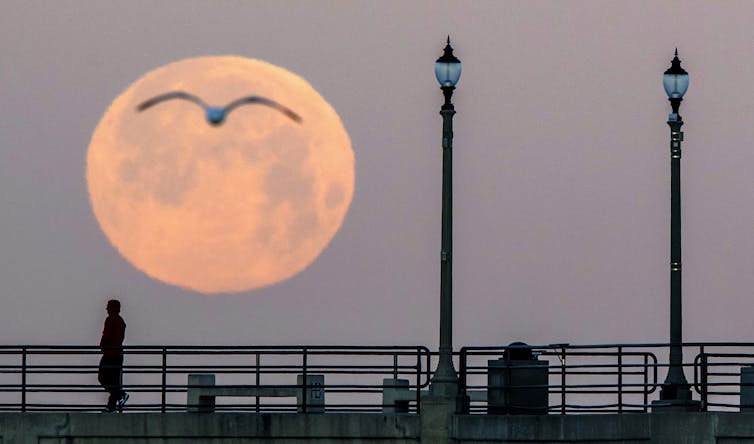
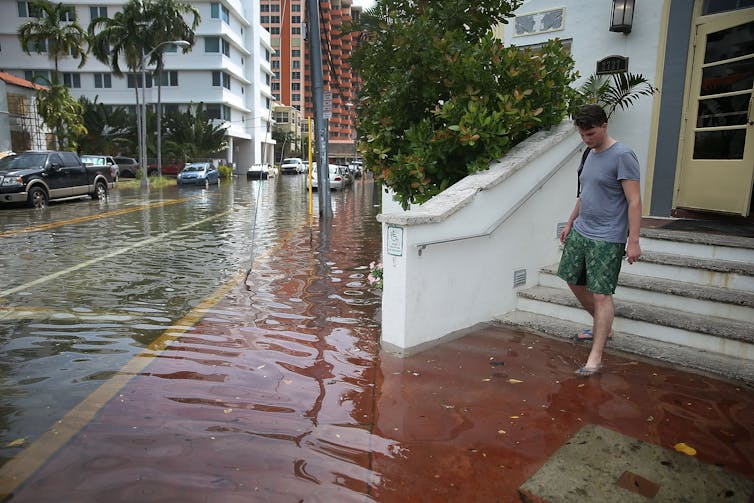
Another “super full moon” is coming May 26, 2021, and coastal cities like Miami know that means one thing: a heightened risk of tidal flooding.
Exceptionally high tides are common when the moon is closest to the Earth, known as perigee, and when it’s either full or new. In the case of what’s informally known as a super full moon, it’s both full and at perigee.
But something else is going on with the way the moon orbits the Earth that people should be aware of. It’s called the lunar nodal cycle, and it’s presently hiding a looming risk that can’t be ignored.
Right now, we’re in the phase of an 18.6-year lunar cycle that lessens the moon’s influence on the oceans. The result can make it seem like the coastal flooding risk has leveled off, and that can make sea level rise less obvious.
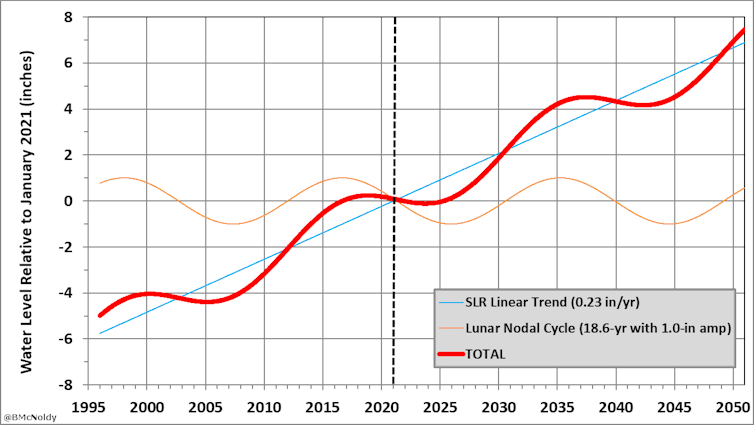
But communities shouldn’t get complacent. Global sea level is still rising with the warming planet, and that 18.6-year cycle will soon be working against us.
I am an atmospheric scientist at the University of Miami’s Rosenstiel School of Marine and Atmospheric Science who keeps a close eye on sea level rise in Miami. Here’s what you need to know.
What the moon has to do with coastal flooding
The moon’s gravitational pull is the dominant reason we have tides on Earth. More specifically, Earth rotating beneath the moon once per day and the moon orbiting around Earth once per month are the big reasons that the ocean is constantly sloshing around.
In the simplest terms, the moon’s gravitational pull creates a bulge in the ocean water that is closest to it. There’s a similar bulge on the opposite side of the planet due to inertia of the water. As Earth rotates through these bulges, high tides appear in each coastal area every 12 hours and 25 minutes. Some tides are higher than others, depending on geography.
The sun plays a role too: Earth’s rotation, as well as its elliptic orbit around the sun, generates tides that vary throughout the day and the year. But that impact is less than half of what the moon contributes.
This gravitational tug-of-war on our water was discovered nearly 450 years ago, though it’s been happening for nearly four billion years. In short, the moon has very strong control over how we experience sea level. It doesn’t affect sea level rise, but it can hide or exaggerate it.
So, what is the lunar nodal cycle?
To begin, we need to think about orbits.
Earth orbits the sun in a certain plane – it’s called the ecliptic plane. Let’s imagine that plane being level for simplicity. Now picture the moon orbiting Earth. That orbit also lies on a plane, but it’s slightly tilted, about 5 degrees relative to the ecliptic plane.
That means that the moon’s orbital plane intersects Earth’s orbital plane at two points, called nodes.
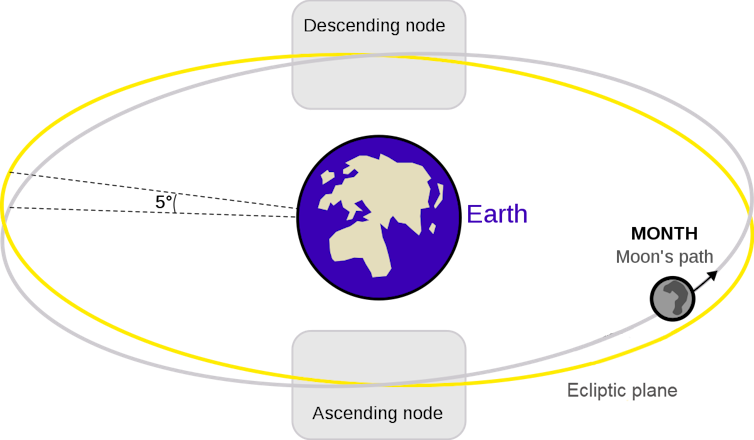

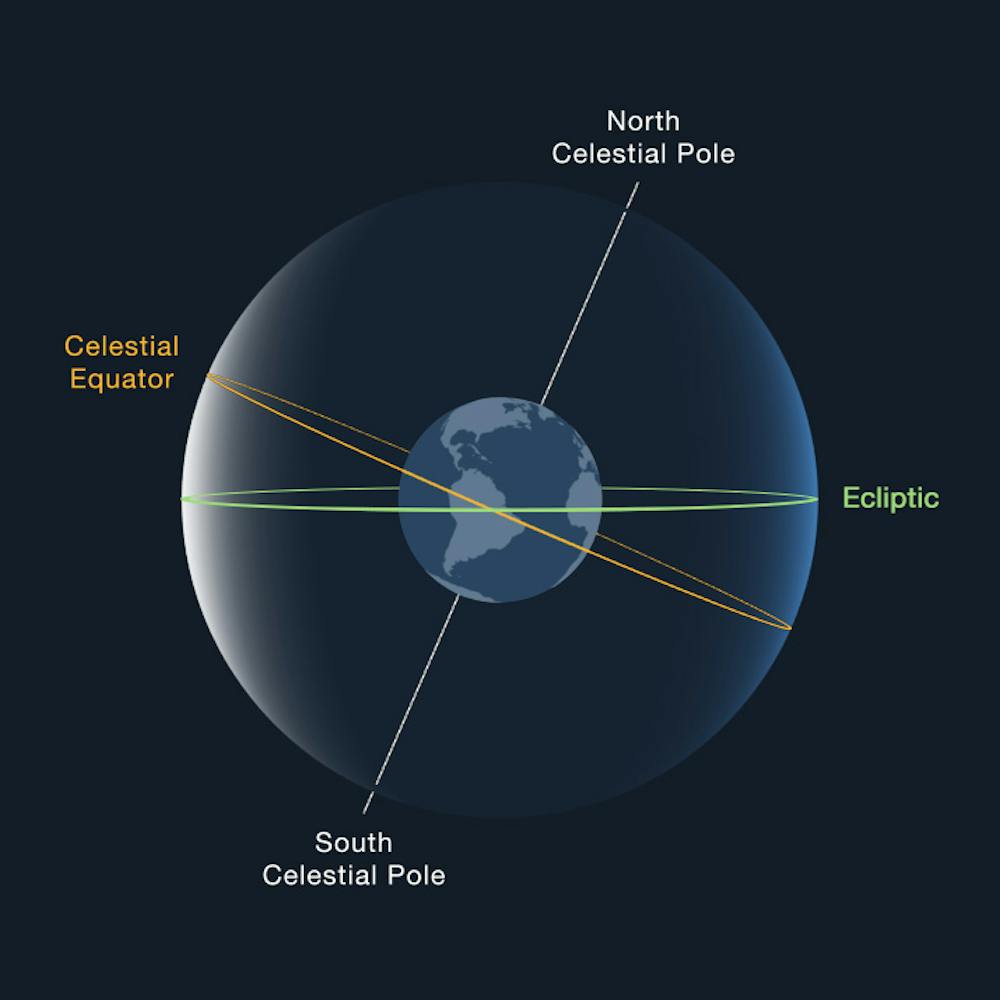

The moon’s orbital plane precesses, or wobbles, to a maximum and minimum of +/- 5 degrees over a period of about 18.6 years. This natural cycle of orbits is called the lunar nodal cycle. When the lunar plane is more closely aligned with the plane of Earth’s equator, tides on Earth are exaggerated. Conversely, when the lunar plane tilts further away from the equatorial plane, tides on Earth are muted, relatively.
The lunar nodal cycle was first formally documented in 1728 but has been known to keen astronomical observers for thousands of years.
What effect does that have on sea level?
The effect of the nodal cycle is gradual – it’s not anything that people would notice unless they pay ridiculously close attention to the precise movement of the moon and the tides for decades.
But when it comes to predictions of tides, dozens of astronomical factors are accounted for, including the lunar nodal cycle.
It’s worth being aware of this influence, and even taking advantage of it. During the most rapid downward phase of the lunar nodal cycle – like we’re in right now – we have a bit of a reprieve in the observed rate of sea level rise, all other things being equal.
[You need to understand the coronavirus pandemic, and we can help. Read The Conversation’s newsletter.]
These are the years to implement infrastructure plans to protect coastal areas against sea level rise.
Once we reach the bottom of the cycle around 2025 and start the upward phase, the lunar nodal cycle begins to contribute more and more to the perceived rate of sea level rise. During those years, the rate of sea level rise is effectively doubled in places like Miami. The impact varies from place to place since the rate of sea level rise and the details of the lunar nodal cycle’s contribution vary.
Like the “supermoon” in late April, the one on May 26 is a perigean full moon. Even with the lunar nodal cycle in its current phase, cities like Miami should expect some coastal flooding.
This story is part of Oceans 21
Our series on the global ocean opened with five in depth profiles. Look out for new articles on the state of our oceans in the lead up to the UN’s next climate conference, COP26. The series is brought to you by The Conversation’s international network.
Brian McNoldy, Senior Research Associate, University of Miami
This article is republished from The Conversation under a Creative Commons license. Read the original article.
LAKE COUNTY, Calif. – Redbud Audubon Society is celebrating 47 years of conservation work in Lake County.
The month of April was declared Bird Appreciation Month in Lake County by the Board of Supervisors.
The Redbud Audubon Society requested the proclamation to celebrate Earth Day on April 22 and to recognize the value of birds to the residents, visitors and businesses in Lake County.
The Redbud Audubon Society is the oldest conservation organization in the county. It was founded in 1974 by Evelyn Thompson of Kelseyville and a group of friends who recognized the need for an active environmental group here.
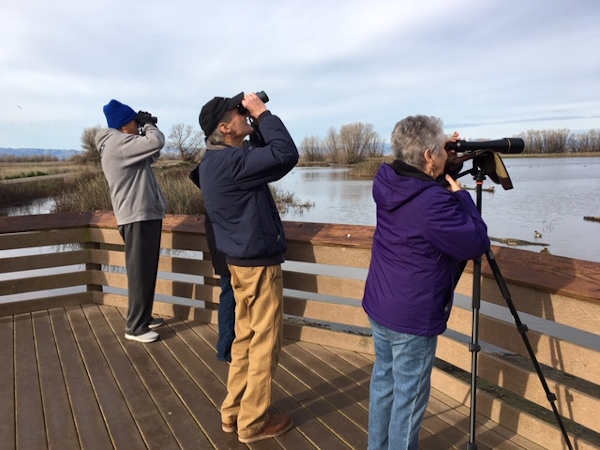
Redbud Audubon is a chapter of the National Audubon Society and functions under its umbrella which includes filing activities and fiscal reports every year, shared memberships and following the lead of the national organization’s bird conservation recommendations.
As a nationally recognized Audubon chapter, Redbud must conduct activities each year, provide educational birding field trips, and follow the standards and best practices for a nonprofit organization. Redbud is a charitable 501c(3) nonprofit and all donations are tax-deductible.
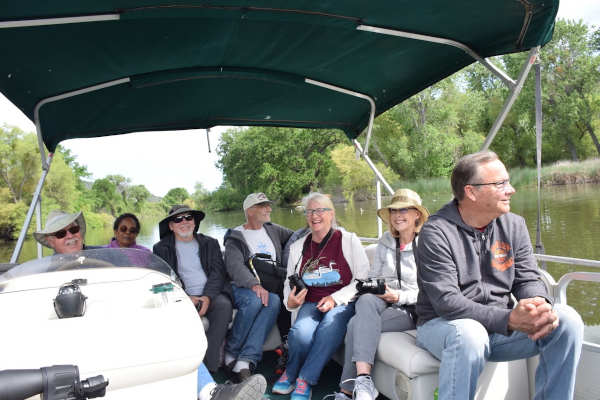
As part of its obligations to the community and as part of its mission, Redbud holds monthly speaker meetings from September through April, and conducts field trips, both in and out of the county, concluding with its annual Heron Days boat tours on Clear Lake at the end of April and beginning of May.
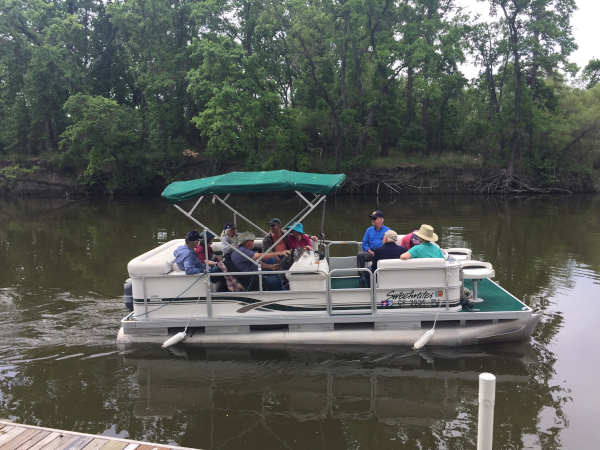
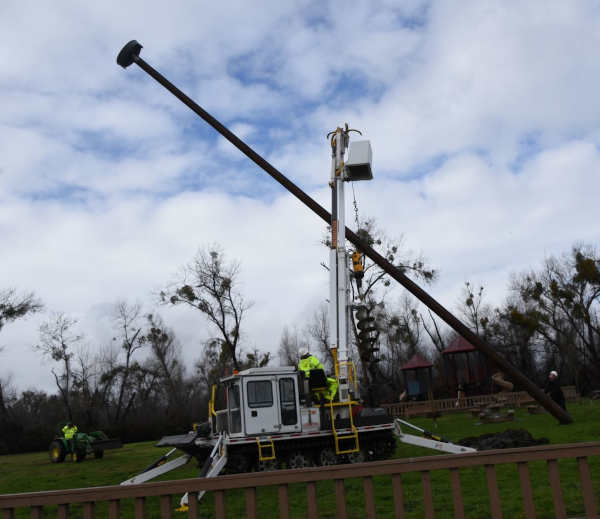
The chapter holds a yearly Christmas Bird Count and reports the data collected from that event to the National organization. Redbud also facilitates the placement of Osprey nesting poles.
Over the last year, Redbud programs and field trips have been curtailed because of COVID-19.
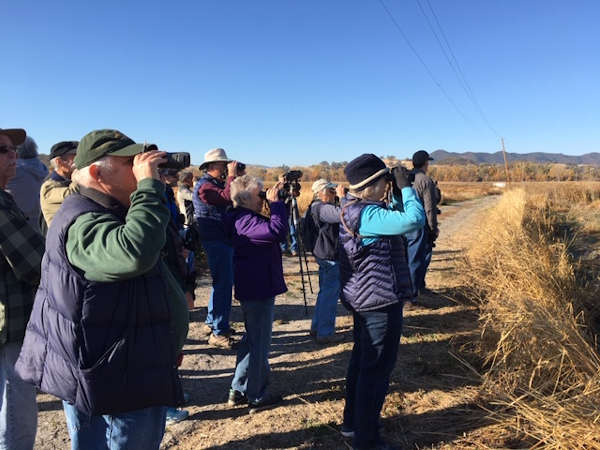
The chapter was able to conduct its annual Christmas Bird Count and offered five Zoom speaker programs and is hoping to start in-person meetings in the fall, along with resuming monthly field trips and Heron Days in the spring of 2022.
Other activities carried out by Redbud Audubon include commenting on proposed development projects that require California Environmental Quality Act review, providing educational materials to local schools and creating and monitoring a Blue Bird Trail of nest boxes.
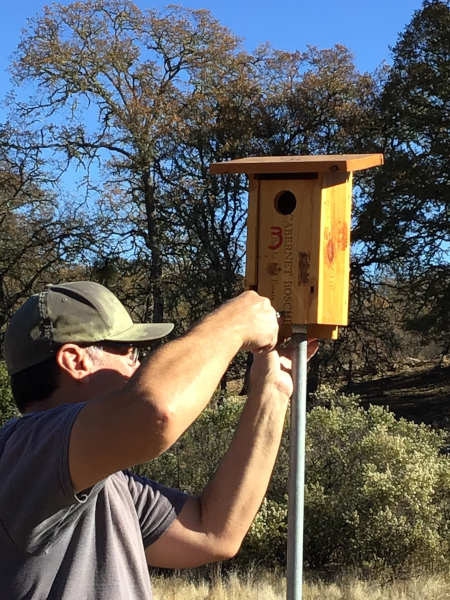
The chapter is also available to answer questions about birds and wildlife, maintains a website, and is active on Facebook.
If you would like to join in the efforts of Redbud Audubon Society you can either volunteer, become a member, or do both.
For information on how to become a member, go to the chapter’s website at www.redbudaudubon.org.
For other inquiries email the chapter at
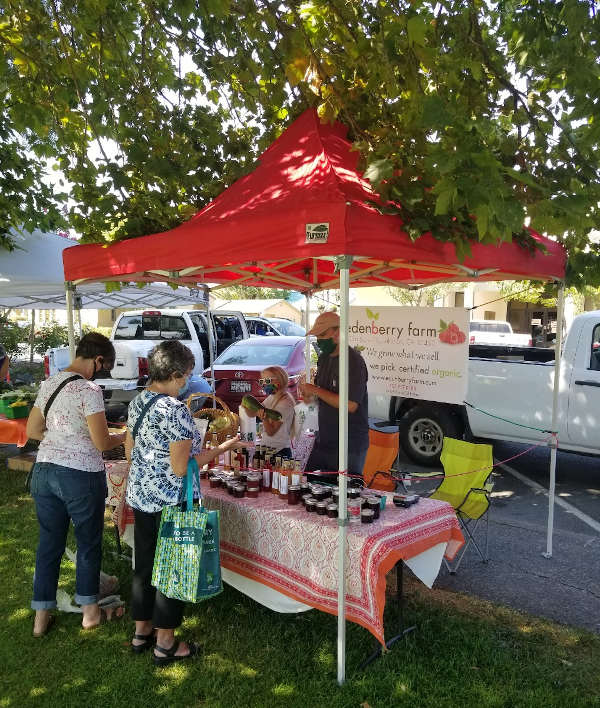
LAKE COUNTY, Calif. – Lake County Farmers’ Finest will open its seasonal market in Lakeport’s Library Park on Tuesday, May 4.
The Lakeport City Council voted in late April to give the downtown markets the go-ahead.
Lake County Farmers’ Finest operates a year-round market on Saturdays at the Lake County Fair’s Floriculture Building and a seasonal one on Tuesdays at Library Park from May to October.
Both are in Lakeport and are open from 10 a.m. to 1 p.m., rain or shine.
“Shopping at a Certified Farmers’ Market provides you with healthy, fresh food, a sense of well-being and hope, and a connection to your community,” said Market Manager Cornelia Sieber-Davis. “Farmers have faith in the future. Is there anything that requires more faith than putting a seed in a bit of dirt and having it grow into a tomato, in spite of unpredictable weather, hornworms, and yes, disease?”
Certified Farmers Markets offer fruits and vegetables grown in season in the same geographical area, not thousands of miles away or in another country.
Shopping at farmers markets also supports local farmers and keeps the money you spend on food closer to your neighborhood.
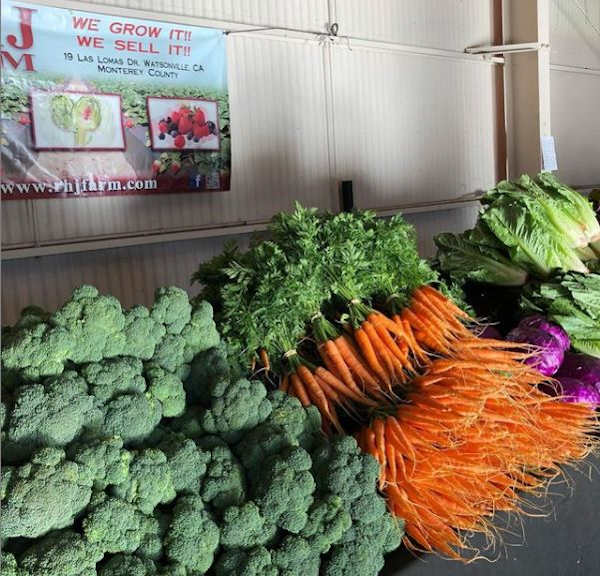
The word “certified” does not denote a growing practice such as “organic.” Rather, it certifies that the produce being sold is grown by the farmers selling it, Sieber-Davis said.
She said this is important as it allows customers to create a relationship with the person producing their food. Shoppers can ask the farmers about their growing practices and find out what they use on their farms.
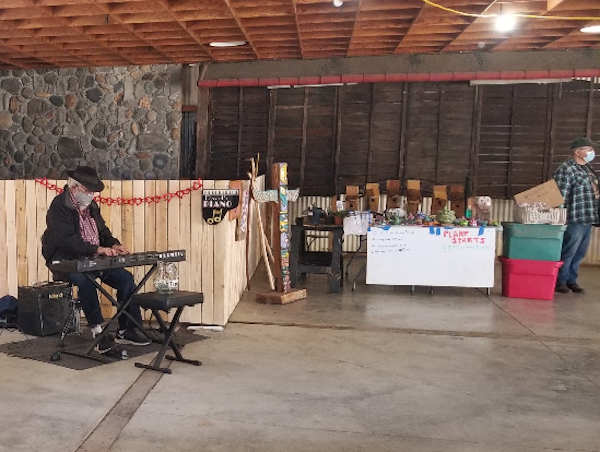
Shoppers also will find beautiful handmade crafts, honey, olive oil, artisan foods, live music and information booths.
The markets accept WIC and CalFresh/EBT and offer Market Match at both markets. When customers use their federal nutrition benefits, they match them dollar for dollar, up to a daily limit per card.
Market Match supports job creation, local economic development and civic engagement by leveraging the benefits of farmers markets for a broader community.
To apply for CalFresh anytime visit www.getcalfresh.org or call 707-995-4200 for information on other ways to apply.
For more information or to order online for curbside pickup, visit www.lakecountyfarmersfinest.org or call the manager at 707 263-6076.

For 149 years, Americans have marked Arbor Day on the last Friday in April by planting trees. Now business leaders, politicians, YouTubers and celebrities are calling for the planting of millions, billions or even trillions of trees to slow climate change.
As ecologists who study forest restoration, we know that trees store carbon, provide habitat for animals and plants, prevent erosion and create shade in cities. But as we have explained elsewhere in detail, planting trees is not a silver bullet for solving complex environmental and social problems. And for trees to produce benefits, they need to be planted correctly – which often is not the case.
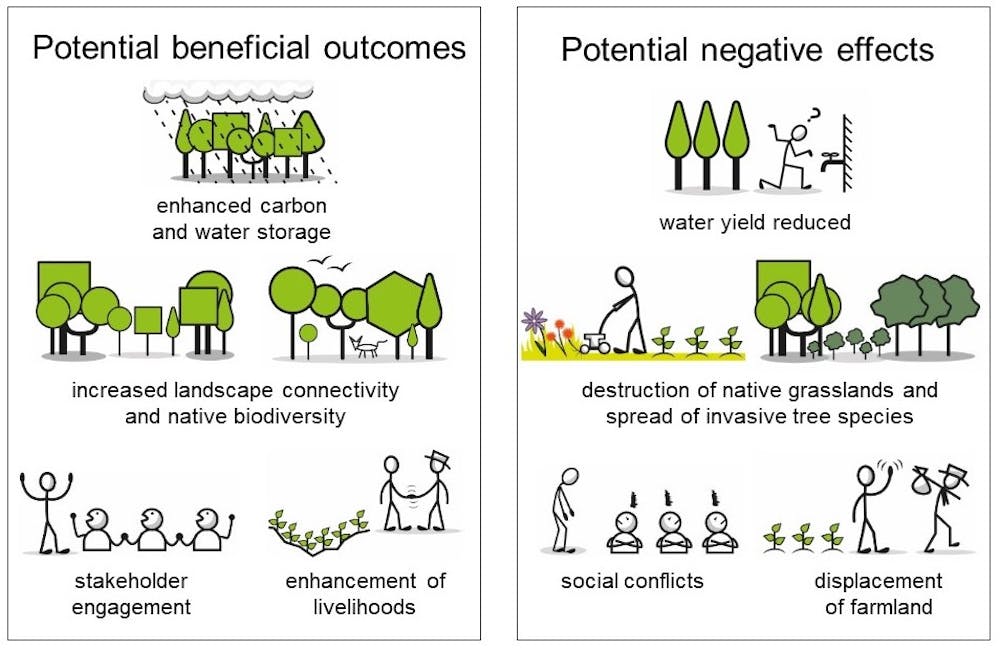
Tree-planting is not a panacea
It is impossible for humanity to plant its way out of climate change, as some advocates have suggested, although trees are one part of the solution. Scientific assessments show that avoiding the worst consequences of climate change will require governments, businesses and individuals around the globe to make rapid and drastic efforts to reduce greenhouse gas emissions.
Moreover, planting trees in the wrong place can have unintended consequences. For example, planting trees into native grasslands, such as North American prairies or African savannas, can damage these valuable ecosystems.
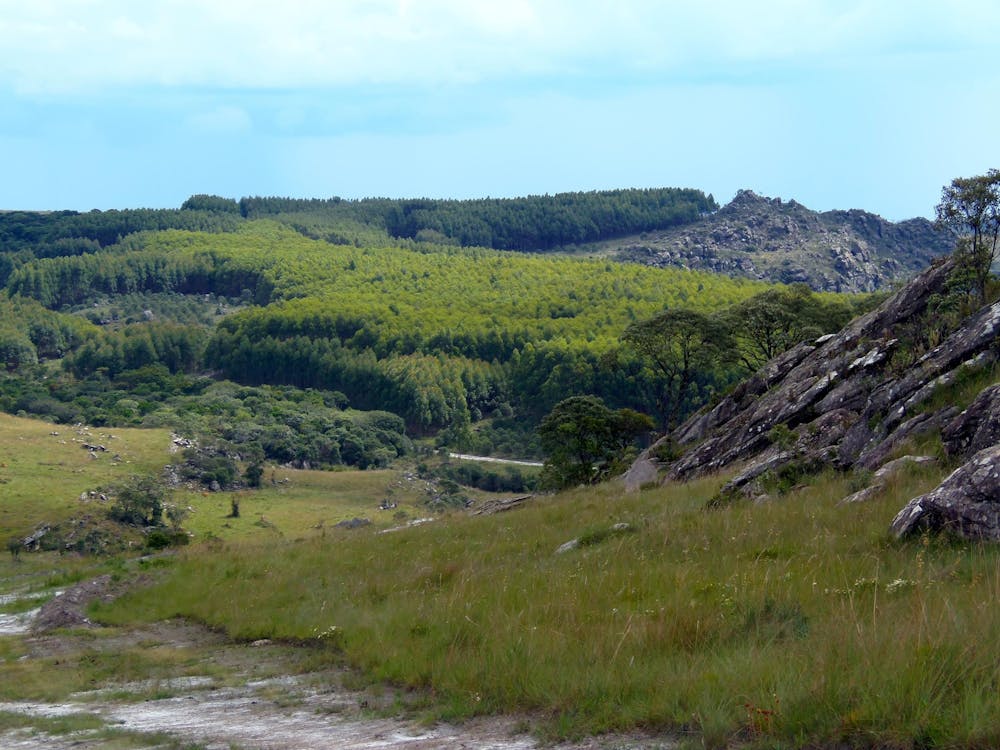
Planting fast-growing, nonnative trees in arid areas may also reduce water supplies. And some top-down tree-planting programs implemented by international organizations or national governments displace farmers and lead them to clear forests elsewhere.
Large-scale tree-planting initiatives have failed in locations from Sri Lanka to Turkey to Canada. In some places, the tree species were not well suited to local soil and climate conditions. Elsewhere, the trees were not watered or fertilized. In some cases local people removed trees that were planted on their land without permission. And when trees die or are cut down, any carbon they have taken up returns to the atmosphere, negating benefits from planting them.
Focus on growing trees
We think it’s time to change the narrative from tree-planting to tree-growing. Most tree-planting efforts focus on digging a hole and putting a seedling in the ground, but the work doesn’t stop there. And tree-planting diverts attention from promoting natural forest regrowth.
To achieve benefits from tree-planting, the trees need to grow for a decade or more. Unfortunately, evidence suggests that reforested areas are often recleared within a decade or two. We recommend that tree-growing efforts set targets for the area of forest restored after 10, 20 or 50 years, rather than focusing on numbers of seedlings planted.
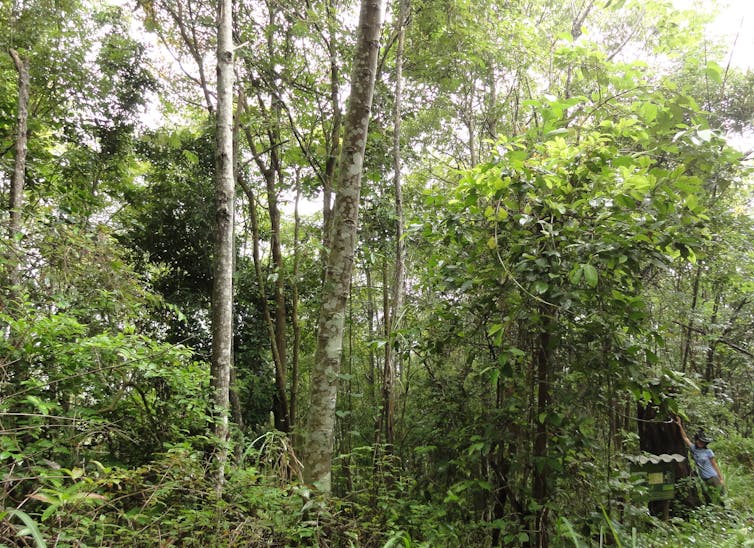
And it may not even be necessary to actively plant trees. For example, much of the eastern U.S. was logged in the 18th and 19th centuries. But for the past century, where nature has been left to take its course, large areas of forests have regrown without people planting trees.

Helping tree-growing campaigns succeed
Tree-growing is expected to receive unprecedented financial, political and societal support in the coming years as part of the U.N. Decade on Ecosystem Restoration and ambitious initiatives such as the Bonn Challenge and World Economic Forum 1t.org campaign to conserve, restore and grow 1 trillion trees. It would be an enormous waste to squander this unique opportunity.
Here are key guidelines that we and others have proposed to improve the outcomes of tree-planting campaigns.
- Keep existing forests standing. Global Forest Watch, an online platform that monitors forests around the world, estimates that the Earth lost an area of rainforest the size of New Mexico in 2020. It is much more effective to prevent clearing of existing forests than to try to put them back together again. And existing forests provide benefits now, rather than decades into the future after trees mature.
Protecting existing forests often requires providing alternative income for people who maintain trees on their land rather than logging them or growing crops. It also is important to strengthen enforcement of protected areas, and to promote supply chains for timber and agricultural products that do not involve forest-clearing.
- Include nearby communities in tree-growing projects. International organizations and national governments fund many tree-growing projects, but their goals may be quite different from those of local residents who are actually growing the trees on their land. Study after study has shown that involving local farmers and communities in the process, from planning through monitoring, is key to tree-growing success.
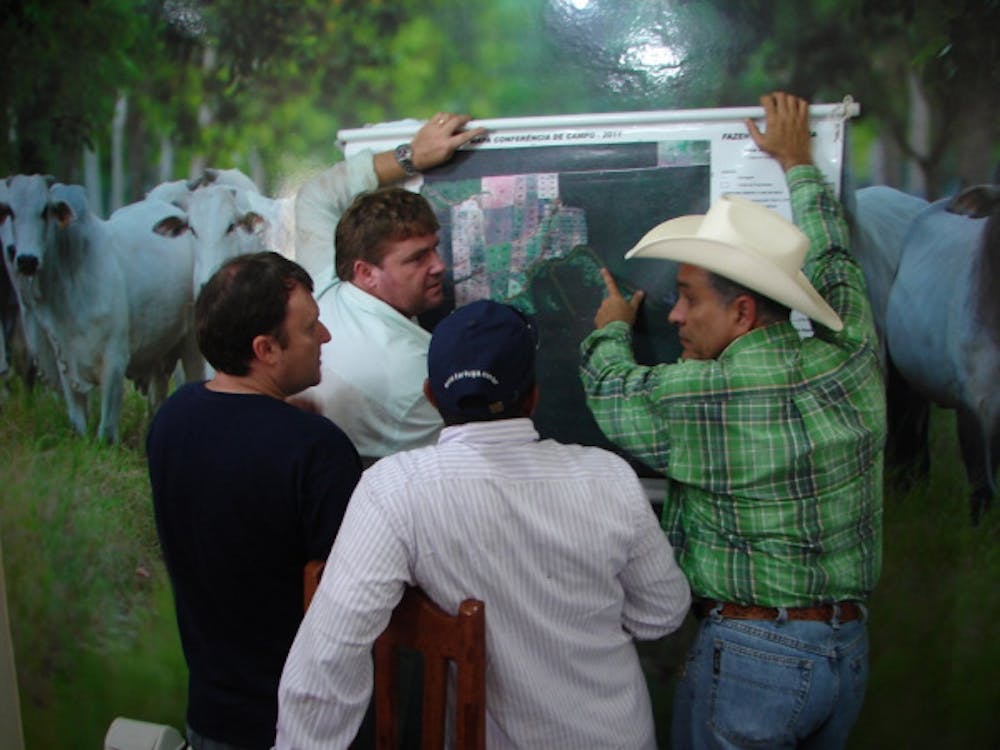
- Start with careful planning. Which species are most likely to grow well given local site conditions? Which species will best achieve the project’s goals? And who will take care of the trees after they are planted?
It is important to plant in areas where trees have grown historically, and to consider whether future climatic conditions are likely to support trees. Planting in areas that are less productive for agriculture reduces the risk that the land will be recleared or existing forests will be cut down to compensate for lost productive areas.
- Plan for the long term. Most tree seedlings need care to survive and grow. This may include multi-year commitments to water, fertilize, weed and protect them from grazing or fire and monitor whether the venture achieves its goals.
We encourage people who support tree-growing efforts to ask where the money is going – to the organization’s managers, or to landowners who are actually growing the trees? Who is monitoring the effort and how long will they track it?
Growing trees can help solve some of the most pressing challenges of our time. But it is important to understand that planting seedlings is just the first step.
[You’re smart and curious about the world. So are The Conversation’s authors and editors. You can get our highlights each weekend.]
Karen D. Holl, Professor of Restoration Ecology, University of California, Santa Cruz and Pedro Brancalion, Professor of Forest Restoration, Universidade de São Paulo
This article is republished from The Conversation under a Creative Commons license. Read the original article.
In California, “an individual 18 or more years of age who is of sound mind may make a will.”
California law presumes that a person has the testamentary capacity to execute a will.
However, a person does not have a sound mind – and so cannot execute a will – if he or she fails either of two tests found in section 6100.5 of the Probate Code.
“The presumption is always that a person is sane, and the burden is always upon the contestants of the will to show affirmatively, and by a preponderance of the evidence, that the testatrix was of unsound mind at the time of the execution of the will.” In re Estate of Perkins (1925) 195 Cal. 699, 703.
The first testamentary capacity test is whether the individual has sufficient mental capacity to, “(A) Understand the nature of the testamentary act; (B) Understand and recollect the nature and situation of the individual’s property; and (C) Remember and understand the individual’s relations to living descendants, spouse, and parents, and those whose interests are affected by the will.”
This is a very low capacity threshold. Only getting married has a lower capacity threshold. Let’s examine.
First, a person understands the nature of the testamentary act if he or she understands their will leaves their assets when at their death to beneficiaries.
Second, understanding and recollecting the nature and situation of the individual’s property requires only a general knowledge and appreciation of one’s assets and depends on the complexity of a person’s estate. The more assets one owns, and the more complicated their estate, the greater the necessary, “understanding and recollection.”
Third, a person must remember their living heirs and understand how the will affects them.
Next, the second testamentary capacity test is whether a person, “suffers from a mental health disorder with symptoms including delusions or hallucinations, which delusions or hallucinations result in the individual’s devising property in a way that, except for the existence of the delusions or hallucinations, the individual would not have done.”
This test was recently reexamined by the First Appellate Court in “Eyford v. Nord” 2021 WL 1034192.
In “Eyford v. Nord”, the deceased testator (will maker) erroneously believed that her heirs were stealing her money and jewelry (and many other false accusations) and decided to disinherit her heirs who were apparently trying to help her.
The court applied the standard in section 6100.5 that a person must suffer from a mental health condition involving delusions or hallucinations that are the “but for” cause as to why he or she devised (left) his or her estate in the will.
Because the testator did not suffer from a mental condition at the time when she executed her will the issue of whether she was delusional was not even relevant.
The court also distinguished between irrational beliefs that are “tethered to facts” (shown to exist) and delusions created by a mental health condition. Irrational beliefs that are “tethered to facts” are not wholly delusional and so are insufficient to show an unsound mind.
The foregoing section 6100.5 tests for testamentary capacity may be applied to executing a simple trust amendment or a simple trust if it is more like a will in its complexity. Andersen v. Hunt (2011) 196 Cal.App.4th 722.
The foregoing is not legal advice. Anyone confronting the issue of testamentary capacity should consult a qualified estate planning attorney.
Dennis A. Fordham, attorney, is a State Bar-Certified Specialist in estate planning, probate and trust law. His office is at 870 S. Main St., Lakeport, Calif. He can be reached at
What's up for May? This month, a rocky planet round-up, and a super blood Moon eclipse.
May 3: The bright planet Saturn will appear to the left of the half-lit Moon.
May 4: The Moon forms a large triangle in the east-southeast with the bright planets Saturn and Jupiter.
Mid-May: You'll have an opportunity to see all four of the rocky, inner planets of our solar system at the same time, with your own eyes.
May 26: Watch for a total lunar eclipse during the second supermoon of 2021.
Beginning mid-May, if you can find a clear view toward the western horizon, you'll have an opportunity to see all four of the rocky, inner planets of our solar system at the same time, with your own eyes.
Starting around May 14, cast your gaze to the west about half an hour after sunset, local time to see if you can spot Mercury, Venus, and Mars. (And well, Earth is kind of hard to miss.)
To see near the horizon, you need an unobstructed view – free of nearby trees and buildings. Some of the best places for this are the shores of lakes or the beach, open plains, or high up on a mountain or tall building.
In addition to the planets, from around the 14th through the 17th, the crescent Moon joins the party for a lovely planetary tableau. Now, Venus will be really low in the sky. (It'll be easier to observe on its own later in the summer.) But for now, take advantage of this opportunity to observe all of the inner planets in a single view.
May 26 brings a total lunar eclipse. Over several hours, the Moon will pass through Earth's shadow, causing it to darken and usually become reddish in color. The red color comes from sunlight filtering through Earth's atmosphere – a ring of light created by all the sunrises and sunsets happening around our planet at that time.
Because of the reddish color, a lunar eclipse is often called a "blood moon." Just how red it will look is hard to predict, but dust in the atmosphere can have an effect. (And keep in mind there have been a couple of prominent volcanic eruptions recently.)
Lunar eclipses take place when the Moon is full, and this full Moon happens when the Moon is also near its closest point to Earth in its orbit, often called a "supermoon."
Unlike solar eclipses, which you should never look at, it's safe to view lunar eclipses with your eyes. And unlike solar eclipses, which tend to have a narrower viewing path, lunar eclipses are at least partly visible anywhere on the planet's night side.
Now, eclipses happen at the same moment no matter where you are on Earth, but what time your clock reads during the eclipse depends, of course, on your time zone. The best viewing for this eclipse is in the Pacific Rim – that's the western parts of the Americas, Australia and New Zealand, and Eastern Asia. For the U.S., the best viewing will be in Hawaii, Alaska, and the western states.
For the Eastern U.S., the eclipse begins for you during dawn twilight. You may be able to observe the first part of the eclipse as the Moon just starts to darken, but the Moon will be near or on the horizon as Earth's shadow begins to cover it.
The farther west you are, the more of the eclipse you'll be able to see before the Moon sets that morning. Those in the western half of the country will be able to see almost the entire eclipse.
So if you're in the path of this eclipse, check your local times for the best viewing near you. And if you're in the U.S., be prepared to get up early if you want to see this rare celestial event: a super blood moon eclipse.
For a daily guide, click here.
Preston Dyches works for NASA's Jet Propulsion Laboratory.