 How to resolve AdBlock issue?
News
The committee is pursuing a $3 million grant from the state’s Proposition 68 Regional Parks Program.
As part of that process, the committee held four community planning meetings, resulting in three proposed plans for the horse park they plan to build on Highway 175, just west of Lakeport.
Descriptions of the plans and pictures of each are published below.
Click on this link to participate in the survey and give input on the preferred plan.
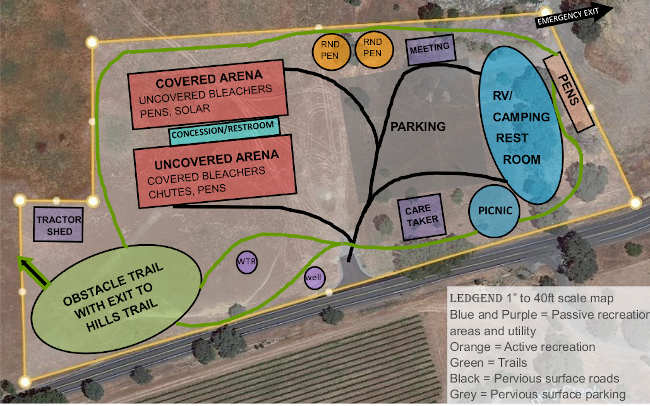
Horse Park — Map A
Map A includes two arenas, one covered, one uncovered.
The covered arena, 130 by 200 feet, with a tilled dirt floor, open bleachers on the west end, and horse pens on the north side, is designed to be used by riders and drivers year-round. The roof would have solar to offset utility expenses.
An uncovered arena, 130 by 200 feet, with a tilled dirt floor, can accommodate riders, drivers, and a junior rodeo with three bucking chutes and stock pens, an announcer’s booth overhead, roping chutes, and fencing to move animals.
Bleachers would be on the south side of each arena, with restrooms and a concession stand in between.
There are two round pens and a large obstacle course for horse and horsemanship training. A meeting room for educational and social activities is located adjacent to the parking area.
Overnight camping is under the trees along with covered picnic tables and barbecues. The caretaker home is nearby and handy to the entrance.
There is a perimeter riding/driving/hiking trail, and a gate on the west boundary that leads to a 4-plus mile loop trail in the nearby hills.
The tractor shed is convenient to both arenas and the obstacle area. The well is at the bottom of the hill and the water tank is at the highest point on the property.
There is an emergency exit on the northeast edge of the property (if permitted) to provide a second access to Highway 175.
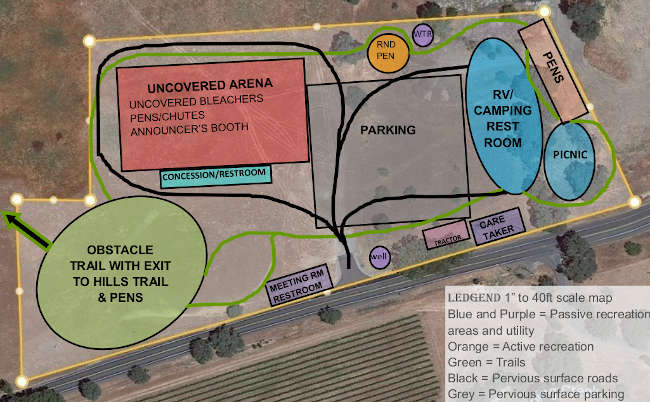
Horse Park — Map B
Map B includes an uncovered arena, 150 by 328 feet, that can be used by riders and drivers and can offer a PRCA rodeo.
It has stock pens on the west end, bucking and roping chutes on the north side, and fencing to move animals. Uncovered bleachers run along the south side, with restrooms and concession stands behind or under them.
A road circles the arena to deliver rough stock for rodeo events and accommodate emergency vehicles.
There is an obstacle course and a round pen for horse and horsemanship training, and a meeting room (with restroom) for educational and social activities.
Overnight camping under the trees includes restrooms with showers, and a picnic ground with covered tables and barbecues. The camping area would be used exclusively for competitor parking during rodeo events.
There is a perimeter riding/driving/hiking trail, and a gate to the west that leads to a 4-plus mile loop trail in the nearby hills.
The caretaker house, tractor shed, and well are located between the entrance and the camping area.
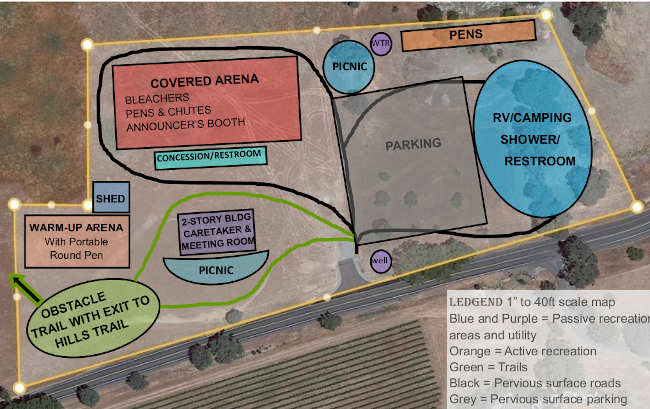
Horse Park — Map C
Map C includes a 150 by 328 foot Covered Arena, with tilled earth footing, designed for riding, driving, and PRCA rodeos.
It has covered bleachers on both the north and south sides, an announcer’s booth above the six bucking chutes and six stock pens on the west side, roping chutes on the east side, and fencing along the south side for moving stock to the east chutes.
A road circles the arena to deliver rough stock for rodeo events and accommodate emergency vehicles.
There is a 30-foot by 45-foot warmup arena with a portable round pen, and an obstacle course for horse and horsemanship training. The tractor shed is located nearby for convenience.
One level of a two-story building provides a two bedroom, two bath caretaker home, the other level provides a meeting room for educational and social activities.
Separate covered (circle) and uncovered (moon) picnic grounds have tables and barbecues. Overnight camping is located under mature trees, with restrooms and showers. The camping area would be used exclusively for competitor parking during rodeo events.
There is a perimeter riding/driving/hiking trail, and a gate on the west boundary that leads to a 4-plus mile loop trail in the hills to the west.
The well is located at the lowest point on the property and the water tank is located higher, at the north edge of the property.
Californians have been concerned about wildfires for a long time, but the past two years have left many of them fearful and questioning whether any solutions to the fire crisis truly exist.
The Dixie Fire in the Sierra Nevada burned nearly 1 million acres in 2021, including almost the entire community of Greenville. Then strong winds near Lake Tahoe sent the Caldor Fire racing through the community of Grizzly Flats and to the edges of urban neighborhoods, forcing the evacuation of tens of thousands of people – including one of us. Those were only the biggest of the 2021 fires, and the risk isn’t over. A wind-blown fire that started Oct. 11 was spreading quickly near Santa Barbara on the Southern California coast.
As foresters who have been working on wildfire and forest restoration issues in the Sierra Nevada for over a quarter of a century, we have found it painful to watch communities destroyed and forests continuing to burn to a crisp.
The main lesson we gather from how these fires have burned is that forest fuels reduction projects are our best tools for mitigating wildfire impacts under a changing climate, and not nearly enough of them are being done.
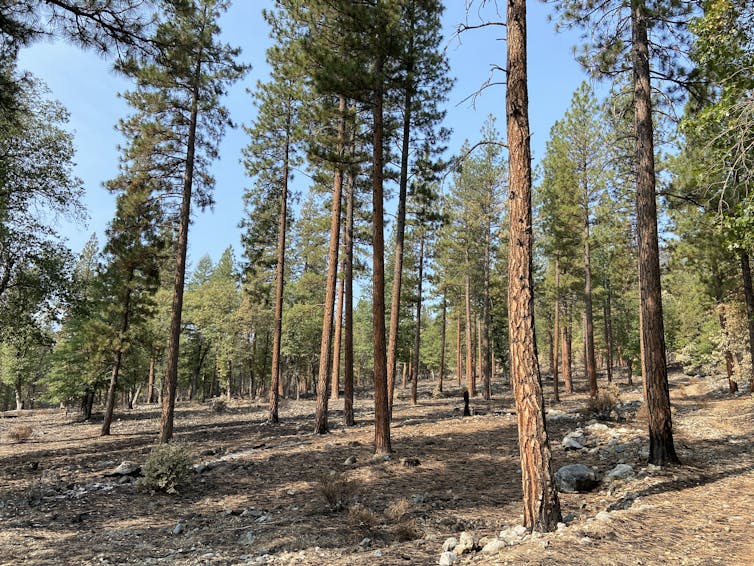
Two historic policies, in our view, led the western U.S. to the point where its forests have become so overgrown they’re fueling megafires that burn down whole communities.
Fire suppression
The first policy problem is fire suppression and exclusion.
Fire is an essential ecological process, and many of the ecosystems in the West are adapted to frequent fire, meaning plant and wildlife species have evolved to survive or even thrive after wildfires. But most people arriving in California during colonization, both before and after the Gold Rush of 1849, fundamentally misunderstood the nature of frequent fire forests.
As state and federal agencies evolved policies on forest management, they considered all fire to be an existential problem and declared war. The U.S. Forest Service kicked off a century of fire suppression in the West after the devastating fires of 1910, known as the “Big Blowup” or “Big Burn,” by implementing the 10 a.m. policy. It aimed for full suppression of all fires by 10 a.m. the day after they broke out.
Native people who practiced prescribed fire to manage forests were removed from their homelands, and burning was criminalized. California made prescribed fire illegal in 1924, and it remained illegal for decades until a better appreciation of its importance emerged in the 1970s.
Past harvesting practices lead to regulations
The second policy issue is the regulatory approach that grew out of past logging practices.
Foresters and early California communities were interested in forests for lumber and fuel wood. They sent the largest – and most fire-tolerant – trees to mills to be turned into lumber, which was used to build California’s cities and towns.
Poorly executed logging in some areas led to concerns from residents that forest cover and habitat was shrinking. As a result, state and federal regulations were developed in the 1970s that require managers proposing forest projects to consider a “no action alternative.” In other words, maintaining dense forest habitat in the long term was considered a viable management choice.
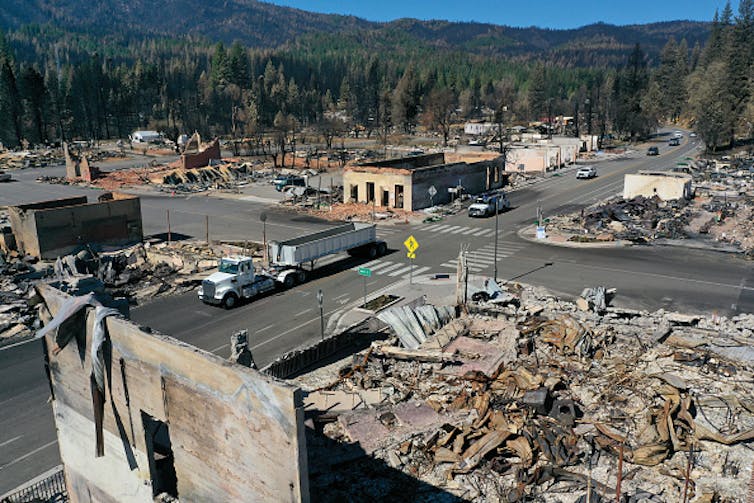
On private land, few owners today thin the forest to levels that would mimic the more fire-resilient forests found in the Sierra at colonization. The California Forest Practices Act until recently required replanting after timber harvest to levels much more dense than were found at colonization. In other words, our current regulatory framework promotes maintaining high levels of forest density, when much more drastic removal of vegetation is needed.
Taken together, these policies have promoted 21st-century forests that are younger, denser and more homogenous – making them vulnerable to increasingly severe disturbances such as drought, insect outbreaks and fire. This new reality is exacerbated by a changing climate, which turns the regulatory assumption that active and widespread forest management is riskier than no management on its head.
Agency priorities change as the crisis grows
Just as forests have changed, so too have the agencies that manage and regulate them. The U.S. Forest Service has seen its budgets for fighting fires balloon while its capacity to proactively manage forests has been shrinking. The California Department of Forestry and Fire Protection, known as CAL FIRE, has also seen large increases in firefighting budgets, though the state legislature has recently moved to increase fire prevention funds, too.
Living in communities threatened by wildfires this summer, we are very grateful to firefighters who have saved our homes. Yet we also are concerned that more large, high-severity wildfires burning across the landscape mean less funding and staff will be available for proactive fuels reduction projects like forest thinning and prescribed fires.
How do we get out of this mess?
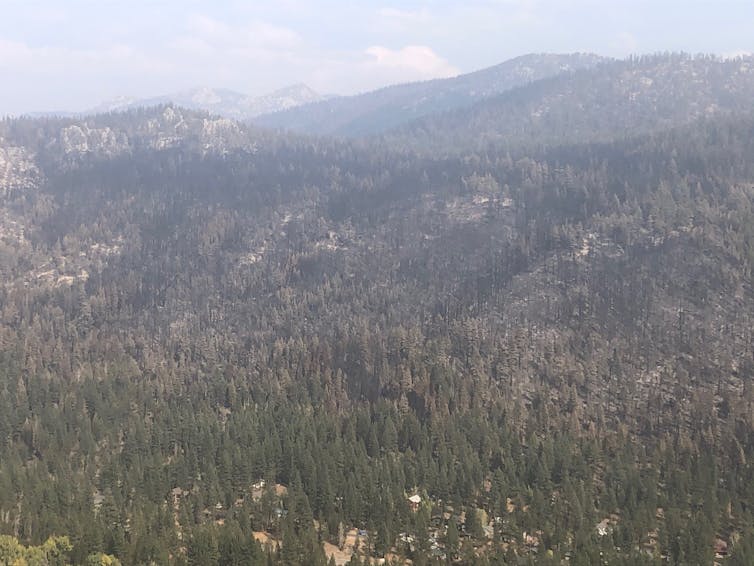
The Dixie and Caldor fires that destroyed Greenville and Grizzly Flats provided evidence that forest fuels reduction projects can work.
Both fires burned less severely in areas with proactive forest restoration and fuels management projects, including near South Lake Tahoe and near Quincy.
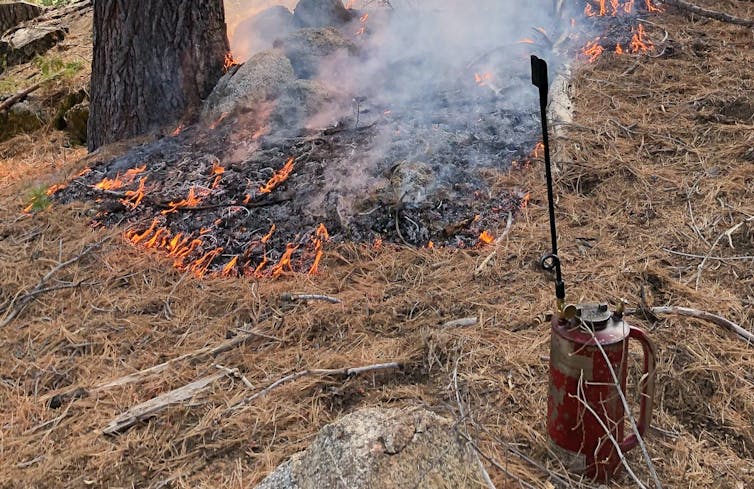
Fuels reduction projects include thinning out trees, burning off woody debris and reducing “ladder fuels” like small trees and brush that can allow fire to reach the tree canopy. They create more open forests that are less likely to fuel severe megafires. They also create strategic areas where firefighters can more easily fight future blazes. And, because fires burn less intensely in thinned forests, they leave more intact forest after a fire for regenerating new trees and sequestering carbon. Prescribed fires and managed ignitions paid huge dividends for containing the Dixie and Caldor fires.
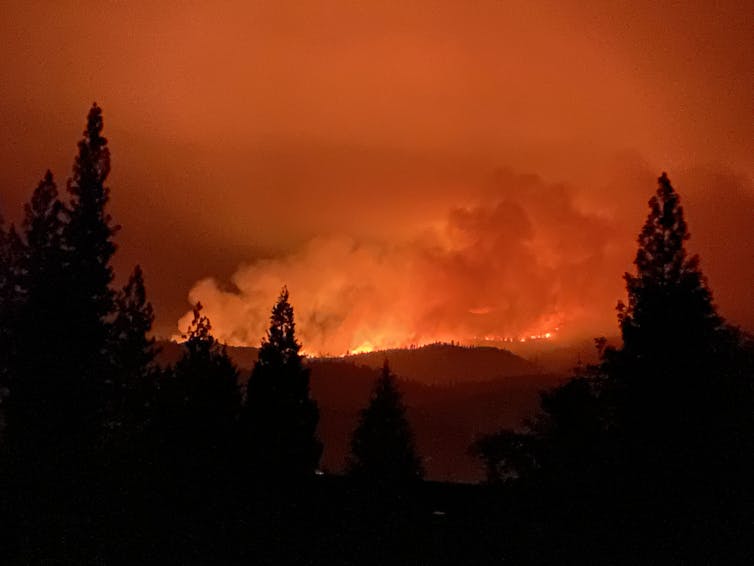
To manage fires in an era of climate change, where drier, hotter weather creates ideal conditions for burning, experts estimate that the area treated for fuels reduction needs to increase by at least an order of magnitude. We believe government needs to accomplish these four things to succeed:
1) Drastically increase funding and staff for agencies’ fuels reduction projects, as well as outreach, cost-sharing and technical assistance for private forestland owners. Although the Biden administration’s proposal for a Civilian Climate Corps proposes funding to bring in more young and unskilled workers, funding more federal and state agency positions would recruit more natural resource professionals, provide career-track opportunities and better add forest restoration capacity for the long term.
2) Reduce regulations on forest and fuels management efforts for both public and private land. While California and the federal government have made recent strides to streamline regulations, land management agencies need to acknowledge the biggest risk in frequent fire forests is doing nothing, and time is running out. Agencies need to drastically cut the time needed to plan and implement fuels reduction projects.
3) Invest in communities’ capacity to carry out local forest restoration work by providing long-term support to local organizations that provide outreach, technical assistance and project coordination services. Funding restoration through competitive grants makes development of long-term community capacity challenging at best.
4) Provide funds and financial incentives for at risk communities to retrofit homes to withstand wildfires and reduce fuels around homes, communities and infrastructure.
Under a changing climate, we will have to learn to coexist with wildfires in the U.S. West, but this will require concerted action and a cultural shift in how we view and manage our forests and communities to be resilient.
[Like what you’ve read? Want more? Sign up for The Conversation’s daily newsletter.]
Susan Kocher, Cooperative Extension Forester and Natural Resources Advisor, University of California, Division of Agriculture and Natural Resources and Ryan E. Tompkins, Cooperative Extension Forester and Natural Resources Advisor, University of California, Division of Agriculture and Natural Resources
This article is republished from The Conversation under a Creative Commons license. Read the original article.
Dogs available for adoption this week include mixes of American bulldog, American Staffordshire terrier, Belgian malinois, Doberman, German shepherd, husky, Labrador Retriever, pit bull, Rottweiler, shepherd and terrier.
Dogs that are adopted from Lake County Animal Care and Control are either neutered or spayed, microchipped and, if old enough, given a rabies shot and county license before being released to their new owner. License fees do not apply to residents of the cities of Lakeport or Clearlake.
The following dogs at the Lake County Animal Care and Control shelter have been cleared for adoption (additional dogs on the animal control website not listed are still “on hold”).
Call Lake County Animal Care and Control at 707-263-0278 or visit the shelter online at http://www.co.lake.ca.us/Government/Directory/Animal_Care_And_Control.htm for information on visiting or adopting.
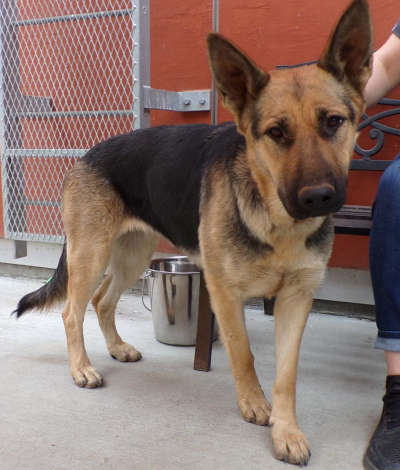
Female German shepherd
This 1-year-old female German shepherd has a short tan and black coat.
She is in kennel No. 4, ID No. LCAC-A-1767.
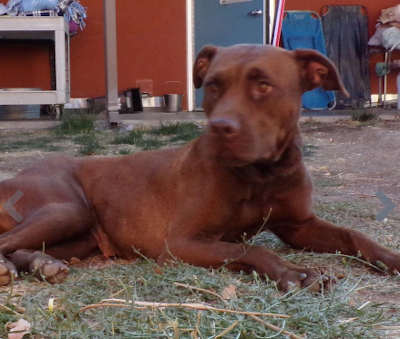
Labrador-pit bull mix
This 5-year-old female chocolate Labrador retriever-pit bull mix has a short chocolate-colored coat.
She is in kennel No. 5, ID No. LCAC-A-1769.

‘Ace’
“Ace” is a 1-year-old male shepherd and Doberman mix with a short black and tan coat.
He is in kennel No. 6, ID No. LCAC-A-1731.

Male terrier
This 1-year-old male terrier has a long red coat.
He is in kennel No. 7, ID No. LCAC-A-1782.
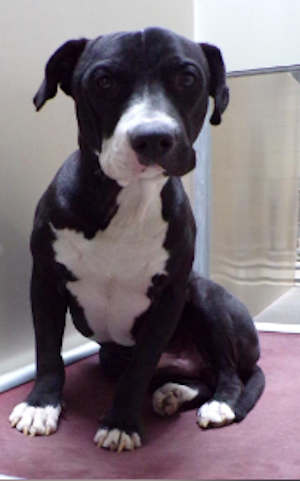
‘Duke’
“Duke” is a 1-year-old male pit bull mix with a short black and white coat.
He is in kennel No. 8, ID No. LCAC-A-1750.

Female shepherd-husky
This female shepherd-husky has a short tan coat with black markings and blue eyes.
She is in kennel No. 9, ID No. LCAC-A-1745.
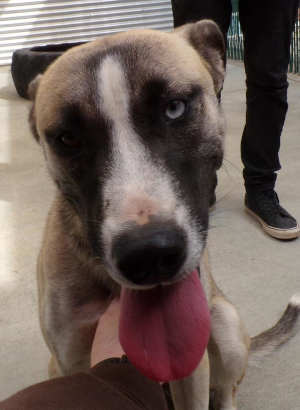
Female shepherd-husky
This 1-year-old female shepherd-husky mix has a short tricolor coat and blue eyes.
She’s in kennel No. 10, ID No. LCAC-A-1746.

Belgian malinois puppy
This 6-month-old male Belgian malinois puppy has a short tan coat.
He is in kennel No. 16, ID No. LCAC-A-1711.

Female Rottweiler
This 1-year-old female Rottweiler has a short black coat with white markings.
She is in kennel No. 18, ID No. LCAC-A-1700.

‘Rocky’
“Rocky” is a 1-year-old female German shepherd mix with a short black coat and tan markings.
She is in kennel No. 19, ID No. LCAC-A-1719.
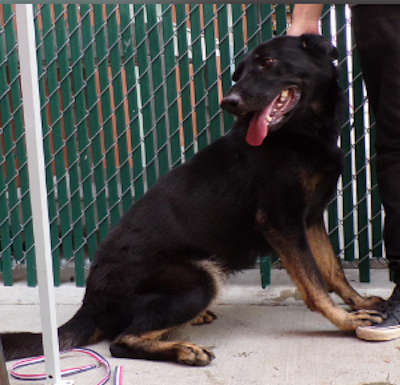
Female German shepherd
This 2-year-old female German shepherd has a short black coat with tan markings.
She is in kennel No. 22, ID No. LCAC-A-1733.
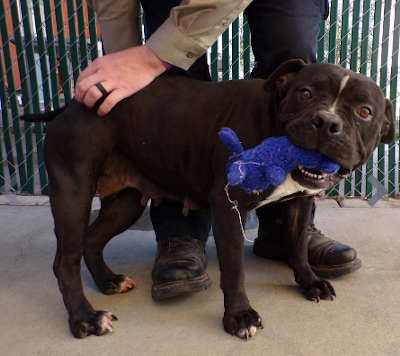
Female American Staffordshire mix
This 3-year-old female American Staffordshire mix has a short black coat with white markings.
She is in kennel No. 23, ID No. LCAC-A-1727.
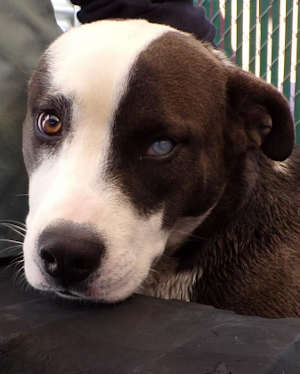
Female husky-pit bull
This 1-year-old female husky-pit bull mix has a short brown coat with white markings.
She is in kennel No. 24, ID No. LCAC-A-1725.

Male husky-pit bull
This 1-year-old male husky-pit bull mix has a short coat.
He is in kennel No. 25, ID No. LCAC-A-1726.

‘LuLu’
“LuLu” is a 1-year-old female Rottweiler with a short black and tan coat.
She is in kennel No. 27, ID No. LCAC-A-1658.
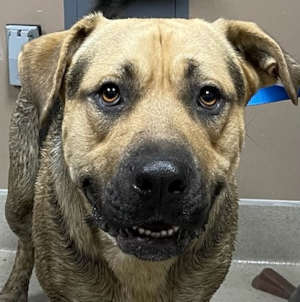
Male shepherd mix
This 2-year-old male shepherd mix has a short black and tan coat.
He is in kennel No. 28, ID No. LCAC-A-1743.
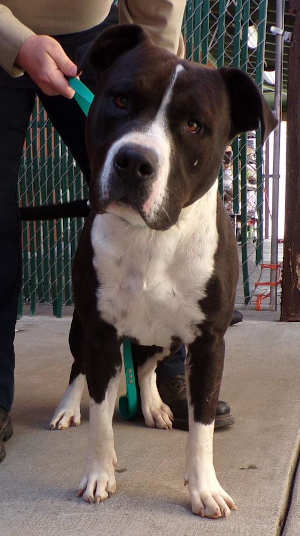
Male pit bull
This young male pit bull has a short black and white coat.
He is in kennel No. 29, ID No. LCAC-A-1699.

Female terrier mix
This 2-year-old female terrier mix has a short tan coat.
She is in kennel No. 30, ID No. LCAC-A-1739.
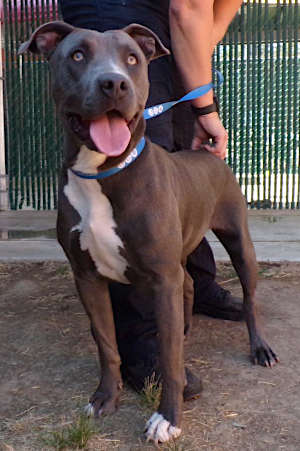
Female pit bull
This 1-year-old female pit bull mix has a short gray coat with white markings.
She is in kennel No. 31, ID No. LCAC-A-1683.

‘Dozer’
‘Dozer’ is a 5-year-old American pit bull terrier mix with a short brindle coat.
He is in kennel No. 33, ID No. LCAC-A-1483.

‘Milo’
“Milo” is a 3-year-old male American bulldog-pit bull mix with a short white coat.
He is in kennel No. 34, ID No. LCAC-A-1657.
Email Elizabeth Larson at
Asteroids embody the story of our solar system’s beginning. Jupiter’s Trojan asteroids, which orbit the Sun on the same path as the gas giant, are no exception.
The Trojans are thought to be left over from the objects that eventually formed our planets, and studying them might offer clues about how the solar system came to be.
Over the next 12 years, NASA’s Lucy mission will visit eight asteroids — including seven Trojans — to help answer big questions about planet formation and the origins of our solar system. It will take the spacecraft about three and a half years to reach its first destination. What might Lucy find?
Like all the planets, asteroids exist in the heliosphere, the vast bubble of space defined by the reaches of our Sun’s wind. Directly and indirectly, the Sun affects many aspects of existence within this pocket of the universe. Here are a few of the ways the Sun influences asteroids like the Trojans in our solar system.
Place in space
Asteroids embody the story of our solar system’s beginning. Jupiter’s Trojan asteroids, which orbit the Sun on the same path as the gas giant, are no exception. The Sun makes up 99.8% of the solar system’s mass and exerts a strong gravitational force as a result. In the case of the Trojan asteroids that Lucy will visit, their very location in space is dictated in part by the Sun’s gravity.
They are clustered at two Lagrange points. These are locations where the gravitational forces of two massive objects — in this case the Sun and Jupiter — are balanced in such a way that smaller objects like asteroids or satellites stay put relative to the larger bodies. The Trojans lead and follow Jupiter in its orbit by 60° at Lagrange points L4 and L5.
Pushing asteroids around (with light!)
That’s right, sunlight can move asteroids! Like Earth and many other objects in space, asteroids rotate.
At any given moment, the Sun-facing side of an asteroid absorbs sunlight while the dark side sheds energy as heat. When the heat escapes, it creates an infinitesimal amount of thrust, pushing the asteroid ever so slightly off its course.
Over millions of years, this force, called the Yarkovsky effect, can noticeably alter the trajectory of smaller asteroids (those less than 25 miles, or about 40 kilometers, in diameter).
Similarly, sunlight can also alter the rotation rate of small asteroids. This effect, known as YORP (named for four scientists whose work contributed to the discovery), affects asteroids in different ways depending on their size, shape, and other characteristics.
Sometimes, YORP causes small bodies to spin faster until they break apart. Other times, it may cause their rotation rates to slow.
The Trojans are farther from the Sun than the near-Earth or Main Belt asteroids we’ve studied before, and it remains to be seen how the Yarkovsky effect and YORP affect them.
Shaping the surface
Just like rocks on Earth show signs of weathering, so too do rocks in space, including asteroids. When rocks warm up during the day, they expand. As they cool down, they contract. Over time, this fluctuation causes cracks to form. The process is called thermal fracturing.
The phenomenon is more intense on objects without atmospheres, such as asteroids, where temperatures vary wildly. Therefore, even though the Trojans are farther from the Sun than rocks on Earth, they’ll likely show more signs of thermal fracturing.
The lack of atmosphere has another implication for asteroid weathering: Asteroids are battered by the solar wind, a steady stream of particles, magnetic fields, and radiation that flows from the Sun.
For the most part, Earth’s magnetic field protects us from this bombardment. Particles that do get through can excite molecules in Earth’s atmosphere, resulting in auroras.
Without magnetic fields or atmospheres of their own, asteroids receive the brunt of the solar wind.
When incoming particles strike an asteroid, they can kick some material off into space, changing the fundamental chemistry of what’s left behind.
Anna Blaustein works for NASA’s Goddard Space Flight Center in Greenbelt, Maryland.
Registrar of Voters Office completes official canvass, final count for gubernatorial recall election
The special election seeking Gov. Gavin Newsom’s recall took place on Sept. 14. It was the 54th unsuccessful recall attempt against a governor since 1913.
The official canvass must be completed within a month, and Registrar of Voters Maria Valadez completed her work on Thursday, as planned.
The results will be certified by Oct. 22, the Secretary of State’s Office reported.
Valadez will ask the supervisors to adopt a resolution accepting the official canvass and accept her certification of the election results, which will be taken up as part of the consent agenda.
The final results for Lake County showed that there was a 59.59% percent voter participation rate, with 22,388 ballots cast over 70 precincts. There are 37,571 registered voters in the county.
The ballots cast in favor of recalling Gov. Newsom totaled 10,923, or 49%, while the no votes totaled 11,367, or 51%.
That’s compared with the initial count given on the night of Sept. 14, when the early returns looked far more lopsided.
The preliminary results on that night showed a 62.48% “no” vote compared to a 37.52% “yes” vote, as Lake County News has reported. At that point 9,333 of the 22,388 ballots had been counted, accounting for 41% of the total vote.
In a breakdown of vote-by-mail or absentee ballots, the yes vote was 47.06%, or 9,647 ballots, to 10,851 no votes, or 52.94%.
Of those ballots cast on Election Day, 71.21%, or 1,276 ballots, supported the recall, while 516 ballots, or 28.79%, voted against the recall.
The top five candidates who received votes to succeed Newsom had he been recalled were led in Lake County by Larry Elder, with 6,306 votes; John Cox, 1,060 votes; Kevin Kiley, 801 votes; Kevin Paffrath, 642 votes; and Patrick Kilpatrick, 548 votes.
While Lake County’s final results were markedly different from the preliminary count, on a statewide basis, the statewide results changed slightly.
Early on Sept. 15, the California Secretary of State’s Office reported that the preliminary statewide count was 63.9% against the recall and 36.1% in support of it.
On Friday, the Secretary of State’s Office said the statewide results were 61.9% against the recall and 38.1 percent for it.
Statewide, in the top five Elder also led alternate candidates, followed by Paffrath, Kevin L. Faulconer, Brandon M. Ross and Cox.
The state results can be found here.
Email Elizabeth Larson at
091421 Certification of County Elections Official of Results by LakeCoNews on Scribd
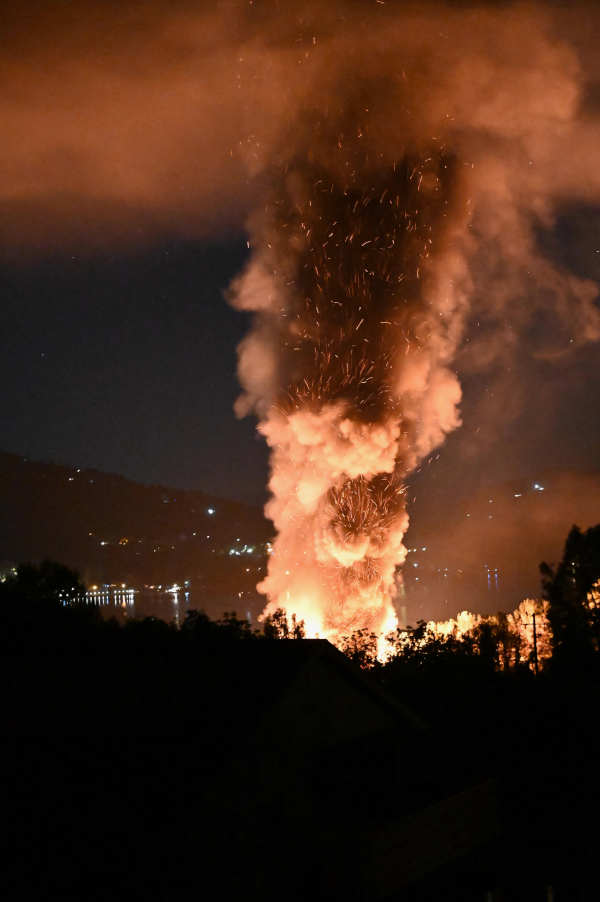
LAKE COUNTY, Calif. — Firefighters worked early Saturday to contain a fire involving several structures in the Kelseyville area.
Shortly after 2:45 a.m., several structures were reported to be on fire at 9495 Konocti Bay Road, near Richmond Park Bar & Grill.
Firefighters arriving on scene reported that there were two motor homes fully involved, with a third trailer becoming involved a short time later, according to radio traffic.
The fire also was reported to have moved into nearby vegetation.
The Northshore Fire Support Team was requested to respond to the scene.
Incident command asked for Pacific Gas and Electric to respond, as well as asking for a hand crew.
Just before 4:15 a.m., the fire was reported to be confined to the structures, with firefighters working on the vegetation fire.
Firefighters were expected to be on scene until later in the morning for mop up.
Additional information will be published as it becomes available.
Email Elizabeth Larson at