 How to resolve AdBlock issue?
News
Dogs available for adoption this week include mixes of American Staffordshire terrier, beagle, border collie, Chihuahua, Doberman, German shepherd, husky, Labrador retriever, mastiff, pit bull and pug.
Dogs that are adopted from Lake County Animal Care and Control are either neutered or spayed, microchipped and, if old enough, given a rabies shot and county license before being released to their new owner. License fees do not apply to residents of the cities of Lakeport or Clearlake.
The following dogs at the Lake County Animal Care and Control shelter have been cleared for adoption (additional dogs on the animal control website not listed are still “on hold”).
Call Lake County Animal Care and Control at 707-263-0278 or visit the shelter online for information on visiting or adopting.
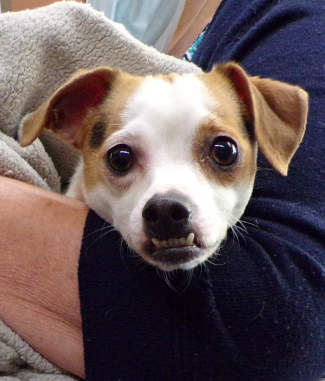
‘Maisey’
“Maisey” is a 6-year-old female Chihuahua-pug mix.
She is in kennel No. 2, ID No. LCAC-A-2167.
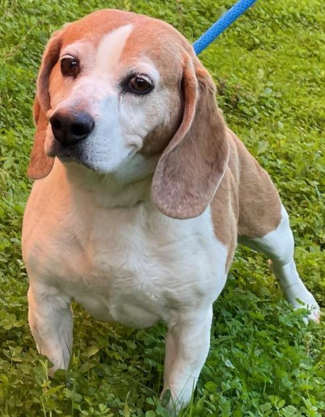
‘Buster’
“Buster” is a 5-year-old beagle with a short red and white coat.
He is in kennel No. 8, ID No. LCAC-A-2196.
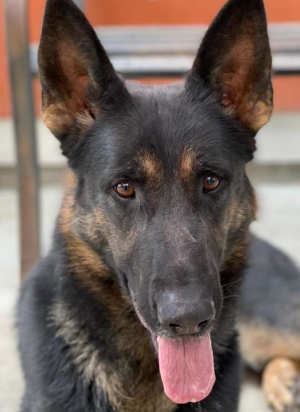
Male German shepherd
This 1-year-old male German shepherd has a black and tan coat.
He is in kennel No. 12, ID No. LCAC-A-1892.
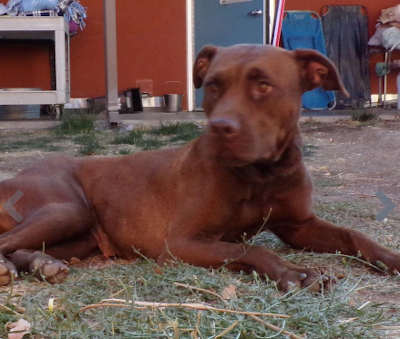
Labrador-pit bull mix
This 5-year-old female chocolate Labrador retriever-pit bull mix has a short chocolate-colored coat.
She is in kennel No. 13, ID No. LCAC-A-1769.
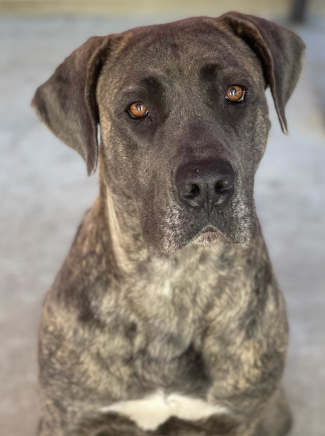
Female mastiff
This 3-year-old female mastiff has a short brindle coat.
She is in kennel No. 15, ID No. LCAC-A-1868.
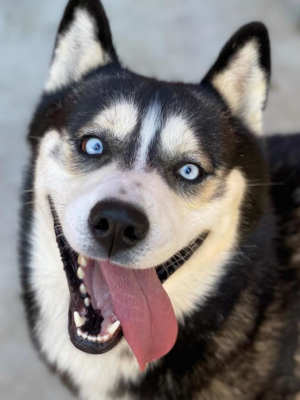
Male husky
This 1-year-old male husky has a black and white coat with bright blue eyes.
He is in kennel No. 16, ID No. LCAC-A-2190.
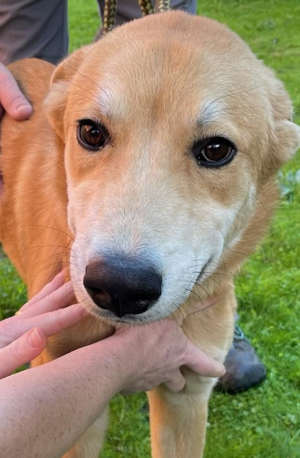
Male retriever mix
This young male retriever has a short yellow coat.
He is in kennel No. 20, ID No. LCAC-A-2195.
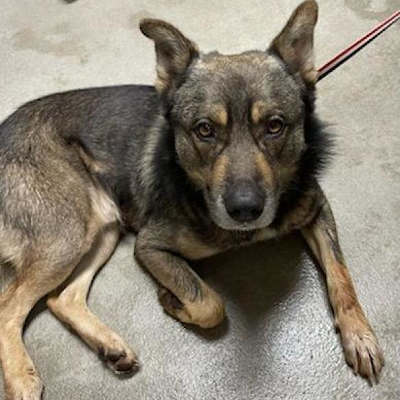
‘Skoutt’
“Skoutt” is a 6-year-old male shepherd mix with a short tricolor coat.
He is in kennel No. 22, ID No. LCAC-A-2163.
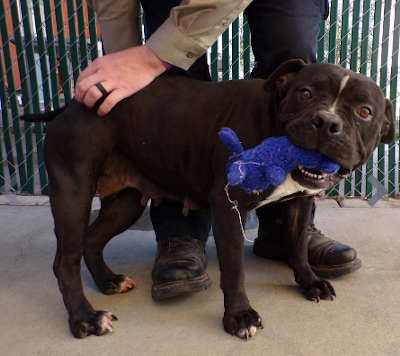
Female American Staffordshire mix
This 3-year-old female American Staffordshire mix has a short black coat with white markings.
She is in kennel No. 23, ID No. LCAC-A-1727.
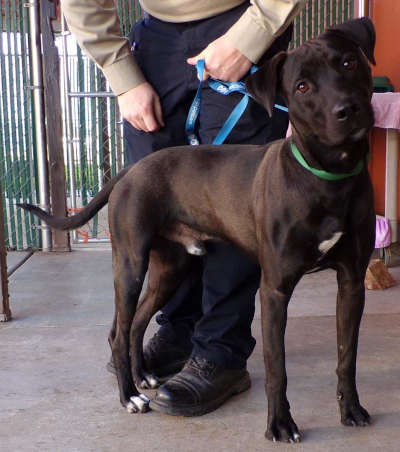
‘Snuffy’
“Snuffy” is a 1-year-old black Labrador retriever mix.
He is in kennel No. 24, ID No. LCAC-A-2152.
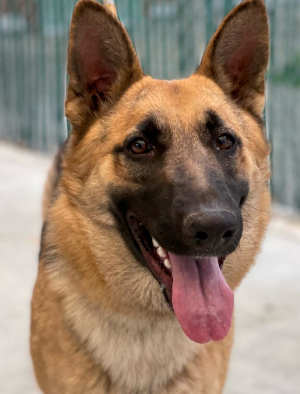
Female German shepherd
This 1-year-old female German shepherd has a black and tan coat.
She is in kennel No. 25, ID No. LCAC-A-2155.
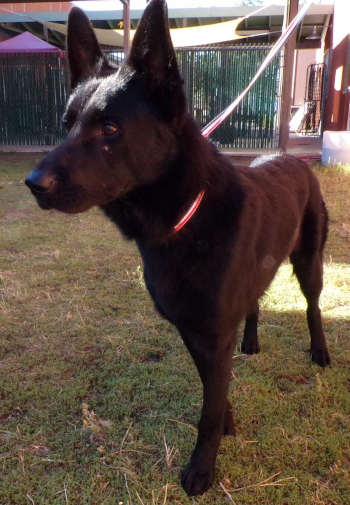
Male German shepherd
This 2-year-old male German shepherd has a black and tan coat.
He is in kennel No. 26, ID No. LCAC-A-1903.
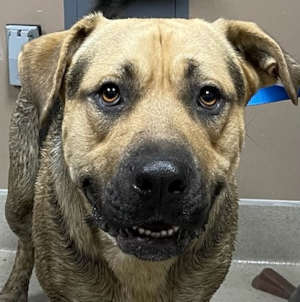
Male shepherd mix
This 2-year-old male shepherd mix has a short black and tan coat.
He is in kennel No. 28, ID No. LCAC-A-1743.
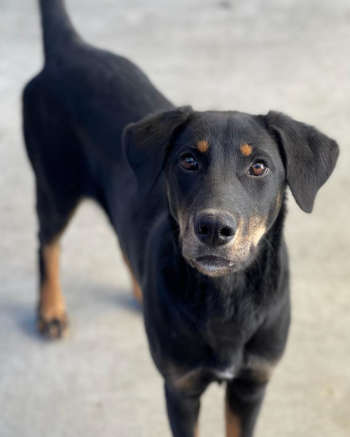
Female Doberman-Labrador mix
This young Female Doberman-Labrador mix has a short black and tan coat.
She is in kennel No. 29, ID No. LCAC-A-2131.
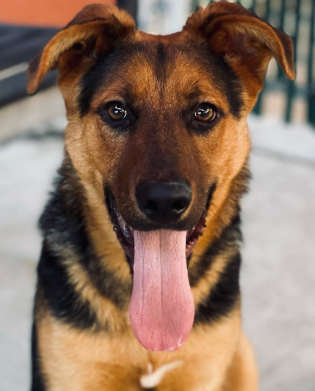
‘Simon’
“Simon” is a young male German shepherd with a black and tan coat.
He is in kennel No. 30, ID No. LCAC-A-2164.
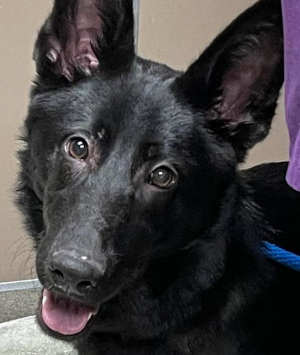
Female German shepherd
This female German shepherd has a black coat.
She is in kennel No. 33, ID No. LCAC-A-2169.
Email Elizabeth Larson at
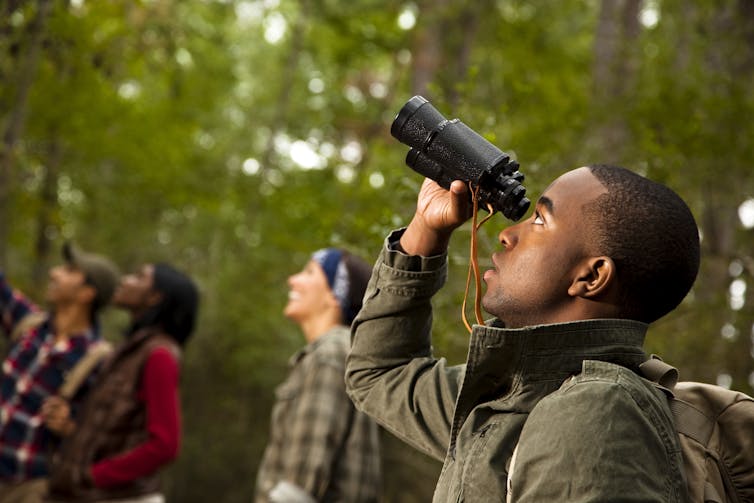
Modern society benefits when people understand science concepts. This knowledge helps explain how cryptocurrency works, why climate change is happening or how the coronavirus is transmitted from person to person.
Yet the average American spends less than 5% of their lifetime in classrooms learning about such topics. So, besides school, where else can people go to study and explore science?
Museums, zoos and libraries are certainly a great start. As a researcher of adult STEM education, I study less conventional ways for people of all ages to learn and participate in science.
Here are four alternative venues where the general public can enjoy nature, engage in hands-on science learning and get a behind-the-scenes look at scientific research in action.
1. National parks
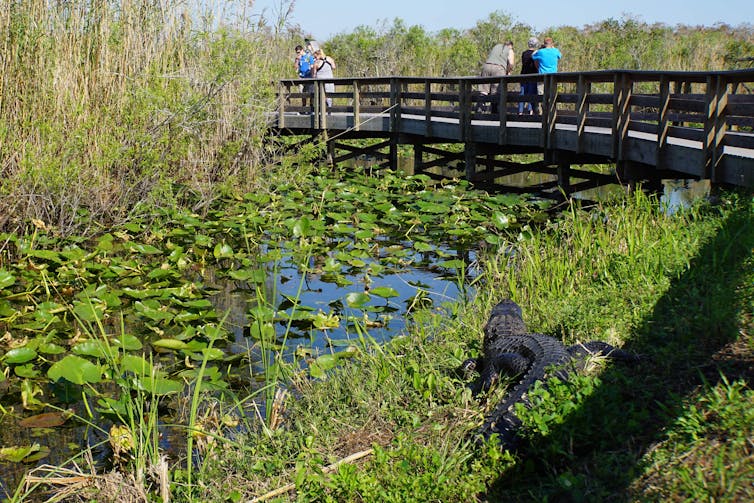
Visitors to national parks dramatically increased over the past two years as the pandemic inspired people to go outside and enjoy nature more regularly. However, people often don’t realize that many parks offer lecture series, nature walks and interactive science learning opportunities for those interested in adding an extra layer of scientific and environmental knowledge to their outdoor experience.
For example, Grand Canyon National Park in Arizona offers Ranger Programs that teach the public about ongoing changes to the canyon from weathering and erosion. Great Smoky Mountains National Park, which spans Tennessee and North Carolina, offers its own education programming but also partners with local groups to offer guided nature hikes or trail-building volunteer opportunities.
For those who don’t wish to venture into the great outdoors, the National Parks Service has a variety of online resources, such as virtual park visits and webcams that present real-time views of weather, dramatic scenery, wildlife and more.
Find your nearest national park here.
2. University extension programs
Land-grant universities are charged with translating and delivering scientific research to the public and exist in every U.S. state and territory.
They often do this through what’s called “extension” programs. Master Gardener is a popular one, but there are many unique local options, too. For example, Colorado State University offers a Native Bee Watch program that trains volunteers to identify and monitor bees in their backyards or local natural areas. An extension program at University of Minnesota teaches volunteers how to detect aquatic invasive species in local rivers and lakes.
3. Biological field stations
Biological field stations are usually associated with universities or other research institutions. While scientific and environmental research is the primary focus, many field stations provide programs for adult learners, as well as opportunities to interact directly with scientists.
Field stations tend to be in more rural areas, where there are fewer zoos, museums, aquariums and other science-learning venues. Yet nearly 80% of the U.S. population lives within an hour’s drive of a biological field station. This map can help you identify one near you.
The W.K. Kellogg Biological Station in Michigan has a bird sanctuary that offers adult courses on botany, ornithology and nature drawing, as well as volunteer opportunities. There’s also a dairy center that hosts open-house events where visitors can learn about cutting-edge dairy management and research.
For learners who want to get involved in the scientific process, engage in a longer-term experience or participate as a family, Mohonk Preserve in upstate New York enlists volunteers to monitor bird activity and habitats, record the seasonal changes in plants and engage in other activities.
4. Marine labs
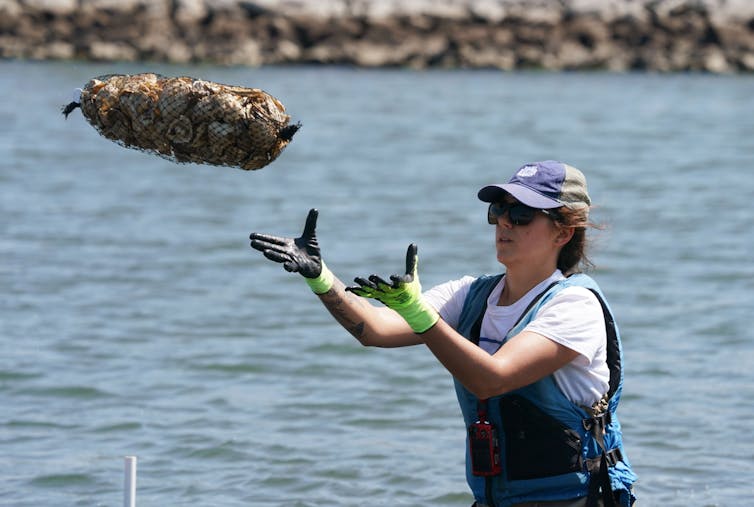
Marine laboratories are similar to biological field stations but are typically located on coasts or other water bodies.
Harbor Branch Oceanographic Institute in Florida allows visitors to tour its research facilities and equipment, including an up-close view of its underwater vehicle. It also offers citizen science programs and a weekly lecture series on all things related to ocean science.
In Alaska, the Behind the Scenes program provides adults a look at the skills and science of running the Sitka Sound Science Center, like monitoring the genetic interaction of wild and hatchery salmon. Its feature event, the Sitka WhaleFest, includes wildlife cruises guided by scientists, science lectures and storytelling. For learners worldwide, the center hosts a podcast and offers recorded lessons on how to say the names of local animals in Tlingit, the language of the Sitka tribe.
As people continue to reap the mental and physical benefits of spending more time outdoors, I believe it’s important to mitigate any harm this extra activity may have on the environment. These four venues can help anyone learn more about the science behind natural spaces and also how to help preserve them.
[Get our best science, health and technology stories. Sign up for The Conversation’s science newsletter.]
Jill Zarestky, Assistant Professor of Education, Colorado State University
This article is republished from The Conversation under a Creative Commons license. Read the original article.
Using the European Southern Observatory’s Very Large Telescope, or the ESO’s VLT, astronomers have revealed the closest pair of supermassive black holes to Earth ever observed.
The two objects also have a much smaller separation than any other previously spotted pair of supermassive black holes and will eventually merge into one giant black hole.
Located in the galaxy NGC 7727 in the constellation Aquarius, the supermassive black hole pair is about 89 million light-years away from Earth.
Although this may seem distant, it beats the previous record of 470 million light-years by quite some margin, making the newfound supermassive black hole pair the closest to us yet.
Supermassive black holes lurk at the centre of massive galaxies and when two such galaxies merge, the black holes end up on a collision course.
The pair in NGC 7727 beat the record for the smallest separation between two supermassive black holes, as they are observed to be just 1600 light-years apart in the sky.
“It is the first time we find two supermassive black holes that are this close to each other, less than half the separation of the previous record holder,” said Karina Voggel, an astronomer at the Strasbourg Observatory in France and lead author of the study published online today in Astronomy & Astrophysics.
“The small separation and velocity of the two black holes indicate that they will merge into one monster black hole, probably within the next 250 million years,” added co-author Holger Baumgardt, a professor at the University of Queensland, Australia.
The merging of black holes like these could explain how the most massive black holes in the Universe come to be.
Voggel and her team were able to determine the masses of the two objects by looking at how the gravitational pull of the black holes influences the motion of the stars around them.
The bigger black hole, located right at the core of NGC 7727, was found to have a mass almost 154 million times that of the Sun, while its companion is 6.3 million solar masses.
It is the first time the masses have been measured in this way for a supermassive black hole pair.
This feat was made possible thanks to the close proximity of the system to Earth and the detailed observations the team obtained at the Paranal Observatory in Chile using the Multi-Unit Spectroscopic Explorer, or MUSE, on ESO’s VLT, an instrument Voggel learnt to work with during her time as a student at ESO.
Measuring the masses with MUSE, and using additional data from the NASA/ESA Hubble Space Telescope, allowed the team to confirm that the objects in NGC 7727 were indeed supermassive black holes.
Astronomers suspected that the galaxy hosted the two black holes, but they had not been able to confirm their presence until now since we do not see large amounts of high-energy radiation coming from their immediate surroundings, which would otherwise give them away.
“Our finding implies that there might be many more of these relics of galaxy mergers out there and they may contain many hidden massive black holes that still wait to be found,” said Voggel. “It could increase the total number of supermassive black holes known in the local Universe by 30%.”
The search for similarly hidden supermassive black hole pairs is expected to make a great leap forward with ESO’s Extremely Large Telescope, or ELT, set to start operating later this decade in Chile’s Atacama Desert.
“This detection of a supermassive black hole pair is just the beginning,” said co-author Steffen Mieske, an astronomer at ESO in Chile and Head of ESO Paranal Science Operations. “With the HARMONI instrument on the ELT we will be able to make detections like this considerably further than currently possible. ESO’s ELT will be integral to understanding these objects.”
William “Bill” Jensen, 68, of Hidden Valley Lake, was the pilot who died in the crash, said Lauren Berlinn, the sheriff’s office’s public information officer.
Berlinn said the cause of the crash is pending an investigation that’s being led by the National Transportation Safety Board.
Jensen was piloting the aircraft which witnesses saw going down over Clear Lake shortly after 11 a.m. Thursday.
A search with ground and air resources began immediately, and the aircraft was located just before 12:30 p.m. Thursday in tules along the shoreline, between Konocti Vista Casino and the city of Lakeport, according to radio traffic.
Jensen was pronounced dead at the scene, the sheriff’s office said.
Sheriff Brian Martin had told Lake County News on Thursday that rescue personnel were challenged in reaching the site.
Part of the issue was the low water, which meant sheriff’s Marine Patrol boats could not reach the downed craft, according to reports from the scene. During the search an air boat responded to help with the recovery.
The Federal Aviation Administration accident and incident notification on the Thursday crash identified the aircraft Jensen was flying as an experimental Gyrocopter Vortex, registered to an owner in Grass Valley.
The notification’s description of the incident states, “Aircraft crashed into marshy area due to unknown circumstances.”
In August 2020, Jensen had been involved in a gyrocopter crash near Upper Lake.
Both Berlinn and NTSB records confirmed that the aircraft involved in the August 2020 crash was not the same as the one that crashed this week. The gyrocopter in the earlier incident belonged to Jensen, according to federal records.
In the 2020 crash, Jensen had a male passenger from Windsor riding with him as they were flying over the Clover Valley area in his two-seat 2017 Autogyro Cavalon.
His own narrative of the flight explained that he had dropped down for a closer look while passing over a ranch belonging to an old flying friend when, as he was making a pass, he looked backward and accidentally pulled the stick backward as well, causing the aircraft to slow down and drop altitude.
The account said the gyrocopter fell through the trees and hit the ground. While the fuselage remained intact, much of the rest of the aircraft was destroyed.
The sheriff’s office reported at the time that both Jensen and his passenger were conscious and alert, and later airlifted out of the county for medical treatment.
Federal aviation investigations can take months to complete, so a finding on the Thursday crash’s cause is not expected immediately.
Meantime, the sheriff’s office said it is conducting a coroner’s investigation.
Email Elizabeth Larson at
City Manager Alan Flora gave a brief update on the fire’s recovery process to the Clearlake City Council at its Thursday evening meeting.
The fire, which began on Aug. 18, destroyed 138 structures, including 57 homes, and burned more than 80 acres.
In early September, Gov. Gavin Newsom proclaimed a state of emergency for Lake County as a result of the fire, which opened the door for the city and impacted residents to get more help with cleanup and recovery.
Flora told the council that about 90% of the cleanup, which is being led by the state, is now complete.
He said no work is taking place now, with crews set to return soon to complete the work.
He said the Governor’s Office of Emergency Services, or Cal OES, which is overseeing the cleanup, recently approved cleanup of some additional properties.
Cal OES and Federal Emergency Management Agency representatives recently visited the city, he said.
So far, Flora said state and federal officials haven’t made a final determination as to whether the Cache fire will be included in a federal disaster declaration.
However, he said it sounds like there is still some hope that may happen.
If it does, “It could be a real benefit to those who have property that was damaged,” with more resources available to them, he said.
Flora also reported that funding administered through the Small Business Administration was approved to help residents.
He said the SBA directly contacted the fire-impacted residents about the available assistance.
Email Elizabeth Larson at
The City of Clearlake Animal Association also is seeking fosters for the animals waiting to be adopted.
Call the Clearlake Animal Control shelter at 707-273-9440, or email
Visit Clearlake Animal Control on Facebook or on the city’s website.
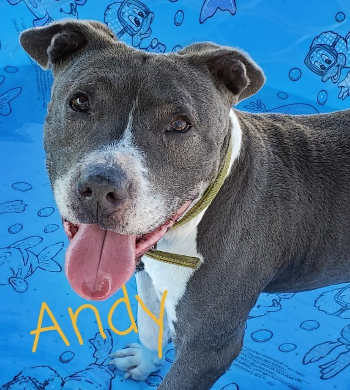
‘Andy’
“Andy” is a male American pit bull mix with a short gray and white coat.
He is dog No. 48995415.
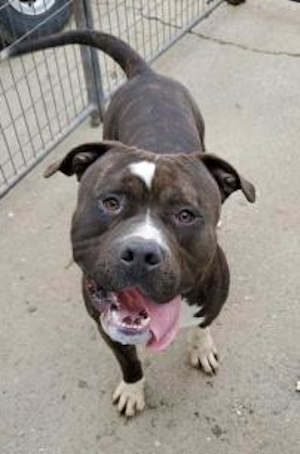
‘Arnold’
“Arnold” is a male American Staffordshire terrier mix with a short brindle coat with white markings.
He is dog No. 49029348.
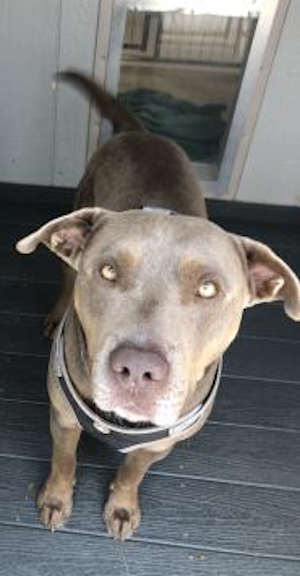
‘Bear’
“Bear” is a male Labrador retriever-American pit bull mix with a short charcoal and fawn coat.
He has been neutered.
He is dog No. 48443153.
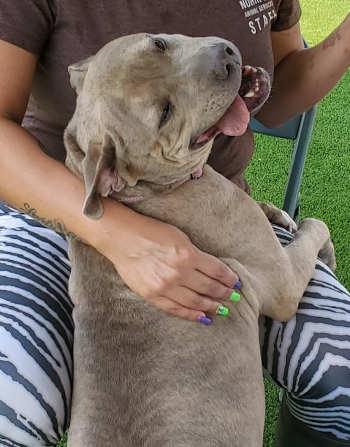
‘Bella’
“Bella” is a female American pit bull mix with a short gray brindle coat.
She has been spayed.
She is dog No. 48448381.
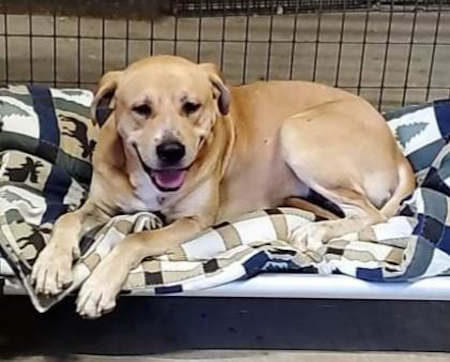
‘Levi’
“Levi” is a male golden retriever-Labrador retriever mix.
He has a short golden coat.
He is dog No. 48975687.
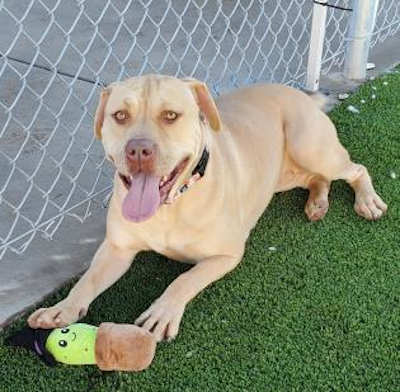
‘Maria’
“Maria” is a female Shar-Pei mix with a short tan coat.
She is dog No. 49047315.
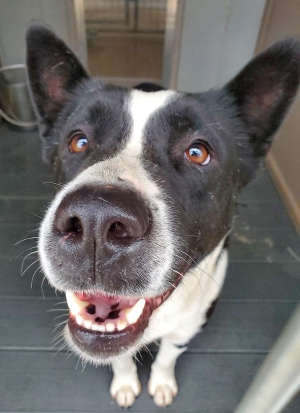
‘Mitzi’
“Mitzi” is a female Australian cattle dog mix with a medium-length black and white coat.
She has been spayed.
She is dog No. 48443306.
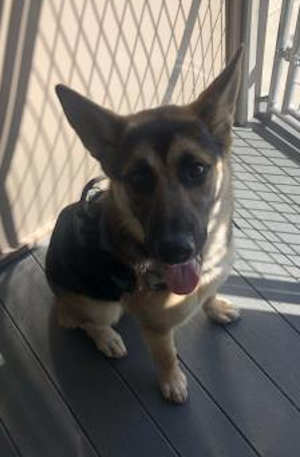
‘Nala’
“Nala” is a 1-year-old female German shepherd mix.
She has a medium-length black and tan coat.
She is dog No. 48289638.
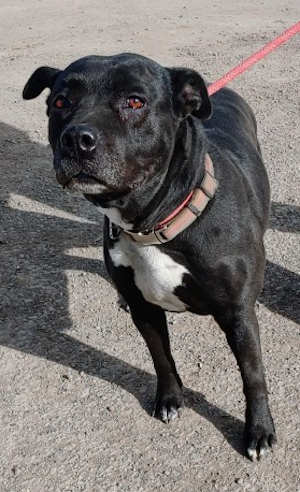
‘Sassy’
“Sassy” is a female American pit bull mix with a short black coat.
She has been spayed.
She is dog No. 48443128.
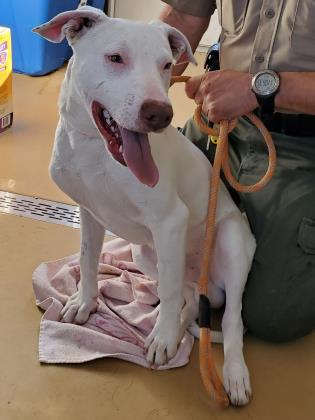
‘Snowball’
“Snowball” is a male American Staffordshire mix terrier with a white coat.
He is dog No. 49159168.
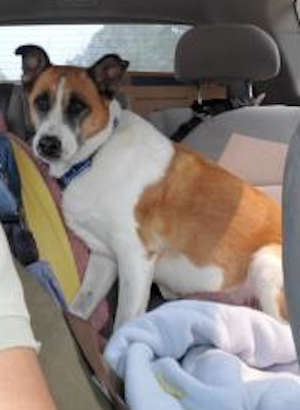
‘Tanisha’
“Tanisha” is a female Australian cattle dog mix with a short red and white coat.
She has been spayed.
She is dog No. 48443302.
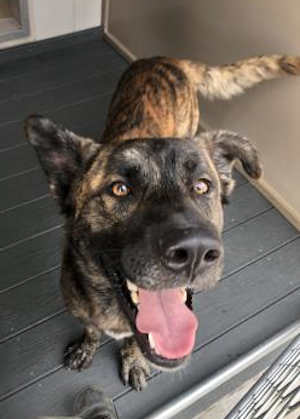
‘Terry’
“Terry” is a male shepherd mix with a short brindle coat.
He is dog No. 48443693.
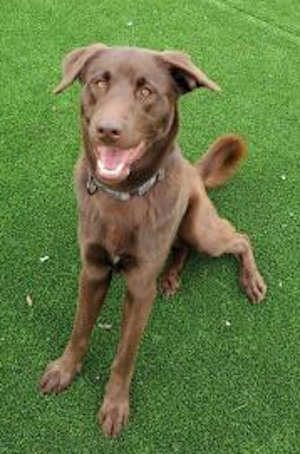
‘Turk’
“Turk” is a male chocolate Labrador retriever mix.
He is dog No. 48911836.
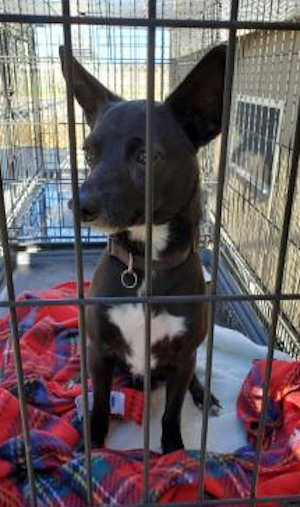
‘Willie’
“Willie” is a male Chihuahua mix with a short black coat and white markings.
He is dog No. 49141640.
Email Elizabeth Larson at