LAKE COUNTY, Calif. — Lake County Animal Care and Control has eight dogs ready for their forever homes this week.
Dogs available for adoption this week include mixes of German shepherd, husky, Labrador retriever, mastiff and pit bull.
Dogs that are adopted from Lake County Animal Care and Control are either neutered or spayed, microchipped and, if old enough, given a rabies shot and county license before being released to their new owner. License fees do not apply to residents of the cities of Lakeport or Clearlake.
The following dogs at the Lake County Animal Care and Control shelter have been cleared for adoption (additional dogs on the animal control website not listed are still “on hold”).
Call Lake County Animal Care and Control at 707-263-0278 or visit the shelter online for information on visiting or adopting.
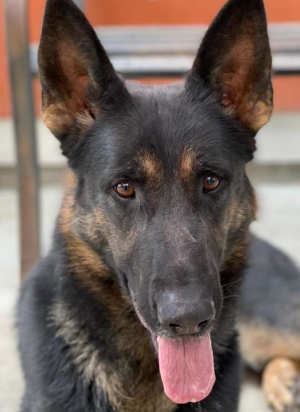
This 1-year-old male German shepherd is in kennel No. 12, ID No. LCAC-A-1892. Photo courtesy of Lake County Animal Care and Control. Male German shepherd
This 1-year-old male German shepherd has a black and tan coat.
He is in kennel No. 12, ID No. LCAC-A-1892.
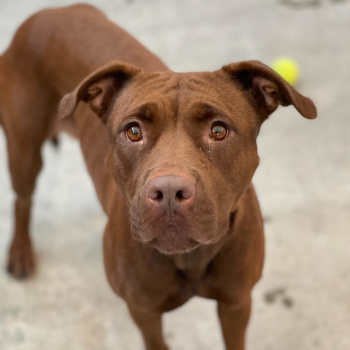
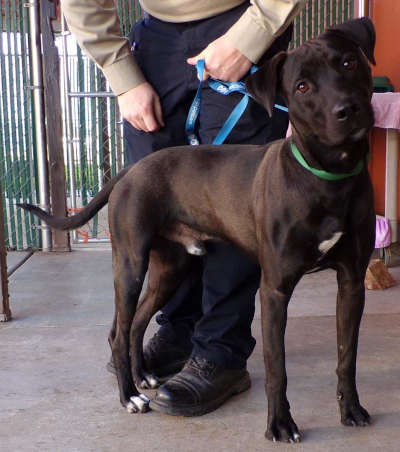
This 5-year-old female chocolate Labrador retriever-pit bull mix is in kennel No. 13, ID No. LCAC-A-1769. Photo courtesy of Lake County Animal Care and Control. Labrador-pit bull mix
This 5-year-old female chocolate Labrador retriever-pit bull mix has a short chocolate-colored coat.
She is in kennel No. 13, ID No. LCAC-A-1769.
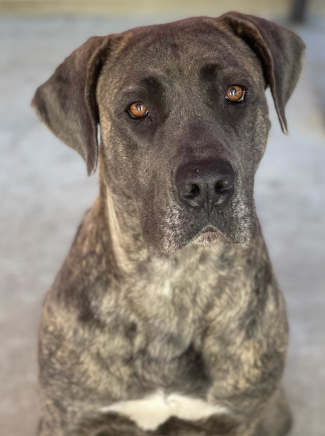
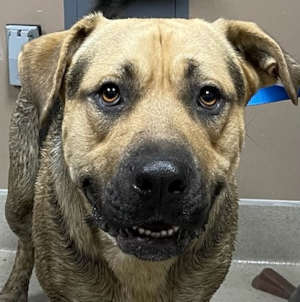
This 3-year-old female mastiff is in kennel No. 15, ID No. LCAC-A-1868. Photo courtesy of Lake County Animal Care and Control. Female mastiff
This 3-year-old female mastiff has a short brindle coat.
She is in kennel No. 15, ID No. LCAC-A-1868.
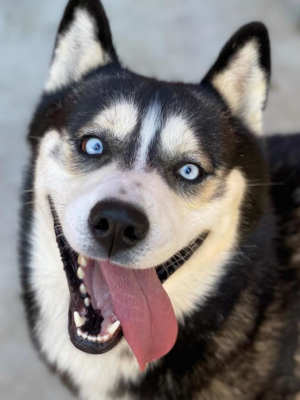
This 1-year-old male husky is in kennel No. 16, ID No. LCAC-A-2190. Photo courtesy of Lake County Animal Care and Control. Male husky
This 1-year-old male husky has a black and white coat with bright blue eyes.
He is in kennel No. 16, ID No. LCAC-A-2190.
“Snuffy” is a 1-year-old black Labrador retriever mix in kennel No. 24, ID No. LCAC-A-2152. Photo courtesy of Lake County Animal Care and Control. ‘Snuffy’
“Snuffy” is a 1-year-old black Labrador retriever mix.
He is in kennel No. 24, ID No. LCAC-A-2152.
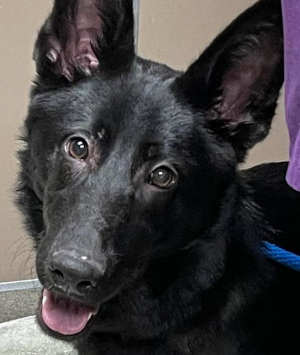
This 2-year-old male German shepherd is in kennel No. 26, ID No. LCAC-A-1903. Photo courtesy of Lake County Animal Care and Control. Male German shepherd
This 2-year-old male German shepherd has a black and tan coat.
He is in kennel No. 26, ID No. LCAC-A-1903.
This 2-year-old male shepherd mix is in kennel No. 28, ID No. LCAC-A-1743. Photo courtesy of Lake County Animal Care and Control. Male shepherd mix
This 2-year-old male shepherd mix has a short black and tan coat.
He is in kennel No. 28, ID No. LCAC-A-1743.
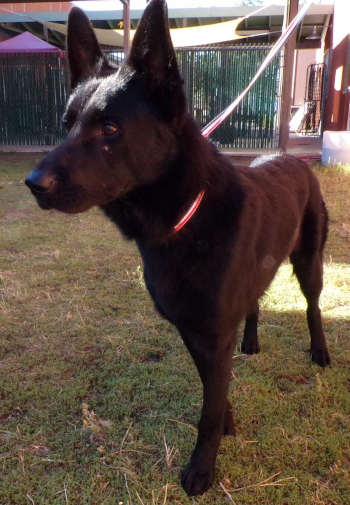
This female German shepherd is in kennel No. 33, ID No. LCAC-A-2169. Photo courtesy of Lake County Animal Care and Control. Female German shepherd
This female German shepherd has a black coat.
She is in kennel No. 33, ID No. LCAC-A-2169.
Email Elizabeth Larson at This email address is being protected from spambots. You need JavaScript enabled to view it.. Follow her on Twitter, @ERLarson, or Lake County News, @LakeCoNews.
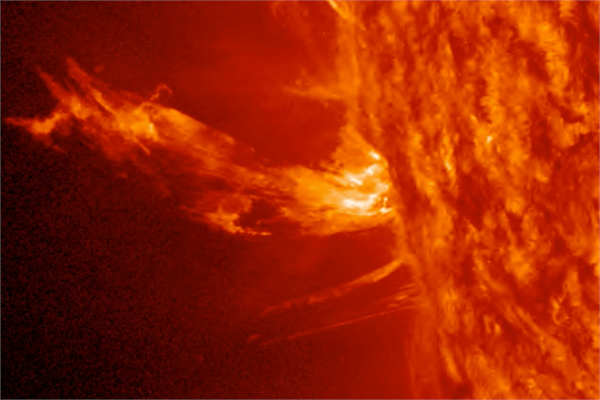
In this new citizen science project, participants will help identify bursts of plasma coming off the Sun, called solar jets, in thousands of images captured over the last 11 years by NASA’s Solar Dynamic Observatory. Image credit: NASA.
If you ever wanted to be an astronomer, now is your chance. A new citizen science project, led by researchers at the University of Minnesota with support from NASA, allows volunteers to play an important role in learning more about the Sun by using their personal computers.
Participants will help identify bursts of plasma coming off the Sun, called solar jets, in thousands of images captured over the last 11 years by NASA’s Solar Dynamic Observatory.
The project, called Solar Jet Hunter, is the newest citizen science project under the Zooniverse platform originated at the University of Minnesota. Zooniverse is the world’s largest and most popular people-powered online research platform with more than two million volunteers from around the world. These volunteers act as armchair scientists and archivists helping academic research teams with their projects from the comfort of their own homes.
In this project, citizen scientists will detect solar jets by looking at short movies made from a sequence of still images. They decide if a solar jet is visible in any of the movies and provide information about the jets by annotating the images where solar jets are found.
By building a database of solar jets, the volunteers help narrow down the vast amount of data about the Sun to the most important information for further review by solar researchers.
Solar Jet Hunter is the newest citizen science project under the Zooniverse platform. In this project, citizen scientists will detect solar jets by looking at short movies made from a sequence of still images. They decide if a solar jet is visible in any of the movies and provide information about the jets by annotating the images where solar jets are found. Credit: Solar Jet Hunter, Zooniverse
“These solar jets are sort of like a million hydrogen bombs going off on the star that’s actually not that far away from us, so it is important that we try to understand more about how that happens,” said Lindsay Glesener, a University of Minnesota associate professor of physics and astronomy. “But with our small research team, it would probably take a decade or more to look through all these images ourselves so we’re asking for help.”
The team decided that the project would be perfect for the Zooniverse citizen science platform.
“Solar jets are very difficult to identify in any sort of automatic way,” said Sophie Musset, a research fellow at the European Space Agency and former University of Minnesota postdoctoral researcher who is leading the Solar Jet Hunter project. “You can’t just write a piece of code that will tell the computer to search and find all of the solar jets, but it's very easy to see with human eyes.”
Musset and Glesener said the information they get from the citizen scientists will not only be used to study the Sun but will also help to write a computer algorithm that could speed future identification of solar jets by combining computer help with human expertise.
Glesener also said that the University of Minnesota was the perfect place for solar research and citizen science to come together.
“We have both the expertise in studying solar jets and the Zooniverse team here at the University of Minnesota,” Glesener said. “You can’t just throw some random images up on a website and expect that you're going to get the information from the citizen scientists that you need. It takes people who really know how to make it work.”
Lucy Fortson, a fellow University of Minnesota physics and astronomy professor and one of the founders of the Zooniverse platform, is one of those experts.
“While Zooniverse has been involved in all kinds of citizens projects from the humanities to biology, this project brings us back to our astrophysics roots,” Fortson said. “Our partnership with NASA and the Adler Planetarium has expanded our capacity to take on important projects like this one and increased the acceptance of citizen science as a valid research methodology within the scientific community. This is real proof that citizen science has come of age as a research tool.”
In addition to Musset, Glesener, and Fortson, the Solar Jet Hunter international research team includes co-investigators Gregory Fleishman, a professor in the Center for Solar-Terrestrial Research at the New Jersey Institute of Technology; and Navdeep Panesar, a research scientist at Lockheed Martin Solar & Astrophysics Laboratory and Bay Area Environmental Research Institute.
Other members of the team include Erik Ostlund, a Zooniverse web developer at the University of Minnesota; Suhail Alnahari, a data scientist in the University of Minnesota’s School of Physics and Astronomy; University of Minnesota graduate students Yixian Zhang and Charlie Kapsiak; Mariana Jeunon, graduate student at Catholic University of America in Washington, D.C.; and Paloma Jol, a master student at Leiden University in The Netherlands.
The Solar Jet Hunter citizen science project is funded by NASA under the Heliophysics Guest Investigators program, and has supported students under a U.S. National Science Foundation CAREER grant.
LAKE COUNTY, Calif. — A semi rollover on Saturday morning resulted in a fatality and caused a milk and diesel spill near a creek.
The California Highway Patrol first received reports of the crash shortly after 6:30 a.m. Saturday on Highway 20 about four miles west of Walker Ridge Road, east of Clearlake Oaks.
The semi tank truck had gone over the side of the highway and initially was not visible from the roadway, the CHP reported.
When authorities accessed the truck, they confirmed a fatality, shortly before 7:30 a.m., according to reports from the scene.
CHP separately issued a notification just before 8 a.m. confirming a fatality, and reporting that Highway 20 west of Walker Ridge Road was open but impacted by emergency traffic as work at the crash site continued. The agency asked drivers at that time to use caution or take an alternate route of travel.
The early scene reports stated that the tanker appeared to be carrying a load of milk and that the crash resulted in milk going into Grizzly Creek.
Reports also estimated that up to 100 gallons of diesel fuel could have been spilled had the truck’s fuel tanks been full.
Fish and Game and the Office of Emergency Services were requested due to the hazmat concerns, according to CHP reports.
The recovery efforts required heavy equipment, with two wreckers responding but other assistance needed to remove the fuel.
The CHP also reported challenges with recovery due to the crash being on a blind curve on the highway.
The work to remove the semi continued into the afternoon and evening, the CHP said.
Radio reports stated that the hazmat team cleared the scene at 5 p.m.
At 6:40 p.m., the CHP reported that all lanes of the highway were open and the incident had been cleared.
Additional information will be published as it becomes available.
Email Elizabeth Larson at This email address is being protected from spambots. You need JavaScript enabled to view it.. Follow her on Twitter, @ERLarson, or Lake County News, @LakeCoNews.
LAKE COUNTY, Calif. — The National Weather Service said a winter storm will bring rain and mountain snow this weekend, with wet weather expected to impact the region through the middle of next week.
The agency’s Eureka office said that, as the cold front approaches, winds are expected to increase on Saturday, diminishing in the wake of the cold front on Saturday night.
In Lake County, rain is expected to start on Saturday evening, with less than a tenth of an inch during the day but up to three quarters of an inch on Saturday night.
There is the possibility of another inch of rain on Sunday.
On Monday, the forecast calls for as much as an inch and a half, the National Weather Services said.
The forecast expects more rain from Tuesday through Thursday, with specific amounts not predicted.
Temperatures over the coming week will hover in the high 40s during the day and the low 40s at night until Monday, when they will drop into the 30s and continue in that range through late in the week.
There also will be light winds in the evenings until Monday, when southwest winds of up to 17 miles per hour and gusts of up to 23 miles per hour, are forecast.
Email Elizabeth Larson at This email address is being protected from spambots. You need JavaScript enabled to view it.. Follow her on Twitter, @ERLarson, or Lake County News, @LakeCoNews.
With the holiday season underway and people visiting family and friends, the California Department of Public Health is urging Californians to get the influenza vaccine to protect their health, and the health of others, during this flu season.
For Californians who still haven't had the COVID-19 vaccine or are due for their booster, the flu vaccine and COVID-19 vaccine can be given on the same day.
CDPH said influenza is increasing around the country, especially among young adults and children, who commonly spread the disease. The number of cases tends to increase during this time of year.
National survey data show lower vaccination rates for children and pregnant people this year as compared with last year leaving them unprotected and more vulnerable to serious flu illness.
“We continue to see the positive impact vaccines have on our collective and individual health and well-being,” said Dr. Tomás J. Aragón, CDPH Director and State Public Health Officer. “There are many reasons to get vaccinated this season, but the best ones are to keep yourself and loved ones healthy.”
Flu vaccinations in Lake County this year are slightly down compared with last year, according to information provided by Jen Baker, interim deputy director for Lake County Health Services.
Baker reported that from July 1 to date, there have been 10,841 flu vaccinations in Lake County.
Flu vaccinations received in Lake County for the same time period last year totaled 11,611, Baker said.
CDPH recommends the annual flu vaccination for everyone 6 months of age and older. Getting vaccinated against the flu is especially important for people at high-risk of severe disease and hospitalization, including:
• People 65 years and older. • People who smoke or have underlying medical conditions like diabetes, heart disease, asthma, lung disease, neurological disorders and weakened immune systems. • Pregnant women and children under five years of age. • Caregivers and residents in long-term care facilities. • Essential workers who encounter others outside their homes or at higher risk because of their occupation.
CDPH encourages Californians to contact their health care provider, physician's office, or clinic about getting the flu vaccine. Adults and children may also get immunized at the pharmacy where they generally pick up their prescriptions. Pharmacies accept most insurance, including Medi-Cal. Some local health departments may offer low- or no-cost flu immunizations.
If you still haven’t had the COVID-19 vaccine or are due for a booster, the flu vaccine and COVID-19 vaccine can be given on the same day. The state’s My Turn website can be used to schedule COVID-19 vaccination appointments, and also allows Californians to schedule their flu vaccination or find a walk-in clinic.
Besides getting immunized, you can also take preventive actions:
• Continue wearing a mask when recommended or required in high-risk settings. • Stay away from people who are sick. • Stay home when sick for at least 24 hours after symptoms go away. • Cough or sneeze into your elbow, arm, or disposable tissue. If you use a disposable tissue, use hand sanitizer, or wash your hands afterward. • Wash hands frequently and thoroughly with soap and warm water or use an alcohol-based hand sanitizer. • Avoid touching your eyes, nose, and mouth.
LAKE COUNTY, Calif. — The city of Lakeport announced this week that it has completed an updated emergency evacuation map.
The city completed the map’s latest version with the assistance of the Lake County Sheriff’s Office.
The map includes color-coded zones, with each zone containing the ZoneHaven identification.
Officials said the map also is geo-spatially referenced, which allows users to locate themselves without the need of Internet, wi-fi or other network connections, just their mobile device's built-in GPS service. This is especially helpful for users of GeoPDF applications such as Avenza and Global Mapper.
 How to resolve AdBlock issue?