 How to resolve AdBlock issue?
News
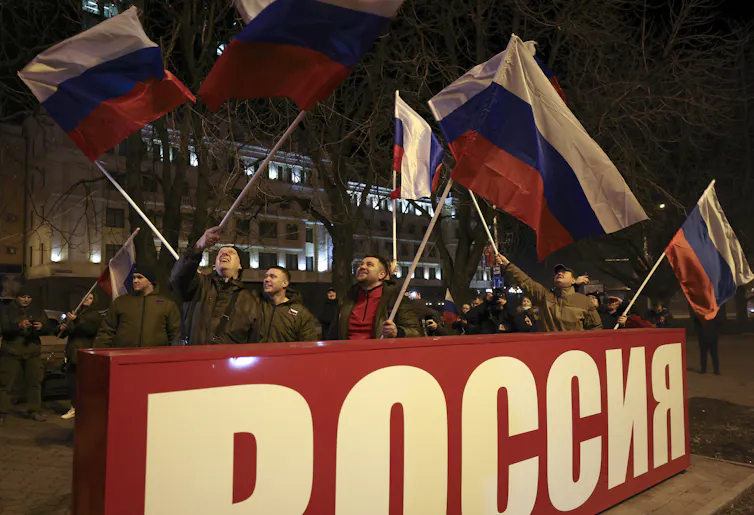
The first casualty of war, says historian Ronald Suny, is not just the truth. Often, he says, “it is what is left out.”
Russian President Vladimir Putin began a full-scale attack on Ukraine on Feb. 24, 2022 and many in the world are now getting a crash course in the complex and intertwined history of those two nations and their peoples. Much of what the public is hearing, though, is jarring to historian Suny’s ears. That’s because some of it is incomplete, some of it is wrong, and some of it is obscured or refracted by the self-interest or the limited perspective of who is telling it. We asked Suny, a professor at the University of Michigan, to respond to a number of popular historical assertions he’s heard recently.
Putin’s view of Russo-Ukrainian history has been widely criticized in the West. What do you think motivates his version of the history?
Putin believes that Ukrainians, Belarusians and Russians are one people, bound by shared history and culture. But he also is aware that they have become separate states recognized in international law and by Russian governments as well. At the same time, he questions the historical formation of the modern Ukrainian state, which he says was the tragic product of decisions by former Russian leaders Vladimir Lenin, Josef Stalin and Nikita Khrushchev. He also questions the sovereignty and distinctive nation-ness of Ukraine. While he promotes national identity in Russia, he denigrates the growing sense of nation-ness in Ukraine.
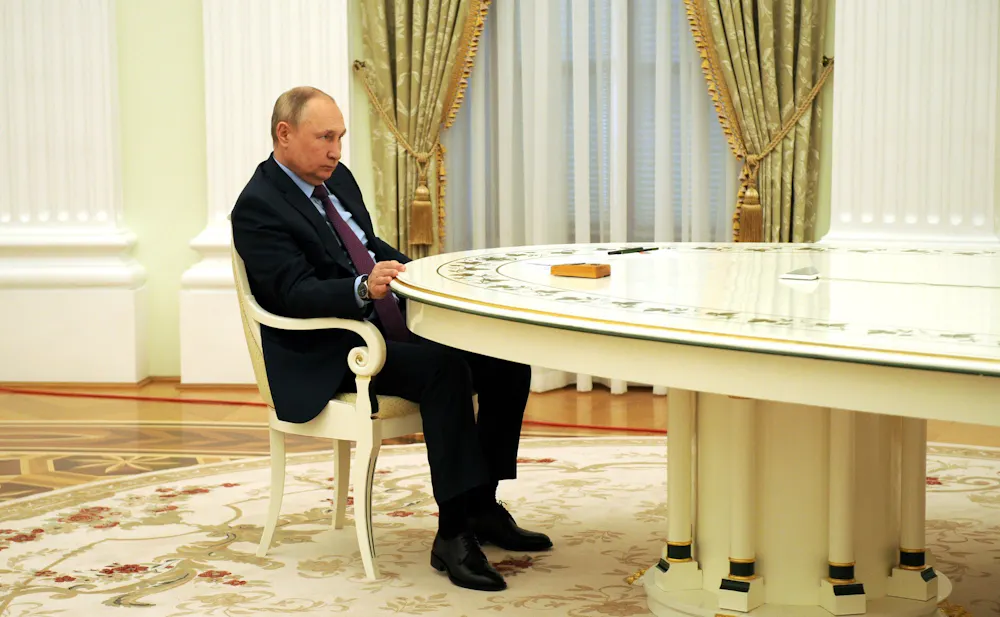
Putin indicates that Ukraine by its very nature ought to be friendly, not hostile, to Russia. But he sees its current government as illegitimate, aggressively nationalist and even fascist. The condition for peaceful relations between states, he repeatedly says, is that they do not threaten the security of other states. Yet, as is clear from the invasion, he presents the greatest threat to Ukraine.
Putin sees Ukraine as an existential threat to Russia, believing that if it enters NATO, offensive weaponry will be placed closer to the Russian border, as already is being done in Romania and Poland.
It’s possible to interpret Putin’s statements about the historical genesis of the Ukrainian state as self-serving history and a way of saying, “We created them, we can take them back.” But I believe he may instead have been making a forceful appeal to Ukraine and the West to recognize the security interests of Russia and provide guarantees that there will be no further moves by NATO toward Russia and into Ukraine. Ironically, his recent actions have driven Ukrainians more tightly into the arms of the West.
The Western position is that the breakaway regions Putin recognized, Donetsk and Luhansk, are integral parts of Ukraine. Russia claims that the Donbass region, which includes these two provinces, is historically and rightfully part of Russia. What does history tell us?
During the Soviet period, these two provinces were officially part of Ukraine. When the USSR disintegrated, the former Soviet republic boundaries became, under international law, the legal boundaries of the post-Soviet states. Russia repeatedly recognized those borders, though reluctantly in the case of Crimea.
But when one raises the fraught question of what lands belong to what people, a whole can of worms is opened. The Donbass has historically been inhabited by Russians, Ukrainians, Jews and others. It was in Soviet and post-Soviet times largely Russian ethnically and linguistically. When in 2014 the Maidan revolution in Kyiv moved the country toward the West and Ukrainian nationalists threatened to limit the use of the Russian language in parts of Ukraine, rebels in the Donbas violently resisted the central government of Ukraine.

After months of fighting between Ukrainian forces and pro-Russian rebel forces in the Donbas in 2014, regular Russian forces moved in from Russia, and a war began that has lasted for the last eight years, with thousands killed and wounded.
Historical claims to land are always contested – think of Israelis and Palestinians, Armenians and Azerbaijanis – and they are countered by claims that the majority living on the land in the present takes precedence over historical claims from the past. Russia can claim Donbass with its own arguments based on ethnicity, but so can Ukrainians with arguments based on historical possession. Such arguments go nowhere and often lead, as can be seen today, to bloody conflict.
Why was Russia’s recognition of Donetsk and Luhansk People’s Republics as independent such a pivotal event in the conflict?
When Putin recognized the Donbass republics as independent states, he seriously escalated the conflict, which turned out to be the prelude to a full-scale invasion of Ukraine. That invasion is a hard, harsh signal to the West that Russia will not back down and accept the further arming of and placing of weaponry in Ukraine, Poland and Romania. The Russian president has now led his country into a dangerous preventive war – a war based on the anxiety that sometime in the future his country will be attacked – the outcome of which is unpredictable.
A New York Times story on Putin’s histories of Ukraine says “The newly created Soviet government under Lenin that drew so much of Mr. Putin’s scorn on Monday would eventually crush the nascent independent Ukrainian state. During the Soviet era, the Ukrainian language was banished from schools and its culture was permitted to exist only as a cartoonish caricature of dancing Cossacks in puffy pants.” Is this history of Soviet repression accurate?
Lenin’s government won the 1918-1921 civil war in Ukraine and drove out foreign interventionists, thus consolidating and recognizing the Ukrainian Soviet Socialist Republic. But Putin is essentially correct that it was Lenin’s policies that promoted Ukrainian statehood within the USSR, within a Soviet empire, officially granting it and other Soviet republics the constitutional right to secede from the Union without conditions. This right, Putin angrily asserts, was a landmine that eventually blew up the Soviet Union.
The Ukrainian language was never banned in the USSR and was taught in schools. In the 1920s, Ukrainian culture was actively promoted by the Leninist nationality policy.
But under Stalin, Ukrainian language and culture began to be powerfully undermined. This started in the early 1930s, when Ukrainian nationalists were repressed, the horrific “Death Famine” killed millions of Ukrainian peasants, and Russification, which is the process of promoting Russian language and culture, accelerated in the republic.
Within the strict bounds of the Soviet system, Ukraine, like many other nationalities in the USSR, became a modern nation, conscious of its history, literate in its language, and even in puffy pants permitted to celebrate its ethnic culture. But the contradictory policies of the Soviets in Ukraine both promoted a Ukrainian cultural nation while restricting its freedoms, sovereignty and expressions of nationalism.
History is both a contested and a subversive social science. It is used and misused by governments and pundits and propagandists. But for historians it is also a way to find out what happened in the past and why. As a search for truth, it becomes subversive of convenient and comfortable but inaccurate views of where we came from and where we might be going.
[Understand key political developments, each week. Subscribe to The Conversation’s politics newsletter.]
Ronald Suny, Professor of History and Political Science, University of Michigan
This article is republished from The Conversation under a Creative Commons license. Read the original article.
The commission met on Wednesday, Feb. 16, with commissioners in the chambers and community members able to attend both in person and via Zoom to discuss several projects, among them, the Bevins Street senior apartments.
Community Development Director Jenni Byers presented to the commission a density bonus application from AMG and Associates for the project, a 40-unit affordable housing complex which will be built on 3.1 acres at 447 Bevins St.
Byers said the developer plans to make it available to seniors whose income is from 30 to 60% of Lake County’s median income.
It will sit directly west of the Bella Vista senior housing complex, also built by AMG and Associates.
This will be the fourth project the developer has built in Lakeport. In addition to Bella Vista, it has built the two phases of the Martin Street affordable housing apartment complex.
The Bevins Street apartment project’s 40 units will be a mix of 32 one-bedroom units and eight two-bedroom units, with each of the units having either a patio or a deck.
It also will have a 1,000 square foot community building with a common kitchen, exercise room, laundry facility and business center, a community garden with raised planter beds, bocce ball court, a fenced dog park for residents’ pets, 51 parking stalls — 40 of which will be covered — along with covered picnic tables with a barbecue, pergolas made from noncombustible material, U.S. Postal Service-approved pedestal mounted mailboxes and an on-site resident manager.
Byers said that, based on state law, the developer can request up to three variances from city code and the city can’t deny it.
The Lakeport Municipal Code sets forth the criteria for density bonuses, which are meant to increase the production of affordable housing. Byers said the project is 100% affordable housing and so qualified for the density bonus, as well as up to three development incentives.
She said the developer was seeking a reduction of the off street parking requirement. Normally a development of this size would need to have 60 parking spaces, but they are planning to have 51. Based on state law, they could have requested even more of a reduction, Byers added.
The apartment complex will have a tower feature for its elevator that will be 42 feet high, exceeding the city’s maximum building height of 35 feet, she said.
Byers said the developer also asked to not have a parking requirement for recreational vehicles.
As proposed, Byers said the reductions are consistent with city code and the general plan housing element.
This is not the first density bonus application the city has considered. Staff said the city previously had approved one for the Bella Vista apartments and one for the first phase of the Martin Street apartments, both built by the same developer.
Commissioner Jeff Warrenberg moved to approve the project, with Commissioner Kurt Combs seconding and the commission giving unanimous approval.
Also during the meeting, the commission voted to have Mark Mitchell and Jeff Warrenberg continue to serve as chair and vice chair, respectively, for another year.
The commission also approved separate use permits and categorical exemptions for short-term rentals proposed by Tea Tree LLC at 1950 Lakeshore Blvd and Amber Chatwin of LNR Services at 600 Esplanade.
Email Elizabeth Larson at
Congressman John Garamendi and Congressman Mike Thompson both spoke out on the situation.
Garamendi (D-CA-03) is chair of the Armed Services Subcommittee on Readiness.
“Tonight, Russia launched an unjustified and unprovoked attack against Ukraine. My prayers are with the people of Ukraine as they withstand this meritless incursion from Vladimir Putin and the Russian military” Garamendi said.
“Vladimir Putin’s justifications for this strike are ludicrous and predicated on lies. His attempt to provoke war in Europe and usurp the democratically elected government of Ukraine will bring widespread suffering and loss of life at a scale the continent of Europe has not witnessed in a generation. I condemn these actions in the strongest possible terms,” Garamendi continued.
“As chair of the Armed Services Subcommittee on Readiness, I am monitoring the situation closely,” Garamendi said. “These actions will further unite the United States and its allies — including NATO and the European Union — and Russia will be held accountable. My heart is with the people of Ukraine and my prayers are for their safety.”
In his remarks, Thompson (D-CA-05) said the decision by Putin to invade Ukraine “is pure evil and a direct attack on democracy.”
He added, “The response to this transgression must be swift — and that means cutting Putin, Russia, and their financial elites off from the global market and imposing further crippling sanctions.
“The United States and our allies must be steadfast in the face of blatant disregard for Ukraine’s sovereignty and territorial integrity.
“My thoughts are with the people of Ukraine and I am hoping for a rapid resolution of this conflict and for lasting peace,” Thompson said.
The group will meet at 5 p.m. Monday, Feb. 28, via Zoom. The public is invited to attend.
The meeting ID is 986 2616 1748, pass code is 173031. The meeting also can be accessed via phone at 1-669-900-6833 or +16699006833,,98626161748#,,,,*173031# for one tap mobile.
The council will host guest speaker William Fox, program manager with Lake County Water Resources.
Fox will discuss the status of the Fish and Wildlife permit to clear Scotts Creek and the highest priority areas to be cleared in Scotts Creek, as well as offer an update on the Blue Ribbon Committee for the Rehabilitation of Clear Lake and the status of the well monitoring program for Scotts Valley residents. There also will be time for questions and answers.
Under old business, there will be an update on the request to clear Scotts Creek beginning at the bridge at Hendricks and Scotts Valley Road and ending downstream from the newly installed culvert. Permits for the project are in process.
In new business items, they will discuss new use permits, the Multi-Tribal Fire Prevention Grant application to Cal Fere to support the Scotts Valley Firewise Community, updates on the Firewise Committee and broadband or Scotts Valley,
They also will talk about the North Bay Forest Improvement Program, and get updates from the Scotts Valley Groundwater Protection Committee,the South Cow Mountain Management Area implementation and the free drinking water testing program offered through Cal-WATCH.org.
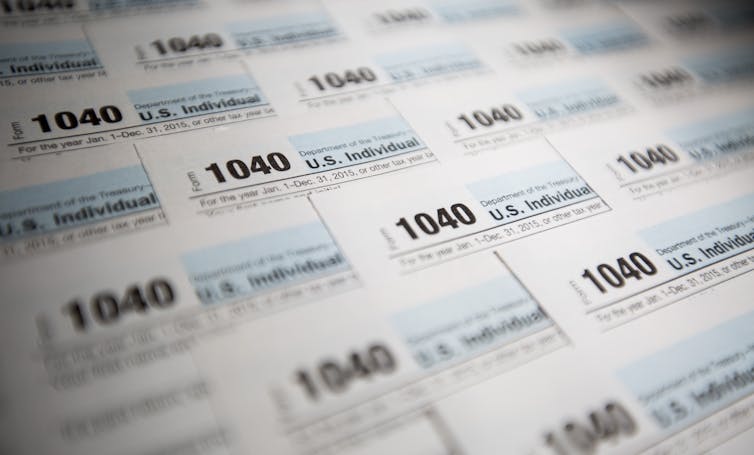
No one likes tax season. It’s complicated, it’s stressful, and it’s getting worse.
Last year was already the “most challenging year taxpayers and tax professionals have ever experienced,” according to the Taxpayer Advocate Service, an independent part of the Internal Revenue Service. According to the agency’s annual report, taxpayers had trouble reaching the IRS, tax returns took months to process, almost a quarter of refunds didn’t go out until 2022, and collection notices were sent out even after the tax owed was paid.
The pandemic deserves some of the blame, but so do years of underfunding the IRS, antiquated computer systems and a dwindling workforce.
And with millions of returns from 2021 still waiting to be processed, 2022 may be worse. That prospect has prompted lawmakers and others to press the IRS to offer taxpayers relief, as it did in 2021, in the form of suspended penalties, delayed collections and extended tax deadlines.
As a tax expert, I believe taxpayers will face at least three main challenges this year. While the onus for solving these problems should be on the federal government – not the taxpayer – I do have a few suggestions for getting you through tax season 2022.
1. Backlogs and delays
The IRS started the 2022 tax season already significantly behind.
Over 15 million returns and 5 million pieces of taxpayer correspondence from 2021 sit untouched – including 6 million original 1040s. Amended 2021 returns are taking more than 20 weeks to process.
And it’s not just complicated returns that are getting delayed. Even simple individual returns are caught in the backlog.
As a result, expect a long wait before you receive this year’s refund.
This is a big problem for almost everyone. In 2020, over 75% of taxpayers received a refund, and the average refund for e-filed returns was $2,549.
Most people are eager to get their money. Often, refunds make a big difference to a household’s finances. One out of 4 recipients report that they will use their refunds to cover everyday expenses. One-third will try to catch up on debt. Others may use the sudden infusion of cash to make big purchases that they have put off all year, such as dental work or a down payment on a new car.
IRS delays mean businesses must wait longer for forgiveness of pandemic-related loans or credits for keeping their workers on the payroll. The same goes for workers who erroneously paid federal taxes on their unemployment insurance and can only be reimbursed at tax time.
2. Erroneous letters and actions from the IRS
That brings me to a second challenge.
IRS actions are often triggered by automated systems that generate notices and letters to taxpayers. For example, if the IRS system shows that a taxpayer owes the government money but doesn’t show payment by a given date, the automated system triggers a notice demanding immediate payment and assessing penalties. These IRS communications can leave taxpayers petrified.
Because of the antiquated computer system and dwindling personnel, you might very well receive a notice reprimanding you for a failure that you took care of months ago.
The IRS recently announced that it would suspend some automatic notices until its backlog clears, but others are required to go out within a certain time frame. It’s important to note that regardless of whether you receive a notice, you may still be on the hook for interest or penalties if the IRS thinks you owe money.
3. Hello? Anyone there?
But this challenge is compounded by the fact that taxpayers and preparers are finding it nearly impossible to get help from the IRS, whether in person, by telephone or via mail.
Face-to-face meetings have naturally become more limited due to COVID-19 precautions. IRS offices remain open but require appointments, while all Taxpayer Advocate Service offices are closed to in-person visits.
But don’t expect much more luck getting help over the phone. Last year, the IRS received a record 282 million phone calls, but answered only 11% of them. In other words, 250 million calls went unanswered.
And, as old-fashioned as it sounds, people still seek help from the IRS with snail mail. But the 2021 backlog is around 5 million letters, which suggests if you need help this year, mail may not be your best bet.
What you can do
And that brings me to what, if anything, you can do to steer through some of these challenges. Fortunately, there are a few best practices that can help.
File as early as you can. And if possible, file electronically – for example, by using the IRS’ free fillable forms, which allow you to prepare and file your own return without using any tax software.
Do your best to ensure your return is accurate the first time you file. Filing an amended return is sure to stretch out your wait.
It is also a good idea to keep copies of everything and not freak out if you get an IRS notice. There is at least some chance that the notice is wrong and the problem is already solved.
Calling the IRS seems like a nearly fruitless activity. If you must pick up the phone, you might have more luck calling in the morning when there’s less demand rather than in the afternoon. But expect a long wait even if you’re lucky enough to be among the 1 in 9 callers who get to talk to a human being.
For some taxpayers, such as those who are low-income or disabled, you could try reaching out to your local Volunteer Taxpayer Assistance Clinic, which may have more bandwidth to help. There is also the Taxpayers Assistance Center, which makes appointments and helps with more complicated matters.
Of course, the problem with all this advice is that it puts the onus on you, the individual taxpayer, to figure out how to sort through the mess created by years of severely underfunding the IRS. Annual funding for the agency has declined about 20% from 2010 levels, after adjusting for inflation, resulting in severe staffing shortages. I believe the only way to truly rectify the situation is for Congress to reverse the cuts it made and shore up the IRS with enough funding to do its job.
You shouldn’t have to be skilled or savvy in order to honestly pay your taxes.
[More than 150,000 readers get one of The Conversation’s informative newsletters. Join the list today.]
Beverly Moran, Professor Emerita of Law, Vanderbilt University
This article is republished from The Conversation under a Creative Commons license. Read the original article.
The National Weather Service’s observation stations reported small amounts of rain — up to a tenth of an inch in areas like Upper Lake — but there also were small accumulations of hail and snow that occurred on Tuesday afternoon.
Based on the updated forecast, a cold and dry air mass is expected to settle over the region and persist through the week.
The National Weather Service is forecasting more rain and mountain snow through this weekend, primarily Saturday night into Sunday, with still more precipitation expected into the middle of next week.
The specific Lake County forecast calls for patchy frost early Wednesday, and on Wednesday night and into early Thursday morning, with overnight temperatures dipping into the low 30s this week.
Daytime conditions this week will be in the 50s, with some light winds predicted on Friday.
Friday and Saturday are expected to be partly sunny, before chances of rain return.
The National Weather Service’s forecast calls for the possibility of rain from Saturday night through Tuesday.
Email Elizabeth Larson at