 How to resolve AdBlock issue?
News

The Biden administration on March 31, 2022, said it plans to release an unprecedented 180 million barrels of oil from the U.S. Strategic Petroleum Reserve to combat the recent spike in gas and diesel prices. About a million barrels of oil will be released every day for up to six months.
If all the oil is released, it would represent almost one-third of the current volume of the Strategic Petroleum Reserve. It follows a release of 30 million barrels in early March, a large withdrawal until the latest one.
But what is the Strategic Petroleum Reserve, why was it created, and when has it been used? And does it still serve a purpose, given that the U.S. exports more oil and other petroleum products than it imports?
As an energy researcher, I believe considering the reserve’s history can help answer these questions.
Origins of the reserve
Congress created the Strategic Petroleum Reserve as part of the Energy Policy and Conservation Act of 1975 in response to a global oil crisis.
Arab oil-exporting states led by Saudi Arabia had cut supply to the world market because of Western support for Israel in the 1973 Yom Kippur War. Oil prices quadrupled, resulting in major economic damage to the U.S. and other countries. This also shook the average American, who had grown used to cheap oil.
The oil crisis caused the U.S., Japan and 15 other advanced countries to form the International Energy Agency in 1974 to recommend policies that would forestall such events in the future. One of the agency’s key ideas was to create emergency petroleum reserves that could be drawn on in case of a severe supply disruption.
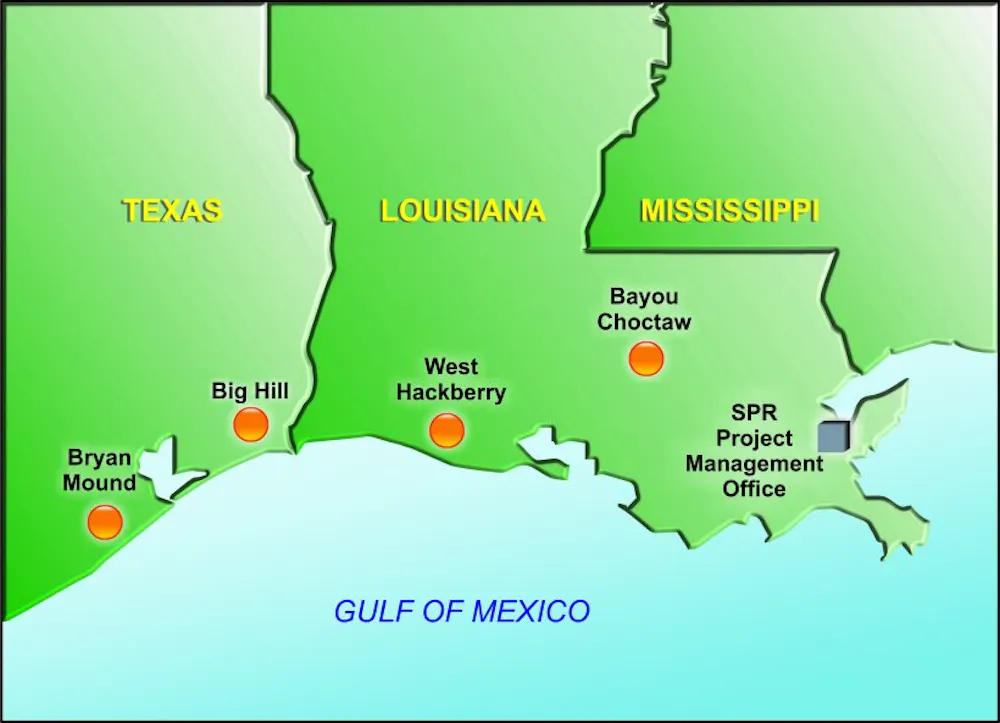
The Energy Policy and Conservation Act originally stipulated the reserve should hold up to 1 billion barrels of crude and refined petroleum products. Though it has never reached that size, the U.S. reserve is the largest in the world, with a maximum volume of 714 million barrels. The cap was previously set at 727 million barrels.
As of March 25, 2022, the reserve contained about 568 million barrels.
Oil in the reserve is stored underground in a series of large underground salt domes in four locations along the Gulf Coast of Texas and Louisiana, and is linked to major supply pipelines in the region.
Salt domes, formed when a mass of salt is forced upward, are a good choice for storage since salt is impermeable and has low solubility in crude oil. Most of the storage sites were acquired by the federal government in 1977 and became fully operational in the 1980s.
History of drawdowns
In the 1975 act, Congress specified that the reserve was intended to prevent “severe supply interruptions” – that is, actual oil shortages.
Over time, as the oil market has changed, Congress expanded the list of reasons for which the Strategic Petroleum Reserve could be tapped, such as domestic supply interruptions due to extreme weather.
Prior to March 2022, about 280 million barrels of crude oil had been released since the reserve’s creation, including a 50 million release that began in November 2021.
There have only been three emergency releases in the reserve’s history. The first was in 1991 after Iraq invaded Kuwait the year before, which resulted in a sharp drop in oil supply to the world market. The U.S. released 34 million barrels.
The second release, of 30 million barrels, came in 2005 after Hurricanes Rita and Katrina knocked out Gulf of Mexico production, which then comprised about 25% of U.S. domestic supply.
The third was a coordinated release by the International Energy Agency in 2011 as a result of supply disruptions from several oil-producing countries, including Libya, then facing civil unrest during the Arab Spring. In all, the agency coordinated a release of 60 million barrels of crude, half of which came from the U.S.
In addition, there have been 11 planned sales of oil from the reserve, mainly to generate federal revenue. One of these – the 1996-1997 sale to reduce the federal budget deficit – seemed to serve political ends rather than supply-related ones.
A better way to avoid pain at the pump
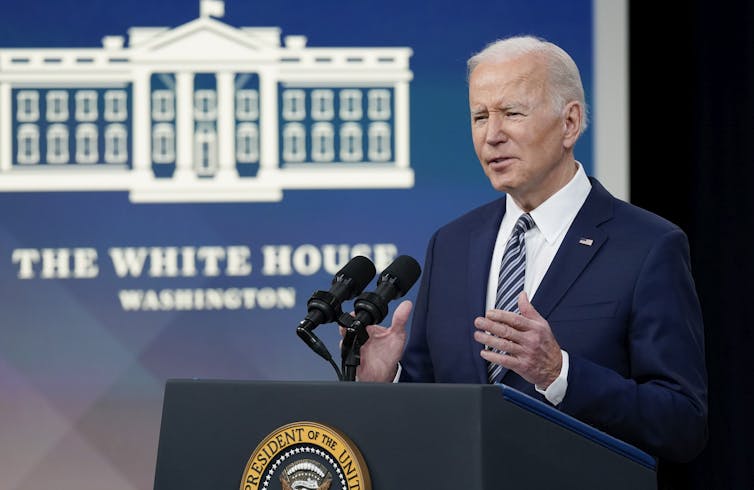
President Joe Biden’s November decision to tap the reserve was also seen as political by Republicans because there was no emergency shortage of supply at that time.
Similarly, the latest historic release of 180 million barrels could also be seen as serving a political purpose – in an election year, no less. But I believe it also seems perfectly legitimate in terms of fulfilling the Strategic Petroleum Reserve’s original purpose: reducing the negative impacts of a major oil price shock.
Though the U.S. is today a net petroleum exporter, it continues to import as much as 8.2 million barrels of crude oil every day.
[Over 150,000 readers rely on The Conversation’s newsletters to understand the world. Sign up today.]
But in my view, the best way to avoid the pain of oil price shocks is to lower oil demand by reducing global carbon emissions – rather than mainly relying on releases from the reserve.
This is an updated version of an article originally published on Nov. 24, 2021.
Scott L. Montgomery, Lecturer, Jackson School of International Studies, University of Washington
This article is republished from The Conversation under a Creative Commons license. Read the original article.
During a special Wednesday morning meeting, the Lake Local Agency Formation Commission, or LAFCo, voted unanimously to set a protest hearing on the proposed annexation, which covers about 137 acres and 50 parcels south of the city limits.
LAFCo Chief Executive Officer John Benoit told Lake County News after the meeting that he expects the protest hearing will take place in about a month, with no firm date yet set.
Lakeport has been working for decades to prepare for the annexation, which includes the most lucrative commercial corridor in the unincorporated county that has long been within its sphere of influence.
City and fire officials have argued that annexing the area will allow for the efficient delivery of services, including water, which Lakeport Fire Chief Jeff Thomas emphasized on March 16 is critical because of the significant hazardous material issues along that corridor.
Earlier this year, the city and county of Lake reached a tax sharing agreement that cleared the way for the proposal to move forward.
The annexation appeared on track to be approved at LAFCo’s regular March 16 meeting. However, a written protest submitted by business owner Justin Ratcliffe led to questions about whether a protest proceeding could be avoided by simply eliminating Ratcliffe’s property from the annexation area. That led to the scheduling of Wednesday's special meeting.
LAFCo received one additional written protest since the March 16 meeting, Benoit said Wednesday.
Counsel Scott Browne took the last two weeks to analyze the options for moving forward if the city chose to remove Ratcliffe’s property at 53 Soda Bay Road and proceed with approving the annexation.
For his part, Benoit said the public hearing notices had been sent out according to procedure and they had only received one protest, referring to Ratcliffe’s.
His recommendation was the same as it was at the meeting two weeks ago — to approve the annexations subject to certain terms and conditions.
Browne explained that the law governing annexations, the Cortese Knox Hertzberg Act of 2000, isn’t clear about the question before LAFCo, regarding excluding territory before a final resolution is approved. He said it’s very clear applications can be amended to add or exclude territory.
It was his conclusion that by removing Ratcliffe’s property from the annexation area, it would waive the objection to the annexation since he got what he wanted by not being included.
However, Browne added, “There’s no clear law on this.”
In the absence of clear law, Browne suggested the commissioners could approve going back and starting a new notice and hearing process to see if there are any new protests.
“That would be the bulletproof way of doing it, but I don’t think it’s necessary,” he said.
Lakeport area Supervisor Tina Scott asked the commission to reopen the public hearing to give people a chance to comment.
Commission Chair and District 2 Supervisor Bruno Sabatier also questioned the process and whether LAFCo could simply waive protests by just removing specific properties. He believed the right thing to do was to go forward with the protest hearing process, citing sections of state law.
Browne said Sabatier’s questions were good ones, noting that sections of the law Sabatier referred to were specifically about changing an adopted resolution, not changing it ahead of acceptance.
“So those provisions do not apply to this particular situation,” Browne said. “Nevertheless, the issue is unclear.”
County Counsel Anita Grant said that when items are unclear, she usually urges moving forward with abundant caution.
“I will say that there is also a very clear procedural track for these to take,” she said, pointing to the importance state statute gives to property owners’ ability to protest.
She said she’d never seen a response like the one proposed in this case, which she said seemed to be inconsistent with protest hearings.
“I think the timing of this may give one pause,” she said.
Lakeport City Manager Kevin Ingram said the city was OK with removing Ratcliffe’s property as proposed and moving ahead. However, if the protest process occurred, they wanted the property to stay in.
Ratcliffe told the commission he wanted to keep his protest active, and said he did not feel there was sufficient notice. He said 90% of property owners were unaware that the meeting was their last chance to formally protest.
Benoit said there is a provision in LAFCo code that a process can’t be set aside if people haven’t read the meeting notices. He questioned why Ratcliffe was at the meeting if he didn’t receive a notice.
Commissioner and Lakeport Mayor Stacey Mattina thanked Browne for taking the extra time to clarify the matter. “This has been a really complicated process.”
She said the city’s application meets LAFCo’s policies and offers efficient delivery of public services and the need for fire protection, and eliminates public health and safety threats.
Mattina suggested it was the most important decision the commission has had in 10 years. She then moved to offer the resolution to approve the annexation, amending the original resolution to remove Ratcliffe’s property. Commissioner Ed Robey seconded the motion.
Property owners argue against annexation
Benoit said the public hearing was closed so Sabatier instead opened public comment, after which Mattina called the motion.
The commission then heard from six community members and property owners — including Ratcliffe — who said they opposed the annexation.
“I feel like this was a railroad that actually goes back quite a few years,” said P.J. Racine, whose late father, Paul Racine, had opposed the annexation and conducted a survey that found that 79% of property owners didn’t support it.
Paul Racine died two years ago, and P.J. Racine said he felt the city was railroading it through now that there was no one to head the opposition.
Both Sabatier and Robey responded that the matter had been discussed for years.
Property owner Kathleen Miller also spoke against the annexation. She was at the meeting on March 16 and had handed in a written protest after the public hearing had closed, and so it was not counted. She said she also hadn’t gotten a notice about the meeting and had only heard about it through word of mouth.
Ingram said the city has done outreach through letters, a special community meeting, a newspaper notice and social media postings. He said the process has been ongoing for a long time.
Mattina said the protest vote process is convoluted and not an opportunity for everyone in the public to vote. “I don’t think everyone realizes that.”
“It’s definitely a unique process,” said Sabatier.
With the number of additional objections offered on Wednesday, Browne suggested the circumstances had changed and LAFCo was no longer in a position to waive protest proceedings.
Commissioner and Clearlake Mayor Dirk Slooten agreed with Browne, saying it was obvious that some community members either didn’t receive the notice or didn’t understand it. “We have to be on solid legal ground to move on with these procedures.”
Slooten said he wasn’t against the annexation, but wanted to make sure the commission was on legally solid ground to move forward.
After Mattina asked for a 10-minute break, the commission returned to settle on its course of action.
Benoit said they could do the protest proceeding or a new notice and start over. Since he believed adequate noticing had been done, he suggested pursuing the protest hearing.
Mattina withdrew her original motion and offered the resolution to approve the annexation subject to the terms and conditions of the protest hearing process, with Robey seconding.
Commissioner and county Supervisor Moke Simon said for community members to be looking for the protest proceeding notices. “Be aware, it is coming.”
The commission voted unanimously to approve the resolution.
Benoit said a brief summary of the process will be mailed out, an eight-page notice will be put in the newspaper and people will have an opportunity to provide a written protest or to appear in person at the proceeding when it’s scheduled in the next month.
LAFCo will then evaluate the value of the protest and decide whether or not it would go to an election, Benoit said.
Email Elizabeth Larson at
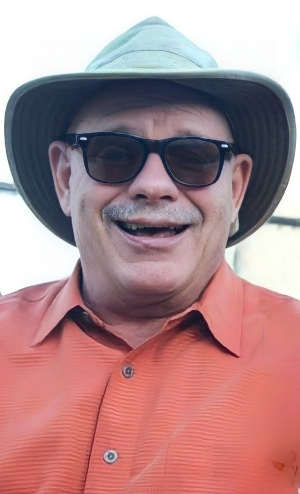
LAKE COUNTY, Calif. — A veterinarian who played a key role in establishing and running the clinic at Lake County Animal Care and Control and expanding the agency’s services has died.
Dr. Richard Bachman, 68, died March 20.
His passing was the reason Animal Care and Control reported that it was putting some of its services on hold, including the community cat program and vaccination clinics, said Director Jonathan Armas.
Animal Care and Control said Bachman received his veterinary license in 1982 and owned a private practice in Sonoma County.
He later worked in Contra Costa County, where he began specializing in shelter medicine.
Bachman started working with Lake County Animal Care and Control in 2007 and dedicated a tremendous amount of his time to Lake County, the agency reported.
He’s credited with being instrumental in creating the Animal Care and Control clinic, conducting a study that was presented to the Board of Supervisors that Armas said began the clinic’s formation. The clinic opened in 2012.
Bachman also was a part of establishing public services including the low cost spay/neuter program and community cat program which have been central to the agency’s efforts to control the pet population.
“The clinic allowed us to provide high quality care to stray animals, kept our adoption prices low and provided public services,” Armas said.
Animal Care and Control said Bachman provided veterinary care to Lake County animals affected by disasters and wildfires, most notable during the Valley fire in 2015.
That same year, when the clinic’s vets resigned, Armas said Bachman stepped in to ensure that quality care continued to be provided.
“He tried to find a replacement multiple times and had to step back from full time work but continued to work with us and provide surgeries for our adoptions and vaccination clinics,” Armas said. “He was also instrumental in the procurement of all of the equipment we use and the formation of the program as a whole.”
On its Facebook page, Animal Care and Control posted, “Dr. Bachman was an advocate for animals and affordable access to care. Dr. Bachman was a mentor and friend who will be greatly missed.”
His family has suggested that donations in honor of Dr. Bachman’s life may be made via check (write “donation” in the check memo line) to Lake County Animal Care and Control, 4949 Helbush Drive, Lakeport, CA 95453.
Email Elizabeth Larson at
The day is observed on the anniversary of his birth in 1927.
Chavez’s efforts resulted in better working conditions and laws that gave farmworkers rights to organize and join unions.
The full declaration from Gov. Gavin Newsom is below.
Throughout his life of work and service, Cesar Chavez empowered thousands to stand together for their rights and led our nation toward a more equitable and just society. His visionary leadership inspired a powerful movement that burns brightly to this day, rallying people from all walks of life to champion the dignity of work.
Born near Yuma, Arizona in 1927, Chavez and his family moved to California after losing their home during the Great Depression. Toiling in the fields from a young age, Chavez faced dismal working conditions, racism, abuse and exploitation. Moved to confront these injustices, he began working as an organizer in the farmworker community, advocating for improvements in
their working and living conditions.
Founding the United Farm Workers (UFW) together with Dolores Huerta, Chavez challenged Americans to recognize that the produce on their dinner tables was picked by human hands — often the hands of people who were denied the most basic human rights. Bringing their cause to the national stage, Chavez led a historic march of farmworkers from Delano to Sacramento in 1966 and helped launch a successful boycott of grapes that galvanized support across the country and beyond.
Chavez's tireless efforts were instrumental in the passage of the 1975 California Agricultural Labor Relations Act, which made our state the first in U.S. history to give farmworkers the right to join a union and engage in collective bargaining.
On the anniversary of his birth, we celebrate Cesar Chavez's hard-won strides for social justice, and reflect on the work that lies ahead to build a brighter future for all our communities. Let us carry on his timeless legacy by lifting up our neighbors, speaking out against injustice, and working together to extend the dream of prosperity, equity and progress to all.
NOW THEREFORE I, GAVIN NEWSOM, Governor of the State of California, do hereby proclaim March 31, 2022, as "Cesar Chavez Day."
IN WITNESS WHEREOF I have hereunto set my hand and caused the Great Seal of the State of California to be affixed this 30th day of March, 2022.
Gavin Newsom
Governor of California
ATTEST:
SHIRLEY N. WEBER, Ph.D.
Secretary of State
By expanding the use of beneficial fire, officials said the state can utilize smart burning tactics on brush and other fuels to help both prevent the start of fires and mitigate the spread of wildfires.
Based on a collaborative effort of the state’s leading fire experts and managers, the strategic plan sets a target of expanding beneficial fire to 400,000 acres annually by 2025, a shared goal between state, federal, tribal, and local entities — part of an overall goal to treat 1 million acres annually in California by 2025.
The state invested $1.5 billion in wildfire resilience in 2021 alone, including significant support for prescribed fire and cultural burning.
"As climate change continues to exacerbate wildfire conditions, we’re bringing federal, state, tribal, and local partners together to more effectively address the scale of this crisis,” said Gov. Gavin Newsom. “California is putting in the work to help protect our communities from the devastating impacts of wildfires, build for the long-term, and safeguard our treasured state for generations to come.”
The governor earlier this week participated in fuels management work along Highway 50 ahead of peak wildfire season.
“We know that returning good fire to the ground is one of our best tools in the fight against catastrophic wildfire and climate change,” said Task Force Co-Chair and California Secretary for Natural Resources Wade Crowfoot. “This strategic plan includes the key steps we need to take over the next few years to build capacity, return to a culture of beneficial fire, and invest in our future.”
“This plan is vital to improve the health and resilience of the state’s forests, reduce wildfire risk of vulnerable communities, and increase stewardship by Native American fire practitioners,” added Task Force Co-Chair and U.S. Forest Service Regional Forester Jennifer Eberlien.
The key elements of the Strategic Plan include:
• Launching an online prescribed fire permitting system to streamline the review and approval of prescribed fire projects;
• Establishing the state’s new Prescribed Fire Claims Fund to reduce liability for private burners;
• Beginning a statewide program to enable tribes and cultural fire practitioners to revitalize cultural burning practices;
• A prescribed fire training center to grow, train, and diversify the state’s prescribed fire workforce;
• An interagency beneficial fire tracking system;
• Pilot projects to undertake larger landscape-scale burns; and
• A comprehensive review of the state’s smoke management programs to facilitate prescribed fire while protecting public health.
Wednesday’s announcement delivers on several of the key commitments made in the Wildfire and Forest Resilience Action Plan issued in January 2021.
The action plan is also backed by the governor’s $1.5 billion investment in forest health and wildfire resilience, and a proposed $1.2 billion additional investment for fiscal years 2022-23 and 2023-24.
“The plan gives me hope because it represents the vision and priorities of the people who know prescribed fire best — the community leaders, cultural burners, and agency practitioners who have been leading and championing this work for years. California is ready for a bolder, more collaborative approach to prescribed fire, and this plan gives us a great place to start,” said Lenya Quinn-Davidson, area fire advisor, UC Cooperative Extension.
Don Hankins professor at California State University, Chico, and a cultural fire practitioner, said, “California's Strategic Plan for Expanding the Use of Beneficial Fire takes an unprecedented step for the state to address shortcomings of current fire policy and use. Most significant is the recognition of the role of Native American tribes, organizations and practitioners to revitalize traditional fire stewardship.”
“California’s Strategic Plan for Expanding the Use of Beneficial Fire demonstrates the collaborative commitment to expand the use of restorative fire to limit damaging wildfires, stabilize forest carbon, better protect communities, and restore and maintain resiliency and biodiversity in the California landscape,” said Craig Thomas, director, The Fire Restoration Group. “This past year of collaborative work with State and Federal agencies, scientists, and multiple nongovernmental partners has addressed and supported the proper role of restorative fire in California.”
“Welcome Home Vietnam Veterans Day” is being observed on Wednesday, March 30.
The observance follows National Vietnam War Veterans Day on Tuesday, March 29.
The Vietnam War took place from Aug. 4, 1964 to Jan. 27, 1973.
The Department of Veterans Affairs said the number of all those who served during the Armed Forces at that time totaled 8,744,000, with 3,403,000 deployed to Southeast Asia.
The war resulted in 47,424 battle deaths, 10,785 other deaths in theater, 153,303 wounded and 238 Medals of Honor, the VA reported.
About 10% of the war’s casualties came from California, according to the Governor’s Office.
Five Lake County men reported to have died in the war.
The Department of Defense’s POW/MIA Accounting Agency said the war resulted in 2,646 unaccounted for Americans lost in the Vietnam War. Of those, 1,062 have been repatriated and identified, with 1,584 still to be located.
Lake County is reported to have one of the highest veterans populations per capita in the state of California.
The U.S. Census Bureau’s American Community Survey for 2020 reports that the veterans population in Lake County totals 9.7%.
Of Lake County’s veterans population, the American Community Survey shows that the vast majority served during the Vietnam era.
The survey reported that 2,297 Lake County residents are Vietnam era veterans, which accounts for 46.7% of the overall veterans population. The next largest group is Gulf War veterans, at 10.6%, or 528 individuals.
Gov. Gavin Newsom issued a proclamation declaring Welcome Home Vietnam Veterans Day in California.
The full proclamation is below.
Nearly fifty years after the last American troops returned home from the Vietnam War, which claimed the lives of more than 58,000 U.S. service members, including 5,822 Californians, we honor the brave men and women who selflessly answered our nation's call at a time of great turmoil and strife.
Whether drafted or volunteered, our Vietnam veterans served with honor and distinction in one of our nation's most challenging wars, and amid deep social, political and cultural divisions throughout society. Upon returning home, these veterans — many of them bearing lifelong physical and mental scars — were not met with the gratitude, respect and care befitting of their heroism and sacrifices.
Each year, we must recommit ourselves to honoring the legacy of our Vietnam veterans and upholding the lesson they have imparted — welcoming home our service members is essential, but only the first step in our duty to serve and support them.
California is proud to stand by our veterans and remains steadfastly committed to connecting them and their families with the benefits they have earned and deeply deserve.
NOW THEREFORE I, GAVIN NEWSOM, Governor of the State of California, do hereby proclaim March 30, 2022, as "Welcome Home Vietnam Veterans Day."
IN WITNESS WHEREOF I have hereunto set my hand and caused the Great Seal of the State of California to be affixed on the 29th day of March 2022.
Gavin Newsom
Governor of California
ATTEST:
SHIRLEY N. WEBER, Ph.D.
Secretary of State
Email Elizabeth Larson at