 How to resolve AdBlock issue?
News
Dr. Ramos has more than three decades of cross-cutting experience and expertise with a focus on health equity and reproductive health.
She currently serves at the California Department of Public Health's Center for Healthy Communities, where she oversees the state’s public health and prevention programs.
The governor established the role of surgeon general in 2019 on his first day in office as part of a series of major health care proposals and actions.
The California surgeon general is a key spokesperson on public health issues throughout the state and advises the governor on efforts to address health risks and challenges as effectively and as early as possible.
“California’s surgeon general has a pivotal role in driving focused solutions to tackle the root causes of our most pressing health challenges and inequities,” said Gov. Newsom. “Dr. Ramos is a distinguished leader in medicine and a trusted public health expert who brings a lifetime of experience protecting and promoting the health of vulnerable communities. I look forward to her partnership in advancing urgent priorities for the state on women’s health, mental health, addressing the gun violence epidemic, and more as we continue our work to lift up the health and well-being of all Californians.”
Diana Ramos, M.D., 55, of Laguna Beach, has served as a Public Health Administrator at the California Department of Public Health’s Center for Healthy Communities since 2021.
She has been an adjunct assistant clinical professor at the University of Southern California Keck School of Medicine since 1999.
Dr. Ramos has been a per diem physician at Kaiser Permanente since 1998. She has been founder and chief executive officer of Gami-Fi Health since 2018.
She was a public health medical officer at the California Department of Public Health from 2017 to 2021 and director of reproductive health at the Los Angeles County Department of Public Health’s Maternal, Child and Adolescent Health Division from 2005 to 2017.
She was chief medical officer at Alpha Medical Center Inc. from 2003 to 2005. She was a Senior Regional Medical Research Specialist at Pfizer Inc. from 2000 to 2003 and a Staff Obstetrician at Clinica Humanitaria from 1999 to 2000.
Dr. Ramos is an executive board member of the California Maternal Care Quality Collaborative, secretary of the National Hispanic Medical Association Executive Board and co-chair of the Women’s Preventive Services Initiative Implementation Committee.
She is a chair of the American College of Obstetricians and Gynecologists, or ACOG, District IX and co-chair of the American Medical Association’s ACOG Delegation.
She earned a Master of Public Health degree from the University of California, Los Angeles, a Master of Business Administration degree from the University of California, Irvine School of Business and a Doctor of Medicine degree from the University of Southern California Keck School of Medicine.
This position requires Senate confirmation and the compensation is $216,420.
Dr. Ramos is registered without party preference.

Data privacy in the U.S. is, in many ways, a legal void. While there are limited protections for health and financial data, the cradle of the world’s largest tech companies, like Apple, Amazon, Google, and Meta (Facebook), lacks any comprehensive federal data privacy law. This leaves U.S. citizens with minimal data privacy protections compared with citizens of other nations. But that may be about to change.
With rare bipartisan support, the American Data and Privacy Protection Act moved out of the U.S. House of Representatives Committee on Energy and Commerce by a vote of 53-2 on July 20, 2022. The bill still needs to pass the full House and the Senate, and negotiations are ongoing. Given the Biden administration’s responsible data practices strategy, White House support is likely if a version of the bill passes.
As a legal scholar and attorney who studies and practices technology and data privacy law, I’ve been closely following the act, known as ADPPA. If passed, it will fundamentally alter U.S. data privacy law.
ADPPA fills the data privacy void, builds in federal preemption over some state data privacy laws, allows individuals to file suit over violations and substantially changes data privacy law enforcement. Like all big changes, ADPPA is getting mixed reviews from media, scholars and businesses. But many see the bill as a triumph for U.S. data privacy that provides a needed national standard for data practices.
Who and what will ADPPA regulate?
ADPPA would apply to “covered” entities, meaning any entity collecting, processing or transferring covered data, including nonprofits and sole proprietors. It also regulates cellphone and internet providers and other common carriers, with potentially concerning changes to federal communications regulation. It does not apply to government entities.
ADPPA defines “covered” data as any information or device that identifies or can be reasonably linked to a person. It also protects biometric data, genetic data and geolocation information.

The bill excludes three big data categories: deidentified data, employee data and publicly available information. That last category includes social media accounts with privacy settings open to public viewing. While research has repeatedly shown deidentified data can be easily reidentified, the ADPPA attempts to address that by requiring covered entities to take “reasonable technical, administrative, and physical measures to ensure that the information cannot, at any point, be used to re-identify any individual or device.”
How ADPPA protects your data
The act would require data collection to be as minimal as possible. The bill allows covered entities to collect, use or share an individual’s data only when reasonably necessary and proportionate to a product or service the person requests or to respond to a communication the person initiates. It allows collection for authentication, security incidents, prevention of illegal activities or serious harm to persons, and compliance with legal obligations.
People would gain rights to access and have some control over their data. ADPPA gives users the right to correct inaccuracies and potentially delete their data held by covered entities.
The bill permits data collection as part of research for public good. It allows data collection for peer-reviewed research or research done in the public interest – for example, testing whether a website is unlawfully discriminating. This is important for researchers who might otherwise run afoul of site terms or hacking laws.
The ADPPA also has a provision that tackles the service-conditioned-on-consent problem – those annoying “I Agree” boxes that force people to accept a jumble of legal terms. When you click one of those boxes, you contractually waive your privacy rights as a condition to simply use a service, visit a website or buy a product. The bill will prevent covered entities from using contract law to get around the bill’s protections.
Looking to federal electronic surveillance law for guidance
The U.S.’s Electronic Communications Privacy Act can provide federal law makers guidance in finalizing ADPPA. Like the ADPPA, the 1986 ECPA legislation involved a massive overhaul of U.S. electronic privacy law to address adverse effects to individual privacy and civil liberties posed by advancing surveillance and communication technologies. Once again, advances in surveillance and data technologies, such as artificial intelligence, are significantly affecting citizens’ rights.
ECPA, still in effect today, provides a baseline national standard for electronic surveillance protections. ECPA protects communications from interception unless one party to the communication consents. But ECPA does not preempt states from passing more protective laws, so states can choose to provide greater privacy rights. The end result: Roughly a quarter of U.S. states require consent of all parties to intercept a communication, thus providing their citizens increased privacy rights.
ECPA’s federal/state balance has worked for decades now, and ECPA has not overwhelmed the courts or destroyed commerce.
National preemption
As drafted, ADPPA preempts some state data privacy legislation. This affects California’s Consumer Privacy Act, although it does not preempt the Illinois Biometric Information Privacy Act or state laws specifically regulating facial recognition technology. The preemption provisions, however, are in flux as members of the House continue to negotiate the bill.
ADPPA’s national standards provide uniform compliance requirements, serving economic efficiency; but its preemption of most state laws has some scholars concerned, and California opposes its passage.
If preemption stands, any final version of the ADPPA will be the law of the land, limiting states from more firmly protecting their citizens’ data privacy.
Private right of action and enforcement
ADDPA provides for a private right of action, allowing people to sue covered entities who violate their rights under ADPPA. That gives the bill’s enforcement mechanisms a big boost, although it has significant restrictions.
The U.S. Chamber of Commerce and the tech industry oppose a private right of action, preferring ADPPA enforcement be restricted to the Federal Trade Commission. But the FTC has far less staff and far fewer resources than U.S. trial attorneys do.
ECPA, for comparison, has a private right of action. It has not overwhelmed courts or businesses, and entities likely comply with ECPA to avoid civil litigation. Plus, courts have honed ECPA’s terms, providing clear precedent and understandable compliance guidelines.
How big are the changes?
The changes to U.S. data privacy law are big, but ADPPA affords much-needed security and data protections to U.S. citizens, and I believe that it is workable with tweaks.
Given how the internet works, data routinely flows across international borders, so many U.S. companies have already built compliance with other nations’ laws into their systems. This includes the E.U.’s General Data Protection Regulation – a law similar to the ADPPA. Facebook, for example, provides E.U. citizens with GDPR’s protections, but it does not give U.S. citizens those protections, because it is not required to do so.
Congress has done little with data privacy, but ADPPA is poised to change that.
Anne Toomey McKenna, Visiting Professor of Law, University of Richmond
This article is republished from The Conversation under a Creative Commons license. Read the original article.
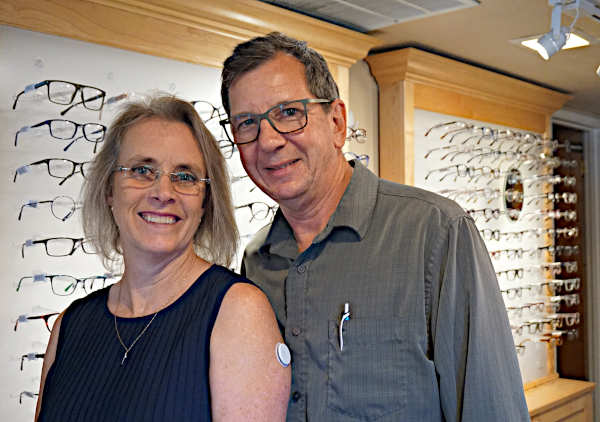
LAKEPORT, Calif. — After nearly three decades of taking care of thousands of patients, a Lake County optometrist is closing his doors and heading into retirement.
Dr. Mark Buehnerkemper announced his retirement earlier this month.
He and wife, Monica, own the optometry practice at 120 S. Main St. in Lakeport.
“Aug. 31 is our last day of patient care,” he said.
However, they will work part-time through September to close out the practice, work that includes dispensing glasses, finalizing billing and insurance claims, and finishing up the expected odds and ends after nearly 26 years of practice.
Dr. David Browning, owner of Eye Care Optometric in Lakeport, will take custody of the records for Buehnerkempers’ estimated 3,500 patients at his location at 225 S Main St., next to the Soper Reese Theatre.
“He’ll be taking on many of our patients,” Mark Buehnerkemper said.
“He’s also graciously hired all of our staff. All five of our staff members are going over there,” he added.
Except for wife Monica. “She’s going with me,” he quipped.
The Buehnerkempers also own M-Square Farms in Kelseyville. Monica is an accomplished equestrian who has a successful — and full — horse boarding operation with 18 slots. They also have horses of their own, plus dogs, goats, cats and other pets.
Mark is a musician who has been a part of the popular band, the Lake County Diamonds and has been active in Rotary since 1997, serving as president from 2006 to 2007.
They’ve also been very involved with church activities. They were part of the music ministry for 17 years at St. Mary's Catholic Church in Lakeport, where they also were involved in youth ministry. For six years they led music at Our Lady Queen of Peace in Clearlake for 6 years and also helped that church with confirmation class.
Once the office is closed up, the Buehnerkempers will load up their two horses, critters and possession, and head to Rockwall, Texas, a suburb of Dallas, where they plan to make their new home.
They’ve selected that area of Texas because it’s a central location to reach their three adult children — who live in Phoenix, Dallas and Pittsburgh, Pennsylvania — and four grandchildren, with another on the way.
The couple has been married since 1988. Initially, Mark came out of school with an engineering degree and worked in that field, for two different aerospace companies, before going back to optometry school. Monica, who also worked in aerospace, supported him through optometry school while working as a computer programmer.
They made the move to Lake County from Norco almost 26 years ago, arriving on Nov. 15, 1996, in order for Mark to take his first job out of optometry school working for Dr. Robert J. Blanche.
He worked for Dr. Blanche a month and a half before Blanche retired. The Buehnerkempers purchased the practice from Blanche on Jan. 1, 1997.
Before coming to Lake County, they did have some ties to the area. Monica’s mother, Ada Lou Duacsek, was born and raised in Clearlake when it was known as the Clearlake Highlands, and the family had kept connections here.
In the years since he moved to Lake County, Dr. Buehnerkemper has cared for thousands of Lake County patients, as his wife has kept the office running smoothly.
Their plans to retire have been in the works for some time. However, despite working for almost three years to find an alternative to closing, the Buehnerkempers said they were unable to find a replacement.
They said they’ve been unable to find doctors willing to move to a rural area. They’ve also found that most doctors do not want to take on the responsibility of practice ownership and prefer to work as an employee for a larger entity.
“They just want to see patients,” Mark said. “The hospital has the same problem.”
They said they tried everything, from looking for associates, a buyer and private equity, and approaching Lake County Tribal Health and Adventist Health.
“None of that worked out,” he explained.
The fact that they’re having to close rather than pass the practice on to another optometrist has left Dr. Buehnerkemper with mixed emotions.
The building and M-Square Farms will be listed for sale in mid-September, with Bobby Dutcher being the listing agent for both properties. The Buehnerkempers are hoping someone will buy the ranch and continue the boarding.
The Lake County Diamonds will continue to play local gigs as a trio. “I’m going to come back when I’m available to help out,” Mark said.
The Buehnerkempers also will be working at Dr. Browning’s office for a short time to help with the transition.
If patients want copies of their existing records forwarded to a provider other than Eye Care Optometric, they’re asked to call Dr. Buehnerkemper’s office at 707-263-0101 before Friday, Aug. 26.
Email Elizabeth Larson at
Council incumbents Stacey Mattina and Mireya Turner are seeking reelection. Mattina is now in her third term, Turner in her second.
They were the only two candidates to file for the seats in the November election, the Lake County Registrar of Voters reported.
That was the case four years ago as well, at which point the council decided to forgo an election and appoint them to new terms, as election code allows.
This year, however, the city isn’t pursuing that option due to the fact that Measure P, which is for the South Lakeport annexation, is on the ballot, said City Manager Kevin Ingram.
“Election codes state that the ability to direct appoint only exists when there is nothing else already on the current ballot and given that the Measure P item is a City sponsored measure it seemed the safest to hold the election,” Ingram told Lake County News in a Wednesday email.
He said there are differing opinions on the matter, with Registrar of Voters Maria Valadez concluding that since Measure P involves an area currently outside of the city, the city could move forward with appointing the two incumbents.
However, City Attorney David Ruderman is advising that it is not that clear, Ingram said, thus the decision to move forward with an election, not appointments.
Measure P will be voted on by the less than 20 voters who live specifically in the annexation area, which consists of 50 parcels totaling 137 acres stretching from 2325 South Main St. to 96 Soda Bay Road.
The measure will ask voters if the order to add the annexation area to the city boundaries, adopted on March 30 by the Lake Local Agency Formation Commission, should be confirmed.
If anyone wishes to run as a write-in candidate for the Lakeport council seats, they should contact the City Clerk’s Office at Lakeport City Hall at 707-263-5615 to fill out the required paperwork to qualify.
Email Elizabeth Larson at

LAKE COUNTY, Calif. — The Lake County Sheriff’s Office is continuing to search for an Upper Lake man who they said assaulted a woman earlier this month.
Arturo Pedro Gutierrez, 62, is wanted in connection to the assault, which took place on Aug. 18.
On Wednesday, the sheriff’s office reported that a $500,000 warrant has been issued for Gutierrez’s arrest.
A registered sex offender, Gutierrez is believed Gutierrez to frequent the Willits area of Mendocino County.
Anyone with any information as to his whereabouts is asked to call the Lake County Sheriff’s Central Dispatch at 707-263-2690.
Email Elizabeth Larson at

PORTLAND, Ore.— The Oregon Department of Fish and Wildlife issued a report on Wednesday announcing video footage of the den site of what could be a relatively new wolf family in southwestern Oregon.
This is the first known modern-day instance of a California wolf dispersing to Oregon and likely starting a family.
The mated pair of radio-collared wolves are Oregon-born female wolf OR-115 and California-born male wolf LAS013, who left his birth pack in Lassen County, California and migrated to Oregon in late 2020.
The video of one of the adult wolves near their den site was captured by aerial surveillance technology and shared on the department’s YouTube page. It can be seen below.
“We’re so glad these wolves found each other,” said Amaroq Weiss, senior wolf advocate at the Center for Biological Diversity. “The thrilling story of wolf recovery in Oregon and California is still in its infancy. Since wolves don’t use dating apps to find each other, they need other wolves in their neighborhood to keep the story going.”
This new wolf family, whose territory includes parts of Klamath and Lake counties, has not yet been given a pack name by the Department of Fish and Wildlife.
Whether they will count as a “successful breeding pair” for purposes of the department’s annual 2022 report depends on whether the pair has at least two pups that survive until the end of December.
Oregon’s wildlife agency issued its annual wolf report in April 2022 for the calendar year 2021. That report estimated the state’s wolf population to be 175 individuals in 21 packs, with a total of 16 successful breeding pairs.
While LAS013 and OR-115 were first observed together in early 2021, they did not count as a breeding pair at that time since the department had no evidence showing the pair had reproduced that year.
This year marks the first time in which the wolves’ radio-collar signals indicated they had localized at a den-site, and this was subsequently confirmed by the aerial video surveillance. Localized radio-collar signals are frequently how wildlife agencies learn that a pair of wolves has made a den, which often indicates they have given birth to pups.
The department’s report indicates the video footage will allow wildlife officials to focus their efforts to find and count any pups.
“The fact that this California-born wolf likely has pups born in Oregon underscores how essential it is for wolf populations to be legally protected and connected, and not simply relegated to isolated, postage-stamp-size recovery areas,” said Weiss. “Fortunately, we’ve managed to get federal protections restored to wolves in this part of Oregon and California, and we’ll work to ensure those protections remain in place.”
Wolves in Oregon once trekked statewide but they had been killed off by the late 1940s to appease agricultural interests. In 1999 wolves from Idaho began to make their way into Oregon, and the state’s first pack was confirmed in 2008.
Wolves from Oregon began to make their way into California in late 2011, and California’s first wolf family was confirmed in 2015. Currently, California has three known wolf packs, including the pack from which LAS013 originated.