 How to resolve AdBlock issue?
News

The U.S. government will likely report in September 2022 that for 2021 its most accurate measure of child poverty was the lowest on record. This was due, in large part, to generous government benefits. Our research suggests child poverty in 2021 would have been even lower had the government made it easier for families to receive these benefits.
One way the federal government responded to the economic upheaval that accompanied the COVID-19 pandemic was to boost the money Americans got as benefits – and to distribute those benefits to people who didn’t previously get them.
Starting in the spring of 2020, for example, most Americans received a series of economic relief payments. Those funds helped reduce child poverty, which fell to 9.7% in 2020 from 12.6% in 2019, according to what’s known as the “supplemental poverty measure.”
Research that we and other economists have conducted indicates that the share of American children living in poverty fell even further in 2021. One key policy change brought about this decline: The government temporarily expanded the child tax credit, boosting the incomes of nearly all families with children.
We have determined, however, that child poverty would have plunged much more had the government done a better job ensuring that all who qualified got the credit.
Child tax credit
Unlike the official poverty rate, the supplemental poverty measure accounts for government benefits, such as the Supplemental Nutritional Assistance Program, or SNAP.
The supplemental poverty measure has been consistently lower for children than the official poverty rate since its launch in 2011.
One reason for this is the child tax credit. It began in 1998, with a maximum possible credit of $400 per child. The amount families could get was limited by the income taxes they owed. Since low-income families either don’t pay any income taxes or owe very little, this did them little good. Subsequent reform measures increased both the amount of the credit and made some of this benefit available to families that paid no income tax.
A large federal spending package enacted in 2021 increased the credit further and made it available to all but the wealthiest families with children. Between July 2021 and June 2022, most received up to $3,600 for each child under 6 and as much as $3,000 for kids between the ages of 6 and 17. The Internal Revenue Service distributed half this money in monthly payments between July and December 2021, and the rest at tax time in 2022.
3 million fewer children in poverty
Many economists predicted that this benefit would help millions of children escape poverty.
A Columbia University research team that tracks child poverty rates on a monthly basis calculated that the child tax credit expansion reduced child poverty by about 29% in December 2021 compared with what it would have been without the credit. That would translate into 3 million fewer children in poverty.
If confirmed, that would be an extremely positive result. But we estimate that the child poverty rate could have fallen even further had the government ensured that more eligible families received the expanded child tax credit last year.
As we recently explained in the Journal of Post Keynesian Economics, an academic publication, we reviewed detailed 2019 data to estimate what would have happened to child poverty that year had all eligible families received the 2021 tax credit expansion. We found that child poverty would have declined an additional 9 percentage points from what the Columbia team estimated for December, or 38%.
We believe the best explanation for this gap is that many low-income families didn’t file a tax return in 2019 or 2020 because they didn’t owe federal income taxes. To get monthly child tax credits from the IRS, these families needed to file a return.
Alternatively, families could log in to the IRS website and apply for the child tax credit. That was hard to do for many low-income people who lacked internet access.
Lack of awareness
Surveys by a Washington University in St. Louis research team support our theory. It found that 29% of low- and moderate-income Americans knew little or nothing about the child tax credit expansion – or even that they were eligible to receive it.
Specifically, 78% of those surveyed who did not file a 2020 tax return didn’t know much about the credit. Furthermore, some journalists found that the IRS website people must use to apply for benefits when they didn’t file a tax return was not user-friendly, and no Spanish version was available.
These findings suggest that expanding the child tax credit can greatly reduce child poverty. They also point to the need for increased outreach efforts to ensure that all low-income Americans can obtain the benefits for which they are eligible.
We will learn more when the Census Bureau releases its 2021 poverty statistics in September 2022. Based on our estimates and those of other research teams, we expect to see that the child tax credit expansion led to a further sharp decline in the the supplemental poverty rate for children.
If that’s the case, there should be loud calls for this benefit to be restored on a permanent basis.
Steven Pressman, Adjunct Professor of Economics, The New School and Robert H. Scott III, Professor, Dept. of Economics, Finance & Real Estate, Monmouth University
This article is republished from The Conversation under a Creative Commons license. Read the original article.
Dogs available for adoption this week include mixes of Australian cattle dog, German shepherd, Great Pyrenees, hound, husky, Labrador retriever, pit bull, Rottweiler, shepherd and treeing walker coonhound.
Dogs that are adopted from Lake County Animal Care and Control are either neutered or spayed, microchipped and, if old enough, given a rabies shot and county license before being released to their new owner. License fees do not apply to residents of the cities of Lakeport or Clearlake.
The following dogs at the Lake County Animal Care and Control shelter have been cleared for adoption.
Call Lake County Animal Care and Control at 707-263-0278 or visit the shelter online for information on visiting or adopting.

Female pit bull terrier
This 2-year-old female pit bull terrier has a black and white coat.
Shelter staff said she is a gentle girl with a loving personality who came into the shelter needing some tender loving care.
She is in kennel No. 9, ID No. LCAC-A-3856.

Male pit bull terrier
This 1-year-old male pit bull terrier has a gray and white coat.
Shelter staff said he is a playful young dog who does well on a leash and loves fetch. He will benefit from training.
He is in kennel No. 10, ID No. LCAC-A-3855.

Male Rottweiler-shepherd mix
This male Rottweiler-shepherd mix puppy has a short black and tan coat.
“This little pup is shy when meeting new people, but with the right toy and some TLC he warms up and shows some true puppy spirit,” shelter staff reported.
He is in kennel No. 13, ID No. LCAC-A-3851.
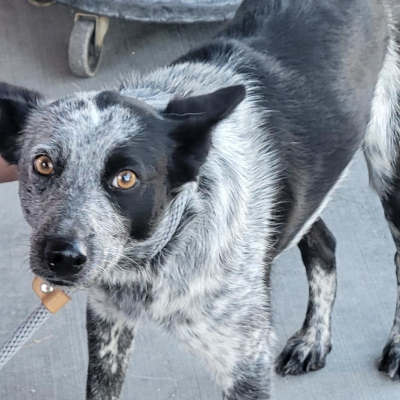
Female Australian cattle dog
This 1-year-old female Australian cattle dog has a short black and white coat.
She is in kennel No. 17, ID No. LCAC-A-3920.

Female hound mix
This 1-year-old female hound mix has a short brown and white coat.
Shelter staff said she loves to be around people and will show you the true meaning of a lap dog. She enjoys toys and walks well with a leash.
He is in kennel No. 19, ID No. LCAC-A-3766.

Female treeing walker coonhound
This young female treeing walker coonhound has a short black brindle coat.
She is in kennel No. 22, ID No. LCAC-A-3776.

Male husky
This 2-year-old male husky has a black and white coat.
He is in kennel No. 23, ID No. LCAC-A-3919.

Female German shepherd
This 1-year-old female German shepherd has a short black and tan coat.
She is in kennel No. 24, ID No. LCAC-A-3780.

Male German shepherd
This 2-year-old male German shepherd has a black and tan coat.
Shelter staff called him a “handsome sweet dude who is motivated by treats and does well walking on a leash.
He is in kennel No. 25, ID No. LCAC-A-3870.
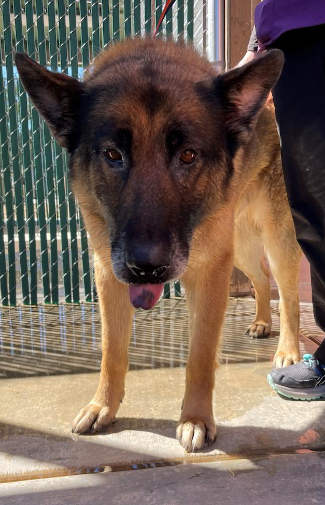
Male German shepherd
This 3-year-old male German shepherd has a black and tan coat.
He is in kennel No. 26, ID No. LCAC-A-3929.
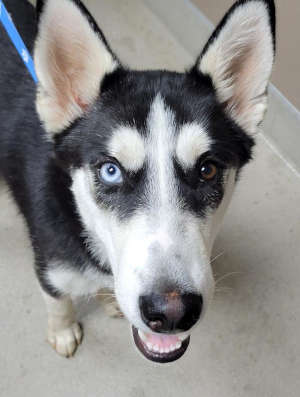
Female husky
This 1-year-old female husky has a cream and black coat.
She is in kennel No. 27, ID No. LCAC-A-3893.

Female Great Pyrenees
This 4-month-old female Great Pyrenees has a short white and gray coat.
She is in kennel No. 30, ID No. LCAC-A-3790.

Male German shepherd
This 1-year-old male German shepherd has a black and tan coat.
He is in kennel No. 31, ID No. LCAC-A-3930.

Female Great Pyrenees
This young female Great Pyrenees has a short white coat.
She is in kennel No. 34, ID No. LCAC-A-3789.
Email Elizabeth Larson at


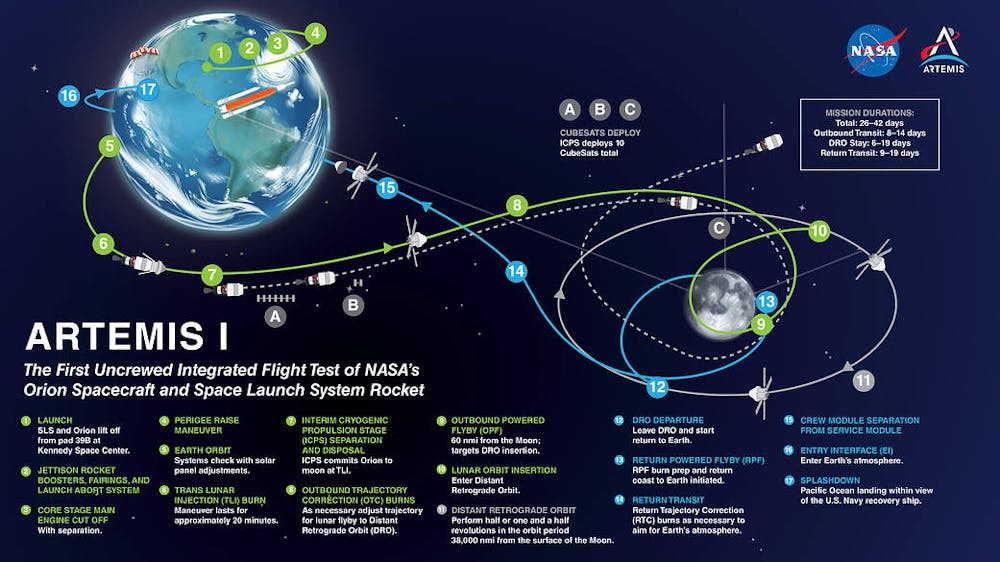
NASA’s Artemis 1 mission is poised to take a key step toward returning humans to the Moon after a half-century hiatus. The mission, scheduled to launch on Monday, Aug. 29, 2022, is a shakedown cruise – sans crew – for NASA’s Space Launch System and Orion Crew Capsule.
The spacecraft is scheduled to travel to the Moon, deploy some small satellites and then settle into orbit. NASA aims to practice operating the spacecraft, test the conditions crews will experience on and around the Moon, and assure everyone that the spacecraft and any occupants can safely return to Earth.
The Conversation asked Jack Burns, a professor and space scientist at the University of Colorado Boulder and former member of the Presidential Transition Team for NASA, to describe the mission, explain what the Artemis program promises to do for space exploration, and reflect on how the space program has changed in the half-century since humans last set foot on the lunar surface.
How does Artemis 1 differ from the other rockets being launched routinely?
Artemis 1 is going to be the first flight of the new Space Launch System. This is a “heavy lift” vehicle, as NASA refers to it. It will be the most powerful rocket engine ever flown to space, even more powerful than Apollo’s Saturn V system that took astronauts to the Moon in the 1960s and ‘70s.
It’s a new type of rocket system, because it has both a combination of liquid oxygen and hydrogen main engines and two strap-on solid rocket boosters derived from the space shuttle. It’s really a hybrid between the space shuttle and Apollo’s Saturn V rocket.
Testing is very important, because the Orion Crew Capsule is going to be getting a real workout. It will be in the space environment of the Moon, a high-radiation environment, for a month. And, very importantly, it will be testing the heat shield, which protects the capsule and its occupants, when it comes back to the Earth at 25,000 miles per hour. This will be the fastest capsule reentry since Apollo, so it’s very important that the heat shield function well.
This mission is also going to carry a series of small satellites that will be placed in orbit of the Moon. Those will do some useful precursor science, everything from looking further into the permanently shadowed craters where scientists think there is water to just doing more measurements of the radiation environment, seeing what the effects will be on humans for long-term exposure.
What’s the goal of the Artemis project? What’s coming up in the series of launches?
The mission is a first step toward Artemis 3, which is going to result in the first human missions to the Moon in the 21st century and the first since 1972. Artemis 1 is an uncrewed test flight.
Artemis 2, which is scheduled to launch a few years after that, will have astronauts on board. It, too, will be an orbital mission, very much like Apollo 8, which circled the Moon and came back home. The astronauts will spend a longer time orbiting the Moon and will test everything with a human crew.
And, finally, that will lead to a journey to the surface of the Moon in which Artemis 3 – sometime mid-decade – will rendezvous with the SpaceX Starship and transfer crew. Orion will remain in orbit, and the lunar Starship will take the astronauts to the surface. They will go to the south pole of the Moon to look at an area scientists haven’t explored before to investigate the water ice there.
Artemis is reminiscent of Apollo. What has changed in the past half-century?
The reason for Apollo that Kennedy envisioned initially was to beat the Soviet Union to the Moon. The administration didn’t particularly care about space travel, or about the Moon itself, but it represented an audacious goal that would clearly put America first in terms of space and technology.
The downside of doing that is the old saying “You live by the sword, you die by the sword.” When the U.S. got to the Moon, it was basically game over. We beat the Russians. So we put some flags down and did some science experiments. But pretty quickly after Apollo 11, within a few more missions, Richard Nixon canceled the program because the political objectives had been met.


So fast-forward 50 years. This is a very different environment. We are not doing this to beat the Russians or the Chinese or anybody else, but to begin a sustainable exploration beyond Earth’s orbit.
The Artemis program is driven by a number of different goals. It includes in situ resource utilization, which means using resources at hand like water ice and lunar soil to produce food, fuel and building materials.
The program is also helping to establish a lunar and space economy, starting with entrepreneurs, because SpaceX is very much part of this first mission to the surface of the Moon. NASA doesn’t own the Starship but is buying seats to allow astronauts to go to the surface. SpaceX will then use the Starship for other purposes – to transport other payloads, private astronauts and astronauts from other countries.
Fifty years of technology development means that going to the Moon now is much less expensive and more technologically feasible, and much more sophisticated experiments are possible when you just figure the computer technology. Those 50 years of technological advancement have been a complete game-changer. Almost anybody with the financial resources can send spacecraft to the Moon now, though not necessarily with humans.
NASA’s Commercial Lunar Payload Services contracts private companies to build uncrewed landers to go to the Moon. My colleagues and I have a radio telescope that’s going to the Moon on one of the landers in January. That just wouldn’t have been possible even 10 years ago.
What other changes does Artemis have in store?
The administration has said that in that first crewed flight, on Artemis 3, there will be at least one woman and very likely a person of color. They may be one and the same. There may be several.
I’m looking forward to seeing more of that diversity, because young kids today who are looking up at NASA can say, “Hey, there’s an astronaut who looks like me. I can do this. I can be part of the space program.”
Jack Burns, Professor of Astrophysical and Planetary Sciences, University of Colorado Boulder
This article is republished from The Conversation under a Creative Commons license. Read the original article.
The cleanup will be held from 9 a.m. to noon that day.
The check-in locations in Lake County will be:
• Lucerne Harbor Park;
• Rodan Slough Park, Nice;
• Library Park, Lakeport;
• Highland Springs Recreation Area, Lakeport;
• Konocti CrossFit, Kelseyville; and
• Austin Park Beach, Clearlake.
Sign up here.
While COVID-19 restrictions have been lifted in many locations around the state, the health and safety of our volunteers remains a top priority.
Please do not attend the cleanup if you have recently tested positive for COVID-19 or are experiencing any symptoms of COVID.
For those who are busy that day, they can still participate in the Coastal Cleanup by cleaning up neighborhoods, parks and local areas anytime during the month of September.
Trash from inland areas flows downstream to the coast, so cleaning up neighborhood trash prevents marine debris.
Gather cleanup supplies from home, download the CleanSwell app (to count your trash, and to have your trash counted!), and clean on your own time.
All cleanups that take place during September will count toward the event’s statewide goals.
To learn more about the Coastal Cleanup and its history, visit the state’s event website.
For more information about the local effort, contact Lake County Water Resources at 707-263-2344 or
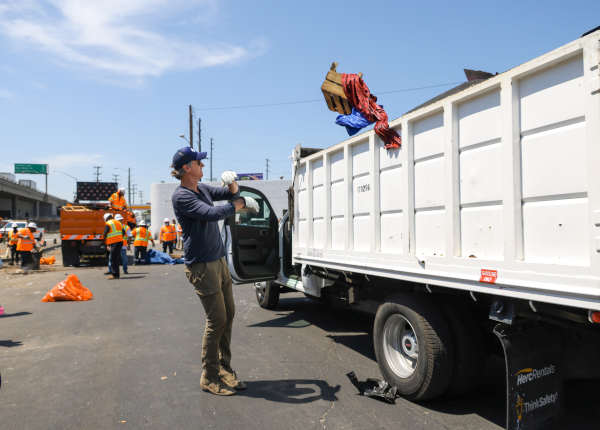
In September 2021, Gov. Gavin Newsom announced the state had prioritized 100 high-profile encampment sites on state land to clear.
One year later, California has cleared an average of 100 encampments per month with a total of 1,262 cleared sites, removing 1,213 tons of trash — enough to fill 22 Olympic-size swimming pools.
To highlight the successful state efforts, Gov. Newsom joined Caltrans cleanup efforts at an encampment on I-10 in Los Angeles Thursday. During his administration, the governor has helped clean up several encampments across the state.
“Leaving people on the streets and our highways is dangerous and inhumane. It’s unacceptable,” said Gov. Newsom. “California is investing billions of dollars to house thousands of people and clean up our communities and streets. Our efforts are a model for the nation, and more importantly, we’re getting people off the streets and into the housing and services they deserve.”
Newsom’s office said that when he became governor, California lacked money, coordination and accountability in tackling the state’s homelessness crisis.
Three years later, Newsom’s office said the state has become a national leader, investing $14.7 billion towards homelessness with a coordinated statewide approach focusing on encampment resolution and housing through the Homekey program.
California has provided housing or shelter to more than 67,000 people since the beginning of the pandemic and 55,000 housing units have been or are in the process of being deployed.
The budget Gov. Newsom signed earlier this year includes $700 million for encampment resolution grants with $350 million earmarked for assisting those living on state right-of-way property.
Some of the 1,262 encampments closed by Caltrans during the past 12 months include:
Bay Area – In May, Caltrans closed an encampment along State Route 77 near the High Street offramp in Oakland, collecting 1,600 cubic yards of trash, the most of any single encampment in the state. Throughout the nine Bay Area counties, Caltrans closed 283 encampments and collected more than 14,668 cubic yards of trash.
Los Angeles – In April, Caltrans closed an encampment along Interstate 105 near the Central Avenue offramp, collecting 1,250 cubic yards of trash, the most of any single encampment in Southern California. Caltrans closed 321 encampments and collected more than 33,546 cubic yards of trash throughout Los Angeles and Ventura counties.
San Diego – Caltrans closed 281 encampments and collected more than 2,678 cubic yards of trash throughout San Diego and Imperial counties.
Central Coast – Caltrans closed 161 encampments and collected more than 6,672 cubic yards of trash throughout Santa Barbara, San Luis Obispo, Monterey, San Benito and Santa Cruz counties. This includes an encampment the department closed along Highway 1 near the Ocean Street onramp in Santa Cruz from which Caltrans collected more than 1,000 cubic yards of trash.
Sacramento and the Central Valley – Caltrans closed 121 encampments and collected more than 11,192 cubic yards of trash throughout the Central Valley between Butte County in the north and Kern County to the south. This includes 40 encampments in Sacramento County in which the department collected a total of more than 3,078 cubic yards of trash.
North Coast – Caltrans closed 56 encampments and collected more than 1,176 cubic yards of trash throughout Del Norte, Humboldt, Mendocino and Lake counties.
Orange County – Caltrans closed 22 encampments and collected more than 1,721 cubic yards of trash.
The City of Clearlake Animal Association also is seeking fosters for the animals waiting to be adopted.
Call the Clearlake Animal Control shelter at 707-273-9440, or email
Visit Clearlake Animal Control on Facebook or on the city’s website.
The following dogs are available for adoption. New additions are at the top.

‘Sparkles’
“Sparkles” is a female terrier mix with a short brindle coat.
Shehas been spayed.
She is dog No. 50592729.

‘Andy’
“Andy” is a male American pit bull mix with a short gray and white coat.
He is dog No. 48995415.

‘Bear’
“Bear” is a male Labrador retriever-American pit bull mix with a short charcoal and fawn coat.
He has been neutered.
He is dog No. 48443153.

‘Betsy’
“Betsy” is a female American pit bull mix with a short white coat.
She has been spayed.
She is dog No. 50236145.

‘Bluey’
“Bluey” is a male retriever mix with a short black coat.
He has been neutered.
He is dog No. 50552999.

‘Big Phil’
“Big Phil” is a 13-year-old male American pit bull terrier mix with a blue coat.
He has been neutered.
He is dog No. 49951647.

‘Colt’
“Colt” is a male Rhodesian Ridgeback mix with a short rust and black coat.
He has been neutered.
He is dog No. 49812106.

‘Groucho’
“Groucho” is a male Chihuahua-miniature pinscher mix with a short tricolor coat.
He has been neutered.
He is dog No. 49651597.

‘Hakuna’
“Hakuna” is a male shepherd mix with a tan coat.
He has been neutered.
He is dog No. 50176912.

‘Kubota’
“Kubota” is a male German shepherd mix with a short tan and black coat.
He has been neutered.
Kubota is dog No. 50184421.

‘Luna’
“Luna” is an 8-month-old Labrador retriever-terrier mix with a black and white coat.
She is dog No. 50339254.

‘Mamba’
“Mamba” is a male Siberian husky mix with a gray and cream-colored coat.
He has been neutered.
He is dog No. 49520569.

‘Matata’
“Matata” is male shepherd mix with a tan coat.
He has been neutered.
He is dog No. 50176912.

‘Newman’
“Newman” is a 1-year-old male American pit bull terrier mix with a black and white coat.
He has been neutered.
Newman is dog No. 49057809.

‘Sadie’
“Sadie” is a female German shepherd mix with a black and tan coat.
She has been spayed.
She is dog No. 49802563.

‘Terry’
“Terry” is a handsome male shepherd mix with a short brindle coat.
He gets along with other dogs, including small ones, and enjoys toys. He also likes water, playing fetch and keep away.
Staff said he is now getting some training to help him build confidence.
He is dog No. 48443693.

‘Tiramisu’
“Tiramisu” is a female Alaskan husky mix with a short brown and cream coat.
She is dog No. 49652833.

‘Willie’
“Willie” is a male German shepherd mix with a black and tan coat.
He has been neutered.
He is dog No. 50596003.

‘Ziggy’
“Ziggy” is a male American pit bull terrier mix with a short gray and white coat.
He has been neutered.
Ziggy is dog No. 50146247
Email Elizabeth Larson at