 How to resolve AdBlock issue?
News
LAKE COUNTY, Calif. — Forecasters said more rain is expected in Lake County on Wednesday, with another storm that’s expected to hit the North Coast inbound later this week.
The National Weather Service's Eureka Office reported that Lake County had 6 to 8 inches of rainfall with some higher totals in the surrounding mountains of around 10 to 15 inches since Jan. 3, according to a report from the county of Lake on Tuesday.
And more is on the way.
State Climatologist Dr. Michael Anderson said the sixth atmospheric river to hit the state since Christmas moved over California on Tuesday, with the forecast showing it will continue into Wednesday, when more heavy rain is expected.
Across Lake County on Tuesday, the National Weather Service’s observation stations recorded levels ranging from an inch of rain in Upper Lake to 2 inches near Hidden Valley Lake and 2.25 inches south of Lake Pillsbury.
The rainfall and continued runoff from the previous storms pushed Clear Lake’s level up to just over 1.0 feet Rumsey as of Tuesday night.
Anderson said the next atmospheric river storm, expected to hit on Thursday, will be more focused on the North Coast. That will be the seventh atmospheric river.
The eighth is forecast to arrive on Saturday, with the ninth, and last, anticipated on Wednesday, Jan. 18.
Anderson said California may see a week of dry weather after that last storm in the series.
The California Nevada River Forecast Center said early Wednesday that 20 rivers and water bodies are above monitor stage and six are above flood stage.
Those sites in the flood stage level include the Russian River in Hopland and Guerneville.
Jeremy Arrich, manager of the California Department of Water Resources’ Division of Flood Management, said the levels in Hopland are forecast to hover around flood stage for the next few days, but there has been no request for state assistance.
As of Tuesday, Arrich said the state’s Flood Operations Center has delivered flood fight equipment to 16 counties, including more than 389,000 sandbags, cix flood fight material containers, 3,000 fee of reinforcing muscle wall, more than 500,000 square feet of plastic sheeting for levee protection and deployed one flood fight specialist since the center was activated on Jan. 3.
Molly White, State Water Project water operations manager, said that as of Tuesday the average storage level of California’s 154 reservoirs was at 81% of the historic average.
The state also reported that the rain and high water has taxed aging water and sewer infrastructure, resulting in millions of gallons of sewage spills across the Bay Area.
In Lake County, Special Districts Administrator Scott Harter said they are doing “all right” in spite of all of the rain.
He told Lake County News that there were two small sewer spills due to the collection system surcharge on Monday morning in Clearlake but the agency was able to get pumper trucks dispatched quickly to relieve the system and stop the spills.
“They were both in the same reach of the collection system from two adjacent manholes in the Meadowbrook area,” Harter said.
The estimated volume was about 1,400 gallons from one, and 350 gallons from the other one. Harter said it was reported to the required agencies and appropriate actions were taken.
“The storm intensity has decreased significantly from last weekend and we are able to handle current flows without issue,” Harter said. “The longer range weather outlook looks promising as well with nothing quite as intense as we’ve experienced.”
Harter said the rest of the sewer systems are maintaining without issue and they got through the power outages without incident.
“Our water systems are looking good as well. We are experiencing intermittent treatment issues at our North Lakeport water treatment plant due to the turbidity of the water,” Harter said.
“On Sunday when turbidities were up we supplemented production with the intertie we have with the city of Lakeport water system,” Harter said. “Thankfully winter demands on the system are relatively low and we can meet them without concern.”
Email Elizabeth Larson atThis email address is being protected from spambots. You need JavaScript enabled to view it. . Follow her on Twitter, @ERLarson, or Lake County News, @LakeCoNews.
The National Weather Service's Eureka Office reported that Lake County had 6 to 8 inches of rainfall with some higher totals in the surrounding mountains of around 10 to 15 inches since Jan. 3, according to a report from the county of Lake on Tuesday.
And more is on the way.
State Climatologist Dr. Michael Anderson said the sixth atmospheric river to hit the state since Christmas moved over California on Tuesday, with the forecast showing it will continue into Wednesday, when more heavy rain is expected.
Across Lake County on Tuesday, the National Weather Service’s observation stations recorded levels ranging from an inch of rain in Upper Lake to 2 inches near Hidden Valley Lake and 2.25 inches south of Lake Pillsbury.
The rainfall and continued runoff from the previous storms pushed Clear Lake’s level up to just over 1.0 feet Rumsey as of Tuesday night.
Anderson said the next atmospheric river storm, expected to hit on Thursday, will be more focused on the North Coast. That will be the seventh atmospheric river.
The eighth is forecast to arrive on Saturday, with the ninth, and last, anticipated on Wednesday, Jan. 18.
Anderson said California may see a week of dry weather after that last storm in the series.
The California Nevada River Forecast Center said early Wednesday that 20 rivers and water bodies are above monitor stage and six are above flood stage.
Those sites in the flood stage level include the Russian River in Hopland and Guerneville.
Jeremy Arrich, manager of the California Department of Water Resources’ Division of Flood Management, said the levels in Hopland are forecast to hover around flood stage for the next few days, but there has been no request for state assistance.
As of Tuesday, Arrich said the state’s Flood Operations Center has delivered flood fight equipment to 16 counties, including more than 389,000 sandbags, cix flood fight material containers, 3,000 fee of reinforcing muscle wall, more than 500,000 square feet of plastic sheeting for levee protection and deployed one flood fight specialist since the center was activated on Jan. 3.
Molly White, State Water Project water operations manager, said that as of Tuesday the average storage level of California’s 154 reservoirs was at 81% of the historic average.
The state also reported that the rain and high water has taxed aging water and sewer infrastructure, resulting in millions of gallons of sewage spills across the Bay Area.
In Lake County, Special Districts Administrator Scott Harter said they are doing “all right” in spite of all of the rain.
He told Lake County News that there were two small sewer spills due to the collection system surcharge on Monday morning in Clearlake but the agency was able to get pumper trucks dispatched quickly to relieve the system and stop the spills.
“They were both in the same reach of the collection system from two adjacent manholes in the Meadowbrook area,” Harter said.
The estimated volume was about 1,400 gallons from one, and 350 gallons from the other one. Harter said it was reported to the required agencies and appropriate actions were taken.
“The storm intensity has decreased significantly from last weekend and we are able to handle current flows without issue,” Harter said. “The longer range weather outlook looks promising as well with nothing quite as intense as we’ve experienced.”
Harter said the rest of the sewer systems are maintaining without issue and they got through the power outages without incident.
“Our water systems are looking good as well. We are experiencing intermittent treatment issues at our North Lakeport water treatment plant due to the turbidity of the water,” Harter said.
“On Sunday when turbidities were up we supplemented production with the intertie we have with the city of Lakeport water system,” Harter said. “Thankfully winter demands on the system are relatively low and we can meet them without concern.”
Email Elizabeth Larson at
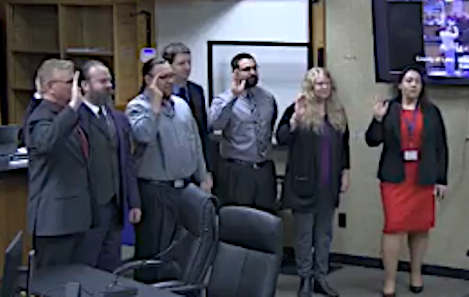
LAKE COUNTY, Calif. — The Board of Supervisors held its first meeting of the year on Tuesday, during which newly elected officials were sworn in and the board chose its 2023 leadership.
At the start of Tuesday’s meeting, the board held its annual reorganization.
Supervisor Bruno Sabatier nominated Supervisor Jessica Pyska to be the chair for 2023, with Supervisor Moke Simon to be vice chair. Supervisor Michael Green seconded the motion, which was approved 5-0.
That was followed by a swearing-in ceremony for several reelected and newly elected county officials.
While their oaths needed to have been taken by Jan. 2, the group took their oaths together in a ceremonial swearing-in that’s customary at the board’s first meeting of the year following election years.
Registrar of Voters Maria Valadez administered the oath of office to supervisors EJ Crandell and Bruno Sabatier, and District Attorney Susan Krones, who were each reelected to second terms in 2022, and Superintendent of Schools Brock Falkenberg and Assessor-Recorder Richard Ford who won third terms last year.
Also taking their oaths were county employees stepping into new leadership roles — new Treasurer-Tax Collector Patrick Sullivan and County Clerk/Auditor-Controller Jenavive Herrington.
Sullivan succeeds Barbara Ringen and Herrington succeeds Cathy Saderlund.
Both Ringen and Saderlund retired in December, with more than 70 years of county service between them.
Not in attendance for the ceremony was Lake County’s new sheriff, Rob Howe.
Howe, who for the past 11 years has served as chief probation officer following 19 years with the Lake County Sheriff’s Office, was appointed sheriff by the board on Dec. 20. He succeeds Sheriff Brian Martin, who retired effective Dec. 30.
He took his oath on Jan. 2 at the Registrar of Voters Office.
Howe sent a message for Tuesday’s meeting, which Pyska read, apologizing for his absence and explaining that he was away for a week at the California State Sheriffs' Association’s sheriffs school, which is offered once every four years.
“I would like to sincerely thank the board for the faith and trust they have shown in me with this appointment to the position of Lake County sheriff. It means a great deal to me. I take the responsibility very seriously and I have every intention of rewarding their confidence,” Howe’s message said.
As a lifelong resident who has spent his entire professional career in local law enforcement, Howe said, “I am happy and excited to be given the opportunity to continue to serve the citizens of our county.”
Email Elizabeth Larson at
NORTHERN CALIFORNIA — Members of California’s Congressional Delegation on Tuesday introduced legislation to help fire victims get some additional financial relief.
On Tuesday, in a bipartisan action, Reps. Mike Thompson (CA-04), Doug LaMalfa (CA-01), Jared Huffman (CA-02) and Tom McClintock (CA-05) reintroduced the bill from last Congress to exempt thousands of fire victims who are receiving compensation from the Fire Victim Trust from having to pay federal income tax on their settlement money or attorney fees that are included in the settlement.
In the 117th Congress, Reps. Thompson and LaMalfa introduced H.R. 7305 and fought to have it included in the end of the year FY2023 government funding package but unfortunately all tax and disaster relief provisions were not included in the final package.
Among the fires the fund is administering claims for is the October 2017 Sulphur fire that hit Clearlake and Clearlake Oaks.
Other fires included in the fund include the 2015 Butte fire; the 2017 North Bay wildfires including the 37, Adobe, Atlas, Blue, Cascade, Cherokee, Honey, LaPorte, Lobo, Maacama/Youngs, McCourtney, Norrbom, Nuns, Partrick, Pocket, Point, Pressley, Pythian/Oakmont, Redwood/Potter Valley, Sullivan and Tubbs; and the 2018 Camp fire.
More information about the fund can be found here.
“Fire survivors have been through living hell in the wake of losing their homes and livelihoods to wildfires and should not be taxed on the settlements from the PG&E Fire Victims Trust,” said Thompson. “This bipartisan bill is a top priority, and I will continue to work with Rep. LaMalfa and Rep. Huffman to enact this bill into law to bring much needed relief to fire survivors.”
“It is essential that we get this done and every Fire Victim Trust beneficiary has this massive tax headache alleviated. It should have been done last year. Fire victims need this tax relief to help rebuild their lives, they should not have to go through another tax season with this uncertainty about their settlement,” said LaMalfa.
“My constituents in Northern California have suffered enough from the devastation brought on by wildfires. The last thing the government should do is strip them of funds from the PG&E Fire Victims Trust that was set up to help them,” said Huffman. “I will keep working in every way I can to support wildlife survivors and get our bill signed into law.”
“Wildfire victims have experienced unfathomable hardship. The last thing they should be concerned with as they navigate rebuilding their lives is continued uncertainty from the IRS,” said McClintock.
Thompson represents California’s Fourth Congressional District, which includes all or part of Lake, Napa, Solano, Sonoma and Yolo counties.
On Tuesday, in a bipartisan action, Reps. Mike Thompson (CA-04), Doug LaMalfa (CA-01), Jared Huffman (CA-02) and Tom McClintock (CA-05) reintroduced the bill from last Congress to exempt thousands of fire victims who are receiving compensation from the Fire Victim Trust from having to pay federal income tax on their settlement money or attorney fees that are included in the settlement.
In the 117th Congress, Reps. Thompson and LaMalfa introduced H.R. 7305 and fought to have it included in the end of the year FY2023 government funding package but unfortunately all tax and disaster relief provisions were not included in the final package.
Among the fires the fund is administering claims for is the October 2017 Sulphur fire that hit Clearlake and Clearlake Oaks.
Other fires included in the fund include the 2015 Butte fire; the 2017 North Bay wildfires including the 37, Adobe, Atlas, Blue, Cascade, Cherokee, Honey, LaPorte, Lobo, Maacama/Youngs, McCourtney, Norrbom, Nuns, Partrick, Pocket, Point, Pressley, Pythian/Oakmont, Redwood/Potter Valley, Sullivan and Tubbs; and the 2018 Camp fire.
More information about the fund can be found here.
“Fire survivors have been through living hell in the wake of losing their homes and livelihoods to wildfires and should not be taxed on the settlements from the PG&E Fire Victims Trust,” said Thompson. “This bipartisan bill is a top priority, and I will continue to work with Rep. LaMalfa and Rep. Huffman to enact this bill into law to bring much needed relief to fire survivors.”
“It is essential that we get this done and every Fire Victim Trust beneficiary has this massive tax headache alleviated. It should have been done last year. Fire victims need this tax relief to help rebuild their lives, they should not have to go through another tax season with this uncertainty about their settlement,” said LaMalfa.
“My constituents in Northern California have suffered enough from the devastation brought on by wildfires. The last thing the government should do is strip them of funds from the PG&E Fire Victims Trust that was set up to help them,” said Huffman. “I will keep working in every way I can to support wildlife survivors and get our bill signed into law.”
“Wildfire victims have experienced unfathomable hardship. The last thing they should be concerned with as they navigate rebuilding their lives is continued uncertainty from the IRS,” said McClintock.
Thompson represents California’s Fourth Congressional District, which includes all or part of Lake, Napa, Solano, Sonoma and Yolo counties.
During National Human Trafficking Prevention Month, California Attorney General Rob Bonta is reminding Californians of the support services available statewide and issued new guidance to help trafficking survivors secure relief for offenses committed as a result of being trafficked.
Human trafficking is a heinous crime that can have numerous long-lasting, harmful impacts on victims, survivors, and their families.
These harms may also include criminal records based on crimes the victim was forced to commit because of the brutal circumstances of being trafficked. Importantly, under California law, there is vacatur relief available to trafficking survivors.
In addition, whether it is through state and local government or community organizations, California offers a wide array of resources to support survivors of human trafficking including housing, cash, and immediate assistance through direct service providers.
“For many survivors, the pain of human trafficking is felt long after they’re out of harm’s way,” said Attorney General Bonta. “Whether it’s struggling to heal from trauma or regain financial independence, survivors of trafficking deserve and are entitled to support. For those who committed nonviolent offenses as a result of being trafficked, there are also pathways to secure relief and start fresh. I urge all Californians to review the information being shared today by my office. Together, we can help put a stop to trafficking and support those who have been harmed.”
Human trafficking is a modern-day form of slavery where perpetrators profit from the control and exploitation of adults and children for sex or labor through force, fraud, or coercion. Human trafficking does not require movement across borders.
According to the National Human Trafficking Hotline, there were more than 1,300 human trafficking cases reported in California in 2021 — more than any other state in the nation.
In California, human trafficking is prevalent in the hospitality, commercial sex, domestic work, and construction industries. Victims of human trafficking are also found among migrant and seasonal agricultural workers, providers of residential care, and in California’s garment sector.
While human trafficking can have myriad harms, the associated criminal justice consequences that may arise are often overlooked and can create significant challenges, including to employment, safe housing, education, financial assistance, and citizenship status.
Accordingly, under state law, survivors of human trafficking, intimate partner violence, or sexual violence may have criminal records vacated, sealed, and destroyed if the underlying nonviolent offense — e.g., petty theft, drug possession, or prostitution — was committed as a result of being a victim of trafficking or other forms of abuse.
This type of relief — known as vacatur relief — helps eliminate barriers to stability and independence, and spares survivors from having to explain their traumatic past to future employers, housing managers, or others.
If you or someone you know is being forced to engage in any activity and cannot leave — whether it is commercial sex, housework, farm work, construction, factory, retail, or restaurant work — there are resources available to help.
It is also important to remember that California law prohibits law enforcement authorities from asking individuals, including those who are reporting or are victims of potential crimes, about their immigration status, unless the information is necessary to certify the victim for a U visa for victims of crime or T visa for victims of human trafficking.
If you need help, you can reach out to local authorities and organizations, and the attorney general also encourages victims of human trafficking to consider reaching out to the following organizations.
The California Department of Justice's Victims' Services Unit
Find them online at https://oag.ca.gov/victimservices
Call 1-877-433-9069 or
EmailThis email address is being protected from spambots. You need JavaScript enabled to view it.
National Human Trafficking Hotline
Find them online at https://humantraffickinghotline.org/ (online chat available);
Text 233-733 (Be Free) or
Call 1-888-373-7888
The Victims of Crime Resource Center
Find them online at https://1800victims.org/ (online chat available)
Text or call 1-800-842-8467 or
EmailThis email address is being protected from spambots. You need JavaScript enabled to view it.
Additional resources:
Resources such as emergency food and shelter, legal services, and health services can often be found directly through cities or counties.
For those in need of legal support, pro bono legal assistance can be found through the State Bar of California and, for those who have been the victim of a violent crime, the California Victim Compensation Board can help cover related bills and expenses.
In addition, the Human Trafficking Prevention Education and Training Act, which was authored by Attorney General Bonta when he was a member of the Legislature, requires public schools in California to offer education and training on human trafficking identification and prevention to help protect students in middle school and high school — and those around them — from exploitation for labor or sex.
Separately, as a result of Senate Bill 1193 of 2012 and subsequent legislation, California law requires specified businesses and other establishments — including hotels, motels, and bed and breakfast inns — to post a notice informing the public and survivors of human trafficking of telephone hotline numbers to seek help or report unlawful activity. The notices are available for free on the California Department of Justice’s website in English, Spanish, and roughly two dozen other languages.
Through collaboration with federal, state, and local law enforcement partners and community organizations, Attorney General Bonta is committed to disrupting and dismantling human trafficking in California.
As part of those efforts, the California Department of Justice operates two regional Human Trafficking and Sexual Predator Apprehension Teams, serves as the lead agency on the San Diego Human Trafficking Task Force, and leads the prosecution of complex, multijurisdictional, and criminal human trafficking cases across the state.
Bonta continues to take action to support survivors and hold those who break the law accountable.
In November, he announced that 30 individuals were arrested in San Diego County as part of Operation Century Week and, in Fresno, 19 individuals were arrested for allegedly attempting to contact a minor for sex and other related offenses.
Last year, the attorney general announced the launch of California’s first-ever sexual assault evidence kit tracking portal to enable survivors of sexual assault to privately, securely, and electronically track information about their cases.
Bonta also joined a bipartisan coalition of attorneys general in supporting the Consumer Financial Protection Bureau’s effort to help survivors of human trafficking restore their financial independence.
Additional information and resources regarding human trafficking are available on the California Department of Justice’s website here.
A copy of the vacatur guidance shared today is available here.
Human trafficking is a heinous crime that can have numerous long-lasting, harmful impacts on victims, survivors, and their families.
These harms may also include criminal records based on crimes the victim was forced to commit because of the brutal circumstances of being trafficked. Importantly, under California law, there is vacatur relief available to trafficking survivors.
In addition, whether it is through state and local government or community organizations, California offers a wide array of resources to support survivors of human trafficking including housing, cash, and immediate assistance through direct service providers.
“For many survivors, the pain of human trafficking is felt long after they’re out of harm’s way,” said Attorney General Bonta. “Whether it’s struggling to heal from trauma or regain financial independence, survivors of trafficking deserve and are entitled to support. For those who committed nonviolent offenses as a result of being trafficked, there are also pathways to secure relief and start fresh. I urge all Californians to review the information being shared today by my office. Together, we can help put a stop to trafficking and support those who have been harmed.”
Human trafficking is a modern-day form of slavery where perpetrators profit from the control and exploitation of adults and children for sex or labor through force, fraud, or coercion. Human trafficking does not require movement across borders.
According to the National Human Trafficking Hotline, there were more than 1,300 human trafficking cases reported in California in 2021 — more than any other state in the nation.
In California, human trafficking is prevalent in the hospitality, commercial sex, domestic work, and construction industries. Victims of human trafficking are also found among migrant and seasonal agricultural workers, providers of residential care, and in California’s garment sector.
While human trafficking can have myriad harms, the associated criminal justice consequences that may arise are often overlooked and can create significant challenges, including to employment, safe housing, education, financial assistance, and citizenship status.
Accordingly, under state law, survivors of human trafficking, intimate partner violence, or sexual violence may have criminal records vacated, sealed, and destroyed if the underlying nonviolent offense — e.g., petty theft, drug possession, or prostitution — was committed as a result of being a victim of trafficking or other forms of abuse.
This type of relief — known as vacatur relief — helps eliminate barriers to stability and independence, and spares survivors from having to explain their traumatic past to future employers, housing managers, or others.
If you or someone you know is being forced to engage in any activity and cannot leave — whether it is commercial sex, housework, farm work, construction, factory, retail, or restaurant work — there are resources available to help.
It is also important to remember that California law prohibits law enforcement authorities from asking individuals, including those who are reporting or are victims of potential crimes, about their immigration status, unless the information is necessary to certify the victim for a U visa for victims of crime or T visa for victims of human trafficking.
If you need help, you can reach out to local authorities and organizations, and the attorney general also encourages victims of human trafficking to consider reaching out to the following organizations.
The California Department of Justice's Victims' Services Unit
Find them online at https://oag.ca.gov/victimservices
Call 1-877-433-9069 or
National Human Trafficking Hotline
Find them online at https://humantraffickinghotline.org/ (online chat available);
Text 233-733 (Be Free) or
Call 1-888-373-7888
The Victims of Crime Resource Center
Find them online at https://1800victims.org/ (online chat available)
Text or call 1-800-842-8467 or
Additional resources:
Resources such as emergency food and shelter, legal services, and health services can often be found directly through cities or counties.
For those in need of legal support, pro bono legal assistance can be found through the State Bar of California and, for those who have been the victim of a violent crime, the California Victim Compensation Board can help cover related bills and expenses.
In addition, the Human Trafficking Prevention Education and Training Act, which was authored by Attorney General Bonta when he was a member of the Legislature, requires public schools in California to offer education and training on human trafficking identification and prevention to help protect students in middle school and high school — and those around them — from exploitation for labor or sex.
Separately, as a result of Senate Bill 1193 of 2012 and subsequent legislation, California law requires specified businesses and other establishments — including hotels, motels, and bed and breakfast inns — to post a notice informing the public and survivors of human trafficking of telephone hotline numbers to seek help or report unlawful activity. The notices are available for free on the California Department of Justice’s website in English, Spanish, and roughly two dozen other languages.
Through collaboration with federal, state, and local law enforcement partners and community organizations, Attorney General Bonta is committed to disrupting and dismantling human trafficking in California.
As part of those efforts, the California Department of Justice operates two regional Human Trafficking and Sexual Predator Apprehension Teams, serves as the lead agency on the San Diego Human Trafficking Task Force, and leads the prosecution of complex, multijurisdictional, and criminal human trafficking cases across the state.
Bonta continues to take action to support survivors and hold those who break the law accountable.
In November, he announced that 30 individuals were arrested in San Diego County as part of Operation Century Week and, in Fresno, 19 individuals were arrested for allegedly attempting to contact a minor for sex and other related offenses.
Last year, the attorney general announced the launch of California’s first-ever sexual assault evidence kit tracking portal to enable survivors of sexual assault to privately, securely, and electronically track information about their cases.
Bonta also joined a bipartisan coalition of attorneys general in supporting the Consumer Financial Protection Bureau’s effort to help survivors of human trafficking restore their financial independence.
Additional information and resources regarding human trafficking are available on the California Department of Justice’s website here.
A copy of the vacatur guidance shared today is available here.
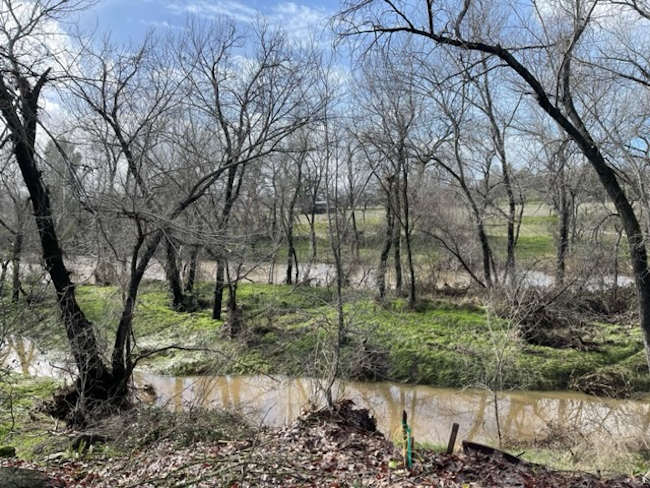
LAKE COUNTY, Calif. — The California Department of Water Resources reported that several more atmospheric river storms are in store for the state as some areas hit flood stage and reservoirs get a massive influx of runoff and rain.
With California facing still more storms through the middle of January, Department of Water Resources Director Karla Nemeth said Monday in a briefing with reporters that it was “yet another climate signal,” with California having both a drought and flood emergency.
Nemeth said California has been in the midst of a record-breaking drought up until a few weeks ago. However, she said that the state continues to be in a drought emergency.
As for the recent storms dumping large amounts of rain on California, “We will be reassessing in the later part of January what this means relative to overall drought,” Nemeth said, noting the large amount of variability across the state in terms of hydrological conditions and water availability.
There is still a long time left to go in a typical wet season, and Nemeth said there is a lot of other data to fill in to help understand California's longer term water supply picture.
The rain that fell on Monday came from the fifth atmospheric river storm in a series that started just after Christmas, said State Climatologist Dr. Michael Anderson.
A storm that will hit later this week is expected to have a longer duration and extend along the North Coast to the North Bay counties, he said.
“We will get some more rain out of that for a couple of days heading into the weekend,” Anderson said.
That’s one of four more atmospheric river storms forecast to hit California by Jan. 19 — bringing the total to nine — after which some dry conditions are expected to return.
Anderson said the forecast models show that after Jan. 19 the storms will die down and high pressure will build, blocking storms and pushing them to the north.
He explained that the storms are part of a sudden pattern shift that began in December, around Christmas, when a very strong jet stream brought storm after storm after storm.
There is more energy for the atmosphere to work with, leading to the interplay between the wet and dry cycles, Anderson said.
Jeremy Arrich, manager of the Department of Water Resources’ Division of Flood Management who is involved with the Flooding Operation Center — activated since Jan. 3 — said many monitored water locations across California were expected to reach flood stage late on Monday.
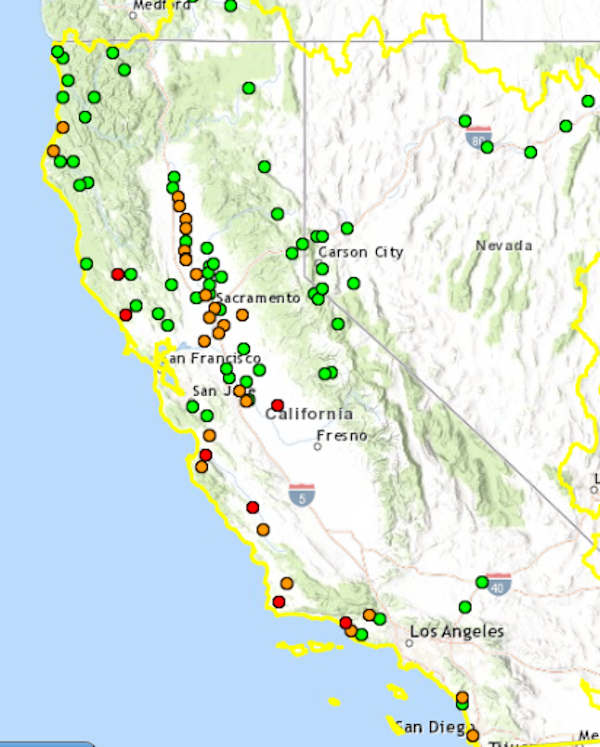
As of early Tuesday morning, the California Nevada River Forecast Center reported that there were 27 locations above monitor stage and seven above flood stage.
Clear Lake, which just passed onto the plus side of lake height over the weekend after being at its lowest level since the 1970s drought, was at 0.6 feet Rumsey late Monday and therefore was reported as being within “normal” conditions by the forecast center.
In neighboring Mendocino County, the Russian River at Hopland was fast approaching flood stage, with its level reported to be at 13.4 feet late Monday night, just short of the 15 foot flood stage.
The Russian River at Guerneville in Sonoma County was at 31.4 feet on Monday night, with its flood stage at 32 feet, the forecast center reported.
Arrich said the Russian River was among a handful of areas where the state was focusing its efforts to address flooding. The other areas are the Cosumnes River in Sacramento County, Bear Creek in Merced County, the Carmel River in Monterey County and the Pajaro River in Santa Cruz and Monterey counties.
He said on Monday afternoon that there had been no requests for assistance due to the Russian River’s high water, but that it’s an area the state monitors on a regular basis and that it had made the high water notification calls.
“We’re ready to assist when and if needed,” he said.
By Monday afternoon, Arrich said the Flood Operations Center had delivered flood fight materials and equipment to 13 counties, including more than 180,000 sandbags, six flood fight containers, 3,000 linear feet of reinforcing muscle wall, with flood fight specialists also deployed.
Arrich said the state also is communicating and making proactive outreach to local levee managers, counties and cities to keep them informed of high water conditions, and is continuing close coordination with the California Governor’s Office of Emergency Services, counties and emergency managers in areas that are anticipated to be impacted.
He said most levee operators are doing their own patrols.
The Department of Water Resources told Lake County News on Monday that at that point the Flood Operations Center had not received a specific request for assistance from Lake County at this time.
However, the agency said the center is in close contact with local agencies across the state and flood-fight materials and equipment have been positioned at 49 locations statewide to support state and local response efforts when requested.
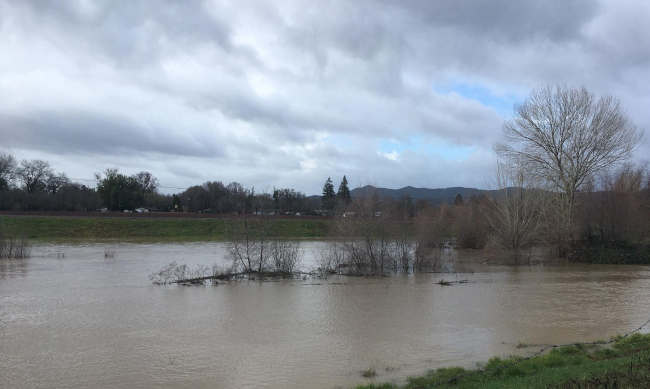
Around Lake County, creeks and streams are running high, and in Upper Lake, the water level is high in the Middle Creek and Clover Creek diversion levees.
John Yarborough, assistant deputy director of the State Water Project, said that although there has been significant inflow into the state’s reservoirs, there is still a lot of room to take in more water from the storms over the coming days. Statewide reservoir storage as of Jan. 8 was 78%.
He said Lake Shasta is 37% full and that Lake Oroville’s level has risen more than 77 feet since Dec. 1 thanks to taking in more than half a million acre feet of water.
Another half a million acre feet are expected to flow into Lake Oroville, bringing it up to two million acre feet. Yarborough said Lake Oroville has a capacity of 3.5 million acre feet.
While the storms are great, state officials said water supply conditions are still below average. Anderson said the reservoirs have been depleted and rebuilding the system’s storage will take time — he estimated a couple of years — and require not just more storms but also snowmelt.
Anderson said forecasters are waiting until after the larger storm event to do an analysis of it.
While each of the storms on its own hasn’t been that awe inspiring, Anderson said it’s a matter of having so many storms, one after another, with no break.
In the fall, forecasters expected a La Nina system to bring more dry conditions, and late in 2022, that pattern was holding, he said.
However, Anderson said it’s still a work in progress to understand large transitions such as these recent storms that happen suddenly.
He said forecasters are working with the research community to get better forecasts and lead time on weather events.
Email Elizabeth Larson at
LAKE COUNTY, Calif. — Authorities said driving under the influence is believed to be a factor in a four-vehicle wreck on Monday morning that killed a Clearlake man and injured four others.
Gregory J. Zachreson, 58, died at the scene of the crash, which occurred at 10:46 a.m. Monday on Highway 29 near Argonaut Road near Lakeport, according to the California Highway Patrol’s Clear Lake Area office.
Bradley C. Jones, 20, of Lakeport was arrested following the crash on suspicion of DUI, the CHP said.
The CHP’s report on the crash said Jones was driving a 1999 Chrysler Concorde southbound on Highway 29 at the intersection of Argonaut Road as Gary D. Moore, 67, of Finley was driving a 2021 Honda Passport northbound.
Timothy M. Laubach, 31, of Middletown was driving a 2001 Ford Focus northbound on Highway 29 to the rear of Moore, with Zachreson riding as Laubach’s passenger, the CHP said.
Traveling behind Laubach was Andrew T. Pick, 26, of Lakeport, who was driving a 2008 Mercedes C300 northbound, with Isis E. Martinez, 22, of Lakeport as his passenger, according to the report.
The CHP said Jones drove the Chrysler south over the solid double-yellow lines and into the northbound lane, where it hit Moore’s Honda head-on before continuing south in the northbound lane and hitting Laubach’s Ford head-on.
Pick was unable to avoid the collision and hit Jones’ Chrysler head-on, the CHP said.
The CHP said Zachreson died of his injuries at the scene.
CHP officers arrested Jones at the scene for DUI. He suffered major injuries and was transported to the Santa Rosa Memorial Hospital.
Laubach suffered major injuries and also was transported to Santa Rosa Memorial, while the CHP said Pick and Martinez both suffered minor injuries and were taken to the hospital for treatment of lacerations and contusions. Moore was uninjured.
Martinez was not wearing a seat belt, but the other five individuals involved in the wreck did use their seat belts, the CHP said.
The CHP reminds motorists to designate a sober driver and always wear a seatbelt.
Email Elizabeth Larson atThis email address is being protected from spambots. You need JavaScript enabled to view it. . Follow her on Twitter, @ERLarson, or Lake County News, @LakeCoNews.
Gregory J. Zachreson, 58, died at the scene of the crash, which occurred at 10:46 a.m. Monday on Highway 29 near Argonaut Road near Lakeport, according to the California Highway Patrol’s Clear Lake Area office.
Bradley C. Jones, 20, of Lakeport was arrested following the crash on suspicion of DUI, the CHP said.
The CHP’s report on the crash said Jones was driving a 1999 Chrysler Concorde southbound on Highway 29 at the intersection of Argonaut Road as Gary D. Moore, 67, of Finley was driving a 2021 Honda Passport northbound.
Timothy M. Laubach, 31, of Middletown was driving a 2001 Ford Focus northbound on Highway 29 to the rear of Moore, with Zachreson riding as Laubach’s passenger, the CHP said.
Traveling behind Laubach was Andrew T. Pick, 26, of Lakeport, who was driving a 2008 Mercedes C300 northbound, with Isis E. Martinez, 22, of Lakeport as his passenger, according to the report.
The CHP said Jones drove the Chrysler south over the solid double-yellow lines and into the northbound lane, where it hit Moore’s Honda head-on before continuing south in the northbound lane and hitting Laubach’s Ford head-on.
Pick was unable to avoid the collision and hit Jones’ Chrysler head-on, the CHP said.
The CHP said Zachreson died of his injuries at the scene.
CHP officers arrested Jones at the scene for DUI. He suffered major injuries and was transported to the Santa Rosa Memorial Hospital.
Laubach suffered major injuries and also was transported to Santa Rosa Memorial, while the CHP said Pick and Martinez both suffered minor injuries and were taken to the hospital for treatment of lacerations and contusions. Moore was uninjured.
Martinez was not wearing a seat belt, but the other five individuals involved in the wreck did use their seat belts, the CHP said.
The CHP reminds motorists to designate a sober driver and always wear a seatbelt.
Email Elizabeth Larson at