 How to resolve AdBlock issue?
News
Some studies claim the obesity rate to be much higher, more like 60 to 65 percent. Obesity is defined as 20 percent over the ideal body weight.
Studies claim we are the fattest country on earth! If you’ve traveled overseas to Europe and Asia you would probably concur. Asians, Europeans, Africans and Latin Americans definitely seem to be more slender than the average American.
Studies also point out that Americans have some of the world’s highest rates of cancer, diabetes and heart disease. And yet many Americans, and certainly our “health care” industry, brag that we have the finest and most advanced medical care system in the world.
The problem is at once simple and complex. Any dietitian, nutritionist or naturopath like me would suggest that, for one thing, we simply eat less and exercise more. We’ve all heard that we need to eat far fewer simple and far more complex carbohydrates.
Another mantra is increasingly becoming, “Eat more organically grown foods (clean and more nutrient-rich) and less processed food.” That’s the “simple” part.
The hard parts are that we’ve grown up as an addictive society. The vast majority of us grew up eating foods laden with pesticides and grown in nutritionally poor or bankrupt agri-soils. Relatively inexpensive frozen and canned foods that typically contain sugars, and a host of additives, are not only our choice and for the most part what’s readily available to us, but due to the sugars ( including high fructose corn syrup) these food have become our addiction.
There are six tastes: sweet, sour, salty, pungent, bitter and astringent. Each taste has both a physiological and emotional response. Sweet taste is the most emotionally nurturing of all the tastes. Sweet taste is the taste of “I feel secure now.” It occurs, to some extent, in all grains, fruits and vegetables. It is the main taste in meats.
We need sugars to turn into glycogen to feed our 100 trillion cells. What we don’t need is refined, concentrated and processed sugars like cane and high fructose sugars. These sugars spike insulin levels and ultimately create enormous health problems. These sugars, more than anything else, create obesity. They’re almost ubiquitous in our supermarket food supply. And we’ve become addicted to them.
These refined sugars, along with excessive free-radical and homocystiene damage, create an almost unbridled internal inflammation. Studies all over the world are now in agreement that all of our deadly diseases are at least co-created by chronic subclinical inflammation. It’s not inflammation that we most often don’t feel, nor have any symptom of, and yet inflammation is a natural response in the body.
The immune system creates an inflammation whenever we suffer a cut or abrasion. It’s a natural part of the healing response. But internal inflammation often goes unchecked and out of control due, in part, to a cascade of events from consuming excessive amounts of refined sugars. Also, its internal scaring and ensuing inflammation in our veins and arteries that demand a build up of excessive cholesterol that acts as an anti-inflammatory agent.
Finally, it doesn’t take a well-financed scientific study to conclude that Lake County has a very high rate of obesity. Something must be done to avert further landslides of suffering from an information vacuum on the causes and prevention of the obesity epidemic in Lake County.
As long as local residents purchase foods that contribute to the problem, the supermarkets and mom and pop stores will continue to carry sugar-laden foods. Demand creates supply. Informed Lake County residents will eventually make more intelligent food choices. Life is not so much a tragedy of nutrition – life is a tragedy of information.
Steven West, ND is a Kelseyville- based naturopath and nutritionist. He graduated form the Institute for Natural Health Studies and has been in practice in California for 18 years.
{mos_sb_discuss:2}
The state is offering a new set of rules under AB 885 that would require inspections of septic systems at least once every five years, and also could require some people to replace their systems, costs which could run into the tens of thousands, according to opponents of the measure.
A meeting had been set for Tuesday evening at the Wells Fargo Center in Santa Rosa, as Lake County News reported earlier this week.
However, when hundreds of people showed up, with traffic backing up out onto Highway 101 and people standing in aisles and doorways, the meeting was shut down.
Chuck March, executive director of the Lake County Farm Bureau, attended the very short meeting, which he said only ran about 15 minutes before it was stopped.
“A lot of people were pretty upset,” said March, who noted that a water board official was about three pages into a PowerPoint presentation before the meeting was halted.
March noted that people “from all walks of life” had crowded into the meeting to hear what the state is proposing.
Ray Ruminski, director of Lake County Environmental Health, also attended with some of his staffers, and recounted the many people jammed into the auditorium and out into the hallway and lobby.
He said he didn't think the water board could have foreseen such a huge crowd turning out.
Both Ruminski and March said it was a fire official who ultimately stopped the proceedings.
Water board spokesperson Kathie Smith said in response to the cancellation two new meetings have been scheduled in Santa Rosa on Feb. 9, in the Ruth Finley Person Theater – which has a 1,500-person capacity – at the Wells Fargo Center, 50 Mark West Springs Road.
The first session will take place from 1 p.m. to 5 p.m., the second from 7 p.m. to 11 p.m. Smith said both meetings will present identical information.
Feb. 9 was the original date for a public hearing in Sacramento that the State Water Resources Control Board had planned. That hearing has been postponed, Smith said.
The state also has extended the comment period on the regulations, from Feb. 9 to noon on Feb. 23.
Written comments may be sent to Todd Thompson, PE, Division of Water Quality, State Water Resources Control Board, 1001 I St., P.O. Box 2231, Sacramento, CA 95812; fax, 916-341-5463; e-mail,
Questions about the public comments also can be directed to Thompson at 916-341-5518 or to Gita Kapahi, director of public participation, at 916-341-5501.
To see the proposed regulations and other background information, visit www.waterboards.ca.gov/water_issues/programs/septic_tanks/.
E-mail Elizabeth Larson at
{mos_sb_discuss:2}
Patrick Dewin McDaniel, 44, of Clearlake Oaks was returned to Lake County on Thursday and booked into the Lake County Jail on an attempted murder charge, according to Capt. James Bauman of the Lake County Sheriff's Office.
McDaniel was wanted for his alleged part in a Nov. 26 confrontation, in which he is alleged to have shot 42-year-old Patrick O'Conner of Clearlake Oaks, as Lake County News has reported.
His brother, Cecil McDaniel, 37, also of Clearlake Oaks, also was allegedly involved.
The two brothers allegedly fled from the scene that night. Cecil McDaniel was located and arrested by sheriff’s detectives in Clearlake Oaks on Dec. 3 and remains in the Lake County Jail on $500,000 bail, charged with being an accessory.
Bauman said Patrick McDaniel remained at large until Dec. 17, when he was located and arrested on fugitive warrant by the Las Vegas Metropolitan Police.
McDaniel, a recent parolee, was extradited by the U.S. Marshals Office from the Clark County Jail in Nevada to the San Quentin State Prison in early December where he was held on a related parole violation, Bauman said.
A removal order was signed by Lake County Superior Court Judge Stephen Hedstrom on Jan. 26, and McDaniel was transported back to Lake County on Thursday, according to Bauman.
McDaniel was booked at the Lake County Jail Thursday afternoon on charges which Bauman said include attempted murder, assault with a deadly weapon, felon in possession of a firearm and accessory to a crime.
Bauman said that McDaniel also is being held on a bench warrant for failure to appear on a prior felony narcotics offense and a CDC parole hold.
{mos_sb_discuss:2}
On Super Bowl Sunday 2008, 12 people were killed in alcohol-involved collisions – three times the daily average in California, the agency reported.
These deaths, CHP said, were in addition to the 167 people injured in alcohol-related crashes throughout the state.
“We're not discouraging the celebration,” said CHP Commissioner Joe Farrow. “We're asking fans to make the right call, so they won't find themselves benched in a jail cell.”
CHP officers statewide arrested 403 motorists for driving under the influence (DUI) on Super Bowl Sunday last year.
This year the CHP, along with police and sheriff's departments, will be deploying special DUI patrols through the Avoid Campaign across the state to lower alcohol-involved deaths and injuries.
Law enforcement invites the public to help by calling 911 to report a suspected drunk driver. Callers should be prepared to provide dispatchers with a description of the vehicle, its location and direction of travel.
“A DUI is no 5-yard penalty,” Farrow warned. “It's something that will follow you around for years to come.“
In addition to designating a driver, the CHP encourages motorists to wear a seat belt and comply with the speed limit.
{mos_sb_discuss:2}
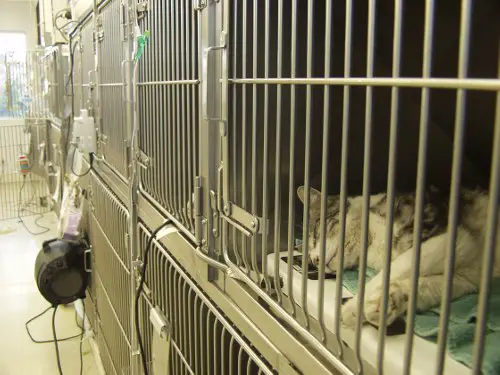
LAKE COUNTY – Taking care of all creatures great and small could become a lot more expensive if the state Legislature approves a proposal by the governor.
In an effort to find additional revenue sources for California, Gov. Arnold Schwarzenegger is proposing to broaden the state's sales tax to include veterinary services.
The plan first arose late last year during special budget sessions, in which state legislators strongly opposed it. Now, Schwarzenegger has included it in his draft state budget for the 2009-10 fiscal year.
Aaron McLear, a spokesman for the governor, told Lake County News that Schwarzenegger released his latest budget – and the seventh proposal of the year – on New Year's Eve.
He said it takes a “balanced approach” of seeking new revenue by adding veterinary care to taxed services.
The American Veterinary Medical Association reports that so far only three states – Hawaii, New Mexico and South Dakota – collect taxes on veterinary medical services, which include routine exams and vaccinations.
The new tax would be a nearly 10-percent additional cost to pet and animal owners, which is raising concerns for animal advocates and others fearing that the number of abandoned and neglected animals – already believed to be growing due to the economic climate – could get much worse.
The exact amount of sales tax added would vary from one area to the next, depending on local sales tax measures. In the unincorporated areas of the county, sales tax currently is 7.25 percent, while in Clearlake and Lakeport – where voter-approved sales tax measures support police and road projects, respectively – sales tax currently is 7.75 percent, according to city and county officials.
"It's obvious that 10 percent onto fees for people that are lower income is going to be devastating for them," said Dr. Debra Sally of Clearlake Veterinary Clinic.
"There's a potential that a lot more animals are going to go without care," Sally added, suggesting many more animals could end up in the pound, which itself is an expense for government.
Jennifer Fearing, chief economist for the Humane Society of the United States, said the organization is referring to the tax proposal as the "Fido fine," although it also will affect large animal and livestock care as well.
“We are absolutely opposed,” she said.
Fearing said animal shelters already are grappling with higher costs and more animals, and making it more expensive to care for animals may just mean more animals in the pound. “This is really just adding insult to injury,” said Fearing, who called the proposal “reckless on the governor's part.”
Because it also will impact livestock, said said it will raise the cost of doing business for farmers and ranchers.
Then there are impacts on government, said Fearing. Because local government agencies aren't immune from paying sales tax, animal shelters that contract for vet services would have to pay the tax along with everyone else.
An example, Fearing said Los Angeles County, which spends $2.5 million a year on contracted services, would have to pay $250,000 in taxes, funds which otherwise would go to animal care.
Fearing said the most absurd and strange aspect of the proposed tax is how it's lumped in with several completely unrelated services.
The budget proposal suggests that, beginning March 1, the sales tax would be extended to appliance and furniture repair, vehicle repair and veterinarian services. Then, on April 1, the sales and use tax rate
would be applied to amusement parks, sporting events and golf.
“Selection of these services was based on ease of implementation as these services are generally provided by entities that already have a relationship with the Board of Equalization,” the budget states.
The new taxes are estimated to generate $272 million in state general fund in 2008-09 and $1.154 billion in 2009-10.
"Ethically I don't see how you can put animals lives in the same category as car repair," Sally said.
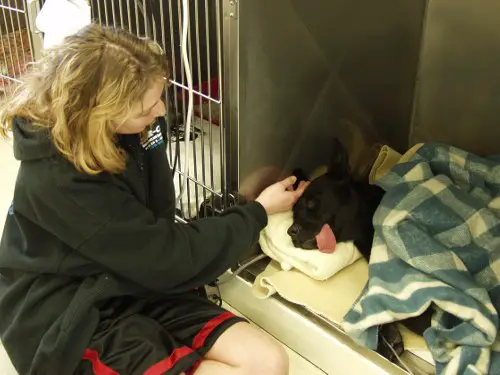
Pet owners could see big rises in costs
Dr. Susan Cannon of Wasson Memorial Veterinary Clinic in Lakeport said the big issue is the prospect of greater expenses for clinics and their patients.
"Obviously, most clinics are not going to afford to be able to absorb those costs," she said.
Cannon said pet owners can expect an increase in fees to compensate for the tax. "A lot of people are having a hard enough time as it is affording vet care," she said, adding that the proposal is "all very vague."
The tax seems very large, said Cannon, and most pet owners don't have insurance or other assistance in paying for care.
"Obviously the state's in trouble and they're trying to come up with as many ways as they can to make money," Cannon said.
On Tuesday, Callie Dailey of Boonville was at Wasson Memorial with her 1-year-old black lab mix, Beau Duke, who she adopted from a Lake County rescue group.
Beau had been hit by a car, and suffered a shattered left hind leg and a hip out of socket, said Dailey.
After being told by other vets that they could only amputate Beau's leg, Dailey connected with Dr. Chris Holmes of Wasson. On Tuesday Holmes operated on Beau in an effort to save his leg.
Dailey said the surgery is expensive enough without having to pay hundreds of dollars more in tax.
She said cost could force heartbreaking choices.
“I'm sure for some people it would mean the difference between saving their dog and having to put it to sleep,” said Dailey.
Vets group speaks out against tax
The California Veterinary Medical Association, which represents 6,000 veterinarians statewide, has come out against the proposal.
The association's president, Dr. William Grant II, told Lake County News that it's hard to say if the tax will become a law.
The association has good support from both Democrats and Republicans who agree it isn't a good tax, Grant said.
Grant said it's not fair to segregate one fraction of the health care profession and target it with this level of taxation. He had no idea why veterinarians were singled out.
"It's already difficult in today's economy for a lot of people to take care of their pets," he said.
Grant said the tax will get passed on from vets to pet owners, and essentially will result in penalizing people for doing the right thing by taking care of their pets.
He also noted that pet owners can be prosecuted for failing to provide veterinarian care. "We just think it's ridiculous."
Grant, who is a small animal vet in Southern California, has told many of his clients about the proposal, and they've responded by calling legislators.
The Humane Society also sent out an e-mail alert to 120,000 California members about a week and a half ago, Fearing said.
Schwarzenegger's office has a constituent affairs line where people can call in to register their opinions about various issues, said McLear.
To call in, dial 916-445-2841; press 5 to leave an opinion – hit 1 to show support for the sales tax and 2 if you oppose it.
As to response on the tax, McLear said "It's higher than most issues right now."
He added, "That changes daily, depending on what the hot issues of the day are."
Schwarzenegger receives a weekly report on constituent feedback on issues, McLear said.
"Obviously we are being heard," Grant said.
The 2009 California Humane Lobby Day, which will take place from 9:30 a.m. to 4 p.m. Thursday, February 12, at the California State Capitol, also will offer animal advocates a chance to speak to elected officials and their staff about important legislation. To RSVP to take part in the event, visit https://community.hsus.org/humane/events/lobbyday_SacramentoCA_Feb12/details.tcl?member_key=ine3wie2z7men7k6&.
E-mail Elizabeth Larson at
{mos_sb_discuss:2}
THIS STORY HAS BEEN UPDATED.
CLEARLAKE OAKS – A Clearlake Oaks man wanted in connection to a November shooting has been arrested.
Patrick Dewin McDaniel, 44, was booked into the Lake County Jail shortly before 2:30 p.m. Thursday, according to Lake County Jail records. A Friday report said he had been apprehended in Nevada and then, because he is a parolee, was transported to San Quentin before returning to Lake County.
McDaniel and his 37-year-old brother, Cecil, of Clearlake Oaks, are alleged to been involved in a confrontation with Clearlake Oaks residents 42-year-old Patrick O'Conner and his 23-year-old son, James, at a neighbor's residence on the evening of Nov. 26, as Lake County News has reported.
The O'Conners heard Patrick McDaniel yelling at a female neighbor and went next door to intervene. Patrick O'Conner and Patrick McDaniel had had a confrontation earlier in the day, according to investigators.
An argument resulted, with Cecil McDaniel reportedly taking a swing at O’Conner and missing. Then Patrick McDaniel allegedly shot O'Conner in the chest.
The brothers – both of whom are convicted felons – are then alleged to have fled the scene, with deputies searching for them for several hours.
Cecil McDaniel was arrested on Dec. 3, and remains in the Lake County Jail on $500,000 bail for being an accessory to the shooting. He went before Judge Richard Martin on Jan. 21, and is scheduled to return to court on March 9 in Department 3.
Patrick McDaniel is charged with attempted murder, with bail set at $500,000, according to jail records.
McDaniel, who sheriff's officials reported had been paroled from prison not long before O'Conner's shooting, also has a felony bench warrant against him, with an additional $50,000 in bail for that charge.
E-mail Elizabeth Larson at
{mos_sb_discuss:2}