 How to resolve AdBlock issue?
News
The proposed rule would require large banks to apply consumer protections, including interest rate disclosures, to overdraft fees. In doing so, the proposed rule would close a regulatory loophole that enables banks to extract billions of dollars from consumers by charging overdraft fees without adequately disclosing basic credit terms.
“Overdraft fees are a relic and should be left in the past. These fees harm low-income Californians the most, while lining the pockets of large financial institutions,” said Bonta. “The Consumer Financial Protection Bureau's proposed rule would protect consumers' pocketbooks and create more transparency about how overdraft fees are handled in the places where they bank. By closing this archaic loophole, we work toward a California where consumers are treated more equitably and fairly by financial institutions.”
TILA was enacted in 1968 when many families used the mail to send and receive checks and had little certainty about when their deposits and withdrawals would clear. When a bank clears a check and the consumer doesn’t have funds in the account, the bank charges an overdraft fee and in doing so is issuing a loan to cover the difference.
The Federal Reserve Board created an exemption to TILA protections if the bank was honoring a check when their depositor inadvertently overdrew their account. At the time, this was used infrequently and resulted in a small cost for consumers. It was not a major profit driver.
This exception no longer serves its original purpose given the automation of overdraft pay, prevalence of debit card transactions as an alternative to checks, and drastically increased amount of overdraft fees.
Approximately 23 million households pay overdraft fees in any given year. Banks usually charge $35 for an overdraft, most of which are repaid within three days — representing an annual percentage rate, or APR, of approximately 17,000%.
An APR is the yearly rate charged for a loan or earned by an investment and includes interest and fees. Typically, personal loan APRs are from 6% to 36%. In 2022, consumers paid over $7.7 billion in overdraft and non sufficient fund fees.
In the letter, the attorneys general endorse the proposed rule and request that the Consumer Financial Protection Bureau set the benchmark overdraft fee at $3, which would not trigger TILA disclosures and reduce overdraft fees for consumers.
The attorneys general also urge the Consumer Financial Protection Bureau to consider expanding the proposed rule to small financial institutions given that many are among the most frequent chargers of costly overdraft fees.
In submitting the letter, Attorney General Bonta joins the attorneys general of New York, Colorado, Connecticut, Delaware, Illinois, Maine, Maryland, Massachusetts, Michigan, Minnesota, Nevada, North Carolina, Oregon, Pennsylvania, Washington and the District of Columbia.
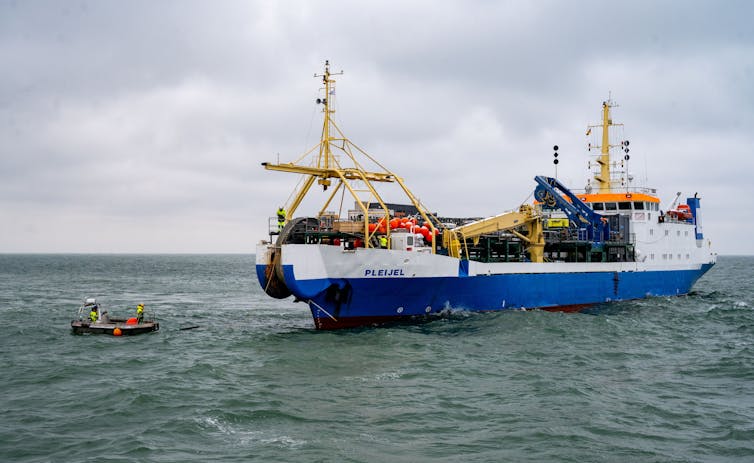
Have you ever wondered how an email sent from New York arrives in Sydney in mere seconds, or how you can video chat with someone on the other side of the globe with barely a hint of delay? Behind these everyday miracles lies an unseen, sprawling web of undersea cables, quietly powering the instant global communications that people have come to rely on.
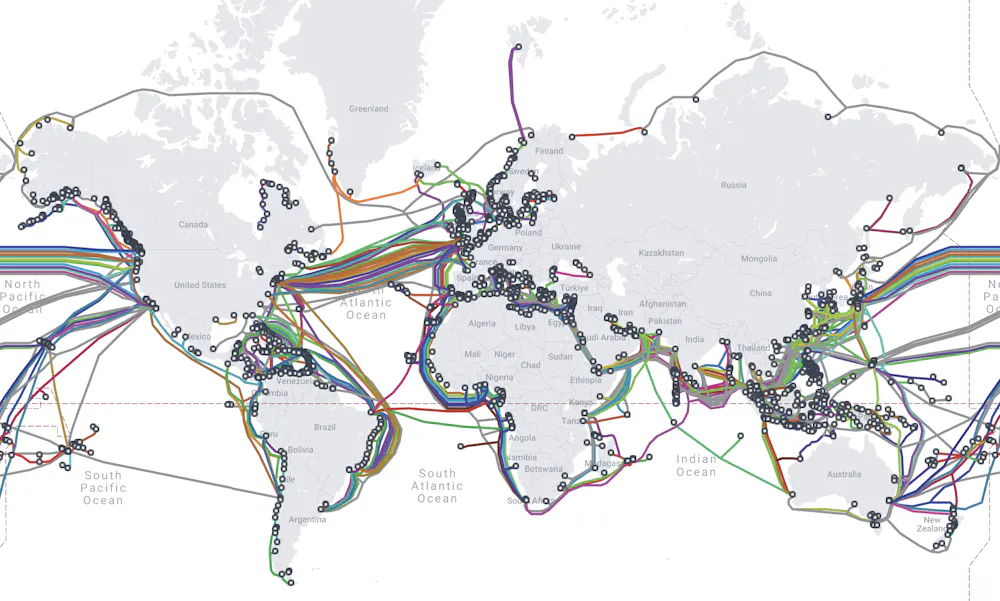
Undersea cables, also known as submarine communications cables, are fiber-optic cables laid on the ocean floor and used to transmit data between continents. These cables are the backbone of the global internet, carrying the bulk of international communications, including email, webpages and video calls. More than 95% of all the data that moves around the world goes through these undersea cables.
These cables are capable of transmitting multiple terabits of data per second, offering the fastest and most reliable method of data transfer available today. A terabit per second is fast enough to transmit about a dozen two-hour, 4K HD movies in an instant. Just one of these cables can handle millions of people watching videos or sending messages simultaneously without slowing down.
About 485 undersea cables totaling over 900,000 miles sit on the the ocean floor. These cables span the Atlantic and Pacific oceans, as well as strategic passages such as the Suez Canal and isolated areas within oceans.
Laying cable under the sea
Each undersea cable contains multiple optical fibers, thin strands of glass or plastic that use light signals to carry vast amounts of data over long distances with minimal loss. The fibers are bundled and encased in protective layers designed to withstand the harsh undersea environment, including pressure, wear and potential damage from fishing activities or ship anchors. The cables are typically as wide as a garden hose.
The process of laying undersea cables starts with thorough seabed surveys to chart a map in order to avoid natural hazards and minimize environmental impact. Following this step, cable-laying ships equipped with giant spools of fiber-optic cable navigate the predetermined route.
As the ship moves, the cable is unspooled and carefully laid on the ocean floor. The cable is sometimes buried in seabed sediments in shallow waters for protection against fishing activities, anchors and natural events. In deeper areas, the cables are laid directly on the seabed.
Along the route, repeaters are installed at intervals to amplify the optical signal and ensure data can travel long distances without degradation. This entire process can take months or even years, depending on the length and complexity of the cable route.
Threats to undersea cables
Each year, an estimated 100 to 150 undersea cables are cut, primarily accidentally by fishing equipment or anchors. However, the potential for sabotage, particularly by nation-states, is a growing concern. These cables, crucial for global connectivity and owned by consortia of internet and telecom companies, often lie in isolated but publicly known locations, making them easy targets for hostile actions.
The vulnerability was highlighted by unexplained failures in multiple cables off the coast of West Africa on March 14, 2024, which led to significant internet disruptions affecting at least 10 nations. Several cable failures in the Baltic Sea in 2023 raised suspicions of sabotage.
The strategic Red Sea corridor has emerged as a focal point for undersea cable threats. A notable incident involved the attack on the cargo ship Rubymar by Houthi rebels. The subsequent damage to undersea cables from the ship’s anchor not only disrupted a significant portion of internet traffic between Asia and Europe but also highlighted the complex interplay between geopolitical conflicts and the security of global internet infrastructure.
Protecting the cables
Undersea cables are protected in several ways, starting with strategic route planning to avoid known hazards and areas of geopolitical tension. The cables are constructed with sturdy materials, including steel armor, to withstand harsh ocean conditions and accidental impacts.
Beyond these measures, experts have proposed establishing “cable protection zones” to limit high-risk activities near cables. Some have suggested amending international laws around cables to deter foreign sabotage and developing treaties that would make such interference illegal.
The recent Red Sea incident shows that help for these connectivity challenges might lie above rather than below. After cables were compromised in the region, satellite operators used their networks to reroute internet traffic. Undersea cables are likely to continue carrying the vast majority of the world’s internet traffic for the foreseeable future, but a blended approach that uses both undersea cables and satellites could provide a measure of protection against cable cuts.
Robin Chataut, Assistant Professor of Cybersecurity and Computer Science, Quinnipiac University
This article is republished from The Conversation under a Creative Commons license. Read the original article.
The elections office reported on Tuesday that it had completed the work within the 28-day canvass to finalize and certify the election results.
The certified results will be presented to the Board of Supervisors for acceptance at its April 9 meeting.
The final results show that Brad Rasmussen held onto his lead over three other candidates to clinch the District 4 supervisorial seat.
Rasmussen, who is retiring later this year from his job as Lakeport’s police chief, received 2,007 votes, or 58.72%. He needed at least 50% plus one.
Next in the tally was Laura McAndrews Sammel, the CEO of the Lake County Chamber, with 709 votes, or 20.74%, followed by Scott Barnett with 545 votes, or 15.94%, and Chris Read with 157 votes, or 4.59%.
In the District 1 race, the results flipped from the initial count reported on election night and the two top vote-getters will race to November.
John Hess, the District 1 planning commissioner, held a two-vote lead over rancher Helen Owen in a five-candidate field in the primary tally.
However, with the final count in, Owen has taken the lead. She received 1,185 votes, or 39.06%, followed by Hess, with 1,006 votes or 33.16%.
The rest of the field included Sean Millerick, 508 votes or 16.74%; Bryan Pritchard, 275 votes or 9.06%; and Bren Boyd, 60 votes, or 1.98%.
In the race for the District 5 seat, incumbent Supervisor Jessica Pyska won her second term over challenger Daniel “Boone” Bridges, receiving 2,160 votes, or 56.96% of the vote, compared to Bridges’ 1,632 votes, or 43.04%.
Also on the ballot was the Lake County Superior Court Department 4 judicial seat. Incumbent Judge Shanda Harry won by an overwhelming margin, receiving 10,003 votes, or 75.92% of the votes. Her challenger, attorney Anna Gregorian, received 3,172 votes, or 24.08%.
Luke Bingham, running unopposed, won the seat for Lake County sheriff, receiving 11,431 votes.
In other election news, voters turned down the Kelseyville Unified School District’s Measure Q bond, which intended to issue $35.5 million in bonds.
The measure needed only a simple majority to win, and on election night the “no” votes led by six ballots.
In the final tally, the no votes totaled 1,758, or 50.14%, with the yes votes totaling 1,748, or 49.86%.
Overall voter turnout for the primary election was 42.74%, with 15,626 of 36,561 registered voters casting a ballot, the elections office reported.
Email Elizabeth Larson at
The council will meet at 6 p.m. Thursday, April 4, in the council chambers at Clearlake City Hall, 14050 Olympic Drive.
The agenda can be found here.
The meeting will be broadcast live on the city's YouTube channel or the Lake County PEGTV YouTube Channel.
Community members also can participate via Zoom. The webinar ID is 865 9013 6162, the pass code is 146270. One tap mobile is available at +16694449171,,86590136162#, or join by phone at 669-444-9171 or 253-205-0468.
On Thursday, the council will present a proclamation declaring April 2024 as Sexual Assault Awareness Month and a proclamation declaring April 14 to 20 as Public Safety
Telecommunicators Week.
The council also will offer certificates of appreciation for the Bunny Brunch and receive the Recreation and Events Department’s quarterly report.
Under business, the council will consider the second reading of Ordinance No. 269-2024 updating Clearlake Municipal Code Section 3-5 and possible further discussion of fire mitigation fees.
The council also will discuss the Lake County Sanitation District's Southeast Regional Wastewater System and operations within the city of Clearlake.
City Manager Alan Flora’s report to the council explains that, “when the City of Clearlake was incorporated in 1980, most of the existing infrastructure was already in place as the areas of Clearlake Highlands and Clearlake Park had developed as unincorporated areas of the county. The City is in a somewhat unusual situation as a municipality that controls no utilities. This makes coordination of the City’s land use authority and orderly development difficult. This has been a significant concern with the three separate water districts for some time and more recently with the sewer service in the City, provided through the Southeast Regional Treatment System, operated by Lake County Special Districts.”
He said there are ways the city can work more directly with Lake County Special Districts related to sewer service within its jurisdiction. “One direct way is being involved with the governance of Special Districts, and specifically the Lake County Sanitation District, which is the legal entity that provides sewer collection and treatment services to the Clearlake area and other areas throughout the county.”
He said the council delegated authority to the sanitation district’s board in 1983. Flora is asking for a discussion on possible actions, including requesting the city be involved in governance or considering another method of being involved.
On the meeting's consent agenda — items that are considered routine in nature and usually adopted on a single vote — are warrants; minutes; the continuation of the director of emergency services/city manager’s proclamation declaring a local emergency for winter storms; and authorization for the city manager to sign a consulting engagement letter for accounting support services with Eide Bailly.
The council also will hold a closed session for conference with legal counsel to discuss a case of anticipated litigation and to hold an evaluation of the city manager.
Email Elizabeth Larson at
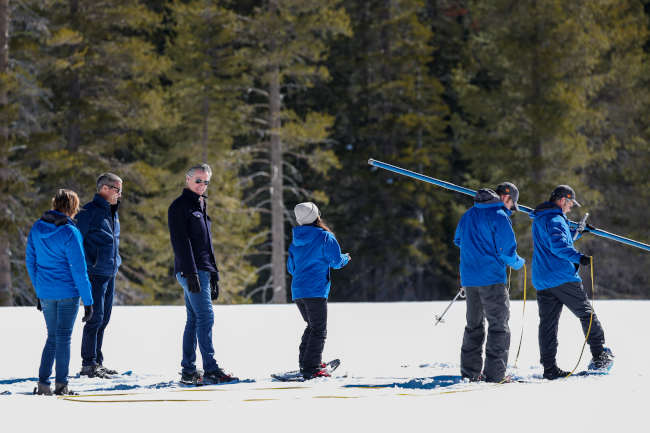
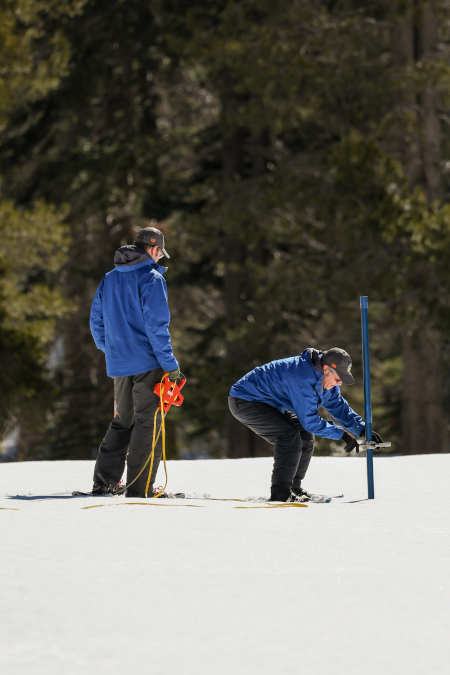
The Department of Water Resources on Tuesday conducted the all-important April snow survey, the fourth measurement of the season at Phillips Station.
The manual survey recorded 64 inches of snow depth and a snow water equivalent of 27.5 inches, which is 113 percent of average for this location.
The snow water equivalent measures the amount of water contained in the snowpack and is a key component of DWR’s water supply forecast.
The April measurement is critical for water managers as it’s considered the peak snowpack for the season and marks the transition to spring snowmelt into the state’s rivers and reservoirs.
DWR’s electronic readings from 130 stations placed throughout the state indicate that the statewide snowpack’s snow water equivalent is 28.6 inches, or 110 percent of the April 1 average, a significant improvement from just 28 percent of average on January 1.
The focus now shifts to forecasting spring snowmelt runoff and capturing as much of that water as possible for future use.
“It’s great news that the snowpack was able to catch up in March from a dry start this year. This water year shows once again how our climate is shifting, and how we can swing from dry to wet conditions within a season,” said DWR Director Karla Nemeth. “These swings make it crucial to maintain conservation while managing the runoff. Variable climate conditions could result in less water runoff into our reservoirs. 100 percent snowpack does not mean 100 percent runoff. Capturing and storing what we can in wetter years for drier times remains a key priority.”
California’s reservoirs remain in good shape thanks to state efforts to capture and store as much water as possible from record storms in 2023 and again this season.
The State Water Project has increased storage by 700,000 acre-feet at Lake Oroville and by 154,000 acre-feet at San Luis Reservoir since January 1. Statewide, reservoir levels currently stand at 116 percent of average.
However, there are challenges ahead as the spring runoff begins. The dry start to the year, soot and ash from burn scars that accelerates snowmelt, and other factors may result in below average spring runoff which can impact water availability.
Recently, the State Water Project increased its forecasted allocation of water supplies for the year to 30 percent, up from an initial 10 percent, due to the storms in February and March.
However, uncertainty about the spring runoff and ongoing pumping restrictions to protect threatened and endangered species in the Delta has impacted that allocation forecast.
“California has had two years of relatively positive water conditions, but that is no reason to let our guard down now,” said Dr. Michael Anderson, state climatologist with DWR. “With three record-setting multi-year droughts in the last 15 years and warmer temperatures, a well above average snowpack is needed to reach average runoff. The wild swings from dry to wet that make up today’s water years make it important to maintain conservation while managing the runoff we do receive. Our water years moving forward will see more extreme dry times interrupted by very wet periods like we saw this winter.”
That need to adapt to a changing climate is why Gov. Gavin Newsom joined Tuesday’s snow survey at Phillips Station to announce the release of the California Water Plan Update 2023.
The Water Plan Update sets forth a vision for all Californians to benefit from water resources that are sustainable, resilient to climate change and achieves equity for all communities and benefits the environment.
Check out the Water Plan Update to learn more about how the plan focuses on key issues including addressing climate urgency, strengthening watershed resilience, and achieving equity in water management.
As part of the state’s climate adaptation efforts, over the past two years, California has worked with local groundwater agencies and state and federal partners to capture as much water as possible to prepare for the next drought.
In 2023, more than 1.2 million acre-feet of groundwater recharge was permitted by state agencies, with nearly 400,000 acre-feet of flood water recharged using the executive orders issued by Gov. Newsom.
On average, the Sierra snowpack supplies about 30 percent of California’s water needs. Its natural ability to store water is why the Sierra snowpack is often referred to as California's “frozen reservoir.”
Data from these snow surveys and forecasts produced by DWR’s Snow Surveys and Water Supply Forecasting Unit are important factors in determining how DWR provides water to 27 million Californians and manages the state’s water resources.
DWR conducts five snow surveys at Phillips Station each winter near the first of each month, January through April and, if necessary, May.
For California’s current hydrological conditions, visit https://cww.water.ca.gov.

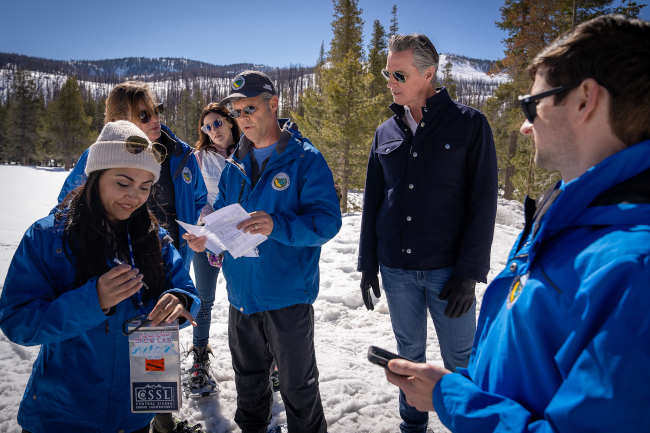
NORTHERN CALIFORNIA — In the face of the climate crisis, the Newsom Administration announced actions to protect water supplies when it’s dry and to capture more water during wet seasons.
In addition to investing billions of dollars to boost water supplies and drastically expanding the state’s storage capacity, the updated California Water Plan demonstrates how planning at a watershed scale provides the most comprehensive solutions for climate resilient water supplies for all Californians.
This plan is directly tied into Tuesday’s snow survey, a key indicator of expected runoff that this plan helps both state and local governments capture and store.
It recorded 64 inches of snow depth and a snow water equivalent of 27.5 inches, which is 113 percent of average for this location and above average overall.
“In the past few years alone, we’ve gone from extreme drought to some of the most intense rain and snow seasons on record — showcasing the need for us to constantly adapt to how we manage our water supplies,” said Gov. Gavin Newsom. “The water plans and strategies we’re implementing are each targeted components of our overall effort to deliver clean water to Californians by capturing, storing, and conserving more water throughout the state. This plan is a critical component of that effort.”
Here are just a couple examples of what California has implemented since the last Water Plan, highlighting its importance:
• Created a Flood-Managed Aquifer Recharge program, capturing and spreading flood flows to recharge aquifers – boosting the state’s water capture and storage abilities.
• Integrated climate science and research to help vulnerable communities defend against floods and drought.
This plan is a critical component of how California plans to capture more water, store it in reservoirs, replenish and recharge groundwater aquifers, protect against floods, and more. It’s directly tied to the state’s other water strategies:
• Water Resilience Portfolio. Outlines 142 state actions to protect our water supply from climate impacts by boosting water supplies, restoring natural ecosystems, and building infrastructure to store and move more water.
• Water Supply Strategy. Hotter and drier weather could diminish our water supply up to 10% by 2040, and this strategy offsets that loss – adding enough storage, recycling, and smarter water use to supply 8.4 million households every year.
These plans and reports are all intertwined, serving as critical blueprints for managing different parts of California’s complex water supply system – the Supply Strategy is offsetting the 10% loss we’re facing, the Resilience Portfolio boosts water supplies on top of that by building more and restoring natural water sources, and the Water Plan guides California's water management and conservation.
California’s other actions to boost water supplies include:
• Nearly $9 billion in water investments over the last three years. Track water projects in your community here.
• Expanded water supply and storage through groundwater recharge and other projects by over 400 billion gallons.
• Streamlining projects and limiting litigation delays to spur new and improved water infrastructure.
• Large-scale environmental restoration, including the removal of four dams from the Klamath River – the nation’s largest dam removal project.
More is needed to expand California’s water supplies. During this year's storms alone, the Delta Conveyance Project could’ve captured enough water to supply 9.4 million people; the streamlined Sites Reservoir Project could hold enough water for three million households’ yearly usage.