 How to resolve AdBlock issue?
News
KELSEYVILLE – A man shot and killed himself early Saturday morning during a traffic stop near Kelseyville.
Ryan Randall Williams, 28, of Kelseyville died from a self-inflicted gunshot wound to the head at the scene of the stop, according to sheriff's Capt. Rob Howe.
Howe said that Sgt. Andy Davidson was traveling northbound on Highway 29 a mile south of Soda Bay Road at approximately 12:28 a.m. Saturday, July 25, when he recognized the vehicle traveling in front of him as possibly belonging to Williams.
Davidson confirmed through Central Dispatch that the vehicle was Williams’. Howe said Davidson knew that Williams was on parole and was wanted for a parole violation.
When Davidson activated his forward facing red light, attempting to stop Williams at the corner of Highway 29 and Soda Bay Road, Williams slowed, turned on his blinker and turned onto Soda Bay Road near Kit's Corner, according to Howe.
Then Davidson activated his siren and overhead emergency lights, and Howe said Williams slowed and pulled onto the shoulder of the road but did not come to a complete stop.
Williams started to accelerate and pull back onto the roadway. Howe said Davidson accelerated onto the roadway, past Williams and tried to block his vehicle. At that point Williams’ vehicle accelerated and hit the driver’s side rear bumper of Davidson’s patrol vehicle then traveled in the oncoming traffic lane.
Howe said Williams’ vehicle left the roadway and was traveling parallel to the patrol vehicle on the embankment on the opposite side of the road. Williams then swerved back down the embankment, across the oncoming lane and collided with the driver's side of Davidson’s patrol vehicle. Williams' vehicle then left the roadway and crashed into a heavily wooded area.
Following the crash, Williams was found in the vehicle with severe head trauma, and a loaded handgun with one expended cartridge was also found in the vehicle near Williams’ feet, Howe said.
Williams was extricated from the vehicle and prepared to be flown by REACH to Santa Rosa Memorial Hospital. Despite life saving efforts on scene, Howe said Williams died as a result of his injuries prior to being flown out.
The investigation revealed that Williams' head trauma was not caused by the vehicle collision, but by a single self-inflicted gunshot wound. Howe said it appeared that when Davidson attempted to stop Williams he decided to take his own life.
Editor's note: News agencies do not normally cover cases involving suicide unless, such as in this case, they involve an act that is committed in a public manner.
Oakland resident Chinh Pham, 63, was the victim in the Saturday evening incident, according to sheriff's Capt. Rob Howe.
Howe said sheriff's deputies responded to Highland Springs Park in Kelseyville on a report of a drowning at approximately 6 p.m. Saturday, July 25.
When they arrived they were told that Pham had been swimming and then went under water and didn't resurface.
Lakeport Fire and the Northshore Dive Team also responded to the scene where, at approximately 6:13 p.m., dive team leader Capt. John Rodriguez found Pham.
Howe said Pham was found 45 feet off shore and approximately 15 feet under the water, tangled in weeds. Pham was pronounced dead at the scene.
Pham's wife told deputies they were in Lake County on vacation, and were with a group of friends and went to the park for recreation, said Howe.
He said Pham was swimming just offshore when he went under water and never resurfaced. Several people at the park dove into the water in an attempt to help the decedent but could not locate him.
The results of an autopsy showed that Pham's death actually was due to ischemic heart disease and not drowning.
The American Heart Association reported that ischemic heart disease – also called coronary artery disease – is a condition in which the arteries to the heart are narrowed, resulting in less blood and oxygen reaching the heart muscle. The result can be a heart attack.
E-mail Elizabeth Larson at
Kenneth Allen Rogers, 51, who since has moved to Lake County, was convicted by a jury in Ukiah last Wednesday, according to his attorney, J. David Markham of Lakeport.
Markham, who was appointed by the court to represent Rogers after his previous attorney had to leave the case due to a conflict, said Rogers is facing 25 years to life on the conspiracy charge alone when he's sentenced in Ukiah at 1:30 p.m. Aug. 14.
Tim Stoen of the Mendocino County District Attorney's Office, who prosecuted the case, said Rogers could be looking at a life term.
Rogers was accused for conspiring with an employee, Richard Peacock, to kill Alan Simon, a political rival of Rogers', on June 17, 2005.
“It was a very dramatic case,” said Stoen.
Stoen said Rogers and Peacock hatched the plot due to a “cascading set of reasons.”
Rogers had chaired the water and fire board in Westport, a town of about 80 full-time residents north of Fort Bragg, where Rogers had lived since 1997, said Stoen.
Stoen said residents in the district claimed Rogers was harassing them, and a successful recall effort was launched, culminating in the Aug. 21, 2004, vote in which he was replaced by Simon.
“He took it hard,” said Stoen.
Then, in January of 2005, Rogers and Simon crossed paths again, when Rogers was fired as assistant fire chief, with Simon voting against him. Stoen said Rogers later won a lawsuit proving he had been wrongly terminated.
But Stoen alleged that Rogers' anger continued to grow. In May of 2005, a notary who visited Rogers said spittle was flying from his mouth at the mention of Simon.
Peacock – who Stoen called a “street thug” – was released from custody on March 26, 2005, after serving time for several felony charges including one involving a firearm.
The prosecution alleged that Rogers and Peacock conspired to kill Simon, with Stoen saying that Rogers had a “triple motive” – his recall, the firing and his belief that the recall had hurt his chances for higher political office in Sacramento. Stoen said Rogers, the chair of the Mendocino County Republican Central Committee, had claimed that the Republican Party was his “religion.”
Stoen alleged that Rogers and Peacock thought they had planned the perfect crime, with the shooting taking place on a Friday night.
Peacock went to Simon's home and fired nine shots into the front door. Stoen said Simon dove to the floor and was hit in the scalp and arm by the bullets.
Despite being injured, Simon was able to identify the suspect's distinctive vehicle – a Mazda Miata with a damaged front bumper.
The vehicle would be spotted later on the night of the shooting on Branscomb Road toward Laytonville. Stoen said as Peacock made his getaway, he turned into a remote area where Rogers owned property.
Peacock was arrested the next day and put on trial. He received 71 years to life because the shooting was his third strike, Stoen said.
After Peacock was convicted, the issue remained whether or not he acted alone. During Rogers' trial, Peacock was called to testify, but refused to turn on Rogers, which Stoen suggested was because Peacock didn't want a “snitch jacket” placed on him in prison.
Since Simon was shot, Rogers moved to Lake County, where he has property, said Stoen. Rogers went back and forth between Westport and Sacramento a lot, and so he also spent a lot of time in Lake County. “Clear Lake's been a central part of his life for some time,” Stoen said.
Markham said Rogers had been out on bail since his 2005 arrest, but was remanded into custody after the jury's verdict was delivered last week.
The conviction will be appealed, said Markham.
“I'm going to file a notice of appeal and that will simply get the process started,” he said.
E-mail Elizabeth Larson at
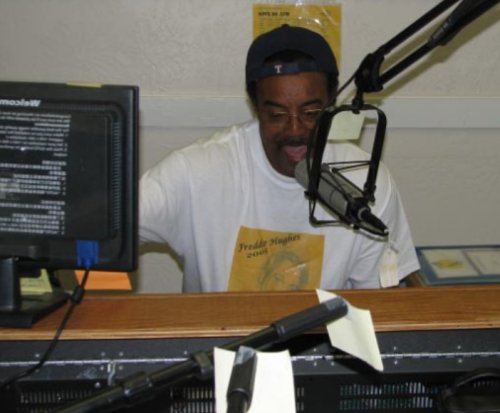
It is an unprecedented alignment of the stars. Not wholly unlike the recent total solar eclipse or the appearance of Halley’s Comet.
The CyberSoulChildren who are alive and conscious on July 31, 2009, can be cognizant of the fact that not one, but two major Motown acts are appearing at the same time in and around Lake County, within 60 miles of each other. The Four Tops are appearing at Cache Creek Casino Resort. Smokey Robinson is appearing at Konocti Harbor Resort & Spa.
This is an insightful, culture altering occurrence, juxtaposed against the golden anniversary of the birth of Motown. As a chronicler of the evolution of rhythm and blues, the time has come for me to offer up and perhaps correct some Sound Of Young America (as Berry Gordy called it) history.
I remember striving to find some semblance of that Sound on the airwaves when I arrived on the shores of Lake County in 1997. There was a commercial station that used to air a promo once or twice an hour that stressed that they played the best in Motown. They’d then follow it with a Billy Preston track or an Aretha Franklin track, neither of whom was ever a Motown artist.
Sometimes of course, they would play a legitimate Motown artist, but they would err (no pun intended) enough to make the CyberSoulMan uncomfortable. So, for those of you who are perhaps carrying around those suppositions as fact, here is the CyberSoulMan version of some Motown history. Be forewarned that I can’t squeeze the whole soulful slate into 1,000 words.
Motown was created by Berry Gordy on Jan. 12, 1959. Originally it was called the Tamla Records but incorporated as Motown Record Corp. a little over a year later.
At first it was simply a record label, a vehicle to expose to the world the very unique tapestry of the artists involved in the Detroit Sound. The first group signed to the label was the group formerly known as The Matadors. This was the group that Smokey Robinson sang lead for and when they signed with Tamla, they became The Miracles.
Other early Tamla acts were Marv Johnson, Mable John and Mary Wells. The first certifiable Tamla hit was “Money” by Barrett Strong, which charted at No. 2 on Billboard's R&B hit list in 1959.
The first million-selling record for Motown was “Shop Around” by The Miracles. The first Billboard No. 1 pop hit for the corporation was “Please Mr. Postman” by the Marvelettes.
Berry Gordy amassed a stable of artists that also included Martha & The Vandellas, The Temptations, The Four Tops, Stevie Wonder, Marvin Gaye, Tammi Terrell, The Supremes, Gladys Knight & The Pips and The Jackson 5.
Somehow, it became ingrained in parts of the American psyche that Motown was an exclusively African-American company. Nothing could be further from the truth.
From virtually its inception forward, Motown has been integrated. It has had many artists and acts that were not African American. Among them, Chris Clarke, Rare Earth, Judas Priest, Dorsey Burnette, R. Dean Taylor, The Pretty Things, Stoney & Meatloaf, Shaun Murphy, Duke Jupiter, Teena Marie, Michael McDonald and the great Bobby Darrin, among others.
Some of you may recall the film “Standing In The Shadows Of Motown,” which documented the saga of The Funk Brothers, the extremely jazz savvy studio musicians who did all the instrumental tracks for Motown from 1959 to 1972. They, too, were an integrated band.
Motown also developed Motown Latino Records which focused on Spanish language Latin American music.
In addition, Motown employed songwriting/production teams that included Smokey Robinson, Holland/Dozier/Holland, Norman Whitfield and many others that reflected accurately this melting pot called America.
Clearly, Motown wasn’t all African-American in its scope. Similarly, all African-American music wasn’t Motown. To insinuate that Aretha Franklin music is Motown distorts history. Though Aretha grew up in Detroit she was never Motown. There is room enough in Detroit for more than one iconic style or genre.
Billy Preston and others incorrectly tagged by that aforementioned radio promo not withstanding, there are many distinctions within the canon of African-American music, some of them geographic, some stylistic, some differences subtle, some very overt. It helps to do the homework. There will only be a quiz on the above material if you choose to self administer it.
The last time Smokey Robinson appeared in Lake County, I believe, was in 2004 at Robinson Rancheria. I had not seen Smokey live since 1967 when he was still fronting the Miracles. Tammi Terrill opened that show at San Francisco’s Basin Street West and gave the Smokey a good run for his money.
I was pleasantly surprised when Smokey played Lake County last. Not only had he matured gracefully, but he was a better performer. And he was my favorite in 1967. For those of you who can’t make his upcoming show, KPFZ 88.1 FM will broadcast my 2004 interview with him on Saturday, Aug. 1, between 6 p.m. and 8 p.m.
Duke Fakir is the only remaining founding member of the Four Tops. Obie Benson, Lawrence Payton and their great baritone lead singer Levi Stubbs have gone on to glory in Soul Heaven. Don’t let that hinder you from attending their show if you are so inclined. They have recruited former Temptation Theo Peoples and Lawrence Payton’s son Roquel to round out and continue their great sound.
For an awe-inspiring deeply emotional view of Levi Stubbs performing for the last time with his group (and the new replacements) go to: http://www.youtube.com/watch?v=h1May52b1RQ . Have your hankies on the ready!
Keep prayin’, keep thinkin’ those kind thoughts.
*****
Upcoming cool events:
Sunday Brunch in the Garden, Blue Wing Saloon & Cafe, 9520 Main St., Upper Lake. Brunch served 10 a.m. to 3 p.m. Chris Forshay featured on guitar and vocals, 11:30 a.m. to 2 p.m. Information: 707-275-2244 or www.bluewingsaloon.com .
Will Siegal & Friends, 6:30 p.m. to 9 p.m. Blues Monday, July 27, Blue Wing Saloon & Cafe, 9520 Main St., Upper Lake. Information: 707-275-2244 or www.bluewingsaloon.com .
Open Mike Night, 6 p.m. to 8:30 p.m. Thursday, July 30, Blue Wing Saloon & Cafe, 9520 Main St., Upper Lake. Information: 707-275-2244 or www.bluewingsaloon.com .
Rootstock, 6:30 p.m. Friday, July 31. Library Park, 200 Park St., Lakeport.
Smokey Robinson in concert, 7:15 p.m. Saturday, July 31. Konocti Harbor Resort & Spa. 8727 Soda Bay Road, Kelseyville. Information: 800-660-LAKE or www.konoctiharbor.com .
The Four Tops in Concert, 9 p.m. Saturday, July 31. Cache Creek Casino Resort, 14455 Highway 16, Brooks. Information: 888-77-CACHE or www.cachecreek.com .
T. Watts is a writer, radio host and music critic. Visit his Web site at www.teewatts.biz.
Shortly before 5 p.m. officials were called to Highlands Springs where a male subject had reportedly drowned.
Lakeport Fire and the Lake County Sheriff's Office controlled the scene, while the Northshore Dive Team was called, said dive team leader Capt. John Rodriguez.
Rodriguez said the drowning resulted from a swimming accident.
He and two other dive team members – including Keith Hoyt – responded to the scene.
Hoyt said once the team got in the water, Rodriguez found the victim – whose name and age were not available – after about 10 minutes.
The man's body was found about 75 feet offshore in about 12 to 15 feet of water, said Rodriguez.
“We had about a 5-foot visibility,” Rodriguez explained, noting that the area of the lake where they were searching had a lot of snags and thick weeds.
The team, however, had good information about where the victim had last been seen, which Rodriguez said was the key to the whole operation.
“It led us right to the victim,” he said.
Hoyt said a group of the victim's family members were at the scene, where an event was taking place.
Some good Samaritans who also were at the lake had done repeated dives in an effort to help find the man, but with no luck. Hoyt said they were very close to the location were the body ultimately was found, but the water was a little too deep and the man's body was completely covered by weeds.
Hoyst said the men were extremely upset after being unable to find the man.
He said he thanked them for what they did, which he told them was more than a lot of people would have done.
“They did the right thing,” he said.
E-mail Elizabeth Larson at
The decision regarding AltaRock Energy's engineered geothermal systems (EGS) project – scheduled to take place on a federal land leaded by the Bureau of Land Management to the Northern California Power Agency (NCPA) – came down earlier this month, as Lake County News has reported.
AltaRock, based in Sausalito and Seattle, plans to drill thousands of feet into the earth and fracture bedrock and inject water, which create steam for geothermal production.
It had already begun drilling into an old well in preparation to start the fracturing – also called “stimulation” – in August.
But a New York Times article late last month and ensuing media coverage in the interim pointed to the similarity between AltaRock's technology and that which was used on a project in Basel, Switzerland, in 2006. In that case, a company – not AltaRock – drilled into a fault and triggered a 3.4-magnitude earthquake and more than 3,500 more over the following year.
Dr. Ernie Majer, a scientist and geophysics department deputy division director for the Lawrence Berkeley National Laboratory, said the decision to halt the project while more study was done came directly from his old boss, Dr. Steven Chu, now head of the Department of Energy.
“It came from the top, it came from Dr. Chu,” Majer told Lake County News.
Chu, Majer said, didn't want to let the project go forward until it was reviewed, and wanted the community fully informed all throughout the process.
Last fall, AltaRock received more than $6 million in funding from the Department of Energy funding for The Geysers project. It also has amassed another $30 million in venture capital.
The project moved very quickly through the approval process with only a month-long public comment process and one community meeting earlier this spring.
On June 8, Rich Burns, a Lake County resident and the field manager for the Ukiah BLM's field office, signed a finding of no significant impact on the project, noting, “the process will induce seismicity that is fully expected to be within the range of present levels (both frequency and magnitude) experienced at Anderson Springs, the closest community to the Project.”
That document also stated, “While it is acknowledged that the proposed project involves some uncertainty regarding seismic impacts, the mitigation and monitoring that will be required by BLM will mitigate these uncertainties to a level of insignificance. Drilling methods and associated activities for this project are typical of existing processes in the Geysers Geothermal Field/Geysers Management Area.”
Officials with the BLM, which needed to approve a federal permit for the company to move forward, stated that AltaRock's didn't disclose to them what happened with the technology in Basel.
In turn, AltaRock's executives have said they withheld no information, and that the Basel project is well known in the industry. They also told Lake County News that the Department of Energy had asked for more information, which the company provided, and they expected to changes to their project schedule, which called for fracturing to begin in August.
Earlier this month, BLM told Lake County News that they and the Department of Energy decided to do more study on the project.
This past week Tiffany Edwards, deputy press secretary for the Department of Energy, provided an agency statement to Lake County News about the decision.
“The Department is conducting additional analysis of the question of induced seismicity, and specifically comparing induced seismicity at the Geysers to induced seismicity at Basel, Switzerland to determine whether there should be additional safeguards beyond what is already planned for the Geysers site,” the statement said. “No stimulation activity will be funded by the Department until we've completed this additional comparative analysis and provided a final NEPA [National Environmental Policy Act] determination.”
Edwards did not respond to Lake County News' request for an estimate on how long the NEPA determination might take.
The written statement Edwards provided further noted that the geothermal technology in question has “enormous potential to provide renewable baseload energy to heat and power homes and businesses. That's why industry and scientific leaders, with the support of the Department of Energy, are working to develop better technologies that will help reduce the cost of these systems, including the cost of drilling and pipes that can withstand hot, corrosive fluids deep within the earth.”
The statement concluded, “Ultimately, we believe that scientific innovation could resolve those issues, and we can develop better ways to manage the deep reservoir to maximize heat production. The Department's support of enhanced geothermal systems is focused on addressing these obstacles.”
Geothermal isn't the only type of energy production raising concerns about earthquakes. Recent reports from Cleburne, Texas, have linked to a series of small quakes – the first in well over a century – to natural gas drilling.
A USA Today report explains that a process called “fracking” is being used in Texas. Like local geothermal production, it involves injecting water deep into the earth. Fracking is meant to fracture shale layers in an effort to release the natural gas.
Officials want more openness in process
Majer said he and other scientists – US Geological Survey seismologist David Oppenheimer and Mark Zoback, a Stanford University geophysics professor – traveled to Washington, DC earlier this month to meet with Department of Energy officials to discuss the project.
He said they met with Dr. Steven E. Koonin, Chu's under secretary for science, to go over the project. Majer said Koonin indicated he wants real-time seismic monitoring in place for the community.
He also attended the community meeting held by the BLM in Middletown in April to discuss the project. Majer said the community had clear concerns about the project.
Then the articles in the New York Times and elsewhere began coming out, said Majer.
“One of the big concerns was how is this different or is it different from what happened in Basel, Switzerland?” Majer said.
He said the Department of Energy has asked AltaRock to write a document and explain how their project would differ from Basel, and explore if the technology could cause similar seismic issues here. “If so, how are you going to deal with it?”
He said AltaRock – which has approached him at one time to be an advisor, a request he declined due to the inherent conflict of interest – is now in the process of providing that report.
Majer said the Department of Energy will have that report considered by three independent reviewers. If they agree with AltaRock that the risk is minimal, the Department of Energy will let them go forward. If the findings are different, the agency likely will request more study.
Once that review is done, the information will be released to the public, said Majer. “Dr. Chu wants everything open and above board.”
Majer, who did he thesis at The Geysers, is very familiar with the earthquake activity there.
The frequent earthquakes in the area are the result of geothermal production, he said.
For many years industry working in the area denied they were causing the earthquakes, but when study after study showed a direct correlation between geothermal production there, primarily the injection of water into fissures, “They just couldn't deny it any more,” Majer said.
Majer said Basel is geographically different, stress-wise, from The Geysers, so there isn't a reason for comparing the two areas. Europeans have used the EGS technology with some success, he noted.
He said the focus has been on the initial injections planned in AltaRock's project, but Majer suggested the more important question is what will happen in the years ahead as injection continues. That should lead to a closer examination of whether or not there will be an increase in the seismic risk, which exists everywhere.
The assertion that's been made about the project that the biggest quakes it will cause only will be 2.3 in magnitude is “ridiculous,” said Majer.
However, he said creating large fractures, causing major seismicity, actually will defeat AltaRock's purpose, because larger fractures won't heat water for geothermal production as well.
He said AltaRock needs to address the concerns and not just do damage control. The company has claimed some information about its operations is proprietary, he added.
The Lawrence Berkeley National Laboratory does seismic monitoring at The Geysers, said Majer, where they currently have a monitoring array for Calpine and NCPA.
That array currently has 23 real-time monitoring stations, and six more stations will be added to cover AltaRock's project, Majer said.
The array is far more sensitive than the US Geological Survey's. In July, it recorded 11 earthquakes measuring 3.0 in magnitude and above, compared to five found in the US Geological Survey's records.
The Department of Energy funds various projects to increase energy production, and Majer said he believes AltaRock is out in front of such projects in terms of time schedule. “This is the first project that the Department of Energy wanted to succeed.”
Majer said there is a lot of potential for geothermal production.
“There's so much more heat down there that's to be gotten out,” he said.
E-mail Elizabeth Larson at