 How to resolve AdBlock issue?
News
LAKE PILLSBURY, Calif. – A three-day search and rescue operation coordinated by the Lake County Sheriff’s Office in the Mendocino National Forest came to a successful conclusion Saturday afternoon when two young men and a teenager from Sonoma County were rescued from the Snow Mountain Wilderness area, Northeast of Lake Pillsbury.
In a Sunday report, Lake County Sheriff's Capt. James Bauman said the three rescued subjects included Santa Rosans Joel Barnett, 16, and 18-year-old Jesse Barnett, and 20-year-old Christian Magnell of Occidental, who were found early Saturday afternoon.
At 4 p.m. Thursday, March 24, Michael Barnett of Santa Rosa called the Lake County Sheriff’s Dispatch to report his concern for his two sons and a friend who had left Santa Rosa last Monday for a weeklong camping trip in the forest, Bauman said.
Michael Barnett reported that his two sons and Magnell had traveled to the Lake Pillsbury area and planned to park their Toyota truck at the “Bloody Rock” trailhead near the base of Snow Mountain, Bauman said. The young men planned to hike several miles into the Snow Mountain Wilderness area and camp for the week.
When the three reached the Lake Pillsbury area on Monday, they had left their itinerary with phone numbers for their parents at the Soda Creek Store in Lake Pillsbury, according to Bauman.
Although the three were not due to return from the trip until Saturday, the store owners, Nick and Eddie Uram, contacted Michael Barnett on Thursday, concerned that they may not have been sufficiently prepared for the snow that came with the series of storm systems that passed through the area this week, Bauman said.
Following up on the report, Bauman said a team of sheriff’s deputies attempted to reach the area in a four wheel drive SUV on Thursday evening. However, when the deputies tried to enter the Mendocino National Forest on the county road from Potter Valley, they encountered a mud slide and fallen trees blocking the roadway and were forced to turn around.
Bauman said the deputies then tried to enter the area on Elk Mountain Road out of Upper Lake but were met with heavy snow accumulations near Horse Mountain and were again forced to turn around.
By early Friday morning, Lake County Sheriff’s Search and Rescue began coordinating multiple resources for the search and rescue operation, Bauman said.
He reported that by noon on Friday, road crews from Mendocino and Lake counties had cleared the Potter Valley route to Lake Pillsbury. Early Friday afternoon, Lake County SAR volunteers and U.S. Forest Service personnel activated a command center for the search operation at the Soda Creek Ranger Station.
While Lake County Search and Rescue personnel were coordinating resources for an extended search, an unidentified Pillsbury resident in a four wheel drive vehicle located the trio's unoccupied Toyota truck on the main forest roadway, buried in several feet of snow and several miles short of the Bloody Rock Trailhead where they had intended to set out on foot, Bauman said.
Meanwhile, Bauman said a Cal Fire “snow cat” was deployed to the ranger station and used to transport searchers to and from the area of the truck to start looking for signs of the three hikers.
A Sonoma County Sheriff’s Department helicopter was requested to assist with the search but was unable to respond due to weather conditions. Bauman said a National Guard Black Hawk helicopter also was requested but it, too, was hampered by the weather and had to stage in Red Bluff until Saturday morning.
He said search efforts continued as additional resources started responding from other counties throughout the night.
By Saturday morning, Search and Rescue volunteers and “Type 1” Mountain Rescue teams from Contra Costa, Marin, San Mateo and Monterey counties had arrived to join the search. Bauman said teams from the Tahoe Back Country Ski Patrol and the Southern California Nordic Ski Patrol also responded, while the National Guard helicopter remained on the ground in Red Bluff, still hampered by the weather.
The U.S. Forest Service relieved Cal Fire’s snow cat crew in transporting teams to and from the search area by deploying two of their six-wheel drive “UTVs,” Bauman said.
By mid-day Saturday, consultants with “Team Adam” of the National Center for Missing and Exploited Children had arrived from the State of Wyoming to assist with resources. Bauman said additional Search and Rescue Mountain Rescue teams from Placer, Ventura and Los Angeles counties were due to respond by Sunday for an extended search.
At 12:45 p.m. Saturday, a search team located the three making their way out of the wilderness area, approximately one mile north of Bloody Rock, Bauman said.
He said all three were unharmed and transported back to the Soda Creek Ranger Station by sheriff’s personnel.
By late afternoon Saturday, the three had been transported down to Potter Valley where they were reunited with their families. Bauman said their Toyota truck had to be left for the time being as conditions prevented any attempts to remove it from the snow.
Bauman said the sheriff’s office commended the owners of the Soda Creek Store, Nick and Eddie Uram, for alerting the family members of conditions in the area on Thursday. He said the heavy snow accumulations and prevailing rain could easily have left the hikers vulnerable to heavy snowpack hypothermia and their plans to cross the swollen Upper Eel River were valid reasons for concern.
Sheriff’s Search and Rescue authorities acknowledged the three hikers did the right thing by leaving their itinerary with the Soda Creek Store before venturing further. Bauman said this precautionary strategy is an absolute must for any kind of excursion into the wilderness and, in this case, it greatly aided Search and Rescue personnel in focusing their efforts on the right areas.
Leaving specific plans with family members and the use of GPS, personal locator beacons and other satellite messenger devises are highly recommended for all wilderness activities, he said.
Bauman said the Lake County Sheriff’s Office was very pleased with the coordination and outcome of
the three-day Search and Rescue operation, which resulted in a total of 42 volunteers and public safety workers responding to the incident.
Sheriff Frank Rivero expressed his deepest gratitude to Search and Rescue Deputy Coordinator Det. Sgt. John Gregore, and to the Lake County Search and Rescue volunteers for their efforts.
Gregore said he particularly appreciated Michael St. John of Marin County Search and Rescue for his assistance in managing the search operation.
Rivero also commended and thanked the allied agencies that supported the rescue and contributed to the safe return of the three hikers, including the U.S. Forest Service; Cal Fire, Search and Rescue teams from Contra Costa, Marin, Monterey and San Mateo counties; the Tahoe Back Country Ski Patrol; the Southern California Nordic Ski Patrol; the National Center for Missing and Exploited Children members who flew in from Wyoming to assist; and the Lake and Mendocino County Public Works departments.
Other agencies who either offered their assistance or were poised to respond for an extended operation included the California Emergency Management Agency, the Law Enforcement Branch of California Office of Emergency Services, the California National Guard and Search and Rescue teams from Ventura, Placer and Los Angeles counties, Bauman said.
An estimate on the cost of the operation was not immediately available.
Follow Lake County News on Twitter at http://twitter.com/LakeCoNews , on Facebook at http://www.facebook.com/pages/Lake-County-News/143156775604?ref=mf and on YouTube at http://www.youtube.com/user/LakeCoNews .
3 of 3
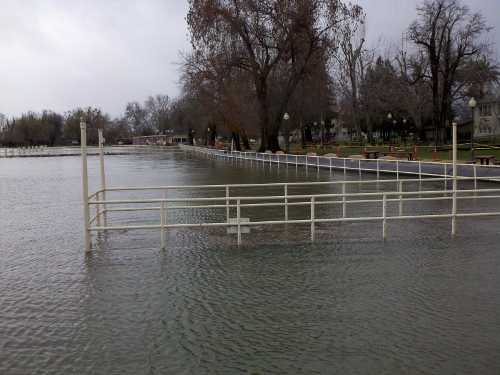
LAKE COUNTY, Calif. – With rain showers possible on Sunday, the National Weather Service is keeping a flood warning in effect for Lake County.
Clear Lake reached flood stage – 9 feet Rumsey – early Friday morning, and by early Sunday the lake was measured at 9.34 feet Rumsey, according to a US Geological Survey gauge.
In addition to the flood warning, the National Weather Service issued a hazardous weather outlook for the county based on forecasts of snow in higher elevations.
Clear Lake is at flood stage for the first time in 13 years.

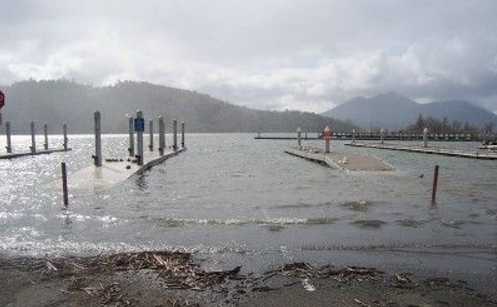
The lake has pushed up over the seawall at Lakeport's Library Park, where the encroaching waters are being held back by aqua dams the city installed late last week. In Clearlake, Redbud Park's docks were partially swamped.
Elsewhere, creeks and streams are running high, and the rain filled up Boggs Lake.
Releases from Cache Creek Dam in the south county were at 3,860 cubic feet per second early Sunday, according to the US Geological Survey.
Clear Lake is forecast to hit 9.5 feet Rumsey by Monday morning, according to Lake County Water Resources.
E-mail Elizabeth Larson at
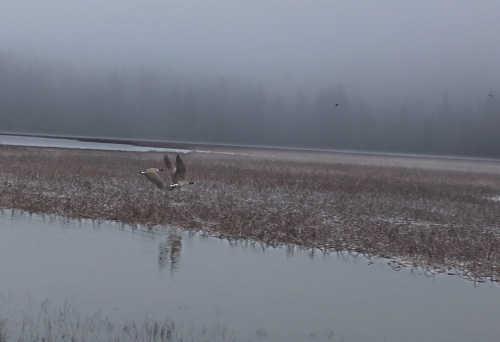
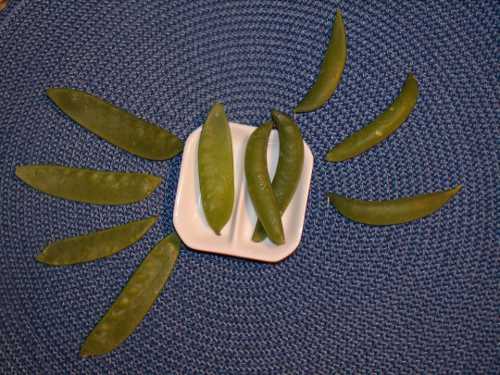
Peas may qualify as the cutest vegetables on the planet. Snuggly and sweet in their little pod home, they’re like a happy family nestled together.
I love peas in this form, and have wonderful childhood memories of sitting on my grandmother’s porch helping her shuck them from the shell. Every other pea went into my mouth, of course, as they were so tender and sweet.
It’s a bit difficult to find fresh garden peas in one’s local supermarket (at least that’s been my experience), probably because both their shelf life and their season are short.
Other types of peas are sold fresh – snap peas and snow peas, for example – but the English peas that one can shuck fresh from the shell are elusive. (Garden peas are also known as English peas – the names are interchangeable.)
Farmers’ markets in our area begin in May, and since peas are a cool weather crop, it’s possible that some local farmers will have garden peas available early in the season. They’re certainly worth seeking out.
Those who remember middle school biology may associate peas with 19th century Austrian monk and scientist, Gregor Mendel, whose observations of the traits of pea plants laid the foundation for the modern-day study of genetics.
The pea, a springtime legume grown on climbing vines, has the botanical name pisum sativum. Like the tomato, it is considered a fruit for botanical purposes since the pods contain seeds that were developed from the ovary of a flower; however, also like the tomato, it’s considered a vegetable for culinary purposes.
Its ancestor, the wild pea, also known as the field pea, is found in the Mediterranean basin and in the Near East.
Along with broad beans (known in the U.S. by their Italian name, fava beans) and lentils, peas have been an important part of the diet of most people in the Middle East, North Africa, and Europe during the Middle Ages.
New cultivars were developed in English gardens during this time, eventually becoming the English or garden pea we know today. Peas are said to have staved off a famine in England in 1555.
For millennia, dried peas were the way people consumed this legume. In the 17th and 18th centuries, particularly in France and England, it became popular to eat peas “green,” that is, when they were immature and just after they were picked. This was made possible by the more tender varieties of peas that had been developed by that time.
The popularity of green peas spread to North America, and Thomas Jefferson grew more than 30 cultivars on his estate.
If cooking fresh green peas, do so only briefly to minimize the loss of color and flavor. Depending on size, they should be boiled no more than ten minutes. If braising or steaming them, they may be nestled between two wet lettuce leaves to maintain their tenderness.
Butter and fresh mint are wonderful accompaniments for simply cooked fresh peas, and cooking sliced celery with them is an old-fashioned classic.
Peas are popular in varied cuisines around the world. In China, pea sprouts are used in stir fried dishes, and pea leaves are considered a delicacy.
Fresh peas are paired with curried potatoes in India to make a dish known as aloo matar, and with paneer, a fresh, non-melting cheese, in matar paneer.
In Greece, Turkey, Cyprus, and other parts of the Mediterranean region, peas are stewed with meat and potatoes, similar to their use in Europe and North America.
Peas are roasted and salted for snacks, sometimes with a spicy flavor such as wasabi, in Japan, China, Taiwan, Thailand and Malaysia.
In the U.K., a dish made with mashed, rehydrated dried peas known as “mushy peas” is a favorite, and “pease pudding” is an ancient, traditional dish made with dried yellow peas. (Pease pudding is also known as “pease porridge,” made famous by the nursery rhyme which goes, “Pease porridge hot, pease porridge cold, pease porridge in my pot, nine days old.”)
Snow peas and snap peas, easily found fresh in markets, are intended to be eaten with their shell intact. The French have a term for such peas. Mangetout is French for “eat all” and applies to both snow and snap peas.
Snow peas are one of the earliest known cultivated plants, with evidence, according to Wikipedia, of having been cultivated some 12,000 years ago in an area that’s now along the Thailand-Burma border.
The name may come from their tendency to grow at the end of winter, just before the last spring freeze. They can be covered with snow during these times but still keep growing well, hence the name.
Snow peas are eaten in their shells before they’re fully ripe. A delicately-flavored and tender pea, its shell is flatter than the rounded shell of other peas. The green shoots of the snow pea may also be cut and served as a vegetable, often done in Chinese cooking.
Snap peas, like snow peas, are an edible-pod pea, except their pods are plumper and rounded. They have a sweet taste (spawning their other moniker, sugar snap peas) and a crunchy texture.
Snap peas are similar to the garden pea in looks; however, the pod is less fibrous and edible when young. As well, they don’t have a membrane and do not open when ripe, as garden peas do.
I prefer eating snow or snap peas out of hand or fresh in salads; however, they’re often lightly cooked in Chinese stir fried dishes. They may also be boiled or steamed until tender, for about six minutes.
Since garden peas do not keep well in the pod, it’s recommended that they be shucked (removed from their pod) within 12 hours after harvesting, and within three or four hours is best.
Fresh peas that have been removed from the pod may be stored for four or five days in the fridge, provided they are stored in an environment that is not air-tight, such as a loosely-closed or perforated bag.
Shucked garden peas or whole snow peas may be preserved by freezing; however, blanch them first.
I am not partial to commercially frozen vegetables; however, for me, frozen peas are an exception. I always have a bag or two in my freezer so they’re available to throw into stews, soups, or stir-fries. I don’t feel the taste of dishes is compromised by their use.
With continued rain and cold in our forecast, one of my favorite soups comes to mind, split pea.
The use of dried peas to make soup is a time-honored tradition going back many centuries in a wide variety of places around the globe.
Most northern and middle European countries have a version of pea soup. In Germany, instant pea soup was manufactured as early as 1889, and the Swedes have an ancient version called artsoppa, which actually predates the Vikings.
In India, pea soup is known as dal (or dahl). North Africans make pea soup, as do Russians, Iranians and Iraqis.
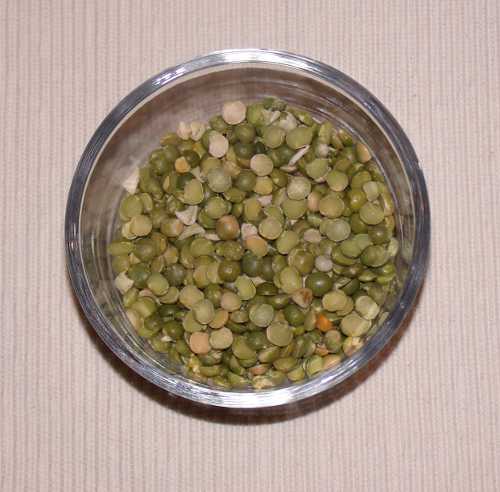
While the use of split peas (dried peas which have been mechanically split) is widespread and common, whole dried peas have a history dating back 10,000 years. Like dried beans, whole dried peas must be soaked prior to cooking. After soaking, they become tender after one to two hours of boiling.
Split peas, found in both green and yellow, do not have to be soaked and generally become tender after one to one and a half hours of simmering. One note: they’re not recommended for pressure cooking, as the foam created by cooking them can gum up the safety and pressure valves.
Green peas are an extremely low-fat food; however, the fats they do contain are impressively nutritious. They’re a reliable source of omega-3 and omega-6 fats, as well as linoleic acid. The high-quality fat in peas provides sizable amounts of beta-carotene and small but valuable amounts of vitamin E.
Peas are a good source of protein and fiber, and contain more than 80 nutrients, including stores of vitamin K, vitamin C, and a variety of minerals and B vitamins. Consumption of at least three cups of legumes is recommended for good health and prevention of disease by a number of national health organizations, and peas are one way to meet this goal.
Peas are an environmentally friendly food in that pea crops provide the soil with important nitrogen, and rotation of peas with other crops has been shown to reduce pest problems.
Another environment boon is that pea starch is one of those used in the bioplastics industry to make plastic from renewable natural starches.
Today’s recipe, Tarragon Pea Soup, is from “The New Basics Cookbook” by Sheila Lukins and Julee Rosso. Their first cookbook, “The Silver Palate” – one of my favorite classics – kindled an interest in at-home gourmet cooking in the 1980s.
The soup is made with frozen peas and dried tarragon, but fresh garden peas and fresh tarragon may be substituted if you have them. (Just be sure to triple the amount of tarragon and finely chop it if using fresh.) Enjoy!
Tarragon pea soup
4 tablespoons (1/2 stick) unsalted butter
1 onion, coarsely chopped
2 large clove garlic, chopped
4 cups chicken or vegetable stock
1-1/2 pounds frozen sweet peas
1 large potato, peeled and quartered
¼ teaspoon cayenne pepper
½ teaspoon freshly ground black pepper
2 tablespoons dried tarragon
Melt the butter in a heavy saucepan over low heat. Add the onion and garlic, and cook gently until wilted, 10 minutes.
Add the stock and potato; bring to a boil. Reduce the heat and cook until the potato is just tender, about 15 minutes.
Add the peas, cayenne, and black pepper, and return to a boil. Then remove the pan from the heat and stir in the tarragon. Allow the soup to cool for 10 minutes.
Process the soup, in batches, in a food processor or blender until smooth. Pour the soup through a fine sieve or a food mill to remove any pieces of skin.
Makes six cups.
Esther’s note: Using a hand-held immersion blender is another method of pureeing the soup.
Esther Oertel, the “Veggie Girl,” is a culinary coach and educator and is passionate about local produce. Oertel teaches culinary classes at Chic Le Chef in Hidden Valley Lake, Calif., and The Kitchen Gallery in Lakeport, Calif., and gives private cooking lessons. She welcomes your questions and comments; e-mail her at
Follow Lake County News on Twitter at http://twitter.com/LakeCoNews , on Facebook at http://www.facebook.com/pages/Lake-County-News/143156775604?ref=mf and on YouTube at http://www.youtube.com/user/LakeCoNews .

X-ray observations made by the Suzaku observatory provide the clearest picture to date of the size, mass and chemical content of a nearby cluster of galaxies.
The study also provides the first direct evidence that million-degree gas clouds are tightly gathered in the cluster's outskirts.
Suzaku is sponsored by the Japan Aerospace Exploration Agency (JAXA) with contributions from NASA and participation by the international scientific community. The findings will appear in the March 25 issue of the journal Science.
Galaxy clusters are millions of light-years across, and most of their normal matter comes in the form of hot X-ray-emitting gas that fills the space between the galaxies.
“Understanding the content of normal matter in galaxy clusters is a key element for using these objects to study the evolution of the universe,” explained Adam Mantz, a co-author of the paper at NASA's Goddard Space Flight Center in Greenbelt, Md.
Clusters provide independent checks on cosmological values established by other means, such as galaxy surveys, exploding stars and the cosmic microwave background, which is the remnant glow of the Big Bang. The cluster data and the other values didn't agree.
NASA's Wilkinson Microwave Anisotropy Probe (WMAP) explored the cosmic microwave background and established that baryons – what physicists call normal matter – make up only about 4.6 percent of the universe. Yet previous studies showed that galaxy clusters seemed to hold even fewer baryons than this amount.
Suzaku images of faint gas at the fringes of a nearby galaxy cluster have allowed astronomers to resolve this discrepancy for the first time.
The satellite's ideal target for this study was the Perseus Galaxy Cluster, which is located about 250 million light-years away and named for the constellation in which it resides. It is the brightest extended X-ray source beyond our own galaxy, and also the brightest and closest cluster in which Suzaku has attempted to map outlying gas.
“Before Suzaku, our knowledge of the properties of this gas was limited to the innermost parts of clusters, where the X-ray emission is brightest, but this left a huge volume essentially unexplored,” said Aurora Simionescu, the study's lead researcher at the Kavli Institute for Particle Astrophysics and Cosmology (KIPAC) at Stanford University.
In late 2009, Suzaku's X-ray telescopes repeatedly observed the cluster by progressively imaging areas farther east and northwest of the center. Each set of images probed sky regions two degrees across – equivalent to four times the apparent width of the full moon or about 9 million light-years at the cluster's distance. Staring at the cluster for about three days, the satellite mapped X-rays with energies hundreds of times greater than that of visible light.
From the data, researchers measured the density and temperature of the faint X-ray gas, which let them infer many other important quantities.
One is the so-called virial radius, which essentially marks the edge of the cluster. Based on this measurement, the cluster is 11.6 million light-years across and contains more than 660 trillion times the mass of the sun. That's nearly a thousand times the mass of our Milky Way galaxy.
The researchers also determined the ratio of the cluster's gas mass to its total mass, including dark matter – the mysterious substance that makes up about 23 percent of the universe, according to WMAP.
By virtue of their enormous size, galaxy clusters should contain a representative sample of cosmic matter, with normal-to-dark-matter ratios similar to WMAP's. Yet the outer parts of the Perseus cluster seemed to contain too many baryons, the opposite of earlier studies, but still in conflict with WMAP.
To solve the problem, researchers had to understand the distribution of hot gas in the cluster, the researchers say. In the central regions, the gas is repeatedly whipped up and smoothed out by passing galaxies. But computer simulations show that fresh infalling gas at the cluster edge tends to form irregular clumps.
Not accounting for the clumping overestimates the density of the gas. This is what led to the apparent disagreement with the fraction of normal matter found in the cosmic microwave background.
“The distribution of these clumps and the fact that they are not immediately destroyed as they enter the cluster are important clues in understanding the physical processes that take place in these previously unexplored regions,” said Steve Allen at KIPAC, the principal investigator of the Suzaku observations.
Goddard supplied Suzaku's X-ray telescopes and data-processing software, and it continues to operate a facility that supports U.S. astronomers who use the spacecraft.
Suzaku (Japanese for “red bird of the south”) is the fifth Japanese X-ray astronomy satellite. It was launched as Astro-E2 on July 10, 2005, and renamed in orbit. The observatory was developed at JAXA's Institute of Space and Astronautical Science in collaboration with NASA and other Japanese and U.S. Institutions.
Follow Lake County News on Twitter at http://twitter.com/LakeCoNews, on Facebook at http://www.facebook.com/pages/Lake-County-News/143156775604?ref=mf and on YouTube at http://www.youtube.com/user/LakeCoNews.

SACRAMENTO – Motorists traveling at an unsafe speed is consistently found to be the No. 1 primary collision factor (PCF) in injury collisions in California; it is among the top three PCFs when it comes to fatal collisions.
“Speed is one of the most prevalent factors when it comes to fatal and injury collisions, which is a significant public safety concern,” said California Highway Patrol (CHP) Commissioner Joe Farrow. “The CHP primarily exists to save lives and we’re committed to reducing the number of people killed and injured annually in California.”
To help slow the pace of the number of speed-related collisions, the CHP is conducting an enforcement project statewide.
In 2009, the most recent year for which finalized data from the Statewide Integrated Traffic Records System is available, speed was indicated as the primary collision factor in roughly 30 percent of all crashes in the state; that year there were 423 fatal collisions in addition to the 47,869 injury crashes due to unsafe speed.
Through the federal grant-funded “Comprehensive Approach to Reducing Speed III Project” (CARS III), the CHP will focus on reducing the number of victims killed and injured in speed-caused collisions along state highways and county roads.
The CARS III project also places special emphasis on reducing the number of motorcyclists injured and killed in speed-related collisions.
Throughout the effort, specific attention will be paid to 15 state highways which have a high rate of fatal, speed-related collisions, including: Interstate 5, state Route 299, Interstate 15, state Route 99, Interstate 10, state Route 1, Interstate 80, state Route 60, Interstate 710, U.S. Route 101, Interstate 405, U.S. Route 50 and Interstate 880.
“Speed-related collisions are the result of poor decision making on the part of the driver,” added Commissioner Farrow. “Hopefully, with an aggressive enforcement effort, the mere presence of a patrol vehicle will encourage motorists to slow to a safe, legal speed – those that don’t will pay the price.”
Funding for the CARS III project is provided by a grant from the California Office of Traffic Safety through the National Highway Traffic Safety Administration.
Follow Lake County News on Twitter at http://twitter.com/LakeCoNews, on Facebook at http://www.facebook.com/pages/Lake-County-News/143156775604?ref=mf and on YouTube at http://www.youtube.com/user/LakeCoNews.
LAKE COUNTY, Calif. – Five senior centers, five high schools, seven nonprofit organizations and one
fire district have been selected as beneficiaries of this year’s Lake County Wine Auction.
More than 40 organizations, agencies, and programs submitted their funding requests to the Wine Alliance, demonstrating the number of worthy programs in Lake County seeking financial assistance.
The recipient organizations will use their grants for these projects:
The Arts: The fine arts and performing arts programs at the five Lake County high schools (Clear Lake High, Kelseyville High, Lower Lake High, Middletown High, and Upper Lake High) will share the funds in this category.
Health: Any Positive Change will use funds to purchase a mobile unit to expand their outreach services; Catholic Charities’ grant will benefit the Lake County Rural Food Program; and five senior centers will support their nutrition programs for delivered meals to homebound seniors (Meals on Wheels).
Community: Funds in this category will be shared by the Lake County Council of Church Women United to buy shoes and socks for needy children; the Lake County Literacy Coalition for a continuation of their tutoring programs; the Military Funeral Honors Team for their services to all veterans; the Northshore Fire Protection District for the purchase of dive gear used for public safety by the Northshore Dive Team; Operation Tango Mike for shipping fees and package contents for troops deployed to combat zones; and People Services Inc., for continued support services for the developmentally disabled.
The Wine Alliance, a nonprofit organization of wineries, winegrape growers, vineyard owners,
related businesses and community supporters founded in 2000, has contributed more than $831,765 to foster the arts, benefit health services, and support the community while promoting Lake County as a premier growing region for fine wine grapes.
An all-volunteer board of directors and auction committee plan and direct the annual charity event.
This year’s Wine Auction, the 12th annual, will take place at Ceago Vinegarden in Nice on
Saturday, Sept. 17.
This special venue is an ideal setting to showcase the fine foods and wine from Lake County restaurants, caterers and more than 25 wineries. The event is open to guests 21 years and older.
The Wine Alliance and Ceago management are encouraging greater attendance at the event by
offering two ticket prices.
The Grand Tasting ticket will include an afternoon of wine and food tasting in the gardens, a commemorative wineglass and tasting plate, and participation in the silent auction for $75 per person. This portion of the event will start at 3 p.m. and end at 6 p.m. with the closing of the silent auction.
The Grand Tasting and Auction Reserve ticket of $150 per person will include the afternoon of wine and food tasting in the gardens, a commemorative wineglass and tasting plate, a beautiful gift
tote, reserved seating for the served dinner, the live auction and dancing. Music for the evening will be
presented by Twice as Good.
The evening activities will start at 6 p.m. and conclude at 9 p.m.
All proceeds from the Wine Auction activities will benefit the selected beneficiaries.
Tickets for the Wine Auction will be available in April through the Wine Alliance Web site,
www.winealliance.org, or by calling1-866-279-WINE to make reservations. Information about
sponsorship opportunities is available at 707-278-0129.
Honorary chair for the 2011 Wine Auction is Bill Brunetti, Lakeport businessman and property
manager.
Live auction excitement will be generated by auctioneers Shaun Hornby of Lakeport and Stephanie Green of Kelseyville. Hornby is an experienced auctioneer with a lively and engaging personality, and Green is a certified sommelier and wine expert.
Members of the Wine Alliance board are Margaret Walker, president; Marie Beery, vice president; Rob Roumiguiere, treasurer; and Kaj Ahlmann, Judy Luchsinger, Wilda Shock, and Janet Thompson.
Luchsinger chaired the beneficiaries committee and helped the board review the record number of applications.
A large committee of volunteers from throughout Lake County is meeting monthly to plan this
major charity event.
Follow Lake County News on Twitter at http://twitter.com/LakeCoNews, on Facebook at http://www.facebook.com/pages/Lake-County-News/143156775604?ref=mf and on YouTube at http://www.youtube.com/user/LakeCoNews.