 How to resolve AdBlock issue?
News
Large schools of fish have been observed on Adobe Creek at the Bell Hill crossing, and a few scattered specimens have been seen elsewhere, including several who have been attempting to spawn in a vineyard slough in the Cole Creek drainage a couple of specimens being caught by raptors.
The hitch (lavinia exilicauda chi) is a fish found only in Clear Lake and a California listed Species of Special Concern; they live deep in the lake most of the year, but during a brief breeding season every spring move up into the surrounding creeks.
Once present in unimaginable abundance, hitch were a valuable food source for wildlife and of great importance to the native people of the region, but their population has declined substantially over the past fifty years, for reasons that are not completely understood.
Recently they have been found in reliably large numbers only in Kelsey and Adobe creeks.
This coming Saturday, April 2, the Chi Council, an organization dedicated to the long-term survival of the hitch which has recruited dozens of volunteers to observe the spawning migration, will conduct its annual field trip to see the spawning run in progress.
This year's excursion also will include a special opportunity to observe the tribal fish-tagging process on Adobe Creek.
Participants are asked to meet at Studebaker's, 3990 Main St. in Kelseyville, at 10 a.m.
The event is free, and everyone is invited, particularly those who have never had an opportunity to see this thrilling spectacle for themselves. No reservations are needed.
For more information about the hitch, including still photographs, a video of spawning in progress, and a field guide to Clear Lake fish, visit the Chi Council Web site, www.lakelive.info/chicouncil.
Follow Lake County News on Twitter at http://twitter.com/LakeCoNews , on Facebook at http://www.facebook.com/pages/Lake-County-News/143156775604?ref=mf and on YouTube at http://www.youtube.com/user/LakeCoNews .
SACRAMENTO – Gov. Jerry Brown on Thursday released the actual bill language of seven separate pension reform measures.
In addition, Brown listed five other specific pension reforms that he is developing.
These include a pension benefit cap, limits on post-retirement public employment, hybrid defined contribution/benefit options, an action plan to address CalSTRS unfunded liability, and a measure to change and improve the board governance of CalPERS and CalSTRS.
All 12 of these pension reform measures were presented and discussed in detail with Republican legislators.
Talks broke down, however, over other issues earlier this week, as Lake County News has reported.
Brown said he intends to introduce these pension reforms with or without Republican support.
Information on all twelve pension reforms is available below.
PENSION REFORM PROPOSAL: APPLIES TO STATE AND LOCAL GOVERNMENTS
1. Eliminate Purchase of Airtime. Would eliminate the opportunity, for all current and future employee members of all state and local retirement systems, to purchase additional retirement service credit. (RN 14777) (Note Walters, SB 522, would eliminate Air Time)
2. Prohibit Pension Holidays. All California public agencies would be prohibited from suspending employer and/or employee contributions necessary to fund the normal cost of pension benefits. (RN 14777)
3. Prohibit Employers from Making Employee Pension Contributions. All California public agencies would be prohibited from making employee contributions that fund the normal cost of employee retirement benefits in whole or in part. (RN 14777)
4. Prohibit Retroactive Pension Increases. All California public agencies would be prohibited from granting any retroactive pension benefit increases, such as benefit formula improvements that credit prior service. (RN 14777)
5. Prohibit Pension Spiking: Three Year Final Compensation. Final compensation for new employees would be defined as the highest average annual compensation during a consecutive 36 month period. (RN 14777)
6. Prohibit Pension Spiking: Define Compensation as Only Regular, Non-recurring Pay. Compensation means normal rate of pay or base pay. (RN 14777) (Note Simitian, SB 27, would exclude from defined benefit changes in compensation principally for the purpose of enhancing benefits; would place stricter limits on creditable compensation)
7. Felony Convictions. Prohibits payment of pension benefits to those who commits a felony related to their employment. (RN 14777) (*Note Strickland, SB 115, similar prohibition)
PROPOSALS UNDER DEVELOPMENT
Impose Pension Benefit Cap.
Improve Retirement Board Governance
Limit Post-Retirement Public Employment
Hybrid Option
Address CalSTRS Unfunded Liability
Follow Lake County News on Twitter at http://twitter.com/LakeCoNews , on Facebook at http://www.facebook.com/pages/Lake-County-News/143156775604?ref=mf and on YouTube at http://www.youtube.com/user/LakeCoNews .
SACRAMENTO – Following significant increases in statewide rainfall and mountain snowpack this season, on Wednesday Governor Jerry Brown proclaimed an end to the state’s drought, but urged Californians to keep conserving water as we move into the spring and summer months.
“While this season’s storms have lifted us out of the drought, it’s critical that Californians continue to watch their water use,” Brown said. “Drought or no drought, demand for water in California always outstrips supply. Continued conservation is key.”
Brown issued a proclamation officially rescinding Executive Order S-06-08, issued on June 4, 2008, by former Gov. Arnold Schwarzenegger, and ends the States of Emergency Schwarzenegger called on June 12, 2008, and on Feb. 27, 2009.
Brown's announcement came the same day as the state Department of Water Resources' fourth snow survey of the season found that water content in California’s mountain snowpack is 165 percent of the April 1 full season average.
“Recent storms have significantly contributed to the above-average snowpack, helping to stabilize California’s water supply for the year,” said DWR Director Mark Cowin. “While this is beneficial for California’s farms, businesses and communities, we remind residents to practice sensible water use and conservation as we transition to warmer weather.”
Water Resources said Wednesday's manual survey and electronic readings are the most important of the year, since April 1 is when the state’s snowpack normally is at its peak before it melts into streams and reservoirs in the spring and summer months.
March precipitation has helped register 2011 among the top years in snowpack water content, despite dry weather conditions in January and early February, the state said.
The mountain snowpack provides approximately one-third of the water for California’s households, industry and farms as it melts into streams and reservoirs.
Electronic readings indicate that water content in the northern mountains is 174 percent of the April 1 seasonal average.
Electronic readings for the central Sierra show 163 percent of the April 1 average. The number for the southern Sierra is 158 percent. The statewide number is 165 percent
On March 1, the date of this winter’s third manual survey, percentages of the snowpack’s normal water content were 109 percent of the full season average, 103 percent for the northern Sierra, 106 percent for the central Sierra, and 119 percent in the south.
On this date last year, snowpack water content readings of the April 1 average were 123 percent in the north, 88 percent in the central ranges, 102 percent in the south, and 102 percent statewide.
California’s reservoirs are fed both by rain and snowpack runoff.
A majority of the state’s major reservoirs are also above normal storage levels, the state said.
Lake Oroville in Butte County, the State Water Project’s principal reservoir, is 104 percent of average for the date (80 percent of its 3.5 million acre-foot capacity). Lake Shasta north of Redding, the federal Central Valley Project’s largest reservoir with a capacity of 4.5 million acre-feet, is at 111 percent of average (91 percent of capacity).
DWR estimated it will be able to deliver 70 percent of requested State Water Project (SWP) water this year. The estimate likely will be adjusted upward as hydrologists make adjustments for snowpack and runoff readings.
The SWP delivers water to more than 25 million Californians and nearly one million acres of irrigated farmland.
In 2010, the SWP delivered 50 percent of a requested 4,172,126 acre-feet, up from a record-low initial projection of 5 percent due to lingering effects of the 2007-2009 drought. Deliveries were 60 percent of requests in 2007, 35 percent in 2008, and 40 percent in 2009.
Given the heavy water inflow from the series of storms that have swept across California, the state’s flood managers are monitoring high river flows and making flood control releases from reservoirs to maintain storage space.
The last 100 percent allocation – difficult to achieve even in wet years due to pumping restrictions to protect threatened and endangered fish – was in 2006, Water Resources said.
Follow Lake County News on Twitter at http://twitter.com/LakeCoNews , on Facebook at http://www.facebook.com/pages/Lake-County-News/143156775604?ref=mf and on YouTube at http://www.youtube.com/user/LakeCoNews .

LAKE COUNTY, Calif. – Probation searches conducted by the Sheriff’s Narcotics Task Force over the past two days have yielded two arrests and the seizure of several firearms from felony probationers.
Robert Alban Wenning, 22, of Nice and Kelseyville resident Anthony James Peak, 33, were taken into custody, according to a Wednesday report from Capt. James Bauman of the Lake County Sheriff's Office.
On Tuesday, March 29, at approximately 5:20 p.m., narcotics detectives conducted a probation search at Wenning's home on Brown Street in Nice, according to Bauman.
Bauman said Wenning, who was on probation for a prior felony vandalism conviction, was detained without incident when narcotics detectives entered the home.
While searching Wenning’s home, narcotics detectives located a sawed-off shotgun in one of the bathrooms. Bauman said Wenning was arrested and booked at the Lake County Hill Road Correctional Facility on felony charges of possessing an illegal weapon and being a felon in possession of a firearm.
Wenning's bail was set at $10,000. Jail records indicated he posted bail and later was released.
On Wednesday, March 30, at approximately 4 p.m., narcotics detectives conducted a probation search at Peak's Wight Way home in Kelseyville. Bauman said Peak was on felony probation for a prior possession of narcotics for sales conviction.
Peak was not in the home when narcotics detectives initially arrived so they conducted surveillance in the area, Bauman said. After approximately 30 minutes, Peak arrived at the home and was detained without incident.
A search of Peak’s vehicle revealed a loaded rifle concealed beneath the front seat and several loaded magazines on the driver’s seat and the vehicle’s floor board. Bauman said detectives located narcotics paraphernalia in Peak’s home and the search of a travel trailer on the property revealed four more firearms, including a shotgun and three rifles
Peak was arrested and booked at the Lake County Hill Road Correctional Facility for being a felon in possession of a firearm, being a felon in possession of ammunition, possession of narcotics paraphernalia, and carrying a loaded firearm in public, Bauman said.
His bail was set at $10,000, and jail records indicated he was still in custody on Wednesday night.
Bauman said the Sheriff’s Narcotics Task Force will continue its efforts to monitor the activities of known convicted criminals and pursue probation or parole violators. Anyone with information that can assist the task force with this effort is encouraged to call the anonymous tip line at 707-263-3663.
Follow Lake County News on Twitter at http://twitter.com/LakeCoNews , on Facebook at http://www.facebook.com/pages/Lake-County-News/143156775604?ref=mf and on YouTube at http://www.youtube.com/user/LakeCoNews .
WASHINGTON, D.C. – Congressman Mike Thompson (D-St. Helena) has introduced a resolution to help increase tsunami awareness and preparedness in at-risk coastal communities.
Earlier this month, tsunami waves generated by a 9.0-magnitude earthquake in Japan caused significant damage in Crescent City, Fort Bragg, Santa Cruz and other parts of Northern California.
The California Emergency Management Agency has tentatively estimated damages to be in excess of $40 million, Thompson's office said.
“Over 7 million Americans live or vacation in coastal communities that are at-risk of experiencing a tsunami,” said Thompson. “While relatively rare, these natural disasters can literally wipe out entire communities and cause significant loss of life. In the wake of the recent disaster in Japan, it’s important to encourage at-risk communities to plan and prepare for a potential tsunami. We don’t get to pick the next disaster, so it’s important to be informed about the threats and hazards we face.”
Tsunamis are a series of large ocean waves generated by major undersea disturbances, including earthquakes, landslides and volcanic eruptions.
All U.S. ocean coasts can be impacted by tsunamis, although some areas are at much greater risk than others.
Since 1812, California has experienced 14 tsunamis with wave heights higher than 3 feet. Of these, six caused significant destruction, including the devastating 1964 tsunami that killed 11 people in Crescent City.
H. Res 185 includes the following advice for those who see tsunami warning signs:
Keep calm;
Immediately move to your local tsunami shelter using defined tsunami evacuation routes;
Move to higher ground that is at least 100 feet in elevation, a mile inland, or to the highest floor of a sturdy building and stay there if there are no evacuation routes defined;
Do not move from a safe location;
Move on foot when possible, do not drive, keep roads clear for emergency vehicles;
Stay tuned to the National Oceanic and Atmospheric Administration (NOAA) Weather Radio or news broadcasts for changes in tsunami alerts; and
Stay away from the coast and low-lying areas until local officials say it’s safe to return.
The resolution goes on to state that the House of Representatives:
Supports the goals and ideals of National Tsunami Awareness Week;
Encourages the staff of NOAA, especially the National Weather Service and the Pacific Tsunami Warning Center and the West Coast/Alaska Tsunami Warning Center, and other appropriate Federal agencies, to continue their work of educating people in the United States about tsunami preparedness;
Endorses the efforts of the National Tsunami Hazard Mitigation Program (http://nthmp.tsunami.gov), a coordinated national effort of federal, state and local entities, to assess tsunami threats, prepare community response, issue timely and effective warnings, and mitigate damage; and
Urges the people of the United States to recognize such a week as an opportunity to learn more about the work of NOAA in warning for and mitigating the impact of tsunamis and educating citizens about the potential risks of these natural disasters.”
Follow Lake County News on Twitter at http://twitter.com/LakeCoNews , on Facebook at http://www.facebook.com/pages/Lake-County-News/143156775604?ref=mf and on YouTube at http://www.youtube.com/user/LakeCoNews .
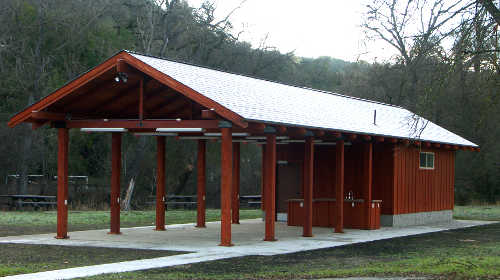
KELSEYVILLE, Calif. – Years of work by the Clear Lake State Park Interpretive Association to bring a new education pavilion to Clear Lake State Park will reach completion in a special weekend dedication ceremony.
The Clear Lake State Park Education Pavilion will officially open on Saturday, April 2, during a public dedication ceremony which association board President Madelene Lyon will open at 2 p.m.
On hand for the dedication will be Congressman Mike Thompson, an advocate and supporter during the six years it has taken to bring the project to completion, State Parks Director Ruth Coleman, Assemblyman Wesley Chesbro, Northern Buttes District Superintendent Marilyn Linkem and Clear Lake Sector Superintendent Bill Salata.
Early in 2005 the board of directors of the nonprofit, volunteer-led Clear Lake State Park Interpretive Association (CLSPIA) voted to undertake the building of a new facility to support and enhance the environmental educational programs offered at the park on Soda Bay Road near Kelseyville.
As news of the project spread, collaboration with individuals, park visitors and community organizations developed to assist with funding.
Major donors to the project included the Keeling-Barnes Family Foundation, Wildhurst Vineyards, Brad and Kathy Barnwell, William and Roberta Beat, the California State Park Foundation, D.A. and Leona Butts, Henry and Dorothy Hurkett, Madelene and Walt Lyon, Ernie Mendes, Dorothy Meyer, Tom and Val Nixon, Brad Onorato, the Priest Family Charitable Fund, Rotary Club of Lakeport, Grant Cary Family, Thrivent, Neil and Bobbi Towne, and Tom and Tina Wasson.
The education pavilion has been built in partnership with the California State Department of Parks and Recreation.
CLSPIA volunteer Bud Hurkett prepared the initial blue print draft for presentation to the state in late 2005.
When the plans reached Coleman's desk, she signaled her support by setting aside funds within the department’s budget specifically for the pavilion.
Even as state budget cuts occurred during the ensuring years, Coleman made sure the funds for the building remained intact.
The California Conservation Corps team based in Ukiah did the construction.
The ceremony will be at the pavilion, across the street from the visitor center at Clear Lake State Park, located at 5300 Soda Bay Road.
A large parking lot is adjacent to the area. There will be no entrance fee for those attending this event.
Follow Lake County News on Twitter at http://twitter.com/LakeCoNews , on Facebook at http://www.facebook.com/pages/Lake-County-News/143156775604?ref=mf and on YouTube at http://www.youtube.com/user/LakeCoNews .