 How to resolve AdBlock issue?
News
Fee disputes usually arise when the trustee provides an accounting. Let’s consider how California law treats trustee compensation.
When dealing with court supervised trusts, California law distinguishes between “ordinary compensation” and “extraordinary compensation.”
So-called “ordinary compensation” includes the normal trustee duties a trustee regularly is expect to perform. Sometimes trustees will ask a court to grant “extraordinary compensation” when the trustee performs additional services – such as handling litigation, running a business or managing commercial property.
A trustee’s fees is governed foremost by what the trust document says. Trustees receive reasonable compensation under the circumstances of the trust administration, unless the trustee is a corporate entity (like a bank) or a government entity (such as the public guardian).
This is what most trust documents say and is also what California law provides. Corporate trustees and Public Guardians, however, have trustee fee schedules that determine what they will charge for trustee services.
Let’s examine “reasonable compensation under the circumstances.”
California case law provides guidelines to evaluate whether trustee fees are reasonable under the circumstances.
The following are factors used to evaluate the reasonableness of trustee fees: (1) Value of trust assets under management; (2) success of trustee in administering trust (usually measured in terms of asset growth); (3) faithfulness of trustee in following the terms of the trust; (4) risks and responsibilities assumed by trustee; (5) time spent by trustee in administering the trust; (6) local court rules regarding trustee compensation; and (7) skill of trustee relevant to administering the trust.
The quality of the trustee’s accounting and documentation of trust administration services will be important evidence as to how the factors apply.
Thus, a trustee who successfully administers a large trust estate, faithfully follows the terms of the trust, spends many hours performing trustee duties, and uses special expertise to manage the trust assets is reasonably entitled large trustee fees.
This will be reflected either by the trustee charging a higher hourly rate or a higher percentage of the trust assets.
Courts much prefer trustees to compute their fees based on an hourly compensation. Local court rules where the trustee resides should be followed.
When a trustee hires agents to help with the management of trust assets – e.g., hiring a real estate management company to collect trust rental income – then the expenses incurred will naturally reduce reasonable trustee fees because the trustee has delegated out his work.
Also, if there are co-trustees the fees are apportioned between them based on the value of their services, unless the trust says otherwise.
If a trustee breaches his duty as trustee – such as by engaging in impermissible acts of self dealing (such as by using trust assets for the trustee’s own benefit) or by failing to administer the trust according to its own terms – the beneficiaries may bring a court proceeding to reduce the trustee fees accordingly.
Given that reasonable trustee fees depend on the facts and circumstances of each case, there is room for negotiation over what is reasonable.
Mediation, therefore, may be a cost effective way to negotiate disputes over trustee fees. Otherwise the issue of trustee fees may get resolved by costly trust litigation.
Dennis A. Fordham, attorney (LL.M. tax studies), is a State Bar Certified Specialist in Estate Planning, Probate and Trust Law. His office is at 55 First St., Lakeport, California. Dennis can be reached by e-mail at
Follow Lake County News on Twitter at http://twitter.com/LakeCoNews, on Facebook at http://www.facebook.com/pages/Lake-County-News/143156775604?ref=mf and on YouTube at http://www.youtube.com/user/LakeCoNews.
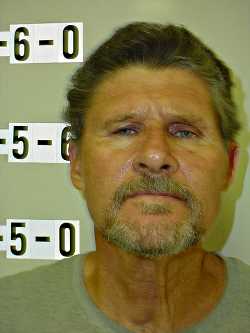
CLEARLAKE, Calif. – A parole search conducted by the Sheriff’s Narcotics Task Force on Thursday afternoon has resulted in the arrest of a Clearlake man for a felony violation of parole and possession of narcotics paraphernalia.
Arrested was 54-year-old Brody Lee Pirtle of Clearlake, according to Capt. James Bauman of the Lake County Sheriff's Office.
On Thursday, July 7, at approximately 3:30 p.m., narcotics detectives contacted Pirtle at his home to conduct a parole search. Bauman said Pirtle was on felony parole for a prior vehicle theft conviction.
While searching the residence, detectives located a glass “meth” pipe concealed in a bedroom cupboard of the home, Bauman said.
Pirtle was arrested for possession of the pipe and for violating the terms of his parole. Bauman said Pirtle was subsequently booked at the Lake County Hill Road Correctional Facility for violation of parole and possession of narcotics paraphernalia. He was placed on a no-bail hold for the parole violation, according to jail records.
Anonymous tips about narcotics trafficking can be called in to the Sheriff’s Narcotics Task Force at 707-263-3663.
Follow Lake County News on Twitter at http://twitter.com/LakeCoNews, on Tumblr at www.lakeconews.tumblr.com, on Facebook at http://www.facebook.com/pages/Lake-County-News/143156775604?ref=mf and on YouTube at http://www.youtube.com/user/LakeCoNews.
The vote ensures that TRICARE Prime enrollment fees for individual retirees under age 65 will be raised in the new fiscal year by $30, to $260 a year, and that retiree family coverage will climb by $60, to $520. These will be the first fee increases since TRICARE rates were set in 1995.
The Senate panel also joined with the House to endorse an Obama administration plan to restructure TRICARE pharmacy co-payments to encourage use of mail order for refills instead of having local drugstores, at far greater cost to the government, refill prescriptions for chronic conditions.
Through TRICARE “home delivery,” patients get a 90-day supply of pills versus a 30-day supply from retail outlets. Defense officials intend to make mail order more attractive by ending a $3 charge for generic drugs and raising the co-pay for generic medicines at retail outlets to $5, up from $3.
Co-pays for brand name drugs on the military formulary would stay at $9 by mail but climb to $12 at retail pharmacies. For non-formulary brand drugs, the $22 co-pay would climb to $25 for mail order and retail. The new co-pays are projected to save $2.6 billion over five years, or five times the savings projected from higher TRICARE Prime fees on working age retirees.
The Senate committee also voted with the House to support a 1.6 percent military pay increase next January, enough to ensure that pay keeps pace with private sector wage growth.
But the Senate committee parted ways with the House version of the fiscal 2012 defense authorization bill on a number of other personnel issues.
Here’s a rundown of some key differences that will have to be reconciled before Congress can pass a final defense authorization bill later this year:
Combat pay windfall
Only the Senate bill would require the services to begin to prorate monthly imminent danger pay and hostile fire pay of $225 a month based on number of days in designated danger areas. Under current law, spending only part of a day in a war zone or imminent danger area makes a member eligible for the full $225 payment.
Amid the looming debt crisis, and congressional leaders searching for ways to lower federal spending, senators decided to address perceived combat pay windfalls to save $30 million a year. The main targets are persons on temporary assignments. Flight crews, for example, can spend only hours in Afghanistan and get a full month of danger pay.
The committee also received reports of military personnel attending first-of-the-month change of command ceremonies in war zones and, by arriving a day early and departing immediately after the ceremony, qualifying for two months of danger pay.
Members on full deployments also would be impacted by this change. Currently, if a member on a yearlong, wartime deployment arrives mid-month and, a year later, departs mid-month, he or she qualifies for a total of 13 months of danger pay. If the prorated formula becomes law, total payments would reflect the actual length of deployment, ending the extra month of danger pay so many members now receive.
Special survivor indemnity allowance
The Senate bill is silent on a House-passed provision that would ease further a reduction in Survivor Benefit Plan payments felt by 57,000 surviving military spouses.
Spouses of these survivors either have died on active duty or, in retirement from a service-connected injury or ailment. As a result they qualify for tax-free Dependency and Indemnity Compensation (DIC) from VA. But to accept DIC they must forfeit an equal amount of taxable SBP.
To ease this so-called “widow’s tax,” Congress four years ago authorized a Special Survivor Indemnity Allowance (SSIA) valued now at $70 a month and rising by $10 a year until it hits $100 by 2014. The House version of this year’s defense bill would raise SSIA higher and extend its life so that by fiscal 2017 payments would reach $314 a month.
The House was able to pay for this $150 million SSIA initiative in part by accepting the administration’s plan to curb costs linked to the Uniformed Services Family Health Plan, a managed care plan for military beneficiaries living in six areas of the U.S. near former Public Health Service hospitals.
The Senate bill also would curb costs under USFHP, as we describe below. But rather than use the dollars saved to expand SSIA, senators choose to beef up incentives available to downsize the force.
Force Shaping Tools – The Senate bill would give the services three new or extended authorities to downsize forces.
One new tool would be a “voluntary retirement payment” which could be offered to certain officers with between 20 and 29 years of service if they agree to retiree. The payment could equal up to 12 times an officer’s monthly basic pay. This could be used as an alternative to an early retirement board.
The Senate bill also would extend the Voluntary Separation Incentive (VSI) authority that was set to expire. VIS is an annuity used extensively during the Post-Cold War drawdown to entice members to leave service.
A third initiative would expand from three months to a full year the period service prior to expiration of an enlistment contract that member could be discharged without a loss of benefits such as the GI Bill. The change would apply only to benefits, not pay or allowances.
USFHP and Medicare
Both the Senate and House would require individuals newly enrolled in the Uniformed Services Family Health Plan to transition to TRICARE for Life, and out of USFHP, as they become Medicare eligible due to age.
But only the Senate bill praises the USFHP model and directs Defense officials to work with USFHP and Medicare to develop and evaluate health plan alternatives for TRICARE for Life beneficiaries so they can get integrated health care management like that being delivered to elderly through USFHP.
To comment, e-mail
Follow Lake County News on Twitter at http://twitter.com/LakeCoNews, on Tumblr at www.lakeconews.tumblr.com, on Facebook at http://www.facebook.com/pages/Lake-County-News/143156775604?ref=mf and on YouTube at http://www.youtube.com/user/LakeCoNews.
Deputy District Attorney Shannon Cox said the guilty plea exposes Steven Chiriboga, formerly of Hopland, to a prison sentence of life with the possibility of parole.
In return for Chiriboga’s change of plea, the prosecutor dismissed five other charges because the underlying facts supporting those counts will still be considered and additional convictions would not have materially changed Chiriboga’s prison exposure.
“We believe that justice will be served by Chiriboga’s change of plea,” said Cox.
Cox also said Chiriboga’s wife was pleased with the outcome. “She is relieved she does not have to go through a trial.”
On Thursday afternoon, Cox and Public Defender Linda Thompson outlined in open court the agreement to Judge Richard Henderson, who accepted Chiriboga’s plea and canceled a trial scheduled to get under way on Monday.
Henderson set Chiriboga’s sentencing for Sept. 30.
In the meantime Chiriboga’s bail status was changed to no bail so that he will remain in custody at the Mendocino County Jail.
Chiriboga was taken into custody in Sonoma County on Sept. 6, 2010, two days after he fled Hopland following his wife’s rescue by neighbors from a Mountain House Road residence.
Investigators said Chiriboga had opened valves to a gas line in the house’s kitchen, and set it on fire after his wife returned home. He allegedly refused to let his wife leave the burning house, which had been barricaded shut.
Neighbors were able to force their way into the house, and drag Chiriboga and his wife out of the burning structure. Chiriboga then fled in his pickup truck, where he was spotted two days later in the Sea Ranch area.
As the incident was unfolding at the Chiriboga residence, the Hopland Fire Department was holding
its annual fundraising barbecue just down the road.
As a result, the firemen were able to quickly respond to the fire and extinguish it, the District Attorney's Office reported.
Follow Lake County News on Twitter at http://twitter.com/LakeCoNews, on Tumblr at www.lakeconews.tumblr.com, on Facebook at http://www.facebook.com/pages/Lake-County-News/143156775604?ref=mf and on YouTube at http://www.youtube.com/user/LakeCoNews.
Governor Jerry Brown Jr. said Governor's Executive Order B-2-11, issued in January to purge unnecessary vehicles, has already cut the state’s fleet by 3,800, which is expected to save $11.4 million next year and bring in $5 million from auction revenue.
The Governor's Office said the cuts meet approximately 32 percent of the state's goal to reduce 5,500 passenger cars and trucks, and deeper cuts will continue as the state eliminates more unnecessary vehicles across every department.
“Significant progress has been made, but we are not done yet,” Brown said in a statement released by his office. “I’m not satisfied with purging just 3,800 vehicles – state departments can make deeper cuts. Every department must eliminate the unnecessary vehicles that waste taxpayer money. There is no excuse for an excessive state fleet.”
The Department of General Services, charged with implementing the governor’s executive order, estimates this first reduction phase will save the state more than $11 million annually by eliminating surplus cars, trucks, vans, buses and heavy equipment.
Auctioning these vehicles is estimated to bring the state at least $5 million more in additional revenue. The Department of General Services is prepared to begin holding auctions in the fall.
The largest reductions come from the following eight departments, which operate the largest fleets:
California Department of Transportation: 926;
Department of Corrections & Rehabilitation: 795;
California State Parks: 388;
California Highway Patrol: 322;
California Department of Fish & Game: 251;
Cal Fire: 234;
California Department of Water Resources: 204;
California Department of Food & Agriculture: 111.
On average, a state vehicle remains useful for five years and costs $3,000 per year in maintenance, insurance and depreciation costs. Based on those figures, the reductions announced Thursday could save the state up to $57 million over five years, according to the Governor's Office.
The Department of General Services will continue to make even deeper cuts in the coming months to eliminate unnecessary vehicles across every department.
In addition to reducing the size of its state fleet immediately, the state is examining its need for vehicles going forward. This examination will include reviewing how, when and why vehicles are used and will help departments implement more practical and cost-effective plans for the amount and type of vehicles needed to achieve their missions.
Departments also have eliminated more than 600 vehicle home storage permits that are nonessential or cost ineffective, the Governor's Office reported. The Department of General Services expects to eliminate hundreds more.
Since taking office, Brown has implemented a variety of cost-saving measures, including cutting his own office's spending by more than 25 percent, and ordering state agencies and departments to recover millions of dollars in uncollected salary and travel advances, ban spending taxpayer dollars on free giveaway and gift items, eliminate 30,000 cell phones and freeze hiring across state government.
Follow Lake County News on Twitter at http://twitter.com/LakeCoNews, on Tumblr at www.lakeconews.tumblr.com, on Facebook at http://www.facebook.com/pages/Lake-County-News/143156775604?ref=mf and on YouTube at http://www.youtube.com/user/LakeCoNews.
Chiang's report is the latest step in a massive roll out of salary information for local and state government employees and elected officials that he began last fall.
The effort was prompted by the discovery of inflated salaries for officials in the Southern California city of Bell.
The information can be found at the Government Compensation in California Web site, www.sco.ca.gov/compensation_search.html.
The information released on Chiang's Web site on Tuesday shows the salary, pension benefits and other compensation for 256,222 state of California employees as well as 123,406 California State University (CSU) employees.
Chiang's office said the database does not include state positions that are not paid by the controller, including the staff of legislators and staff of the lieutenant governor, the Department of Food and Agriculture's agriculture associations and Division of Fairs and Expositions, the University of California and California Community Colleges.
Based on the data, approximately 1,357 state employees make $200,000 or more a year, with many of the top salaries held by physicians and other health officials in the state prison system.
Among California State University employees, 69 – mostly top administrators – made $200,000 or more, according to an analysis of the data.
On Tuesday afternoon Chiang's office reported that the figures on the Web site reflected some incorrect information – in particular, that the state's top earner by taxable wages made $838,706 in calendar year 2010.
Spokesman Jacob Roper said that amount was not paid to an individual for state service, and that the data was being reviewed and would be updated.
Based on that correction, the data showed the top state wage earner was a physician and surgeon for the High Desert State Prison in Susanville. That doctor received $777,423, well above the position's annual salary of $235,740.
Other members of the top 10 wage earners among state employees for 2010 included:
– The physician and surgeon for the Northern California Youth Center in Stockton, paid $736,378, above the annual salary of $248,172.
– The chief dentist of the Sierra Conservation Center correctional facility in Tuolumne County, paid $599,403 (salary range, $303,060 to $334,140).
– The staff psychiatrist for the Vacaville-based California Medical Facility's correctional and rehabilitative services, paid $582,609 (salary range, $228,624 to $260,952).
– The chief risk officer of the State Compensation Insurance Fund, paid $561,072 (annual budgeted salary, $288,000).
– The chief investment officer of the Public Employees' Retirement System, paid $548,152 (salary range, $408,000 to $612,000).
– The physician and surgeon for the California Correctional Institution in Tehachapi, paid $536,955 (annual budgeted salary, $223,344).
– The physician and surgeon for the Mule Creek State Prison in Ione, paid $534,527 (annual budgeted salary, $235,740).
– California Prison Health Care System medical executive, paid $508,140 (salary range, $240,000 to $412,080).
– President of the California Institute for Regenerative Medicine, paid $482,234 (salary range, $285,996 to $529,092).
Among educators in the CSU system, the state chancellor was the highest paid, receiving $399,326. That position's annual maximum salary is $421,500; no minimum salary was listed.
Other top 10 wage earners among educators were presidents of the various state universities, with all of those presidents having an annual salary range of $223,584 to $350,004.
They included No. 2, president of CSU Los Angeles, $372,461; No. 3, president of CSU San Francisco, $356,366; No. 4, an administrator IV at State Polytechnic University, San Luis Obispo, $356,330 (salary range, $89,844 to $258,168); No. 5, president of CSU Sacramento, $351,541; No. 6, president of CSU Humboldt, $343,862; No. 7, president of CSU San Bernardino, $337,215; No. 8, president of CSU Channel Islands, $333,507; No. 9, president of CSU Bakersfield, $332,845; and No. 10, president of CSU Sonoma, $331,359.
All of those are higher than Gov. Jerry Brown's salary, which was not listed in the study but is reported to be $173,987, according to The Book of the States 2010.
Last October, Chiang collected and posted wage information for more than 600,000 city and county employees. He also added 2,379 special districts’ payroll earlier this year, as Lake County News has reported.
For each position the Web site includes minimum and maximum salary ranges; actual wages paid; the applicable retirement formula; any contributions by the employer to the employee’s share of pension costs; any contributions by the employer to the employee’s deferred compensation plan; and any employer payments for the employee’s health, vision and dental premium benefits.
In addition, the Web site shows employees who hold multiple positions within either state government or the CSU system.
The Controller's Office said it is continuing to update the site weekly with new information from local government agencies.
All counties have complied with the reporting requirements, with only two cities – Fort Jones and Tulelake – listed as noncompliant, according to the site.
Among the numerous special districts around the state that have not filed salary and compensation reports three are located in Lake County – Scotts Valley Water Conservation District, Reclamation District No. 2070 and Villa Blue Estates Water District.
Chiang's office said noncomplying agencies can face penalties of $5,000.
E-mail Elizabeth Larson at