 How to resolve AdBlock issue?
News

LAKEPORT, Calif. – Lakeport Police officers on Saturday arrested a Kelseyville man who allegedly used his pickup to ram another vehicle.
Andrew James Serrano, 38, was arrested on three felony counts of assault with a deadly weapon, a felony count of hit-and-run resulting in injury, a misdemeanor violation of a domestic violence restraining order and two misdemeanor violations of civil harassment restraining orders, according to police.
Lakeport Sgt. Jason Ferguson said Serrano was taken into custody at about 8:30 p.m. Saturday.
Serrano had allegedly rammed his Chevrolet pickup into the side of a Chevy Tahoe driven by Lesa Serrano while on Main Street in Lakeport, according to Ferguson. Lesa Serrano is reported to be Andrew Serrano's estranged wife.
Ferguson said Lesa Serrano and her two passengers – sisters Katrina and Kayla Hickey – contacted police to report that Andrew Serrano rammed into their vehicle.
They alleged that he caused major damage to the Chevy Tahoe and, in the process, injured the Hickeys before he fled the scene, Ferguson said.
During the course of the investigation officers learned that Lesa Serrano had a domestic violence restraining order protecting her from Andrew Serrano, and that the Hickeys had civil harassment restraining orders against him also, according to Ferguson.
Ferguson said that officers also learned during the investigation that Andrew Serrano had allegedly circled the restaurant where Lesa Serrano was eating at three separate times before the ramming incident is alleged to have occurred.
Andrew Serrano was booked at the Hill Road Correctional Facility where his bail was set
at $250,000. He remained in custody on Sunday night, according to jail records.
Follow Lake County News on Twitter at http://twitter.com/LakeCoNews, on Tumblr at www.lakeconews.tumblr.com, on Facebook at http://www.facebook.com/pages/Lake-County-News/143156775604?ref=mf and on YouTube at http://www.youtube.com/user/LakeCoNews.
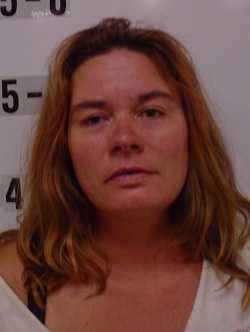
CLEARLAKE, Calif. – A Clearlake woman was arrested Saturday after she allegedly attempted to kidnap a baby.
Judy Lynn Pitts, 40, was taken into custody following the incident, which was reported Saturday night, according to Clearlake Police Sgt. Tim Hobbs.
Just before 10:30 p.m. Saturday Det. Ryan Peterson was on patrol covering a shift for an officer who was off that day when he was waived down by a woman on Pine Street near Olympic Drive, Hobbs said.
The woman told Peterson that a subject who she didn't know – later identified as Pitts – grabbed her 8-month-old daughter from her arms and fled into a nearby residence with the baby, according to Hobbs.
Family members of the child ran into the residence and retrieved the child, who was safely turned back over to her mother, Hobbs said.
Hobbs said the child's mother and other witnesses pointed Pitts out to Peterson as she was leaving the home.
Peterson subsequently arrested Pitts, who appeared to be intoxicated, on a felony charge of kidnapping, Hobbs said.
Pitts later was transported to the Lake County Jail and booked. She remained in custody on Sunday night, with bail set at $50,000, according to jail records.
The Clearlake Police Department is asking anyone with information regarding this case that has not already been interviewed to contact Det. Peterson at 707-994-8251.
Follow Lake County News on Twitter at http://twitter.com/LakeCoNews, on Tumblr at www.lakeconews.tumblr.com, on Facebook at http://www.facebook.com/pages/Lake-County-News/143156775604?ref=mf and on YouTube at http://www.youtube.com/user/LakeCoNews.
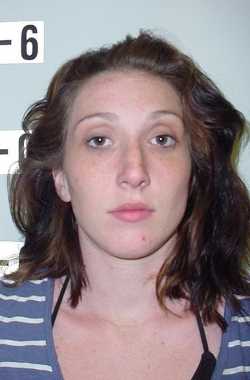
LAKEPORT, Calif. – Lakeport Police officers arrested a Clearlake woman for driving under the influence early Saturday after she drove her vehicle into Clear Lake.
Kristina Ann Colon, 23, was taken into custody following the incident, according to Officer Destry Henderson.
Henderson said Sunday that officers responded to the Skylark Motel on N. Main Street at 3:44 a.m. Saturday on the report of a vehicle into the lake.
When they arrived at the scene the officers found Colon being assisted by motel patrons for injuries she sustained while escaping from the sinking vehicle, Henderson said.
Colon was transported to Sutter Lakeside Hospital for treatment of her injuries and later arrested for
suspicion of driving under the influence of alcohol, according to Henderson.
She was booked at the Lake County Jail, with bail set at $5,000. Jail records indicated Colon later was released.
Colon’s vehicle was recovered from Clear Lake by the Northshore Dive Team and a local tow company. Henderson said the vehicle was approximately 75 yards from the shoreline and Colon was
determined to be the vehicle's sole occupant.
Follow Lake County News on Twitter at http://twitter.com/LakeCoNews, on Tumblr at www.lakeconews.tumblr.com, on Facebook at http://www.facebook.com/pages/Lake-County-News/143156775604?ref=mf and on YouTube at http://www.youtube.com/user/LakeCoNews.
The Clearlake Police Department said 51-year-old Kevin Quinn of Clearlake died shortly after he was shot multiple times by 67-year-old James Mitchell.
“They've had previous issues,” Clearlake Police Sgt. Tim Hobbs told Lake County News on Sunday afternoon.
Hobbs said that Quinn had worked for Mitchell a few years ago, noting, “They weren't on good terms then.”
Hobbs' report on the incident explained that at 2 a.m. Sunday Mitchell was asleep in his residence in the 14200 block of Olympic Drive when Quinn allegedly drove a 1994 Chevrolet Silverado pickup into the front of Mitchell's home.
Hobbs said Mitchell armed himself with a handgun and went to the area of his residence where he heard the crash. When Mitchell went into the room he reportedly was confronted by Quinn, who had gotten out of the pickup.
Quinn allegedly advanced toward Mitchell in a threatening manner while making threats to kill him, Hobbs said.
Mitchell attempted to flee his own residence, and as he was trying to get out of the house Quinn caught up to him, Hobbs said.
Mitchell fired his handgun at Quinn and struck him multiple times before going outside of the residence to notify police, according to Hobbs' report.
Officer Travis Lenz, who was on patrol in the area, saw Mitchell walking out to Olympic Drive while holding a handgun and contacted him, Hobbs said.
Lenz was unaware of the shooting or the crash, said Hobbs, adding that at the same time a Clearlake Police dispatcher was on the phone with a person who was reporting hearing a possible vehicle crash and gunshots in the area.
Sgt. Tim Celli and Officer Ryan Peterson arrived at the scene within one minute and found Quinn inside the residence, suffering from life-threatening injuries from what appeared to be gunshot wounds, said Hobbs.
Hobbs said medical personnel from the Lake County Fire Protection District were dispatched to the scene and arrived a short time later. A REACH helicopter also was dispatched to the scene and landed at Haverty Field in Austin Park to transport Quinn.
Quinn died at the scene of his injuries before he could be transferred to the helicopter, Hobbs said.
Hobbs said Clearlake Police detectives responded and took over the investigation.
Based on the investigation so far, Hobbs said it appears that Mitchell acted in self-defense and was justified in shooting Quinn.
Hobbs said that once the investigation is complete it will be sent to the District Attorney's Office for review, which he said is the standard procedure for handling such cases.
The Clearlake Police Department is asking anyone with information regarding this case to contact Det. Tim Alvarado at 707-994-8251.
Follow Lake County News on Twitter at http://twitter.com/LakeCoNews, on Tumblr at www.lakeconews.tumblr.com, on Facebook at http://www.facebook.com/pages/Lake-County-News/143156775604?ref=mf and on YouTube at http://www.youtube.com/user/LakeCoNews.
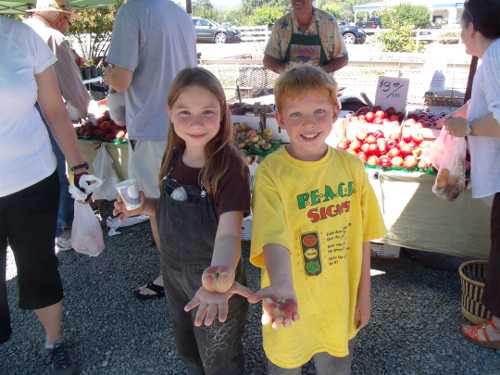
Summer’s heart, I’m convinced, is a ripe, juicy peach.
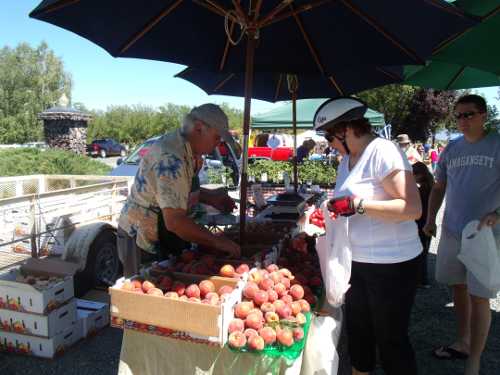
These sumptuous beauties are piled high at farmers’ market stalls now with the California peach season in full swing from mid-June through September.
Whether round, flat, white or yellow, these fragrant, plump fruits called the name of many a farmers’ market shopper over the weekend, mine included.
I came home with a bag of carefully chosen specimens representing several peach types: sweet, mild white peaches; yellow peaches with a full-bodied, tangy taste; and gently-flavored donut peaches with their interesting, slightly squashed shape.
In my mind, peaches are as American as apple pie, synonymous with southern states such as Georgia. Their origins, however, lie at the other side of the world, in China, where peach cultivation can be traced back to the earliest days of Chinese culture.
Peaches were mentioned in Chinese writings that date back to the 10th century B.C., more than 3,000 years ago. Not surprisingly, they were a favorite of Chinese emperors and other royalty.
Pink peach blossoms graced the artwork of many an ancient Chinese painter.
A full 50 percent of the world’s peach crop is produced in modern-day China, reflecting a continuing love affair with this fruit. China is not the largest exporter of peaches, however, as most of their crop stays within their borders for local consumption. Who can blame them?
From China, they were introduced to Persia and the Mediterranean region via traders on the Silk Road. The name “peach,” in fact, derives from a Latin word meaning “Persian apple,” a misnomer arising from the belief that peaches originated in that area.
Cultivation of the peach spread from Europe to the Americas, and by the mid-1700s peaches were so plentiful here that, like me, botanists of the time thought of them as native plants.
Wild peaches, which are small, fuzzy and very tart, are found only in China and Tibet.
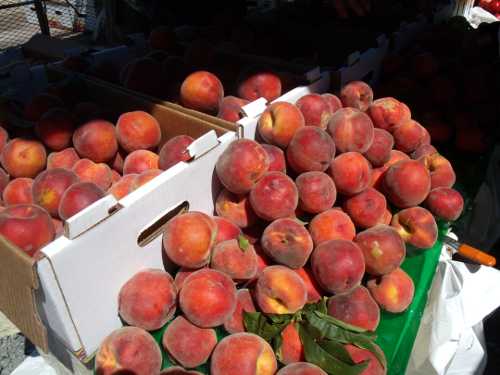
Eating a peach is a sensuous experience, with sunset hues, sweet aromas and velvety skin engaging more than just the taste buds. If we’re lucky, a peach is juicy enough to perpetuate slurping and trickling of liquid down one’s arm.
Cultivated peaches are divided into clingstones and freestones, depending upon whether the flesh easily pulls away from the stone within. Both types can have either white or yellow flesh.
White-fleshed peaches have a lower level of acidity than their yellow-fleshed brethren, making them sweeter and milder. Yellow peaches are considered to be more flavorful, but with higher acidity, they have a bit more tang.
White-fleshed peaches tend to be favored in China, Japan and other Asian countries. Europeans and North Americans have historically chosen the yellow-fleshed type, though white peaches are gaining in popularity here.
Smooth-skinned nectarines are a cultivar group of peaches, not a cross between peaches and plums as is often erroneously believed. “Shaved peach” and “fuzzy-less peach” are a couple of the nicknames they sport. Nectarines are created via a recessive gene, sometimes springing from trees with fuzzy peaches.
Like peaches, nectarines can be clingstone or freestone, white or yellow.
The best way to store peaches is at room temperature, as refrigeration can diminish their flavor. Peaches will ripen if picked a day or two prior to full maturity; however, if picked earlier than that, chances are they won’t.
If you wish to hasten ripening, storing peaches in a paper bag for a day or so may help.
I’m currently developing a cooling soup for summer for a future culinary class made with grilled peaches, so any application utilizing the fruit in this state catches my eye.
In perusing a Jamie Oliver cookbook, I found a recipe for a salad with grilled peaches and goat cheese. He uses bresaola, a dried, cured Italian beef, in his version, but I think the sliced grilled peaches and bits of goat cheese on their own over a bed of arugula would also be a beautiful start to a meal.
The peaches may be prepared in a grill pan on the stovetop or on an outdoor barbecue. Grill until peaches are just caramelized and grill marks show, which won’t take long.
Oliver suggests throwing some herbs in the fire to give the peaches a smoky, herbal taste if using the latter method, and I like that idea. Rosemary, thyme or tarragon would be perfect for flavoring the peaches in this way.
A simple vinaigrette dressing utilizing the same herbs would make a wonderful topping for the salad. Balsamic vinegar would be a nice choice for the acid component, as would lemon juice, as both pair well with peaches, arugula and goat cheese.
Vegetarian chef and cookbook maven Deborah Madison suggests serving delicate white peaches in lemon verbena syrup, and I think the recipe sounds lovely. To make the syrup, simmer sugar in water (say, 2 cups water with about half as much sugar) with a small handful of lemon verbena leaves until the sugar has dissolved. Cover and set aside for at least half an hour for the lemon verbena to infuse the syrup. Remove leaves and add peeled, sliced white peaches. Chill and garnish with fresh lemon verbena leaves.
A spiced peach topping may be made by cooking sliced peaches with sugar, cinnamon sticks, cloves, a little balsamic vinegar and cardamom pods. (These are strong, so go lightly with them.) Simmer together until the peaches are soft, and add some candied ginger at the end.
This lovely concoction should be stored in the fridge and may be used with pork or duck, over vanilla ice cream or spread on toast at breakfast. It can easily be frozen in zipper sealed bags for use when peaches are out of season.
If some diced shallots are added during the cooking process and a stronger vinegar is used, it becomes a nice chutney.
When I was a kid growing up in the family restaurant, we served a dessert called Peach Melba, a poached half peach with vanilla ice cream and fresh raspberry sauce. I enjoyed watching it go from the kitchen to the dining room with its alcohol-soaked flaming sugar cube on top.
This dessert was created by famed chef Auguste Escoffier in 1893 to honor Australian opera singer Dame Nellie Melba. In his version, Escoffier poached peaches in wine and honey and made a raspberry sauce with sugar and fresh berries. However it’s done, raspberries and vanilla ice cream are a fantastic match for peaches.
While peaches are not the powerhouse of nutrition that some fruits are, they have a very respectable amount of vitamin A, as well as being rich in potassium and a good source of fiber.
Whether peaches are eaten at height-of-season fresh and out of hand, baked in a cobbler, pie, or any number of desserts, or even combined with Prosecco (Italian sparkling wine) for a Bellini cocktail, they’re the quintessential summer fruit. I hope you’ll savor their loveliness while they’re here.
Today’s recipe is one that furthers my fascination for grilled peaches. It comes to us from an article on grilling at the National Public Radio Web site, www.npr.org.
I especially love the cleverness of fashioning skewers from cinnamon sticks, and it’s nice to utilize outdoor cooking methods to minimize time in the kitchen during the summer heat. Bon appetit and enjoy!
Cinnamon-grilled peaches
4 large ripe freestone peaches
8 cinnamon sticks (each 3 inches long)
1 bunch fresh mint
8 tablespoons (1 stick) unsalted butter
1/2 cup firmly packed brown sugar
1/2 cup bourbon
1/2 teaspoon ground cinnamon
1 pinch salt
1 pint peach or vanilla ice cream (optional) for serving
Rinse the peaches and blot them dry with paper towels. Cut each peach in half along the crease, running your knife in a circular motion around the peach and cutting to the pit. Twist the halves in opposite directions to separate them. Using a spoon, pry out and discard the pit.
Cut each peach half in half. Using a pointed chopstick or metal skewer, make a starter hole in the center of each peach quarter, working from the pit side to the skin side. Skewer two peach quarters on each cinnamon stick, placing a mint leaf between the two quarters.
Combine the butter, brown sugar, bourbon, cinnamon, and salt in a saucepan and bring to a boil over high heat. Let the glaze boil until thick and syrupy, about five minutes.
Set up the grill for direct grilling and preheat to high.
When ready to cook, brush and oil the grill grate. Place the skewered peaches on the hot grate and grill until nicely browned, 3 to 4 minutes per side, basting with the bourbon and butter glaze. Scoop ice cream into bowls or martini glasses and arrange the peaches on top. Spoon any remaining glaze over the grilled peaches and serve at once.
Adapted from BBQ USA by Steven Raichlen. Copyright 2003 by Steven Raichlen.
Esther Oertel, the “Veggie Girl,” is a culinary coach and educator and is passionate about local produce. Oertel teaches culinary classes at Chic Le Chef in Hidden Valley Lake, Calif., and The Kitchen Gallery in Lakeport, Calif., and gives private cooking lessons. She welcomes your questions and comments; e-mail her at
Follow Lake County News on Twitter at http://twitter.com/LakeCoNews, on Tumblr at www.lakeconews.tumblr.com, on Facebook at http://www.facebook.com/pages/Lake-County-News/143156775604?ref=mf and on YouTube at http://www.youtube.com/user/LakeCoNews.
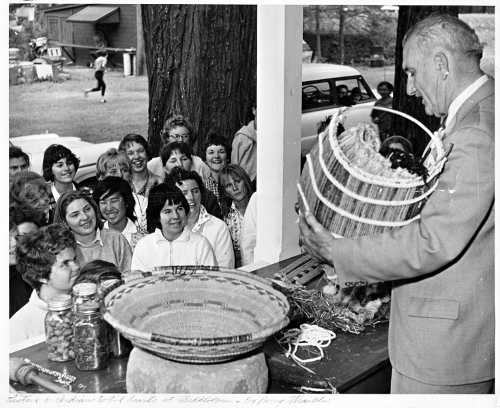
In commemoration of the 150th anniversary of the founding of Lake County this year, Lake County News is publishing a series of historical stories about the county, its people and places. This week the spotlight is on Henry K. Mauldin, Lake County's first official historian.
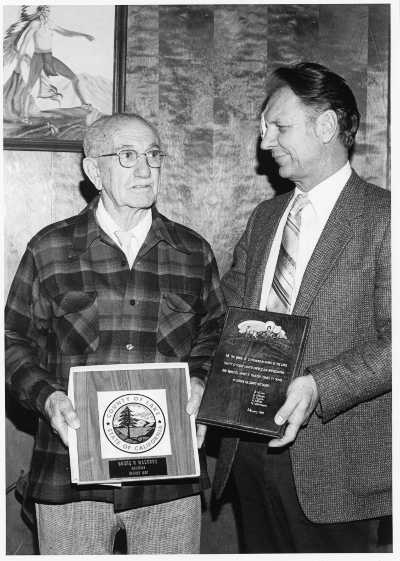
LAKEPORT, Calif. – Henry Mauldin died nearly 30 years ago and, while his name might not be as familiar as it once was, his legacy as the county’s first official historian endures.
As we read the Lake County stories published for the sesquicentennial, one of the stories worth telling is the story of Mauldin and the Lake County stories that he spent 40 years collecting. Without his work, many of those other stories might have been lost.
In 1906 Joel and May Mauldin moved from Idaho to Lake County with their children, including 6-year-old Henry.
The Mauldins settled on a prune ranch near Kelseyville, where Henry grew up. Except for a couple of years away from the county in his youth, Henry Mauldin lived the rest of his 80 years in Lake County.
Mauldin made his living as a pear farmer and also took an active role in numerous civic and agricultural organizations. He served as county supervisor from District 5 from 1940 to 1952.
Mauldin died on Sept. 2, 1981, when a car hit him as he crossed Soda Bay road near his home.
Mauldin’s pursuit of Lake County history began in 1940 as California prepared for the centennial of the Gold Rush and statehood.
He served on the Centennial Commission, collecting Lake County stories for the event, and continued collecting and writing for Lake County’s centennial celebration in 1961.
In 1955 Mauldin was one of the organizers of the Lake County Historical Society. The society began issuing a publication, The Pomo Bulletin, in 1956, which is still published three times a year.
His interest in local history became a passion that gripped Mauldin for 40 years, as he collected nuggets of Lake County history, page after page, until the data filled 50 binders – 10,000 pages – typed in quintuplicate, and all indexed, a collection now called the Mauldin Notes.
Mauldin collected information on thousands of topics: people, places and events in Lake County. His interest extended to both the pioneer and the Pomo history of the area. He incorporated news articles, letters, memoirs, city directories, interviews and other writings into the Mauldin Notes. The typing alone took years as high school typing classes and historical society volunteers typed pages.
The Mauldin Notes are now available to researchers at Lakeport Library, 1425 N. High St.; the Old Courthouse Museum, 255 N. Main, Lakeport; Redbud Library, 14785 Burns Valley Road, Clearlake; and the Lower Lake Schoolhouse Museum, 16435 Morgan Valley Road, Lower Lake. The Lake County Historical Society also owns a set, currently stored at the Nice Clubhouse.
The Mauldin Notes have their own Web site, http://mauldinnotes.lakecountycahistory.com, which includes an introduction to the notes and an index of subjects that appear in the notes. The notes themselves have not been digitized.
Mauldin wrote five books of local history: History of Lake County: Your Lakes, Valleys and Mountains; Mountains & Pioneers of Lake County; Lake County in the Beginning; Two Indian Legends of Lake County, California and History of Clear Lake, Mt. Konocti and the Lake County Cattle Industry.
His byline appeared on numerous articles in local newspapers and other publications. Mauldin contributed Lake County history information to other works, including the “Knave” section of the Oakland Tribune and to Erwin Gudde’s book California Place Names. Mauldin often drew on his vast knowledge in extemporaneous talks about Lake County history.
Education
Health
Business
Obituaries
Veterans
Recreation
Religion
Arts & Life
Government & Politics